
Reviewed · HAKONE TOURS
Hakone 8 hour Private Tour with Government-Licensed Guide
Hakone’s big advantage is variety: in one day, you can see a volcanic valley, a mountain lake, an old shrine, a fine-art museum, and perhaps ride a ropeway or sightseeing boat. This private eight-hour tour lets you choose four or five stops instead of following a fixed route. I like the chance to shape the day around your interests, and I like having a local guide explain the history, hot springs, transport system, and Japanese customs along the way.
The main catch is important: this is not a private-car tour. You meet the guide on foot, and transportation, admission fees, lunch, and personal expenses are extra. Hakone’s buses, trains, cable cars, ropeway, and boats can become crowded, so your guide’s planning matters greatly. A poorly timed day can turn into a long wait, especially around Lake Ashi.
In This Review
- Key points to know before booking
- Why a private Hakone day can work so well
- Lake Ashi and Hakone Shrine: the classic opening
- Owakudani: sulfur, steam, and black eggs
- Hakone Ropeway and the mountain transport circuit
- Art museums for clear thinking and rainy weather
- Sengokuhara, Choanji, and the wetland garden
- Smaller museums and a quieter Hakone
- What the guides add to the day
- Price, time, and the real value
- Who should book this Hakone tour
- Should you book it?
- FAQ
- How long is the Hakone private tour?
- How many places can I choose?
- Is this a private tour?
- Is a private vehicle included?
- Are transportation fees included?
- Are entrance fees included?
- Does the tour include lunch?
- Is the Owakudani Nature Study Path included?
- Can I cancel for a full refund?
Key points to know before booking
- Choose four or five stops: You can focus on volcanoes, art, scenery, temples, gardens, or a mix.
- Expect public transportation: The tour does not include a private vehicle or Hakone Freepass.
- Use the guide’s local judgment: Guides including Yoshi, Ryuta, Hide, Fumiko, Hiro, and Shuji have helped with route planning, meals, weather changes, and train connections.
- Allow extra money for the day: Transport, museums, ropeway rides, boat tickets, food, and some activities are not included.
- Mt. Fuji is never guaranteed: Clear skies can produce a fine view from Lake Ashi, but clouds and rain often hide it.
- The tour suits short stays: If you have only one full day in Hakone, a private guide can save time and help you avoid aimless transfers.
Why a private Hakone day can work so well
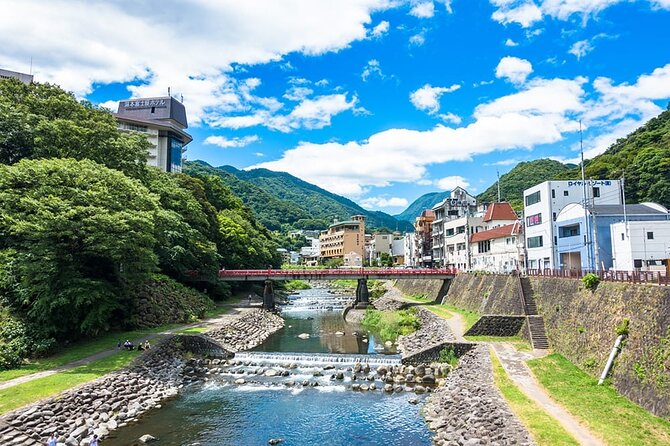
Hakone is easy to admire and surprisingly easy to mishandle. The sights are scattered around the mountains, and the classic circuit may involve a train, cable car, ropeway, boat, and bus. That is part of the fun, but it also means that a late start or an ill-timed transfer can eat up much of your day.
A private guide gives you one person to help join the pieces together. You can ask for an art-heavy day, a shrine-and-nature day, or the standard combination of Lake Ashi, Hakone Shrine, Owakudani, and a ride on the Ropeway. You can also slow down for an older family member, find a shaded route in hot weather, or switch to an indoor museum when rain rolls in.
The strongest part of the experience is the flexibility. Guides have adjusted plans for bad weather, hot temperatures, children, limited time, lunch requests, pharmacy stops, and train departures. One guide, Hide, even helped an older family member settle at a coffee shop while the rest of the group took a short walk.
The tour is private, so only your own group participates. That makes questions easier and avoids the stop-and-go rhythm of a large bus. It also means your group should communicate clearly. Tell the guide what you care about before the day begins, and be honest about walking ability, museum interest, food needs, and how much transport you want to use.
More Private Tours in Hakone
- Private Tour to Mt. Fuji and Hakone (Fully Licenced Operator)
★ 5.0 · 1,910 reviews - Mt. Fuji & Hakone Private Day Tour with English-Speaking Driver
★ 4.5 · 824 reviews - Mt. Fuji, Hakone Full-Day Private Tour with English Driver Guide
★ 4.5 · 458 reviews
Lake Ashi and Hakone Shrine: the classic opening
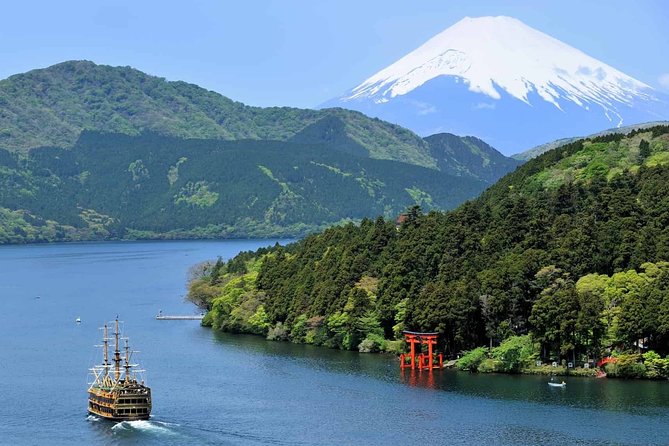
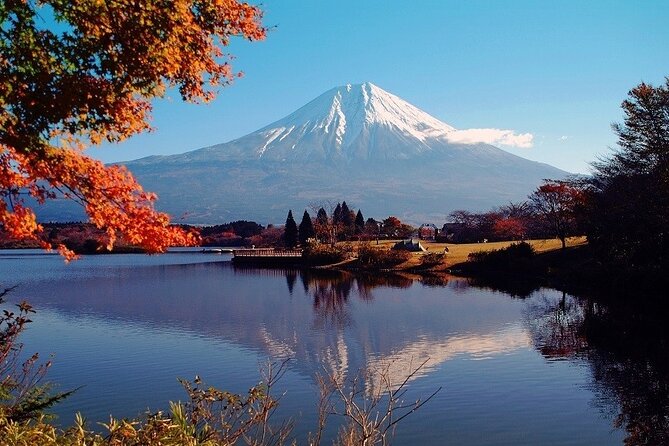
Lake Ashi, or Ashinoko, is the visual heart of Hakone. The lake formed in the volcanic caldera of Mount Hakone after an eruption about 3,000 years ago. On a clear day, Mount Fuji may appear beyond the water, creating the view most often associated with Hakone.
The listed visit is brief, about 15 minutes, so you should discuss timing with your guide if the lake is a major reason for booking. A short photo stop may be enough for you, but it will feel hurried if you want a boat ride, lakeside walk, or time at a café.
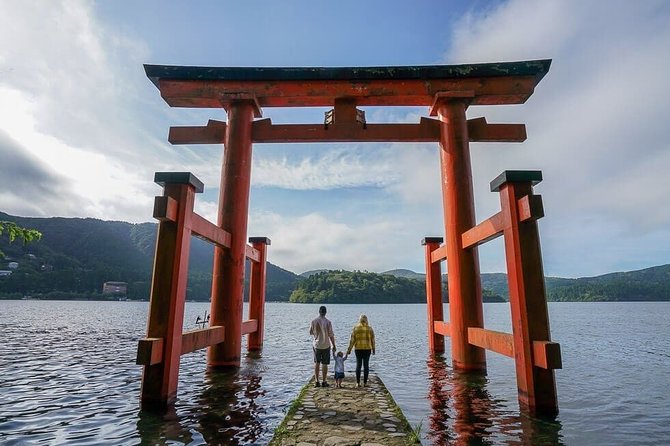
Hakone Shrine sits in a forested area near the lake and dates back more than 12 centuries. Its red torii gate by the water is one of Hakone’s best-known photo spots. The setting is peaceful, but the gate can draw a line. One visitor spent about 30 minutes waiting for a photograph, so I would ask your guide about the queue before committing valuable time.
The shrine itself offers more than a picture. Its wooded approach and traditional buildings give you a sense of why this mountain area became a place of worship and retreat. If you want quiet atmosphere rather than a checklist photo, tell your guide. You may prefer a slower walk around the shrine grounds.
Owakudani: sulfur, steam, and black eggs
Owakudani is Hakone’s active volcanic area. Steam rises from the ground, the air can smell strongly of sulfur, and the terrain feels very different from the lake and shrine. This is the place to try Hakone’s famous black boiled eggs, cooked in naturally heated volcanic water. Their shells turn dark during cooking, while the egg inside remains ordinary.
The standard stop is listed at about 15 minutes, but the Owakudani Nature Study Path allows a longer visit of roughly 40 minutes. This special trail passes through an active volcanic zone and offers closer views of geothermal activity. Advance reservation is required, with an entrance fee of 800 yen.
That reservation requirement makes planning especially important. Ask your guide to confirm the route and timing before the tour. Weather and volcanic conditions can affect access, so you should not assume every Owakudani option will be available on the day.
Owakudani is a strong choice for first-time visitors who want something distinctive. It is less suitable if you dislike sulfur smells, steep or uneven walking, or crowded transport. The black eggs are a fun snack, but the real appeal is seeing a living volcanic area rather than simply hearing about one.
Hakone Ropeway and the mountain transport circuit
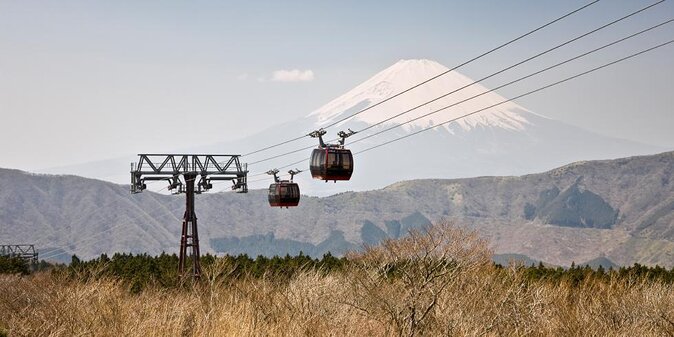
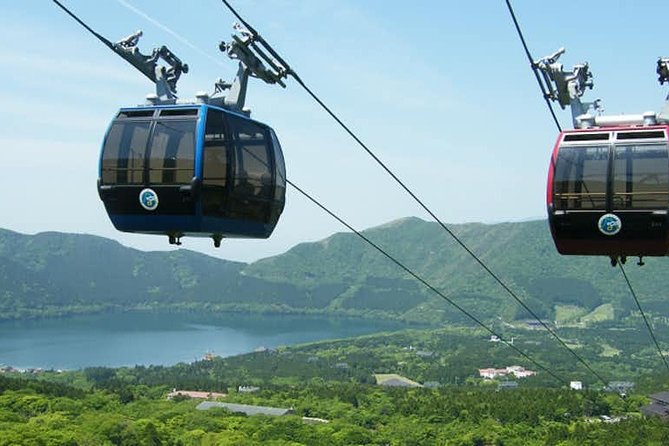
The Hakone Ropeway connects Sounzan with Togendai and forms part of the famous Hakone Round Course. It is more than a ride between two points. From the cabins, you can look over Hakone’s wooded mountains and, near Owakudani, the area’s volcanic ground.
The ride is listed as a short 10-minute stop, but the total time can be much longer once queues and transfers are included. The Ropeway is one of the places where a guide can save you confusion, but it cannot remove every line. On busy days, you may spend a substantial part of the morning moving through stations.
Several tours described by guests used a cable car from Gora, the Ropeway, and a boat on Lake Ashi. This combination gives you changing views and turns transportation into part of the day. It can also make the schedule tight. You should not choose too many museums or distant stops if the mountain circuit is your priority.
The tour price does not include a Hakone Freepass. You will need to pay transport costs separately unless you arrange your own pass. Ask the guide early in the day which ticket option makes sense for your chosen route.
More Hakone trips and passes:
- Mt Fuji and Hakone 1-Day Bus Tour Return by Bullet Train
★ 5.0 · 26,383 reviews - Mt Fuji & Hakone Cruise, Drum Show Bullet Train 1 Day from Tokyo
★ 4.0 · 7,413 reviews - Tokyo Mt Fuji 5th St & Hakone Cruise Bus Tour w/Bullet Train
★ 4.4 · 5,024 reviews - Tokyo: Mt. Fuji Tour, Hakone Ropeway, Owakudani, Lake Ashi
★ 4.7 · 4,002 reviews
Art museums for clear thinking and rainy weather
Hakone has an unusually strong group of museums, and the private format lets you pick one or two rather than forcing every art stop into the day. The Hakone Open-Air Museum is the best-known choice for combining art and nature. Its large grounds place sculptures throughout an outdoor setting, with indoor galleries available as well.
The Hakone Museum of Art in Gora focuses on Japanese art and includes a garden setting. Gora Park offers a nearby pause with formal Western-style grounds and mountain views. The Okada Museum of Art, opened in 2013, displays works from antiquity through the modern era and receives a longer suggested stop of about 30 minutes.
You can also choose the Hakone Venetian Glass Museum, with Italian-style buildings, a museum, shops, and a strolling garden. The POLA Museum of Art presents a private collection connected with the POLA company. The Narukawa Art Museum near Lake Ashi focuses on nihonga, or Japanese-style painting.
These stops are not interchangeable. If you want large outdoor sculpture, choose the Open-Air Museum. For Japanese art and a garden, consider the Hakone Museum of Art. For glass and decorative display, the Venetian Glass Museum may suit you better.
Rain is not necessarily a disaster here. Guides have shifted plans toward museums during cold, wet weather and returned to outdoor sights when conditions improved. That flexibility is one of the clearest reasons to book a private day instead of a rigid group excursion.
Remember that admission is generally not included. The listed stop times are short, often 15 minutes, so tell your guide if you want enough time to see a collection properly. A museum visit can easily take longer than a quick photo stop.
Sengokuhara, Choanji, and the wetland garden
Sengokuhara is known for its broad field of pampas grass, especially attractive in autumn. It gives you open views and a seasonal change of pace after the enclosed museum rooms or busy transport stations. The suggested stop is about 15 minutes, though the area deserves more time if the grass is your main interest.
Choanji Temple, a Soto Zen temple founded in 1356, sits in the Sengokuhara area at the foot of a hill. It is quieter and more atmospheric than the headline sights. You can expect a calm temple visit, wooded surroundings, and a chance to see a less commercial side of Hakone.
Hakone Shisseikaen, the Botanical Garden of Wetlands, preserves plants found in wetland areas of the Fuji Hakone Izu National Park. It is a good option for plant lovers and for anyone who wants a gentle outdoor stop away from the main transport circuit.
These three places work well for a slower day, but they compete with Owakudani and Lake Ashi for time. I would not try to include all of them unless your guide confirms that transport and walking distances fit your schedule.
Smaller museums and a quieter Hakone
The Dollhouse Museum presents centuries-old dollhouses from around the world in a small collection. It is a niche choice, best for you if that subject genuinely interests you. It is not an obvious substitute for the Open-Air Museum or Owakudani.
Gora Park is useful as a short rest stop and can pair naturally with the Hakone Museum of Art. Its sloping location matters, since Hakone is not flat and short distances can still involve uphill walking.
The Narukawa Art Museum is particularly appealing if you want Japanese-style painting and a view near Lake Ashi. The Okada Museum and POLA Museum offer broader art collections, but entrance fees and visit lengths should be considered before you choose several museums in one day.
A private guide can help you avoid a common mistake: selecting five places that all require long visits. Four well-chosen stops will usually feel better than five rushed ones, especially when you are also riding public transport.
What the guides add to the day
The tour uses government-licensed local English-speaking guides, but the actual guide varies. Names appearing in the supplied experiences include Yoshi, Ryuta, Hide, Fumiko, Hiro, Shuji, Atsushi, Yukie, Kappa, Coco, and others.
The best guide experience is not just about facts. It is about judgment. Yoshi helped explain culture, history, and social customs, while Fumiko was praised for planning ahead and staying flexible. Hide helped a family manage different walking speeds, meals, postcards, and transport. Shuji was noted for clear English and useful background on Japanese history.
You should also keep expectations realistic. One poor experience involved a guide who was new to Hakone and could not offer much local insight. Another involved difficult-to-understand English and a guide walking too far ahead. These are not reasons to dismiss the tour, but they are good reasons to state your needs clearly when booking.
Ask for a guide who fits your priorities if the provider allows it. If explanations matter, say so. If you need a slower pace, say so. If you want a guide to handle train and bus changes, make that central to your request.
Price, time, and the real value
At $201.46 per person, the tour is not a budget sightseeing option, especially because transport, entrance fees, lunch, and the Hakone Freepass are separate. For one or two people, the total cost can rise quickly once you add museum tickets and mountain transport.
The value improves for a larger private group, since group discounts are offered and the guide’s time is shared among your party. The private format can also be worthwhile if you have only one day, are staying at a ryokan, or need help reaching a train afterward. One guide personally escorted a family back to the station after helping them retrieve their bags.
The tour has a 4.9 rating from 63 reviews and a 97 percent recommendation rate. Those numbers suggest strong satisfaction, but they do not remove the practical issues: weather, queues, guide fit, and extra costs still shape the day.
I would calculate the full budget before booking. Include transport, admission to your chosen museums, the 800-yen Owakudani trail if reserved, meals, and possible taxis if your group wants to save time. The guide can help with choices, but the advertised price does not cover those items.
Who should book this Hakone tour
I would choose this experience if you have one full day in Hakone and want help fitting several different sights together. It is especially useful for families, older relatives, first-time visitors, and groups with mixed interests.
It also suits you if you want to ask questions about onsen, Japanese customs, local food, or the area’s volcanic past. The private setting makes those conversations easier than on a large group tour.
You may want another option if you expect a private car, dislike public transport, or want to visit many museums at length. You should also reconsider if you want a completely unplanned day. Hakone’s routes need some structure, and the four-to-five-stop limit means you must make choices.
Weather deserves a final warning. Mt. Fuji may appear from Lake Ashi, but clear views are not promised. The day can still work in rain if you switch to museums, temples, or covered stops, but you should book for Hakone as a whole, not only for a Fuji photograph.
Should you book it?
Book this tour if you value personal planning, local explanations, and the freedom to choose four or five sights. Tell the guide your interests before the day starts, and ask for a realistic route that allows for queues and transfers.
I would be most inclined to book it for a short Hakone stay, a family group, or anyone who wants to combine Owakudani, Lake Ashi, a shrine, and one strong museum without managing the entire transport system alone. I would skip it if you want a cheap, self-guided outing or a private vehicle. For the right group, the time saved and the ability to change plans can justify the price.
FAQ
How long is the Hakone private tour?
The tour lasts approximately eight hours.
How many places can I choose?
You can customize the day around four to five sites from the available attractions.
Is this a private tour?
Yes. Only your own group participates, and you do not combine your group with other tour groups.
Is a private vehicle included?
No. This is a walking tour with no private vehicle included. You meet the guide on foot within the designated Hakone area and use transportation separately as needed.
Are transportation fees included?
No. Transportation fees are extra. The Hakone Freepass is also not included.
Are entrance fees included?
Entrance fees are generally not included. The information provided also states that guide entry fees are covered only for sights listed under the What to Expect section.
Does the tour include lunch?
No. Lunch and other personal expenses are extra.
Is the Owakudani Nature Study Path included?
The path is one of the possible stops, but advance reservation is required and the entrance fee is 800 yen. It is not included in the tour price.
Can I cancel for a full refund?
Yes, if you cancel at least 24 hours before the experience start time. Cancellations or changes made less than 24 hours before the start time are not accepted for a refund.
New on our Hakone list
- From Tokyo: Mount Fuji & Hakone Full Day Private Tour★ 4.9 · 25 reviews
- Tokyo: Mt. Fuji, Owakudani, Hakone Shrine, & Open-Air Museum★ 4.7 · 25 reviews
- Tokyo:Mt Fuji & Hakone Day Tour with English Speaking Driver★ 5.0 · 26 reviews
- Full Day Private Tour in Mt. Fuji and Hakone★ 4.5 · 30 reviews
- Odawara: Odawara Castle Tenshukaku Entrance Ticket★ 4.2 · 30 reviews
- Mt.Fuji view Hakone Private tour with English speaking driver★ 5.0 · 33 reviews
- “Tokyo to Mt. Fuji & Hakone: Private Customizable Day Trip”★ 5.0 · 45 reviews
- Mount Fuji and Hakone Private Tour from Tokyo (Customizable)★ 5.0 · 45 reviews
Hakone Tours, compared.
Mt Fuji and Hakone 1-Day Bus Tour Return by Bullet Train
Read our review →
Mt Fuji & Hakone Cruise, Drum Show Bullet Train 1 Day from Tokyo
Read our review →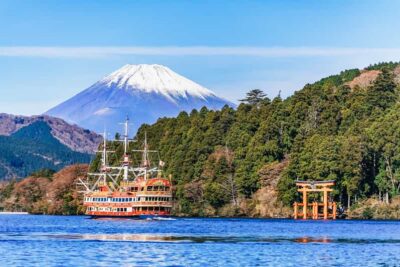
Tokyo Mt Fuji 5th St & Hakone Cruise Bus Tour w/Bullet Train
Read our review →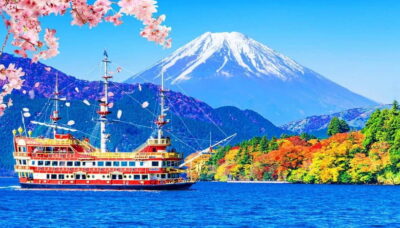
Mt. Fuji Tour, Hakone Ropeway, Owakudani, Lake Ashi
Read our review →
Mt. Fuji 5th Station & Hakone Cruise 1-Day Bus Tour
Read our review →
Private Tour to Mt. Fuji and Hakone (Fully Licenced Operator)
Read our review →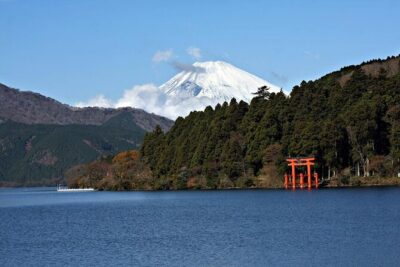
Mt Fuji & Hakone Cruise, Drum Show Bus 1 Day from Tokyo
Read our review →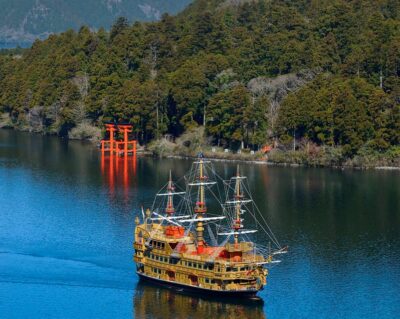
Mt. Fuji & Hakone Tour w/ Return by Bullet Train
Read our review →Browse the lists this tour appears in