
Reviewed · HAKONE TOURS
Japanese Traditional Music Experience
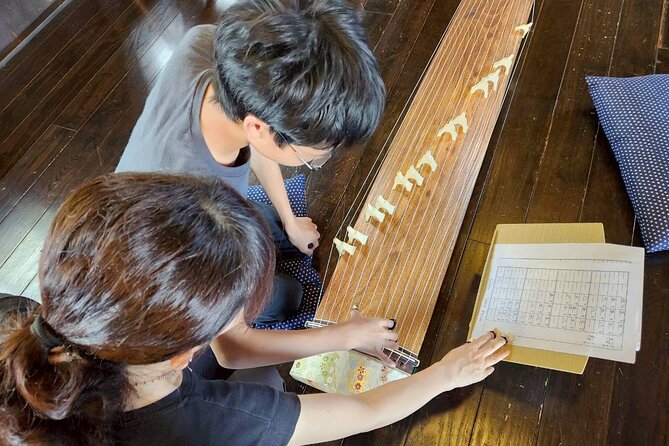
The most rewarding part of this Odawara experience is simple: you get to play a real koto, not just watch one behind glass. Akiko, a qualified koto teacher, explains the instrument, fits you with special playing nails, and takes you through a piece suited to your level. Even a first attempt can produce a pleasing sound.
I like two things especially. First, the class connects music with Odawara’s past as a castle town. Second, the tiny group size, a maximum of three people, gives Akiko room to adjust the lesson. The main consideration is posture: you remove your shoes and may sit in seiza, the traditional kneeling position, although chairs are available if you ask.
In This Review
- Key points at a glance
- Why the koto makes a fine first Japanese music lesson
- What happens during the one-hour class
- A close lesson with Akiko, not a large demonstration
- Why beginners can make progress quickly
- Odawara-juku Nariwai Exchange Center is part of the appeal
- Shoes off, then choose the posture that suits you
- Is $45.53 a fair price for one hour?
- What the excellent feedback tells you to expect
- Who should book this Odawara activity?
- Booking, timing, and cancellation details
- Should you book the koto lesson?
- FAQ
- How long does the Japanese traditional music experience last?
- Where does the experience begin?
- Where does the activity end?
- Is transportation included?
- What does the price include?
- Do I need previous musical experience?
- Do I have to sit in seiza?
- How many people can join?
- Will I receive a ticket on my phone?
- Can I cancel for a full refund?
Key points at a glance
- Play the koto yourself: You receive hands-on instruction, rather than only watching a demonstration.
- Akiko adapts the lesson: Beginners, children, older adults, and musicians familiar with strings can all take part.
- A compact one-hour format: The class fits neatly into a day of sightseeing in Odawara.
- Live performance included: Akiko plays for you after the lesson, giving you a better sense of the instrument’s full sound.
- Traditional setting details matter: You take off your shoes and may use Japanese-style sitting posture.
- Good value for a small group: At $45.53 per person, the price includes the koto, playing tools, and instruction.
Why the koto makes a fine first Japanese music lesson
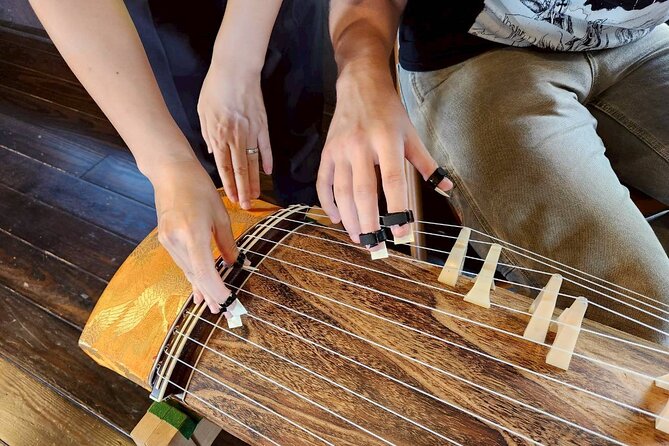
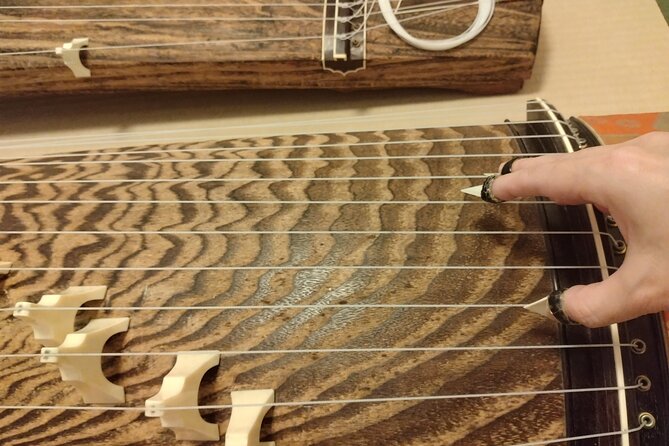
The koto is a long Japanese stringed instrument with a bright, ringing tone. You do not need musical training to try it here. The lesson uses special attachment nails, allowing you to pluck the strings in the proper way without needing to own traditional equipment.
That makes this a stronger choice than a passive cultural talk if you want to remember what you learned through your hands. You hear the instrument, learn what it is, then make your own sound. The process is likely to feel more personal than simply taking a photograph beside a traditional object.
I also like the way the activity suits people with different musical backgrounds. One participant who plays bass and ukulele found the koto’s sound especially lustrous. A guitar player was able to ask questions by comparing the instrument with other stringed instruments. You do not need that background, but if you play music, you may find extra interest in the koto’s technique and tone.
More Hakone trips and passes:
- Mt Fuji and Hakone 1-Day Bus Tour Return by Bullet Train
★ 5.0 · 26,383 reviews - Mt Fuji & Hakone Cruise, Drum Show Bullet Train 1 Day from Tokyo
★ 4.0 · 7,413 reviews - Tokyo Mt Fuji 5th St & Hakone Cruise Bus Tour w/Bullet Train
★ 4.4 · 5,024 reviews
What happens during the one-hour class
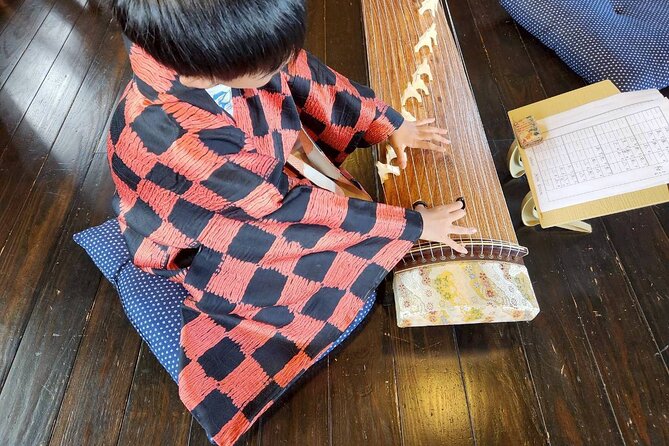
The session follows a clear sequence, so you know what you are getting for the hour. It begins with an explanation of the koto, including its history and basic information. This opening gives the instrument a cultural setting before you start touching the strings.
Next comes instruction in how to play. Akiko shows you how to use the special attachment nails and how to approach the strings. The supplied information does not promise a long technical course, and that is useful to understand. This is an introduction, not a conservatory lesson. The goal is to help you make music quickly and enjoy the instrument without getting buried in theory.
You then try playing the koto yourself. Akiko teaches step by step, and the music can be adapted to your level. For a child, that may mean breaking the movement into very small pieces. For an adult with no music experience, it can mean choosing an easy piece that gives you a sense of progress. The instructor has also used a simple movement that makes a beginner look polished in photographs.
The class finishes with a performance by Akiko. This is an important part of the hour because your own first notes cannot show the koto’s full range. Hearing a qualified teacher play lets you appreciate how much expression the instrument can produce when handled by an experienced musician.
A photo session follows. It gives you a lasting record of the activity and lets you pose with the instrument after learning how it works. Since the experience ends at the same place where it begins, you can collect your belongings and continue your Odawara plans without a second transfer.
A close lesson with Akiko, not a large demonstration
The maximum group size is three people. That is a major advantage for a hands-on lesson. Akiko can watch how you hold your hands, repeat a movement, and alter the piece to match your ability. In a large class, you might spend much of the hour trying to see the instructor. Here, the format is built around participation.
The small size also makes this a sensible pick for a family or a small private group of friends. A mother aged 70, an adult daughter aged 49, and an 11-year-old girl were able to take part together, with the music adjusted to suit their different levels. That tells you more than a general claim that the activity is family-friendly. The lesson can accommodate a real age range, provided everyone is comfortable with the physical setup.
Children can join too. An eight-year-old found the first attempt challenging but enjoyable, with Akiko teaching one step at a time. Parents should set expectations clearly: this is not a quick photo stop with an instrument. A child needs to listen, follow directions, and accept that producing a good sound may take a little concentration.
Why beginners can make progress quickly
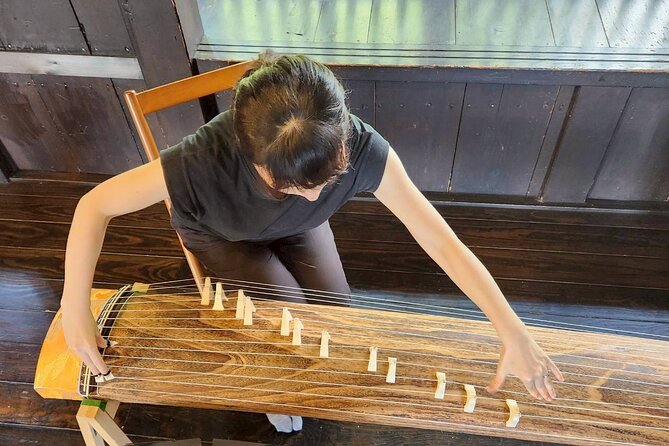
Many traditional instruments look difficult before you play them. The koto is no exception. Its long body and many strings can seem intimidating, especially if you have never handled one. The lesson solves that problem by narrowing the task to basic information, a few guided movements, and an accessible piece.
That approach is the experience’s strongest practical feature. You are not expected to arrive knowing Japanese music. The special nails are provided, as are the koto and the other tools needed for the lesson. The fee covers both the rental equipment and instruction, so you do not have to arrange anything musical in advance.
The sound itself also helps. The koto can produce a beautiful note from a simple pluck, giving you a quick reward for your effort. Do not confuse that with mastering the instrument. You will have only about an hour. Still, you can leave with a basic feel for how the instrument works and a better ear for its sound.
If you already play bass, guitar, ukulele, or another stringed instrument, you may notice familiar ideas in the way the strings respond. At the same time, the koto remains distinctly Japanese in tone and playing method. That mix of familiarity and difference gives experienced musicians something to think about without making the session hard for complete beginners.
Same corner of Hakone, a completely different plan:
- Tokyo: Mt. Fuji Tour, Hakone Ropeway, Owakudani, Lake Ashi
★ 4.7 · 4,002 reviews - Tokyo: Mt. Fuji 5th Station & Hakone Cruise 1-Day Bus Tour
★ 4.2 · 2,381 reviews - Private Tour to Mt. Fuji and Hakone (Fully Licenced Operator)
★ 5.0 · 1,910 reviews - Mt Fuji & Hakone Cruise, Drum Show Bus 1 Day from Tokyo
★ 4.0 · 1,287 reviews
Odawara-juku Nariwai Exchange Center is part of the appeal
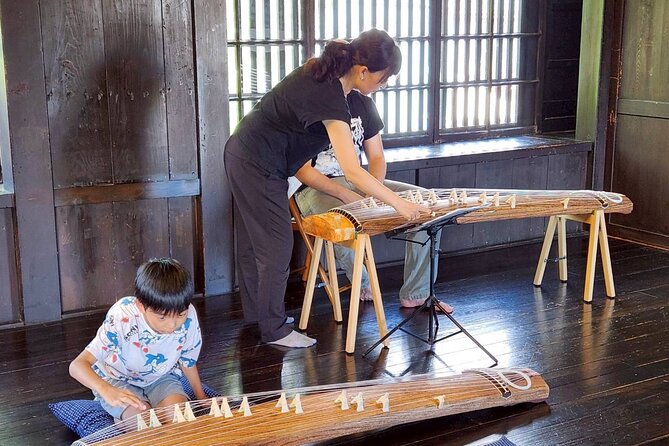
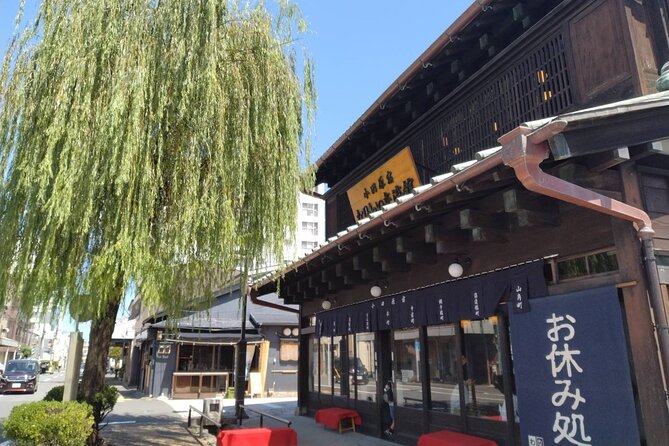
The meeting point is the Odawara-juku Nariwai Exchange Center at 3-chome-6-23 Honcho, Odawara. The activity takes place in Odawara, a historic castle town, and Akiko describes the city as her hometown. That local connection gives the class a stronger sense of place than an identical lesson in a generic studio.
You are not simply adding a music class to your schedule. You are learning a traditional Japanese instrument in the city where the instructor grew up and where she wants to share this part of local culture. The setting links the lesson to Odawara’s identity, even though the main focus remains the koto itself.
The meeting point is near public transportation. Private transportation is not included, so you need to make your own way there. Because the class lasts about one hour and returns to the starting point, it can work well before or after other Odawara sightseeing. Allow yourself enough time to arrive at the named center, rather than assuming a vehicle transfer is part of the booking.
Shoes off, then choose the posture that suits you
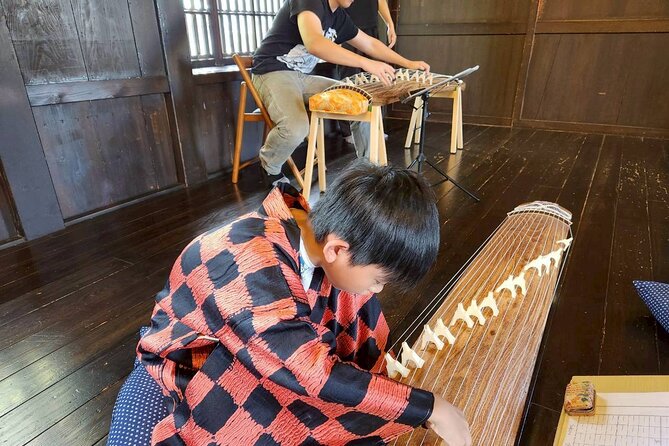
You will remove your shoes when you enter the music lesson space. That is a small detail, but it is worth knowing before you arrive. Wear socks or otherwise plan for an indoor setting where shoes do not remain on your feet.
The traditional posture is seiza, sitting on your knees with your legs folded beneath you. Some people enjoy the cultural aspect of sitting this way. Others find it uncomfortable after only a short time. If your knees, ankles, or hips make this difficult, tell Akiko and she can prepare chairs.
This flexibility matters because discomfort can distract you from the instrument. You do not need to endure a painful position to take part. Still, if you already know that kneeling is a problem, contact the provider or mention it when you arrive so the chair arrangement is ready.
Is $45.53 a fair price for one hour?
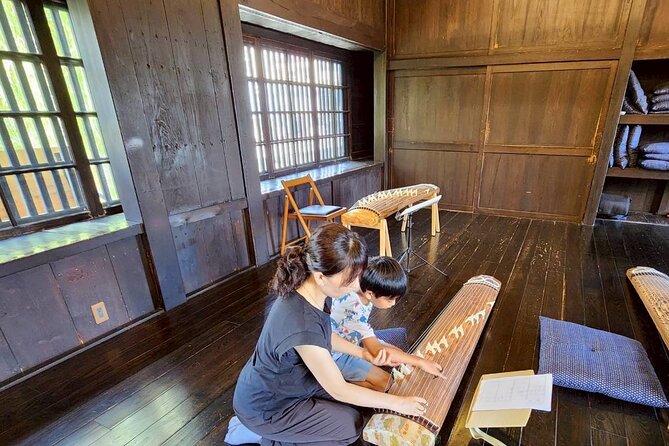
At $45.53 per person, this is not the cheapest possible hour in Japan, but it offers more than a quick demonstration. Your price includes the koto rental, the special tools used to play it, the instruction, the instructor’s performance, and the photo session.
The group limit improves the value. With no more than three people, the money pays for direct teaching rather than a seat in a crowded presentation. You are also paying for access to an instrument that would be impractical to rent and learn on your own during a short visit.
The experience makes the most financial sense if you value participation. If you only want to hear traditional Japanese music, a performance elsewhere may give you more playing time. If you want to hold the instrument, learn the basic method, create a few sounds yourself, and hear an accomplished performance in the same hour, this is a well-focused purchase.
The price is also easier to justify for a family or small group because the lesson can be adjusted across ages. A child, parent, and grandparent do not need separate activities. Everyone can share one cultural experience, with the instructor changing the pace and piece as needed.
What the excellent feedback tells you to expect
Every supplied rating is five stars, and the praise is consistent in useful ways. The strongest theme is patient instruction. People describe Akiko teaching one by one and step by step, which is exactly what you want when the instrument is unfamiliar.
Another repeated point is the sound. Beginners were surprised by how beautiful their playing could sound after a short lesson. That does not mean every note will be perfect, but it does suggest that Akiko chooses material and movements that offer early success rather than frustration.
The lesson also works well for people who already love instruments. A bass and ukulele player was especially taken with the koto’s tone. If you are the sort of person who stops to inspect a string instrument, this is likely to offer more than a standard sightseeing stop.
The final theme is warmth. Akiko’s replies show that she takes interest in each person’s background and encourages continued musical curiosity. For a short activity, that personal attention can make a difference. You are not just being shown a cultural object. You are being invited to try it.
Who should book this Odawara activity?
I would put this high on the list for:
- First-time visitors who want a hands-on Japanese cultural activity
- Couples or small groups who prefer a quiet lesson to a large group show
- Families with children and older adults
- People who play string instruments and want to compare techniques
- Anyone with an interest in traditional Japanese music
- Visitors with a free hour before or after exploring Odawara
It is especially good for people who want a genuine local connection without committing half a day. The class is short, focused, and easy to combine with other plans.
You may want to skip it if you dislike removing shoes, cannot sit in a kneeling position even with a chair, or want a full concert rather than an introductory lesson. You should also avoid expecting advanced musical training. This is a friendly first meeting with the koto, not a course that will make you an accomplished player in one hour.
Booking, timing, and cancellation details
Confirmation arrives within 48 hours of booking, subject to availability. The experience is often reserved about 60 days ahead, so booking early makes sense if your Odawara date is fixed. The small three-person limit is likely the main reason not to leave it until the last minute.
You receive a mobile ticket, which keeps the booking simple while you are moving around Japan. Free cancellation is available if you cancel at least 24 hours before the local start time. Cancellations made less than 24 hours before the start, along with late changes, are not refunded or accepted.
Should you book the koto lesson?
Book it if you want to do something rather than simply see something. For $45.53, Akiko gives you a real instrument, personal teaching, a performance, and a photo opportunity in a one-hour class limited to three people. The strongest reason to choose it is the chance to produce your own first koto sounds while learning about the instrument’s place in Japanese culture.
Before booking, check your route to the Odawara-juku Nariwai Exchange Center and consider the sitting arrangement. If you can manage the indoor, shoes-off setting, or arrange a chair with Akiko, this is an appealing addition to an Odawara day. It offers a rare kind of souvenir: not something you buy, but a skill and sound you briefly make yourself.
FAQ
How long does the Japanese traditional music experience last?
The activity lasts approximately one hour.
Where does the experience begin?
It begins at the Odawara-juku Nariwai Exchange Center, 3-chome-6-23 Honcho, Odawara, Kanagawa 250-0012, Japan.
Where does the activity end?
The experience ends back at the meeting point.
Is transportation included?
No. Private transportation is not included, though the meeting point is near public transportation.
What does the price include?
The price includes the rental fee for the koto and playing tools, as well as the instruction fee.
Do I need previous musical experience?
No. Complete beginners can participate, and the lesson is taught step by step. The instructor can select a piece suited to your level.
Do I have to sit in seiza?
The activity uses the Japanese-style sitting posture called seiza. If you are not comfortable sitting this way, tell Akiko, and chairs can be prepared.
How many people can join?
The activity has a maximum of three participants.
Will I receive a ticket on my phone?
Yes. The experience includes a mobile ticket.
Can I cancel for a full refund?
Yes, if you cancel at least 24 hours before the experience start time. Cancellations made less than 24 hours in advance are not refunded, and late changes are not accepted.
New on our Hakone list
- Hakone Private Customized Day Tour★ 4.5 · 3 reviews
- Day Trip To Mount Fuji and Hakone from Tokyo with English Guide★ 4.5 · 3 reviews
- Mt Fuji, Hakone Private Tour by Car Pickup from Tokyo★ 5.0 · 3 reviews
- Odawara: Castle Guided Tour with Panoramic Views★ 5.0 · 3 reviews
- Mount Fuji and Hakone Private day trip from Tokyo★ 5.0 · 3 reviews
- Tokyo to Hakone | Private and Personalized Day Trip with a Local★ 4.0 · 3 reviews
- Mount Fuji Hakone with English-speaking Guide★ 5.0 · 3 reviews
- 2 Days Tokyo ,Mount Fuji / Hakone Private Tour from Tokyo★ 5.0 · 3 reviews
Hakone Tours, compared.

Mt Fuji and Hakone 1-Day Bus Tour Return by Bullet Train
Read our review →
Mt Fuji & Hakone Cruise, Drum Show Bullet Train 1 Day from Tokyo
Read our review →
Tokyo Mt Fuji 5th St & Hakone Cruise Bus Tour w/Bullet Train
Read our review →
Mt. Fuji Tour, Hakone Ropeway, Owakudani, Lake Ashi
Read our review →
Mt. Fuji 5th Station & Hakone Cruise 1-Day Bus Tour
Read our review →
Private Tour to Mt. Fuji and Hakone (Fully Licenced Operator)
Read our review →
Mt Fuji & Hakone Cruise, Drum Show Bus 1 Day from Tokyo
Read our review →
Mt. Fuji & Hakone Tour w/ Return by Bullet Train
Read our review →Browse the lists this tour appears in