Reviewed · TOURS
9-Day Japan and South Korea Highlight Tour
This nine-day trip packs two countries into one busy sweep, from Mt. Fuji and Kyoto temples to Seoul markets and Busan’s coastal paths. It is designed for you to see the headline sights without building every train, hotel, meal, and airport transfer yourself.
I like the clever mix of big-name places and local food stops, especially Osaka’s five-eatery tasting walk and Seoul’s market-based evening. I also like that the group is limited to 15 people. The tradeoff is clear: this is a physically demanding schedule with frequent flights, long sightseeing days, and little spare time.
In This Review
- Key points
- A nine-day route built for maximum coverage
- Day 1: A soft landing at Narita
- Day 2: Mt. Fuji through four different viewpoints
- Day 3: Tokyo’s shrines, markets, and electric districts
- Moving from Tokyo to Osaka
- Day 4: Osaka by bicycle, then a serious food walk
- Day 5: Kyoto’s Golden Pavilion, Arashiyama, and Nara’s deer
- Day 6: From Osaka to Seoul, then straight to the table
- Day 7: Seoul’s royal center and traditional shopping streets
- Day 8: Busan’s temples, cliffs, and hillside villages
- Day 9: Departure transfer and the limits of the schedule
- What the $4,900 price really buys
- Who should book this Japan and South Korea tour?
- FAQ
- How long is the Japan and South Korea Highlight Tour?
- Where does the tour begin?
- Is airport pickup included?
- What cities and regions does the itinerary visit?
- Are flights between Japanese cities included?
- Is the Seoul to Busan train included?
- Are hotels included?
- Which meals are included?
- How large is the tour group?
- Is the tour suitable for someone with low physical fitness?
- Should you book it?
Key points
- Seven major destinations: Tokyo, Mt. Fuji, Osaka, Kyoto, Nara, Seoul, and Busan all appear within nine days.
- Food has a real role: Osaka includes about 10 dishes at five neighborhood eateries, while Seoul features Insadong, Kwangjang Market, and small food spots around Jongro.
- Mt. Fuji day trip: Chureito Pagoda, Lake Kawaguchiko, Oishi Park, and Saiko Iyashi no Sato Nenba create a strong countryside contrast to Tokyo.
- Two countries with transport arranged: Domestic flights, hotel transfers, accommodation, breakfasts, selected lunches and dinners are included.
- Maximum group of 15: Small enough for a more manageable guided outing, though the exact guide names are not provided.
- A packed physical schedule: Cycling in Osaka, stairs at Chureito Pagoda, palace visits, walking tours, and full-day excursions require stamina.
A nine-day route built for maximum coverage
You begin at Narita Airport and finish with a transfer to the airport on Day 9. In between, you cover Japan’s major cultural centers and South Korea’s two most visited cities.
The price is $4,900 per person, which is a serious amount. Its value depends on how much you want handled for you. Hotels, eight breakfasts, five lunches, two dinners, flights from Tokyo to Osaka and Osaka to Seoul, guided touring, and a Seoul to Busan bullet train ticket are included.
The itinerary is not a slow, settle-in-and-stay-put holiday. You change cities often and spend many days out from morning into the afternoon or evening. If you want a broad first look at Japan and South Korea, this plan does the hard organizing for you. If you prefer lingering in one neighborhood or sleeping late, it may feel too tight.
A few more Narita bookings worth comparing
- Narita Airport (NRT) Private Transfer to Central Tokyo
★ 4.5 · 300 reviews - Private arrival Transfer from Narita Airport(NRT) to central Tokyo city
★ 4.5 · 128 reviews - Narita Airport(NRT): Private Transfer to Tokyo/Yokohama 1-9pax
★ 5.0 · 47 reviews
Day 1: A soft landing at Narita
Your arrival day is simple. Provide your flight information in advance, and a driver collects you at Narita Airport, meeting you near the airport exit before taking you to your hotel.
That transfer matters after a long international flight. You do not need to work out a rail connection while tired, though the schedule does not describe the hotel location or the length of the drive. Day 1 is mainly for checking in and recovering before the sightseeing begins.
Day 2: Mt. Fuji through four different viewpoints
The Mt. Fuji outing gives you one of the trip’s best changes of pace. Instead of viewing Japan only through city streets, you spend the day around lakes, flower gardens, a historic village, and one of the country’s most familiar viewpoints.
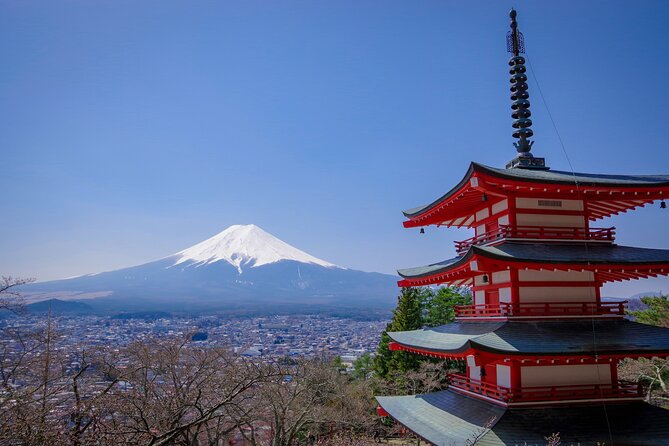
At Chureito Pagoda, you climb the stairs up Mt. Arakura for the classic composition: red pagoda in the foreground and Mt. Fuji behind it. Admission is free, but the climb makes this a poor choice for anyone with limited physical fitness. Clear weather also matters. Fuji views are never guaranteed by a sightseeing schedule.
At Lake Kawaguchiko, the plan includes lunch beside the water at Kawaguchiko Craftpark and time for a gentle walk. The stop lasts about two hours, so you have a chance to eat, stretch your legs, and enjoy the lake rather than simply jump out for a photograph.
Oishi Park adds seasonal color. Flowers change through the year, and the setting gives you another chance to frame Mt. Fuji across the lake. The listed visit is only 30 minutes, so think of it as a photo stop, not a long garden visit.
The final stop, Saiko Iyashi no Sato Nenba, offers a more traditional rural scene. Thatched-roof houses line the lakeside village, and admission is included. You may browse craft displays, try a hands-on activity, or simply walk through the old-style buildings.
This is a full day with several stops, but the variety keeps it from feeling repetitive. Pack comfortable shoes, protect yourself from the weather, and keep expectations sensible about Fuji visibility.
Day 3: Tokyo’s shrines, markets, and electric districts
Tokyo’s city tour moves on foot and by metro, which is useful because you experience the city as a connected set of neighborhoods rather than from a coach window. The route includes Meiji Jingu, Harajuku, Shibuya, Tsukiji, the Imperial Palace area, Akihabara, and Asakusa.
Begin at Meiji Jingu, a forested Shinto shrine dedicated to Emperor Meiji and Empress Shoken. The half-hour visit gives you a calm start before the crowds and neon of central Tokyo.
Harajuku brings a sharp change in mood. Takeshita Street is known for youth fashion and independent shops, while the broader Harajuku area sits close to Meiji Jingu. You then see the Hachiko statue and Shibuya Scramble Crossing. The Hachiko stop is brief, and the crossing visit lasts about 20 minutes, but both are useful introductions to modern Tokyo’s public spaces.
Tsukiji adds food and religion to the day. You visit Tsukiji Hongwanji Temple, then explore the former fish-market district. The present market is no longer the old wholesale market, so you should treat this as a food and shopping area rather than expect the original auction scene.
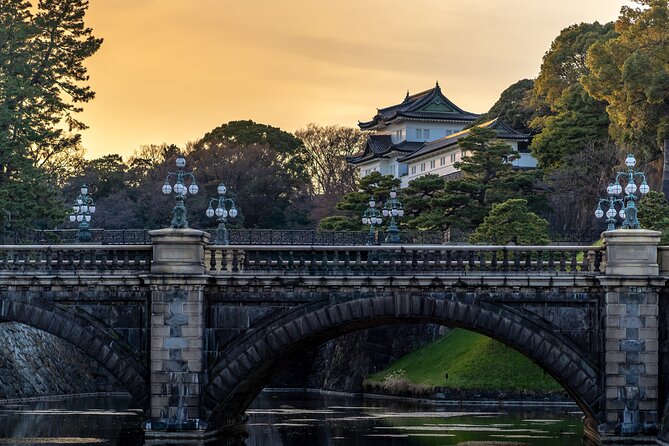
The Imperial Palace, Marunouchi, and Tokyo Station show another side of the capital: formal gardens, office towers, rail connections, and grand urban planning. Much of this section is sightseeing from the outside, but it helps explain how old imperial spaces sit beside one of the world’s busiest commercial centers.
Akihabara is your stop for electronics, anime, manga, games, toys, and collectibles. You receive only about 30 minutes here, so you will need to choose between browsing and simply taking in the spectacle.
The day ends around Senso-ji and Asakusa Shrine. Senso-ji is Tokyo’s oldest temple and one of the city’s key religious sites. Nearby Asakusa Shrine honors the three men associated with Senso-ji’s founding. These final stops provide more time for visual detail than the quick Shibuya visit, but the overall day remains fast.
A local guide is scheduled to explain Japanese society, culture, and history, with bottled water provided. No guide name is supplied, so you cannot judge the outing by a particular personality in advance.
Same corner of Narita, a completely different plan:
- From Narita Airport: Private Layover or Transit Guided Tour
★ 4.8 · 29 reviews - Airport transfer: Narita, Haneda (Tokyo), HND-NRT Airport shuttle
★ 4.5 · 26 reviews - 3 Day Japan Highlights Tour: Tokyo, Mt.Fuji, Nara, Kyoto, Osaka
★ 5.0 · 22 reviews - For Narita Airport Users: Layover or Transit Guided Private Tour
★ 5.0 · 22 reviews
Moving from Tokyo to Osaka
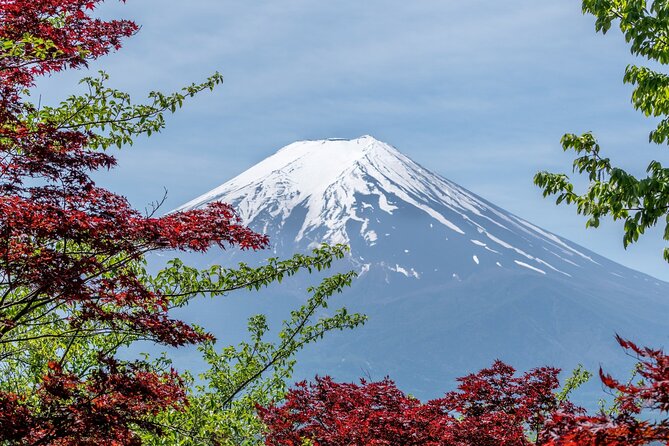
After the Tokyo sightseeing, a driver takes you from the hotel to the airport for the flight to Osaka. On arrival, another airport transfer takes you to your Osaka hotel.
This is efficient, but it is also another travel segment after a long day. Keep your packing light and organized. The trip includes air tickets, but the supplied details do not specify airline, flight times, baggage allowance, or airport names in Osaka.
Day 4: Osaka by bicycle, then a serious food walk
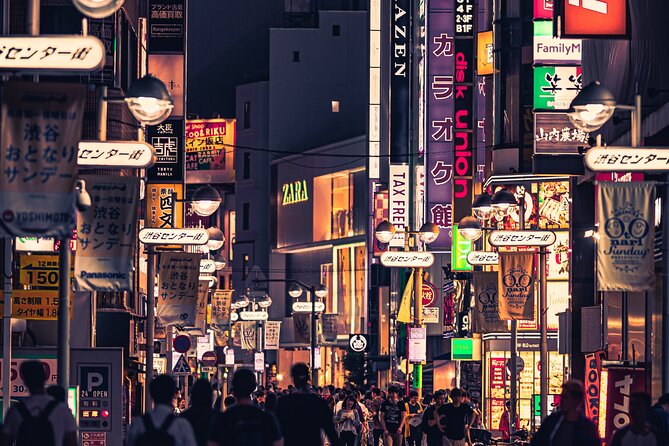
Osaka is treated as a food city and a lived-in city, not only as a list of monuments. The morning and afternoon cycling route passes Nakanoshima Park, the river, the Mint grounds, Osaka Castle Park, Shitennoji, Shinsekai, Tower Knives Osaka, and Namba Yasaka Shrine.
Cycling lets you cover more ground than walking and gives you a closer view of ordinary streets. At Nakanoshima, you ride through landscaped gardens and old commercial buildings. The riverside section adds fresh air and a break from traffic.
Osaka Castle Park provides the major historical sight. You stop for photographs and hear about the castle’s role in Japan’s past, but the schedule does not promise a full interior tour. Shitennoji, identified as Japan’s oldest Buddhist temple, offers a quieter contrast.
In Shinsekai, you see the Tsutenkaku tower and a former working-class district known for its distinctive street-food culture. Tower Knives Osaka adds a craft angle, with an introduction to local knife making and a chance to use one of the tools. Namba Yasaka Shrine is a very short stop, mainly for its unusual architecture, prayers, and good-luck charms.
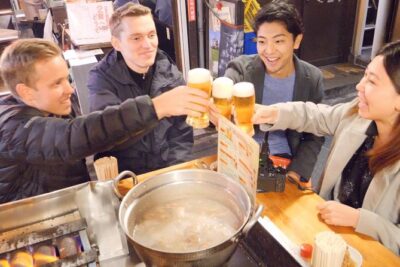
The food portion is the day’s strongest feature. You visit five eateries and try around 10 dishes, focusing on traditional Osaka food in smaller neighborhood establishments. This is not a polished restaurant crawl designed around famous international names. It is meant to show you the local side of Osaka’s eating culture, with time for conversation and a substantial meal.
The combination of bicycle riding and several hours of eating requires energy. You need to be comfortable cycling in a city and able to keep moving after lunch. People with dietary restrictions should confirm how the food arrangements work before paying, since the available details do not describe substitutions.
Day 5: Kyoto’s Golden Pavilion, Arashiyama, and Nara’s deer
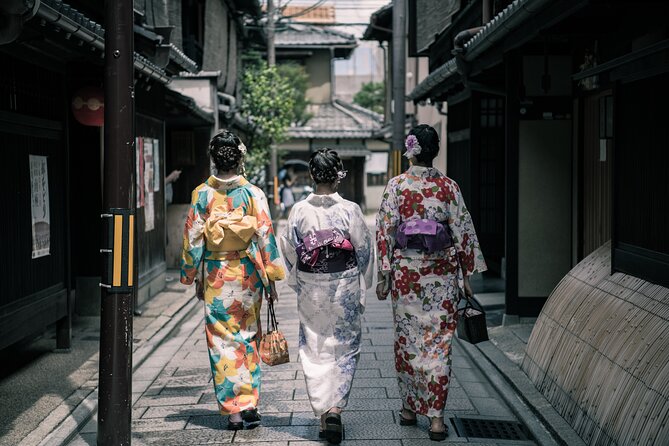
The Kyoto and Nara day leaves from Osaka and covers several of the region’s most recognizable sights. It is a lot for one day, but it gives you a useful first taste of old Japan.
Kinkaku-ji, the Golden Pavilion, is the visual star. The gold-covered structure reflects in Mirror Pond, and its garden setting explains why the temple is so popular. Your visit is about 45 minutes, enough for the main view and a walk through the grounds, but not enough for a slow study of every garden detail.
Arashiyama receives about two hours. The district is known for the Sagano Bamboo Forest, the Hozu River, seasonal flowers, and autumn color. The bamboo path is relatively short, so do not expect a full day in the area. A buffet with about 60 Kyoto dishes or a beef shabu-shabu meal is offered if you select the meal option.
Nara Park shifts the focus from architecture to wildlife. Deer roam freely, and the park leads to Todai-ji, home of the huge seated Buddha. The Great Buddha Hall is one of the world’s largest wooden structures, even though the current building is smaller than the original.
You get about 45 minutes at Nara Park and another 45 minutes at Todai-ji. That is enough for the central sights, but you will not have much time for side streets, smaller temples, or a long walk through Nara.
This day suits you if you want the famous Kyoto and Nara images in one outing. It is less suitable if your priority is quiet temple time or detailed exploration.
Day 6: From Osaka to Seoul, then straight to the table
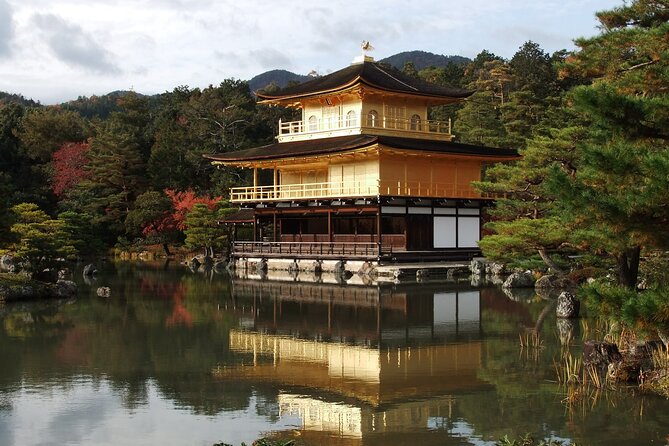
Another airport transfer and flight carry you from Osaka to Seoul. After hotel check-in, the evening becomes a five-hour food and drink walk through central Seoul.
The route includes Insadong, Kwangjang Market, Jongro Gallery, and Sewoon Arcade. Insadong mixes traditional crafts, tea houses, souvenirs, and small alleys. Kwangjang Market gives you a chance to sample several Korean foods and drinks in a market setting.
The stated focus is eating and drinking rather than a formal restaurant lecture. You are expected to arrive hungry, since the walk includes many dishes across several stops. This is a good way to begin Seoul if you want food to guide your introduction to the city.
The schedule also includes Sewoon Arcade, a large urban complex associated with making and electronics. Details about the exact visit are limited, so treat it as part of the neighborhood walk rather than a guaranteed extended tour.
Because alcohol is part of the experience, check the arrangements if you do not drink. The supplied details do not explain nonalcoholic alternatives or the exact number of dishes included.
Day 7: Seoul’s royal center and traditional shopping streets
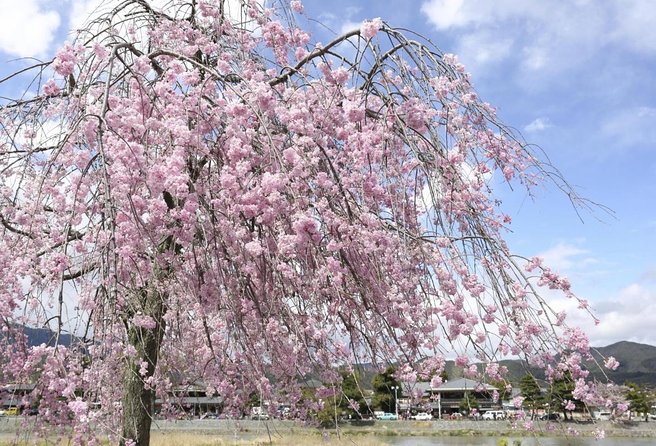
The full-day Seoul sightseeing route covers Jogyesa Temple, the Blue House area, Gwanghwamun Gate, Gyeongbokgung Palace, the National Folk Museum, Insadong, Changdeokgung Palace, Namdaemun Gate, and Namdaemun Market.
Jogyesa Temple is a city-center Buddhist temple and an important place for Korean Zen Buddhism. Its old locust and baeksong trees help make the visit feel removed from the surrounding streets.
At Gyeongbokgung, you watch the royal guard changing ceremony at Gwanghwamun Gate before touring the palace. The palace was the main royal seat during the Joseon period, and the scale of the courtyards makes this one of the day’s central experiences.
Changdeokgung adds a different architectural mood. It was a principal palace for many Joseon kings and is a UNESCO World Heritage site. The grounds include royal residences and a rear garden with an old tree, pond, and pavilion. The schedule allows about an hour here.
Insadong returns you to crafts, antiques, tea, and traditional goods. Namdaemun Gate and Market finish the day with a more commercial, street-level atmosphere. Lunch and entrance fees are included, along with hotel pickup and drop-off.
Pay attention to the weekly closure note: on Tuesdays, Gyeongbokgung Palace and the National Folk Museum are closed. The route then changes to Deoksugung Palace and the Presidential Blue House Museum.
Day 8: Busan’s temples, cliffs, and hillside villages
Busan brings sea air and a more coastal feel. The day includes Haedong Yonggungsa Temple, Taejongdae, Gamcheon Culture Village, and Huinnyeoul Culture Village.
Haedong Yonggungsa is unusual because it sits beside the shoreline rather than in the mountains. Founded in 1376 and rebuilt in 1970, it offers temple architecture with ocean views. You have about an hour here.
Taejongdae takes three hours, making it the longest stop of the day. The area is known for pine trees, cliffs, rock beaches, and broad sea views. This is likely to be one of the more physically active portions, especially if walking paths and inclines are involved.
Gamcheon Culture Village is built into a coastal hillside, with houses arranged in steps and alleys decorated with murals and sculptures. It is photogenic, but the one-hour visit means you will see only part of the area.
Huinnyeoul Culture Village follows with a coastal walking path, local homes, and art spaces on Yeongdo. The hour here gives you time to feel the character of the neighborhood rather than only photograph it.
The transport information says a bullet train ticket from Seoul to Busan and back is included, although the day-by-day schedule does not explain exactly when the return journey occurs. Confirm the rail timing and hotel arrangements before departure, since this affects how much time you really have in Busan.
Day 9: Departure transfer and the limits of the schedule
The final day is straightforward. A driver meets you at the hotel and takes you to the airport for your flight home.
There is no spare day built in for missed connections, weather changes, or extra shopping. Mt. Fuji visibility, flight schedules, palace closures, and traffic can all affect how the trip feels, so keep important onward plans flexible if possible.
What the $4,900 price really buys
At $4,900, the trip is not a budget package. You are paying for convenience across two countries, including hotels, airport transfers, internal flights, guided touring, selected meals, and major admission fees.
The value is strongest if you would otherwise spend many hours comparing hotels, booking domestic flights, arranging airport pickups, and finding guides in several cities. The small maximum group of 15 also has practical value on walking tours and food outings.
The value is weaker if you normally arrange inexpensive hotels, use public transport confidently, and prefer to choose your own restaurants. Several visits are brief, and you may feel that the schedule charges you for breadth rather than time.
Breakfast is included on all eight mornings. Five lunches and two dinners are included, but the exact restaurants and meal selections are not fully described. Gratuities for guides and drivers are extra, and the booking is non-refundable, so this is a purchase that deserves careful date and schedule checking.
Who should book this Japan and South Korea tour?
I would choose this trip for a first visit when your main goal is to see the classic sights in both countries. It works especially well for you if you value organized transfers, guided context, food-focused outings, and a small group.
You should be comfortable with stairs, walking, cycling, airport days, and early starts. The tour information specifically calls for a strong level of physical fitness, and that warning is fair.
I would not choose it for a slow honeymoon, a temple specialist, or someone who wants several free evenings. One past booking described the experience as enjoyable but physically demanding, which is the right way to frame it. It gives you a broad, memorable introduction, but it asks you to keep pace.
FAQ
How long is the Japan and South Korea Highlight Tour?
The tour lasts approximately nine days and includes eight nights.
Where does the tour begin?
It begins at Narita Airport in Chiba Prefecture, Japan.
Is airport pickup included?
Yes. Pickup from Narita Airport is offered on arrival, and airport transfers are also provided during the trip and on departure.
What cities and regions does the itinerary visit?
The itinerary includes Tokyo, Mt. Fuji and the Fuji Five Lakes area, Osaka, Kyoto, Nara, Seoul, and Busan.
Are flights between Japanese cities included?
Yes. Air tickets from Tokyo to Osaka and Osaka to Seoul are included.
Is the Seoul to Busan train included?
Yes. A bullet train ticket from Seoul to Busan and back is included in the package details.
Are hotels included?
Yes. Hotel accommodation is included, though the hotel names and locations are not specified.
Which meals are included?
The package includes eight breakfasts, five lunches, and two dinners.
How large is the tour group?
The maximum group size is 15 people.
Is the tour suitable for someone with low physical fitness?
The tour requires a strong physical fitness level. It includes a stair climb to Chureito Pagoda, cycling in Osaka, full-day sightseeing, walking in palace and temple grounds, and coastal stops in Busan.
Should you book it?
Book this tour if you want maximum sightseeing with minimum planning and accept a quick pace. The combination of Fuji views, Kyoto and Nara, Osaka food, Seoul palaces, and Busan’s coast is impressive for nine days.
Skip it if you want flexibility, long museum visits, or control over every meal and hotel. Before booking, confirm the hotel locations, flight times, baggage rules, guide arrangements, Busan rail schedule, and food options. At this price, those details matter.
New on our Narita list
- Tokyo Layover Tour with Licensed Guide:Narita Airport Dep★ 4.5 · 4 reviews
- Private Arrival Transfer : Narita International Airport to Tokyo Disney★ 5.0 · 4 reviews
- Tokyo Narita Airport (NRT) Transfer Private Transfer(Single way)★ 5.0 · 5 reviews
- Narita-san Private Layover Tour from Narita International Airport★ 5.0 · 5 reviews
- Private Chauffeur from Narita Airport to Tokyo★ 5.0 · 5 reviews
- Private Arrival Transfer : Narita International Airport to Yokohama City★ 5.0 · 6 reviews
- Narita Layover tour with National Licensed guide★ 5.0 · 7 reviews
- Narita Airport Private Transfer To Tokyo City★ 5.0 · 9 reviews
Tours, compared.
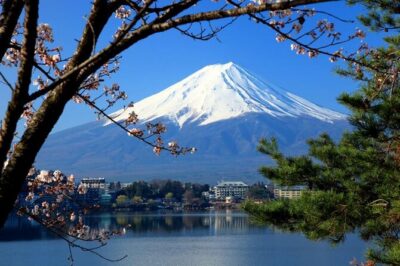
Mt Fuji and Hakone 1-Day Bus Tour Return by Bullet Train
Read our review →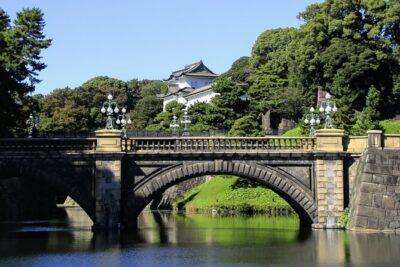
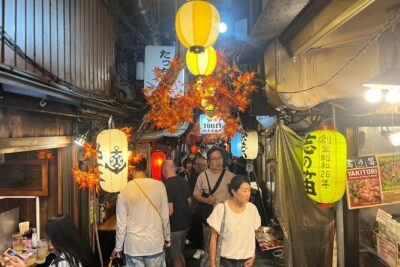
Shinjuku Food Tour (13 Dishes at 4 Local Eateries)
Read our review →
Tokyo Mt Fuji 5th St & Hakone Cruise Bus Tour w/Bullet Train
Read our review →
Flagship 2-Hours Official Street Go-Kart Tour – Tokyo Bay Shop
Read our review →
Mt. Fuji Tour, Hakone Ropeway, Owakudani, Lake Ashi
Read our review →
Tokyo 6hr Private Tour with Government-Licensed Guide
Read our review →