Reviewed · GUIDED
For Narita Airport Users: Layover or Transit Guided Private Tour
Narita Airport is more than a place to wait for your next plane. This private tour takes you by train to Naritasan Omotesando, an old temple approach lined with eel restaurants, sweets, and souvenir shops, then continues to the vast grounds of Naritasan Shinshoji Temple. In three to four hours, you get a real taste of Japan without attempting the difficult trip into central Tokyo.
I like two things right away: the airport meeting point removes much of the stress of finding your way out, and the private format lets the guide adjust the pace to your flight and interests. Guides named Chiho, Fusako, and Fushuko have helped visitors manage tight schedules, arrange food stops, and return to the terminal on time. The main caution is simple: $150 per person is a serious price for a short outing, and you still pay for the train, food, and any luggage locker.
In This Review
- Key points to know before booking
- Why this Narita layover tour works
- Walking Naritasan Omotesando for one hour
- Entering Naritasan Shinshoji Temple
- What the private guide adds
- Is three to four hours enough?
- The real cost of a short Japanese outing
- Who should book this experience?
- Weather, cancellation, and small practical matters
- Should you book the Narita layover tour?
- FAQ
- Where does the tour begin?
- How long does the experience last?
- What places are included?
- Is transportation included in the price?
- Is lunch included?
- Can I cancel the tour?
Key points to know before booking
- A practical three to four hour escape: You meet inside Narita Airport and ride roughly 10 minutes to Narita Station.
- An 800-meter historic approach: Omotesando has more than 150 restaurants and souvenir shops, including places known for eel.
- A major Buddhist temple: Naritasan Shinshoji is more than 1,080 years old and has large grounds, temple halls, and a nature-filled park.
- Private guiding: Only your party participates, so the guide can adapt the walk, meal stop, and timing.
- Built around your flight: The return trip is planned with your connecting flight in mind, though you must allow time for airport procedures.
- Cash matters: Train fare is about 500 yen, some shops do not take cards, and lunch is extra.
Why this Narita layover tour works
The clever part of this outing is its scale. Tokyo is too far away for most airport layovers, especially if you must clear immigration, travel into the city, and return in time for an international departure. Narita town is close enough to make a short visit practical, yet it offers more than an airport shopping center or a bench beside a departure gate.
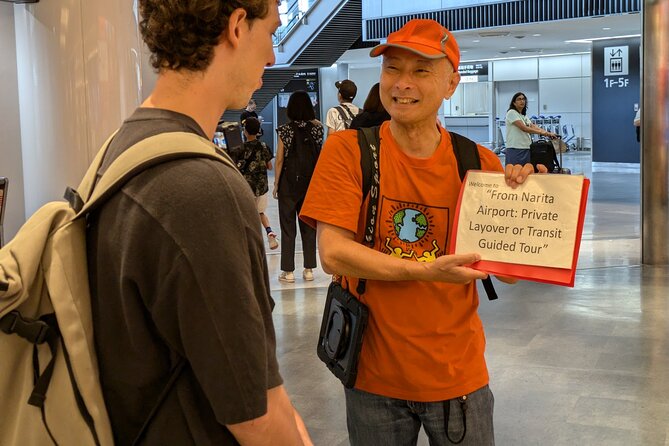
You will meet your guide inside Narita Airport. That detail matters. Airports can be confusing, and a missed turn at the start can eat up the small amount of time you have. From there, you travel together to the station and take a train to Narita Station, a ride of about 10 minutes.
The tour is private, so you are not tied to the pace of a large group. If you are traveling with family, that can make the walk easier. A nine-year-old child, for example, may need a different rhythm than a group of adults. If you are alone, you can focus on the parts of Japanese culture that interest you most.
The arrangement is also useful for people who do not want to manage Japanese transport on their own during a layover. Your guide leads the way to the station, handles the route, and then brings you back toward the airport while keeping your departure time in view.
Still, do not treat the return promise as permission to cut things close. You remain responsible for your airline’s check-in, security, immigration, and boarding requirements. The tour is designed around connecting flights, but airport delays and lines are outside the guide’s control.
A few more Narita bookings worth comparing
- Narita Airport (NRT) Private Transfer to Central Tokyo
★ 4.5 · 300 reviews - Private arrival Transfer from Narita Airport(NRT) to central Tokyo city
★ 4.5 · 128 reviews - Narita Airport(NRT): Private Transfer to Tokyo/Yokohama 1-9pax
★ 5.0 · 47 reviews
Walking Naritasan Omotesando for one hour
Naritasan Omotesando is the first real taste of the town. The avenue runs about 800 meters from Narita Station toward Naritasan Shinshoji Temple. It grew as a gate town during the Edo period, from 1603 to 1867, and its purpose is still clear today: it leads people toward the temple while offering food, gifts, and small pleasures along the way.
This is not a silent old lane. More than 150 restaurants and souvenir shops line the approach. You might find shops selling traditional items, edible gifts, and local specialties, while restaurant signs point you toward eel, one of the area’s best-known dishes.
I like this section because it gives you ordinary street life along with the grand temple visit. You are not simply looking at a historic building from a distance. You are walking through a commercial street shaped by pilgrimage, where food and worship have long been connected.
The avenue is also where a private guide earns much of the tour’s value. On your own, you can walk the street, but you may miss the meaning of the route or choose a shop without knowing what makes it special. Guides such as Fusako have suggested unusual souvenirs and traditional Japanese restaurants, while also adjusting the visit to suit the time available.
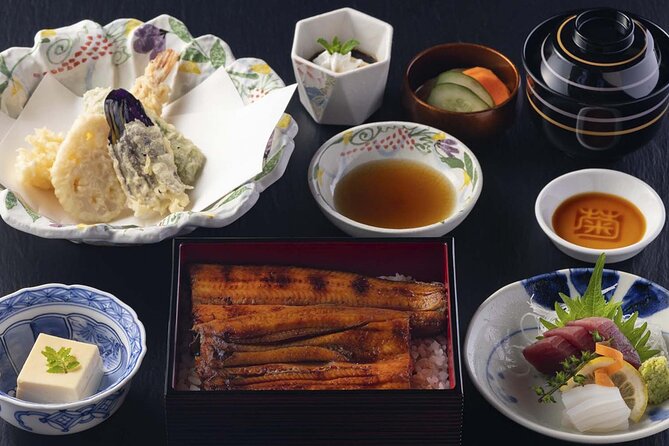
Lunch is not included. A regular Japanese meal generally costs about 2,000 yen, and a slightly higher-end meal may run 3,000 to 4,000 yen. If eel is on your list, ask about the cost before ordering. The meal can be a memorable part of the outing, but it also uses time, so a short layover may call for a quick snack rather than a full lunch.
Bring cash. The tour information specifically warns that some stores do not accept credit cards, and the train fare is around 500 yen. The price of food and souvenirs is your choice, but you should not begin the walk assuming every stop will accept a card.
Entering Naritasan Shinshoji Temple
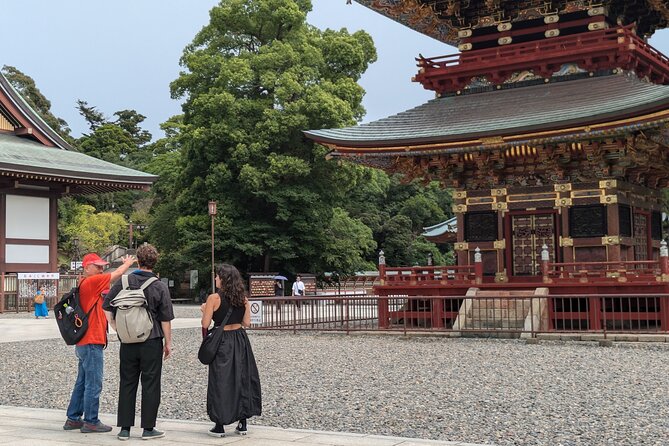
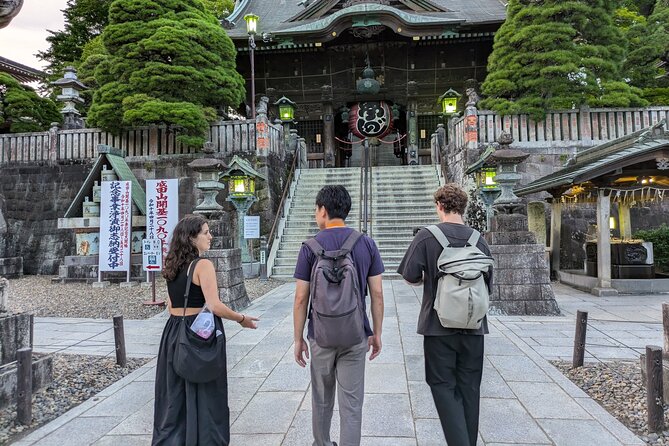
At the end of Omotesando, you reach Naritasan Shinshoji Temple. The temple has more than 1,080 years of history and receives more than 10 million visitors each year. Its size changes the feeling of the outing. After the shops and restaurant signs of the approach, the temple grounds give you room to slow down.
The precinct includes numerous halls, open areas, and a park with plenty of nature. It is not just one building followed by a quick photograph. You can walk through a larger religious site, see different structures, and learn about Buddhist customs and the temple’s place in local life.
Your guide can point out artwork, architectural details, and structures that are easy to pass without a second look. Fusako was singled out for explaining features that might otherwise go unnoticed, which is precisely the kind of help that makes a short cultural visit worthwhile. You do not need a long lecture, but a few clear explanations can turn a pretty building into a place you understand.
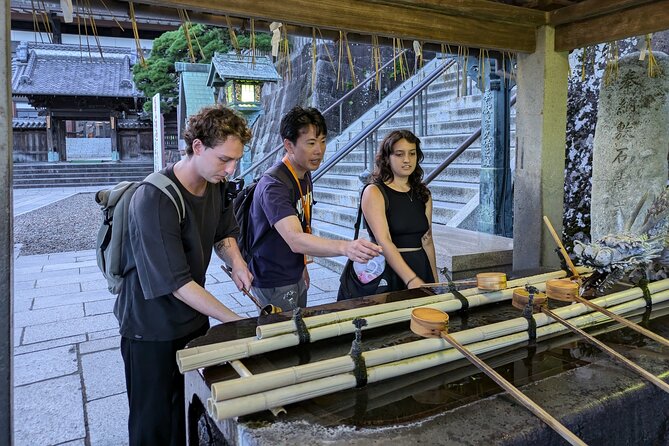
The temple is also associated with good fortune and improved luck, and visitors can take part in hands-on programs or obtain a red seal, known as a goshuin. The information provided does not promise that every program will be available during every visit, so ask your guide what fits your schedule.
You should expect to walk. This is not a vehicle-based sightseeing trip, and large luggage should be left at the airport. If you need to store bags, a coin locker may be available, but the fee is not included. For the easiest outing, arrange your luggage before meeting the guide.
What the private guide adds
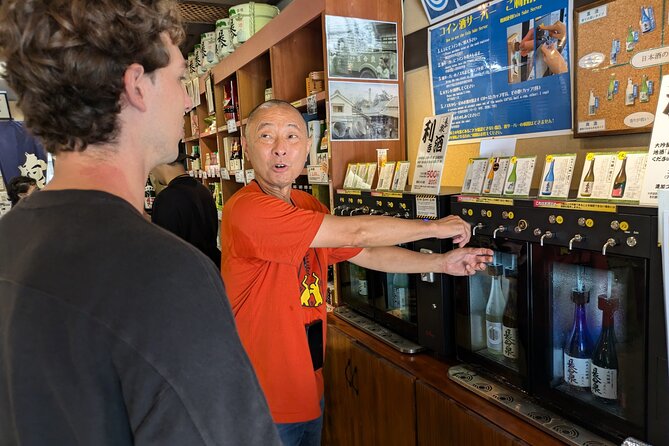
The strongest feature here is not the number of stops. It is the help between them. A local guide can make the airport meeting less stressful, lead you through the train connection, explain the temple, and keep an eye on the clock.
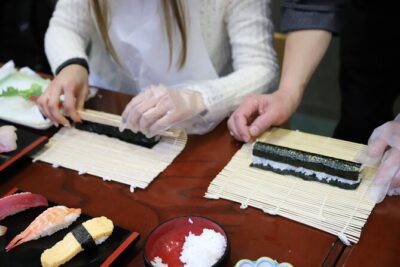
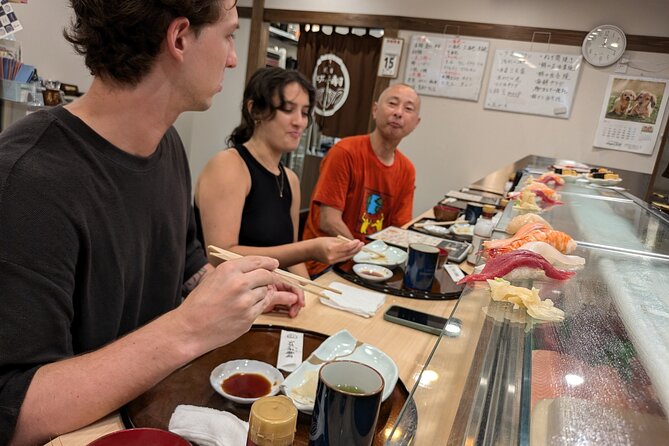
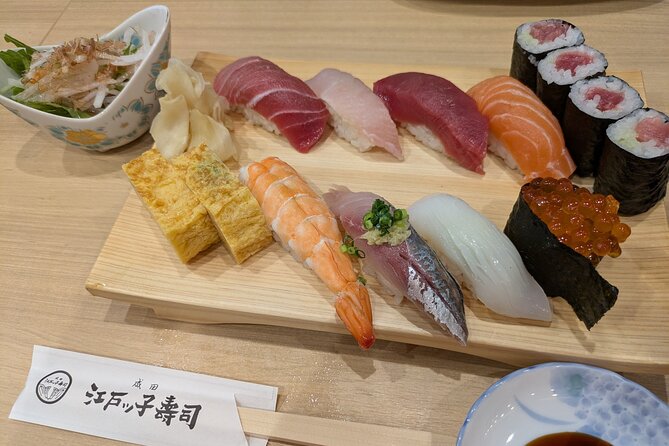
Chiho helped one party at each step of the outing and took extra time to make sure they were safely back where they needed to be. Fusako has been praised for tailoring the walk to personal interests, arranging a sushi lunch, and helping a short visit feel complete even when the original schedule changed. Fushuko also adjusted an outing after a cruise disembarkation reduced the available time.
These details point to a useful quality: flexibility is built into the private format. You can ask for more time at the temple, shorten the shopping walk, stop for food, or focus on cultural details. The exact choices depend on your schedule and guide, but you are not locked into a fixed group itinerary.
The guides also help with the less glamorous parts of travel. They can show you where to go, reduce the chance of taking the wrong train, and help you judge when it is time to turn back. That practical support matters more during a layover than it would on a relaxed weeklong trip.
The tradeoff is that private guiding costs more. At $150 per person, the tour may be worthwhile for a solo visitor who wants easy access to local culture, or for a family that values a calm plan. It is harder to justify for a large group that could manage the train and temple independently, especially since the listed price does not include transportation or lunch.
Group discounts are available, so check the price for your party rather than assuming the individual rate tells the whole story. The activity is private, and only your group participates.
Same corner of Narita, a completely different plan:
- From Narita Airport: Private Layover or Transit Guided Tour
★ 4.8 · 29 reviews - Airport transfer: Narita, Haneda (Tokyo), HND-NRT Airport shuttle
★ 4.5 · 26 reviews - 3 Day Japan Highlights Tour: Tokyo, Mt.Fuji, Nara, Kyoto, Osaka
★ 5.0 · 22 reviews - Private Transfer from Narita Airport to Yokohama Port and City
★ 4.5 · 17 reviews
Is three to four hours enough?
Yes, if you define the goal correctly. This is a concentrated visit to Narita, not a full-day tour of Tokyo or a wide survey of Japanese culture.
The stated duration is approximately three to four hours. About one hour is set aside for Omotesando and about one hour for the temple, with the remaining time covering the airport meeting, station transfer, train ride, and return journey. A meal or extra shopping can affect the pace.
A six-hour layover may allow this tour, but you need to count every part of the airport process. A nine or ten-hour layover gives you a more comfortable cushion and may leave room for lunch and a slower temple visit. Several schedules described in the supplied details used nine or ten hours, while another family had six hours between flights.
The safest approach is to tell the operator your exact flight times before the tour. The guide can then advise how much time to spend in town. Do not assume that a six-hour gap means you have six free hours. Immigration, baggage arrangements, airport transfers, security, and boarding all take a bite from the clock.
The tour provider has extensive experience with Narita transit passengers, which is reassuring. Even so, I would choose it only if your layover gives you a reasonable margin. A delayed first flight could turn a pleasant visit into a rushed return.
The real cost of a short Japanese outing
The listed price is $150 per person. Included is the guide’s fee. Not included are the train fare, lunch, airport or departure taxes, and any coin locker fee.
That makes the value question personal. If your alternative is spending a long layover inside the airport, you may find the price fair for direct help, local context, and a private plan. You are paying for time management as much as sightseeing.
If you already feel comfortable using trains, finding the temple, and choosing your own meal, you can visit Narita more cheaply without a guide. The town is close to the airport, and admission to both listed stops is free. The paid service makes more sense if you want explanations, have limited time, are traveling with children, or prefer not to solve transport questions between flights.
Food costs are manageable by comparison. Plan around 2,000 yen for a regular Japanese meal, or 3,000 to 4,000 yen for something more substantial. Add around 500 yen for the train and keep extra cash for small purchases.
Because admission is free, you are not paying for a package of expensive tickets. The cost rests mainly on the personal service and the convenience of having someone guide you through a short window in Japan.
Who should book this experience?
I would recommend it most strongly to solo visitors, couples, and families with a layover of about nine hours or more. You get the most benefit when you want to leave the airport but do not want to plan the route yourself.
It also suits first-time visitors to Japan who want an introduction that feels local rather than commercial. The combination of a station-town street, traditional food, a major Buddhist temple, and a guided walk gives you a clear first impression without an exhausting day trip.
Families may appreciate the private pace. You can spend less time on a stop that does not hold a child’s attention and more time in the open temple grounds. The guide can also help parents judge how much shopping or food fits before the return trip.
I would be more cautious if your layover is very short, your flight has a history of delays, or you need to remain airside. Depending on the passport country, a visa may be required to enter Japan, so check that before booking. The tour cannot help if you are not legally able to pass through immigration.
The walking requirement also matters. The route includes the approach street and temple grounds, and large luggage is not suitable. Service animals are allowed, the activity is near public transportation, and most people can participate, but anyone with mobility concerns should confirm that the walking plan works for them.
Weather, cancellation, and small practical matters
The experience requires good weather. If poor weather causes cancellation, you will be offered another date or a full refund. You can cancel for a full refund up to 24 hours before the local start time, but changes or cancellations inside that window are not accepted and are not refunded.
Confirmation is sent within 48 hours of booking, subject to availability. Since this is a private activity, you should provide accurate flight information and make your timing needs clear.
Use a mobile ticket, keep your cash handy, and leave large bags at the airport. Comfortable walking shoes are the sensible choice, since the experience is built around streets, a station transfer, and temple grounds rather than a seated sightseeing vehicle.
Should you book the Narita layover tour?
Book it if you have enough time, want a personal introduction to Japan, and value having a guide handle the route and watch the clock. Naritasan Omotesando and Shinshoji Temple offer far more character than an airport waiting area, and the private format makes the outing workable for different interests and ages.
Skip it if your connection is tight, you must remain airside, or $150 per person feels too high for a short visit with free-admission sights. You can explore Narita independently for less, but you will give up the airport pickup, local explanations, meal suggestions, and schedule support.
For a comfortable nine to ten-hour layover, I think this is a smart use of time. For six hours, it becomes a careful calculation. Check your visa, leave room for airport formalities, bring cash, and tell the guide your flight details. If those pieces line up, you can turn an awkward wait into a genuine glimpse of Narita.
FAQ
Where does the tour begin?
You meet your guide inside Narita Airport. The guide then accompanies you to the station for the train to Narita Station.
How long does the experience last?
The tour lasts approximately three to four hours, including the airport meeting, train ride, walking visits, and return toward the airport.
What places are included?
The tour includes Naritasan Omotesando and Naritasan Shinshoji Temple. Admission to both stops is free.
Is transportation included in the price?
No. The train fare is not included and costs around 500 yen. You should prepare cash.
Is lunch included?
No. Lunch is extra. A regular Japanese meal generally costs around 2,000 yen, while higher-end choices may cost 3,000 to 4,000 yen.
Can I cancel the tour?
You can cancel up to 24 hours before the local start time for a full refund. Cancellations or changes made less than 24 hours before the experience are not refunded or accepted. If poor weather causes the tour to be canceled, you will be offered a different date or a full refund.
New on our Narita list
- 9-Day Japan and South Korea Highlight Tour★ 4.5 · 3 reviews
- Tokyo Layover Tour with Licensed Guide:Narita Airport Dep★ 4.5 · 4 reviews
- Private Arrival Transfer : Narita International Airport to Tokyo Disney★ 5.0 · 4 reviews
- Tokyo Narita Airport (NRT) Transfer Private Transfer(Single way)★ 5.0 · 5 reviews
- Narita-san Private Layover Tour from Narita International Airport★ 5.0 · 5 reviews
- Private Chauffeur from Narita Airport to Tokyo★ 5.0 · 5 reviews
- Private Arrival Transfer : Narita International Airport to Yokohama City★ 5.0 · 6 reviews
- Narita Layover tour with National Licensed guide★ 5.0 · 7 reviews
Guided, compared.
Tokyo 6hr Private Tour with Government-Licensed Guide
Read our review →
Shinjuku Local Bar and Izakaya Guided Walking Tour
Read our review →
Private City Highlights Tour with Local Guide
Read our review →
Tokyo 4hr Private Tour with Government-Licensed Guide
Read our review →

Samurai Ninja Museum Guided tour and Experience
Read our review →