Reviewed · TOKYO TOURS
Cook Favorite Japanese Dishes with a Tokyo Mom
The best part of this Tokyo cooking class is that you are not watching a staged food show. You are working in a real home kitchen with Aki, a Japanese host who teaches the everyday dishes she has cooked for her family. I especially like the from-scratch dashi and the chance to choose your main dish. You learn a useful base rather than just assembling pretty food.
I also like the small, private format. Only your group takes part, so Aki can adjust her teaching for both beginners and confident cooks. The main thing to consider is the price: at $120 per person, this is not a cheap meal. You are paying for instruction, ingredients, kitchen use, and a personal cultural experience, not simply dinner.
In This Review
- Key points at a glance
- A Tokyo home kitchen instead of a cooking theater
- The first lesson: making Japanese dashi
- Making norimaki, or choosing onigiri
- Choose your main dish: chicken, fish, or gyoza
- Seasonal vegetables and miso soup complete the meal
- Aki’s teaching style and what beginners can expect
- Ingredients, equipment, and the meal you make
- Is $120 per person a fair price?
- Meeting point, timing, and cancellation details
- Who should book this Japanese cooking class?
- Should you book Tokyo Mom’s Kitchen?
- FAQ
- Where does the Japanese cooking class take place?
- How long does the cooking experience last?
- Is the class private?
- Is transportation to the kitchen included?
- Which dishes will I make?
- Can I choose onigiri instead of sushi?
- Is a vegetarian option available?
- Is the class taught in English?
- What does the $120 price include?
Key points at a glance
- Fresh dashi from scratch: Learn the basic Japanese soup stock that gives miso soup and many home dishes their depth.
- A real choice of main dish: Pick teriyaki chicken, Saikyo yaki fish, or pan-fried gyoza.
- Norimaki or onigiri: Make a traditional sushi roll, or request a rice ball instead.
- Aki’s personal teaching: The class uses pictures, short food stories, and step-by-step guidance for different skill levels.
- Private two-and-a-half-hour format: Your own group participates, with ingredients, tools, apron, and a digital recipe sheet included.
- A useful rainy-day plan: You go directly to the Shinjuku meeting point, making this a good indoor activity when the weather turns wet.
A Tokyo home kitchen instead of a cooking theater
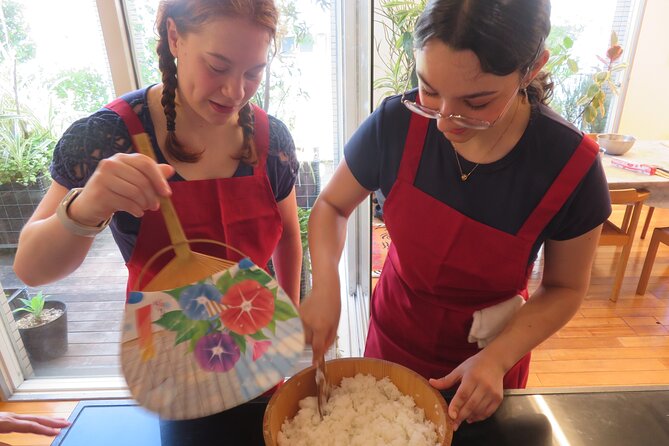
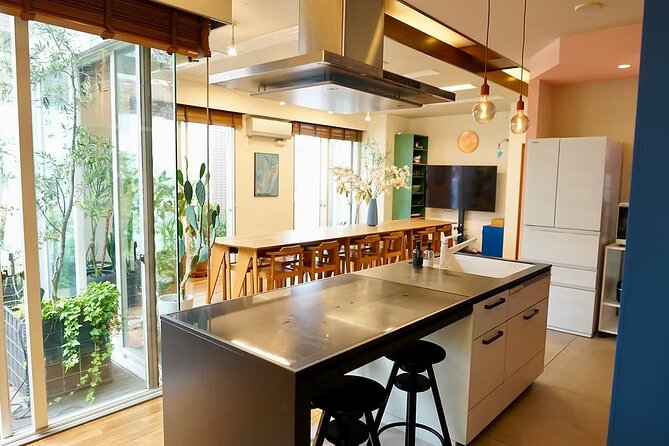
This class begins at アイ・ディール株式会社, at 1-chōme-24-7 in Shinjuku. You make your own way there, since private transportation is not included. The activity lasts about two hours and 30 minutes and finishes back at the same meeting point.
That simple setup matters. You are not being driven between sights or rushed through several commercial venues. The focus stays on the kitchen, the food, and the conversation. Since the activity is private, your group does not have to keep pace with strangers or wait for a large class to catch up.
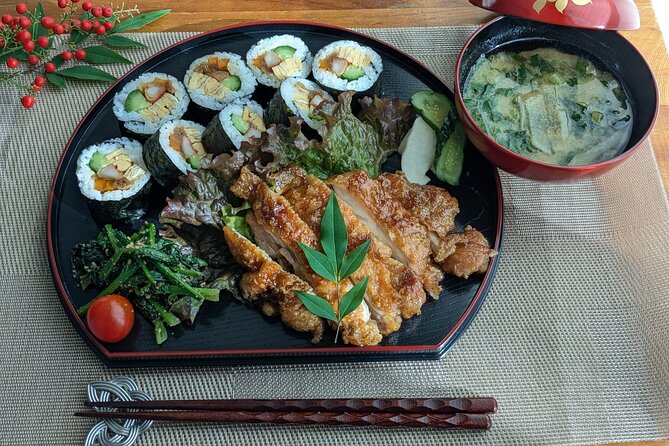
Aki teaches in English and uses pictures along with brief explanations about the food being prepared. That approach helps when a Japanese cooking term or technique is new to you. It also keeps the class practical. You spend your time handling ingredients and cooking, not sitting through a long lecture.
The setting is part of the appeal, but it also means you should set your expectations correctly. This is a small home-style lesson, not a polished studio production with a formal stage, printed menus, or a sightseeing component. If you want a relaxed food experience with personal attention, that is a strength. If you prefer a large professional cooking school with extensive equipment and a fixed performance-style schedule, you may find it modest.
A few more Tokyo bookings worth comparing
- Mt Fuji and Hakone 1-Day Bus Tour Return by Bullet Train
★ 5.0 · 26,383 reviews - 1-Day Tokyo Bus Tour
★ 5.0 · 14,250 reviews - Tokyo: TOKYO SKYTREE® Admission ticket
★ 4.5 · 11,192 reviews
The first lesson: making Japanese dashi
The class starts with dashi, the soup stock used as a foundation in Japanese cooking. This is one of the most useful parts of the experience because it teaches you how Japanese cooks build flavor before adding the main ingredients.
Here, the stock is made completely from scratch and without additives. That gives you a clear look at a basic washoku technique rather than relying on a prepared packet. You learn why a simple bowl of miso soup can taste rounded and satisfying even when it contains only a few ingredients.
For you, the value is practical. Dashi is not just a one-time trick for this class. It can be used in soup, simmered vegetables, sauces, and other home dishes. The lesson also puts Japanese food into context. The balance of broth, vegetables, seasoning, and rice is central to everyday meals, and dashi is often the quiet foundation holding those parts together.
The class uses natural ingredients and seasonal vegetables. The exact produce can change, so you should not expect a fixed list of vegetables every time. That variation is a plus if you want to see how Japanese home cooking follows the season, though it is less suitable if you need a tightly fixed menu for planning purposes.
Making norimaki, or choosing onigiri
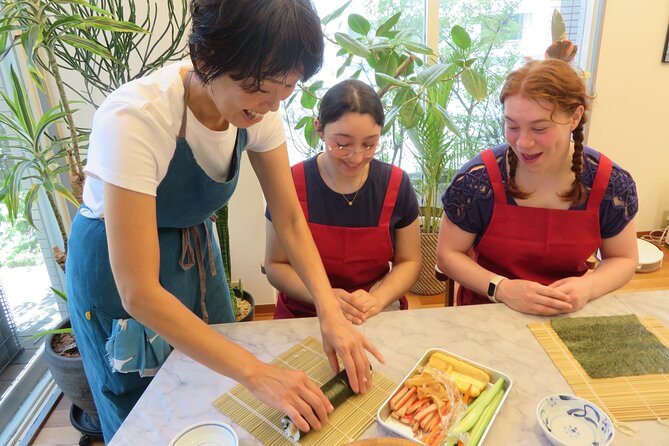
All menus include a traditional norimaki, the rolled sushi that combines seasoned rice and fillings inside nori. You get to practice the process rather than simply receiving a finished roll. The work calls for care, since rice, filling, and seaweed need to be arranged and rolled neatly.
One of the class’s most useful touches is the substitution option. If rolling sushi does not appeal to you, you can request onigiri, the familiar Japanese rice ball. This is a good choice for younger cooks, anyone who finds sushi rolling awkward, or anyone who wants a simpler piece of Japanese home food.
Norimaki has a visual element, and the class pays attention to making the food look good. A previous session included guidance on presentation, with pictures used to show how the dishes should come together. You are not only learning what to cook, but also how a home meal can look inviting.
Do not expect restaurant-level sushi training. This is a home-cooking lesson, and the purpose is to give you a dish you can repeat at home. The focus is on basic technique, presentation, and the pleasure of making the meal yourself.
Choose your main dish: chicken, fish, or gyoza
You select one main side dish from three options. Each offers a different kind of Japanese cooking lesson.
Teriyaki chicken is the most familiar choice for many people. You cook tender chicken with a sweet and savory soy-based glaze. It is approachable, filling, and easy to imagine making again after returning home. If you want a dependable introduction to Japanese home flavors, this is likely the simplest pick.
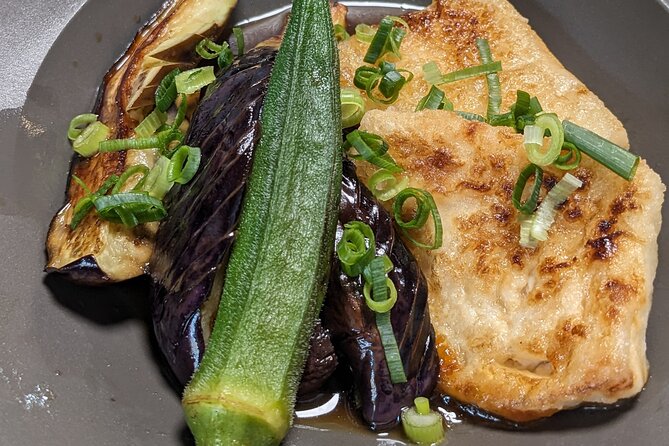
Saikyo yaki uses fish marinated in Saikyo miso before grilling. The result is meant to be delicate and rich, with the mellow sweetness of miso working through the fish. This is the most distinctive option of the three and a good choice if you want to learn a dish less common on casual Japanese menus outside Japan.
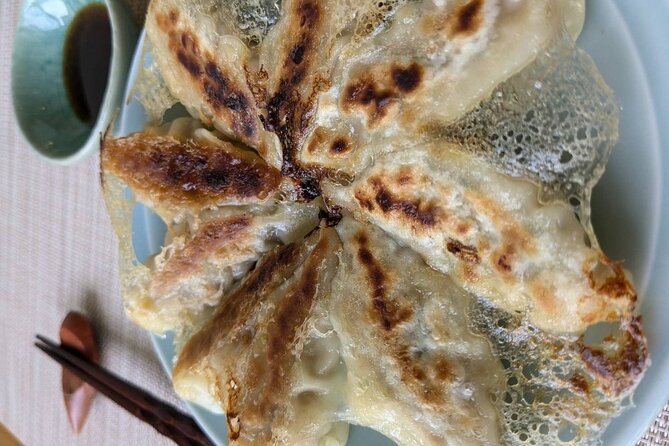
Gyoza gives you the most hands-on preparation. You fill dumpling wrappers with ground pork and vegetables, fold them, and pan-fry them. The class has included sushi, gyoza, and miso soup in one session, and the step-by-step format allowed both first-time and experienced cooks to take part.
Gyoza can be the most social and tactile choice because shaping each dumpling takes practice. It may also be the least tidy option, especially if you are new to folding wrappers. That is not a serious problem in a private class, where Aki can guide you at your own speed.
You should make your menu choice when booking or ask about it in advance. A vegetarian option is available upon request, but the information provided does not specify which of the three main dishes will be adapted or what ingredients will replace the meat or fish. If you eat vegetarian, state that clearly before the class.
Same corner of Tokyo, a completely different plan:
- Tokyo: teamLab Planets TOKYO Digital Art Museum Entry Ticket
★ 4.6 · 9,779 reviews - Mt Fuji & Hakone Cruise, Drum Show Bullet Train 1 Day from Tokyo
★ 4.0 · 7,413 reviews - Tokyo: Sumo Show Experience with Chicken Hot Pot and a Photo
★ 4.8 · 6,678 reviews - Tokyo: Shinjuku Food Tour (13 Dishes at 4 Local Eateries)
★ 5.0 · 6,603 reviews
Seasonal vegetables and miso soup complete the meal
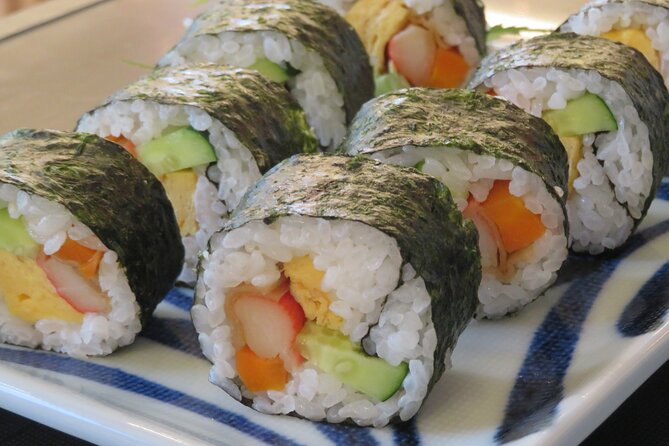
The menu also includes a seasonal vegetable dish. This may be the least flashy part of the class, but it shows how Japanese meals gain balance from small side dishes. Natural vegetables, simple seasoning, rice, soup, and a main dish create the pattern of an everyday family meal.
You will also prepare miso soup. Because you begin with homemade dashi, the soup lesson connects directly to the opening part of the class. You can see how stock, miso, and other ingredients work together rather than treating miso soup as an instant add-on.
I like this structure because it gives you a complete meal instead of a single specialty. Norimaki or onigiri provides rice and nori, the main dish adds weight, vegetables bring freshness, and miso soup ties the meal together. It is a compact look at the balance that defines washoku.
The tradeoff is time. Two and a half hours sounds generous, but it passes quickly when you are making several dishes from scratch. You should expect a focused lesson, not a long visit with many unrelated recipes. The class gives you a useful selection of techniques rather than an exhaustive survey of Japanese food.
Aki’s teaching style and what beginners can expect
Aki is the English-speaking host, and her teaching style is built around clear steps. She has worked with both novices and experienced cooks, adjusting the lesson so that you can follow along without feeling lost or held back.
Pictures are used to support the instruction, and short background notes explain the food being made. I find that combination more useful than a long speech about Japanese cuisine. You get enough context to understand the dish, then return to the practical work of cutting, mixing, shaping, and cooking.
The class can also adapt to your tastes. Aki has adjusted a menu for participants before, which suggests that you should speak up if you have a preference or concern. That does not mean every request can be accepted, so food restrictions and menu substitutions should be raised before arrival.
The private format makes a real difference for beginners. In a large class, you might worry about holding people up while folding gyoza or rolling norimaki. Here, your group receives the attention, and you can ask for a technique to be shown again.
Experienced home cooks may still find value in the dashi lesson and the Japanese approach to seasoning and balance. You may not learn every technique from scratch, but you can compare your own methods with Aki’s and take home ideas for making familiar dishes more Japanese.
Ingredients, equipment, and the meal you make
The $120 price includes all cooking ingredients, use of the kitchen tools, and an apron. A digital recipe sheet in PDF form is also included, which gives the class more lasting value than a meal you simply eat and forget.
The recipes matter because they let you repeat the experience at home. Dashi, miso soup, teriyaki chicken, gyoza, onigiri, and seasonal vegetable dishes are all more useful for a home cook than an elaborate restaurant recipe that depends on hard-to-find equipment.
Ingredients are prepared with care, and premium ingredients have been used in the class. That can improve the meal, but it also helps show how ingredient quality affects a simple recipe. Still, you should not assume that every ingredient will be available in the exact same form on every date. Seasonal cooking means some details may change.
The best finish is eating what you have made. The meal is not an extra stop after the class. It is the point of the work. You can taste the dashi, compare the main dish with the soup and vegetables, and see how the separate parts fit into a Japanese family-style meal.
Is $120 per person a fair price?
At $120 per person, this experience costs more than a standard restaurant meal in Tokyo. If you measure value only by the amount of food, it is not the bargain choice.
I would judge the price by what you take away. You receive about 150 minutes of private instruction, a meal, ingredients, equipment, an apron, an English-speaking host, and a recipe PDF. You also get the chance to ask questions that would be impossible in a cookbook or a quick restaurant visit.
The private format is the biggest reason the cost can make sense. If your group has two or more people who enjoy cooking, the personal attention and shared activity may be worth more than ordering several dishes at a restaurant. It is also a useful indoor plan when rain disrupts outdoor sightseeing.
The value is weaker if you have little interest in cooking or if you only want to sample Japanese food. In that case, a restaurant meal will likely be cheaper and faster. You should book this for the instruction and contact with a local host, with the meal as part of the reward.
The class is often reserved well ahead, with booking commonly made around 37 days before the date. That does not guarantee every date will sell out, but it is sensible to plan ahead if your Tokyo schedule is fixed.
Meeting point, timing, and cancellation details
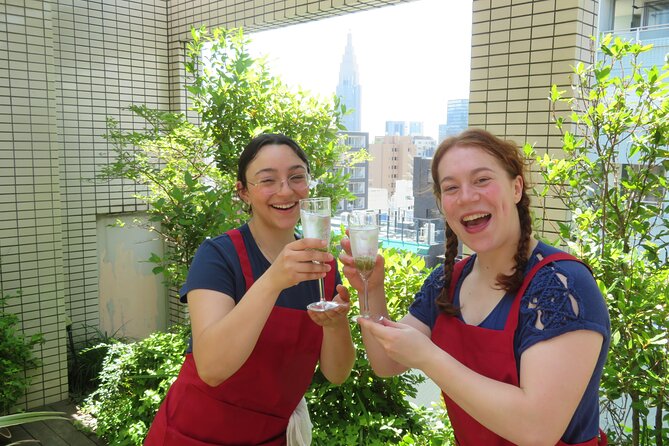
You must travel to the meeting point yourself at アイ・ディール株式会社, 1-chōme-24-7 Shinjuku, Shinjuku City, Tokyo 160-0022. The location is near public transportation, but private transportation is not included. Allow enough time to find the address, especially if you are carrying shopping bags or navigating Shinjuku for the first time.
The activity ends where it begins. That makes the class easy to pair with other plans in the same general area, though you should leave room afterward rather than booking a tight connection. Cooking, eating, and conversation can take the full two hours and 30 minutes.
Confirmation is normally provided at booking. If you book within two days of the activity, confirmation may arrive within 48 hours and depends on availability. Free cancellation is available if you cancel at least 24 hours before the start time. Cancellations or changes inside that window are not accepted for a refund.
Who should book this Japanese cooking class?
I would point this class toward couples, families, friends, and solo cooks who want a personal activity rather than another sightseeing stop. It works particularly well for people who enjoy eating Japanese food but have never tried making it.
It is also a good match for anyone who wants a rainy-day plan in Tokyo. You get out of the weather, meet an English-speaking local host, and spend the afternoon making food rather than simply waiting for the rain to stop.
Families should consider the private format, since it allows the pace to suit the group. The supplied information does not state a minimum age, so ask before booking if you are bringing young children.
Vegetarians can request an adapted menu. People with allergies or other dietary needs should also make those needs clear in advance, since the standard choices include chicken, fish, and pork.
I would be less likely to recommend it to someone looking for advanced professional training, a broad tour of Japanese cuisine, or a cheap meal. The class is about everyday home cooking and personal instruction, not chef certification or a grand tasting menu.
Should you book Tokyo Mom’s Kitchen?
Book it if you want to understand Japanese food by making it yourself. The homemade dashi lesson, seasonal vegetable dish, miso soup, and choice of norimaki or onigiri give you a useful picture of how a Japanese family meal is built.
The main dish choice lets you tailor the class to your interests. Pick teriyaki chicken for a familiar introduction, Saikyo yaki for a more distinctive fish dish, or gyoza for the most hands-on work. Ask about a vegetarian version before you arrive.
I would book this as a high-value cultural activity, not as a budget lunch. The perfect 5 rating from 16 published ratings and a 100 percent recommendation record fit the class’s strongest qualities: clear instruction, personal attention, flexible teaching, and food you can recreate at home.
FAQ
Where does the Japanese cooking class take place?
The class begins and ends at アイ・ディール株式会社, 1-chōme-24-7 Shinjuku, Shinjuku City, Tokyo 160-0022, Japan.
How long does the cooking experience last?
The activity lasts approximately two hours and 30 minutes.
Is the class private?
Yes. Only your group participates in the activity.
Is transportation to the kitchen included?
No. You must make your own way to the meeting point. The location is near public transportation.
Which dishes will I make?
Every menu includes norimaki or an onigiri substitution, a seasonal vegetable dish, miso soup, and one main dish selected from teriyaki chicken, Saikyo yaki, or gyoza.
Can I choose onigiri instead of sushi?
Yes. The norimaki can be replaced with an onigiri if you prefer.
Is a vegetarian option available?
Yes. A vegetarian option is available upon request.
Is the class taught in English?
Yes. The host is English-speaking.
What does the $120 price include?
The price includes all cooking ingredients, full use of kitchen tools, apron rental, and a digital recipe sheet in PDF format.
New on our Tokyo list
- Hakone Hachiri: Old Tokaido Highway Hiking Half-day tour★ 5.0 · 3 reviews
- Tokyo:Calligraphy & Zen Mindful Journey+Take Home Memory★ 5.0 · 3 reviews
- Private Samurai Sword Experience★ 5.0 · 3 reviews
- Dive into Tsukiji Fish Market Walking Friendly Food Tour★ 5.0 · 3 reviews
- Tokyo:Cherry Blossom Mt Fuji & Shibazakura Festival Day Trip★ 4.4 · 3 reviews
- Private Tokyo’s Famed Tsukiji Fish Market Tour★ 5.0 · 3 reviews
- Tokyo Harajuku Walking Tour Meiji Jingu Yoyogi Park and More★ 5.0 · 3 reviews
- Tokyo Private Transfer for Yokohama Cruise Port★ 5.0 · 3 reviews
Tokyo Tours, compared.

Mt Fuji and Hakone 1-Day Bus Tour Return by Bullet Train
Read our review →


teamLab Planets TOKYO Digital Art Museum Entry Ticket
Read our review →
Mt Fuji & Hakone Cruise, Drum Show Bullet Train 1 Day from Tokyo
Read our review →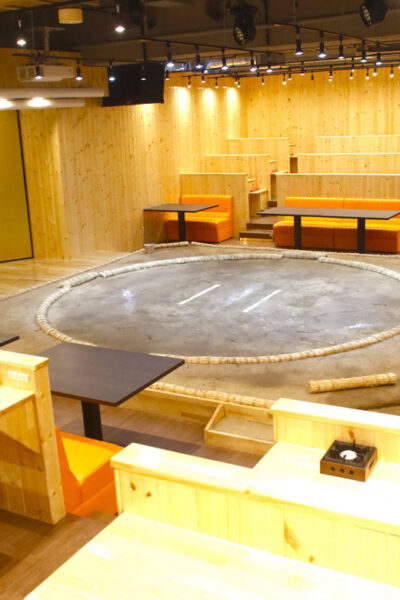
Sumo Show Experience with Chicken Hot Pot and a Photo
Read our review →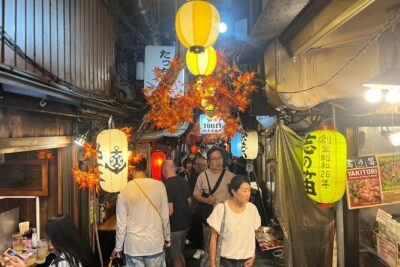
Shinjuku Food Tour (13 Dishes at 4 Local Eateries)
Read our review →