
Reviewed · MT FUJI AREA TOURS
Hakone: Day Tour to View Mt Fuji & Wooden Culture Experience
Hakone is at its best when nature and old Japan share the same day. This private outing links Mt Fuji views, Lake Ashi, and Owakudani with a working woodcraft shop and a thatched tea house reached by bus through the old Tokaido route. Munetaka Horiuchi guides the day in English or Chinese and handles the tricky transport changes.
I like two things in particular: the chance to hear a seventh-generation artisan explain Yosegi-zaiku, and the way the tour uses Hakone’s full chain of transport, from mountain train to ropeway and sightseeing ship. The main drawback is simple: Mt Fuji is weather dependent, and eight hours of moving around leaves little room for lingering.
- A seventh-generation craft lesson: Visit a Yosegi-zaiku workshop with more than 200 years of family experience.
- Five ways to cross Hakone: Use trains, buses, cable cars, ropeways, and a Lake Ashi cruise.
- Two strong Fuji viewpoints: Look from Lake Ashi at about 700 meters and Owakudani at about 1,044 meters.
- A tea house with real age: Stop at a 400-year-old thatched building on the old Tokaido Highway.
- Private timing: Your group of up to six can adjust the order when weather or transport conditions change.
- A useful guide for a complicated day: Munetaka Horiuchi plans the connections and can adjust the meeting point or route before you arrive.
In This Review
- Hakone in one energetic day
- The 200-year Yosegi-zaiku workshop
- The old Tokaido and its smoky tea house
- Hakone Shrine and the red torii by Lake Ashi
- Lake Ashi by sightseeing ship
- Ropeways, Owakudani, and the black eggs
- Hakone’s famous transport circuit
- The schedule is full, but not meant to feel frantic
- What the private format is worth
- Getting to Hakone-Yumoto from Tokyo
- Who will enjoy this Hakone day
- FAQ
- Where does the tour start and finish?
- How long does the tour last?
- Is transportation included in the tour price?
- Can I see Mt Fuji during the tour?
- Is lunch included?
- What languages does the guide speak?
- Should you book it?
Hakone in one energetic day
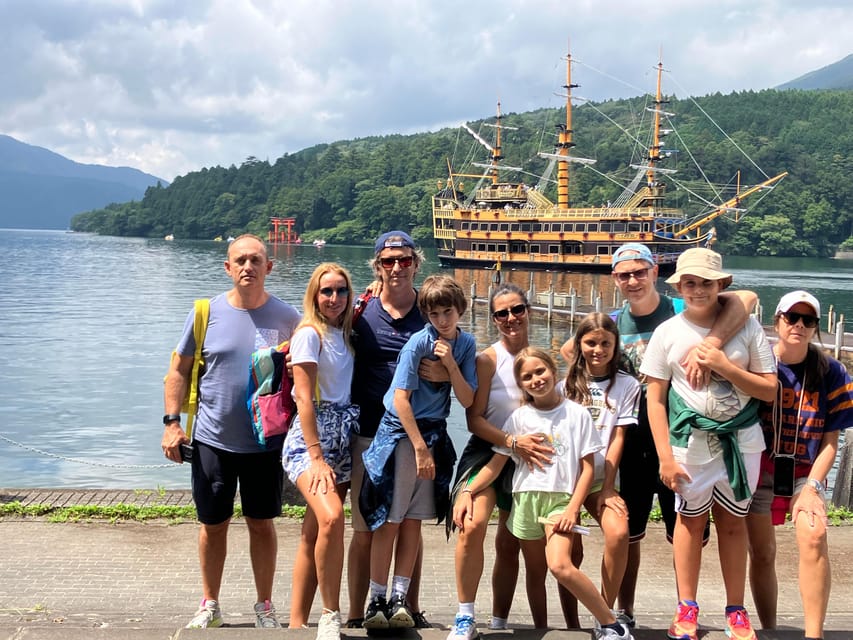
This is not a slow spa-town outing. It is a carefully packed circuit of Hakone’s major sights, with several short visits connected by public transport.
You meet Munetaka at the only ticket gate at Hakone-Yumoto Station, usually around 8 a.m. Odawara Station can also be arranged as the meeting point. From there, you buy the Hakone Free Pass, which covers the public transport used during the day. The pass costs about JPY 6,000 to 7,100 per adult and JPY 1,500 to 1,600 for children aged six to eleven, depending on its validity period and current fare.
That extra ticket cost matters. The advertised tour price is $303 per private group of up to six, but it covers guiding only. Add the transport pass, lunch, tea house drink, and optional boat rental before comparing it with a self-guided day.
The appeal is convenience. Hakone transport can look like a bowl of tangled noodles on a map. A train becomes a cable car, then a ropeway, then a ship, then a bus, and eventually another train. Munetaka’s role is to keep the day moving and explain what you are seeing along the way.
The 200-year Yosegi-zaiku workshop
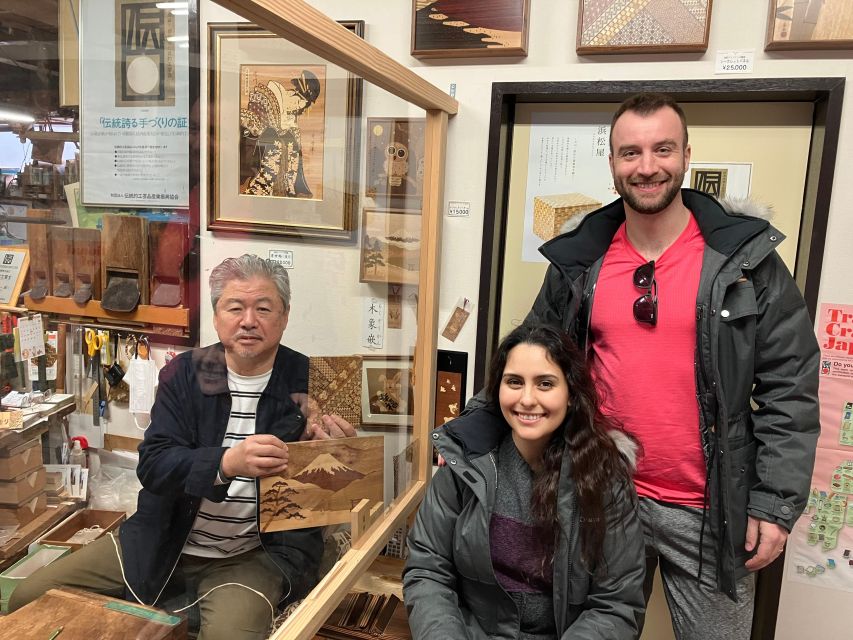
One of the day’s best stops is a marquetry workshop that has operated for more than two centuries. Yosegi-zaiku is a Hakone woodcraft tradition that uses different colored woods to form geometric patterns. The pieces may look simple at first glance, but the design depends on careful cutting, layering, and fitting.
You spend about 25 to 30 minutes hearing a seventh-generation artisan explain how the work is made. This is a short visit, but it gives the rest of the day a useful local anchor. You are not just passing through a resort area and photographing scenery. You are seeing a craft that belongs to Hakone.
The workshop also sells items such as secret boxes and other wooden goods. You may find something small enough to carry home, though the tour information does not promise a hands-on making class. Expect a demonstration and explanation rather than a full craft lesson.
The listed itinerary also includes time for shopping and the possibility of the Hakone Open-Air Museum. The museum is described as an optional addition, so ask Munetaka about it before the day begins. Adding it may mean shortening another stop or changing the order.
More Mt Fuji days from Hakone:
- Mt Fuji and Hakone 1-Day Bus Tour Return by Bullet Train
★ 5.0 · 26,383 reviews - Mt Fuji & Hakone Cruise, Drum Show Bullet Train 1 Day from Tokyo
★ 4.0 · 7,413 reviews - Tokyo Mt Fuji 5th St & Hakone Cruise Bus Tour w/Bullet Train
★ 4.4 · 5,024 reviews
The old Tokaido and its smoky tea house
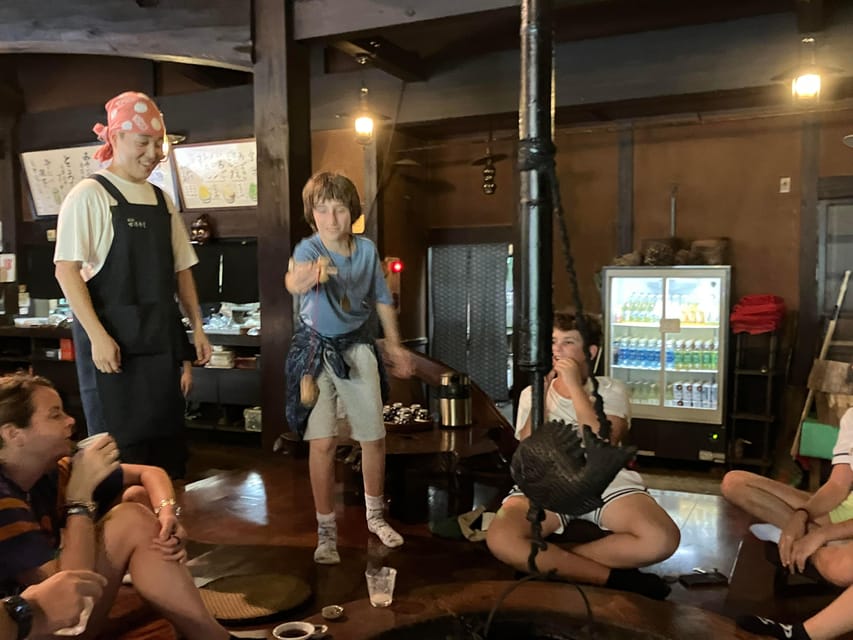
From the workshop, you take a bus toward an old section of the Tokaido Highway. This historic road once connected Edo, now Tokyo, with Kyoto. The route here passes through tall cedar forest, giving you a sense of how travelers once moved through the mountains.
The stop is a 400-year-old tea house with a thatched roof. Inside, you can sit near the fired hearth and talk with the thirteenth-generation owner. That detail matters. This is not simply a recreated historic building prepared for photographs. The family connection gives the stop a personal scale.
The house serves amazake for about JPY 500 per person, payable in cash. Despite its name, this traditional rice drink is non-alcoholic. It is made through fermentation and is not sweetened with sugar. The warm drink and hearth make this a welcome pause before the more crowded transport loop around Lake Ashi.
Allow about 25 to 30 minutes. You will not have time for a long meal here, but the visit offers something the bigger sights cannot: a direct connection with a family-run place and an old travel route.
Hakone Shrine and the red torii by Lake Ashi
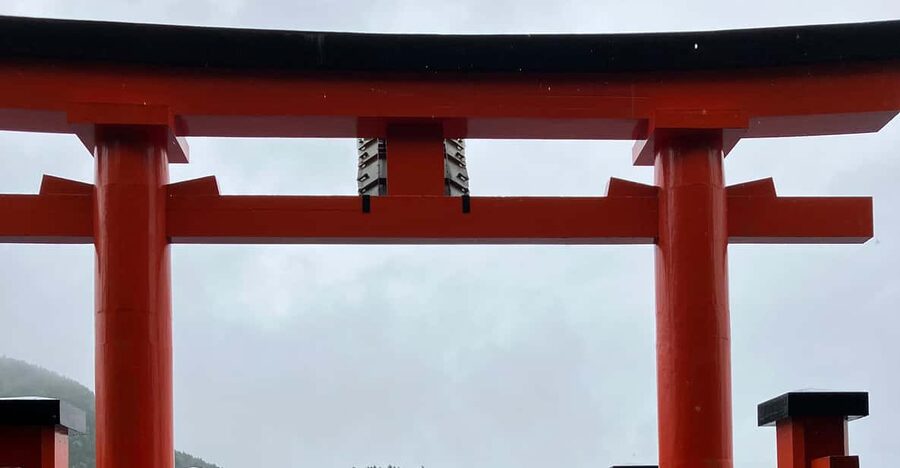
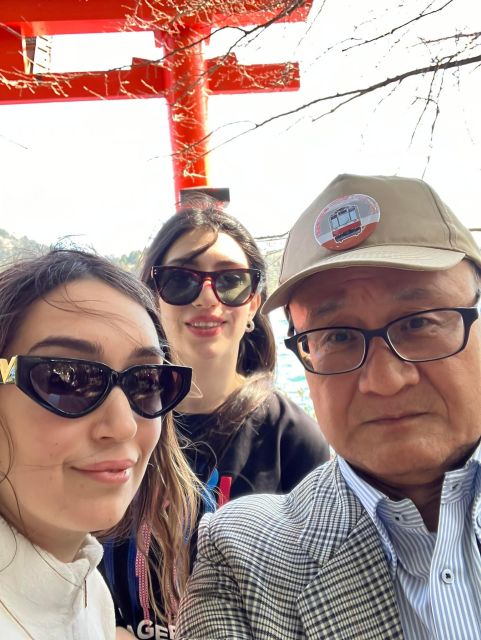
Hakone Shrine sits beside Lake Ashi and is one of the area’s most recognizable photo stops. Its red torii gate at the water is the image most people want, so this is the place to have your phone ready.
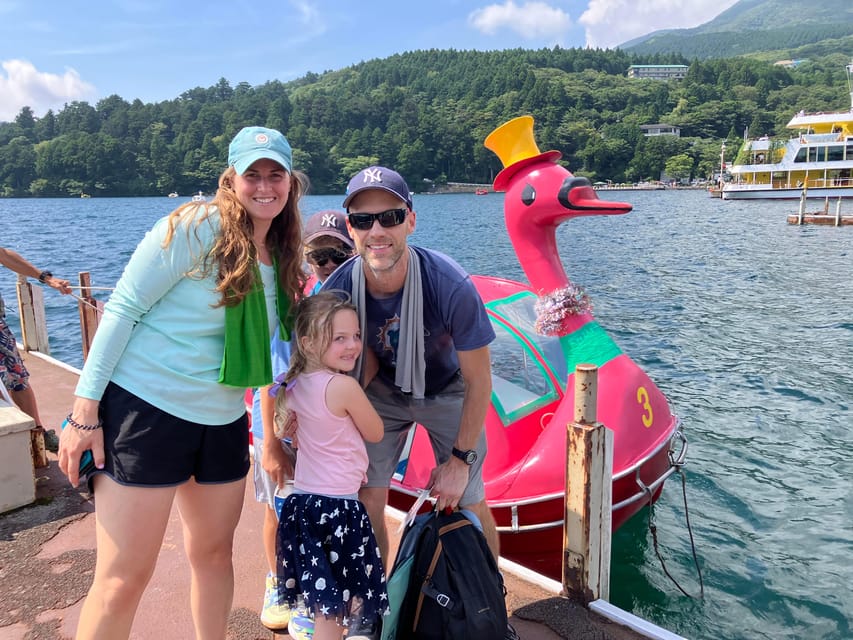
Reaching the shrine involves about 30 minutes of walking each way, according to the tour details. You can instead consider a swan pedal boat on the lake, priced at JPY 1,500 for up to three people for 30 minutes. That boat is optional and costs extra, so decide with Munetaka on the day.
This is one area where timing and crowds can matter. The guide can help you reach the photo location and adjust the order if conditions change. Still, do not expect a quiet private shrine visit. The torii is a popular image, and the stop is built around seeing it and taking photographs rather than spending hours exploring the shrine grounds.
Comfortable shoes are important here. The walking section, stairs, and later transfers make this a poor choice for anyone wanting a no-effort sightseeing day.
Lake Ashi by sightseeing ship
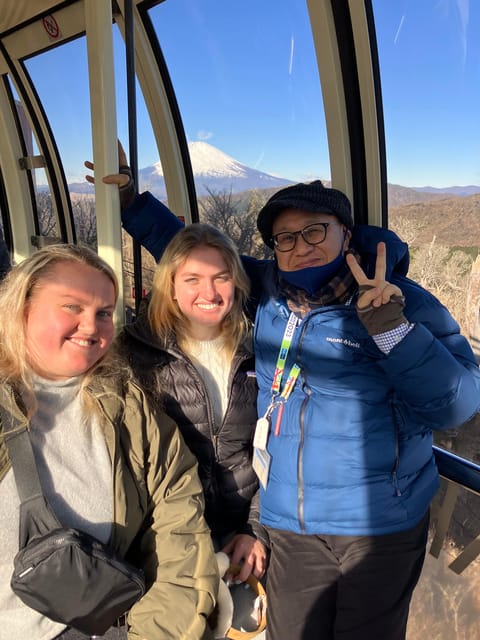
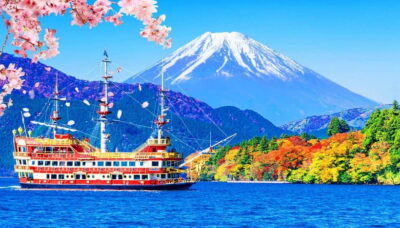
The Lake Ashi cruise lasts about 40 minutes and gives you a break from walking. The boat is also part of the pleasure of the route. Instead of viewing the lake from one shore, you cross it while the surrounding mountains and Hakone sights shift around you.
On a clear day, Lake Ashi can provide one of the tour’s two Mt Fuji viewpoints, at roughly 700 meters in altitude. The word clear does a lot of work here. Clouds can cover Fuji even when the rest of the day is pleasant.
The cruise is a practical part of the transport circuit, but it also gives the day a change of pace. After the busy shrine area, you can sit down, look out across the water, and catch your breath. Keep your rain gear and warm layer accessible rather than buried in your bag. Hakone weather can change quickly, and the higher sections may feel cooler.
More Hakone trips and passes:
- Tokyo: Mt. Fuji Tour, Hakone Ropeway, Owakudani, Lake Ashi
★ 4.7 · 4,002 reviews - Tokyo: Mt. Fuji 5th Station & Hakone Cruise 1-Day Bus Tour
★ 4.2 · 2,381 reviews - Private Tour to Mt. Fuji and Hakone (Fully Licenced Operator)
★ 5.0 · 1,910 reviews - Mt Fuji & Hakone Cruise, Drum Show Bus 1 Day from Tokyo
★ 4.0 · 1,287 reviews
Ropeways, Owakudani, and the black eggs
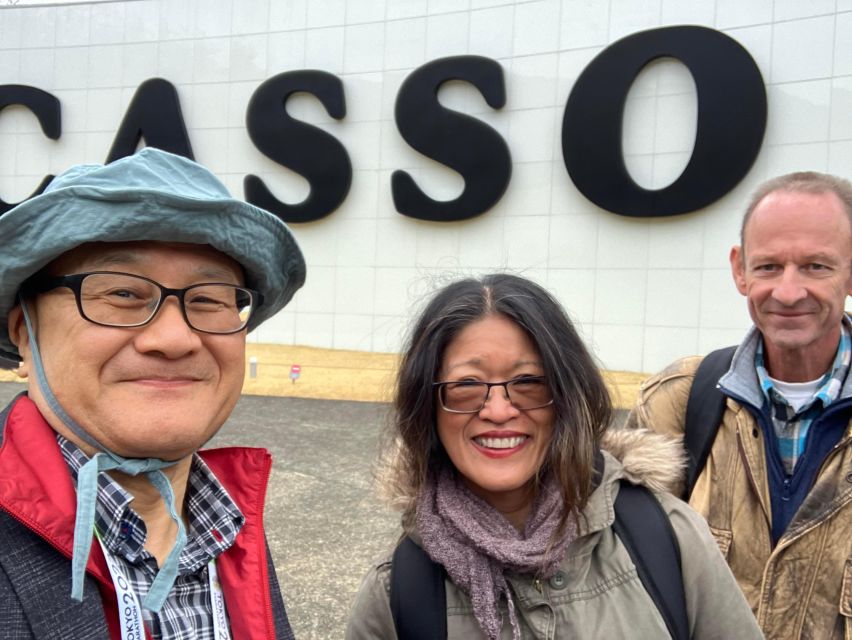
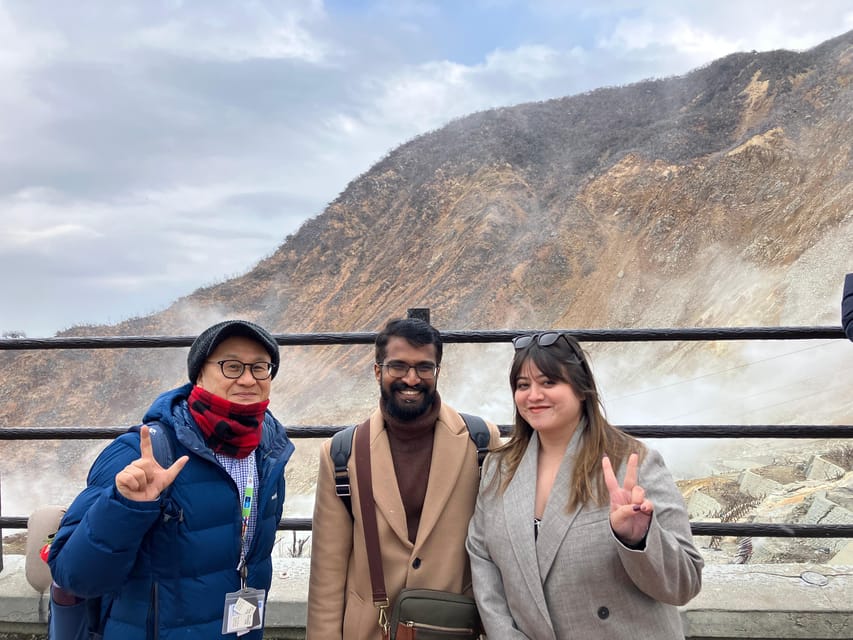
The route continues upward by ropeway to Owakudani Valley, at about 1,044 meters. The ride takes roughly 30 minutes on the No. 1 ropeway, with further ropeway and cable car connections later in the day.
Owakudani is a volcanic valley known for sulfurous fumes and its stark, unusual terrain. The tour specifically warns that it is not suitable for people with respiratory issues. If strong sulfur smells affect you, this is the stop to think about carefully before booking.
The main reason to come is the elevated view and the chance to look for Mt Fuji. The second is the famous black egg, sold at about JPY 500 for four, cash only. Local tradition says one egg adds seven years to your life. Treat that as folklore, but the snack is part of the Owakudani experience.
The planned visit lasts around 35 minutes, followed by an early lunch. You can choose curry rice, a vegetable curry, Japanese noodles, tempura, and similar dishes. Tell Munetaka about allergies or dietary restrictions before the tour, since lunch is not included and the stop is relatively short.
Owakudani is the most weather-sensitive section of the day. Clouds may block Fuji, and wind or poor conditions may affect the ropeway. Munetaka can alter the order or revise the route, but he cannot produce a clear mountain view.
Hakone’s famous transport circuit
A major part of this experience is simply getting around. You use the Hakone Free Pass for five kinds of public transport:
- Hakone Tozan train
- Cable car
- Ropeway
- Lake Ashi sightseeing ship
- Bus
The return route combines the No. 2 ropeway, cable car, and Hakone Mountain Train. The train uses switchback operation to manage the steep mountain route, described in the tour details as an 80 per mil gradient. The repeated reversals are not just a technical footnote. They are a memorable part of riding through Hakone’s mountains.
The full return section can take about 15 minutes by ropeway, 15 minutes by cable car, and 40 minutes by mountain train, with the precise order and timing subject to change. You should expect some waiting, transfers, and crowded public transport. The private group does not mean private vehicles or private cabins.
This is where Munetaka adds practical value. He can keep track of the connections while you focus on the scenery. Several people who toured with him also found his advance communication useful, including detailed directions and suggestions about the easiest meeting point. If you are staying in a new hotel after the tour, discuss the end point in advance.
The schedule is full, but not meant to feel frantic
The usual day begins at 8 a.m. and returns to Hakone-Yumoto around 4 p.m. The order can change according to transportation, weather, and local conditions.
That flexibility is important because Hakone’s loop is not controlled like a theater performance. A delayed bus or suspended ropeway can affect several later stops. Munetaka has adjusted plans during poor weather, including a day when typhoon conditions made the original route impractical. That kind of judgment is more useful than a rigid promise to visit every stop in a fixed order.
Still, you should know what you are buying. You get a broad introduction, not an unhurried study of each place. The craft workshop, tea house, shrine, Owakudani, cruise, and mountain train all receive limited time. Families and first-time visitors may appreciate the variety, while photographers or museum lovers may want fewer stops.
One older participant, aged 81, managed the pace comfortably according to the tour information, but your group should still mention mobility concerns before booking. There is walking, boarding, standing, and changing vehicles throughout the day.
What the private format is worth
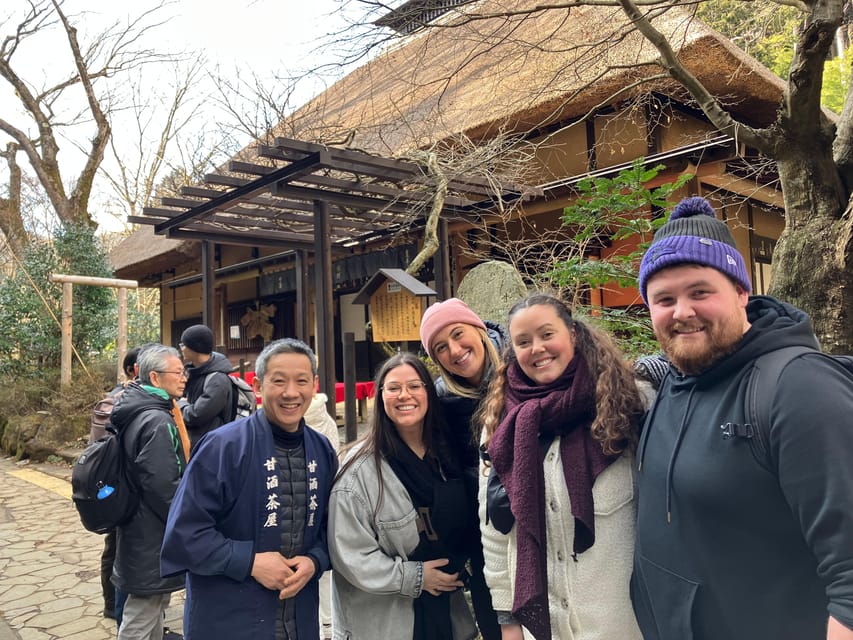
At $303 for up to six people, the base price works out well for a full private day if you are traveling as a family or small group. A party of six pays about $50 per person before transport and food. A solo visitor or couple pays more per person, so the guide’s transport planning and personal attention need to matter to you.
The strongest value comes from time saved and decisions removed. Hakone’s transport system is manageable on your own, but the connections take attention. A guide who knows the route can help you avoid unnecessary backtracking and choose the better sequence for the day.
The guide also adds cultural context at the woodshop and tea house. You can ask Munetaka about Japanese history, geography, religion, and industry, not just the next train. His communication before the tour is another useful feature. He sends questions after booking to help set the meeting place and time, and he can recommend early-morning routes from Tokyo.
The biggest added cost is the Hakone Free Pass. Lunch costs about JPY 1,500 to 2,000, amazake is JPY 500, and the pedal boat is optional. Bring cash for the tea house and black eggs, and keep a charged smartphone for communication.
Getting to Hakone-Yumoto from Tokyo
The early meeting time deserves serious thought. Tokyo to Hakone can take about two hours by ordinary connections, so staying in Hakone or Odawara the night before is recommended.
If you are coming directly from Tokyo, Munetaka can recommend taking the Shinkansen from Tokyo to Odawara, which takes about 30 minutes, or an early Limited Express train from Shinjuku. Hotel transfers are not included.
This is not a tour to book casually at midnight after arriving in Tokyo. Confirm your departure plan, ticket needs, and meeting station in advance. Hakone-Yumoto has only one ticket gate, which makes the actual meeting simple once you arrive.
Who will enjoy this Hakone day
I would choose this tour for a first or second visit to Hakone when I want to cover the major sights without spending the day studying timetables. It suits families, small groups, and anyone who wants a private guide rather than a large coach.
It is also a good match if you care about more than scenery. The marquetry workshop and old tea house give the day a local and historical angle that a simple Fuji photo tour may miss.
I would hesitate if you need a slow pace, dislike public transport, have respiratory problems, or mainly want guaranteed Mt Fuji photographs. Fuji can disappear behind clouds, and Owakudani’s sulfur fumes may be uncomfortable. You should also avoid treating the $303 price as all-inclusive, since the guide’s fee is the only included item.
FAQ
Where does the tour start and finish?
The usual meeting point is the only ticket gate at Hakone-Yumoto Station. Odawara Station may also be arranged in advance. The tour normally ends at Hakone-Yumoto Station around 4 p.m.
How long does the tour last?
The private tour lasts eight hours, generally from about 8 a.m. to 4 p.m. The exact start time and order of stops can change because of weather and transportation conditions.
Is transportation included in the tour price?
No. The guiding fee is included, but you must buy the Hakone Free Pass separately. The adult pass costs about JPY 6,000 to 7,100, while the child fare for ages six to eleven is about JPY 1,500 to 1,600.
Can I see Mt Fuji during the tour?
The tour includes viewpoints from Lake Ashi and Owakudani, but Mt Fuji is visible only when weather conditions are favorable. Clouds may block the mountain.
Is lunch included?
No. Lunch is purchased separately, with expected costs of about JPY 1,500 to 2,000. Food options at Owakudani include curry rice, vegetable curry, Japanese noodles, and tempura. Tell the guide about allergies or dietary restrictions.
What languages does the guide speak?
The live guide service is available in English and Chinese. The experience is led by Munetaka Horiuchi.
Should you book it?
Book this private Hakone day if you want to see the major sights, learn about local woodcraft, visit an old tea house, and let one person manage the transport puzzle. The guide’s personal planning is especially useful for a first visit and for groups of four to six, where the private price spreads well.
Do not book it for guaranteed Fuji weather or a leisurely museum day. Bring comfortable shoes, warm clothing, rain gear, cash, your passport, and a charged phone. If you accept the full day’s pace and the extra transport costs, this is a smart way to connect Hakone’s best-known views with two genuinely local cultural stops.
New on our Hakone list
- Hakone Private Customized Day Tour★ 4.5 · 3 reviews
- Day Trip To Mount Fuji and Hakone from Tokyo with English Guide★ 4.5 · 3 reviews
- Mt Fuji, Hakone Private Tour by Car Pickup from Tokyo★ 5.0 · 3 reviews
- Odawara: Castle Guided Tour with Panoramic Views★ 5.0 · 3 reviews
- Mount Fuji and Hakone Private day trip from Tokyo★ 5.0 · 3 reviews
- Tokyo to Hakone | Private and Personalized Day Trip with a Local★ 4.0 · 3 reviews
- 2 Days Tokyo ,Mount Fuji / Hakone Private Tour from Tokyo★ 5.0 · 3 reviews
- Mount Fuji Hakone with English-speaking Guide★ 5.0 · 3 reviews
Mt Fuji Area Tours, compared.
Mt Fuji and Hakone 1-Day Bus Tour Return by Bullet Train
Read our review →
Mt Fuji & Hakone Cruise, Drum Show Bullet Train 1 Day from Tokyo
Read our review →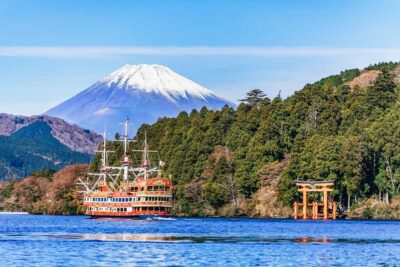
Tokyo Mt Fuji 5th St & Hakone Cruise Bus Tour w/Bullet Train
Read our review →
Mt. Fuji Tour, Hakone Ropeway, Owakudani, Lake Ashi
Read our review →
Mt.Fuji,Kawaguchiko Oishi Park,Arakurayama Sengen Park
Read our review →
Mt. Fuji 5th Station & Hakone Cruise 1-Day Bus Tour
Read our review →
Mt Fuji Top 5 Spots Day Tour: Arakurayama Park,Oshino Hakkai
Read our review →Browse the lists this tour appears in