Reviewed · TOKYO TOURS
Imperial Palace run with fun trivia by an Imperial Palace geek
Tokyo’s Imperial Palace makes an unusual running route: you pass old Edo Castle gates, stone walls, moats, gardens, government buildings, and marathon landmarks while your guide explains the stories behind them. This is not a race. You run, walk, stop, and listen at a comfortable pace, making it a good first Imperial Palace run.
I like the small eight-person limit, which gives you room to ask questions. I also like the stop-and-go format, plus guide YUKO’s evident affection for the palace and running. The main catch is that the $90 price does not include JOGLIS lockers or showers, and the tour still calls for moderate fitness.
In This Review
- Key points to know before booking
- Why this Imperial Palace run feels different
- Starting at JOGLIS at 8:30 am
- Hanzo-mon Gate and Miyake-zaka
- Sakurada-mon Gate and its runner’s clock
- Nijubashi Bridge and Gyoko-dori Avenue
- Entering the East Gardens through Otemon Gate
- Fujimi-yagura and the old castle keep
- Leaving through Kitahanebashi and climbing north
- Returning to JOGLIS and judging the $90 value
- Who should book this palace run?
- Should you book the Imperial Palace run?
- FAQ
- What time does the Imperial Palace run start?
- How long does the activity last?
- Where does the tour begin and end?
- Can I walk instead of run?
- Are lockers and showers included?
- What happens if the weather is poor?
Key points to know before booking
- The route begins at 8:30 am, when the palace area is generally calmer and cooler than later in the day.
- You do not run nonstop. Expect walking, photo stops, short talks, and sections where you set your own pace.
- Guide YUKO adds palace trivia alongside practical running guidance, with Japanese and simple English used during the tour.
- The East Gardens are part of the route, including Edo Castle’s old main tower site and Fujimi-yagura turret.
- JOGLIS facilities cost extra. Lockers and showers are available for ¥1,500, while clothing, shoes, and towels can be rented for an additional fee.
Why this Imperial Palace run feels different
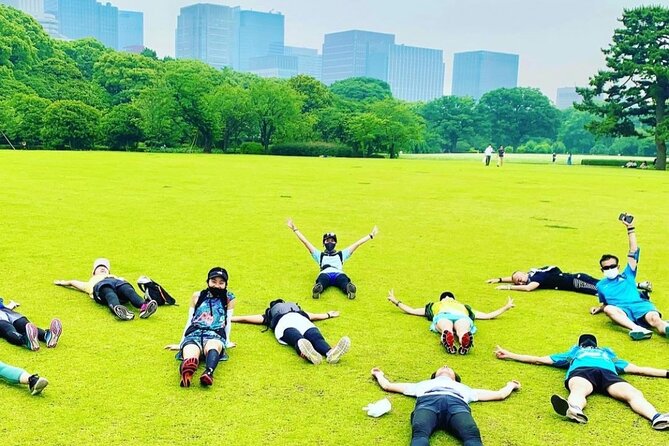
Many sightseeing tours ask you to look at Tokyo. This one asks you to move through it. The change in pace matters. You are not sitting on a bus or following a guide through a packed museum. You are circling the Imperial Palace under your own power, then stopping when a gate, bridge, slope, clock, or castle remnant deserves attention.
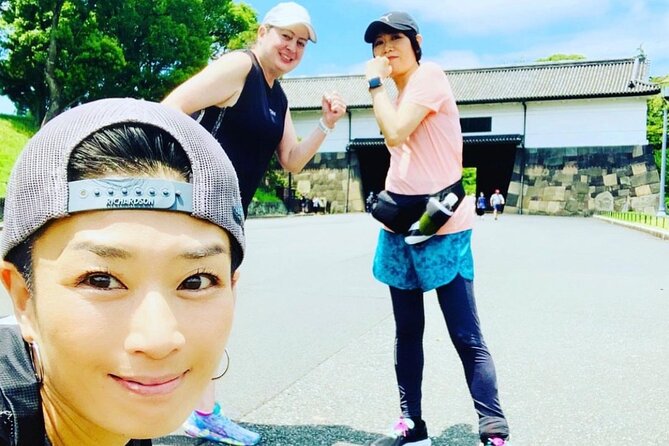
The route covers roughly two and a half hours, but it is built for casual runners as well as regular exercise fans. One of the strongest features is the flexible rhythm. You run for a while, walk when the guide explains a point, stop for photos, and then continue. If running is not your thing, you can walk instead.
That makes this a better fit for sightseeing than a timed training session. You still get exercise, but the palace remains the main subject. Guide YUKO brings a personal interest in both Imperial Palace history and running, and the tour includes plenty of space for questions.
The language setup is practical rather than formal. The tour is conducted in Japanese and simple English, so you should be comfortable with a relaxed bilingual explanation rather than expecting a long, polished lecture in advanced English. The small group helps here, since you can ask for clarification along the way.
A few more Tokyo bookings worth comparing
- Mt Fuji and Hakone 1-Day Bus Tour Return by Bullet Train
★ 5.0 · 26,383 reviews - 1-Day Tokyo Bus Tour
★ 5.0 · 14,250 reviews - Tokyo: TOKYO SKYTREE® Admission ticket
★ 4.5 · 11,192 reviews
Starting at JOGLIS at 8:30 am
Your meeting point is JOGLIS, at FM Center basement level 1 in Kojimachi, Chiyoda City. The start time is 8:30 am, and the activity finishes back at the same place. JOGLIS provides a useful base for changing and getting ready, but those facilities are not included in the tour price.
A locker and shower package costs ¥1,500 per person. Running clothes, shoes, and towels are also available to rent for a fee. If you are staying in a small Tokyo hotel without convenient space to prepare, this option may make the morning easier. If you arrive already dressed and do not need a shower, you can avoid that extra cost.
The opening briefing covers the history of the Imperial Palace and the rules of the Imperial Palace running route. This is a useful start because the route passes through areas with different access rules, including the East Gardens. It also gives you a chance to tell the guide about your preferred pace.
The group maximum is eight people. That is small enough for direct conversation without making the run feel private or expensive beyond reason. At $90, the tour is not a cheap way to get exercise. You are paying for a guided sightseeing route, personal attention, and the guide’s palace-focused stories. The value improves if you want both a run and an introduction to central Tokyo history.
Hanzo-mon Gate and Miyake-zaka
The run begins at Hanzo-mon, one of the entrances to the Imperial Palace. From here, you can see the National Theatre and the Diet Building as you head down Miyake-zaka.
This slope is described as one of Tokyo’s most beautiful, and it gives the opening section a strong sense of place. You are not simply jogging around a city block. Government buildings, old castle approaches, and the modern capital appear together within a short distance.
The route may feel easier here because the group is still settling into its pace. The guide uses this early section to point out what you are seeing and to explain how the palace area fits into Tokyo today. The tour does not provide entry to the National Theatre or the Diet Building, so think of this as an exterior sightseeing stop.
Sakurada-mon Gate and its runner’s clock
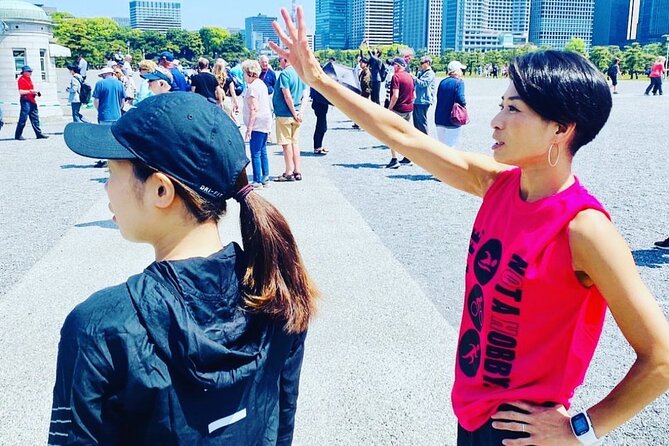
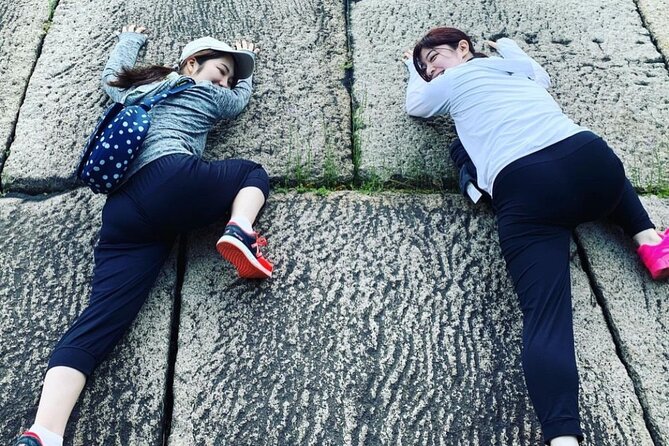
Sakurada-mon is the largest gate on the Imperial Palace route. Passing beneath it gives you a clear look at the scale of the old castle defenses, even if your attention is split between history and breathing.
The guide also explains the Japanese belief in Mount Fuji and the idea of the Imperial Palace as a power spot. That may sound more symbolic than historical, but it adds a local cultural angle to the route. You are hearing not only about stonework and dates, but also about the meaning Japanese people attach to the palace area.
A second stop in Sakurada-mon Square focuses on a secret connected with the clock there. This is the sort of small detail that can make a familiar public running route more interesting. It also shows why the tour is not just a standard lap with a few facts added on top.
The repeated stops around Sakurada-mon mean your pace should not worry you. You will have chances to recover, listen, and look around rather than trying to maintain a steady run.
Same corner of Tokyo, a completely different plan:
- Tokyo: teamLab Planets TOKYO Digital Art Museum Entry Ticket
★ 4.6 · 9,779 reviews - Mt Fuji & Hakone Cruise, Drum Show Bullet Train 1 Day from Tokyo
★ 4.0 · 7,413 reviews - Tokyo: Sumo Show Experience with Chicken Hot Pot and a Photo
★ 4.8 · 6,678 reviews - Tokyo: Shinjuku Food Tour (13 Dishes at 4 Local Eateries)
★ 5.0 · 6,603 reviews
Nijubashi Bridge and Gyoko-dori Avenue

Nijubashi, or the Two-tiered Bridge, is one of the most recognizable palace views. The tour includes time for a commemorative photograph, so bring a phone that is easy to reach. This is one of the route’s clear sightseeing moments, and you do not need to rush past it to keep up.
The group then heads to Gyoko-dori Avenue, associated with the finish area of the Tokyo Marathon. Here the guide talks about Tokyo Station, the Emperor, and the marathon. You also get a chance to pose for photos in a finish-line style scene.
This section connects three versions of Tokyo: the imperial center, the railway city around Tokyo Station, and the modern running culture represented by the marathon. I like that combination because it keeps the tour from treating the palace as an isolated monument. You see how the space is used and understood today.
The marathon connection may be especially appealing if you run regularly. For casual runners, it still gives the route a fun bit of context. Just remember that the photo moment is theatrical and informal, not an official race activity.
Entering the East Gardens through Otemon Gate
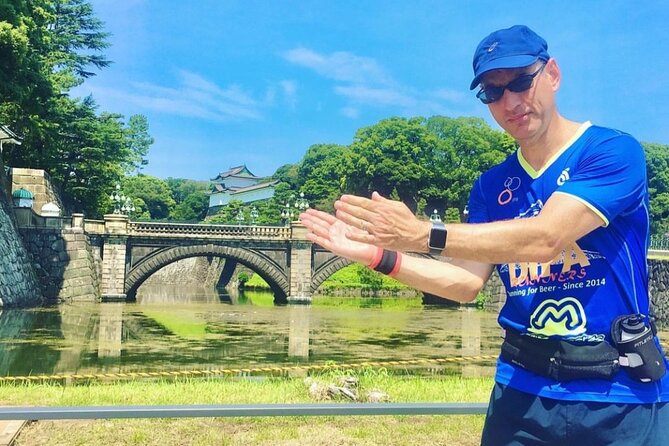
At Otemon Gate, you enter the East Gardens of the Imperial Palace. Before entry, there is a baggage inspection. Keep your belongings compact and be ready for this pause, since it is part of the access process.
Otemon was the main gate of Edo Castle. The transition through the gate changes the feel of the run. Outside, you move among modern streets and government buildings. Inside, the old castle layout becomes easier to picture through gates, walls, slopes, and surviving structures.
A shachihoko greets you inside. These decorative fish-shaped roof ornaments were used on castle buildings and are tied to protection against fire. The stop gives the guide another chance to connect a visible object with the larger story of Edo Castle.
The East Gardens are a key reason to choose this route instead of simply running the outer palace loop. You get to see places that are easy to miss if you treat the palace only as a fitness circuit. On the other hand, the baggage check and garden access mean the tour may pause more than a normal morning run.
Fujimi-yagura and the old castle keep
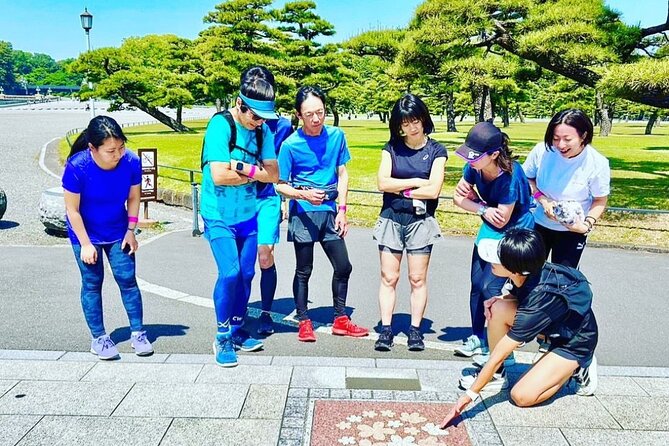
Fujimi-yagura is presented as a small castle, and it served as a substitute for Edo Castle’s main keep. Its white walls and rooflines make it one of the most attractive structures along the route.
The next major stop is Tenshudai, the remains of the main tower. The original keep was destroyed by fire, so you will not see a complete castle tower rising above the gardens. Instead, you see the stone base and a reconstructed model that helps explain what once stood there.
This is an important expectation to set. The East Gardens do not offer a fully rebuilt Edo Castle. Their appeal comes from the surviving foundations, walls, gates, turrets, and the ability to read the old layout. If you want a grand interior castle visit, this is not that. If you enjoy piecing together a vanished place from what remains, the stop is rewarding.
The guide’s trivia is most useful here because the stones alone do not tell the whole story. YUKO’s focus on palace details helps turn the castle keep site into more than a quick photo stop.
Leaving through Kitahanebashi and climbing north
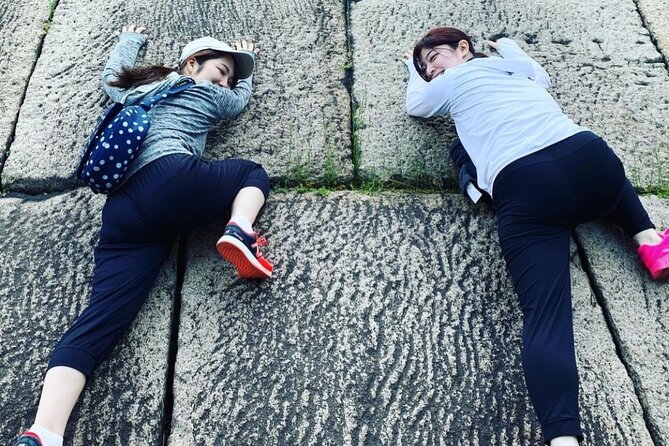
The route exits through Kitahanebashi Gate, once the site of an Edo Castle drawbridge. This marks the end of the garden section and the return to the public streets around the palace.
From here, the uphill part begins. The tour advises you to run at your own pace, which is sensible. After repeated stops, sightseeing, and a garden visit, you may not want to match anyone else’s speed. Stay within your comfort level and use the walking option if needed.
The run continues along Daikancho-dori. During the Edo period, daimyo residences lined this area. Today, it is also known as a cherry blossom viewing spot. That makes the route especially appealing in spring, although the tour is not limited to cherry blossom season.
Next comes Chidorigafuchi Park, another famous cherry blossom area. The guide explains details about cherry trees and why they matter so much in Japanese culture. The subject fits this route well because it links the physical setting to a familiar seasonal tradition rather than stopping at castle dates.
The northern section is less about major monuments and more about how Tokyo uses the palace perimeter as public space. You get a final dose of local context while finishing the exercise portion.
Returning to JOGLIS and judging the $90 value
The tour returns to JOGLIS, where the activity ends. If you paid for the JOGLIS facilities, you can shower there afterward. If not, plan your morning with that limitation in mind.
At $90, this is best viewed as a specialty tour. You could run around the Imperial Palace for free, and the tour does not include a meal, equipment, or a paid palace admission. Its value lies in having YUKO organize the route, explain the history, answer questions, manage the pace, and lead you into the East Gardens.
The eight-person limit supports that price better than a large group would. You are not paying for a generic city jog. You are paying for an active history walk with a guide who has a strong personal interest in the Imperial Palace and the local running scene.
Still, the extras matter. Add ¥1,500 for the locker and shower, plus rental fees if you need running clothes, shoes, or towels. If you already have your gear and can shower at your accommodation, the base price is easier to assess. If you need the full JOGLIS setup, budget beyond the advertised amount.
The cancellation policy is friendly if your plans are firm enough. You receive a full refund when you cancel at least 24 hours before the start. Changes or cancellations inside that window are not refunded, and poor weather can lead to a new date or a full refund.
Who should book this palace run?
I would choose this for a first Imperial Palace run, especially if you want more than a workout. The route gives you a basic understanding of the gates, castle remains, gardens, government district, and marathon connection without requiring a separate history tour.
It also suits runners who dislike rigid group jogging. The repeated pauses and walking sections make the pace manageable, while the uphill section is left to your own ability. You can get exercise without treating the morning as a test.
It is less suitable if you want a fast, uninterrupted run, a fully English-language lecture, or a low-cost way to circle the palace. The simple-English format may require patience, and the group still needs to move together through the route.
For a Japanese speaker, the bilingual setup may feel especially natural. For an English speaker, the best approach is to expect clear, simple explanations and ask questions directly. The small group makes that practical.
Should you book the Imperial Palace run?
Book it if you want to combine Tokyo sightseeing with gentle exercise, and if palace trivia sounds as appealing as the run itself. The East Gardens, Edo Castle remains, Nijubashi, Sakurada-mon, and Chidorigafuchi give you a varied route, while YUKO’s enthusiasm adds personality.
Skip it if you are counting every yen, need a hard training session, or prefer a conventional walking tour in polished English. For everyone else, this is a thoughtful way to see central Tokyo before the day fills up, with enough flexibility for casual runners and walkers.
FAQ
What time does the Imperial Palace run start?
The tour starts at 8:30 am from JOGLIS in Kojimachi, Tokyo.
How long does the activity last?
The experience lasts approximately 2 hours and 30 minutes.
Where does the tour begin and end?
It begins and ends at JOGLIS, located at FM Center basement level 1, 1-chome Kojimachi, Chiyoda City, Tokyo.
Can I walk instead of run?
Yes. The activity is suitable for casual runners, exercise enthusiasts, and people who prefer to walk.
Are lockers and showers included?
No. JOGLIS lockers and showers cost an additional ¥1,500 per person. Running clothes, shoes, and towels can also be rented for a fee.
What happens if the weather is poor?
The activity requires good weather. If it is canceled because of poor weather, you can choose another date or receive a full refund. Cancellations made at least 24 hours before the start time also qualify for a full refund.
New on our Tokyo list
- Hakone Hachiri: Old Tokaido Highway Hiking Half-day tour★ 5.0 · 3 reviews
- Tokyo:Calligraphy & Zen Mindful Journey+Take Home Memory★ 5.0 · 3 reviews
- Private Samurai Sword Experience★ 5.0 · 3 reviews
- Tokyo:Cherry Blossom Mt Fuji & Shibazakura Festival Day Trip★ 4.4 · 3 reviews
- Private Tokyo’s Famed Tsukiji Fish Market Tour★ 5.0 · 3 reviews
- Dive into Tsukiji Fish Market Walking Friendly Food Tour★ 5.0 · 3 reviews
- Tokyo Harajuku Walking Tour Meiji Jingu Yoyogi Park and More★ 5.0 · 3 reviews
- Tokyo Private Transfer for Yokohama Cruise Port★ 5.0 · 3 reviews
Tokyo Tours, compared.
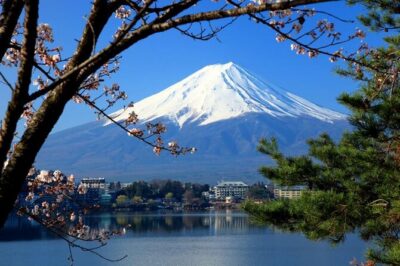
Mt Fuji and Hakone 1-Day Bus Tour Return by Bullet Train
Read our review →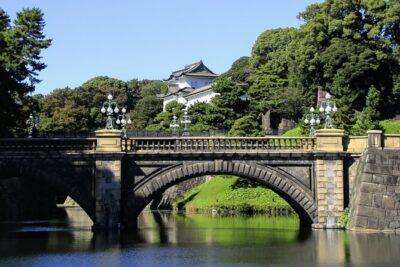
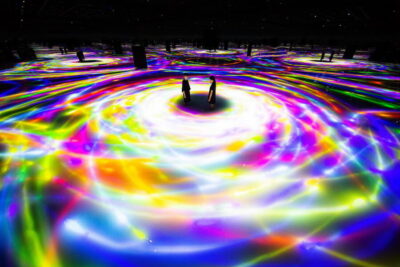
teamLab Planets TOKYO Digital Art Museum Entry Ticket
Read our review →
Mt Fuji & Hakone Cruise, Drum Show Bullet Train 1 Day from Tokyo
Read our review →
Sumo Show Experience with Chicken Hot Pot and a Photo
Read our review →
Shinjuku Food Tour (13 Dishes at 4 Local Eateries)
Read our review →