Reviewed · MT FUJI AREA TOURS
Yabusame Adventure with Mt. Fuji Views
At the foot of Mt. Fuji, you can dress as a mounted archer, ride a native Japanese horse, and fire arrows on the grounds of an old Shinto shrine. This beginner-friendly Yabusame session turns a rare cultural tradition into a hands-on two-hour activity.
I like the setting at Omurosengenjinja, where the shrine gives the activity a sense of place rather than making it feel like a standard riding lesson. I also like the care given to retired horses, which receive a second career instead of simply being put aside. The main consideration is the 90-kilogram weight limit, along with the fact that the activity depends on good weather.
In This Review
- Key points to know before booking
- Why Yabusame feels different from ordinary horseback riding
- Starting at Omurosengenjinja in Fujiyoshida
- Dressing for the part before meeting the horses
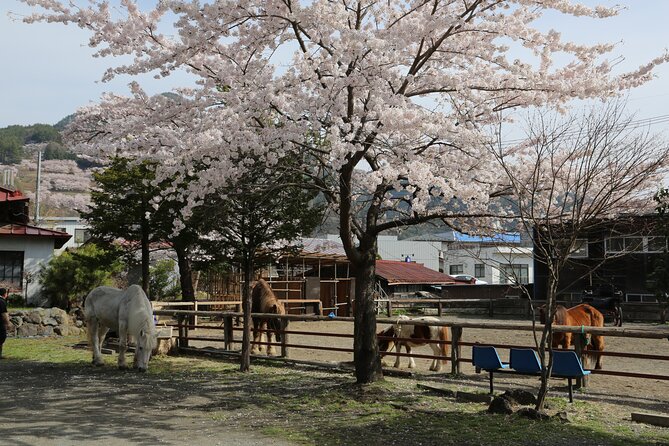
- Meeting the retired Kiso horses
- Learning the basics of riding and arrow shooting
- The final Yabusame challenge on shrine grounds
- Mt. Fuji views and the role of weather
- What the two-hour format gives you
- Is $130.31 a fair price?
- Who should book this activity
- Booking and cancellation details
- Should you book the Mt. Fuji Yabusame session?
- FAQ
- Is this Yabusame activity suitable for beginners?
- How long does the activity last?
- Where does the activity begin and end?
- What is included in the price?
- Is there a weight limit for horseback riding?
- What happens if the weather is poor?
Key points to know before booking
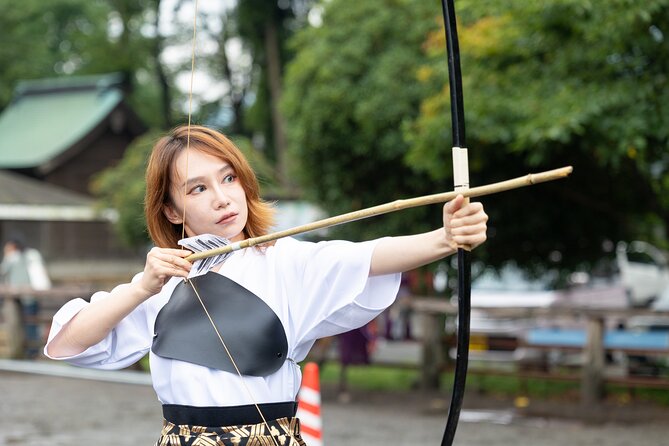
- Ride native Kiso horses: These Japanese horses are smaller than many Western breeds, with a 90-kilogram safety limit.
- Learn before you shoot: Instructors introduce riding and archery step by step, making the session suitable for beginners.
- Practice at a Shinto shrine: The final challenge takes place on the sacred grounds of Omurosengenjinja.
- Traditional clothing is provided: Your outfit and archery equipment are included in the price.
- Private activity: Only your own group takes part, which allows the instructors to focus on your pace.
- Plan for clear weather: Poor weather can lead to a new date or a full refund, and cancellation is free up to 24 hours ahead.
Why Yabusame feels different from ordinary horseback riding
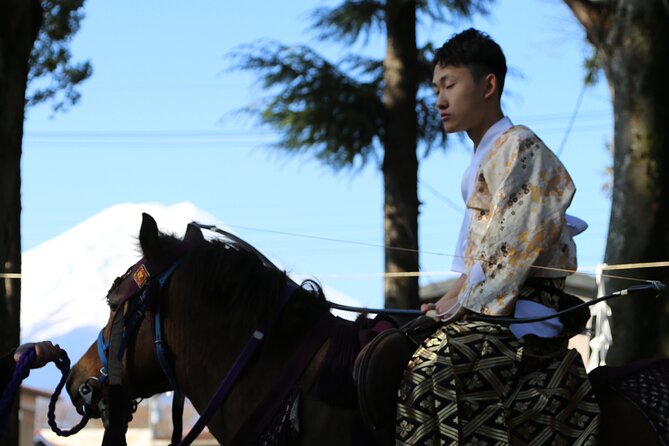
Yabusame is not simply horseback riding with a bow added on. It is a traditional Japanese form of mounted archery connected with Shinto practice, discipline, ceremony, and control. The rider must manage the horse, body position, balance, and arrow at the same time.
That combination makes even a beginner attempt feel like a real challenge. You are not expected to arrive with riding or archery skills. The activity is built around instruction, practice, and a final challenge rather than instant perfection.
I like that the session keeps the tradition visible without pretending you are taking part in a full formal competition. You get to wear traditional clothing, visit the shrine, learn the basic movements, and try shooting from horseback in a controlled setting.
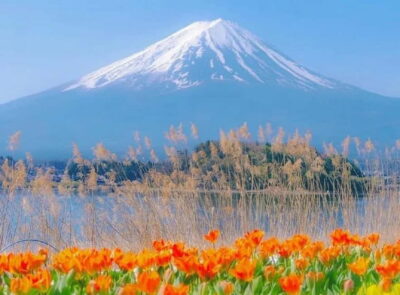
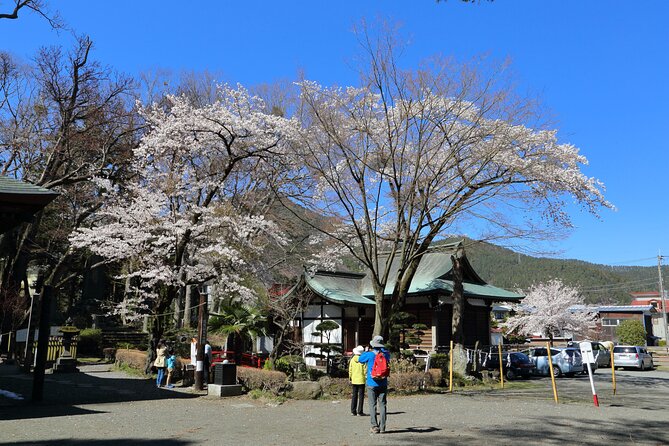
The backdrop matters, too. Fujiyoshida is one of the best places in Japan for views of Mt. Fuji, though the mountain can disappear behind clouds at any time. On a clear day, the combination of shrine architecture, horses, and the mountain makes this feel far more special than an indoor cultural demonstration.
More Mt Fuji days from Fujiyoshida:
- From Tokyo: Full-Day Mount Fuji Tour in English or Spanish
★ 4.7 · 101 reviews - Tokyo: Private Mt. Fuji Luxury Day Tour – Fully Customizable
★ 4.9 · 17 reviews - From Tokyo: 5 Best Mount Fuji Photo Spots Private Day Trip
★ 4.9 · 12 reviews
Starting at Omurosengenjinja in Fujiyoshida
The activity begins at Fujisan Shimomiya Omuro Sengen Jinja, at 3-chome-32-18 Shimoyoshida, Fujiyoshida, Yamanashi 403-0004. The specific stop is identified as Omurosengenjinja, also called Jinmesha.
You meet at the shrine and return to the same point when the activity ends. That simple arrangement is useful if you are building a day around Fujiyoshida, since you do not need to arrange a separate drop-off after the session.
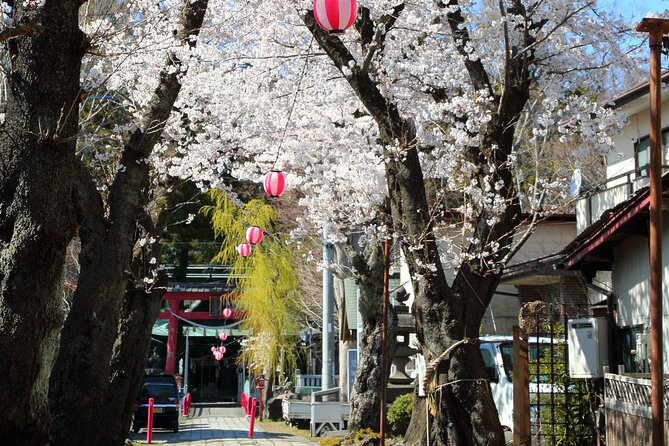
The shrine is more than a backdrop. Yabusame has links to Japanese religious tradition, and practicing on shrine grounds gives the activity a cultural setting that a riding stable alone could not provide. You should treat the location with the quiet respect expected at a Shinto shrine, even though the session itself is active and hands-on.
The activity is private, so only your group participates. That can make a noticeable difference. You are not trying to keep up with a large class, and the instructors can adjust the pace as you learn to handle the horse and bow together.
Dressing for the part before meeting the horses
Traditional clothing and equipment rental are included. Getting dressed is an important part of the activity, not just a photo opportunity. The clothing helps you understand how Yabusame differs from modern riding and gives the session a ceremonial feel from the start.
After changing, you visit the nearby shrine before meeting the horses. This order gives you a little cultural context before the practical work begins. You are not simply arriving, mounting, and shooting at targets. The activity connects the clothing, shrine, horses, and archery into one story.
The available information does not specify every piece of clothing or the exact changing arrangements, so you should follow the provider’s instructions on the day. Wear or bring whatever you need to feel comfortable around horses and outdoors, while remembering that the supplied outfit and equipment are part of the session.
Meeting the retired Kiso horses
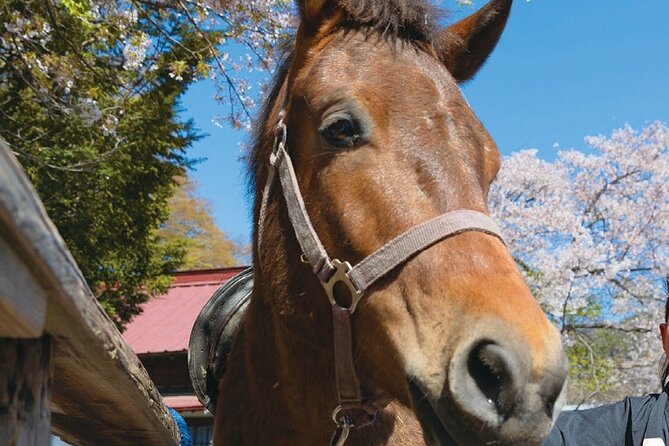
The horses used here are native Japanese Kiso horses. They are slightly smaller than many Western breeds, which is why the provider sets a maximum rider weight of 90 kilograms. A rider between 85 and 90 kilograms should pay particular attention to this guideline, since comfort and safety are the reason for the limit.
The horse policy is one of the most meaningful parts of the activity. Barikiya gives retired horses a second career in tourism, allowing them to remain active in a healthy setting. That does not turn the ride into an animal welfare tour, but it does give you useful context about why these horses are here and how the activity supports their continued care.
You first have time to meet the horses and form a connection with them. This matters because riding and archery both become easier when you are calm and attentive. The horse is not a machine that carries you from one target to the next. You need to pay attention to its movement and respond carefully to instruction.
If you are too heavy for the Kiso horses, you are not excluded from the entire program. The provider offers a horse-drawn carriage ride through Fujiyoshida or a horse interaction activity instead. Those alternatives are important to confirm in advance if you are close to the weight limit or know that mounted riding will not suit you.
Same corner of Fujiyoshida, a completely different plan:
- Mount fuji and Hakone full day private tour with English gui
★ 4.9 · 12 reviews - Fuji/Hakone Private Tour, English speaking guide, Photograph
★ 4.8 · 11 reviews - Private Hiking Tour to View Mt. Fuji
★ 5.0 · 10 reviews - Mount Fuji Full Day Private Tour from Tokyo Full Customized
★ 4.0 · 9 reviews
Learning the basics of riding and arrow shooting
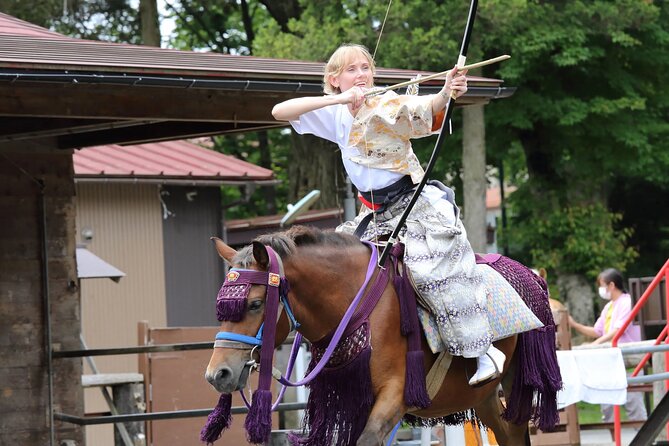
The instructors begin with the fundamentals of horseback riding and arrow shooting. The teaching is designed for beginners, so you do not need previous Yabusame experience. The emphasis is on learning the basic actions safely before attempting the final challenge.
You will need to manage several things at once: your position on the horse, your hands, the bow, the arrow, and your awareness of the surroundings. At first, that can feel like enough work without worrying about hitting a target. A good lesson breaks the task into smaller pieces.
The instructors also help you understand how to behave around the horses. Their role is not only to explain the bow. They guide you through the riding portion and help you build confidence with the animal beneath you.
The exact number of practice arrows and the precise target arrangement are not stated, so you should not book this expecting a full tournament-style course. Think of it as a carefully supervised introduction to horseback archery, followed by a chance to test what you have learned.
That format is a strength for most people. You get the excitement of trying a difficult skill without needing to train for months first. It also keeps the activity welcoming for someone who may be curious about Japanese culture but has never held a bow from horseback.
The final Yabusame challenge on shrine grounds
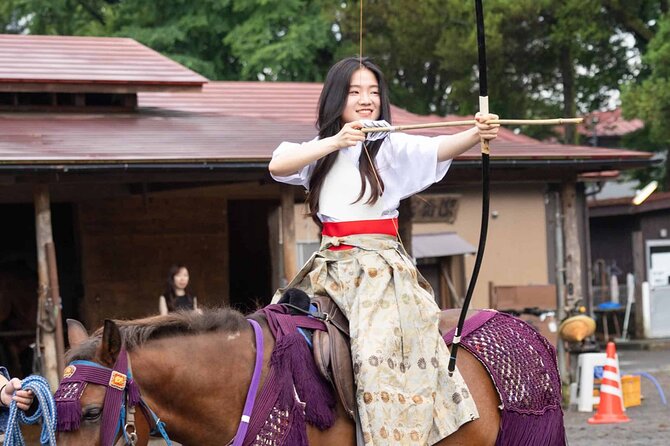
Once you have practiced enough, you take part in the Yabusame challenge. You shoot arrows while riding on the grounds of the ancient Shinto shrine, bringing together the main elements of the session: traditional clothing, a Japanese horse, archery, and Mt. Fuji country.
The challenge is likely to be the most exciting part, but it is also where you should keep your expectations realistic. This is a beginner version, not a professional performance or a chance to master the art in two hours. Success may mean staying composed, following instructions, and making a good attempt rather than hitting every target.
That is part of the appeal. Yabusame looks graceful when performed by an expert, but trying it yourself shows how much control it demands. You gain a better sense of the skill behind the tradition because you have felt the difficulty firsthand.
The shrine setting adds a layer of meaning. You are not firing arrows at a generic range. You are practicing a traditional activity in a place connected with Japanese religious culture. The result feels personal and physical, rather than like a short stage show watched from a distance.
Mt. Fuji views and the role of weather
Mt. Fuji is a major reason to choose this activity, but the view is never guaranteed. Fujiyoshida sits in a prime area for seeing the mountain, yet clouds and rain can cover it even on a day that begins clear.
The provider requires good weather for the activity. If poor weather forces a cancellation, you can choose another date or receive a full refund. This policy protects you from making a long trip for an outdoor activity that cannot run safely, but it also means you should keep some flexibility in your schedule.
For the best chance of seeing Mt. Fuji, you may want to place the activity on a day when the forecast looks promising. Still, the shrine, horses, clothing, and archery remain the core of the experience even if the mountain is hidden.
I would not book this solely as a guaranteed Mt. Fuji photo stop. Book it because the mountain can add a remarkable backdrop to an already unusual cultural activity. That keeps the experience worthwhile in less-than-perfect visibility.
What the two-hour format gives you
The session lasts about two hours for two participants, though the timing may change slightly with group size. That is long enough to cover changing, the shrine visit, horse introductions, instruction, practice, and the final challenge without taking up an entire day.
A two-hour activity works well beside other plans in Fujiyoshida. You can combine it with additional sightseeing in the area, but allow enough time to reach the shrine and get settled before the start. The meeting point is near public transportation, though transportation to your hotel after the activity is not included.
The private format also helps the time feel useful. You are not waiting through a large number of other people’s turns. The pace can focus on your group, although the total time may still vary depending on how many people are participating together.
There is a practical limit to what can fit into two hours. You will receive an introduction, not a full course in Yabusame. If you want advanced riding instruction, lengthy archery practice, or a long ride through the countryside, this is not the right product.
Is $130.31 a fair price?
At $130.31 per person, this is not a budget horse ride. The value comes from the unusual combination of elements included: traditional clothing, equipment rental, horse handling, riding instruction, archery instruction, a private group format, and the shrine setting.
You are also paying for access to a specialized activity that would be difficult to arrange independently. Finding a Kiso horse, traditional Yabusame equipment, a trained instructor, and a suitable shrine setting on your own would not be simple.
The price makes the most sense if you care about cultural depth and want to take part rather than only look at a landmark. It is less compelling if your main goal is a long horseback ride or a guaranteed Mt. Fuji photograph.
The provider’s work with retired horses also adds value for people who want their spending to support a more considered approach to animal care. You should still judge the activity on its own terms, but the second-career program gives the horse component a clear purpose beyond entertainment.
Who should book this activity
This is a strong choice for you if you want something unusual, enjoy hands-on cultural activities, or have an interest in horses and archery. Beginners are welcome, and the instructors provide the basic training needed to make a safe attempt.
It also suits couples, families with appropriate participants, and small private groups who prefer not to join a large class. The private arrangement is especially useful if one person is confident and another is trying horseback riding for the first time.
You should think twice if you dislike outdoor activities, have difficulty mounting or riding, or weigh more than the stated 90-kilogram limit. The alternative carriage ride or horse interaction activity may be a better fit, but the mounted archery portion is not suitable beyond the safety limit.
This is also not ideal for anyone who needs a fixed schedule at all costs. The activity can be canceled in poor weather, and the exact duration may vary slightly.
Booking and cancellation details
You receive confirmation at the time of booking, and a mobile ticket is provided. The activity is near public transportation, but you are responsible for getting to the shrine and arranging your own return transportation.
Free cancellation is available up to 24 hours before the start time for a full refund. Changes or cancellations made less than 24 hours before the start time are not accepted for a refund, and the cut-off follows local time in Japan.
Service animals are allowed, and most people can participate. The most important personal check is the horse weight limit, since the native Kiso breed is smaller than many horses used for Western riding.
Should you book the Mt. Fuji Yabusame session?
Book this if you want a memorable, active way to connect with Japanese culture at the foot of Mt. Fuji. The strongest reasons are the private instruction, the chance to work with retired Kiso horses, the traditional clothing, and the rare opportunity to try horseback archery at a Shinto shrine.
Skip it if you want a long ride, a formal expert-level Yabusame show, or a guaranteed mountain view. For everyone else who fits the weight limit and can accept weather uncertainty, $130.31 buys a distinctive two-hour activity with real cultural character and a good chance of becoming one of the most talked-about parts of your Fujiyoshida visit.
FAQ
Is this Yabusame activity suitable for beginners?
Yes. It is a beginner-friendly version of traditional horseback archery, and instructors teach the fundamentals of riding and arrow shooting before the challenge.
How long does the activity last?
The activity lasts about two hours for two participants. The timing may vary slightly depending on group size.
Where does the activity begin and end?
It begins at Fujisan Shimomiya Omuro Sengen Jinja, 3-chome-32-18 Shimoyoshida, Fujiyoshida, Yamanashi 403-0004, Japan. It ends back at the same meeting point.
What is included in the price?
Traditional clothing and equipment rental are included.
Is there a weight limit for horseback riding?
Yes. The safety limit is 90 kilograms because the activity uses smaller native Japanese Kiso horses. People above that limit may be able to take part in a horse-drawn carriage ride through Fujiyoshida or a horse interaction activity instead.
What happens if the weather is poor?
The activity requires good weather. If it is canceled because of poor conditions, you can choose another date or receive a full refund. You can also cancel up to 24 hours before the start time for a full refund.
New on our Fujiyoshida list
- Mount Fuji – Private Tour with English Speaking Chauffeur★ 3.7 · 3 reviews
- From Tokyo: Mount Fuji One Day Private And Customized Tour★ 4.7 · 3 reviews
- From Tokyo MOUNT FUJI and Lake Kawaguchi-ku Full Day Tour★ 5.0 · 3 reviews
- Mount Fuji & Hakone Private Tour with Bullet Train Return★ 5.0 · 3 reviews
- From Tokyo:private Mount Fuji tour with guide★ 4.8 · 4 reviews
- From Tokyo:Mount Fuji private day tour with English driver★ 5.0 · 4 reviews
- Tokyo: Mt-Fuji & Hakone Private Custom Tour English Driver★ 5.0 · 4 reviews
- Tokyo: Mount Fuji & Hakone Private Customized Full Day Tour★ 4.4 · 7 reviews
Mt Fuji Area Tours, compared.
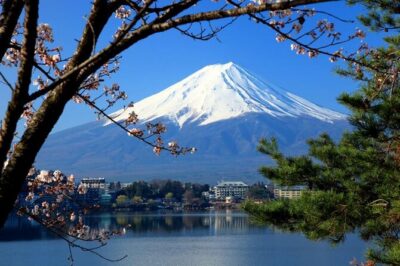
Mt Fuji and Hakone 1-Day Bus Tour Return by Bullet Train
Read our review →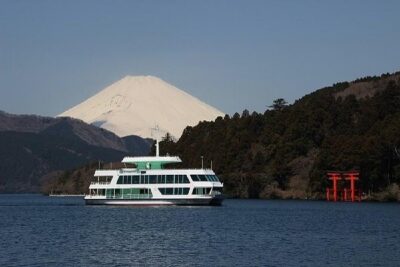
Mt Fuji & Hakone Cruise, Drum Show Bullet Train 1 Day from Tokyo
Read our review →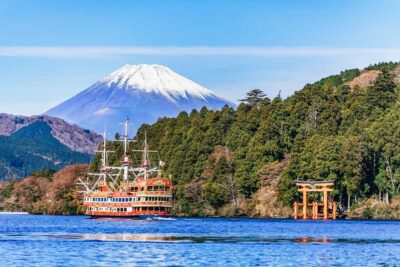
Tokyo Mt Fuji 5th St & Hakone Cruise Bus Tour w/Bullet Train
Read our review →
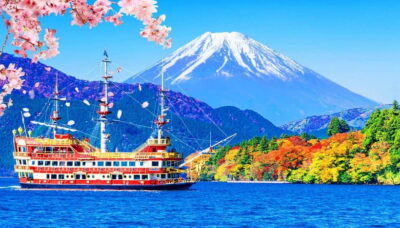
Mt. Fuji Tour, Hakone Ropeway, Owakudani, Lake Ashi
Read our review →
Mt.Fuji,Kawaguchiko Oishi Park,Arakurayama Sengen Park
Read our review →
Mt. Fuji 5th Station & Hakone Cruise 1-Day Bus Tour
Read our review →