
Reviewed · HIKING & TREKKING
Hike Japan Heritage Hakone Hachiri with certified mountain guide
The best part of this outing is that you cross Hakone much as Edo-period travelers did, on old stone paths rather than from a tour bus window. You walk from Hakone Yumoto to Mishima, passing Lake Ashi, the cedar avenue, Hakone Checkpoint, and Yamanaka Castle Ruins.
I like the small group limit of six and the way Aki, also called Akihiro, links the scenery to Japan’s old road system. I also like that the route ends in Mishima, giving you a useful onward connection. The main caution is the physical demand: eight kilometers, steep mountain sections, buses, and seven hours require moderate fitness.
In This Review
- Key details before you book
- Why Hakone Hachiri is more than a forest walk
- Starting at Hakone Yumoto and climbing toward Amazake Tea House
- Lake Ashi, Heiwa no Torii, and the cedar avenue
- Hakone Checkpoint and lunch near Hakone-machi
- The bus transfer and the Shizuoka side of Hachiri
- Yamanaka Castle Ruins and possible Mt Fuji views
- Arriving in Mishima at Mishima Taisha and Genbe River
- What the $158.52 price really covers
- Who will enjoy this seven-hour crossing
- Practical preparation for the trail
- Should you book Hakone Hachiri?
- FAQ
- Where does the Hakone Hachiri tour begin?
- Where does the tour end?
- How long does the experience last?
- How far will I walk?
- Is Mt Fuji guaranteed to be visible?
- What places are included?
- Is lunch included?
- Are local transportation costs included?
- How large is the group?
- What happens if bad weather cancels the tour?
Key details before you book
- Walk an Edo-era highway: Follow the Hakone Hachiri section of the old Tokaido route, including cobblestones and the famous cedar avenue.
- See Hakone from several angles: Lake Ashi, the Torii gate, mountain forests, Yamanaka Castle Ruins, and possible Mt Fuji views all appear along the way.
- Small group, personal guiding: A maximum of six people makes it easier to ask questions and keep a steady pace.
- Finish in Mishima: The tour ends at Mishima Station, with trains and buses for onward travel.
- Budget for extras: The listed price is $158.52, but lunch, local transport, snacks, and an optional Shinkansen ticket cost extra.
- Weather matters: The route depends on suitable conditions, and poor weather can lead to a new date or a full refund.
Why Hakone Hachiri is more than a forest walk
Hakone is often treated as a place for a lake cruise, an onsen stay, or a quick view of Mt Fuji. This hike gives you a different Hakone. You follow the route used by people moving between Edo, now Tokyo, and Kyoto during the 17th century.
That old road was not an easy crossing. The Hakone mountains formed one of the most difficult sections of the Tokaido Highway, and the steep slopes made this a serious part of the journey. Today, you can cover the route with far less hardship, but the stone paving, forest tracks, checkpoint, and castle remains still give the walk a strong sense of place.
I like tours that explain why a path exists, not just where it goes. Aki’s role matters here. The guide carries a national certification and a wilderness first aid certificate, while also handling the practical changes between walking and local buses.
This is not a nonstop trail hike. You will use a shared taxi at the start and buses later in the day. That makes the route possible within seven hours, but it also means you should think of this as a guided heritage crossing, not a pure wilderness trek.
More Hiking Tours in Hakone
- Hike Hakone Hachiri
★ 5.0 · 48 reviews - Traverse Outer Rim of Hakone Caldera and Enjoy Onsen Hiking Tour
★ 5.0 · 30 reviews - Hakone Hachiri: Old Tokaido Highway Hiking Tour
★ 4.9 · 22 reviews
Starting at Hakone Yumoto and climbing toward Amazake Tea House
The meeting point is Hakone Yumoto Station at 9:00 a.m. From there, the group uses a shared taxi to reach the trailhead. The extra transport fee is about 2,000 yen for the shared taxi and buses during the tour.
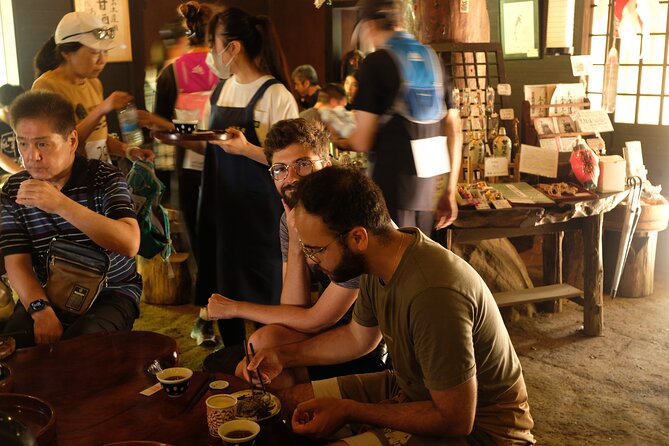
After roughly an hour of walking, you reach the area around Hakone Amazake Tea House and a woodcrafting village. The itinerary allows about two hours for this opening section. You can see local artisans working with wood, a fitting introduction to Hakone’s long connection with forest products and skilled craft.
The first section sets the tone. You are not simply walking from one scenic stop to another. The guide helps connect the forest, mountain road, and local trades to the people who once crossed this route.
Amazake is a traditional sweet drink made from fermented rice, and the tea house is a natural pause along the historic road. Amazake and snacks are not included, so bring cash if you want something along the way. The supplied details do not give a fixed menu or exact stop duration, so treat this as a cultural and refreshment point rather than a guaranteed meal.
You should also expect some uphill walking early in the day. The full route covers about eight kilometers, but distance alone does not tell the whole story. Hakone’s mountain paths and old paving can make the walk feel more demanding than a flat city stroll.
Lake Ashi, Heiwa no Torii, and the cedar avenue
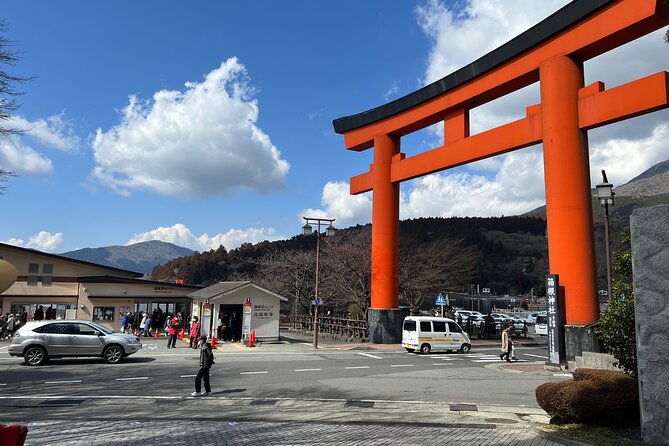
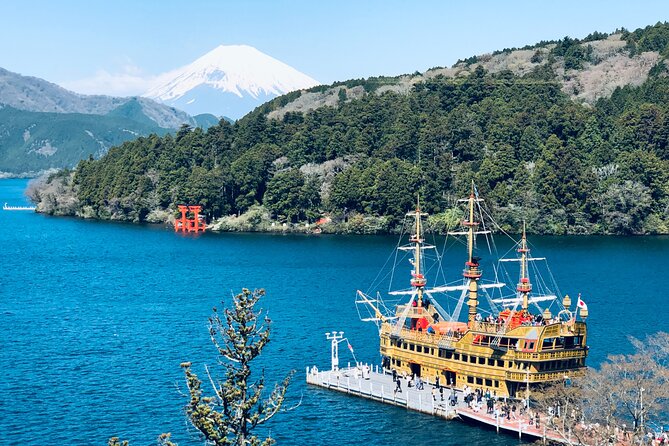
The next major section brings you to Lake Ashi. You walk along the shore near Motohakone-Ko Pier and see Heiwa no Torii, the large red gate associated with Hakone Shrine. When conditions cooperate, Mt Fuji appears behind the lake and gate, creating one of the tour’s most memorable views.
I would keep expectations sensible here. Mt Fuji is weather dependent, and clouds or rain can cover it. One of the strongest points of this route is that the day still has value when Fuji disappears. The lake, shrine gate, forest, and historic road remain.
The Lake Ashi section lasts about an hour and a half. That gives you time to walk rather than rush past the shoreline for a single photograph. The guide can also explain how this part of the road fits into the old crossing of Hakone.
From the lake, the route continues through the Cedar Trees of Hakone Old Road. The large cedar avenue is one of the clearest reminders that this was once a major highway. The trees create a shaded corridor, while the old road surface keeps your attention on the ground as much as the view.
Cobblestones are atmospheric, but they are not as easy underfoot as a smooth pavement. Wear shoes with good grip and make sure you are comfortable walking on uneven surfaces. The tour data does not promise equipment rental, so arrive prepared.
Hakone Checkpoint and lunch near Hakone-machi
After the cedar avenue, you reach Hakone Checkpoint. During the Edo period, this checkpoint controlled movement along the Tokaido Highway. The guide compares it to a modern immigration department, a useful shortcut for understanding its purpose.
The checkpoint adds human drama to the route. This was not just a scenic mountain pass. It was a controlled gateway, and people crossing Japan’s main road had to deal with official inspection.
You have about 30 minutes at the checkpoint before lunch near Hakone-machi. Lunch takes place at a local Japanese restaurant, but the meal is not included. Plan on around 2,000 yen for your group’s lunch, though the exact cost depends on what you order.
This is a good place to think about pacing. By this point you have already walked through the opening mountain section, reached the lake, and passed under the cedar trees. A proper meal break helps, but you still have more walking ahead.
More Hakone trips and passes:
- Mt Fuji and Hakone 1-Day Bus Tour Return by Bullet Train
★ 5.0 · 26,383 reviews - Mt Fuji & Hakone Cruise, Drum Show Bullet Train 1 Day from Tokyo
★ 4.0 · 7,413 reviews - Tokyo Mt Fuji 5th St & Hakone Cruise Bus Tour w/Bullet Train
★ 4.4 · 5,024 reviews - Tokyo: Mt. Fuji Tour, Hakone Ropeway, Owakudani, Lake Ashi
★ 4.7 · 4,002 reviews
The bus transfer and the Shizuoka side of Hachiri
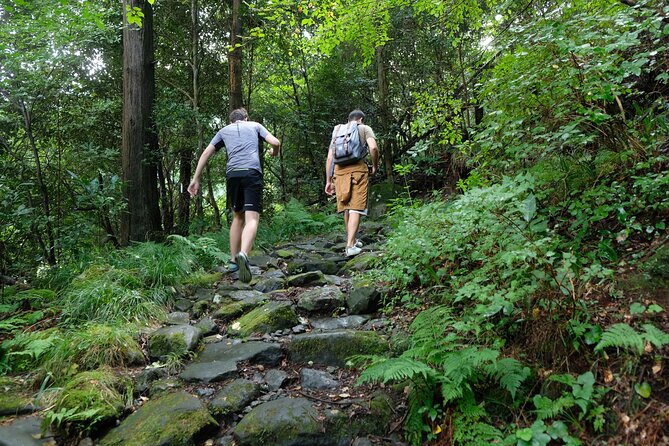
After lunch, you take a bus to the trailhead on the Shizuoka side of the Hachiri route. The bus also skips a temporarily closed section of the path. This is practical rather than romantic, but it keeps the day moving and avoids a blocked section.
The bus connection is one reason this experience works as a cross-mountain itinerary. You see more of the historic route than you likely could by walking every section in one day, while still spending much of the outing on foot.
It also means the experience has a slightly less predictable rhythm than a single continuous hike. You need to be ready to leave the trail, board a local bus, and resume walking later. Transport costs are extra, and the total local transport budget is about 2,000 yen.
The supplied schedule gives about one hour for the Hakone-machi portion, including lunch and the transfer toward the next trailhead. That is not a long restaurant stop, so keep the meal efficient and follow Aki’s timing.
Yamanaka Castle Ruins and possible Mt Fuji views
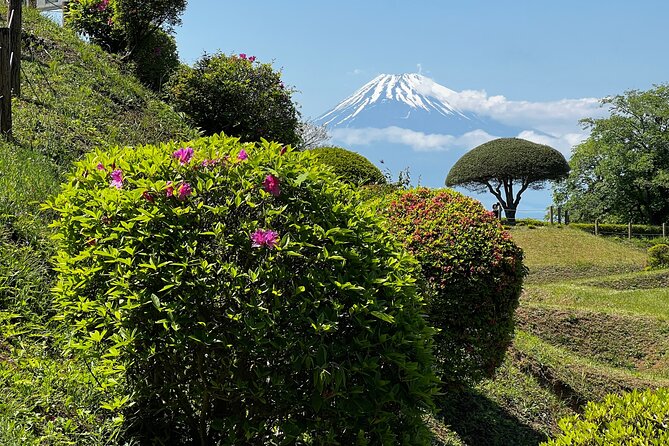
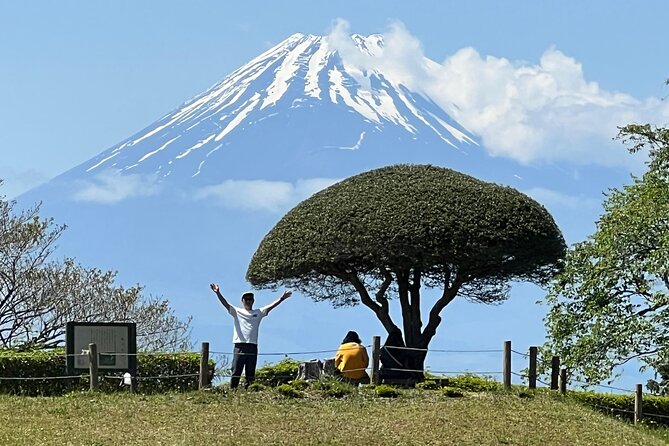
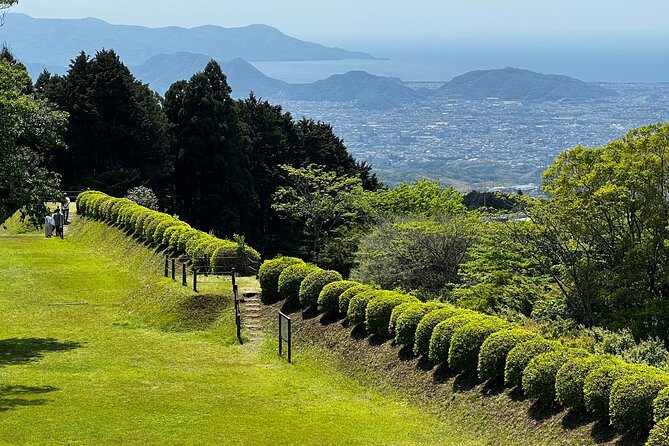
The route continues along Hachiri toward Yamanaka Castle Ruins. You have about an hour here. The ruins offer another way to understand the mountain crossing, this time through military history rather than road control.
The site is especially appealing because it combines open views with the old route. If the air is clear, you may see Mt Fuji from a different angle than at Lake Ashi. That variety is a major strength of the day. Even if Fuji remains hidden, the change from lake shore to mountain ruin gives the tour a fresh final section.
Do not expect a restored castle with grand buildings. The attraction is the remains and their setting along the Hachiri Heritage path. The value comes from seeing how roads, checkpoints, fortifications, and mountain terrain worked together.
The hike’s mix of cultural sites and natural surroundings is also where Aki’s guiding has the most effect. You can walk past a stone path or earthwork without knowing what you are seeing. A guide who explains the setting turns an ordinary slope into part of a much larger story.
Arriving in Mishima at Mishima Taisha and Genbe River
The final section leads to Mishima. The group visits Mishima Taisha, described as the city’s biggest shrine, and Genbe River before finishing at Mishima Station. This gives the tour a proper endpoint rather than leaving you at a remote trailhead.
Ending at a station is a smart design choice. From Mishima, you can continue by bus toward Hakone and other parts of Izu. You can also take a Shinkansen to Odawara in about 15 minutes for around 2,500 yen, or to Tokyo in about 45 minutes for roughly 4,400 yen.
Those rail fares are not included. If you are using the tour as a one-way crossing from Hakone to a Tokyo-area base, add the Shinkansen cost before judging the total price.
The visit to Mishima Taisha and Genbe River also softens the transition from mountain path to city. You finish with a shrine and riverside stop, then reach the station after about an hour in the Mishima section.
What the $158.52 price really covers
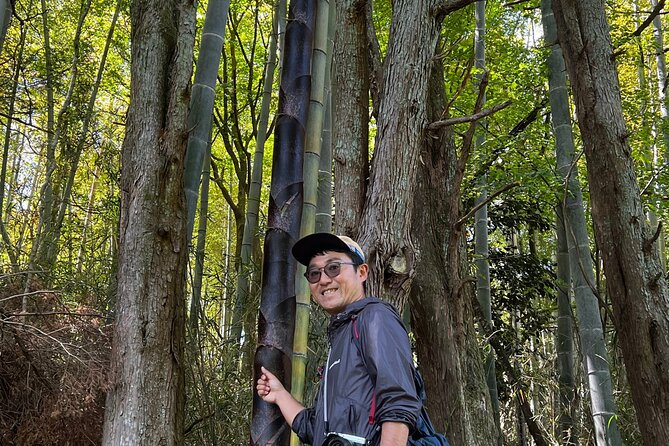
At $158.52 per person, this is not a cheap way to get from Hakone to Mishima. It is a full-day guided experience that includes a national certified mountain guide with wilderness first aid training, route planning, heritage interpretation, and a small group capped at six.
The price makes more sense if you value access to local history and route management. Aki handles the mix of shared taxi, walking, and local buses, while helping you understand sites that could be easy to miss or misunderstand on your own.
You should add about 2,000 yen for local transport and about 2,000 yen for lunch. Amazake and snacks cost extra. If you then take the Shinkansen from Mishima, the day’s transport budget rises again.
Group discounts may reduce the per-person cost for some bookings. The exact discount is not provided, so check the price for your party before deciding.
The tour has an average booking lead time of 61 days. That suggests planning ahead is wise, especially if your Japan itinerary has fixed hotel and rail reservations. The cancellation terms are strict: the booking is non-refundable and cannot be changed, except that poor weather cancellation brings a new date or a full refund.
Who will enjoy this seven-hour crossing
I would choose this for someone who wants old roads, local context, and steady outdoor activity more than a quick checklist of Hakone attractions. It suits hikers with moderate fitness who can manage around eight kilometers over mountain terrain.
The group size is a real advantage for families and small parties. Aki has been praised for taking family photos and for a calm, kind manner, details that matter when the day includes a lot of walking and several transport changes.
The guide’s style also appears suited to people who care about both nature and history. The route includes quiet trails, forest scenery, old stones, lake views, shrine architecture, a checkpoint, and castle remains. You are not locked into one subject for seven hours.
This is less suitable if you want a relaxed sightseeing day with little walking. It is also a poor fit if you need a fixed view of Mt Fuji. Fuji is visible only if weather permits, and the tour still runs as an outdoor heritage walk when clouds cover the mountain, subject to the provider’s weather decision.
Service animals are allowed, and the tour operates near public transportation. No other specific accessibility details are provided, so ask the provider directly if uneven paths, slopes, or bus transfers are a concern.
Practical preparation for the trail
Wear sturdy walking shoes. The old cobblestone road and mountain sections call for better support than ordinary city sneakers.
Bring money for lunch, local transport, and optional amazake or snacks. A small amount of extra food and water is sensible for a seven-hour day, though the supplied details do not specify refreshment facilities along every section.
Keep your schedule open at the end. The tour ends at Mishima Station, but you still need to arrange your onward train or bus. If you plan to take the Shinkansen to Odawara or Tokyo, check departure times after booking rather than assuming the tour will arrive at a precise minute.
Most important, watch the weather forecast. Clouds can reduce the views, and poor conditions can cancel the outing. Since ordinary cancellations are non-refundable, do not book this as a casual last-minute option unless your plans can absorb that risk.
Should you book Hakone Hachiri?
Book it if you want to understand Hakone by walking through it. The route gives you a rare combination: an old Tokaido road, Lake Ashi, Heiwa no Torii, cedar trees, a historic checkpoint, castle ruins, Mishima Taisha, and a practical station finish.
The strongest reasons to go are the small group, Aki’s personal guiding, and the chance to see Hakone from several angles. The main reasons to hesitate are the price, extra transport and lunch costs, moderate physical demand, and weather-dependent Fuji views.
If you have only one day in Hakone and prefer a gentle sightseeing circuit, choose something less strenuous. If you want a meaningful day on foot and like the idea of following an Edo-era route from Kanagawa into Shizuoka, this is a well-planned choice.
FAQ
Where does the Hakone Hachiri tour begin?
The tour begins at Hakone Yumoto Station in Hakone, Kanagawa. The meeting time is 9:00 a.m.
Where does the tour end?
The tour ends at Mishima Station in Mishima, Shizuoka. You can continue from there by train or bus.
How long does the experience last?
The tour lasts about seven hours.
How far will I walk?
You will hike around eight kilometers in total. The route includes mountain paths and cobblestone sections.
Is Mt Fuji guaranteed to be visible?
No. Mt Fuji can be seen from Lake Ashi and Yamanaka Castle Ruins if weather conditions permit.
What places are included?
The route includes Hakone Amazake Tea House, Lake Ashi, Heiwa no Torii, the Cedar Trees of Hakone Old Road, Hakone Checkpoint, Yamanaka Castle Ruins, Mishima Taisha, and Genbe River.
Is lunch included?
No. Lunch is not included. The expected cost is around 2,000 yen for your group.
Are local transportation costs included?
No. Shared taxi and bus fares are extra and cost around 2,000 yen in total.
How large is the group?
The tour has a maximum of six people.
What happens if bad weather cancels the tour?
If the provider cancels because of poor weather, you can receive a different date or a full refund. The experience is otherwise non-refundable and cannot be changed.
More Historical Tours in Hakone
- Tokyo: Imperial Palace and Shogun Historical Walking Tour
★ 5.0 · 2,251 reviews - Tokyo: Imperial Palace Japanese History Walking Tour
★ 4.9 · 987 reviews - Yanaka Walking Tour: Historic and Traditional District of Tokyo
★ 5.0 · 530 reviews - Tokyo: Shinjuku Historical Walking Tour & Secret Backstreets
★ 5.0 · 530 reviews
More Hiking & Trekking in Hakone
- Full Day Hiking Tour at Mt.Takao including Hot Spring
★ 5.0 · 52 reviews - Yokosuka : Scenic Hidden Gem Hike and Naval Port Cruise
★ 5.0 · 13 reviews
New on our Hakone list
- From Tokyo: Mount Fuji & Hakone Full Day Private Tour★ 4.9 · 25 reviews
- Tokyo: Mt. Fuji, Owakudani, Hakone Shrine, & Open-Air Museum★ 4.7 · 25 reviews
- Tokyo:Mt Fuji & Hakone Day Tour with English Speaking Driver★ 5.0 · 26 reviews
- Full Day Private Tour in Mt. Fuji and Hakone★ 4.5 · 30 reviews
- Odawara: Odawara Castle Tenshukaku Entrance Ticket★ 4.2 · 30 reviews
- Mt.Fuji view Hakone Private tour with English speaking driver★ 5.0 · 33 reviews
- “Tokyo to Mt. Fuji & Hakone: Private Customizable Day Trip”★ 5.0 · 45 reviews
- Mount Fuji and Hakone Private Tour from Tokyo (Customizable)★ 5.0 · 45 reviews
Hiking & Trekking, compared.

Full Day Hiking Tour at Mt.Takao including Hot Spring
Read our review →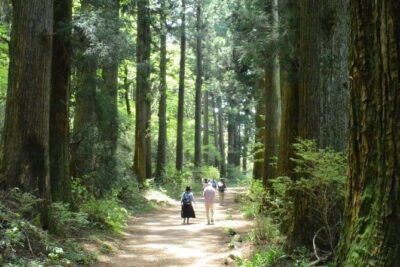

Traverse Outer Rim of Hakone Caldera and Enjoy Onsen Hiking Tour
Read our review →
Hakone Hachiri: Old Tokaido Highway Hiking Tour
Read our review →
Yokosuka : Scenic Hidden Gem Hike and Naval Port Cruise
Read our review →Browse the lists this tour appears in