
Reviewed · HISTORICAL TOURS
Tokyo: Imperial Palace Japanese History Walking Tour
The most interesting part of this Tokyo walk is the way it connects two eras in one place. You follow the remains of Edo Castle, the seat of the shogun, then learn how that military stronghold became the Emperor’s palace. Mika and Natsumi are among the guides praised for clear storytelling, while Laki and Alexandre have also led engaging tours.
I like the interactive history lesson, which turns farmers, samurai, daimyo, and shogun into a system you can actually understand. I also like the calm garden stops, especially the bamboo and royal koi. The main drawback is practical: you walk outdoors for about two hours, rain or shine, and Tokyo’s summer heat can be tough.
In This Review
- Key Points Before You Book
- Why Edo Castle Explains Modern Tokyo
- Meeting at Wadakuramon Fountain Park
- Passing Through Otemon Gate
- Reading the Castle Ruins and Stone Foundations
- Gardens, Bamboo, and Trees From Across Japan
- Royal Koi and the More Relaxed End of the Walk
- The Guides Make the Difference
- How Much Value Do You Get for $32?
- Weather, Walking, and Who Should Book
- Is This Imperial Palace Walk Worth Booking?
- FAQ
- Where does the Imperial Palace walking tour begin?
- How do I identify the guide?
- Where does the tour end?
- What languages are available?
- Does the tour enter the inner palace?
- Can I see the original Edo Castle?
- What will I see in the gardens?
- Does the tour run in bad weather?
- Is the tour suitable for wheelchair users?
- Can I cancel for a full refund?
Key Points Before You Book
- Edo Castle becomes the main character: See the old castle site, stonework, ruins, and a model of the original complex.
- History is explained as a story: Learn how the samurai order worked and how Japan changed from the Edo period to the Meiji era.
- The gardens provide welcome relief: Bamboo, shaded paths, trees donated from around Japan, and koi make this more than a lecture beside ruins.
- Guides add useful local help: Guides such as Mika, Natsumi, Laki, and Alexandre are praised for answering questions and suggesting food and sightseeing stops.
- The inner palace is not included: You remain in the public Eastern Gardens and do not enter the private palace area.
- Plan for outdoor walking: Wear weather-ready clothes, comfortable shoes, and protection from sun and mosquitoes.
Why Edo Castle Explains Modern Tokyo
Tokyo’s Imperial Palace can be hard to understand on your own. You see broad grounds, walls, gates, trees, and an occasional ruin, but the original castle buildings are mostly gone. This tour gives those quiet spaces a clear purpose.
The ground beneath the gardens was once Edo Castle, a major center of shogun power for more than 350 years. The tour explains how the shogun governed Japan, how social ranks worked, and how political authority later shifted back to the Emperor.
That change matters. The palace is not just a royal site. It is also a physical record of Japan’s move from a military government to the modern imperial state. Once you understand that story, the gates and foundations stop looking like isolated stone features.
I find this useful early in a Tokyo visit because it gives you a framework for later sightseeing. Temples, shrines, former samurai districts, and Meiji era sites make more sense after you know who held power and how Japanese society was organized.
A few more Tokyo bookings worth comparing
- Tokyo: Imperial Palace and Shogun Historical Walking Tour
★ 5.0 · 2,251 reviews - Yanaka Walking Tour: Historic and Traditional District of Tokyo
★ 5.0 · 530 reviews - Tokyo: Shinjuku Historical Walking Tour & Secret Backstreets
★ 5.0 · 530 reviews
Meeting at Wadakuramon Fountain Park
The tour begins near Tokyo Station or Otemachi Station. From either station, allow about five to ten minutes to walk to Wadakuramon fountain park. Your guide waits near the Starbucks by the fountain and carries a Sunrise Adventure sign.
This meeting point is easy to reach, but do not rush it. Tokyo Station and Otemachi are large areas, and a short walk can take longer if you exit through the wrong passage. Check your route before leaving the train and arrive with enough time to locate the fountain and Starbucks.
The guide’s sign matters here. It gives you a simple way to identify the right person in a busy city center. Guides have also been praised for making themselves easy to find and for helping with practical details once the walk begins.
The tour ends back at the same meeting point. That makes it convenient if you plan to continue around Tokyo Station, head back to your hotel, or stop for lunch nearby.
Passing Through Otemon Gate
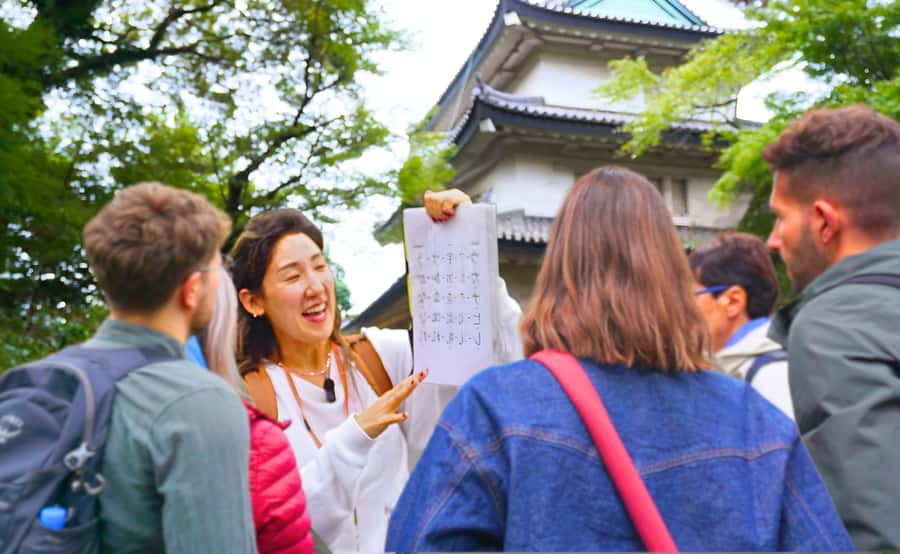
From the meeting point, you walk toward Otemon Gate, the grand entrance to the palace grounds. The gate is an important first lesson because it shows how access to Edo Castle was controlled.
Your guide uses the approach and entrance to explain the castle’s scale and purpose. This is where the idea of walking in the shogun’s footsteps becomes more than a slogan. You are moving through the same broad historic setting, even though the original castle buildings are no longer standing.
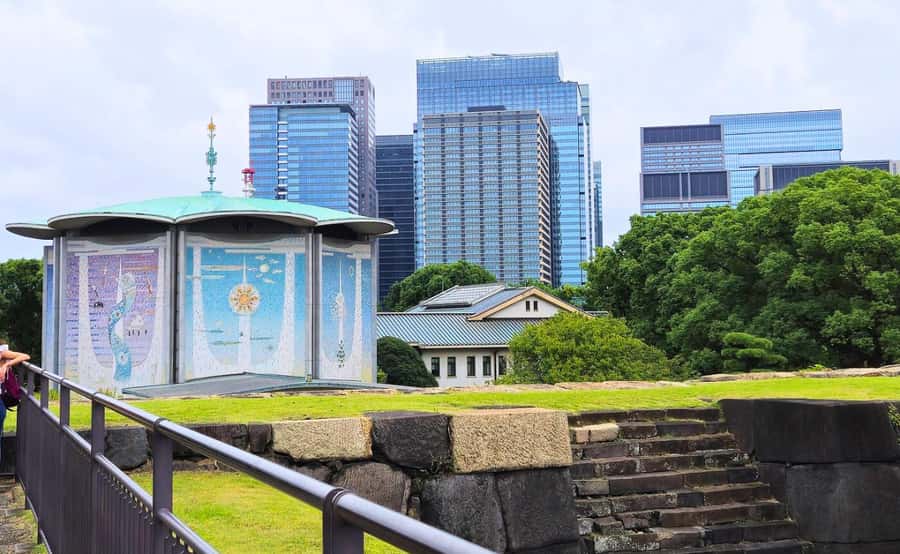
The missing castle is not a flaw in the tour, but it does require imagination. You will not tour preserved palace rooms or climb through a complete fortress. Instead, you see the surviving setting and use the guide’s explanations and a miniature model to picture what once occupied the grounds.
That model is especially helpful. A city that now feels orderly and open once held a vast castle complex with walls, gates, residences, and working spaces. Seeing the former arrangement gives you a better sense of what the ruins meant.
Reading the Castle Ruins and Stone Foundations
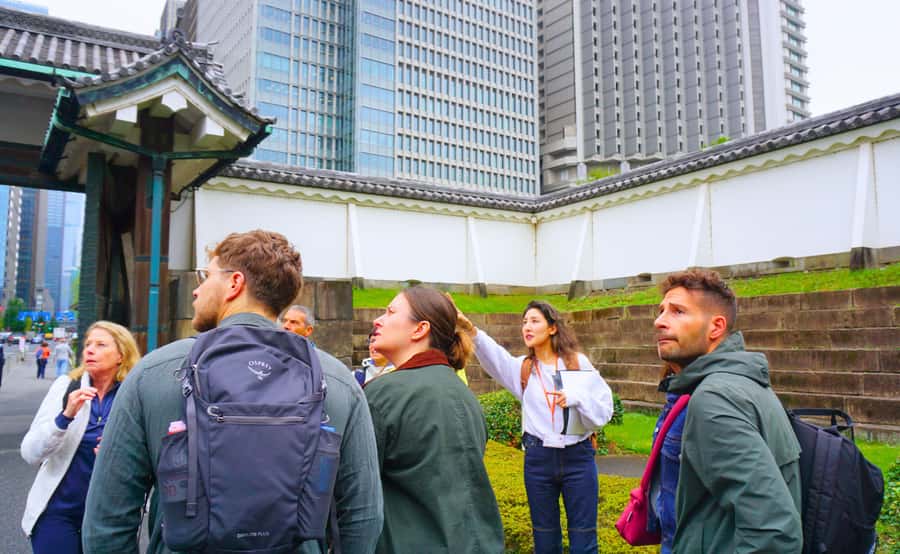
Inside the grounds, the tour focuses on remains of Edo Castle and the ways the site functioned. Your guide explains the castle’s design, the role of its defenses, and the political world connected to it.
The stone walls and foundations are not decorated like a famous European castle. Their value comes from scale, placement, and context. Without guidance, you might take a quick photograph and keep walking. With a guide, you learn to notice how the walls mark power, security, and rank.
The tour also covers the old social order of farmer, samurai, daimyo, and shogun. This is one of the strongest parts for anyone new to Japanese history because it turns a complicated period into a sequence of roles.
You also hear about the transition from the Edo period to the Meiji era and the change from shogun rule to imperial government. Guides such as Natsumi have been praised for explaining this shift with clear stories, while Laki and other guides add humor and invite questions.
The exact style depends on your guide. Some sessions are more interactive, with questions for the group. Others may feel more like a flowing talk. The common strength is that the guide provides the missing structure.
More walking routes in Tokyo:
- Tokyo Tsukiji Fish Market Food and Culture Walking Tour
★ 5.0 · 3,184 reviews - Tokyo: Shinjuku Local Bar and Izakaya Guided Walking Tour
★ 4.9 · 1,794 reviews - Tokyo: Tsukiji Fish Market Food and Walking tour
★ 5.0 · 1,724 reviews - Tokyo: Asakusa Walking Tour with Sensoji Temple Visit
★ 4.8 · 1,583 reviews
Gardens, Bamboo, and Trees From Across Japan

The Eastern Gardens soften the political story. After stone walls and castle foundations, you walk through planted areas with broad trees, bamboo, and quieter paths.
The gardens are not simply decoration. They help you see how the palace grounds changed over time. A place built for military authority now includes carefully maintained public garden areas, showing a different side of the imperial site.
The bamboo forest is a pleasant stop and a strong photo opportunity. It is also a reminder to pace yourself. The tour is not a race from one monument to the next, and the shaded sections can be welcome in hot weather.
You also see trees gifted to the Emperor from different parts of Japan. Your guide explains their connection to the palace and the country beyond Tokyo. This detail gives the grounds a national dimension. The gardens are not only about the capital. They also reflect ties between the imperial household and regions across Japan.
Shade varies along the route. In summer, you should expect periods in full sun, even though guides make an effort to pause beneath trees when possible. Bring water, wear a hat, and choose light clothing. The walk takes place in all weather conditions, so rain gear matters too.
Royal Koi and the More Relaxed End of the Walk
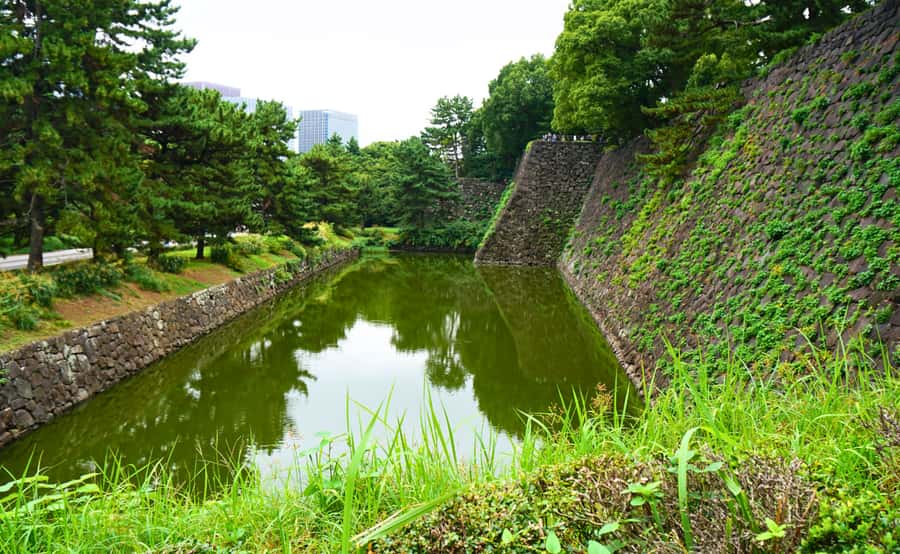
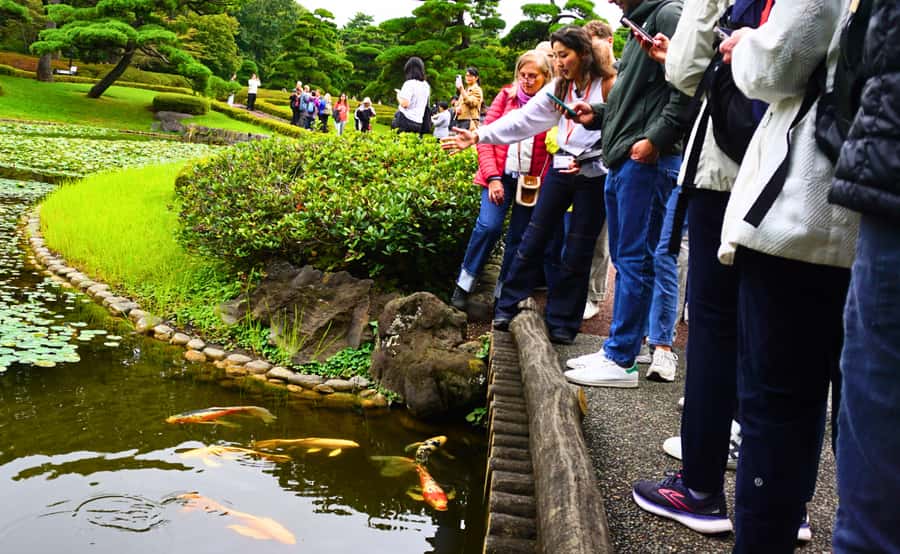
The koi ponds offer one of the most memorable stops for many people. These are described as royal koi, and they bring a living element to a tour otherwise filled with walls, dates, and political change.
This is a good point to slow down and take photographs. Guides may also help take pictures, a small service that makes a difference when you are traveling alone or want a group photo.
The koi stop helps balance the tour. You get history, but you also get gardens, water, trees, and time to look around. Families may find this part especially useful because the fish and open grounds give younger children a break from formal explanation.
Do not expect an indoor palace visit at the end. The inner palace is not open to the public as part of this activity, and access to it is not included. The experience remains focused on the public garden grounds, castle remains, and outdoor history.
The Guides Make the Difference

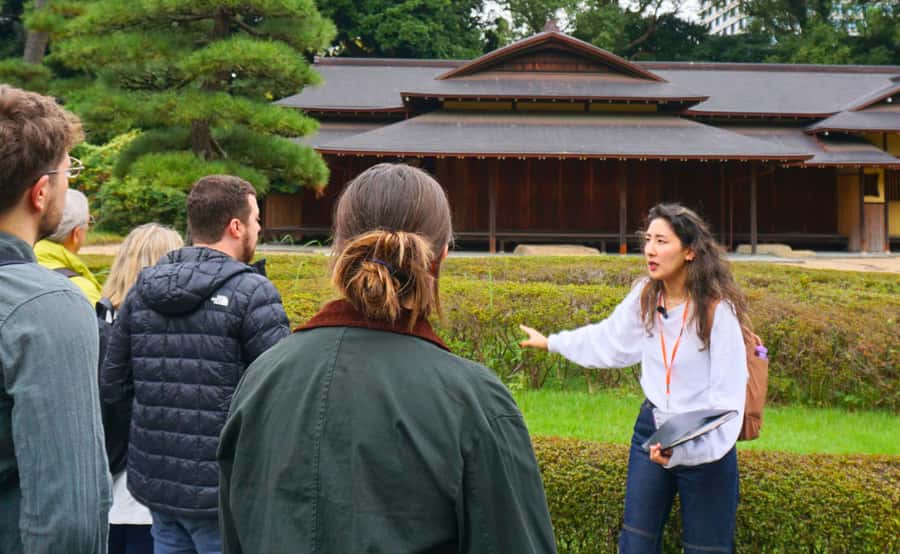
The strongest part of this experience is the guide. The subject is interesting, but the site needs explanation. Several guides have earned particular praise for their approach.
Mika is noted for clear English, friendly answers, photo help, and attention to the group’s comfort. In hot weather, she has paused in shaded areas and provided small useful items, including mosquito spray and heat relief.
Natsumi is praised for storytelling, clear explanations, and practical suggestions for food and places to visit after the tour. She is a good fit if you want the palace visit to serve as an introduction to Tokyo rather than a stand-alone history lesson.
Laki is described as warm, energetic, patient, and good at making the walk interactive. Alexandre has led tours in both English and French and is noted for spending extra time with questions and offering cultural and etiquette advice.
Other guides, including Nico, Hugo, Arief, Fei, and Lucky, bring their own personalities. Lucky, in particular, has been praised for engaging families and helping with photographs. You cannot choose a specific guide unless the operator confirms it, so treat these names as examples of the team rather than a promise.
The listed languages are English and French. If you need French, confirm the available departure before booking. The guide’s ability to answer questions is valuable here because Japanese history has unfamiliar names, titles, and political terms.
How Much Value Do You Get for $32?
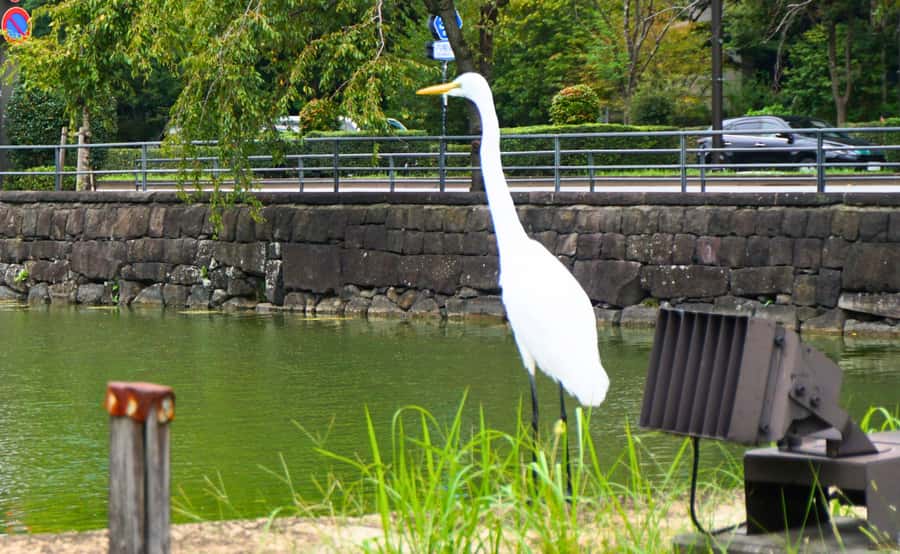
At $32 per person, this is a reasonably priced guided introduction to one of Tokyo’s most important sites. You are paying mainly for interpretation, not for an expensive entrance attraction. That distinction matters because the palace grounds themselves do not offer a complete castle interior.
I think the price works best if you are visiting Tokyo for the first time or do not already have a strong grasp of Japanese history. The guide helps you understand what you are seeing, and that can save you from treating the gardens as a pleasant but vague walk.
The value is also good for solo visitors and families. A guide can take photographs, answer questions, keep the group moving, and suggest what to do next. Several guides provide restaurant and sightseeing tips, which can add practical value beyond the advertised route.
If you prefer to wander silently, stop whenever you like, or study every stone at your own pace, a self-guided visit may suit you better. You also need to accept that much of the castle is gone. This is an interpretation-led tour of a historic site, not a preserved castle tour.
The reserve and pay later option keeps your plans flexible, and cancellation is available up to 24 hours before the activity for a full refund. Those terms reduce the risk of booking while you are still arranging a Tokyo schedule.
Weather, Walking, and Who Should Book
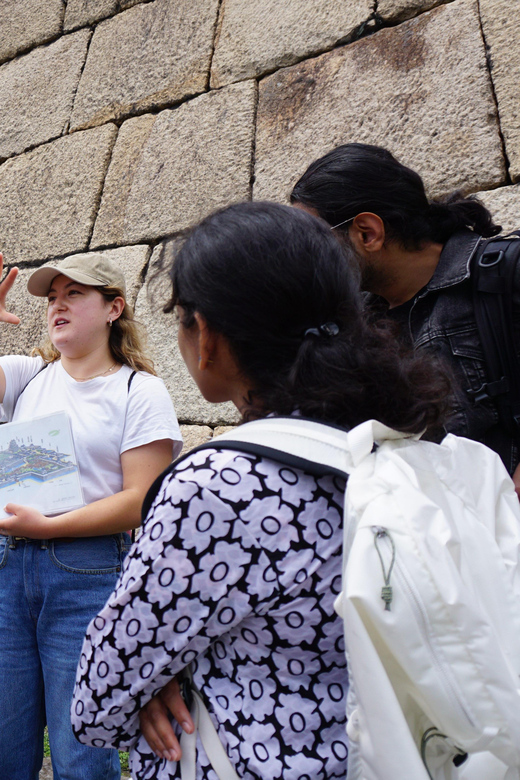
This is an outdoor walk with no weather guarantee. Tokyo’s summer heat can make the route tiring, even with shade. Rain can also change the experience, so check the forecast and dress for conditions rather than assuming the palace grounds will provide shelter.
Wear comfortable shoes and clothes suited to the weather. Mosquitoes can be present in the garden areas, and mosquito spray may be useful. Bring water, especially for a warm morning or afternoon.
The activity is not suitable for pregnant women, people with back, heart, or mobility problems, wheelchair users, anyone recovering from recent surgery, or people with a low level of fitness. These restrictions make sense because the tour involves outdoor walking and uneven historic grounds.
History fans will get the most from it, but you do not need prior study. The guide builds the story from basic ranks and political changes, then adds details about architecture, culture, and daily life.
Families can also enjoy it, especially with an interactive guide. Children may not want two hours of dates and titles, but questions, koi, bamboo, and castle stories can keep the visit moving.
Is This Imperial Palace Walk Worth Booking?
Book it if you want the Imperial Palace grounds to make sense, not just look attractive. For $32, you get a roughly two-hour walk, a clear introduction to Edo Castle and the shogun system, garden stops, photo opportunities, and a guide who can help shape the rest of your Tokyo plans.
Skip it if you want to enter the inner palace, see intact castle rooms, or avoid walking outdoors in heat and rain. The tour cannot provide access to the private palace, and the original castle is represented mainly by ruins, foundations, and explanation.
For most first-time visitors, I would place this near the start of a Tokyo stay. It gives you historical bearings before you visit other districts, and guides such as Mika, Natsumi, Laki, and Alexandre can make the story approachable without turning it into a classroom lecture.
FAQ
Where does the Imperial Palace walking tour begin?
The meeting point is near the Starbucks by the fountain in Wadakuramon fountain park. The park is about a five to ten minute walk from Tokyo Station or Otemachi Station.
How do I identify the guide?
The guide waits near the fountain and holds a sign with the Sunrise Adventure logo.
Where does the tour end?
The activity ends back at the original meeting point near Wadakuramon fountain park.
What languages are available?
The tour is available in English and French.
Does the tour enter the inner palace?
No. The inner palace is not open to the public, and access to it is not included.
Can I see the original Edo Castle?
The original castle buildings are no longer there. You see castle remains, foundations, related grounds, and a miniature model showing what the complex looked like in the past.
What will I see in the gardens?
The walk includes a beautiful garden, bamboo, trees gifted to the Emperor from different parts of Japan, old samurai-related sites, and royal koi fish.
Does the tour run in bad weather?
Yes. The tour takes place rain or shine, so you should wear clothing suitable for the forecast.
Is the tour suitable for wheelchair users?
No. The activity is not suitable for wheelchair users or people with mobility impairments.
Can I cancel for a full refund?
You can cancel up to 24 hours in advance for a full refund. The reserve and pay later option also lets you hold a place without paying immediately.
New on our Tokyo list
- From Tokyo: Mount Fuji & Hakone Full Day Private Tour★ 4.9 · 25 reviews
- Tokyo Spectacular View Day-Cruise in 90 Minutes★ 5.0 · 25 reviews
- Real Tokyo Runner Club : Daikoku Car Meet Night Tour with JDM Car★ 5.0 · 25 reviews
- 2.5 Hour-Guided Cycle Tour in the Central Tokyo★ 5.0 · 25 reviews
- Ramen Making from Scratch +Akihabara Tour –Cooking Class★ 5.0 · 25 reviews
- [Self-Drive] Tokyo & Daikoku Custom Car Driving Tour★ 4.9 · 25 reviews
- Tokyo: 2-Hour Night Bike Tour of the City’s Hidden Gems★ 4.9 · 25 reviews
- Samurai themed Entertainment show in Shinjuku★ 4.5 · 25 reviews
Historical Tours, compared.

Imperial Palace and Shogun Historical Walking Tour
Read our review →
Yanaka Walking Tour: Historic and Traditional District of Tokyo
Read our review →
Shinjuku Historical Walking Tour & Secret Backstreets
Read our review →
Mt. Fuji Heritage Tour: Traditional Villages, Lakes & Shrine
Read our review →

The Best of Izakaya in Shinjuku Food & Cultural Tour
Read our review →
Yanaka Historical Walking Tour in Tokyo’s Old Town
Read our review →
Browse the lists this tour appears in