

Reviewed · HISTORICAL TOURS
Tokyo: Imperial Palace and Shogun Historical Walking Tour
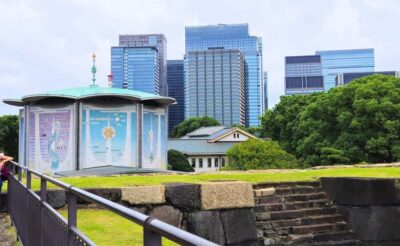
Tokyo’s Imperial Palace East Gardens give you something rare in central Tokyo: a quiet walk through the former grounds of Edo Castle, where stone gates, massive walls, and the base of the old keep tell the story better than a museum display. The garden is free to enter on your own, but this tour adds a guide to explain what you are seeing.
I like the small group limit of 15, which makes it easier to ask questions, and the $22 price, a fair fee for two hours of local context. The main drawback is that the experience depends heavily on your guide. Jim, Tony, Miguel, Izzy, and others have earned praise for clear storytelling, while a few guests found the history too long or the meeting communication poor.
In This Review
- Key points at a glance
- Why the East Gardens tell Tokyo’s story so well
- From Wadakura Fountain Park to the castle ruins
- Standing on the Edo Castle keep foundation
- Ninomaru Garden and the quieter side of Edo
- A small group makes the history easier to follow
- What the guide adds for $22
- The guide style you are most likely to appreciate
- Timing, walking, and practical comfort
- Who should book this Imperial Palace walk
- Should you book it?
- FAQ
- How long does the Imperial Palace and Shogun Historical Walking Tour last?
- What does the tour include?
- Where does the tour start and finish?
- How large is the group?
- Is the tour suitable for most people?
- Is public transportation available near the meeting point?
- Can I cancel for a full refund?
Key points at a glance
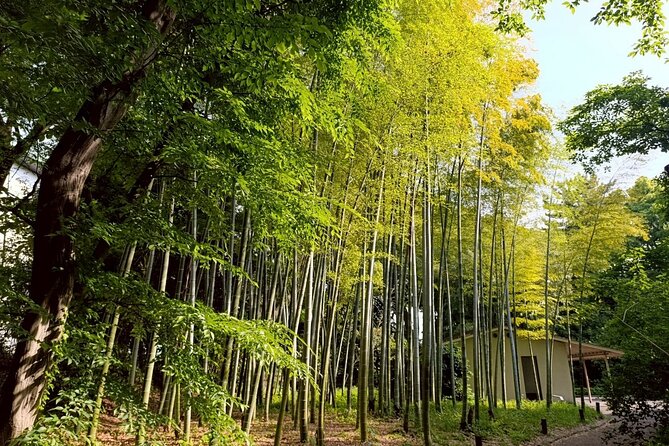
- Walk on the former Edo Castle grounds: See imposing gates, stone walls, and the foundation of the old castle keep.
- Ninomaru Garden adds calm: Ponds and seasonal flowers show the refined side of the Edo period.
- Guides shape the experience: Jim, Tony, Miguel, Izzy, Lasse, Michi, and others have led tours, with styles ranging from brisk and friendly to highly detailed.
- The group stays intimate: A maximum of 15 people is small enough for questions and easier movement through the grounds.
- Allow for slopes and steady walking: This is not a ride-by sightseeing trip. You will walk through open palace grounds for roughly two hours.
- Meet at Starbucks near Wadakura Fountain Park: The tour starts at 3-1 Kōkyogaien in Chiyoda City and returns to the same meeting point.
Why the East Gardens tell Tokyo’s story so well
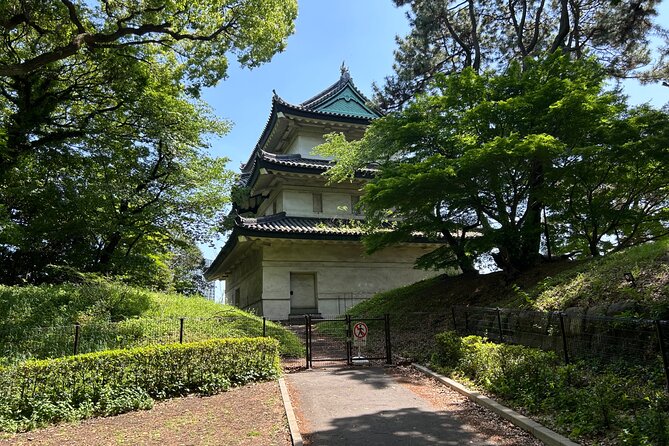
The Imperial Palace is not simply a royal residence behind guarded gates. Its East Gardens occupy part of the former Edo Castle, the center of political power during Japan’s shogun era. You walk across a site where military authority, court ceremony, and modern government all meet.
That gives this outing more substance than a quick look at palace walls. You are not entering the private palace buildings, but you are seeing the old castle grounds and learning how the site changed from the age of feudal lords to the modern imperial family.
I especially like the contrast. One moment you are facing huge defensive stones and the remains of a castle keep. Soon after, you are beside a quiet pond in Ninomaru Garden, looking at carefully arranged plantings and seasonal flowers. The shift from military power to garden design helps make Japanese history easier to picture.
A guide is useful here because many details are easy to miss. A stone foundation can look like a pile of old masonry until someone explains that it marked the base of one of Japan’s most important castle structures. A gate can seem decorative until you understand its role in controlling access and displaying status.
A few more Tokyo bookings worth comparing
- Tokyo: Imperial Palace Japanese History Walking Tour
★ 4.9 · 987 reviews - Tokyo: Shinjuku Historical Walking Tour & Secret Backstreets
★ 5.0 · 530 reviews - Yanaka Walking Tour: Historic and Traditional District of Tokyo
★ 5.0 · 530 reviews
From Wadakura Fountain Park to the castle ruins
The meeting point is Starbucks Coffee in Kokyo Gaien Wadakura Fountain Park, at 3-1 Kōkyogaien, Chiyoda City. You should arrive early and identify the guide before the group moves toward the gardens. One poor experience involved a missed connection after the tour left the assigned meeting place, so meeting-point communication deserves serious attention.
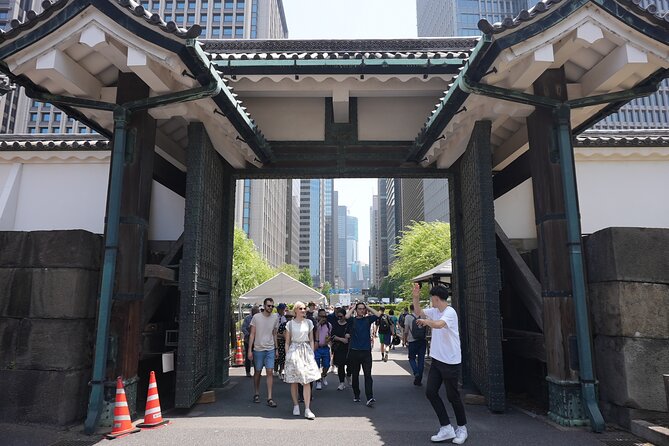
Once underway, the walk leads through grand stone gates and across the old castle grounds. The scale of the walls is one of the first things that makes an impression. These are not delicate ruins. They show the defensive strength and social order of Edo Castle, where the shogun controlled access to the political heart of Japan.
The guide’s job is to connect the physical remains to the people who used them. The better guides do not simply name a gate or point at a wall. They explain the shogunate, feudal lords, the emperor, and the transition toward modern Japan.
Jim has been praised for answering questions patiently and for bringing in both Japanese history and present-day culture. Tony has been noted for explaining the Edo period, the shogunate, the emperor, and the imperial family in a way that gives the site a wider meaning. Miguel has been described as generous with historical details and modern Tokyo insights.
Guide quality can vary, so keep your expectations sensible. This is a guided walk rather than a formal academic lecture, though some guides may make it feel close to a history class. One guide was faulted for needing help with historical answers, while another was considered too repetitive. The strongest reports consistently point to guides who tell stories, invite questions, and keep the group together.
Standing on the Edo Castle keep foundation
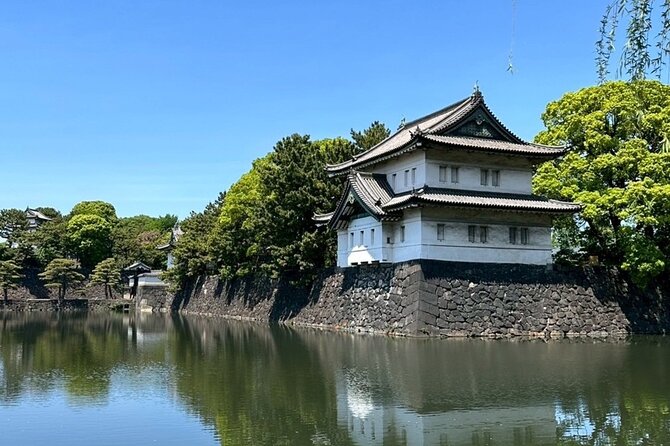
The former castle keep foundation is the tour’s clearest physical link to the shogun era. You stand on the base of a once-mighty structure and look across grounds that once carried enormous political weight.
There is no reconstructed tower here to distract you with polished spectacle. Instead, you get the outline and stonework of what remains. That requires some imagination, but the guide’s explanation helps you picture the castle as a working seat of power rather than an isolated monument.
This is where the tour’s historical commentary earns its fee. You can walk through the gardens for free, but a free visit may leave you with only attractive paths, walls, and flowers. At the foundation, context explains why the site matters and how power operated during the shogun period.
The pace appears relaxed, but you should still expect real walking. One guide made a point of waiting for the full group before moving on, which matters when people stop for photographs or need a slower pace on slopes. Wear comfortable shoes and leave room in your schedule for a steady walk rather than treating this as a short palace photo stop.
Ninomaru Garden and the quieter side of Edo
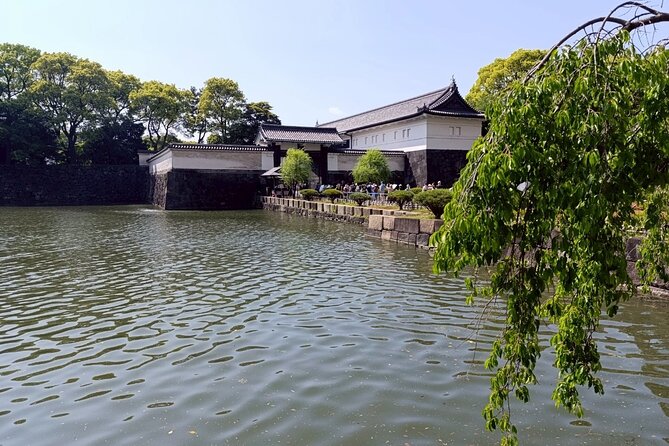
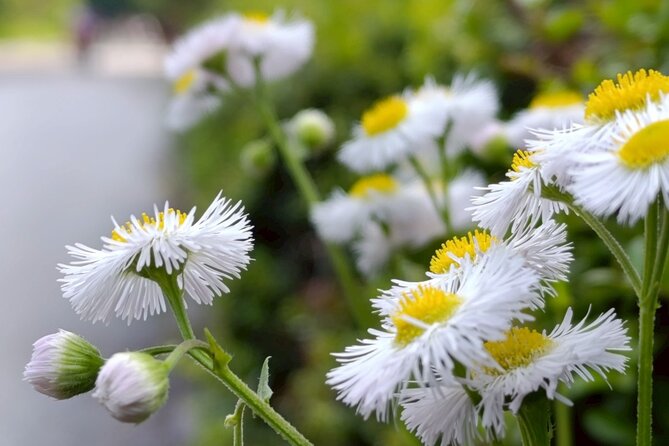
Ninomaru Garden changes the mood. After the gates and defensive walls, you move into a more measured setting of ponds and seasonal flowers. The design reflects the refined taste of the Edo period and shows that power in Japan was expressed through gardens as well as fortifications.
I like this part because it gives the tour breathing room. You can listen to the guide, then look closely at the water, paths, and plantings without the visual pressure of a city street. The East Gardens offer a welcome pause from Tokyo’s dense urban core.
The garden also gives your guide a chance to explain culture beyond dates and rulers. The best commentary links the design to ideas of order, ceremony, beauty, and status. Aya, named in one account of a related palace-area experience, was praised for explaining cultural meaning and proper temple customs, but the Senso-ji portion does not belong to this stated East Gardens itinerary. You should not book this walk expecting a temple visit.
Some people may find the garden stops too long. One account describes repeated explanations and extended pauses that made it harder to stay focused. If you prefer a fast checklist of landmarks, this tour may feel slow. If you want time to connect the gardens with the site’s history, the pace works better.
More walking routes in Tokyo:
- Tokyo Tsukiji Fish Market Food and Culture Walking Tour
★ 5.0 · 3,184 reviews - Tokyo: Shinjuku Local Bar and Izakaya Guided Walking Tour
★ 4.9 · 1,794 reviews - Tokyo: Tsukiji Fish Market Food and Walking tour
★ 5.0 · 1,724 reviews - Tokyo: Asakusa Walking Tour with Sensoji Temple Visit
★ 4.8 · 1,583 reviews
A small group makes the history easier to follow
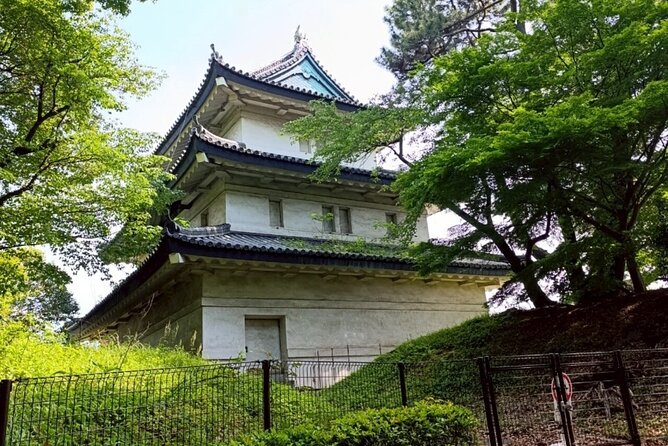
The maximum group size is 15. That is not a private tour, but it is considerably easier to manage than a large coach group. You can hear the guide more clearly, ask a question without stopping an entire crowd, and stay near the front when the path widens.
A walking tour also reaches corners and pathways that a bus cannot. No bus can take you across the old castle grounds or pause beside a wall while the guide explains its construction. The format is simple, but it suits this site.
I would choose this tour over a bus-based palace drive if you care about the physical details of Edo Castle. You will spend more time on foot, but that is exactly what lets you notice the gates, wall stones, garden views, and changes in terrain.
The small group does not guarantee a perfect experience. One group had trouble finding the guide after a change in meeting location, and another felt the guide leading the walk was inexperienced. Confirm the meeting instructions before you go, keep your phone available, and arrive early enough to avoid a rushed start.
What the guide adds for $22
At $22 per person, this is a modestly priced way to add structure to an otherwise free garden visit. You are paying mainly for interpretation, organization, and the chance to ask questions. Admission to the East Gardens is included, and the walk lasts about two hours, with the stated garden and castle portion lasting roughly one hour and 30 minutes.
The value is strongest if Japanese history is new to you. Guides explain the shogunate, Edo period, castle grounds, emperor, imperial family, and modern Tokyo. That framework can help you understand other parts of Japan during the rest of your trip.
The value is weaker if you have already studied the site and prefer to wander alone. You may not need someone to explain every gate or garden feature, especially since the grounds can be visited without paying for a guide.
The price also buys a social experience. Several guides are described as friendly and welcoming, and the small group gives you a chance to meet other people. That should be viewed as a pleasant extra, not the main reason to book.
The rating is listed as five out of five from 2,251 reviews, with 99 percent recommending the activity. Those numbers suggest a strong overall record, but the detailed comments show why you should consider guide style and meeting-point care along with the headline score.
The guide style you are most likely to appreciate
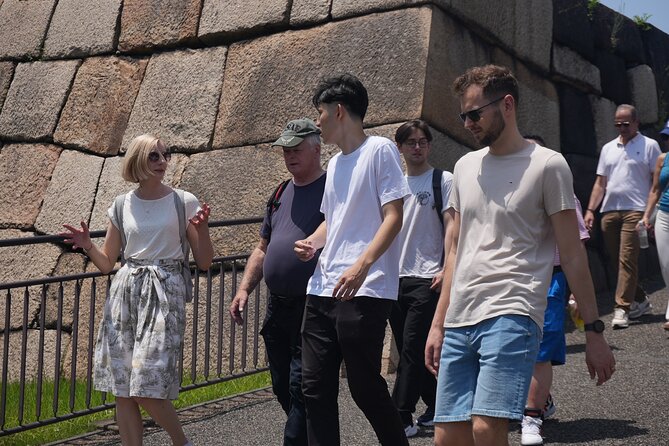
You will get the most from this tour if you enjoy stories and background rather than a quick march between photo spots. The guide may explain how the castle worked, who held power, what changed during the transition to modern Japan, and how the imperial family fits into contemporary Tokyo.
Jim is repeatedly associated with patient answers, historical depth, and useful advice about Japanese culture. Tony is praised for connecting the Edo period and shogunate to the palace and imperial family. Miguel is described as engaging, generous with information, and willing to take questions. Izzy is noted for clear, enjoyable explanations, while Lasse is described as especially passionate about Japanese history.
Those names are useful, but guide assignments can change. Do not book solely because you hope for one particular person. Instead, treat the repeated pattern as a guide to the experience you are buying: a history-focused walk with a friendly leader, not a scripted audio tour.
The balance of information matters. One guide gave too little historical setup before entering the historic area, while another explained so much that the stops lost momentum. I would tell you to speak up politely if you need a shorter answer, or ask for more context if the explanation feels thin.
Timing, walking, and practical comfort
The tour is advertised at approximately two hours and ends where it begins. The East Gardens portion is listed at one hour and 30 minutes, so you should allow the full advertised time rather than scheduling a tight restaurant reservation immediately afterward.
The route includes open garden areas, stone paths, gates, castle remains, and slopes. Most travelers can participate, but the tour is not designed as a seated visit. Your comfort will depend on your shoes, the weather, and your ability to walk at a steady pace.
You should also plan around the garden’s operating conditions. One account notes that the palace grounds closed before the entire route could be completed after a delayed start. That makes punctuality especially important. A missed start is not just inconvenient; it can shorten the visit at a site with closing hours.
The tour is near public transportation, which helps with access from other parts of Tokyo. The provided meeting point is specific, but you should still confirm the exact instructions at booking and on the day. Free cancellation is available up to 24 hours before the start time. Changes or cancellations inside that window are not accepted for a refund.
Who should book this Imperial Palace walk
I would recommend it to a first-time Tokyo visitor who wants a clear introduction to Japanese political and royal history. It also suits anyone who looks at old stones and gardens and wants to understand what happened there instead of simply taking photographs.
Families and mixed-age groups may appreciate the short duration and small group size, provided everyone can manage the walking. History fans will enjoy the castle foundations and explanations of the shogunate, while garden lovers will value the shift into Ninomaru’s ponds and seasonal planting.
This is also a good choice near the start of a Tokyo stay. The guides may provide useful background on Japanese customs, historical periods, and modern culture that helps you make sense of later sightseeing. It can work near the end of a trip too, when you already have some city context and want to connect it to the palace grounds.
I would skip it if you want to enter palace interiors, see the private imperial residence, or spend the whole time taking photographs. The stated route focuses on the East Gardens and Edo Castle remains. It is also not ideal if you dislike walking, lengthy explanations, or the possibility of a guide whose style does not match your own.
Should you book it?
Book this tour if you want the East Gardens to become a story rather than a free green space with old walls. At $22, the cost is reasonable for a two-hour small-group walk, especially when you value clear explanations and the chance to ask questions.
Go in expecting gates, stonework, the old keep foundation, Ninomaru Garden, and a history-focused guide. Arrive early, wear comfortable shoes, confirm the meeting details, and allow enough time for a slower explanation of the site.
The tour is not flawless. Communication at the start can fail, and guide quality can range from excellent to less experienced. Still, the best guides, including Jim, Tony, Miguel, and Izzy, appear to make the palace grounds far more meaningful. For most first-time visitors with an interest in Tokyo’s past, that makes the tour a worthwhile buy.
FAQ
How long does the Imperial Palace and Shogun Historical Walking Tour last?
The experience lasts approximately two hours. The stated visit to the East Gardens and Edo Castle ruin takes about one hour and 30 minutes, so allow the full tour time.
What does the tour include?
The tour includes a guided walk through the Imperial Palace East Gardens and the former Edo Castle grounds. You will see stone gates, castle walls, the old keep foundation, and Ninomaru Garden. Admission is included.
Where does the tour start and finish?
It starts at Starbucks Coffee in Kokyo Gaien Wadakura Fountain Park, 3-1 Kōkyogaien, Chiyoda City, Tokyo 100-0002, Japan. The activity ends back at the meeting point.
How large is the group?
The tour has a maximum of 15 travelers.
Is the tour suitable for most people?
Most travelers can participate, but this is a walking tour with slopes and open garden paths. You should be prepared to walk steadily for much of the two-hour experience.
Is public transportation available near the meeting point?
Yes. The meeting point is near public transportation.
Can I cancel for a full refund?
Yes, if you cancel at least 24 hours before the experience start time. Cancellations or changes made less than 24 hours before the start time are not accepted for a refund.
New on our Tokyo list
- From Tokyo: Mount Fuji & Hakone Full Day Private Tour★ 4.9 · 25 reviews
- Tokyo Spectacular View Day-Cruise in 90 Minutes★ 5.0 · 25 reviews
- Real Tokyo Runner Club : Daikoku Car Meet Night Tour with JDM Car★ 5.0 · 25 reviews
- 2.5 Hour-Guided Cycle Tour in the Central Tokyo★ 5.0 · 25 reviews
- Ramen Making from Scratch +Akihabara Tour –Cooking Class★ 5.0 · 25 reviews
- [Self-Drive] Tokyo & Daikoku Custom Car Driving Tour★ 4.9 · 25 reviews
- Tokyo: 2-Hour Night Bike Tour of the City’s Hidden Gems★ 4.9 · 25 reviews
- Samurai themed Entertainment show in Shinjuku★ 4.5 · 25 reviews
Historical Tours, compared.
Yanaka Walking Tour: Historic and Traditional District of Tokyo
Read our review →
Shinjuku Historical Walking Tour & Secret Backstreets
Read our review →
Mt. Fuji Heritage Tour: Traditional Villages, Lakes & Shrine
Read our review →

The Best of Izakaya in Shinjuku Food & Cultural Tour
Read our review →
Yanaka Historical Walking Tour in Tokyo’s Old Town
Read our review →
Browse the lists this tour appears in