Reviewed · TOURS
Japanese Garden & Western Architecture: Akasaka exploration tour
Akasaka gives you a welcome break from Tokyo’s towers, and this private walk connects several of the district’s best cultural sights. You’ll move from a 400-year-old Japanese garden to a grand state guesthouse, then on to Meiji-era art and a famous ginkgo avenue.
I like the personal pace and the strong history focus. Guides such as Mutsuko Takano, Sayaka, and Ume have been praised for clear English, warmth, and flexibility. I also like that the route ends near Gaiemmae Station rather than returning you to the starting point. The main catch is cost: the $82.42 tour price does not include the ¥2,000 Akasaka Palace admission, and the day involves plenty of walking.
In This Review
- Key points at a glance
- Why Akasaka makes a smart half-day choice
- Hotel New Otani Japanese Garden: a graceful first stop
- Akasaka Palace: the tour’s grandest sight
- Meiji Memorial Picture Gallery: paintings instead of palace rooms
- Jingu Gaien’s ginkgo avenue: an easy final walk
- The private guide makes the difference
- What the $82.42 price really buys
- Practical advice before you set out
- Should you book this Akasaka walk?
- FAQ
- How long does the Akasaka exploration tour last?
- Where does the tour start?
- Where does the tour finish?
- Is the Akasaka Palace entrance fee included?
- Is this a private tour?
- What happens if the weather is bad?
Key points at a glance
- Start with a 400-year-old garden: Hotel New Otani Japanese Garden offers waterfalls, ponds, seasonal plants, and a calm opening to the walk.
- See where Japan receives foreign leaders: Akasaka Palace has a castle-like exterior and remains a state guesthouse.
- Connect art with modern Japan: The Meiji Memorial Picture Gallery uses paintings and murals to explain the Meiji era.
- Finish beneath golden ginkgo trees: Jingu Gaien’s tree-lined street is one of Tokyo’s most recognizable seasonal scenes.
- Keep the route private: Only your own group takes part, giving you room to ask questions and adjust the pace.
- Budget for extras: Palace admission costs ¥2,000 per person, and some locations may require cash.
Why Akasaka makes a smart half-day choice
Tokyo is full of famous districts, but Akasaka offers a different kind of city experience. Instead of concentrating on shopping streets or huge crossings, this route links formal gardens, government architecture, museums, shrines, and parks.
The tour lasts about three to four hours. That is long enough to give each stop real attention without taking up a full day. I see it as a good fit after a busy morning in central Tokyo, especially if you want culture and greenery without a major trip across the city.
The route begins at Akasaka-Mitsuke Station and finishes at Gaiemmae Station. That one-way design is useful. You see a section of Tokyo while moving forward, rather than spending time retracing your steps.
You should still prepare for a walking-heavy outing. Comfortable shoes and clothing are important, and the route or transport plan may change in bad weather. The tour is private, so your guide can respond to your pace, but the published schedule gives each stop a fairly tight window.
A few more Tokyo bookings worth comparing
- Mt Fuji and Hakone 1-Day Bus Tour Return by Bullet Train
★ 5.0 · 26,383 reviews - 1-Day Tokyo Bus Tour
★ 5.0 · 14,250 reviews - Tokyo: TOKYO SKYTREE® Admission ticket
★ 4.5 · 11,192 reviews
Hotel New Otani Japanese Garden: a graceful first stop
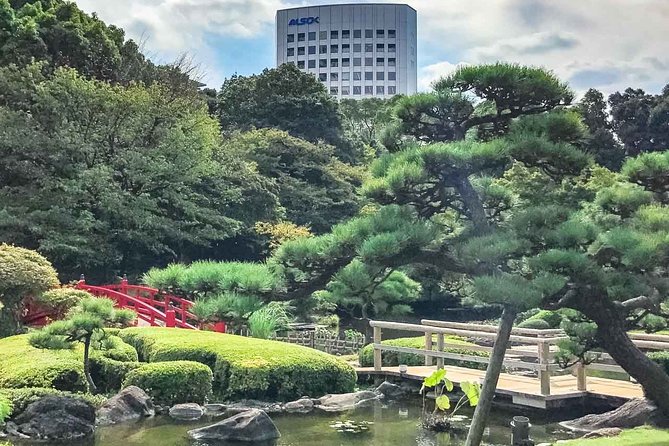
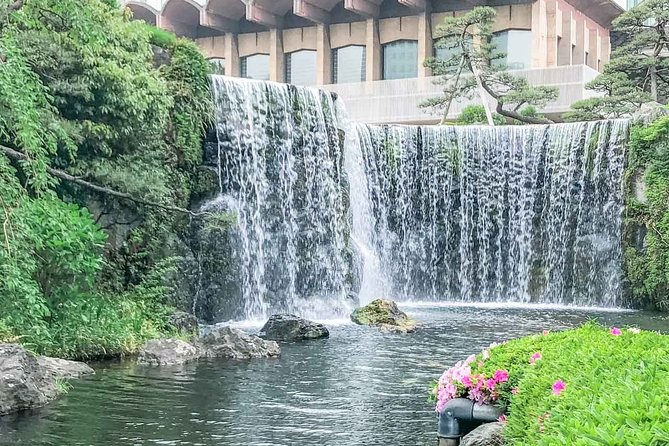
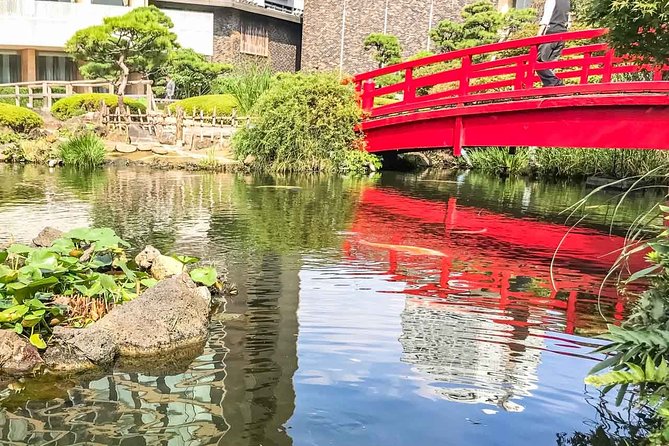
The opening visit takes about 40 minutes at Hotel New Otani Japanese Garden. This is not simply a patch of lawn beside a hotel. The garden has a 400-year history and includes waterfalls, ponds, stone features, and seasonal plantings.
I like beginning here because it gives you a quiet introduction to Japanese design before the larger architectural sights. The setting helps explain how water, rocks, plants, and carefully framed views can create a sense of space even in central Tokyo.
The garden changes with the calendar. Spring brings cherry blossoms, summer offers thick green growth, and autumn brings more color, with seasonal illumination also noted as part of the garden experience. The exact display depends on your date, so you should think of this as a place whose mood shifts throughout the year.
A guide adds value here by explaining what you are looking at. Without context, a Japanese garden can seem pleasant but puzzling. With a guide, the pond, waterfall, paths, and planting choices become part of a larger story about Japanese aesthetics and the old ruling order.
The 40-minute stop is enough for a focused walk, but not enough for a slow, aimless wander. If gardens are your main reason for booking, tell your guide early. One past guide, Ume, was especially noted for showing visitors lesser-known gardens and quiet streets, and a private format makes that kind of adjustment more possible.
The tour information also refers to Inari Shrine and Shimizudani Park as part of the Akasaka exploration theme. Since the detailed route lists four main stops, ask your guide at the start whether those places are included on your date or treated as alternatives. Temporary closures and weather can change the route.
Akasaka Palace: the tour’s grandest sight
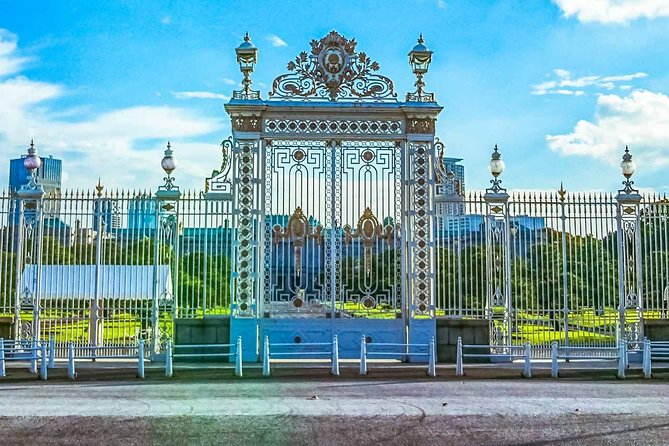
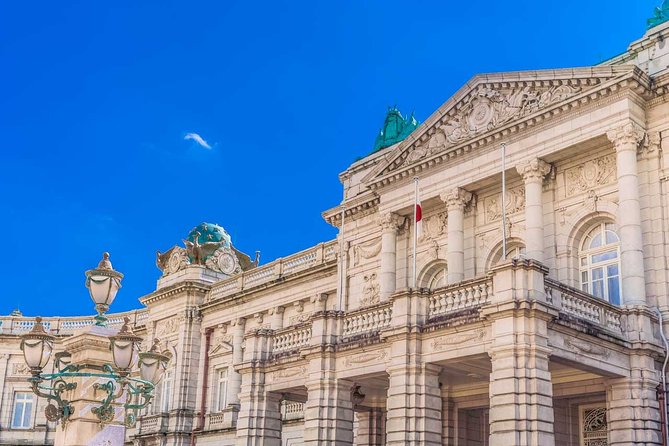
The largest admission charge goes toward Akasaka Palace, officially the State Guesthouse. Allow about 50 minutes here, and budget ¥2,000 per person for entry.
Akasaka Palace is built to receive kings, presidents, and other official visitors. Its formal, castle-like appearance is a sharp contrast to the softer lines of the Japanese garden. This change of mood is one of the route’s strengths: you move from private-feeling garden scenery into the ceremonial world of the Japanese state.
I would make this the anchor of the tour. The palace gives you a clear way to think about Japan’s changing identity. The tour begins with the Tokugawa shogunate and Edo period, then moves through later government and imperial history. Akasaka Palace helps connect those eras to the Japan you see today.
The palace admission is not included in the headline price, so compare the real cost before booking. At $82.42 per person, the tour is not a cheap sightseeing walk, particularly once you add ¥2,000 for entry. But the fee pays for a private guide, not just transportation between landmarks. For a couple, family, or small group that wants detailed explanations, the value is easier to justify.
The palace can also be the most time-sensitive stop. Entry rules, opening conditions, and temporary closures may affect the day. Bring cash because not every place on the route accepts credit cards. If the palace is unavailable, the operator may substitute another stop.
The guide’s role matters most here. Ayako was described as calm and flexible while new to guiding, and another account praised the way a guide helped arrange a reservation at an authentic tea shop. Tea is not included in this tour, so treat that sort of help as an added possibility, not a promised part of the schedule.
Meiji Memorial Picture Gallery: paintings instead of palace rooms
The third stop is the Meiji Memorial Picture Gallery, reached after the palace portion of the walk. Plan on about 40 minutes.
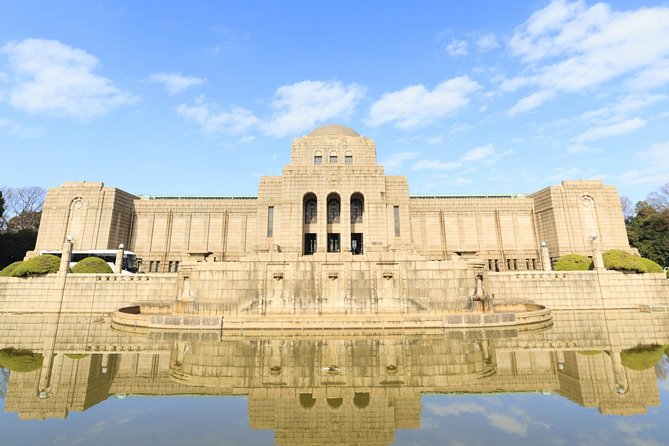
The museum is easy to recognize by its dome-shaped design. Inside, paintings and murals focus on the Meiji era, a period when Japan changed rapidly in government, society, industry, and international affairs.
This stop gives the tour a useful change of scale. The palace presents power through architecture. The gallery presents history through images. If you enjoy learning how Japan moved from the shogunate into the modern age, you will likely appreciate the connection.
Forty minutes is enough for an introduction, but you should not expect to study every painting at length. The tour is built around a broad cultural explanation rather than a specialist museum visit. Your guide can help identify the main themes and answer questions, which is especially useful if you do not already know the basic story of the Meiji period.
The building also has visual appeal from outside. Its dome and the approach from Aoyama Street create a formal setting before you even enter. This is another reason the route works well for people who enjoy architecture as much as indoor exhibits.
Past guides have included Sayaka, who was described as enthusiastic and willing to answer many questions. Mutsuko Takano was praised for speaking excellent English and explaining parts of Japan that visitors might otherwise miss. Guides vary, but the private setup gives you a better chance to shape the conversation around your interests.
Same corner of Tokyo, a completely different plan:
- Tokyo: teamLab Planets TOKYO Digital Art Museum Entry Ticket
★ 4.6 · 9,779 reviews - Mt Fuji & Hakone Cruise, Drum Show Bullet Train 1 Day from Tokyo
★ 4.0 · 7,413 reviews - Tokyo: Sumo Show Experience with Chicken Hot Pot and a Photo
★ 4.8 · 6,678 reviews - Tokyo: Shinjuku Food Tour (13 Dishes at 4 Local Eateries)
★ 5.0 · 6,603 reviews
Jingu Gaien’s ginkgo avenue: an easy final walk
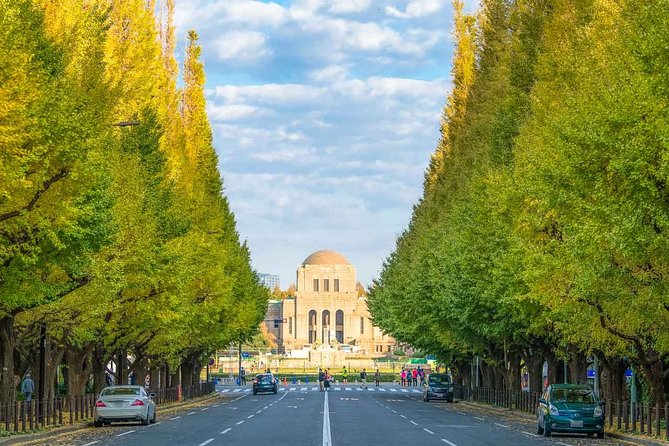
The final listed stop is Jingu Gaien Ginkgo Tree-lined Street. This visit takes about 20 minutes and is free.
The avenue is one of Tokyo’s signature views, particularly when the ginkgo trees turn yellow. In spring and summer, the setting has a different character, with seasonal greenery replacing the famous autumn color. The route is not a long nature hike. It is a short, photogenic walk that lets you finish in an open setting after the palace and museum.
I like this ending because it feels less formal. You have spent much of the tour looking at official buildings and historical material. Walking beneath the trees gives you time to talk with your guide, take photos, and absorb the day without another admission line.
The short visit has a tradeoff. If you are visiting specifically for peak autumn color, the timing of your tour matters more than the advertised duration. Seasonal conditions can vary, and the description does not promise a particular level of color on a particular date.
The route finishes at Gaiemmae Station, near Kitaaoyama. That is convenient if you want to continue around Aoyama afterward, but it may be less useful if your next plan is back in Akasaka. You can ask the guide about changing the finishing point, though you should arrange that in advance or at the beginning.
The private guide makes the difference
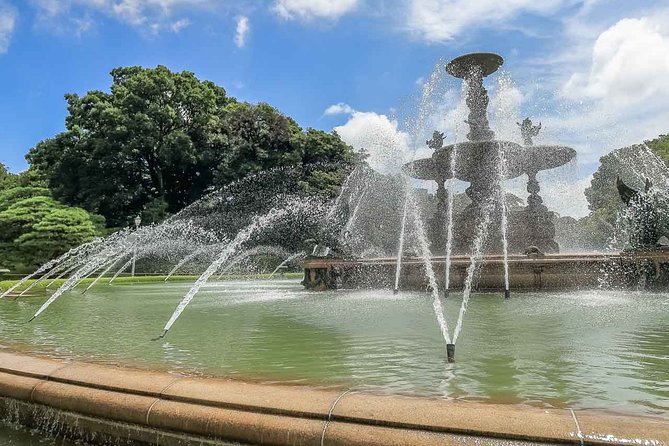
This is a private tour, so only your group participates. That matters more here than it would on a simple photo stop. The value lies in the explanations linking a garden, palace, gallery, and street into one story.
You can ask about the Tokugawa shogunate at the garden, modern Japanese government at Akasaka Palace, or the Meiji era at the gallery. You can also pause for photos or request more time at a favorite stop, although the fixed three to four-hour window limits how far you can stretch the route.
The guide’s necessary expenses are included. Transportation costs are listed as zero, which suggests the planned route does not require a paid ride, but you should still follow the operator’s advice if bad weather changes the transport plan. Any costs you personally incur at visited sites are yours.
English ability and guiding style can differ by guide. Names connected with past outings include Ayako, Sayaka, Ume, and Mutsuko Takano. The strongest pattern is a friendly, flexible approach, but you should not assume you will receive a specific guide unless the booking confirms it.
What the $82.42 price really buys
At $82.42 per person, this is a midrange private cultural tour for Tokyo. It is more expensive than joining a large walking group, but it includes a dedicated guide for your party and a route that covers several areas of interest.
You need to add the ¥2,000 Akasaka Palace fee per person. Food and drinks are not included, and there is no dining stop. The experience also lists no optional activity costs, but tea or other purchases you arrange during the walk would be extra.
I think the price makes the most sense for:
- A couple who wants a personal introduction to Tokyo history
- Families that prefer a private pace
- First-time visitors who want help making sense of Japanese historical periods
- People who enjoy gardens, architecture, and museums more than shopping
- Visitors looking for a quieter alternative to Tokyo’s busiest sights
It is less convincing for someone who only wants to see Akasaka Palace. In that case, you may prefer to visit the palace on your own and skip the guide fee. The tour earns its price through the combination of places and the explanations between them.
The fact that it is often booked about 164 days ahead suggests you should plan early for a preferred date. Confirmation is provided when you book, and free cancellation is available up to 24 hours before the start time. Changes or cancellations inside that window are not refunded.
Practical advice before you set out
Wear comfortable walking shoes. The tour moves through gardens, streets, outdoor avenues, and cultural sites, so you need clothing suited to several hours on foot.
Carry cash. The information for the experience warns that some locations do not accept credit cards, and the ¥2,000 palace admission is a cost you should have ready.
Do not plan a meal during the tour. There is no dining stop, and the schedule is designed around sightseeing. Eat beforehand or plan lunch after arriving at Gaiemmae Station.
Confirm the route with your guide at the start. The overview includes Inari Shrine and Shimizudani Park, while the detailed stop list centers on the New Otani garden, Akasaka Palace, the Meiji Memorial Picture Gallery, and Jingu Gaien. Weather, closures, and local conditions can alter the plan.
Ask about the ending point if you need to return to Akasaka. The usual finish is Gaiemmae Station, but the guide may be able to adjust it. Do not assume the tour returns to Akasaka-Mitsuke Station.
Should you book this Akasaka walk?
Book it if you want Tokyo history explained as you walk, rather than simply collecting photos at separate sights. The garden, palace, Meiji gallery, and ginkgo avenue create a well-shaped half-day, and the private format is particularly useful for families and small groups.
I would book it for the guide’s local context and the chance to ask questions. The strongest praise has gone to guides who were warm, flexible, and clear in English. I would not book it expecting a full museum day, a food tour, or a long garden visit.
The extra palace fee and walking deserve attention, but they are easy to plan around. If your interests include Japanese gardens, formal architecture, and the shift from the shogunate to modern Japan, this is a worthwhile way to spend three to four hours in central Tokyo.
FAQ
How long does the Akasaka exploration tour last?
The tour lasts approximately three to four hours.
Where does the tour start?
The meeting point is Akasaka-Mitsuke Station at 3-chōme-1-6 Akasaka, Minato City, Tokyo 107-0052.
Where does the tour finish?
The usual finishing point is Gaiemmae Station at 2-chōme-7-16 Kitaaoyama, Minato City, Tokyo 107-0061.
Is the Akasaka Palace entrance fee included?
No. Akasaka Palace admission costs ¥2,000 per person and is not included in the tour price.
Is this a private tour?
Yes. Only your own group participates in the activity.
What happens if the weather is bad?
The transportation, destinations, or route may change in bad weather. Sites may also be replaced if they are temporarily closed.
New on our Tokyo list
- Hakone Hachiri: Old Tokaido Highway Hiking Half-day tour★ 5.0 · 3 reviews
- Tokyo:Calligraphy & Zen Mindful Journey+Take Home Memory★ 5.0 · 3 reviews
- Private Samurai Sword Experience★ 5.0 · 3 reviews
- Tokyo:Cherry Blossom Mt Fuji & Shibazakura Festival Day Trip★ 4.4 · 3 reviews
- Private Tokyo’s Famed Tsukiji Fish Market Tour★ 5.0 · 3 reviews
- Dive into Tsukiji Fish Market Walking Friendly Food Tour★ 5.0 · 3 reviews
- Tokyo Harajuku Walking Tour Meiji Jingu Yoyogi Park and More★ 5.0 · 3 reviews
- Tokyo Private Transfer for Yokohama Cruise Port★ 5.0 · 3 reviews
Tours, compared.
Mt Fuji and Hakone 1-Day Bus Tour Return by Bullet Train
Read our review →
Shinjuku Food Tour (13 Dishes at 4 Local Eateries)
Read our review →
Tokyo Mt Fuji 5th St & Hakone Cruise Bus Tour w/Bullet Train
Read our review →
Flagship 2-Hours Official Street Go-Kart Tour – Tokyo Bay Shop
Read our review →
Mt. Fuji Tour, Hakone Ropeway, Owakudani, Lake Ashi
Read our review →
Tokyo 6hr Private Tour with Government-Licensed Guide
Read our review →