
Reviewed · TOKYO GO-KART EXPERIENCES
Tokyo Bay: Scenic Skyline Go-Kart Tour (120 Minutes)
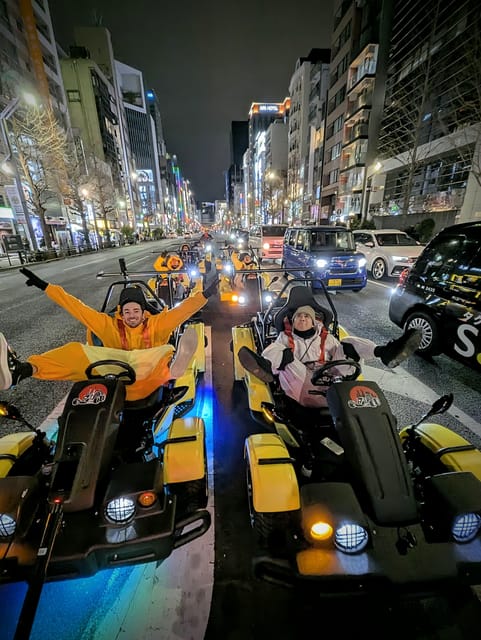
Tokyo looks different from behind a steering wheel. This 120-minute street-legal go-kart tour carries you from Tokyo Skytree through waterfront districts, Ginza, Tokyo Station, and the Imperial Palace area, with a guide talking to you by two-way radio as you drive.
I like the small group of up to eight and the practical comfort features, including hydraulic brakes, suspension, and reinforced frames for larger riders. I also like the live local commentary, which gives the ride more purpose than simply cruising through city streets. The main consideration is the paperwork: you need the correct license in hand, and arriving without it means you cannot join and will not receive a refund.
In This Review
- Key points
- What the $116 price really buys you
- Starting near Tokyo Skytree
- Why the kart design matters in Tokyo traffic
- Tokyo Skytree to Monzen-Nakachō
- Toyosu Fish Market and the waterfront districts
- Ginza and Kabuki-za from the driver’s seat
- Tokyo Station and the Imperial Palace surroundings
- The guide, radio commentary, and group size
- Costumes, camera footage, and practical extras
- License rules you must check before booking
- Who will enjoy this two-hour Tokyo route?
- Booking flexibility and what to bring
- Should you book the Kartzilla Uptown Route?
- FAQ
- How long does the Tokyo Bay go-kart tour last?
- Where does the tour start and finish?
- How early should I arrive?
- What driving documents are accepted?
- Can I use a digital copy of my license?
- Is a passport required?
- What landmarks does the route pass?
- Is the tour suitable for first-time kart drivers?
- Is a camera included?
- What is included in the price?
Key points
- Tokyo from street level: Follow a city route linking Tokyo Skytree, Toyosu, Ginza, Tokyo Station, and the Imperial Palace surroundings.
- Live radio guidance: Your guide provides safety directions and landmark stories while you are on the road.
- Comfort-first karts: Suspension, hydraulic brakes, stable handling, and reinforced frames make the karts suitable for first-time drivers and big and tall riders.
- Small-group format: The tour is limited to eight participants, allowing the guide to keep the group together more easily.
- Hands-free memories: An optional Insta360 camera can record the journey, but you must bring or buy a compatible Micro SD card.
- Useful extras included: Fuel, accident insurance, drinks, and anime costume rental are part of the tour price.
What the $116 price really buys you
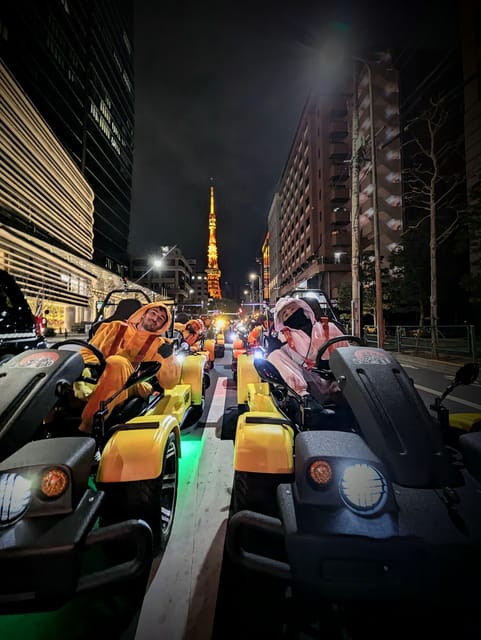
At $116 per person, this is not a cheap way to get from one Tokyo neighborhood to another. It is a guided city activity, with the kart, fuel, safety briefing, local guide, insurance, drinks, and costume rental included.
The value comes from combining several things in one outing. You get a moving sightseeing tour, a small-group guide, and a memorable way to cross parts of the city that you might otherwise see only through a train window. The route also reaches several districts in two hours, without requiring you to plan transfers between them.
I would compare the price with other special-interest Tokyo tours rather than with a normal sightseeing bus or subway fare. If you want quiet museum time or detailed access inside major sights, this is the wrong purchase. If you want an active way to see Tokyo streets and do not mind paying for a novelty activity, the cost is easier to justify.
The tour does not include meals, hotel transportation, or a Micro SD card for the camera. Drinks are supplied, with water, tea, and coffee available, but plan to eat before or after the drive.
More street-kart slots:
- Flagship 2-Hours Official Street Go-Kart Tour – Tokyo Bay Shop
★ 5.0 · 4,974 reviews - Official Street Go-Kart in Shibuya
★ 5.0 · 3,435 reviews - Official Street Go-Kart Tour – Akihabara
★ 5.0 · 1,578 reviews
Starting near Tokyo Skytree
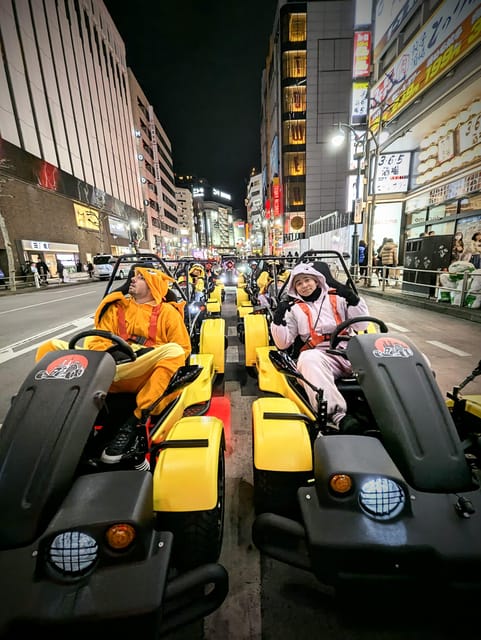
The meeting point is Kartzilla Go Kart Tokyo, near Hiraki Children’s Clinic. Look for the outdoor Kartzilla Go Kart sign, and allow extra time to find the building. Google Maps is described as reliable for reaching the location, but the operator asks you to arrive at least 40 minutes before departure.
That early arrival is important. You need time for check-in, license inspection, the safety briefing, and basic driving instructions. This is not a tour where you should hurry in at the scheduled start time with your documents still in your hotel bag.
Bring your passport, driving license, and International Driving Permit if required. A photograph, digital copy, or expired license is not accepted. The license rules are strict because you are driving on public roads, not around a private kart track.
After the briefing, you take control of a professionally engineered, street-legal go-kart. The karts are designed for city driving rather than racing. That difference matters: the stated aim is a relaxed pace with no competition between drivers.
Why the kart design matters in Tokyo traffic
A recreational kart can be fun for a few laps and tiring after that. This tour lasts two hours, so the kart’s comfort and control features matter more than they would at a short amusement course.
Kartzilla lists advanced suspension to soften the ride, hydraulic brakes for controlled stopping, and reinforced frames that can accommodate big and tall riders. Stable handling is also intended to help first-time drivers feel more confident.
You should still expect an exposed, open-air driving position. The information provided does not specify weather protection, so check conditions before you go and dress for the day. You will also need to remain alert, follow the guide’s directions, and manage ordinary road conditions.
The two-way radio is one of the strongest practical features. Your guide can give real-time safety instructions and help the group keep its pace. At the same time, the guide shares stories about landmarks and local culture, so the road time is not silent travel between photo stops.
The radio system does not turn the tour into a private drive. You remain part of a group of up to eight, and the guide controls the route and rhythm. That is a benefit for new drivers, though people hoping to drive fast or choose their own streets may find the format limiting.
Tokyo Skytree to Monzen-Nakachō
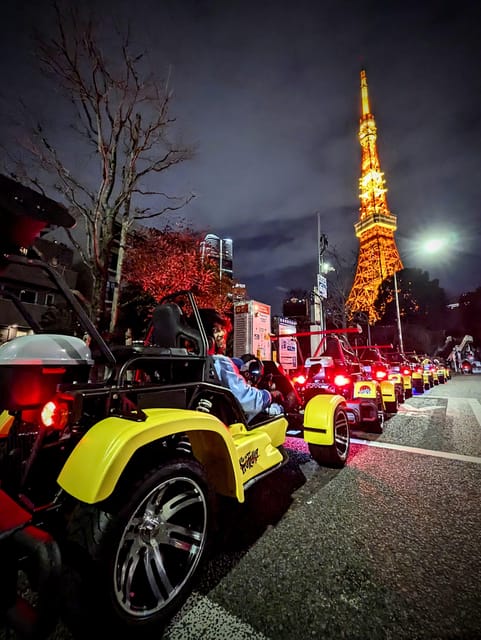
Tokyo Skytree is both the starting reference point and one of the first major sights on the route. From the road, you get a street-level view of one of Tokyo’s best-known landmarks rather than the usual observation-deck experience.
The attraction here is the change in perspective. You are not simply looking at a skyline from above. You are moving through the city beneath it, with the guide explaining what you are seeing over the radio.
The route then heads toward Monzen-Nakachō Station. This district gives the outing a different feel from Tokyo’s major shopping streets. It is one of the city neighborhoods included to show everyday urban Tokyo alongside its famous sights.
The provided schedule describes scenic driving and guided commentary at each location, not admissions or extended walks. Treat these as drive-through sightseeing points. If you want to visit a temple, market, or museum in depth, plan a separate stop before or after the tour.
A few more Tokyo bookings worth comparing
- Mt Fuji and Hakone 1-Day Bus Tour Return by Bullet Train
★ 5.0 · 26,383 reviews - 1-Day Tokyo Bus Tour
★ 5.0 · 14,250 reviews - Tokyo: TOKYO SKYTREE® Admission ticket
★ 4.5 · 11,192 reviews - Tokyo: teamLab Planets TOKYO Digital Art Museum Entry Ticket
★ 4.6 · 9,779 reviews
Toyosu Fish Market and the waterfront districts
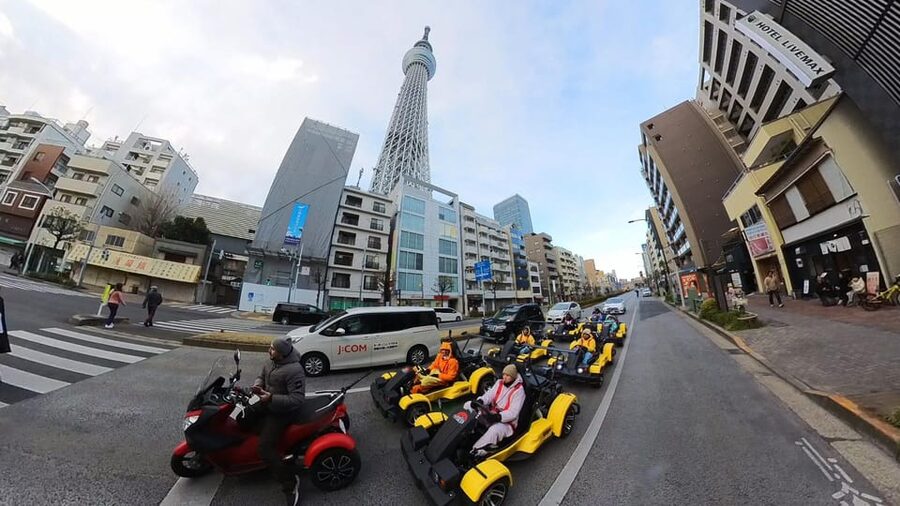
Toyosu Fish Market brings the route into one of Tokyo’s modern waterfront areas. The market is a major food and commercial landmark, but this activity does not include a meal or market entry.
That distinction is useful. You will see the district from the road and hear the guide’s explanation, but you should not book the kart tour as a replacement for a dedicated Toyosu visit. If fresh seafood or market architecture is high on your list, return later with time to explore on foot.
From Toyosu, the drive continues through Ariake Coliseum and Harumi. These areas show another side of Tokyo: broad city roads, newer development, waterfront views, and large public venues.
For me, this middle section is valuable because it breaks up the classic landmark sequence. Ginza and the Imperial Palace are familiar names. Toyosu, Ariake, and Harumi help you see how Tokyo keeps extending and reshaping its urban core.
The tradeoff is that newer districts can feel less intimate than older streets. You may find the views more open and spacious, but there are fewer traditional storefronts and small lanes than in central historic neighborhoods. The guide’s live commentary helps give these places context.
Ginza and Kabuki-za from the driver’s seat
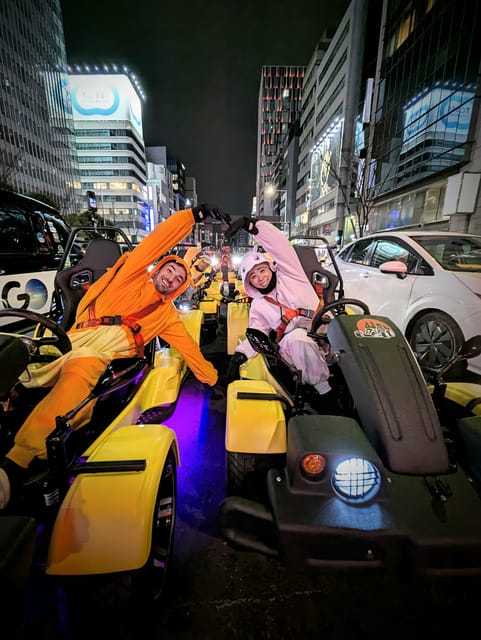
Ginza is the route’s polished central-city section. Known for major shops, department stores, restaurants, and carefully maintained streets, it gives you a strong contrast with the waterfront districts.
A go-kart is an unusual way to pass through Ginza. You are close to street activity and architecture, but you are also concentrating on traffic and the group. Do not expect to stop whenever you see something interesting. The value is in seeing the district as part of a moving city route.
Kabuki-za adds a cultural landmark to the Ginza portion. Its distinctive theater is closely tied to kabuki, Japan’s traditional stage art. The tour gives you a chance to see the building and hear about it from the guide, but no performance ticket is included.
If Kabuki-za interests you, note the building’s place on the route and consider returning for a separate visit. The kart tour is best for orientation and exterior views. It is not designed for a full theater experience.
The live guide is especially useful here. A guide can point out a landmark as you approach it, rather than leaving you to identify buildings after the fact. Because the commentary comes through the radio, you can keep your eyes on the road while still receiving information.
Tokyo Station and the Imperial Palace surroundings
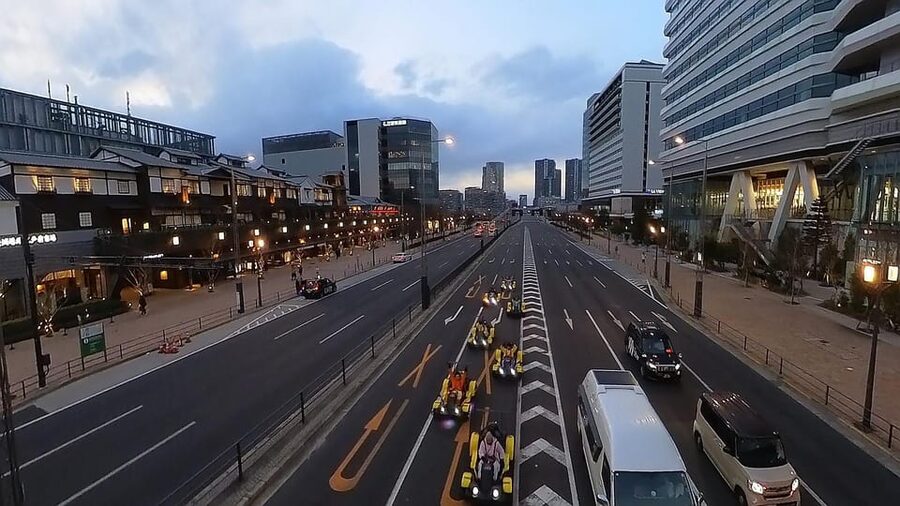
Tokyo Station is one of the city’s most important transport landmarks and a striking stop on the central route. The area around it combines major business streets, formal architecture, and constant movement.
Again, expect scenic driving and commentary rather than a station tour. The kart gives you a quick sense of how Tokyo Station fits into the city around it. You can return by train later if you want to enter the station, inspect its architecture, or use it as a base for another neighborhood.
The route then reaches the surroundings of the Tokyo Imperial Palace. This is a calmer, more formal part of central Tokyo, with broad roads and the palace grounds nearby.
The wording matters: the activity takes you through the Imperial Palace area, not into palace interiors. You should not expect admission, a guided walk inside the grounds, or time to explore the gardens. The reward is seeing the palace district as part of Tokyo’s central road network.
Taken together, Tokyo Station and the Imperial Palace provide a good final contrast. One is a transport hub built around movement and commerce. The other represents Japan’s imperial institution and a more restrained central setting. The guide’s stories can connect those sights while you continue driving.
The guide, radio commentary, and group size
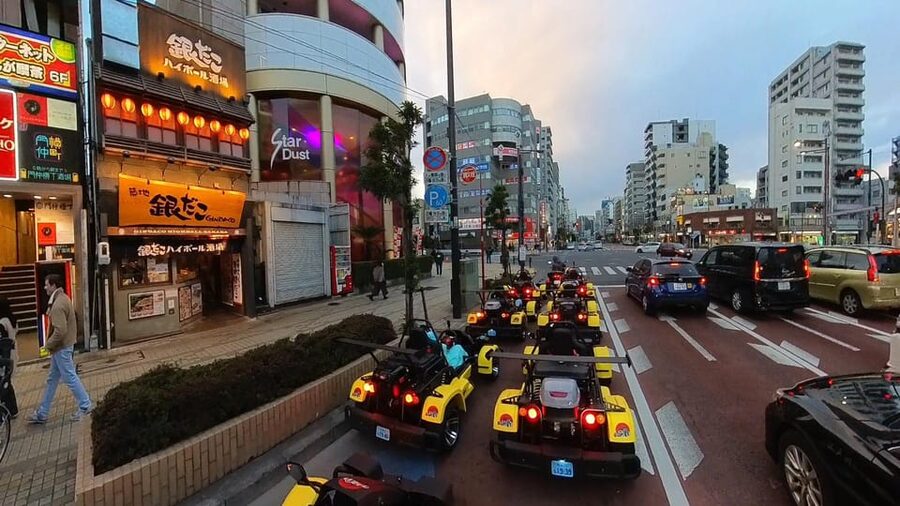
The tour includes a professional local guide who leads the group throughout. English, German, Spanish, and Persian are available, so select the language that will make safety instructions easiest for you to follow.
The guide’s role goes beyond pointing at buildings. You receive road-safety instructions, traffic guidance, landmark explanations, and cultural information in real time. That combination is important because the route passes through several kinds of city streets, and you do not want to divide your attention between driving and reading a phone.
A maximum of eight participants keeps the group relatively compact. It should be easier for the guide to maintain contact with a small group than with a large convoy. The experience will still depend on everyone following instructions and staying together.
There are no guide names provided for this activity, so you should not book expecting a particular host. The useful point is the live communication system and the availability of several guide languages.
Costumes, camera footage, and practical extras
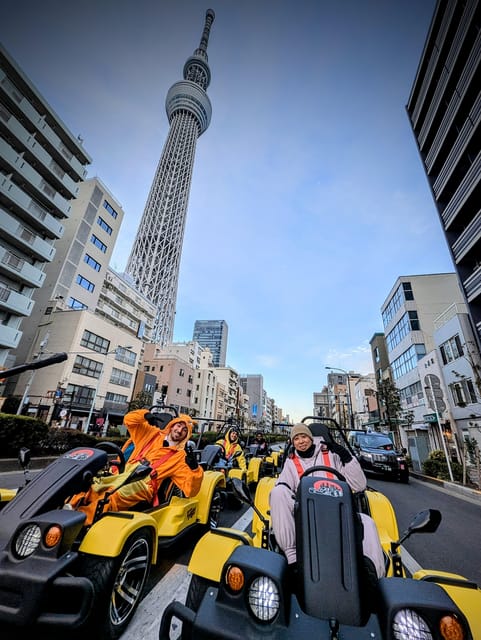
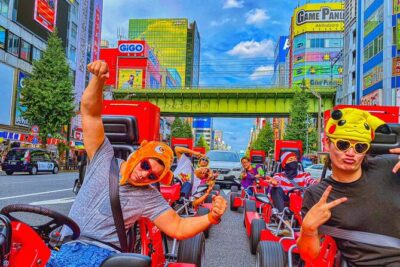
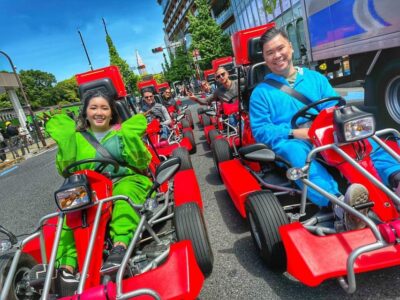
Anime costume rental is included. This adds a playful element to the outing and may appeal to people who want photos that look different from standard Tokyo sightseeing pictures.
Costumes are optional in spirit, even though the rental is included. If dressing up is not your style, the main activity remains the drive, the route, and the guide commentary.
Each kart offers optional on-board Insta360 camera use. This lets you record the journey hands-free from the driver’s seat, including city streets, landmarks, and the route between stops.
You must provide a Micro SD card, or buy one on site. This is an easy detail to miss. If recording matters to you, bring a compatible card rather than assuming the camera package includes storage.
Fuel is included for the full tour, as is accident insurance. Water, tea, and coffee are also included. These extras do not transform the price, but they reduce the number of add-on costs you need to think about on the day.
License rules you must check before booking
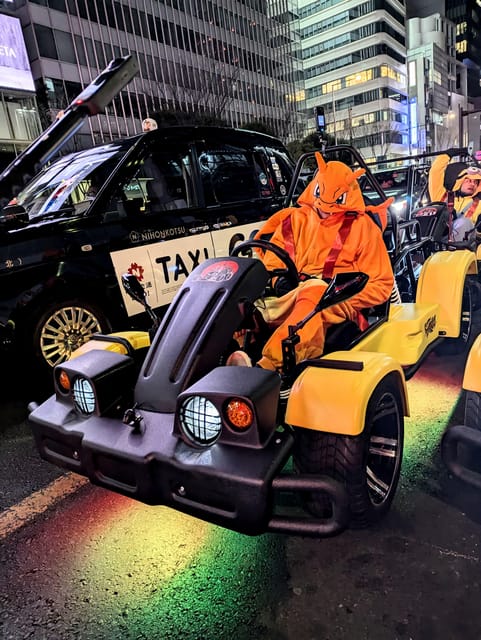
The license requirement is the most important booking issue. A valid driving license is mandatory, and the accepted document depends on where you live.
Japanese citizens and residents of Japan may use a Japanese driving license. Non-residents need an International Driving Permit issued under the 1949 Geneva Convention.
Drivers from Switzerland, Germany, France, Belgium, Monaco, or Taiwan need their national driving license together with an official Japanese translation issued by JAF. A normal international license from another arrangement may not meet the stated requirement, so check carefully before paying.
Bring the physical documents. Digital licenses, photographs, and expired licenses are not accepted. If you arrive without the correct paperwork, you cannot take part and no refund is provided.
Drivers must be at least 18, and the tour is not suitable for anyone over 95. It is also not suitable for people with visual impairments or people without a driver’s license. The activity is listed as wheelchair accessible, but every participant still needs to meet the driving and license requirements.
Who will enjoy this two-hour Tokyo route?
I would recommend this tour to a first-time Tokyo visitor who wants a strong visual overview and enjoys active sightseeing. It also suits repeat visitors who have already seen the city by train and want to experience its streets directly.
The tour is a good match for:
- Drivers who want a guided activity rather than a self-planned rental
- Couples, friends, and small groups looking for unusual city photos
- Big and tall riders who need more reassuring kart dimensions
- First-time kart drivers who prefer a calm pace and radio support
- People interested in seeing old districts, modern waterfront areas, and central landmarks in one outing
I would think twice if you dislike driving in cities, feel uncomfortable with exposed vehicles, or want long visits at each landmark. This is also not the right choice if you have not confirmed your license paperwork.
The activity works best as one part of a Tokyo plan. Do not schedule a major timed attraction immediately afterward unless you leave plenty of room. The operator asks you to arrive 40 minutes early, and city traffic can affect the pace of any road-based activity.
Booking flexibility and what to bring
You can cancel up to 24 hours before departure for a full refund, and the reserve-now, pay-later option allows more flexibility while you settle your plans. Starting times vary, so check availability for the date you want.
Bring your passport, the correct physical driving documents, and a Micro SD card if you want to use the Insta360 camera. Wear clothing that lets you sit comfortably and drive for two hours, and check the forecast before leaving.
Drones, alcohol, drugs, and alcoholic drinks in the vehicle are not allowed. Hotel pickup and drop-off are not included, so arrange your own way to the Kartzilla facility near Tokyo Skytree.
Should you book the Kartzilla Uptown Route?
Book it if you want Tokyo as a moving street scene, not just a list of indoor attractions. The route connects Skytree, Monzen-Nakachō, Toyosu, Ariake, Harumi, Ginza, Kabuki-za, Tokyo Station, and the Imperial Palace area in a compact two-hour outing.
The strongest reasons to choose it are the small group, live radio guidance, and comfort-focused karts. The biggest caution is the strict license rule. Confirm your documents before booking, arrive 40 minutes early, and understand that the landmarks are viewed from the road rather than visited inside.
At $116, this is a specialty experience, not a budget sightseeing ride. For the right person, the combination of city views, local commentary, costumes, and hands-free video makes the price reasonable. If you want a relaxed, unusual look at Tokyo’s central streets and waterfront districts, this is a worthwhile choice.
FAQ
How long does the Tokyo Bay go-kart tour last?
The tour lasts 120 minutes, or two hours.
Where does the tour start and finish?
It starts and returns at Kartzilla Go Kart Tokyo, near Tokyo Skytree and in proximity to Hiraki Children’s Clinic.
How early should I arrive?
Arrive at least 40 minutes before your scheduled starting time for check-in and the required safety briefing.
What driving documents are accepted?
Japanese citizens and residents may use a Japanese driving license. Non-residents need an International Driving Permit issued under the 1949 Geneva Convention. Licenses from Switzerland, Germany, France, Belgium, Monaco, or Taiwan must be accompanied by an official Japanese translation issued by JAF.
Can I use a digital copy of my license?
No. Digital licenses, photographs, and expired licenses are not accepted.
Is a passport required?
Yes. The required items include a passport, driving license, and International Driving Permit when applicable.
What landmarks does the route pass?
The route includes Tokyo Skytree, Monzen-Nakachō Station, Toyosu Fish Market, Ariake Coliseum, Harumi, Ginza, Kabuki-za, Tokyo Station, and the Tokyo Imperial Palace surroundings.
Is the tour suitable for first-time kart drivers?
Yes. The karts have stable handling, suspension, hydraulic brakes, and comfort features intended to support first-time drivers. The guide also provides live safety instructions by two-way radio.
Is a camera included?
On-board Insta360 camera use is included as an option, but you must bring a Micro SD card or purchase one on site.
What is included in the price?
The price includes the street-legal go-kart, fuel, professional local guide, anime costume rental, optional Insta360 camera use, accident insurance, and drinks including water, tea, and coffee. Hotel transfers, meals, and the Micro SD card are not included.
New on our Tokyo list
- Hakone Hachiri: Old Tokaido Highway Hiking Half-day tour★ 5.0 · 3 reviews
- Tokyo:Calligraphy & Zen Mindful Journey+Take Home Memory★ 5.0 · 3 reviews
- Private Samurai Sword Experience★ 5.0 · 3 reviews
- Tokyo:Cherry Blossom Mt Fuji & Shibazakura Festival Day Trip★ 4.4 · 3 reviews
- Private Tokyo’s Famed Tsukiji Fish Market Tour★ 5.0 · 3 reviews
- Dive into Tsukiji Fish Market Walking Friendly Food Tour★ 5.0 · 3 reviews
- Tokyo Harajuku Walking Tour Meiji Jingu Yoyogi Park and More★ 5.0 · 3 reviews
- Tokyo Private Transfer for Yokohama Cruise Port★ 5.0 · 3 reviews
Tokyo Go-Kart Experiences, compared.
Flagship 2-Hours Official Street Go-Kart Tour – Tokyo Bay Shop
Read our review →
Tokyo Go Kart: Asakusa, Skytree, and Akihabara **IDP MUST**
Read our review →
Shibuya Official Street Go-Kart in Shibuya Annex
Read our review →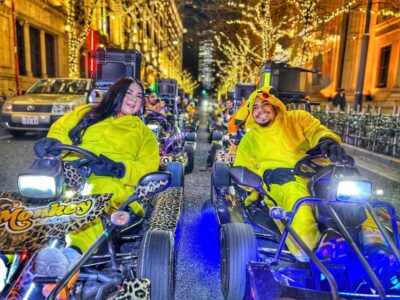
Asakusa, Skytree & Akhihabara Go-Kart City Experience
Read our review →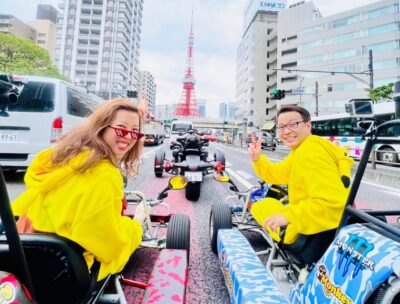
Premium Go-Kart Tour with Tower & Shibuya Crossing
Read our review →Browse the lists this tour appears in