
Reviewed · TOKYO GO-KART EXPERIENCES
Tokyo: Asakusa, Skytree & Akhihabara Go-Kart City Experience
Tokyo sightseeing usually means trains, pavements, and the occasional crowded observation deck. This tour changes the angle completely: you sit low in a custom-built go-kart and follow a guide through Asakusa, Tokyo Skytree, and Akihabara. The city feels faster, louder, and much more immediate from street level.
I like the small groups of no more than eight and the fact that the guide handles the photos while you concentrate on driving. I also like the costume choice, which turns a simple city ride into a playful photo session. The main catch is serious: Japan accepts only certain driving documents, and rain can force a schedule change.
In This Review
- Key points at a glance
- Starting near Oshiage and Tokyo Skytree
- The ride from Asakusa to Akihabara
- Why the guide makes the difference
- Costumes, cameras, and the photo package
- Choosing the right start time
- Who should book this experience
- The document rule that can ruin your booking
- Booking flexibility and practical value
- Should you book the Tokyo go-kart tour?
- FAQ
- How long does the Tokyo go-kart tour last?
- Where does the tour start?
- Which Tokyo areas does the route cover?
- What driving permit do I need?
- Is an online or digital International Driving Permit accepted?
- Are costumes and photos included?
- Can the tour be canceled or rescheduled?
Key points at a glance
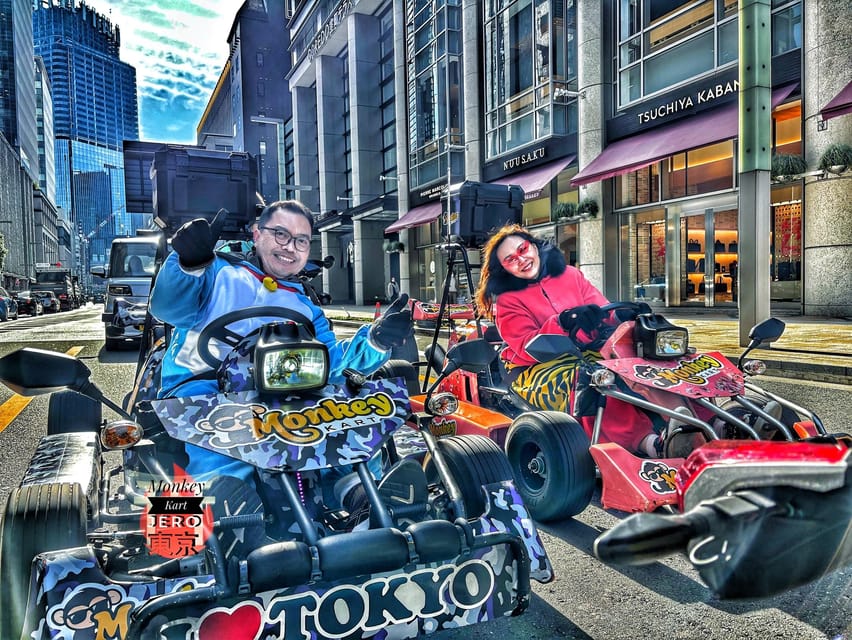
- Street-level Tokyo route: Ride through Asakusa, pass Tokyo Skytree, and continue toward Akihabara.
- Eight-person maximum: A small group makes it easier to follow the guide and get individual help.
- Costumes and camera support: Dress up, use the action-camera or Insta360 mount, and receive photos from the guide.
- Best timing tip: Around 4 p.m. can give you changing daylight and evening city lights.
- Driving paperwork matters: You need a hard-copy 1949 Geneva Convention International Driving Permit, or an approved Japanese license translation.
- Adult-only activity: Drivers must be over 18, and the tour is not suitable for pregnant people or anyone over 180 centimeters tall.
Starting near Oshiage and Tokyo Skytree
The meeting point is at 4-chōme-9-9 Yokokawa, about a seven-minute walk from Oshiage Station. Plan to arrive 20 minutes before your booked time. That early arrival is not wasted time: staff need to check documents, prepare the karts, explain the controls, and cover road safety before you head out.
Oshiage is a sensible starting area for this route. It puts you close to Tokyo Skytree, one of the city’s clearest landmarks, and gives the tour an immediate visual anchor. You are not simply driving around a featureless neighborhood before the sightseeing begins.
The staff provide water, and cold-weather equipment may be available when needed. One February rider was glad to receive gloves, while summer riders described attentive staff helping everyone cope with hot conditions. Still, dress for the forecast. A go-kart leaves you exposed to wind, sun, and rain.
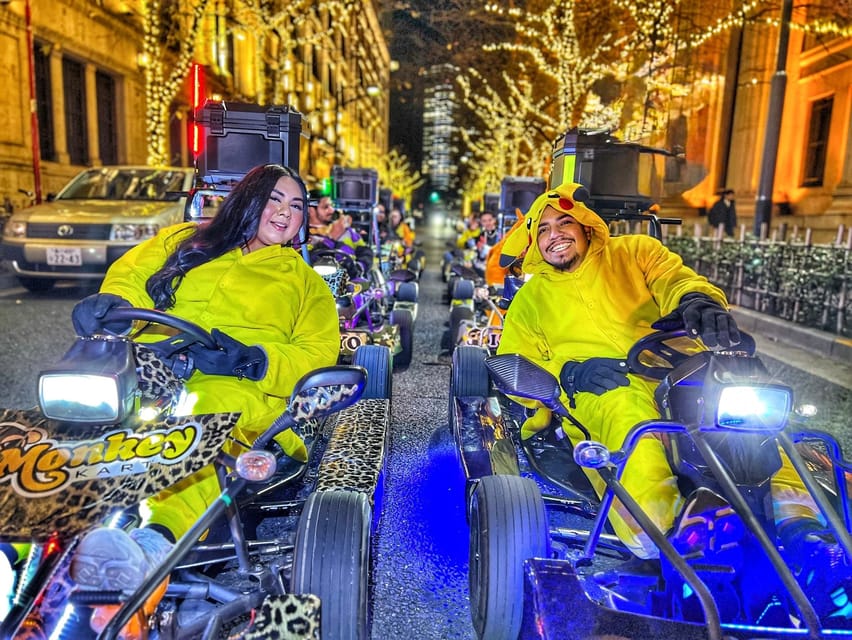
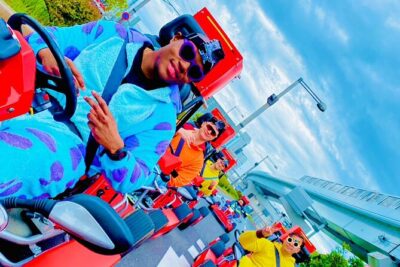
Before departure, you can choose a costume. The selection is intended for fun and photographs, not serious historical interpretation, so think of it as a cheerful extra rather than the main reason to book. Costumes are especially enjoyable for couples and friends who want photos with a little more personality.
The safety briefing is an important part of the experience. Guides explain how to operate the karts and how to stay with the group. Several guides have been praised by name for making nervous drivers feel calmer, including Adam, Sho, Hannah, Louis, Brandon, and Matias. The staff roster can change, but the pattern is clear: the guide leads from the front and keeps the pace organized.
More street-kart slots:
- Flagship 2-Hours Official Street Go-Kart Tour – Tokyo Bay Shop
★ 5.0 · 4,974 reviews - Official Street Go-Kart in Shibuya
★ 5.0 · 3,435 reviews - Official Street Go-Kart Tour – Akihabara
★ 5.0 · 1,578 reviews
The ride from Asakusa to Akihabara
Once on the road, the experience becomes part sightseeing tour and part driving challenge. You follow the guide through Tokyo traffic, using the road as a real driver rather than watching the city through a bus window. That gives you a close view of shopfronts, intersections, pedestrians, and passing landmarks, but it also means you must pay attention.
Asakusa brings the strongest contrast with the rest of the route. This is one of Tokyo’s traditional districts, associated with Senso-ji Temple, old shopping streets, and a more historic atmosphere than Akihabara’s electronic storefronts. The tour is a pass-through street experience, not a long temple visit, so do not book it as a replacement for exploring Asakusa on foot.
I like this part because the kart gives you a moving view of the district without requiring another train connection. You can see the urban texture as you go, and people along the road may wave or give a thumbs-up. That attention from the street can be fun, but it also reminds you that you are operating a vehicle in a public city environment. Follow the guide’s signals and keep your eyes on the road.
Tokyo Skytree is the route’s easiest landmark to recognize. The tower rises above the surrounding buildings, making it a useful orientation point and a natural photo stop. The supplied itinerary identifies Tokyo Skytree Town as the main sightseeing point, with a photo stop and guided sightseeing before the ride continues.
Do not expect a long stop with time to visit the tower or shop inside the complex. The tour lasts 70 minutes, so the stop is designed for a quick look and photographs. If you want the Skytree observation decks, book that separately and leave enough time in your day.
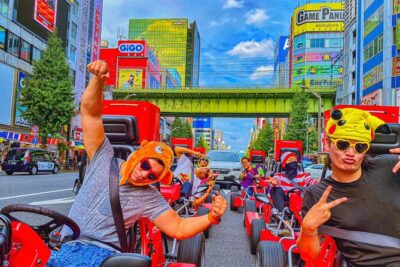
Akihabara changes the mood again. Its reputation comes from electronics, anime, manga, games, and Japanese pop culture. From a go-kart, you experience the district as a stream of signs, traffic, and street energy rather than as a series of shops to browse.
That distinction matters. This tour is good at giving you a memorable sense of Tokyo’s major areas, but it is not an in-depth cultural tour. You will not have time to stop for shopping, visit arcades, or study the details of each neighborhood. I would pair it with a walking visit to Akihabara or Asakusa on another part of your itinerary.
Why the guide makes the difference
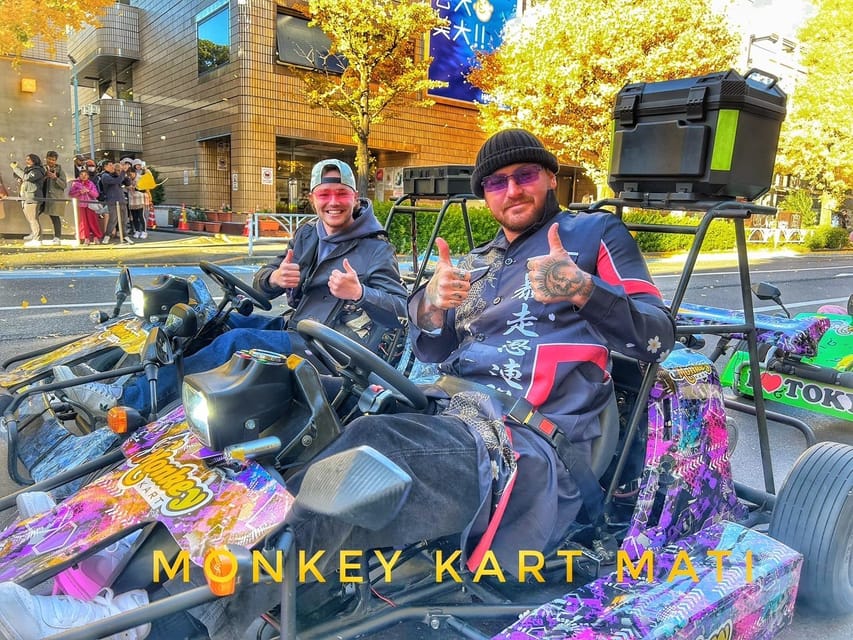
Driving alone through Tokyo would be stressful and impractical. Here, the English-speaking guide sets the pace, leads the group, and helps keep everyone together. That support is one of the strongest reasons to choose a guided ride instead of treating the kart as a simple vehicle rental.
The guide also adds local context. One rider singled out Adam for explaining what the group was seeing and offering advice about local life and places to visit. The exact commentary will depend on the guide and the traffic, but the tour is more than a silent procession.
Safety is the point to take seriously. You are driving on public roads, not a closed amusement-park track. One piece of useful feedback concerned hand signals being hard to see from several karts back. Stay alert, keep enough space to see the guide, and do not assume the person ahead will handle every instruction for you.
The small group size helps. With a maximum of eight people, the guide can keep the line compact and respond if someone feels nervous. Several riders who had never driven a kart, or felt anxious about Tokyo traffic, said the briefing and calm guidance helped them settle in.
The vehicles have also received favorable comments for being well maintained, large, and comfortable. That is encouraging, though no road activity is entirely free of interruptions. A minor kart problem was dealt with promptly on one outing, which is exactly what you want from the staff if equipment needs attention.
Costumes, cameras, and the photo package
At $96 per person, this is not a cheap way to cover Tokyo. Public transport costs far less, and a walking route through Asakusa, Skytree Town, and Akihabara can also be arranged for a fraction of the price.
The value comes from the combination. You receive the go-kart, a guide, a costume, water, photos taken during the ride, one hard-copy photo, and an action-camera or Insta360 mount. You are paying for a short, unusual activity with a built-in memory-making service, not efficient transportation.
The photo service is particularly useful. You should not be trying to hold a phone while driving, so having the guide take photos lets you enjoy the route safely. Pictures are shared afterward by AirDrop or email, and several riders appreciated receiving a large batch rather than only one souvenir image.
The hard-copy photo is a small but welcome touch. It gives you something physical before the digital files disappear into your camera roll. If you use the action-camera mount, check that your device is fully charged. One rider specifically wished for a charged GoPro, a practical reminder for anyone relying on personal recording equipment.
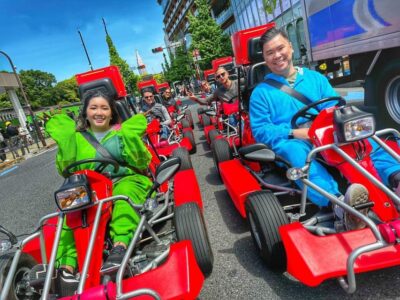
Costumes make the photos more distinctive, but they are optional in spirit. If dressing up in public feels awkward, you can still enjoy the drive. If you are traveling with friends, the costume choice adds a shared joke and makes the group easier to spot in the guide’s photographs.
More Asakusa visits:
- Tokyo: Japanese Dance Cabaret Theater Asakusa-Kaguwa Ticket
★ 4.8 · 2,270 reviews - Tokyo: Meiji Shrine, Asakusa, Skytree Bus Tour and Cruise
★ 4.7 · 1,986 reviews - Tokyo: Roll and Authentic Sushi Making Class in Asakusa
★ 4.9 · 1,957 reviews - Tokyo: Asakusa Walking Tour with Sensoji Temple Visit
★ 4.8 · 1,583 reviews
Choosing the right start time
The tour duration is 70 minutes, so timing can change the mood without changing the route. Morning rides give you daylight and may feel calmer, though the experience remains subject to city traffic.
The most useful timing tip is around 4 p.m. This can let you begin in daylight, see Tokyo shift toward evening, and finish with illuminated streets. Several riders liked the change from day to night, and one specifically recommended the late-afternoon departure for city lights.
Night rides can be more dramatic, especially around Akihabara, where illuminated signs are part of the appeal. They can also feel colder, particularly in winter, and visibility becomes more important. Wear suitable clothing and pay close attention to the guide’s signals.
Sunset conditions are not guaranteed. Weather, season, and traffic all affect what you see. The route may be rescheduled because of rain, so keep some flexibility in your Tokyo plan rather than scheduling a critical dinner or train immediately afterward.
Who should book this experience
This is best for adults who already hold a valid driving document and want an active sightseeing experience. Couples, friends, first-time Tokyo visitors, and repeat visitors can all find a reason to book it. For a first visit, it gives you a quick visual tour of several famous districts. For a return visit, it offers a very different way to see familiar places.
You need to be over 18. The activity is not suitable for pregnant people, anyone over 150 kilograms, or anyone over 180 centimeters tall. The height limit is especially easy to miss, so check it before paying.
This is not ideal if you dislike traffic, public attention, costumes, or sitting exposed to the weather. It is also a poor fit if your main goal is detailed sightseeing at temples, shops, or museums. You will be moving most of the time.
Non-drivers cannot simply join as passengers in a standard kart under the information provided. One past rider referred to a Can-Am bike option for someone who did not drive, but availability and rules for that option are not stated here. Ask the operator directly before booking if a non-driving alternative is essential.
The document rule that can ruin your booking
Do not treat the license requirement as a minor footnote. Every driver must bring a physical paper booklet International Driving Permit issued under the 1949 Geneva Convention by the official agency in their country, such as AAA, AA, CAA, or another approved authority.
Digital files, photographs of permits, and soft copies are not valid. A 1968 Vienna Convention permit is not recognized by Japan, and permits issued by FIA, IDA, or IAA are also listed as unacceptable.
Drivers from France, Switzerland, Taiwan, Germany, Monaco, and Belgium need a Japanese translation of their local license, obtained through the Japan Automobile Federation. Some other national licenses are not accepted for driving in Japan, including licenses from Indonesia, Pakistan, Saudi Arabia, Mexico, Brazil, Costa Rica, Colombia, Kuwait, and Qatar unless the driver has an approved 1949 Geneva Convention permit.
Get the correct paperwork before leaving home. Do not assume that an online IDP service is enough. If your documents are wrong, the fun costume and camera package will not help you get behind the wheel.
Booking flexibility and practical value
The activity allows free cancellation up to 24 hours before departure for a full refund, and you can reserve now and pay later. That is useful when Tokyo weather is uncertain, though the operator may also reschedule the tour because of rain.
The meeting point is a seven-minute walk from Oshiage Station, but allow extra time to find 4-chōme-9-9 Yokokawa and complete the pre-ride process. Arriving 20 minutes early is a firm practical tip, not a suggestion to squeeze into your schedule.
At $96, I would call this a special-event purchase rather than a transport bargain. The cost makes more sense if you care about the photos, want to dress up, and value a guide-led activity with a small group. If you only want to see the landmarks, trains and walking routes will give you more time and lower costs.
The strongest part of the package is the blend of structure and play. The guide handles navigation and photography, while you get the fun of driving. That division lets you enjoy the unusual setting without constantly reaching for your phone.
Should you book the Tokyo go-kart tour?
Book it if you want a memorable adult activity and have the correct driving documents in hand. The 70-minute route is a lively way to connect Asakusa, Tokyo Skytree, and Akihabara, and the costume and photo extras give you something to keep afterward.
I would choose a departure around 4 p.m. if available, especially for a first visit. You may catch daylight, sunset color, and evening signs in one outing.
Skip it if you want slow cultural sightseeing, dislike driving in traffic, or are close to the height limit. For everyone else, this is a playful, well-organized addition to a Tokyo itinerary, provided you respect the paperwork, arrive early, and remember that the road comes before the photo.
FAQ
How long does the Tokyo go-kart tour last?
The experience lasts 70 minutes, including the safety briefing, the guided ride, sightseeing, and photo stops.
Where does the tour start?
It starts at 4-chōme-9-9 Yokokawa, about a seven-minute walk from Oshiage Station.
Which Tokyo areas does the route cover?
The route includes Asakusa, Tokyo Skytree or Tokyo Skytree Town, and the Akihabara area. The itinerary identifies Tokyo Skytree Town as a sightseeing and photo stop.
What driving permit do I need?
You need a hard-copy paper booklet International Driving Permit issued under the 1949 Geneva Convention by the official agency in your country, or another license document approved under Japanese regulations.
Is an online or digital International Driving Permit accepted?
No. Online copies, digital files, and soft copies are not valid for this activity.
Are costumes and photos included?
Yes. A costume, guide-led photoshoot, photos shared by AirDrop or email, one hard-copy photo, and an action-camera or Insta360 mount are included.
Can the tour be canceled or rescheduled?
You can cancel up to 24 hours in advance for a full refund, and you can reserve now and pay later. The tour may also be rescheduled because of rain.
New on our Tokyo list
- Tokyo Spectacular View Day-Cruise in 90 Minutes★ 5.0 · 25 reviews
- From Tokyo: Mount Fuji & Hakone Full Day Private Tour★ 4.9 · 25 reviews
- Real Tokyo Runner Club : Daikoku Car Meet Night Tour with JDM Car★ 5.0 · 25 reviews
- 2.5 Hour-Guided Cycle Tour in the Central Tokyo★ 5.0 · 25 reviews
- Ramen Making from Scratch +Akihabara Tour –Cooking Class★ 5.0 · 25 reviews
- [Self-Drive] Tokyo & Daikoku Custom Car Driving Tour★ 4.9 · 25 reviews
- Tokyo: 2-Hour Night Bike Tour of the City’s Hidden Gems★ 4.9 · 25 reviews
- Samurai themed Entertainment show in Shinjuku★ 4.5 · 25 reviews
Tokyo Go-Kart Experiences, compared.
Flagship 2-Hours Official Street Go-Kart Tour – Tokyo Bay Shop
Read our review →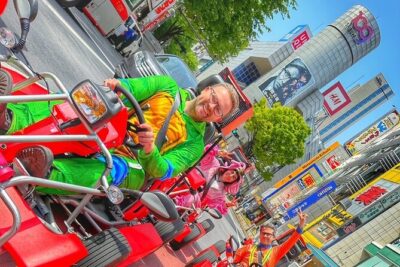
Tokyo Go Kart: Asakusa, Skytree, and Akihabara **IDP MUST**
Read our review →
Shibuya Official Street Go-Kart in Shibuya Annex
Read our review →
Premium Go-Kart Tour with Tower & Shibuya Crossing
Read our review →Shibuya Kart: Premium Go-Karting Tour through Shibuya, Tokyo
Read our review →Browse the lists this tour appears in