Reviewed · TOURS
Tokyo: Edo Castle Ruins & Imperial Palace East Garden Tour
Edo Castle is now a quiet garden in the middle of Tokyo, but its stone walls, gates, moats, and guardhouses still hint at the power once held here by the shoguns. I like the way this two-hour walk connects castle defenses to imperial history, rather than treating the East Gardens as just a pretty park.
I also like the small-group or private format, which gives you a better chance to ask questions. Guides including Mari and Isao have been praised for their warmth, patience, and detailed explanations. The trade-off is simple: this is a walking tour of ruins and gardens, not a visit inside the Imperial Palace buildings, and one quiet guide can make the experience feel like an ordinary park walk.
In This Review
- Key points to know before you book
- Why Edo Castle ruins are worth your time
- Meeting at Wadakura Fountain
- Passing through Otemon Gate
- Samurai security at the guardhouses
- The former Honmaru and the castle keep site
- Trees, Suwa tea house, and the East Gardens
- A quiet finish in Ninomaru Garden
- What the two-hour pace feels like
- The guide can make or break the experience
- Is $37 a fair price?
- Who should book this Edo Castle walk?
- Should you book it?
- FAQ
- Does the tour enter the Imperial Palace buildings?
- How long does the tour last?
- Where do I meet the guide?
- Is the tour offered in English?
- What should I bring?
- Is the tour suitable for wheelchair users or young children?
Key points to know before you book
- The castle gates tell the clearest story: Otemon, Ote San-no-mon, and the guardhouses show how carefully Edo Castle controlled entry.
- The Imperial Palace itself is not open: You visit the East Gardens and former Edo Castle grounds, not the palace buildings or inner grounds.
- Tenshu-dai gives the tour a strong high point: The former keep site offers broad views of the surrounding area.
- Ninomaru Garden slows the pace: Expect ponds, koi, carefully arranged greenery, and a calmer close to the walk.
- A good guide matters here: Mari and Isao are named examples of guides who answer questions and add historical detail.
- Bring walking shoes and water: The route includes gates, paths, ruins, and gardens, and it is not suitable for wheelchair users or people with mobility impairments.
Why Edo Castle ruins are worth your time
Tokyo can make history feel distant. Skyscrapers, trains, and neon tend to crowd out the past. At the Imperial Palace East Gardens, the old castle survives in a different form: massive stonework, moats, gates, guard posts, and open spaces where important buildings once stood.
That contrast is the real appeal. You are not entering a preserved palace with rooms full of furniture. Instead, you are learning to read what remains. A guide can point out why a gate was placed where it was, how guards controlled movement, and how the site changed from the age of the shoguns to the modern imperial era.
The $37 price is reasonable if you want that explanation. Admission to the castle and East Gardens is included, and an English-speaking guide gives structure to a place you could otherwise walk through without understanding much. The value depends heavily on the guide. With someone like Isao, described as friendly and patient with questions, or Mari, praised for making the history accessible, the tour can turn bare stones into a story.
If your main goal is a grand palace interior, this is the wrong choice. The inner grounds and palace buildings are not open to the public, since the Imperial Family still lives there. You will see gardens and former castle grounds instead.
A few more Tokyo bookings worth comparing
- Mt Fuji and Hakone 1-Day Bus Tour Return by Bullet Train
★ 5.0 · 26,383 reviews - 1-Day Tokyo Bus Tour
★ 5.0 · 14,250 reviews - Tokyo: TOKYO SKYTREE® Admission ticket
★ 4.5 · 11,192 reviews
Meeting at Wadakura Fountain
The tour begins outside the Wadakura Free Rest Area, in front of the entrance. Look for the guide holding a yellow sign. Starting here is practical because it gives you an indoor place to meet, an especially useful detail if the weather is hot, cold, or wet.
Your first stop is Wadakura Fountain National Park. The fountain was built to commemorate a royal wedding, and the guide explains its connection to the imperial family. This opening gives the tour a modern imperial reference before it moves backward into the world of Edo Castle.
The fountain itself is not the main event, and the guided stop lasts about 10 minutes. Still, it provides a useful introduction. You begin with the palace complex as it exists today, then move toward the castle that once occupied this ground.
Next comes Wadakura Moat, with about five minutes of explanation. A moat may look like a strip of water beside a path, but at a castle it was part of the security system. This is a short stop, yet it helps you see the site as a defended compound rather than a garden.
Passing through Otemon Gate
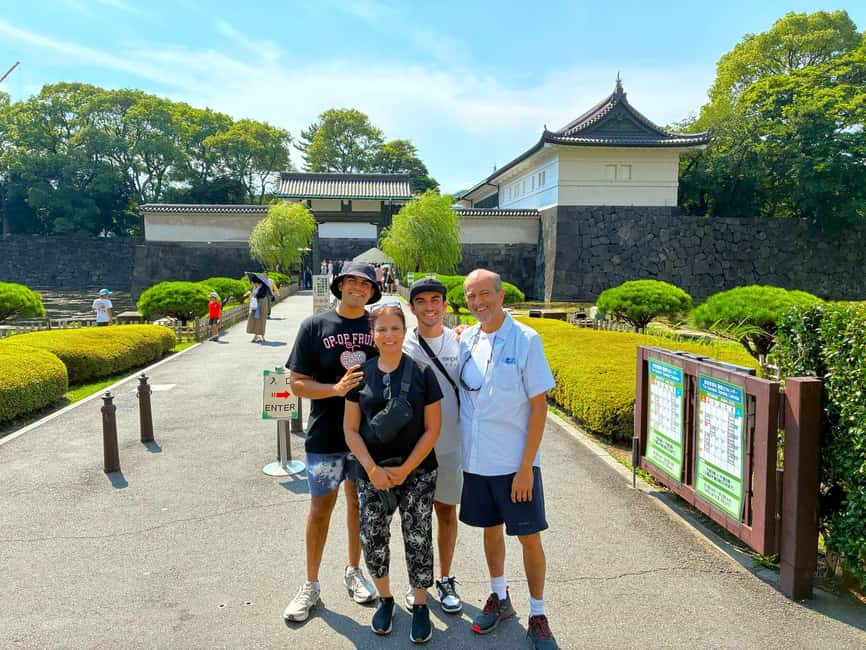
Otemon Gate is one of the tour’s strongest visual stops. It was the main entrance to the castle grounds, and its scale makes the old power of Edo Castle easier to picture.
The guide spends around 10 minutes here. That is enough time to explain the gate’s role and the way visitors entered a heavily protected area. The point is not simply that the gate is large. Its position, walls, and approach show that the castle was designed to manage people carefully.
You then continue to the Ote San-no-mon Gate Ruins. Here, the emphasis shifts from a surviving entrance to traces of a former one. Ruins require more imagination than a complete building, which is exactly where a guide earns the fee.
I would pay close attention during these early stops. The details about gates and access help make sense of the later guardhouses. Without that thread, the itinerary can feel like a series of stone features. With it, you begin to see a system built around control, status, and defense.
Samurai security at the guardhouses
The Doshin Bansho and Hyakunin Bansho Guardhouse are among the most useful stops for understanding daily castle security. The tour describes the samurai heritage of the site and explains how guards watched the approaches.
The Hyakunin Bansho name points to a guardhouse associated with a large guard force, while Doshin Bansho gives you another example of the layers of personnel involved in protecting the castle. The exact architectural details are less important than the wider lesson: entry into Edo Castle was not casual.
Expect roughly 10 minutes at Hyakunin Bansho. This is a good place to ask questions, especially if you want to understand how the shogun’s residence differed from an ordinary fortified site. The tour is designed for history in plain language, and the best guides use these surviving structures to explain the people who worked there.
This is also where the quality of guiding becomes most noticeable. One guide may offer a full explanation and welcome questions. Another may keep the commentary light. The rating of 4.4 from 13 reviews reflects a generally positive experience, but the mixed scores also tell you not to assume every tour will have the same depth.
Same corner of Tokyo, a completely different plan:
- Tokyo: teamLab Planets TOKYO Digital Art Museum Entry Ticket
★ 4.6 · 9,779 reviews - Mt Fuji & Hakone Cruise, Drum Show Bullet Train 1 Day from Tokyo
★ 4.0 · 7,413 reviews - Tokyo: Sumo Show Experience with Chicken Hot Pot and a Photo
★ 4.8 · 6,678 reviews - Tokyo: Shinjuku Food Tour (13 Dishes at 4 Local Eateries)
★ 5.0 · 6,603 reviews
The former Honmaru and the castle keep site
The route then reaches the Edo Castle ruins and the former Honmaru, or main hall area. Honmaru was the central part of the castle compound, so this is where the tour’s historical scale comes into focus.
The stop at the Edo Castle ruins lasts about 15 minutes, followed by about 10 minutes at the site of the Honmaru main hall. Today, you are looking at the remains and open grounds rather than a reconstructed palace building. That can feel less dramatic than visiting a complete castle, but it also leaves room for explanation and imagination.
A restoration model of the Edo Castle keep helps fill in the missing picture. The model is particularly useful because the original keep is not standing above you. You can compare the model with the stone base and understand what the castle would have looked like when its highest structure dominated the site.
The Tenshu-dai, or keep platform, is another highlight. From here, you get panoramic views of the surrounding area. The view is not only a photo stop. It helps you understand the castle’s commanding position and the difference between the old military center and the modern city around it.
Bring a camera, but do not use flash photography. The tour includes a commemorative photo opportunity, which is a pleasant touch for couples, families with older children, or anyone who wants a record of the walk.
Trees, Suwa tea house, and the East Gardens
After the main castle sites, the route includes a stop labeled 都道府県の木, referring to the prefectural trees. This is a gentler part of the walk. It gives you a chance to notice the planting and public garden design after the heavier focus on gates, guards, and walls.
The Suwa no Chaya tea house follows. It adds a more delicate architectural note to a route otherwise shaped by defensive structures and stone foundations. The stop lasts about 10 minutes, so you should expect an explanation and viewing opportunity rather than a tea service. Food and drinks are not included.
The tour then spends about 15 minutes in the Imperial Palace East Gardens. This is the point where the experience changes character. You move from the hard evidence of castle protection to an open garden setting connected with the palace grounds.
Do not confuse the East Gardens with access to the palace itself. You are not entering the inner grounds, and the palace buildings are closed to the public. The garden visit is still valuable because it lets you see the former Edo Castle site in a calm setting, with the modern imperial residence nearby but separate from your route.
A quiet finish in Ninomaru Garden
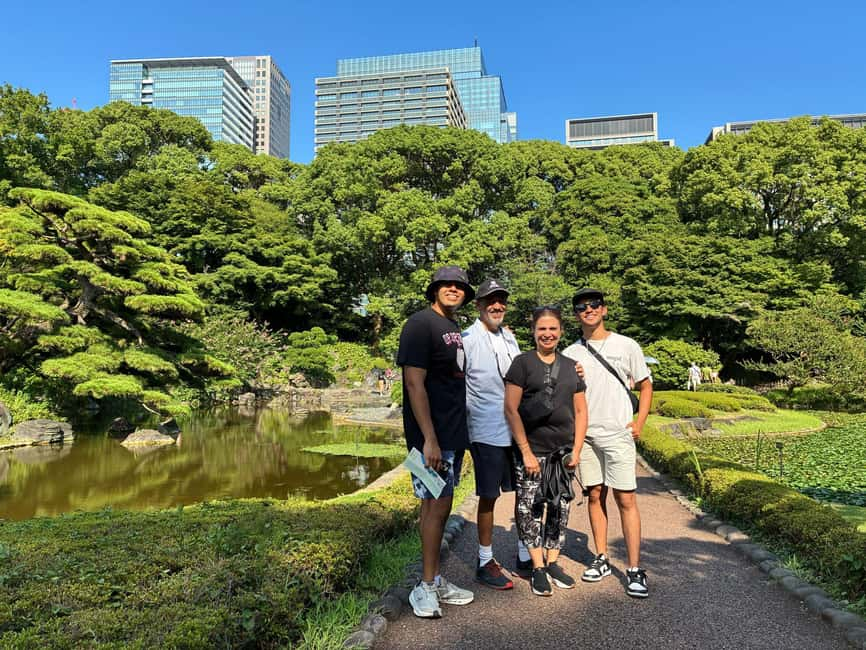
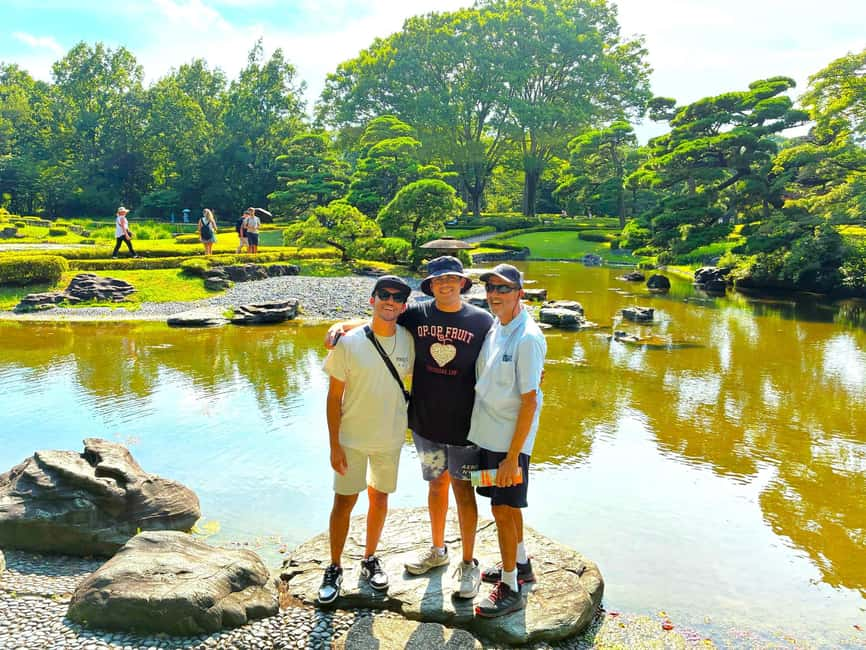
Ninomaru Garden is the final major stop, with about 15 minutes to relax and look around. Its pond, koi fish, and quiet paths provide a welcome change after the historical explanations and stone surfaces.
This is likely to be the most peaceful part of the tour. You can slow down, take photographs, and notice the contrast between the garden’s controlled beauty and the castle’s defensive purpose. The guide may continue explaining the site, but the setting also works well as a quiet pause.
The route returns to the Wadakura Free Rest Area. Since the tour begins and ends there, you do not need to arrange a separate pickup or drop-off. Hotel transportation is not included, so plan your own way to and from the meeting point.
What the two-hour pace feels like
Two hours is enough to cover the major points, but it is not enough for a long, leisurely visit at every stop. The itinerary includes many short explanations: about five minutes at the moat and about 10 minutes at several gates, guardhouses, and historical sites.
That pace suits you if you want a clear introduction to the grounds before moving on to another Tokyo sight. It is less suitable if you prefer to linger, sketch, photograph every detail, or read every sign at your own speed.
The private or small-group option helps. A smaller group makes it easier to hear the guide and ask questions without holding up a large crowd. It also gives the guide more room to adjust the explanation. If you are especially interested in shogun politics, samurai security, imperial history, or Japanese gardens, say so early.
Wear comfortable shoes. The route is outdoors and includes a good deal of walking between gates, ruins, platforms, and gardens. Bring water, and carry a camera if you want one. Smoking is not allowed, and flash photography is prohibited.
Children under six are not suited to this activity, and the tour is not suitable for wheelchair users or people with mobility impairments. Those limits matter here because the experience depends on walking between separate outdoor sites.
The guide can make or break the experience
This is not a tour where the buildings do all the work. Much of Edo Castle has disappeared, so the guide’s ability to explain what you are seeing is central to the experience.
The strongest guiding style is clear, patient, and willing to answer questions. Isao is noted for his friendly manner and careful responses, while Mari is associated with lively historical explanations. Those examples set the right expectation: you want a guide who explains why a stone wall, gate, or guardhouse mattered, not someone who simply names it and moves on.
There is also a real caution. A quiet guide can reduce the tour to a walk through a park. If you want detailed history about the palace and Japan, ask questions as you go. The private or small-group setup may give you a better chance of getting the kind of explanation you want, but no tour can guarantee the same guide or the same level of commentary every time.
The activity is offered in English. That makes it a useful choice if you want context without arranging a separate historian or museum visit.
Is $37 a fair price?
At $37 per person, I see this as a fair price for a focused introduction, especially when admission and a live English-speaking guide are included. You are paying less for access to a rare interior and more for interpretation of a large historic site.
You could walk through the East Gardens on your own, and that is the main value question. If you enjoy reading signs and researching castle history beforehand, a self-guided visit may be enough. If you want the gates, guardhouses, Honmaru, Tenshu-dai, and Ninomaru Garden tied together in one story, the guide adds useful structure.
The price makes the most sense for first-time visitors to Tokyo, people with only a few hours, and anyone curious about the shoguns and emperors but unsure where to begin. It is less compelling for repeat visitors who already know the site well or want to spend most of their time independently.
Free cancellation up to 24 hours ahead and the reserve-now, pay-later option add flexibility. Food and drinks are not included, but the tour is short enough that this is easy to handle before or after the walk.
Who should book this Edo Castle walk?
I would choose this tour if you want:
- A compact introduction to shogun and imperial history
- A guide who can explain the purpose of castle gates and guardhouses
- A mix of ruins, stone walls, moats, models, and gardens
- A small-group or private setting
- A gentle finish among koi ponds and garden paths
I would skip it if your priority is entering the Imperial Palace, seeing furnished castle rooms, or spending several hours at one site. You should also choose another activity if walking outdoors is difficult.
Should you book it?
Book this tour if you want the East Gardens to make sense, not just look attractive. The best parts are the sequence from moat to gate to guardhouse, the Tenshu-dai views, and the calm Ninomaru Garden finish.
Go in with the right expectation. You will not enter the Imperial Palace buildings, and the castle itself survives mainly through ruins, foundations, models, and layout. At $37, that is good value when the guide brings the site to life. If detailed commentary is important to you, choose the small-group or private option when available and come ready with questions.
FAQ
Does the tour enter the Imperial Palace buildings?
No. The inner grounds and palace buildings are not open to the public. The tour focuses on the East Gardens and the historic remains of Edo Castle.
How long does the tour last?
The tour lasts two hours and returns to the Wadakura Free Rest Area.
Where do I meet the guide?
Meet outside the Wadakura Free Rest Area, in front of the entrance. The guide will be holding a yellow sign.
Is the tour offered in English?
Yes. The activity includes a live English-speaking guide.
What should I bring?
Bring comfortable shoes, water, and a camera. Smoking and flash photography are not allowed.
Is the tour suitable for wheelchair users or young children?
The tour is not suitable for wheelchair users or people with mobility impairments. Children under six are also not permitted.
New on our Tokyo list
- Hakone Hachiri: Old Tokaido Highway Hiking Half-day tour★ 5.0 · 3 reviews
- Tokyo:Calligraphy & Zen Mindful Journey+Take Home Memory★ 5.0 · 3 reviews
- Private Samurai Sword Experience★ 5.0 · 3 reviews
- Tokyo:Cherry Blossom Mt Fuji & Shibazakura Festival Day Trip★ 4.4 · 3 reviews
- Private Tokyo’s Famed Tsukiji Fish Market Tour★ 5.0 · 3 reviews
- Dive into Tsukiji Fish Market Walking Friendly Food Tour★ 5.0 · 3 reviews
- Tokyo Harajuku Walking Tour Meiji Jingu Yoyogi Park and More★ 5.0 · 3 reviews
- Tokyo Private Transfer for Yokohama Cruise Port★ 5.0 · 3 reviews
Tours, compared.
Mt Fuji and Hakone 1-Day Bus Tour Return by Bullet Train
Read our review →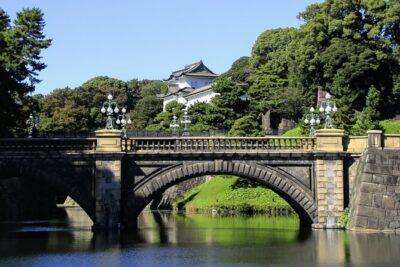
Shinjuku Food Tour (13 Dishes at 4 Local Eateries)
Read our review →
Tokyo Mt Fuji 5th St & Hakone Cruise Bus Tour w/Bullet Train
Read our review →
Flagship 2-Hours Official Street Go-Kart Tour – Tokyo Bay Shop
Read our review →
Mt. Fuji Tour, Hakone Ropeway, Owakudani, Lake Ashi
Read our review →
Tokyo 6hr Private Tour with Government-Licensed Guide
Read our review →