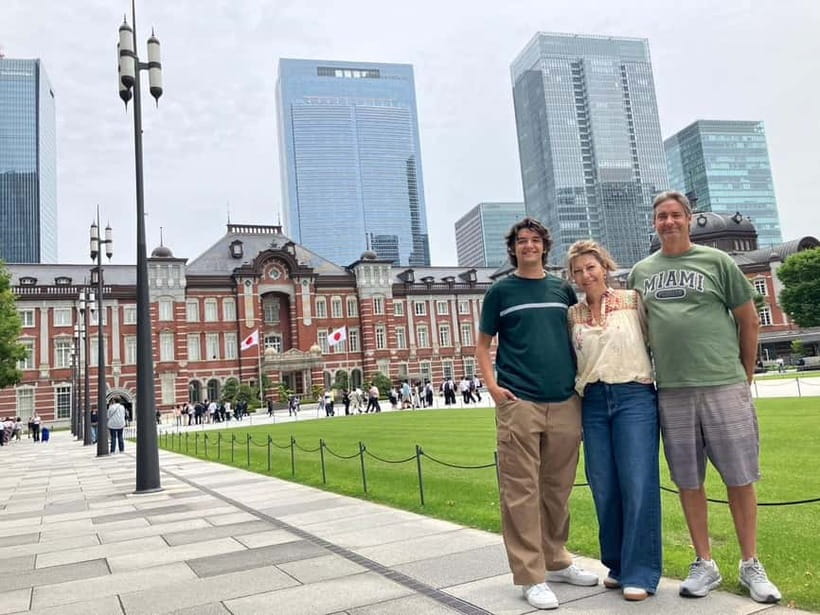
Reviewed · TOURS
Tokyo: Imperial Palace East Gardens and Tokyo Station Tour
Tokyo’s imperial center is more than a palace behind a moat. It is where Edo Castle ruins, quiet gardens, watchtowers, and modern office towers meet. This 150-minute walk connects those pieces in a sensible way, ending at the restored red-brick Tokyo Station.
I like the clear route and the strong historical focus. I also like that guide Yuki is praised for making 400-year-old events easy to picture, with humor instead of a dry lecture. The main consideration is the walking: you need comfortable shoes, sun protection, water, and weather-ready clothing. Backpacks are not allowed, so pack light.
In This Review
- Key points to know
- From a coffee shop meeting point to the old castle gate
- Ote-mon Gate explains how Edo Castle worked
- Ninomaru Garden brings a softer side of the palace grounds
- Edo Castle ruins make the shogunate easier to picture
- Imperial Palace views add the modern imperial chapter
- A ten-minute walk shifts the mood to Marunouchi
- Tokyo Station is a fitting final stop
- What the $38 price delivers
- Who will get the most from this walk
- Practical timing and weather advice
- My recommendation
- FAQ
- How long is the Imperial Palace East Gardens and Tokyo Station Tour?
- How much does the tour cost?
- Where does the tour begin?
- Where does the tour finish?
- Which languages are available?
- Is the Imperial Palace East Gardens admission included?
- What should I bring, and what is not allowed?
Key points to know
- Ote-mon Gate and guardhouses: See the formal entrance to the old castle grounds and learn how security worked during the shogunate.
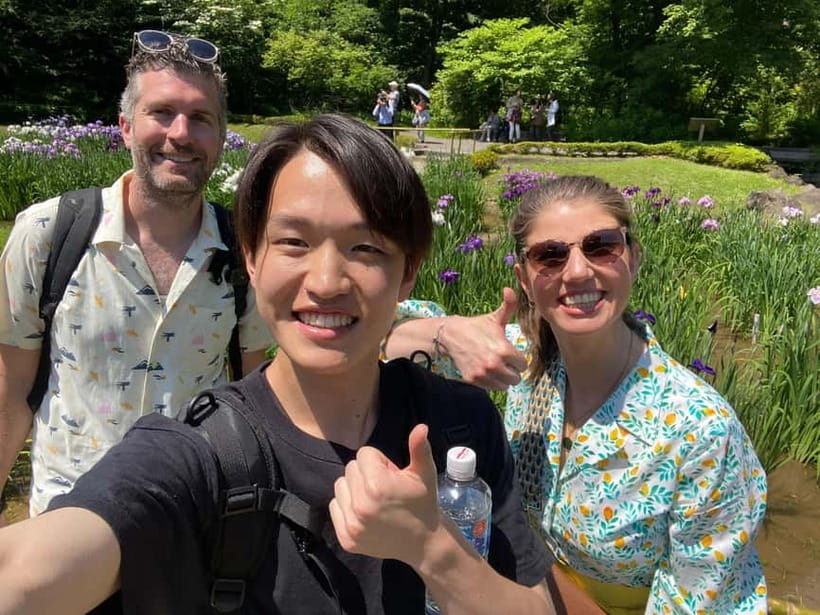
- Ninomaru Garden: A calm garden stop that gives the tour breathing room and shows how Japanese garden design fits into a former fortress.
- Edo Castle remains: Connect the moats, stone walls, Fujimi-yagura watchtower, Honmaru area, and main keep model to the vanished castle.
- Nijubashi views: Enjoy one of the best-known Imperial Palace viewpoints before moving into central Tokyo.
- Marunouchi to Tokyo Station: Watch the city shift from lawns and ruins to art, offices, architecture, and the red-brick station.
- Flexible booking: The tour costs $38 per person, offers several guide languages, and allows cancellation up to 24 hours before departure for a full refund.
From a coffee shop meeting point to the old castle gate
The tour begins at the Starbucks in Wadakura Fountain Park, written locally as スターバックス コーヒー 皇居外苑 和田倉噴水公園店. That is a practical place to meet because it is near the Imperial Palace grounds and gives you an easy landmark to identify.
You do not start with a long museum introduction. Instead, you move quickly toward the palace area and the former Edo Castle. That helps the history feel tied to the places around you. Your guide explains how Tokyo once served as the center of the Tokugawa shogunate, then connects that past with the imperial role of the palace today.
The exact group size is not provided, so I would not book this expecting a private walk. The guide languages listed are English, Japanese, Spanish, Chinese, and French. If you need a particular language, check the available departure before paying.
A few more Tokyo bookings worth comparing
- Mt Fuji and Hakone 1-Day Bus Tour Return by Bullet Train
★ 5.0 · 26,383 reviews - 1-Day Tokyo Bus Tour
★ 5.0 · 14,250 reviews - Tokyo: TOKYO SKYTREE® Admission ticket
★ 4.5 · 11,192 reviews
Ote-mon Gate explains how Edo Castle worked
Ote-mon Gate is one of the most useful first stops because it introduces the castle as a working military and political center, not just a scenic park. Large entrances, moats, guard positions, and controlled access all make more sense once your guide explains the castle’s layout.
The nearby Hyakunin Bansho Guardhouse adds a human detail. Its name points to a guardhouse associated with a large number of guards, and the stop helps you picture the layers of inspection required to approach the castle’s inner grounds.
I like this part because it gives the rest of the walk a framework. Without that context, stone walls can look like attractive ruins. With it, the walls and gates show how power was protected and organized.
The tour is described as including entry to the East Gardens without an admission fee. That keeps the $38 price focused on the guide and the walking experience rather than a separate ticket. Rules at palace-related sites can change, so follow the guide’s instructions about where to walk and where photography is permitted.
Ninomaru Garden brings a softer side of the palace grounds
Ninomaru Garden is a welcome change from gates and fortifications. Here, you get a closer look at the garden side of Japanese court and samurai culture, including the careful use of water, plants, paths, and open views.
The garden is not treated as a quick photo stop alone. Your guide discusses garden design and shows how a former castle compound could include spaces for calm, ceremony, and appreciation of nature. That contrast is one of the tour’s strengths. You see the machinery of power, then the refined setting built within it.
Plan for some walking on paths and through open areas. The tour information calls the amount moderate, but 150 minutes on foot can feel longer in strong sun or rain. A hat, sunscreen, water, and comfortable shoes are sensible choices. The gardens may be peaceful, but this is still a walking tour, not a seated garden visit.
Edo Castle ruins make the shogunate easier to picture
The Imperial Palace East Gardens occupy part of the old Edo Castle grounds. You will see traces of the former complex rather than a complete castle. The guide fills in the missing pieces with explanations of the Edo period, the shogunate, castle life, and the political role of the site.
One especially helpful feature is the Edo Castle main keep scale model. Since the original keep is no longer standing, a model gives you a better idea of the scale and arrangement of the castle than the remaining foundations can provide on their own.
The route also includes the Honmaru area, once the central section of the castle, and the Fujimi-yagura watchtower. The watchtower is a good reminder that these structures served practical purposes. It was not simply decorative. Its form and position relate to watching over the castle grounds.
Recent outings led by Yuki received especially warm praise for clear explanations, humor, and a strong sense of organization. Her way of describing what the castle may have felt like 400 years ago seems to be a major part of the experience. If Yuki is guiding your departure, expect an approachable style with plenty of historical detail rather than a rushed list of dates.
Same corner of Tokyo, a completely different plan:
- Tokyo: teamLab Planets TOKYO Digital Art Museum Entry Ticket
★ 4.6 · 9,779 reviews - Mt Fuji & Hakone Cruise, Drum Show Bullet Train 1 Day from Tokyo
★ 4.0 · 7,413 reviews - Tokyo: Sumo Show Experience with Chicken Hot Pot and a Photo
★ 4.8 · 6,678 reviews - Tokyo: Shinjuku Food Tour (13 Dishes at 4 Local Eateries)
★ 5.0 · 6,603 reviews
Imperial Palace views add the modern imperial chapter
The walk gives you scenic views connected with the Imperial Palace, including the well-known Nijubashi area. Nijubashi is one of the most recognizable palace views in Tokyo, and it provides a strong visual link between the old castle grounds and the present imperial institution.
The tour also passes through Kokyo Gaien National Garden. This broad outdoor setting gives you room to look back at the palace area and understand its place in central Tokyo. It is a useful pause after the denser East Gardens, where walls, trees, buildings, and paths can compete for your attention.
The palace itself is not presented as an interior palace tour. You should book this for the grounds, views, historical remains, and outside orientation. If your priority is entering royal buildings or seeing private palace rooms, this is not the right activity.
A ten-minute walk shifts the mood to Marunouchi
After the palace grounds, the route moves on foot toward Marunouchi. The listed walking connection is about 10 minutes, but the broader tour remains outdoors and continues on city streets, so the total walking effort is more than that one transfer suggests.
Marunouchi shows Tokyo in its present-day form. Office towers, public spaces, art, and older buildings sit close to the palace grounds. Your guide points out modern architecture and cultural details, helping you see the district as more than a business area.
I like this transition because it makes the tour feel like a story about Tokyo’s change, not a history lesson sealed inside one park. You begin with feudal gates and castle defenses, then walk into a district shaped by finance, commerce, design, and modern city life.
The tradeoff is that Marunouchi is less quiet and less garden-like than the East Gardens. You may spend part of this section looking upward at buildings or watching city traffic instead of lingering beside a historic ruin. That contrast is intentional, but people wanting only gardens may prefer a shorter palace-focused walk.
Tokyo Station is a fitting final stop
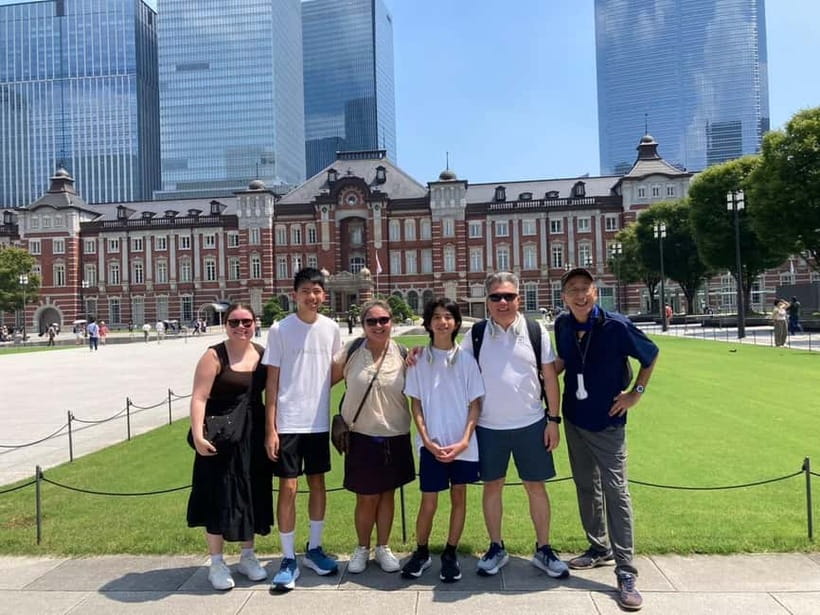
The tour finishes at Tokyo Station, whose restored red-brick exterior gives the walk a clear ending. The station is one of the city’s most recognizable buildings, and its appearance makes a strong counterpoint to the stone walls and wooden-era history seen earlier.
Your guide covers the exterior and the station’s place in Tokyo’s transformation. You can expect an orientation to the building rather than a full station tour or an organized exploration of every interior passage.
Finishing here is practical. Tokyo Station is a major transport point, so you can continue to another part of the city after the tour. It is also a good place to stop for food or use the station as your next navigation point, though those extras are not part of the activity.
The red-brick facade photographs well, but keep your camera ready earlier too. The gardens, moats, stonework, watchtower, and palace views provide the strongest variety. Flash photography is not allowed, so use natural light and respect posted rules.
What the $38 price delivers
At $38 per person, this tour sits in a reasonable range for a guided city walk lasting two and a half hours. You are paying for a live guide, a planned route, language support, and historical interpretation across several connected areas.
The value depends on how you like to explore. If you are comfortable reading signs, using a map, and piecing together Edo Castle’s remains yourself, you could visit the East Gardens without paying a guide fee. The advantage here is the connection between individual stops. Ote-mon Gate, the guardhouse, Ninomaru Garden, the castle ruins, Nijubashi, Marunouchi, and Tokyo Station become one story.
That storytelling matters at a site where many of the most important structures are gone. A guide can explain what you are looking at and why it mattered. The strongest feedback about Yuki points to exactly this benefit: clear, realistic descriptions that help you imagine the old castle instead of merely photographing its foundations.
The tour includes no admission fee because the East Gardens require no admission charge. There is also no mention of food, drinks, transport, or interior admission at Tokyo Station. Bring your own water and plan any meal separately.
Who will get the most from this walk
I would recommend this tour to first-time visitors who want a useful introduction to central Tokyo without spending a full day in museums. It also fits history fans who want help understanding the shogunate, Edo Castle, samurai-era defenses, and imperial change.
It suits you especially well if you enjoy moving between old and new. The route does not pretend Tokyo is only a historic city. Instead, it shows how palace grounds and castle remains sit beside modern office architecture and one of Japan’s main railway stations.
Families with older children may also find the castle sections easier to follow with a guide who can explain guardhouses, towers, and defenses in plain language. The humor and visual storytelling associated with Yuki could help keep a long history lesson lively.
I would think twice if you have difficulty walking for 150 minutes, dislike outdoor tours, or want a relaxed, unstructured visit. The activity is wheelchair accessible, but it still involves a moderate amount of movement through gardens and city areas. Confirm the route details for your needs before booking.
The no-backpack rule also deserves attention. Bring only what you need in a smaller permitted bag, and do not assume a large daypack will be accepted. Comfortable shoes are more important than stylish ones here.
Practical timing and weather advice
The duration is fixed at 150 minutes, with starting times based on availability. Check the time carefully because the route works best when you can complete the garden and city sections without rushing.
Tokyo weather can change the feel of this experience. In hot weather, the open gardens and pavement may be tiring, while rain can make the walking less pleasant. Sunscreen, a hat, water, and clothing suited to the forecast are specifically recommended.
You can bring a camera, but flash photography is not allowed. Keep your hands free enough to walk safely and listen to the guide. Since backpacks are prohibited, a light approach is best.
Cancellation is flexible: you can cancel up to 24 hours before the start for a full refund. You can also reserve now and pay later, which helps if your Tokyo schedule is still shifting.
My recommendation
I would book this tour if you want the Imperial Palace area to make sense, not just look attractive. The strongest reason to go is the guide’s interpretation of Edo Castle and the shogunate, with Yuki’s clear and humorous approach receiving particular praise.
The route also gives you a satisfying change of scene. You begin with moats, gates, gardens, and watchtowers, then finish among Marunouchi’s modern buildings and Tokyo Station’s red brick. For $38, that combination offers a useful introduction to both Tokyo’s past and its present.
Skip it if you want palace interiors, a short stroll, or a completely quiet garden visit. Choose it if you want a well-organized history walk, can manage moderate walking, and like ending near one of Tokyo’s most convenient railway hubs.
FAQ
How long is the Imperial Palace East Gardens and Tokyo Station Tour?
The tour lasts 150 minutes, or two and a half hours.
How much does the tour cost?
The price is $38 per person.
Where does the tour begin?
The meeting point is Starbucks Coffee Imperial Palace Outer Garden Wadakura Fountain Park, written locally as スターバックス コーヒー 皇居外苑 和田倉噴水公園店.
Where does the tour finish?
The tour finishes at Tokyo Station, written locally as 東京駅.
Which languages are available?
Live guides are listed for English, Japanese, Spanish, Chinese, and French.
Is the Imperial Palace East Gardens admission included?
Yes. Entry to the Imperial Palace East Gardens is included, and no admission fee is required for the gardens.
What should I bring, and what is not allowed?
Bring comfortable shoes, a hat, a camera, sunscreen, water, and clothing suited to the weather. Smoking, flash photography, and backpacks are not allowed.
New on our Tokyo list
- Hakone Hachiri: Old Tokaido Highway Hiking Half-day tour★ 5.0 · 3 reviews
- Tokyo:Calligraphy & Zen Mindful Journey+Take Home Memory★ 5.0 · 3 reviews
- Private Samurai Sword Experience★ 5.0 · 3 reviews
- Tokyo:Cherry Blossom Mt Fuji & Shibazakura Festival Day Trip★ 4.4 · 3 reviews
- Private Tokyo’s Famed Tsukiji Fish Market Tour★ 5.0 · 3 reviews
- Dive into Tsukiji Fish Market Walking Friendly Food Tour★ 5.0 · 3 reviews
- Tokyo Harajuku Walking Tour Meiji Jingu Yoyogi Park and More★ 5.0 · 3 reviews
- Tokyo Private Transfer for Yokohama Cruise Port★ 5.0 · 3 reviews
Tours, compared.
Mt Fuji and Hakone 1-Day Bus Tour Return by Bullet Train
Read our review →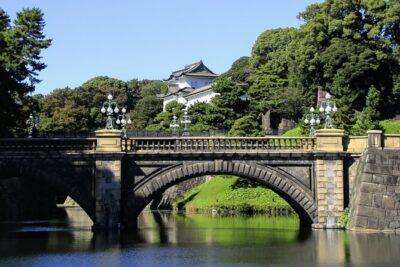
Shinjuku Food Tour (13 Dishes at 4 Local Eateries)
Read our review →
Tokyo Mt Fuji 5th St & Hakone Cruise Bus Tour w/Bullet Train
Read our review →
Flagship 2-Hours Official Street Go-Kart Tour – Tokyo Bay Shop
Read our review →
Mt. Fuji Tour, Hakone Ropeway, Owakudani, Lake Ashi
Read our review →
Tokyo 6hr Private Tour with Government-Licensed Guide
Read our review →