Reviewed · TOURS
Tokyo Toilet Tour
Tokyo’s public toilets make an unlikely but fascinating sightseeing route. This private walk links five designs by major architects with small shrines, neighborhood parks, residential streets, and Shibuya Crossing. It gives you a side of the city most first-time visitors would miss.
I like the private format, since your guide can adjust the pace for your group. I also like the walk between stops, which turns the tour into a look at everyday Tokyo rather than a string of isolated photo stops. The main drawback is the price: $223.34 per group of up to four is reasonable for a private outing, but high if you are traveling alone.
In This Review
- Key points to know before you book
- Why Tokyo’s toilets make a worthwhile tour
- Starting at Yoyogi Fukamachi Mini Park
- Tadao Ando’s toilet at Miyashita Park
- Crossing Shibuya for five minutes
- Kengo Kuma in quiet Nabeshima Shoto Park
- Three designers around Ebisu
- What the private format adds
- Walking, transport, and practical planning
- Who will enjoy this Tokyo walk
- Should you book the Tokyo Toilet Tour?
- FAQ
- How long does the Tokyo Toilet Tour last?
- How much does the tour cost?
- How many people can join the private tour?
- Who guides the tour?
- Where does the tour begin?
- Where does the tour end?
- Which locations are included?
- Is transportation included?
- Can I cancel for a refund?
Key points to know before you book
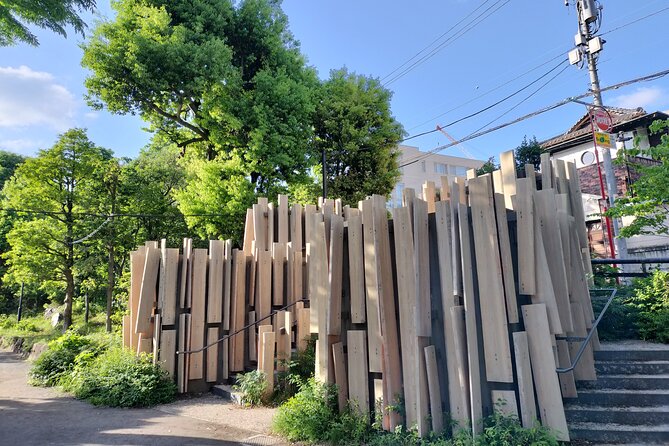
- Five architect-designed toilets: See work by Shigeru Ban, Toyo Ito, Tadao Ando, Kengo Kuma, Fumihiko Maki, Kashiwa Sato, and Nao Tamura.
- A private 3.5-hour walk: Only your group participates, with Ken of Tanaka’s Tokyo Tours serving as the guide.
- A useful neighborhood route: The walk runs from Yoyogi through Shibuya and ends at Ebisu Station.
- More than toilet photography: You also visit Yoyogi Hachimangu Shrine, Miyashita Park, Nabeshima Shoto Park, and Shibuya Crossing.
- Good for first-time Tokyo visitors: The route helps you see how major districts connect, while giving you a local introduction to the city.
- Plan for moderate walking: Private transportation is not included, and lunch is your responsibility.
Why Tokyo’s toilets make a worthwhile tour
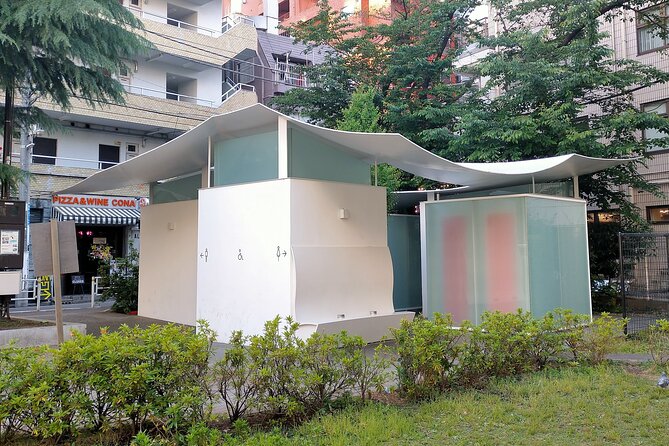
This is not a tour of ordinary restrooms. It follows a major public design project that brought leading architects into the neighborhoods around Shibuya. The result is a set of useful public facilities that also reflect different ideas about light, privacy, materials, shape, and the relationship between a building and its surroundings.
I like the way the route gives these small structures a wider setting. You are not simply driven from one famous building to another. You walk past a Shinto shrine, through parks, across a famous intersection, and into quieter residential areas. That makes the experience feel more like a neighborhood tour with an unusual theme.
The private guide matters here. A toilet can take only a few minutes to see, but the design choices need explanation. Ken, the guide named for this experience, adds context about the Shibuya City project and the architects involved. You can also ask questions without waiting for a large group to catch up.
The tour lasts about three and a half hours. That is long enough to cover the route without turning it into an all-day commitment. It is also short enough to fit beside other Tokyo plans, though you should leave room for the walking time and the journey to the starting point.
A few more Tokyo bookings worth comparing
- Mt Fuji and Hakone 1-Day Bus Tour Return by Bullet Train
★ 5.0 · 26,383 reviews - 1-Day Tokyo Bus Tour
★ 5.0 · 14,250 reviews - Tokyo: TOKYO SKYTREE® Admission ticket
★ 4.5 · 11,192 reviews
Starting at Yoyogi Fukamachi Mini Park
The tour begins at Yoyogi Fukamachi Mini Park, at 1-chōme-54-1 Tomigaya in Shibuya. The first stop is Yoyogi Hachimangu Shrine, a small Shinto site with the first pair of notable toilets on the route.
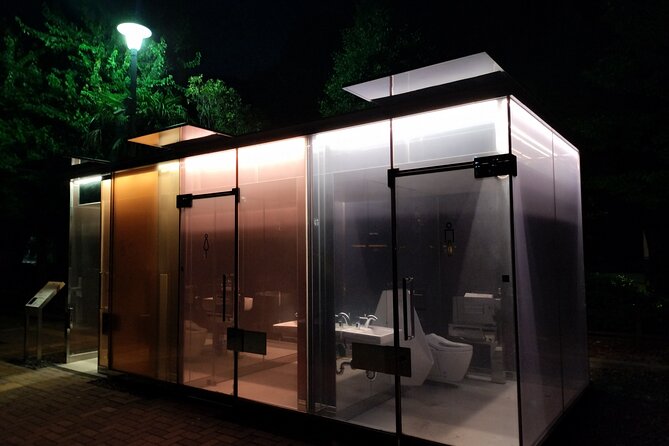
You see a transparent-cubicle design by Shigeru Ban, along with work by Toyo Ito. The Ban toilet is the attention getter. Its transparent walls create a design question that is easy to understand: how can a public restroom appear open and welcoming while still becoming private when in use?
That contrast gives your guide something useful to explain. You can look at the structure, then consider how it works as a public amenity beside a shrine and neighborhood park. The stop lasts about 30 minutes, and there is no admission charge.
The setting adds value. Yoyogi Hachimangu Shrine is not treated as a major sightseeing attraction, so the visit feels calmer than a stop at Tokyo’s busiest temples and shrines. The route also connects with Perfect Days, the Wim Wenders film. The main character takes a lunch break near this location, making it especially appealing if you know the movie.
I would not book this stop expecting a full shrine tour or a long architectural lecture. The information provided focuses on the toilets and their setting. Still, it is a strong opening because it shows how an everyday facility can sit comfortably beside a traditional site.
Tadao Ando’s toilet at Miyashita Park
From Yoyogi, you continue toward Miyashita Park, an area between Shibuya and Harajuku that has seen major redevelopment in recent years. The toilet here was designed by Tadao Ando, one of Japan’s best-known architects.
This stop lasts about 30 minutes. The longer pause makes sense because the area offers more urban context than the first location. You can compare Ando’s approach with Ban’s and Ito’s designs, then look at how a public building fits into a heavily changing part of Tokyo.
Miyashita Park is useful for understanding the tension between old and new Tokyo. The route does not present redevelopment as a simple success story. Instead, you see a neighborhood that has changed quickly, with a public restroom project placed within that larger transformation.
I like this stop for readers who want architecture explained in plain terms. You do not need to know Ando’s work before arriving. Your guide can help you notice the details that might otherwise look like a simple park facility.
The stop is also a reminder that this is a walking tour, not a museum visit. The toilets are working public amenities, not monuments closed off for inspection. Be respectful, keep photography sensible, and remember that local people use these spaces every day.
Crossing Shibuya for five minutes
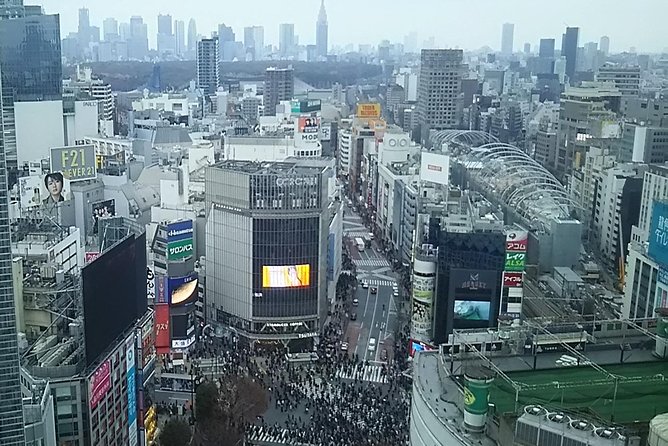
The route then includes Shibuya Crossing. This is a brief stop, about five minutes, and it is not directly part of the toilet project. You cross the famous intersection on the way to the next location.
That short pause is still useful. Shibuya Crossing gives you a quick burst of Tokyo’s most recognizable city energy, then the route moves away from the main station area. The contrast helps you see how close the quieter streets are to one of the world’s best-known urban intersections.
I would keep your expectations in check. This is not a dedicated Shibuya Crossing photography session, and five minutes is not much time. The value lies in the transition. You get the famous crossing, then return to the less obvious side of Shibuya.
For a first visit, this is a smart piece of routing. You get one major landmark without letting it swallow the whole experience. For someone who has already spent several days around Shibuya, the crossing may feel familiar, but the next stop changes the pace.
Same corner of Tokyo, a completely different plan:
- Tokyo: teamLab Planets TOKYO Digital Art Museum Entry Ticket
★ 4.6 · 9,779 reviews - Mt Fuji & Hakone Cruise, Drum Show Bullet Train 1 Day from Tokyo
★ 4.0 · 7,413 reviews - Tokyo: Sumo Show Experience with Chicken Hot Pot and a Photo
★ 4.8 · 6,678 reviews - Tokyo: Shinjuku Food Tour (13 Dishes at 4 Local Eateries)
★ 5.0 · 6,603 reviews
Kengo Kuma in quiet Nabeshima Shoto Park
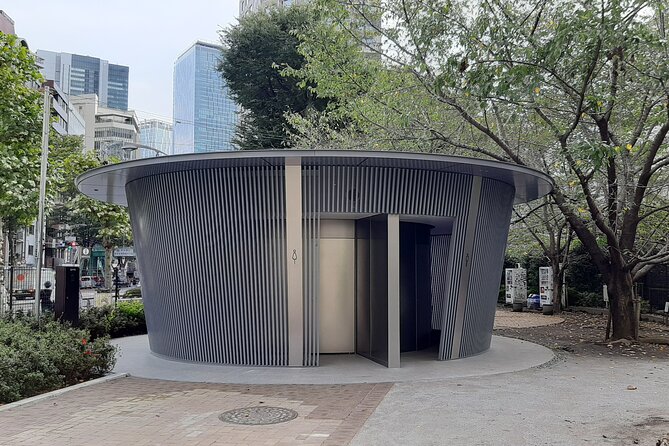
Nabeshima Shoto Park brings you into a quieter residential area about one kilometer from the main station. The toilet here was designed by Kengo Kuma, and the stop lasts about 15 minutes.
This is the shortest stop on the route. That does not mean it is unimportant. Its appeal comes from the setting. After the crowds and large-scale redevelopment around Shibuya, you see a small park in a more residential part of the district.
The walk to this stop is part of the experience. You are not being shuttled between attractions, so you get a feel for the distance between central Tokyo districts. The route also shows that the project reaches beyond the obvious tourist streets.
A 15-minute visit should be enough for a focused look, but it leaves little time for lingering. If you want long architectural discussions at each location, this itinerary may feel brisk. If you prefer variety and steady movement, the pace should suit you.
Three designers around Ebisu
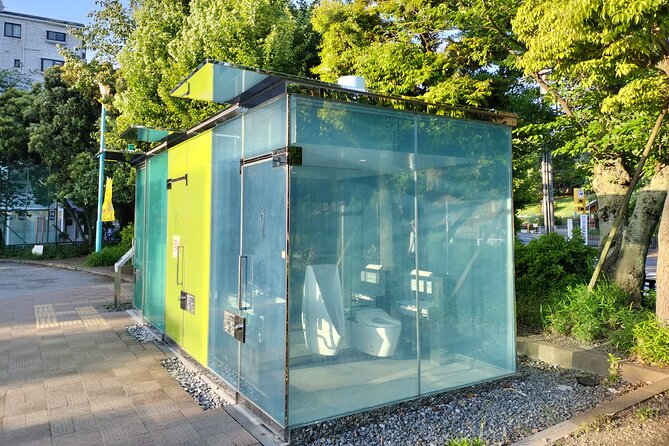
The final major stop is in Ebisu, where the route includes toilets by Fumihiko Maki, Kashiwa Sato, and Nao Tamura. This section lasts about 30 minutes and gives you several more designs to compare before the tour ends at Ebisu Station.
Ebisu is a good finish because it has a different feel from the Shibuya Crossing area. The neighborhood gives you another setting for seeing how public facilities can respond to local surroundings. By this point, you have seen enough examples to compare different design choices rather than judge each one in isolation.
I find the final stop especially useful for anyone interested in design. One architect’s work may emphasize openness, another may focus on form or materials, and another may approach the toilet as part of a broader public space. Your guide’s explanations help turn those differences into something you can notice.
The route ends at Ebisu Station, at 1 Chome-5 Ebisuminami. The station is served by the JR Yamanote Line and the Tokyo Metro Hibiya Line, so you can continue to another part of Tokyo without arranging a separate ride.
What the private format adds
The tour is for your group only, with a maximum of four people. That makes the $223.34 price easier to judge. Split four ways, it works out to about $55.84 per person. For two people, it is about $111.67 each. A solo visitor pays the full group price, so the value is less attractive alone.
I like private tours when the subject is specialized. You can ask why a certain design uses transparent panels, how the project was organized, or what makes one neighborhood different from another. You are not limited to the guide’s prepared talk.
The guide can also respond to your walking pace and interests. Families may need more pauses. Couples may want extra time for photographs. A solo visitor may prefer a quicker route or more conversation. The tour description presents the experience as customizable, but the supplied route is a specific five-stop plan, so ask about changes before booking if you want a very different itinerary.
Ken receives particularly strong praise in the supplied comments. He is described as friendly and informative, with a good grasp of the project and its architects. That combination is important here. A friendly guide makes a walking tour comfortable, while clear explanations keep the unusual subject from feeling thin.
Walking, transport, and practical planning
Private transportation is not included. You will walk between the stops and use Tokyo’s public transport system to reach or leave the route if needed. The finish at Ebisu Station is convenient, but you are responsible for getting to the starting point at Yoyogi Fukamachi Mini Park.
The tour calls for a moderate level of physical fitness. The total duration is only about three and a half hours, yet the route covers several neighborhoods. Wear comfortable shoes and treat the time estimates as approximate rather than guaranteed.
There is no lunch included. The schedule may take you near plenty of places to eat, but the tour price does not cover a meal. I would eat beforehand or plan lunch after reaching Ebisu, depending on your start time.
The mobile ticket is convenient for a private activity. Confirmation is sent within 48 hours of booking, subject to availability. Since the experience is booked an average of 39 days in advance, reserve early if your Tokyo dates are fixed.
You can cancel for a full refund up to 24 hours before the start time. Cancellations or changes made less than 24 hours ahead are not accepted for a refund, with cut-off times based on Tokyo’s local time.
Who will enjoy this Tokyo walk
I would recommend this tour to first-time visitors who want a guided introduction without joining a large group. The route gives you several useful reference points around western Tokyo, from Yoyogi to Shibuya and Ebisu.
It also suits architecture fans and anyone who has seen Perfect Days. The film connection gives the Yoyogi stop extra meaning, while the range of designers gives you a compact introduction to modern Japanese public architecture.
Families and couples benefit from the private format, especially if they want to control the pace. Solo visitors can enjoy the personal attention, but the price is harder to justify unless the subject is a major interest.
I would be less likely to choose it if you want a classic Tokyo highlights tour. The itinerary does not focus on the Imperial Palace, Tsukiji Market, or Meiji Jingu Shrine, although the wider description allows for customization and mentions those attractions as possible interests. Confirm the exact route before booking if those sights matter most to you.
Should you book the Tokyo Toilet Tour?
Book it if you enjoy design, local neighborhoods, and the small details that make Tokyo work. The strongest part is the combination of five architect-designed toilets with ordinary parks, a shrine, residential streets, and a short crossing of Shibuya’s famous intersection.
The price is fair for a private group of four, less compelling for one person. The route also requires walking and does not include lunch or private transport. If you accept those limits, Ken’s friendly guidance and the unusual subject make this a memorable way to see Tokyo beyond the standard checklist.
FAQ
How long does the Tokyo Toilet Tour last?
The tour lasts approximately 3 hours and 30 minutes.
How much does the tour cost?
The price is $223.34 per group, for up to four people.
How many people can join the private tour?
Up to four people can participate, and only your group takes part in the activity.
Who guides the tour?
The experience is provided by Tanaka’s Tokyo Tours. Ken is the named guide associated with the tour.
Where does the tour begin?
The tour begins at Yoyogi Fukamachi Mini Park, 1-chōme-54-1 Tomigaya, Shibuya, Tokyo 151-0063, Japan.
Where does the tour end?
The tour ends at Ebisu Station, 1 Chome-5 Ebisuminami, Shibuya, Tokyo 150-0022, Japan.
Which locations are included?
The route includes Yoyogi Hachimangu Shrine, Miyashita Park, Shibuya Crossing, Nabeshima Shoto Park, and Ebisu.
Is transportation included?
Private transportation is not included. The route involves walking between locations and ends near public transportation at Ebisu Station.
Can I cancel for a refund?
You can cancel up to 24 hours before the experience starts for a full refund. Cancellations or changes made less than 24 hours before the start time are not accepted for a refund.
New on our Tokyo list
- Hakone Hachiri: Old Tokaido Highway Hiking Half-day tour★ 5.0 · 3 reviews
- Tokyo:Calligraphy & Zen Mindful Journey+Take Home Memory★ 5.0 · 3 reviews
- Private Samurai Sword Experience★ 5.0 · 3 reviews
- Tokyo:Cherry Blossom Mt Fuji & Shibazakura Festival Day Trip★ 4.4 · 3 reviews
- Private Tokyo’s Famed Tsukiji Fish Market Tour★ 5.0 · 3 reviews
- Dive into Tsukiji Fish Market Walking Friendly Food Tour★ 5.0 · 3 reviews
- Tokyo Harajuku Walking Tour Meiji Jingu Yoyogi Park and More★ 5.0 · 3 reviews
- Tokyo Private Transfer for Yokohama Cruise Port★ 5.0 · 3 reviews
Tours, compared.
Mt Fuji and Hakone 1-Day Bus Tour Return by Bullet Train
Read our review →
Shinjuku Food Tour (13 Dishes at 4 Local Eateries)
Read our review →
Tokyo Mt Fuji 5th St & Hakone Cruise Bus Tour w/Bullet Train
Read our review →
Flagship 2-Hours Official Street Go-Kart Tour – Tokyo Bay Shop
Read our review →
Mt. Fuji Tour, Hakone Ropeway, Owakudani, Lake Ashi
Read our review →
Tokyo 6hr Private Tour with Government-Licensed Guide
Read our review →