
Reviewed · JDM & CAR CULTURE TOURS
Daikoku JDM car meet experience in a GTR-R35
Japan’s car culture comes alive in the back seat of a Nissan GT-R R35, especially when the route heads through Tokyo’s tunnels toward Daikoku Parking Area. This 210-minute evening outing combines a sports-car ride with a stop at Autobacs Shinonome and about an hour at Japan’s most famous car meet.
I like two things here: transport is handled for you, and the group is limited to six, so you avoid the usual headache of reaching Daikoku by public transport. I also like the mix of driving, shopping, and car spotting rather than a single quick photo stop. The catch is the strict size guidance: people over 180 centimeters or 100 kilograms may not fit comfortably in the R35 or may need a private booking.
In This Review
- Key points at a glance
- Why the GT-R R35 makes this more than a car-spotting tour
- Starting at Arrow Parking Udagawachō
- Autobacs Shinonome: the retail side of tuning culture
- The drive to Daikoku through Tokyo
- An hour at Daikoku Parking Area
- What the guide adds
- Is $225 a fair price?
- Who will enjoy this most
- Practical ways to get more from the night
- FAQ
- How long does the Daikoku GT-R experience last?
- Where does the tour start?
- What vehicle will I ride in?
- Is transport to Daikoku included?
- What languages does the guide speak?
- Can people over 180 centimeters or 100 kilograms join?
- Should you book the Daikoku GT-R night?
Key points at a glance
- Ride in a Nissan GT-R R35: The car itself is a major part of the experience, with a sporty drive through Tokyo and tunnel sections.
- Reach Daikoku without transport stress: The tour takes you from Arrow Parking Udagawachō to the remote parking area and back.
- See more than one side of Japanese car culture: Autobacs Shinonome offers retail and tuning culture before the outdoor car meet.
- Spend about one hour at Daikoku PA: You have time to look at cars, take photographs, and buy a snack or drink.
- Small group of up to six: This keeps the outing more personal, though the R35’s compact seating makes height and weight restrictions important.
- English and French support: The guide explains the tuning scene, local customs, and the plan for the evening.
Why the GT-R R35 makes this more than a car-spotting tour
Daikoku PA is the headline, but the ride there matters. You are not simply dropped at a car park and told to look around. The Nissan GT-R R35 gives the outing a clear focus from the first minute.
The R35 is a modern Japanese performance car with a strong place in the world of tuning and street-car culture. You get to experience the car from inside, hear its engine and exhaust, and see Tokyo from a lower, faster-moving viewpoint. The exact driving style depends on the guide and road conditions, but the supplied experience describes a sports-car ride rather than ordinary point-to-point transport.
Several bookings describe the ride as smooth, comfortable, and safe, with particular praise for the English-speaking guide and friendly manner. One booking describes the sound and tunnel sections as the highlight. Another describes seeing other GT-Rs on the return journey, though you should treat any impromptu convoy or fast-moving moment as luck, not a promised part of the tour.
The focus is car culture, not racing. Public roads are not a racetrack, and a responsible guide should keep safety first. That balance matters because the fun comes from the car, the setting, and the people you meet, not from taking unnecessary risks.
More car-culture meets:
- GT-R35 800hp Club Membership – secret underground car meet
★ 4.8 · 998 reviews - Tokyo: Fast & Furious Tokyo Drift 3 Experience (Kaila Yu SP)
★ 4.8 · 947 reviews - Tokyo: Daikoku JDM Car Meet & Night Car Culture Tour
★ 4.8 · 626 reviews
Starting at Arrow Parking Udagawachō
The meeting point is Arrow Parking Udagawachō. You need to take the elevator to the eighth floor, so allow enough time to find the building and reach the meeting level without rushing.
This is a practical starting point for an evening in Tokyo because the tour handles the awkward part of the journey. Daikoku Parking Area is not easy to reach by normal public transport, and trying to solve the route yourself can eat up time. Here, the same vehicle carries you through the scheduled stops and returns you to the starting point.
The group size is limited to six participants. That sounds roomy on paper, but the vehicle is a Nissan GT-R R35, not a minibus. The experience is specifically not recommended for people over 180 centimeters or 100 kilograms. If you are taller than that, you may be refused from a shared booking because of the available seating space. A private tour may be possible, but it requires a separate arrangement and fee.
Bring your passport. The operator also bans large bags, oversize luggage, food, and drinks in the vehicle. Smoking, alcohol, drugs, weapons, and sharp objects are not permitted. Pack light, since this is a compact sports car rather than a vehicle designed for luggage.
Autobacs Shinonome: the retail side of tuning culture
The first stop is Autobacs Shinonome, where you have about 30 minutes for a self-guided visit. This gives the experience a useful change of pace before Daikoku.
Autobacs is a major automotive retail name in Japan, and this stop lets you see the practical side of car enthusiasm. You might find tuning accessories, car-care products, parts, and other items connected with vehicle customization. The attraction is not only shopping. It is seeing how car culture appears in an everyday Japanese retail setting.
You can browse at your own speed, pick up a drink or snack, and take a short break from the car. The 30-minute limit is enough to look around without turning the outing into a long shopping trip. If you are hoping to buy something specific, do not count on having time for a detailed search or a long discussion with store staff.
This is also where the tour’s explanation of Japanese tuning culture becomes more useful. A guide can help connect the products and displays with the larger scene you will see later at Daikoku. You are not just looking at modified cars as mysterious objects. You get a sense of the parts, styling choices, and care that go into building them.
Keep in mind that purchases are not included in the tour price. Any accessories, souvenirs, food, or drinks cost extra.
The drive to Daikoku through Tokyo
The journey between stops is part of the appeal. You get a ride in the GT-R R35 while moving through Tokyo toward the industrial waterfront setting around Daikoku.
The route is described as adaptable to the best car meets and events, but the practical terms also say that the itinerary is fixed and route changes cannot be requested during the tour. I would read that as flexibility for the operator, not a custom tour for each participant. Conditions, meet activity, and the guide’s plan may affect the route, but you should book this expecting the published sequence: Udagawachō, Autobacs Shinonome, Daikoku PA, and return.
The ride is especially appealing to people who care about how a car feels and sounds. Several accounts praise the noise in Tokyo’s tunnels, the smooth drive, and the chance to travel in a striking Japanese performance car. You may get the kind of dramatic city-night atmosphere associated with car films, but the experience is not a film set and no particular vehicle lineup or driving event can be guaranteed.
The guide also provides information about Tokyo and the timing of the evening. That simple detail is helpful. At a car meet, it is easy to lose track of time, so knowing when you must return to the vehicle keeps the stop relaxed.
A few more Tokyo bookings worth comparing
- Mt Fuji and Hakone 1-Day Bus Tour Return by Bullet Train
★ 5.0 · 26,383 reviews - 1-Day Tokyo Bus Tour
★ 5.0 · 14,250 reviews - Tokyo: TOKYO SKYTREE® Admission ticket
★ 4.5 · 11,192 reviews - Tokyo: teamLab Planets TOKYO Digital Art Museum Entry Ticket
★ 4.6 · 9,779 reviews
An hour at Daikoku Parking Area
Daikoku PA is where the tour earns its price for serious car fans. The parking area is a meeting point for Japanese performance cars, modified builds, European exotics, and owners who enjoy showing what they have created.
You might see Nissan Skyline GT-Rs, Toyota Supras, rotary-powered Mazdas, custom Hondas, drift-style cars, Ferraris, Lamborghinis, McLarens, and other rare or heavily modified vehicles. The exact mix changes from night to night. That unpredictability is part of the charm, but it also means you should not book with one particular model in mind.
The atmosphere can be loud. Engines, exhausts, turbo sounds, and excited conversation are central to the setting. If you dislike noise, enclosed vehicles, or crowded automotive gatherings, this may not be your kind of evening. People with claustrophobia, heart problems, or motion sickness are advised not to join.
You receive about one hour for the guided Daikoku visit. That is long enough to walk around, photograph cars, study details, and take a break for something to eat or drink. It is not enough for an unhurried visit to every part of a large event, especially if the car meet is active. Stay aware of the meeting time and follow the guide’s instructions.
Photography is one of the strongest reasons to choose this outing. Neon reflections, unusual paintwork, wide body kits, lowered cars, and the GT-R itself give you plenty to photograph. Ask before photographing people or closely examining a private car, and avoid blocking vehicles as they move through the parking area. Respect is a key part of Japan’s car scene.
What the guide adds
The guide is not named in the available information, but English and French are offered. English-speaking bookings describe clear communication and a friendly, chatty approach. The guide explains the plan, helps you understand Japanese tuning culture, and gives context for what you are seeing.
That matters at Daikoku because the meet can otherwise feel like a blur of loud cars and quick photographs. You will get more from the stop if you understand the difference between a factory performance model, a tuned street car, a show build, and an exotic simply passing through.
The small group also helps. With no more than six people, the guide can keep track of the group and answer questions without the feel of a large coach tour. The tradeoff is that the car itself has limited space, and the size restrictions are not minor fine print. They are central to deciding if a shared booking is suitable.
Is $225 a fair price?
At $225 per person, this is not a cheap way to get to a parking area. You are paying for the complete package: the GT-R R35 ride, round-trip transport, a small group, the guide, access to a difficult-to-reach location, and the time spent at two automotive stops.
For a dedicated JDM fan, the price can make sense. Hiring a suitable car and arranging transport to Daikoku independently would be difficult, and public transport does not provide a simple route to the parking area. You also avoid the uncertainty of finding a driver who understands the meet and the local car scene.
The value is weaker if your interest in cars is casual. The experience is built around tuning, performance vehicles, photography, and the atmosphere of a night meet. If you mainly want a general Tokyo sightseeing drive, $225 may feel high for three and a half hours.
The total duration is 210 minutes, or three and a half hours. Food, drinks, purchases, and optional requests are extra. The itinerary is fixed, so you cannot add unrelated Tokyo sights or turn it into a private custom drive without arranging an additional option.
Free cancellation up to 24 hours before the start and reserve-now, pay-later booking make the financial commitment easier to manage. Still, check the starting time and fit requirements before booking.
Who will enjoy this most
I would recommend the experience to:
- JDM fans who want to see Japanese tuning culture in person
- GT-R enthusiasts who care about the ride as much as the destination
- Photographers looking for modified cars and night lighting
- Couples or friends seeking a focused automotive evening
- First-time visitors who do not want to solve transport to Daikoku
- Visitors comfortable with a loud, compact vehicle and a fixed schedule
It is less suitable for families with young children, wheelchair users, people with motion sickness, and anyone who needs generous seating. Children under 18 must be accompanied by a responsible adult, and babies under one year are not suitable for the activity.
If you are over 180 centimeters tall, over 100 kilograms, or uncomfortable in a snug sports-car seat, contact the operator before paying. The information specifically warns that taller participants may not fit with other passengers and may need a private tour.
Practical ways to get more from the night
Wear comfortable shoes for walking around Daikoku, but keep your belongings small. Large bags are not allowed in the vehicle, and there is no reason to bring luggage to a car meet.
Bring your passport and a phone or camera with enough battery for the full evening. Daikoku is a photo-friendly setting, and you will want time for both wide shots and close details such as wheels, bodywork, lights, and engine-related styling.
Do not assume that the car you want to see will appear. The best approach is to enjoy the mix. One night might bring several GT-Rs, while another could offer unusual Hondas, rotary Mazdas, European supercars, or a one-off tuning project.
Finally, treat the meet as a shared community space. Follow the guide, stay clear of moving vehicles, ask before getting too close to a private build, and do not expect racing. You will have a better night by showing interest and respect.
FAQ
How long does the Daikoku GT-R experience last?
The experience lasts 210 minutes, or three and a half hours. The route includes Autobacs Shinonome, Daikoku Parking Area, and the return to Arrow Parking Udagawachō.
Where does the tour start?
It starts at Arrow Parking Udagawachō. Take the elevator to the eighth floor for the meeting point.
What vehicle will I ride in?
The experience is provided in a Nissan GT-R R35.
Is transport to Daikoku included?
Yes. Transport along the fixed itinerary is included in the experience price, with return to Arrow Parking Udagawachō.
What languages does the guide speak?
The tour is available with a live guide in English or French.
Can people over 180 centimeters or 100 kilograms join?
The experience is not recommended for people over 180 centimeters or 100 kilograms because of the seating space in the vehicle. Taller participants may need to arrange a private tour, and the operator may refuse a shared booking if the passenger does not fit safely.
Should you book the Daikoku GT-R night?
Book it if the ride in the R35 and the chance to see Japan’s tuning scene are both important to you. The strongest parts are the difficult-to-arrange transport, the small group, the tunnel drive, and the hour at Daikoku with time for photographs and a snack.
Skip it if you need roomy seating, dislike loud engines, want a broad Tokyo sightseeing tour, or expect a guaranteed lineup of specific cars. For the right enthusiast, $225 buys more than a transfer. It buys a carefully organized entry into one of Japan’s best-known car-meet settings, with the GT-R making the journey part of the event.
New on our Tokyo list
- Tokyo : Kamikaze Street Drift Ride★ 5.0 · 3 reviews
- Private Zen Meditation in English in Shinjuku, Tokyo★ 5.0 · 3 reviews
- Sumi-e Experience in a relaxing green tea shop in Tokyo★ 5.0 · 3 reviews
- Onsen Spa in Tokyo and Asakusa Bar Hopping with Local Guide★ 5.0 · 3 reviews
- Easy for everyone! Now you can play handmade mini shamisen and show off to everyone! Musical instruments, sweets and live music★ 5.0 · 3 reviews
- Tokyo: Private Tsukiji Street Food & Sake with Local Guide★ 5.0 · 3 reviews
- Mt Fuji Exploration Tour with Free Japanese Kusa Mochi from Tokyo★ 4.5 · 3 reviews
- Tokyo Tsukiji Fish Market Walking and Exploring Hidden Gems Tour★ 5.0 · 3 reviews
JDM & Car Culture Tours, compared.
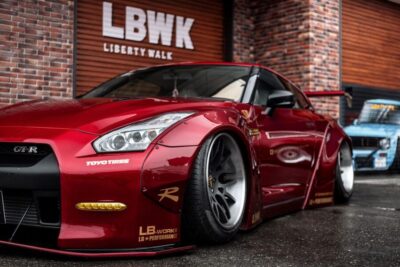
GT-R35 800hp Club Membership – secret underground car meet
Read our review →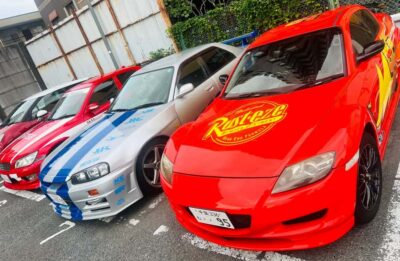
Fast & Furious Tokyo Drift 3 Experience (Kaila Yu SP)
Read our review →
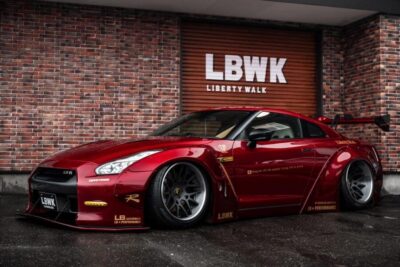
Secret Car Meet: R34 Skyline Car Club Membership
Read our review →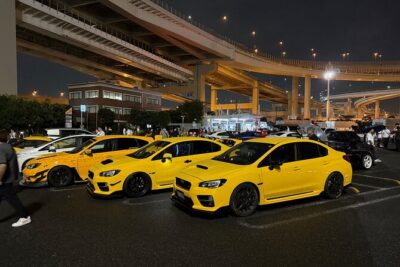
EVO, WRX, Skyline – JDM Night Run to Daikoku Car Meet
Read our review →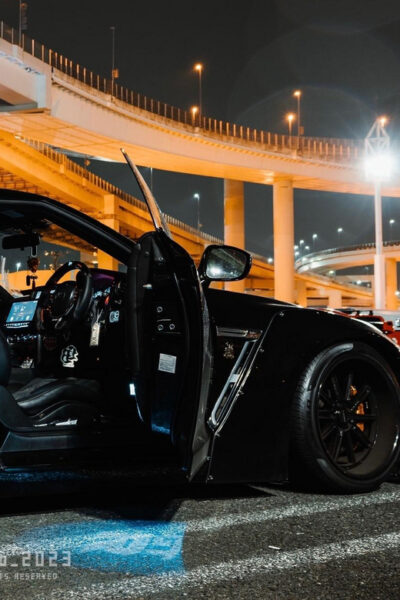
Tokyo Drift: Daikoku PA Supreme Car Experience 大黒PA
Read our review →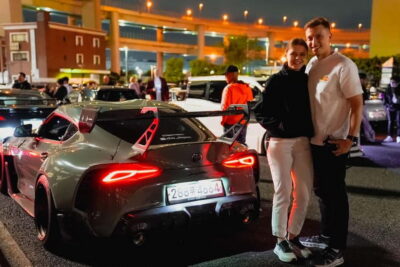
Go Daikoku PA Fast & Furious 3 Sports Car Meetup
Read our review →Browse the lists this tour appears in