
Reviewed · SHINJUKU TOURS
Private Zen Meditation in English in Shinjuku, Tokyo
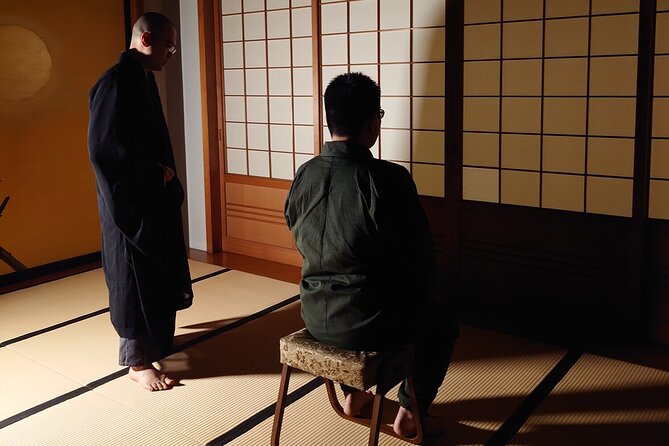
A private meditation session with an English-speaking monk inside Denchuji Temple offers a rare pause in Tokyo. You learn the three practical foundations of zazen, posture, breathing, and the mind, then put them into practice in a historic Soto Zen setting. I especially like the direct instruction in English and the private format, which lets you ask questions without worrying about a large group. Chair zazen is another thoughtful touch for children and anyone who cannot sit cross-legged.
The main drawback is the price: $169.08 per person for about 90 minutes is a serious spend for a short activity. The strict, non-refundable cancellation policy also calls for care when booking. Still, if you want cultural context and personal guidance rather than a quick tourist demonstration, this session has real appeal.
In This Review
- Key points to know before booking
- Why this private zazen session feels different
- Meeting at Edogawabashi at 5:30 pm
- Entering Denchuji Temple, a Soto Zen place with Edo-period roots
- The Eiheiji connection adds useful context
- Learning the three basic parts of zazen
- English guidance makes the practice more accessible
- A private format that suits questions and quiet reflection
- Chair zazen removes a common physical barrier
- Samurai spirit and the wider cultural meaning
- Is $169.08 a fair price for 90 minutes?
- What to know about booking and cancellations
- Who should book this experience?
- My recommendation
- FAQ
- Where does the meditation experience begin?
- What time does the experience start?
- How long does the activity last?
- Is the meditation session private?
- Is the instruction given in English?
- Can children take part?
- Is chair meditation available?
- Are other languages supported?
- Are meals included?
- Can I cancel for a refund?
Key points to know before booking
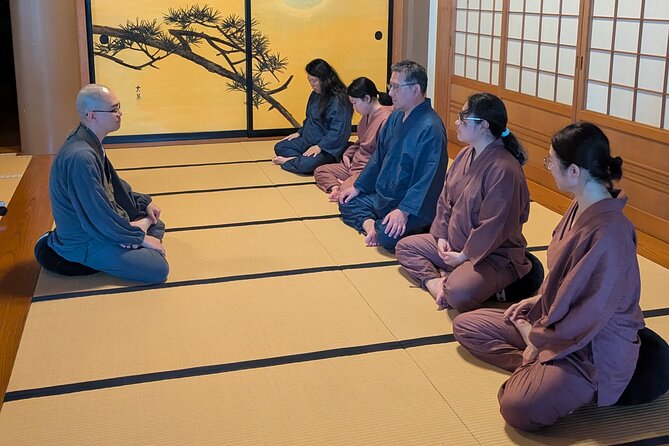
- Historic Soto Zen setting: Denchuji Temple was established in 1628 and has been associated with zazen practice since 1640.
- English instruction from a monk: You receive direct help with posture, breathing, and mental focus rather than simply watching a demonstration.
- Private group format: Only your party participates, making it easier to ask questions and adjust the session to your needs.
- Chair zazen is available: Tell the provider in advance if you need a chair instead of sitting cross-legged.
- Family-friendly approach: Children and beginners can take part, with explanations designed to make Zen easier to understand.
- A 5:30 pm cultural pause: The session lasts about 1 hour 30 minutes and fits neatly into an evening in Tokyo.
Why this private zazen session feels different
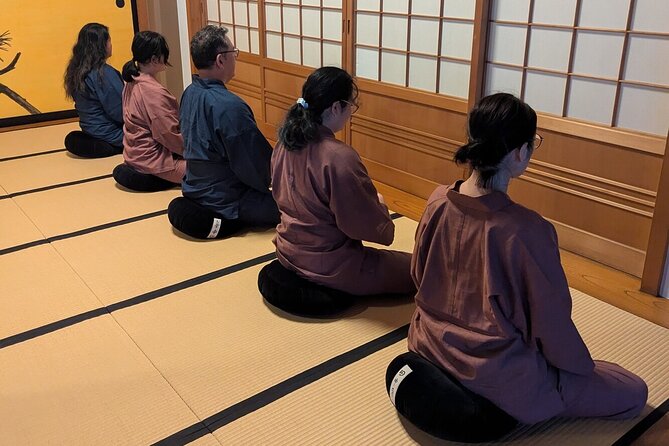
Tokyo gives you plenty of chances to race from one sight to the next. This experience asks you to do the opposite. For 90 minutes, you slow your breathing, settle your body, and pay attention to what is happening in your mind.
That sounds simple, but it is not the same as sitting quietly on your own in a hotel room. A monk guides the session in English and explains what you are trying to do. You are not expected to arrive with meditation experience, Buddhist knowledge, or perfect discipline.
The private setup matters. Your group does not have to match the pace of strangers, and you can ask for clarification when a Zen idea feels unfamiliar. The experience is also suitable for families, although younger children may find the quiet periods harder than the explanation itself.
The tone appears to be personal and reflective rather than theatrical. You are there to practice zazen and understand its place in Japanese culture, not to collect a staged photo.
More Shinjuku nights and walks:
- Tokyo: Shinjuku Food Tour (13 Dishes at 4 Local Eateries)
★ 5.0 · 6,603 reviews - Tokyo Bar Hopping Tour in Shinjuku (All-You-Can-Drink + Dinner)
★ 5.0 · 3,587 reviews - Tokyo: Shinjuku Food Tour (15 Dishes and 4 Eateries)
★ 4.9 · 2,033 reviews
Meeting at Edogawabashi at 5:30 pm
The meeting point is listed at Edogawabashi Station, at 1-chōme-19-6 Sekiguchi in Bunkyo City. The start time is 5:30 pm, and the activity lasts approximately 1 hour 30 minutes.
This location is useful to keep in mind when planning your day. Denchuji Temple is in Tokyo, but it is not presented as a central Shinjuku hotel activity with an automatic walk-up meeting in the busiest part of the city. Check your route carefully and allow enough time to find the meeting point.
Pickup is offered, though the supplied details do not specify the pickup area, timing, or whether an extra fee applies. Confirm those points before you rely on pickup. The activity is also near public transportation, which makes an independent arrival possible.
The evening timing has a practical advantage. You can spend the earlier part of the day sightseeing, then use the meditation session as a change of pace before dinner. Lunch and dinner are not included, so plan your meal separately.
Entering Denchuji Temple, a Soto Zen place with Edo-period roots
Denchuji Temple was established in 1628, during the early Edo period. Its name appeared on maps from that time, and the temple was named by Tokugawa Iemitsu, the third shogun of the Tokugawa shogunate.
Those details give the session more weight than a generic meditation class. You are practicing in a place with a long connection to Japanese religious life, not in a modern wellness studio. The temple has been known for zazen practice since 1640, so meditation is part of its identity.
You should not expect a full temple tour based on the information provided. The central focus is zazen, with cultural explanation woven around the practice. That is a plus if you want to spend your limited time doing something rather than simply looking at buildings.
The temple’s Soto Zen connection is also important. Soto Zen places strong attention on seated meditation and disciplined practice. The activity presents this tradition in a form that an English-speaking beginner can understand.
The Eiheiji connection adds useful context
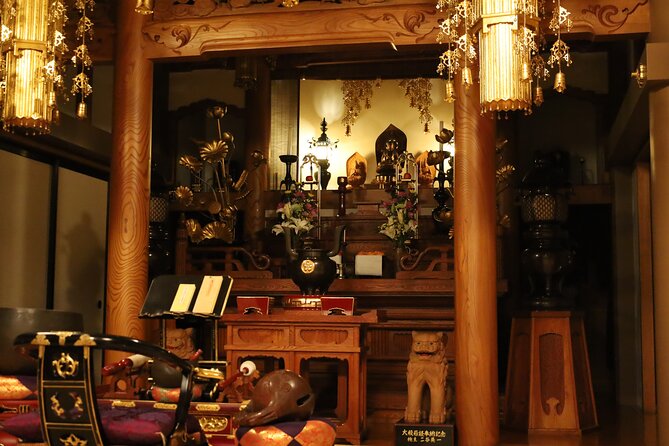
Denchuji Temple has a notable link with Eiheiji Temple in Fukui Prefecture, one of the head temples of the Soto school. Its former head priest, Zen Master Hata Egyoku, served as the 76th chief priest at Eiheiji.
You may not need to remember every name, but this connection helps explain why Denchuji is a meaningful place for learning Soto Zen. The instruction is not presented as a casual relaxation exercise alone. It connects the physical act of sitting with a larger tradition.
This is one of the strongest reasons to choose this experience instead of a generic mindfulness class. You get practical instruction, but you also learn why the practice matters within Japanese Buddhism.
The cultural discussion may also include Shintoism, Kannushi-led meditation, Shinto history, and the relationship between Shinto beliefs and Buddhism. The supplied details do not set out a fixed lecture, so the exact discussion can vary. Still, these subjects offer useful background on Japan’s long, sometimes interwoven religious traditions.
A few more Tokyo bookings worth comparing
- Mt Fuji and Hakone 1-Day Bus Tour Return by Bullet Train
★ 5.0 · 26,383 reviews - 1-Day Tokyo Bus Tour
★ 5.0 · 14,250 reviews - Tokyo: TOKYO SKYTREE® Admission ticket
★ 4.5 · 11,192 reviews - Tokyo: teamLab Planets TOKYO Digital Art Museum Entry Ticket
★ 4.6 · 9,779 reviews
Learning the three basic parts of zazen
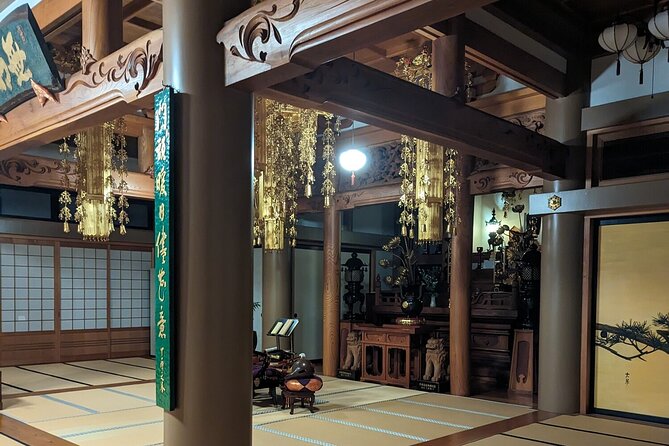
The session reduces zazen to three essential elements:
- Adjusting your posture
- Regulating your breathing
- Adjusting your mind
That simple structure is useful for beginners. Instead of burying you in unfamiliar terms, the monk gives you three things to notice and practice.
Posture comes first because the way you sit affects your comfort and attention. You may sit cross-legged if that works for your body, but you are not required to force yourself into an uncomfortable position. Chair zazen is available for children and people with physical limitations, but you should request it ahead of time.
Breathing provides an anchor. Rather than treating every thought as a problem, you can return your attention to the breath. The goal is not to produce a dramatic spiritual feeling on demand. You are learning how to sit, breathe, and notice your mind with less pressure.
The third element, adjusting the mind, is the hardest to explain and often the most interesting to discuss. The guidance is meant to help you practice without becoming anxious about doing it perfectly. That relaxed approach is especially helpful if this is your first meditation session.
English guidance makes the practice more accessible
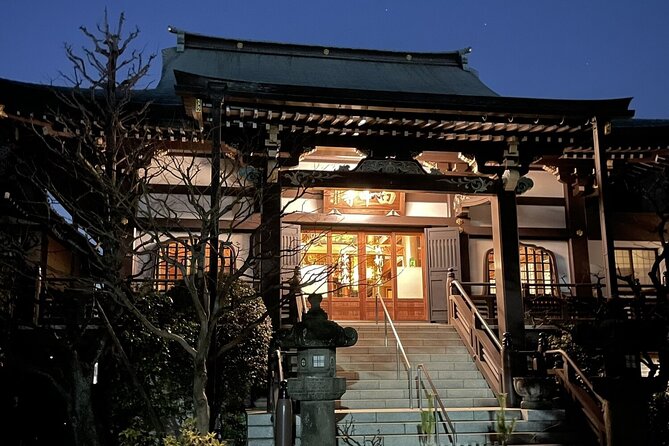
Language can make or break a cultural activity. Here, the zazen instruction is given in English by a monk, with multilingual local guide support available in English, French, German, and Spanish.
Direct instruction matters because small corrections can change the experience. If you do not understand why you are adjusting your posture or how breathing fits into the practice, meditation can feel like a silent guessing game. English explanations give you a clearer way into the activity.
The provider also offers flexible tour planning in English. The details do not explain exactly how much the plan can be changed, so you should confirm what flexibility means for your booking. Still, it suggests that the experience can be discussed with the organizer before arrival rather than treated as a one-size-fits-all class.
The monk’s role is central. The English-speaking guide and monk can explain Zen in plain terms, while the local guide may help with broader cultural context and practical coordination. The names of the monk and other guides are not provided, but the provider contact is Shinya Yamada.
A private format that suits questions and quiet reflection
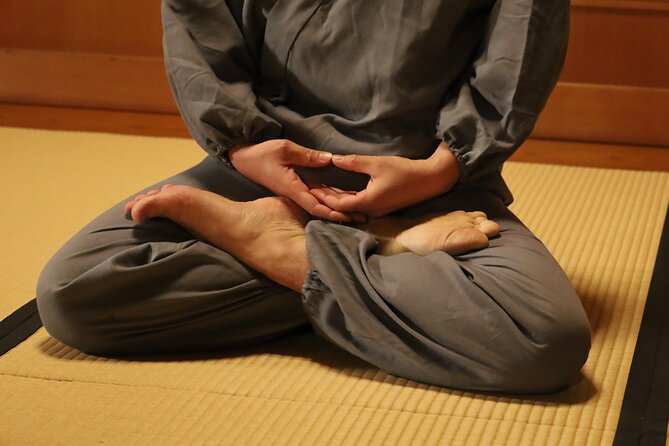
Only your group participates in this activity. That is a meaningful advantage when meditation is involved.
In a large class, you may hesitate to ask why your legs hurt, whether your posture is correct, or how to handle a wandering mind. A private session gives you room to raise those questions. It also allows the instructor to pay closer attention to your group.
Privacy can be especially useful for families. Parents can explain the activity to children in their own way, and the group does not need to worry about disturbing a room full of strangers. At the same time, a private session is not automatically better for everyone. If you enjoy the quiet energy of practicing with many people, this format may feel more solitary.
The private setup also helps couples and small groups who want a shared cultural activity without committing to a full temple tour. You leave with something to discuss together, rather than just another set of photographs.
Chair zazen removes a common physical barrier
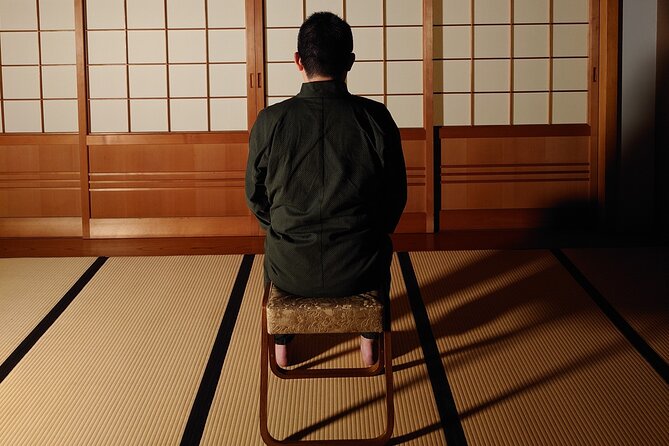
Sitting cross-legged for an extended period is not comfortable for everyone. The option of chair zazen makes this experience more practical for children and people with physical limitations.
You need to inform the provider in advance if you want to use a chair. Do not assume the request can be handled at the last minute. The supplied information says chair zazen is available, but it does not specify the type of chair or the number available.
This is more than a minor convenience. A painful sitting position can make it impossible to focus on breathing or the mind. A chair lets you take part in the central practice while respecting your body.
Most people can participate, and service animals are allowed. The activity is near public transportation. These details make the experience broadly accessible, but you should still raise any specific mobility needs when booking.
Samurai spirit and the wider cultural meaning
The session presents Zen as a way to gain insight into the Samurai spirit. That idea can sound broad, so you should think of it as cultural context rather than a promise of martial training or a Samurai demonstration.
Zen has long been associated in popular accounts with discipline, focus, simplicity, and composure. Learning how meditation is connected with those values can help you understand a familiar part of Japanese culture without reducing it to costume or spectacle.
The possible discussion of Shintoism and Kannushi-led meditation adds another layer. Shinto traditions often focus on relationships among people, nature, place, and ritual, while Buddhism brought different teachings and practices to Japan. A session that touches on both can help you see how Japanese spiritual life developed through contact and overlap.
The exact amount of discussion is not fixed in the details provided. Book this for the chance to explore these themes, not for a guaranteed academic seminar.
Is $169.08 a fair price for 90 minutes?
At $169.08 per person, this is not a budget activity. You are paying for a private group session, English-speaking instruction from a monk, access to a historic temple setting, and the convenience of a tailored experience.
The value depends on what you want from meditation. If you simply want to sit quietly, you can do that at no cost. If you want a polished spa-style relaxation session, other Tokyo options may offer longer treatment time for less money.
I see the value here in the personal instruction and cultural setting. The monk’s direct English guidance removes a major barrier, while the private format gives your group a chance to ask questions and practice without a crowd. For someone seeking a meaningful connection with Japanese Zen, those features can justify the higher price.
Group discounts may be available, but the amount is not stated. Ask about the discount before booking, especially if you are arranging the activity for a family or larger private party. The experience is often booked seven days in advance, so waiting until the last minute may limit your choices.
What to know about booking and cancellations
Confirmation is received within 48 hours of booking, subject to availability. The activity requires a minimum number of participants, and if that minimum is not reached, you are offered another date or experience, or a full refund.
Your own cancellation terms are much stricter. The experience is non-refundable and cannot be changed for any reason after booking. If you cancel or request an amendment, the amount paid is not refunded.
That policy makes travel planning important. Confirm your date, meeting point, party size, chair requirement, and any pickup request before you pay. Since chair zazen must be requested in advance, include that information during the booking process.
Who should book this experience?
I would recommend it most strongly to:
- First-time visitors who want an understandable introduction to Zen
- Couples or families seeking a quiet cultural activity
- People interested in Japanese religious traditions, not just sightseeing
- Anyone who values private instruction and the chance to ask questions
- Visitors who need chair seating and can notify the provider ahead of time
- People comfortable paying a premium for a short, specialized experience
You may want to skip it if you are looking for a long temple visit, a meal, a broad Tokyo sightseeing tour, or a low-cost activity. Lunch and dinner are not included, and the focus stays on meditation and discussion.
My recommendation
Book this private zazen experience if you want more than a quick photo stop and are willing to pay for personal guidance. The combination of an English-speaking monk, a 1628 temple, Soto Zen context, and chair zazen makes it unusually approachable for beginners.
I would be careful about the price and the non-refundable terms. Confirm the meeting details at Edogawabashi, ask about pickup and group discounts, and request chair zazen in advance if needed. If those points work for you, this can be a calm and thoughtful counterpoint to Tokyo’s fast pace.
FAQ
Where does the meditation experience begin?
The meeting point is at Edogawabashi Station, 1-chōme-19-6 Sekiguchi, Bunkyo City, Tokyo 112-0014, Japan.
What time does the experience start?
The listed start time is 5:30 pm.
How long does the activity last?
The experience lasts approximately 1 hour 30 minutes.
Is the meditation session private?
Yes. This is a private activity, and only your group participates.
Is the instruction given in English?
Yes. A monk at Denchuji Temple guides the zazen experience in English.
Can children take part?
Yes. The experience is described as suitable for beginners and families.
Is chair meditation available?
Yes. Chair zazen is available for children and people who cannot sit cross-legged. You should inform the provider in advance if you need it.
Are other languages supported?
A multilingual local guide is available in English, French, German, and Spanish.
Are meals included?
No. Lunch and dinner are not included.
Can I cancel for a refund?
The experience is non-refundable and cannot be changed for any reason. If the provider cancels because the minimum number of participants is not met, you are offered another date or experience, or a full refund.
New on our Tokyo list
- Sumi-e Experience in a relaxing green tea shop in Tokyo★ 5.0 · 3 reviews
- Tokyo : Kamikaze Street Drift Ride★ 5.0 · 3 reviews
- Onsen Spa in Tokyo and Asakusa Bar Hopping with Local Guide★ 5.0 · 3 reviews
- Easy for everyone! Now you can play handmade mini shamisen and show off to everyone! Musical instruments, sweets and live music★ 5.0 · 3 reviews
- Tokyo: Private Tsukiji Street Food & Sake with Local Guide★ 5.0 · 3 reviews
- Mt Fuji Exploration Tour with Free Japanese Kusa Mochi from Tokyo★ 4.5 · 3 reviews
- Tokyo Tsukiji Fish Market Walking and Exploring Hidden Gems Tour★ 5.0 · 3 reviews
- 1-Day trip: Kamakura City (Enoshima/Shonan/Beach)★ 4.7 · 3 reviews
Shinjuku Tours, compared.
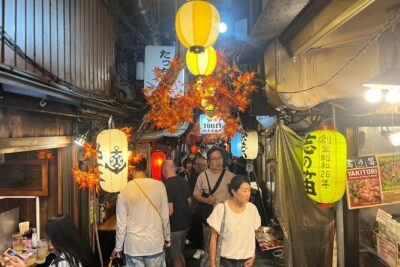
Shinjuku Food Tour (13 Dishes at 4 Local Eateries)
Read our review →
Tokyo Bar Hopping Tour in Shinjuku (All-You-Can-Drink + Dinner)
Read our review →
Shinjuku Food Tour (15 Dishes and 4 Eateries)
Read our review →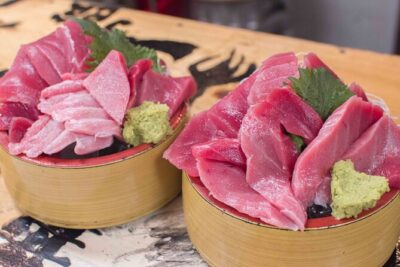
Best of Shinjuku: Izakaya Food Tour (4 Stops, 14+ Tastings)
Read our review →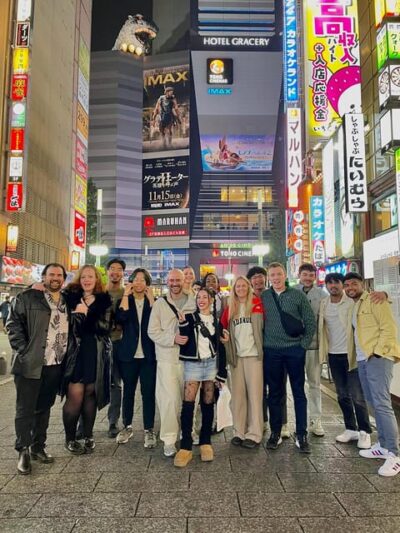
Shinjuku Local Bar and Izakaya Guided Walking Tour
Read our review →
Tokyo Shinjuku Sumo Show & Experience with Photo
Read our review →
Tokyo Night Foodie Tour in Shinjuku – Seasonal Sushi, Wagyu Beef
Read our review →Browse the lists this tour appears in