
Reviewed · BOAT TOURS IN TOKYO
Full Day Private Shore Tour in Nagasaki from Nagasaki Cruise Port
Nagasaki packs a remarkable amount into a compact port day, and this private tour gives you a broad look at the city without making you handle trains, taxis, or timing on your own. You’ll visit the sobering Peace Park, see the harbor from Inasayama, and trace Nagasaki’s unusual links with China and Europe.
I like the private air-conditioned vehicle, especially for a port day when comfort and a dependable return matter. I also like the three hours set aside for lunch and shopping, since it lets you slow down after the guided sightseeing. The main concern is the price, $892.41 per person, and the packed schedule, which can change with traffic, ship timing, or special events.
In This Review
- Key points at a glance
- A port day built around Nagasaki’s big themes
- Meeting your driver at Nagasaki Port
- Peace Park and the weight of August 1945
- Inasayama for the harbor view
- Glover Garden and Nagasaki’s foreign connections
- Sofukuji Temple and Chinese influence
- Dejima, the trading post that shaped the city
- The temples and the itinerary detail that needs checking
- Meganebashi and the famous stone arches
- Three hours in Shinchi Chinatown
- What $892.41 per person buys you
- Timing, ship safety, and cancellation concerns
- Who should choose this Nagasaki tour
- Should you book it?
- FAQ
- Where does the tour begin?
- How long does the experience last?
- Is transportation private?
- Is a guide included?
- Does the tour include pickup and drop-off at the port?
- How much free time is provided?
- Are entrance fees included?
- What happens if the cruise ship cannot dock?
- Can I cancel or change the booking?
Key points at a glance
- Nagasaki’s main sights in one day: Peace Park, Inasayama, Glover Garden, Dejima, four cultural landmarks, Meganebashi, and Chinatown are all included.
- Private pickup at the cruise terminal: Your driver meets you outside the port building, then returns you there at the end.
- Three hours of open time: You can stop for lunch and shop rather than spending every minute with a guide.
- No listed entrance fees: The tour states that no entrance fees are required, with transportation, guide service, and taxes included.
- A schedule built around your ship: The operator says the excursion is planned with the ship’s departure in mind, but traffic and docking changes can affect the day.
- Check the cultural-site details before booking: Two itinerary descriptions refer to Nara rather than Nagasaki, so confirm the exact stops with taxiGo DMC.
A port day built around Nagasaki’s big themes
This is not a narrowly focused museum visit. It is a fast-moving introduction to Nagasaki’s major themes: wartime memory, foreign trade, Chinese influence, Buddhist worship, harbor views, and modern city life.
That range is the appeal. In roughly seven hours, you can see the city from above, visit memorial grounds, step into historic religious sites, and finish with food and shopping in Shinchi Chinatown. If you are visiting Nagasaki only once from a cruise ship, this gives you a useful first portrait.
The private format matters. You are not waiting for a large group to gather at each stop, and the driver can take you between scattered parts of the city. You also have a guide to add context, rather than simply being dropped at a viewpoint and left to work out the significance yourself.
Still, this is a lot for one day. The scheduled sightseeing stops are short, mostly 20 or 30 minutes. That works for photographs and a quick orientation, but not for a slow museum visit or extended temple exploration.
More Boat Tours in Tokyo
- Mt Fuji & Hakone Cruise, Drum Show Bullet Train 1 Day from Tokyo
★ 4.0 · 7,413 reviews - Tokyo Mt Fuji 5th St & Hakone Cruise Bus Tour w/Bullet Train
★ 4.4 · 5,024 reviews - Tokyo: Meiji Shrine, Asakusa, Skytree Bus Tour and Cruise
★ 4.7 · 1,986 reviews
Meeting your driver at Nagasaki Port
The day begins at the Nagasaki Port Terminal Building. Your driver meets you just outside the cruise terminal, where you transfer to a modern, air-conditioned private vehicle.
That arrangement is simple, but it is one of the tour’s practical strengths. Cruise ports can be confusing, and a direct pickup saves you from finding a taxi or trying to match public transport to your ship’s schedule. At the end of the day, the same private service takes you back to the terminal.
The tour includes a professional local guide in Nagasaki as well as private transportation. No guide name is supplied, so you should not expect to select a particular person when booking. If the identity of your guide matters to you, ask taxiGo DMC before the port day.
The operator says most people can participate, but no detailed accessibility information is provided. If you need step-free transport, extra walking support, or specific vehicle arrangements, confirm those points in advance.
Peace Park and the weight of August 1945
Nagasaki Peace Park is the emotional center of the route. The park commemorates the victims of the atomic bombing in 1945 and presents peace as its central message.
The Peace Statue gives the site a clear visual focus. You have about 30 minutes here, enough to see the principal memorial area and listen to your guide, though not enough for a long museum visit or a full study of every memorial.
I would treat this stop with care rather than as just another photo break. The subject is painful, and the value of a guide is especially clear here. A good explanation can help you understand what you are seeing without turning the visit into a rushed checklist.
The short time also means you may want to decide beforehand what matters most. If you want a detailed account of the bombing, the park alone may not satisfy you. This tour is designed to place Nagasaki’s wartime memory within a much wider city tour.
Inasayama for the harbor view
The Inasayama Observation Deck provides a broad view over Nagasaki and its harbor. The description notes that visitors can reach the summit by ropeway or on foot, but this private tour does not specify which method is used.
You have 20 minutes at the viewpoint. That is enough for a quick look and photographs if access is straightforward. It is not much time for a hike, so do not assume the walking option forms part of this schedule.
This is the tour’s best change of pace after Peace Park. From the memorial grounds, you move to a high viewpoint and see how the city fits around the water. The stop is also useful early in the day because it gives you a visual map of Nagasaki before the historic neighborhoods blur together.
Weather and traffic can affect the experience. The operator specifically warns that timing may change because of road conditions, special events, and docking times. Ask how much time is planned for the observation deck if the day is crowded or visibility is poor.
A few more Tokyo bookings worth comparing
- From Tokyo: Mount Fuji Full-Day Sightseeing Trip
★ 4.5 · 4,970 reviews - Mount Fuji Full-Day Private Tour from Tokyo (Customizable)
★ 4.9 · 1,470 reviews - Tokyo Private Full-Day Tour by Car or Van
★ 5.0 · 684 reviews - From Tokyo: Must-Visit Mount Fuji Highlight Full-Day Tour
★ 4.7 · 532 reviews
Glover Garden and Nagasaki’s foreign connections
Glover Garden preserves Western-style homes and gardens connected with early foreign settlers. It is an open-air historic site that reflects the cultural exchange that shaped Nagasaki.
The planned visit lasts 30 minutes. That gives you time to walk through part of the grounds and see the architecture, but it is brief for a full exploration. If gardens and historic houses are your main interest, you may wish to ask the guide which section receives priority.
This stop works well beside Dejima later in the day. Glover Garden presents foreign influence through residences and hillside surroundings, while Dejima focuses on trade and contact during Japan’s period of isolation. Together, they show that Nagasaki’s international role was not a minor footnote.
The tour does not list an entrance charge, stating that no entrance fees are required. That is useful for budgeting, but confirm the current access arrangements if a site changes its admission policy.
Sofukuji Temple and Chinese influence
Sofukuji Temple is described as a historic Chinese temple dating from the early 17th century. Its appeal lies in the architecture, detailed woodwork, and quiet garden.
You have 30 minutes here, which should allow a focused visit rather than a passing glimpse. This is one of the places where a guide can help you notice details that may otherwise look like simply another attractive religious building.
Sofukuji also adds balance to the Western-oriented stops. Nagasaki’s story is not only about Dutch traders and foreign residents. Chinese influence is another major thread, and this temple gives that connection a physical setting.
As with all the religious sites on this route, modest behavior is sensible. The provided information does not give a dress code or specific visiting rules, so rely on your guide for local instructions.
Dejima, the trading post that shaped the city
Dejima was a Dutch trading post during Japan’s period of isolation from the 17th through the 19th centuries. It served as one of the few points of contact between Japan and the outside world.
The scheduled stop is 20 minutes, making this more of an introduction than a full historical visit. You can get the basic idea of Dejima’s role and see the restored historic setting, but you will need to keep moving.
Its importance is hard to overstate within this particular route. Glover Garden shows foreign residents and homes. Dejima explains the controlled trade system that made Nagasaki a gateway between Japan and other countries.
If you are especially interested in this period, ask your guide whether the stop can be adjusted. The published route is subject to changes, and the short time listed may not suit someone who wants to read every display.
The temples and the itinerary detail that needs checking
The schedule next lists Kofukuji Temple for 30 minutes and the Confucian Temple, the Chinese Museum of Successive Generations, for 20 minutes.
Kofukuji is described as a Buddhist temple with beautiful wooden architecture. However, its description refers to Nara, including a five-story pagoda and a UNESCO World Heritage listing. That is a clear mismatch for a Nagasaki tour, and you should ask the operator to confirm the intended Nagasaki site before paying.
The Confucian Temple description also contains a location problem. It calls the site the Nara National Museum while presenting it as a center for Confucian teachings. Since the tour is advertised from Nagasaki, these details may be copied from another destination or may reflect a labeling error.
This is not a small point. The two stops could be worthwhile, but you need to know exactly where you are going and what is included. Contact taxiGo DMC and request a corrected route in writing. The rest of the schedule clearly centers on Nagasaki, but these two entries deserve verification.
Meganebashi and the famous stone arches
Meganebashi, or Spectacles Bridge, is a stone bridge whose arches can resemble eyeglasses when reflected in the water. The planned visit lasts 30 minutes.
This is an easy landmark to appreciate quickly. You can see the bridge, take photographs, and hear why it is one of Nagasaki’s familiar city symbols. The stop also provides a break from enclosed interiors and temple grounds.
Do not expect an extended riverside walk based on the schedule. Thirty minutes is generous for the bridge itself, but the guide may need to keep the group moving to protect the later free time.
Three hours in Shinchi Chinatown
The final major stop is Shinchi Chinatown, followed by three hours of free time. Your guide drops you at a convenient location so you can choose lunch and shopping without being tied to a fixed group menu.
This is one of the strongest features of the tour. Many port excursions fill every minute with guided stops, leaving you hungry and unsure where to eat. Here, you can use local recommendations from your guide, take a proper meal, and browse for souvenirs at your own pace.
A previous booking experience specifically praised the guide’s meal recommendation and the feeling of having ample time without being rushed. That is useful guidance for setting your expectations. The open time appears to be a real part of the design, not a token 20-minute pause.
The tradeoff is that the three hours are not guided. If you want a structured food tour or a detailed explanation of Chinatown, this format may feel loose. If you prefer choosing your own meal and shopping stops, the freedom is valuable.
Keep an eye on the clock. Your return to the ship is handled by private vehicle, but the operator does not promise that traffic or other delays can be avoided. Agree on the meeting time and pickup point before you separate from the guide.
What $892.41 per person buys you
At $892.41 per person, this is an expensive shore excursion. The value depends heavily on how many people are in your private group and how much you value having transport, a guide, and ship timing handled for you.
The price includes a modern air-conditioned vehicle, port pickup and drop-off, a professional local guide, private transportation, all taxes and fees, and three hours of free time. No entrance fees are listed as required. You are paying mainly for private service and convenience, not a long list of paid attractions.
For a large family or group, the private format may make more sense than buying separate transport and arranging several taxis. The listing also mentions group discounts, though no discount terms are provided. Ask for the total price for your exact party rather than relying only on the per-person figure.
For a solo traveler or couple, the cost is harder to justify unless a private vehicle and a guaranteed port return are top priorities. Nagasaki can be explored in other ways, but this tour removes much of the planning work and lets you cover widely separated sights in one day.
Timing, ship safety, and cancellation concerns
The stated duration is about seven hours, with 15 minutes at the port at the beginning and end. The listed stop times add up to the full seven hours, including three hours of free time, so there is little spare time on paper.
The operator says the route is arranged around your ship’s docking schedule and promises a return with time to spare. It also offers a full refund if the ship cannot dock. At the same time, the route and time in the city can change because of docking times, traffic, special events, or other conditions, and no refund is offered if the duration must be shortened for those reasons.
The cancellation policy is strict: the booking is non-refundable and cannot be changed for any reason. That makes it important to check your ship’s confirmed schedule and the two questionable site descriptions before booking.
Who should choose this Nagasaki tour
I would consider this tour for a family, multigenerational group, or group of friends that wants one vehicle and one guide for a packed port day. It suits you if you want the major sights, prefer not to manage local transport, and value three hours for your own lunch and shopping.
It is also a good match if you are nervous about returning to the ship. Port pickup and drop-off, private transport, and a schedule planned around the vessel remove several common day-trip worries.
I would hesitate if you want deep time at each attraction, a specialist peace-history tour, or a relaxed temple day. The 20 and 30-minute stops are useful introductions, but they leave little room for lingering.
I would also pause until taxiGo DMC confirms the Kofukuji and Confucian Temple entries. That correction is the main practical question raised by the information supplied.
Should you book it?
Book this tour if you want a broad, private snapshot of Nagasaki and are willing to pay for comfort, a local guide, and port-day convenience. The best parts are the range of sights, the air-conditioned vehicle, and the unusually generous three-hour break for lunch and shopping.
Before booking, ask for the exact group price, the guide details if important to you, the access method for Inasayama, and corrected names for the two temple stops. If the operator confirms the route and the price works for your group, this can be a useful and reassuring way to see Nagasaki in one call. If the price is too high or you prefer slow sightseeing, choose a shorter private plan focused on Peace Park, Glover Garden, Dejima, and Chinatown.
FAQ
Where does the tour begin?
The tour begins at the Nagasaki Port Terminal Building. The driver meets you just outside the cruise ship terminal.
How long does the experience last?
The tour lasts approximately seven hours. The schedule includes the sightseeing stops, three hours of free time, and transportation back to the port.
Is transportation private?
Yes. The tour includes private transportation in a modern, air-conditioned vehicle.
Is a guide included?
Yes. A professional local tour guide in Nagasaki is included. No guide name is provided in the tour details.
Does the tour include pickup and drop-off at the port?
Yes. Pickup and drop-off at the port are included.
How much free time is provided?
You receive three hours of free time after the guided sightseeing. This time is intended for lunch and shopping in or near Shinchi Chinatown.
Are entrance fees included?
The tour states that no entrance fees will be required. Transportation, taxes, and other listed fees are included.
What happens if the cruise ship cannot dock?
The operator states that you will receive a full refund if your ship cannot dock.
Can I cancel or change the booking?
No. The experience is non-refundable and cannot be changed for any reason.
New on our Tokyo list
- Tokyo : Kamikaze Street Drift Ride★ 5.0 · 3 reviews
- Private Zen Meditation in English in Shinjuku, Tokyo★ 5.0 · 3 reviews
- Sumi-e Experience in a relaxing green tea shop in Tokyo★ 5.0 · 3 reviews
- Onsen Spa in Tokyo and Asakusa Bar Hopping with Local Guide★ 5.0 · 3 reviews
- Easy for everyone! Now you can play handmade mini shamisen and show off to everyone! Musical instruments, sweets and live music★ 5.0 · 3 reviews
- Tokyo: Private Tsukiji Street Food & Sake with Local Guide★ 5.0 · 3 reviews
- Mt Fuji Exploration Tour with Free Japanese Kusa Mochi from Tokyo★ 4.5 · 3 reviews
- Tokyo Tsukiji Fish Market Walking and Exploring Hidden Gems Tour★ 5.0 · 3 reviews
Boat Tours in Tokyo, compared.
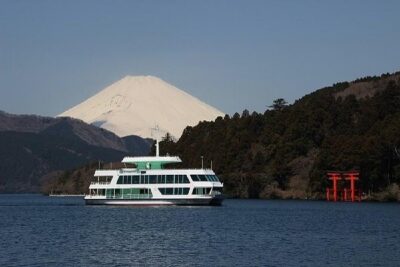
Mt Fuji & Hakone Cruise, Drum Show Bullet Train 1 Day from Tokyo
Read our review →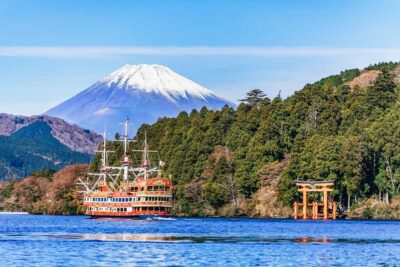
Tokyo Mt Fuji 5th St & Hakone Cruise Bus Tour w/Bullet Train
Read our review →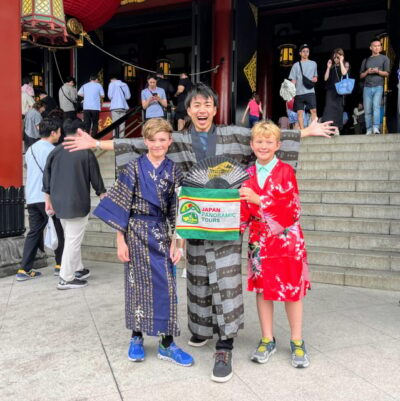
Meiji Shrine, Asakusa, Skytree Bus Tour and Cruise
Read our review →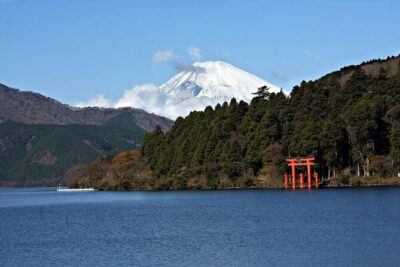
Mt Fuji & Hakone Cruise, Drum Show Bus 1 Day from Tokyo
Read our review →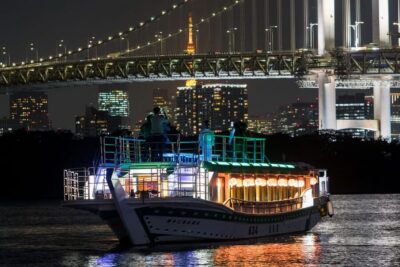
Sumida River: Japanese Traditional Yakatabune Dinner Cruise
Read our review →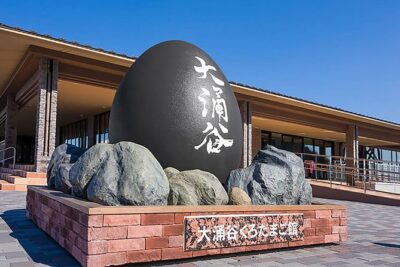
Hakone Fuji Day Tour w/ Cruise, Cable Car, Volcano
Read our review →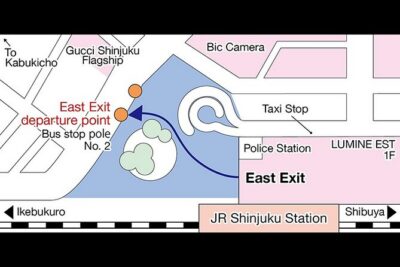
Dynamic Tokyo: Tokyo Tower, Tea Experience, Bay Cruise Day Tour
Read our review →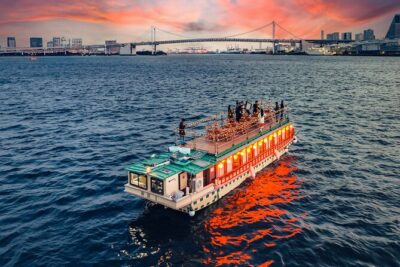
Tokyo Bay Yakatabune Dinner/Day Cruise with Japan Show and Drinks
Read our review →Browse the lists this tour appears in