
Reviewed · HISTORICAL TOURS
Guided History & Nature Exploration in the Yokohama Hill Area
Yokohama’s best story unfolds on its hills, where a port city shaped by foreign contact gives way to quiet lanes, old homes, a traditional garden, and a sweeping evening view. This four-hour outing with Sayumi, an Official Kanagawa Tour Guide, connects those pieces in a way that makes the city easier to understand.
I like the small group limit of six, which gives the walk a personal feel, and I like the clear contrast between Yamate’s international past and Sankeien’s traditional Japanese buildings. The tea stop is another smart touch. The main consideration is the pace: you’ll walk through hilly streets, manage some ups and downs, and pay 220 yen for the bus to Sankeien.
In This Review
- Key points at a glance
- Why Yokohama’s hill district tells the city’s story
- Harbor View Park: start with Yokohama from above
- Foreign Cemetery and Yamate’s old residences
- Tea salon pause: a useful break, not filler
- Motomachi Shopping Street and Yokohama’s local bridge
- Sankeien Garden: traditional Japan in one large setting
- Bashamichi and the 46th-floor finish
- What the $45.98 price really covers
- Who should book this Yokohama walk?
- Booking, weather, and timing advice
- Should you book it?
- FAQ
- Where does the tour start?
- Where does the tour end?
- How long does the experience last?
- Is transportation to Sankeien Garden included?
- Is admission to Sankeien Garden included?
- What happens if the weather is poor?
Key points at a glance
- Port views from Harbor View Park: Reach the park by escalator for one of Yokohama’s best photo spots.
- Yamate’s foreign settlement past: See the Foreign General Cemetery and historic residences such as Berrick Hall.
- A proper tea break: Authentic Japanese tea at a popular tea salon is included.
- Motomachi shopping with context: Browse a historic high street known for distinctive shops and gifts.
- Sankeien’s architectural collection: Garden admission is included, with Sayumi choosing key places to see.
- A high-rise finale: Weather permitting, finish at the 46th floor of OMO5 Yokohama Bashamichi.
Why Yokohama’s hill district tells the city’s story
Yokohama can feel like several cities joined together. Along the waterfront, it is modern and open to the world. Up in Yamate, the streets recall the period after Japan opened its ports and foreign residents settled here. At Sankeien, the mood shifts again, this time to traditional buildings, gardens, and old Japanese design.
That change is the heart of the experience. You are not simply checking off scenic stops. You are moving through the forces that shaped Yokohama: international trade, foreign settlement, local commerce, and the preservation of historic Japanese culture.
Sayumi’s role matters because the value of this walk depends on explanation. The buildings and streets are pleasant on their own, but the connections can be easy to miss without a guide. Her personal ties to the area add another layer. She grew up in Yokohama and used to walk through the hill district during her school years, so the route comes with a strong sense of place rather than a generic city tour.
The group size helps, too. With no more than six people, you can ask questions and adjust the pace more easily than on a large coach excursion. Several accounts describe Sayumi as friendly, organized, flexible, and especially good at telling the city’s story. One particularly useful quality is her ability to adapt plans around weather and seasonal events.
More Yokohama outings:
- Authentic Sumo Experience in Tokyo: Enter the Sanctuary
★ 5.0 · 603 reviews - EVO, WRX, Skyline – JDM Night Run to Daikoku Car Meet
★ 4.9 · 478 reviews - Tokyo: Best Price Daikoku Parking Area JDM Car Meet
★ 4.9 · 192 reviews
Harbor View Park: start with Yokohama from above
Meet at Motomachi-Chukagai Station in Yamashitacho. From there, the route heads uphill toward Harbor View Park, using an escalator to reduce some of the climb.
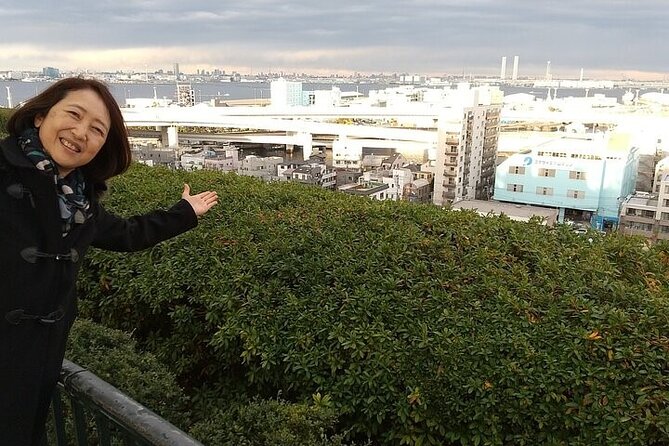
The park provides the first big visual reward: a broad view toward Yokohama’s port. Allow about 30 minutes here. This is the place to take your main harbor photographs and get a quick sense of the city’s layout before walking into the older neighborhoods.
I like beginning with a view rather than a museum. You see the port first, then learn how the city grew around it. The stop is free, and the escalator makes the opening section easier, though the whole tour still includes ordinary hill walking.
The view also sets up the history lesson. Yokohama became Japan’s first major point of contact with the international community after the opening of the port. From the hill, that development feels less abstract. The port below explains why this small settlement became a major city.
Foreign Cemetery and Yamate’s old residences
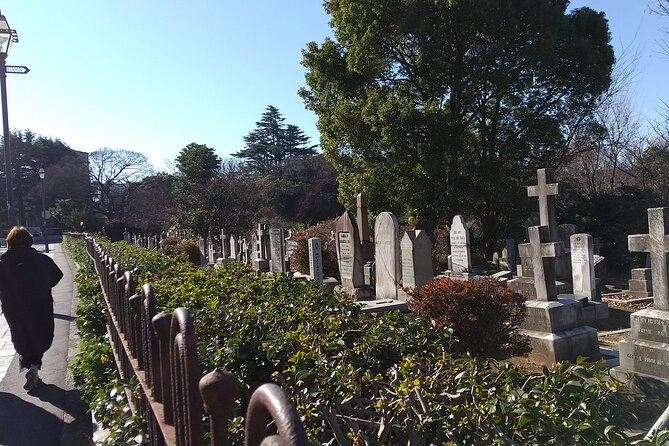
The Yokohama Foreign General Cemetery is a short, meaningful stop of about 15 minutes. It represents the people from overseas who lived and died in the city during its early period of international contact.
This is not a long cemetery tour. Instead, Sayumi uses the site to explain how Yokohama changed after the port opened around 150 years ago. That context makes the next section, Yamate Bluff, more than a pleasant walk through old architecture.
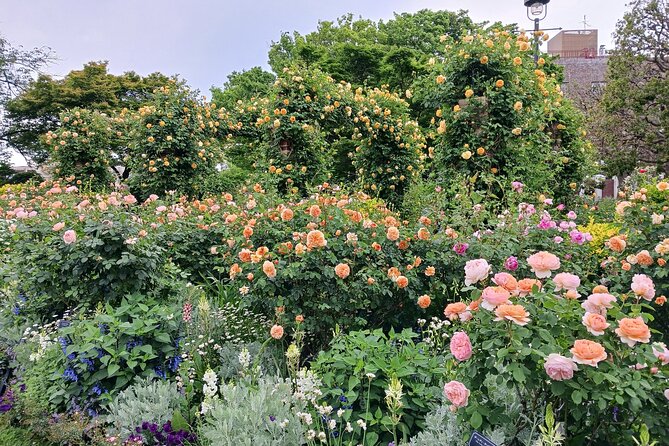
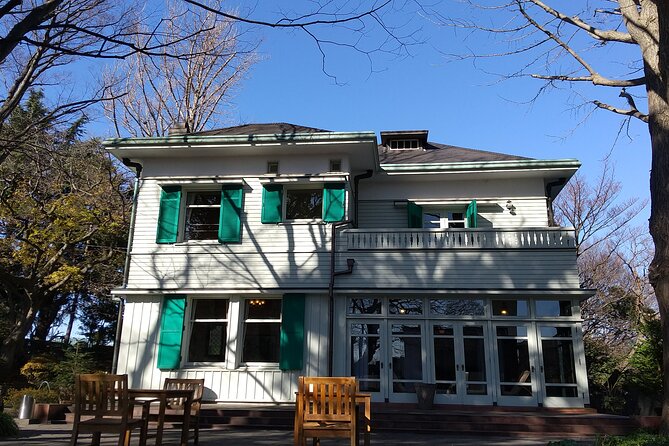
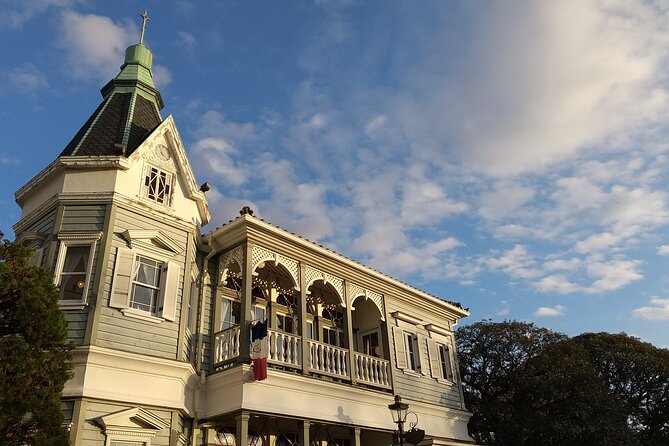
Yamate preserves the atmosphere of the former foreign residential district. You’ll see historic homes and buildings with Western architectural influences, along with streets that feel calmer than the port below. The exact property visited can vary, with Berrick Hall one possible choice among several historic residences.
Berrick Hall is a useful example of the area’s architectural character. The route allows roughly an hour for one or two properties and the surrounding streets, so you should have time to look at details rather than rush from doorway to doorway.
This is also the part of the tour connected with Studio Ghibli’s From Up on Poppy Hill. Fans of the film may recognize familiar settings and enjoy seeing the real neighborhood behind its atmosphere. You should not expect a film-themed tour, however. The movie connection is an extra thread within a broader discussion of Yokohama’s history and architecture.
I especially like this portion for visitors who want more than modern waterfront scenery. Yamate gives you a chance to see how international contact changed daily life, building styles, and the social shape of the city.
Tea salon pause: a useful break, not filler
After the hill district, the tour includes coffee or tea at a tea salon. The included break features authentic Japanese tea and provides a welcome pause after walking through Yamate.
The tea stop has real practical value. Four hours is long enough for your feet to notice the hills, and a seated break keeps the outing from becoming a nonstop march. It also gives Sayumi room to answer questions and talk through what you have seen.
The exact tea salon is described as popular, and the experience is presented as part of the local character of the area rather than a quick drink grabbed at a chain café. If tea culture interests you, this may become one of the most memorable parts of the afternoon.
Do keep expectations sensible. Tea is included, but the focus remains on the city walk, not on a formal tea ceremony or a long food experience.
A few more Yokohama bookings worth comparing
- Tokyo: Imperial Palace and Shogun Historical Walking Tour
★ 5.0 · 2,251 reviews - Tokyo: Imperial Palace Japanese History Walking Tour
★ 4.9 · 987 reviews - Tokyo: Shinjuku Historical Walking Tour & Secret Backstreets
★ 5.0 · 530 reviews - Yanaka Walking Tour: Historic and Traditional District of Tokyo
★ 5.0 · 530 reviews
Motomachi Shopping Street and Yokohama’s local bridge
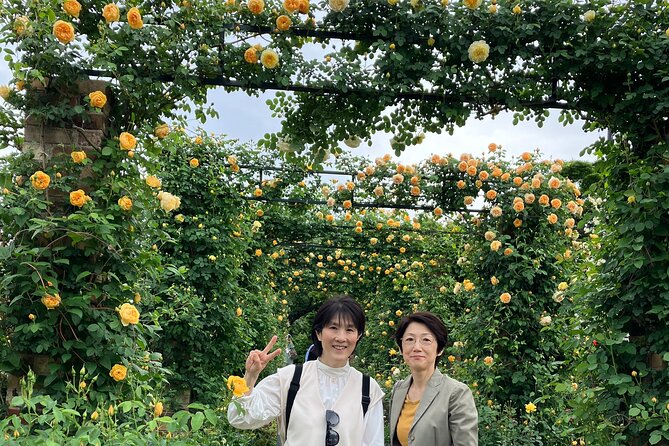
Motomachi is the original high street associated with the opening of Yokohama’s port. Historically, it served as a link between local Japanese residents and the newly arrived foreign community. Today, it remains a stylish shopping street with distinctive stores and gift options.
The tour gives this section about an hour. That is enough time to stroll, hear how Motomachi developed, and pause at shops that catch your eye. It is a better way to approach shopping than simply being dropped beside a retail strip, because you learn why this particular street mattered.
Motomachi can work well for souvenir shopping, especially if you prefer unusual local items to standard station gifts. The description points to unique and fashionable shops, though your purchases are not included in the tour price.
This stop also gives the day a change of rhythm. Yamate is quiet and residential. Motomachi is more commercial and social. The contrast helps you see how the foreign settlement connected with the wider city instead of existing as an isolated enclave.
If you are not interested in shopping, you will still get historical value from the street. But shoppers will probably make the most of the hour. Ask Sayumi for suggestions based on what you want to buy, as the small group format should make that sort of conversation easy.
Sankeien Garden: traditional Japan in one large setting
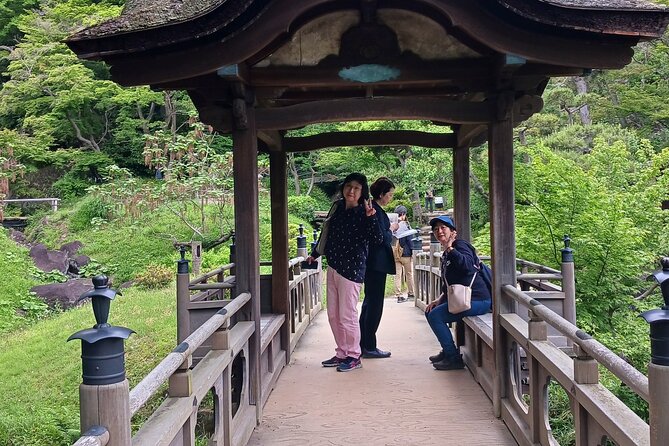
From Motomachi, you take a public bus to Sankeien Garden. The fare is not included and costs 220 yen. The ride takes about 20 minutes, so this is the one part of the experience where you should have a little cash or a suitable way to pay local transport costs.
Sankeien is the tour’s largest shift in mood. After the port, foreign cemetery, Western-style homes, and shopping street, you enter a Japanese garden with historic buildings gathered from different parts of the country.
Garden admission is included. You have about an hour to walk through the grounds, and Sayumi chooses the places to visit while explaining what makes each building or garden feature worth your attention.
The appeal is not just flowers or quiet paths. Sankeien brings together traditional Japanese architecture and garden design in one place. The setting can give you a taste of architectural styles associated with destinations such as Kyoto, Kamakura, and Shirakawa-go without requiring separate day trips.
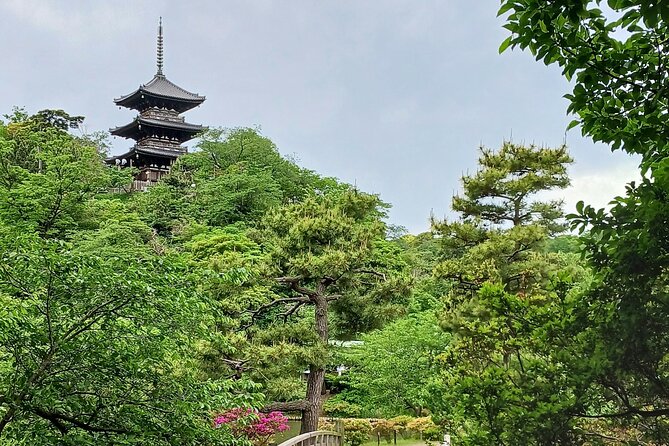
The three-story pagoda is one of the key sights singled out by past participants, and the garden’s historic structures give the stop much more substance than a simple park visit. Depending on the season and timing, special moments may also be possible. Sayumi has arranged experiences such as autumn moon watching with traditional Japanese music, although you should not treat that as a guaranteed part of every departure.
An hour is enough for an introduction, but not enough to inspect every corner of a large garden at leisure. That is both a strength and a limit. Sayumi’s route keeps the visit focused and helps you avoid wandering without direction, but independent garden fans may want to return on their own with more time.
For me, this is the strongest reason to choose the tour. The day lets you compare Yokohama’s international side with a carefully preserved expression of Japanese aesthetics, all within a compact route.
Bashamichi and the 46th-floor finish
The published route ends at OMO5 Yokohama Bashamichi, where you can enjoy an evening view from the 46th floor. The hotel’s new spot opened in January 2026, and weather permitting, the high vantage point allows views across Yokohama, including the port area.
After a garden visit, the return to the city is a useful final contrast. You move from low garden paths and traditional buildings to a modern tower with the city spread below.
The final stop is planned for about 15 minutes, so think of it as a closing view rather than a full observation-deck visit. It can be especially attractive near evening, when the city begins to light up. Clear weather will matter, and poor conditions may affect this part of the experience.
The ending point is practical for exploring Bashamichi afterward, but Sayumi is flexible. If you would rather return toward the starting point or a nearby area such as Chinatown, she can accompany you.
What the $45.98 price really covers
At $45.98 per person, the cost is reasonable if you value interpretation and a tightly arranged route. You receive about four hours with an Official Kanagawa Tour Guide, a tea break, and admission to Sankeien Garden.
The bus fare adds only 220 yen, but it is worth remembering because it is the one stated extra cost. Shopping and any personal purchases are also your responsibility.
The value is strongest for visitors who would otherwise need to research Yamate’s buildings, understand the cemetery’s place in Yokohama’s story, choose a tea salon, work out the bus to Sankeien, and decide which garden sights matter most. Sayumi handles that structure while still leaving room for questions and personal interests.
A larger group tour might cost less, but it would likely offer less flexibility. A private guide could offer more control, though this experience already keeps the group to six people. For a half-day outing that combines several parts of the city, the price is fair, particularly because Sankeien admission is included.
Who should book this Yokohama walk?
I would choose this experience if you want Yokohama explained through its neighborhoods rather than reduced to a harbor photo and a shopping stop.
It suits you especially well if you:
- Enjoy history, architecture, and local stories
- Want to see both Western-influenced Yamate and traditional Sankeien
- Prefer small groups to buses full of people
- Like having a guide who can adjust the day around weather or interests
- Want time for tea and browsing in Motomachi
- Can manage a normal town walk with some hills and changes in elevation
Families can participate, service animals are allowed, and the route is near public transportation. Still, the walk is not completely flat. Anyone who finds hills difficult should consider that before booking.
The experience may be less suitable if your priority is a long shopping session, a detailed garden photography outing, or a completely private schedule. The four-hour limit means each stop is selective. Sankeien, in particular, deserves more time if you want to see every building and path.
Booking, weather, and timing advice
The tour is generally booked well ahead, with an average booking time of 41 days. That suggests you should reserve early if your Yokohama dates are fixed, especially since the group limit is six.
The experience requires good weather. If poor conditions force cancellation, you are offered another date or a full refund. You may also cancel for a full refund up to 24 hours before the start time. Changes or cancellations inside that 24-hour window are not accepted.
Wear comfortable shoes and allow room for a walk that moves between hills, shopping streets, a bus ride, and a large garden. The tour lasts about four hours, but the day can continue afterward in Bashamichi or near the starting area depending on your preferred finish.
Should you book it?
Book this tour if you want a thoughtful half-day introduction to Yokohama’s past and present, with a guide who brings local memory and strong historical context. The combination of port views, Yamate architecture, tea, Motomachi, Sankeien, and a high-rise finish gives you a satisfying range without crossing the entire city at a frantic pace.
Skip it if you want a flat route, extended shopping time, or a full day devoted only to Sankeien. For most people interested in how Yokohama became an international port while retaining a distinct Japanese character, the small group, included tea, and garden admission make $45.98 a sound buy.
FAQ
Where does the tour start?
It starts at Motomachi-Chukagai Station in Yamashitacho, Naka Ward, Yokohama.
Where does the tour end?
The planned endpoint is OMO5 Yokohama Bashamichi by Hoshino Resorts. If you prefer to return to the starting point or a nearby area such as Chinatown, the guide can be flexible and accompany you.
How long does the experience last?
The tour lasts approximately four hours.
Is transportation to Sankeien Garden included?
The bus from Motomachi to Sankeien is not included. The stated fare is 220 yen.
Is admission to Sankeien Garden included?
Yes. Admission to Sankeien Garden is included in the guide fee.
What happens if the weather is poor?
The experience requires good weather. If it is canceled because of poor conditions, you will be offered a different date or a full refund.
New on our Yokohama list
- Yokohama Chinatown: Authentic Local Street Food Experience★ 4.7 · 3 reviews
- Yokohama: A City at the Corner of Tradition and Modernity★ 4.7 · 3 reviews
- 【50 mins】 City lights HelicopterTour: Tokyo and Yokohama plan★ 5.0 · 3 reviews
- Wheelchair Accessible Taxi from HND to Yokohama Port★ 5.0 · 3 reviews
- Tokyo/yokohama: Full Day Nikko Private Sightseeing Trip★ 5.0 · 3 reviews
- Eat like a local in Yokohama – with a Local Expert Guide!★ 4.7 · 3 reviews
- Tokyo JDM Daikoku PA Car Meet Private LEXUS RC Tour from Yokohama★ 5.0 · 3 reviews
- Yokohama: Soba Noodle Workshop with a Soba Master★ 5.0 · 3 reviews
Historical Tours, compared.
Imperial Palace and Shogun Historical Walking Tour
Read our review →
Yanaka Walking Tour: Historic and Traditional District of Tokyo
Read our review →
Shinjuku Historical Walking Tour & Secret Backstreets
Read our review →
Mt. Fuji Heritage Tour: Traditional Villages, Lakes & Shrine
Read our review →
The Best of Izakaya in Shinjuku Food & Cultural Tour
Read our review →
Yanaka Historical Walking Tour in Tokyo’s Old Town
Read our review →Browse the lists this tour appears in