
Reviewed · TEMPLE & SHRINE TOURS
Mt. Fuji Heritage Tour: Traditional Villages, Lakes & Shrine
Mt. Fuji is the star, but this tour gives you more than a single mountain viewpoint. In one long day, you move from a thatched-roof village and lake gardens to a famous pagoda, a Shinto shrine, and eight clear spring ponds. It is a broad sampler of the Fuji area, not a slow village walk.
I like the excellent variety and the low $50 price. I also like the practical bus format, especially for first-time visitors who do not want to sort out several local trains and buses. The main catch is the schedule: roughly five hours are spent on the road, and Tokyo traffic can push the return late.
In This Review
- Key points to know before booking
- A long but efficient day from central Tokyo
- Saiko Iyashi no Sato Nenba and Fuji behind the rooftops
- Lake Kawaguchi, Oishi Park, and the seasonal choice
- Arakurayama Sengen Park and the famous pagoda view
- Lunch without a built-in meal
- Oshino Hakkai and its clear spring ponds
- How much Fuji can you really expect to see?
- Is $50 a fair price for ten hours?
- Who will enjoy this tour most?
- Should you book the Mt. Fuji Heritage Tour?
- FAQ
- How long does the Mt. Fuji Heritage Tour last?
- Where does the tour begin and end?
- Is lunch included?
- Will I see Mt. Fuji clearly?
- Which languages are available?
- Is the tour suitable for wheelchair users?
Key points to know before booking
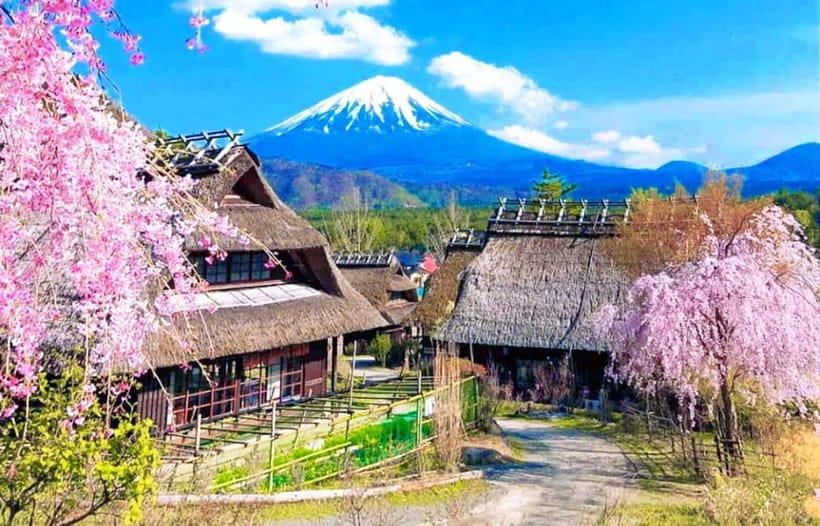
- Saiko Iyashi no Sato Nenba offers the day’s most distinctive setting, with traditional thatched houses and Fuji views.
- Chureito Pagoda requires a substantial stair climb, but the famous Fuji-and-pagoda photograph is the reward.
- Season matters: from October 26 to November 20, the tour visits the Maple Corridor instead of Oishi Park.
- Lunch is not included, so bring food, carry cash, or use the restaurant option arranged during the day.
- Guides such as Sia and Kazi are especially useful for meeting times, photo spots, and keeping a large group together.
- Clear Fuji views are never guaranteed, so check the forecast and treat the area itself as part of the experience.
A long but efficient day from central Tokyo
The tour begins at a designated meeting point near Tokyo MODE Gakuen at 1-chōme-5-1 Marunouchi. Check the exact pickup choice on your booking and arrive at least 15 minutes early. Late arrivals and no-shows are not refunded, which is a hard rule worth taking seriously in a city where a wrong station exit can cost you precious minutes.
The ride to the Fuji area takes about two and a half hours. That sounds lengthy, and it is, but a coach keeps the day simple. You can rest, watch the city give way to the countryside, and avoid changing trains with luggage or children.
The return ride is another two and a half hours. Weekend and holiday traffic may delay the bus, so I would not book an evening show, restaurant reservation, or train connection soon after the scheduled finish. This is a full-day outing, not a quick side trip.
The guide speaks English, Japanese, or Traditional Chinese depending on the group and booking. The commentary is given in several languages, so the amount of spoken detail can vary. The strongest practical value comes from the guide’s organization. Sia, Kazi, Wanting, Alex, Rachel, and others are praised for clear instructions, regular timing reminders, and helping people find the bus again.
More Temple & Shrine Tours in the Mt Fuji Area
- Mt. Fuji, Oishi Park & Arakurayama Pagoda Bus Tour with Lunch
★ 5.0 · 128 reviews - Mt. Fuji & Hakone: Fuji Sengen Shrine, Cruise, and Ramen-Making
★ 5.0 · 124 reviews - From Tokyo: Fuji Mountain Area – FujiQ – Lake Kawaguchiko – Chureito Pagoda
★ 4.8 · 32 reviews
Saiko Iyashi no Sato Nenba and Fuji behind the rooftops
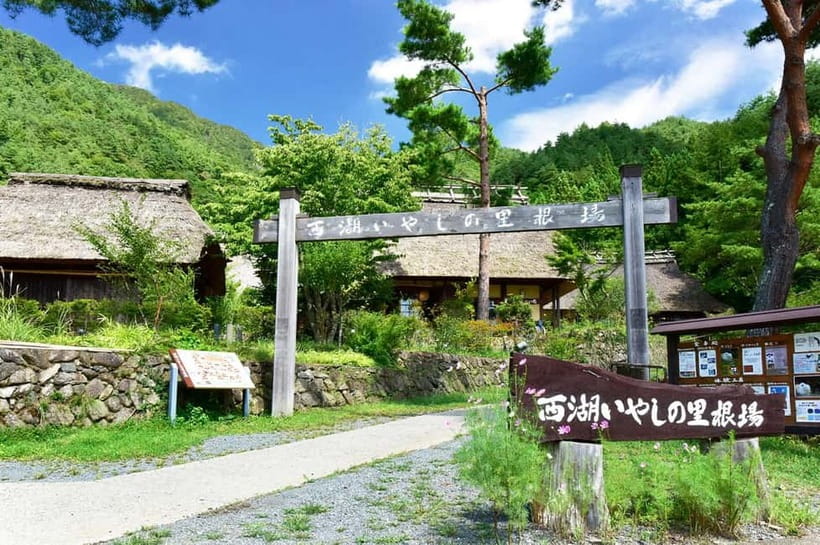
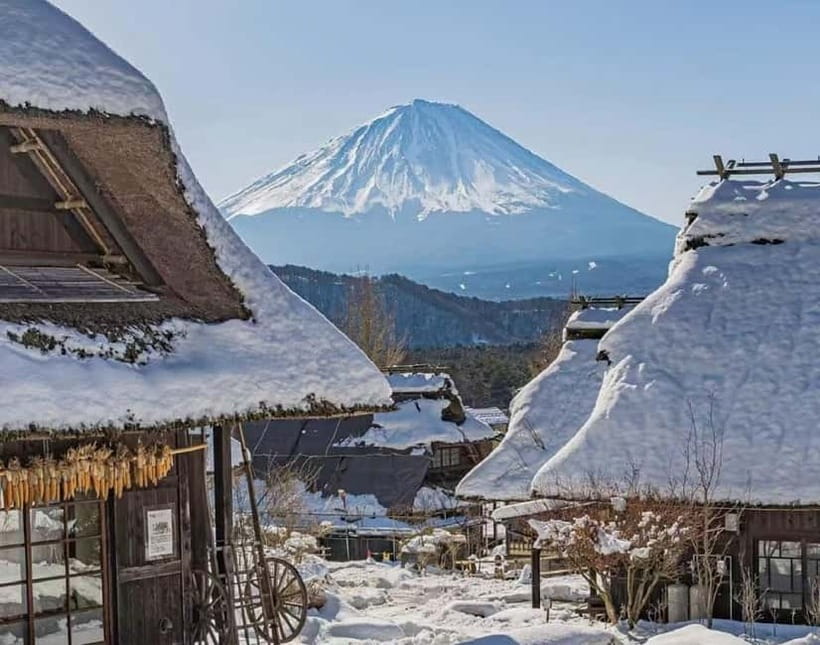
The first major stop is Saiko Iyashi no Sato Nenba, a restored traditional village beside Lake Saiko. Its thatched-roof houses give you a very different Fuji picture from the usual lakefront panorama. The roofs, wooden buildings, mountain backdrop, and open views make this one of the most appealing photo stops of the day.
You have about an hour here. That is enough for a walk through the village, photographs, and a quick look at the small shops and displays. Admission is included, which is useful because this is the only attraction specifically listed as covered in the tour price.
At the entrance, you can buy Japanese snacks, making this a handy place to pick up something small if you skipped breakfast. You can also rent a ninja costume for an extra charge. It is playful rather than essential, but families and anyone who enjoys unusual photographs may find it worth considering.
The village is more than a photo prop. The traditional houses give you a sense of older rural Japan without requiring a separate trip into the mountains. Still, the one-hour stop means you should choose your priorities. If you want careful photographs, browsing, snacks, and a costume rental, time will pass quickly.
Weather matters here. Clouds can hide Fuji even when the village itself is attractive. Several stops offer mountain views, so a covered peak does not ruin the entire day, but you should not book this outing solely on the promise of a clear Fuji portrait.
Lake Kawaguchi, Oishi Park, and the seasonal choice
The bus then heads toward Lake Kawaguchi, one of the best-known viewing areas around Fuji. The lake setting gives the mountain a broad foreground, and the gardens at Oishi Park add flowers and seasonal color to the picture.
Oishi Park receives about 40 minutes. In summer, lavender fills the fields with color and fragrance. In autumn, red broom grass changes the view. The park is a good stop for travelers who want a gentler walk after the village and before the more demanding pagoda stairs.
The schedule changes during peak autumn color. From October 26 through November 20, the tour visits the Maple Corridor instead of Oishi Park. This is important when comparing dates. You cannot assume you will see both locations on the same outing during that period.
The Maple Corridor has about 40 minutes as well. Its trees create a natural frame around Fuji, especially when the summit carries snow. Autumn dates are popular, so expect a more crowded setting and stay aware of the guide’s return time. The appeal is strong, but the stop is brief.
I like this seasonal planning because it matches the place to the time of year. The tradeoff is that you lose Oishi Park during the peak foliage window. If lavender or summer flowers matter most to you, book outside the autumn substitution period.
Arakurayama Sengen Park and the famous pagoda view
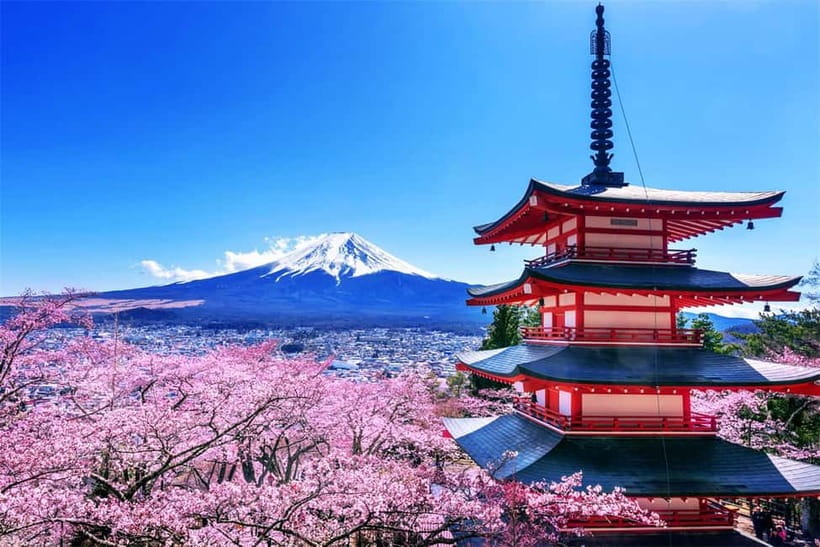
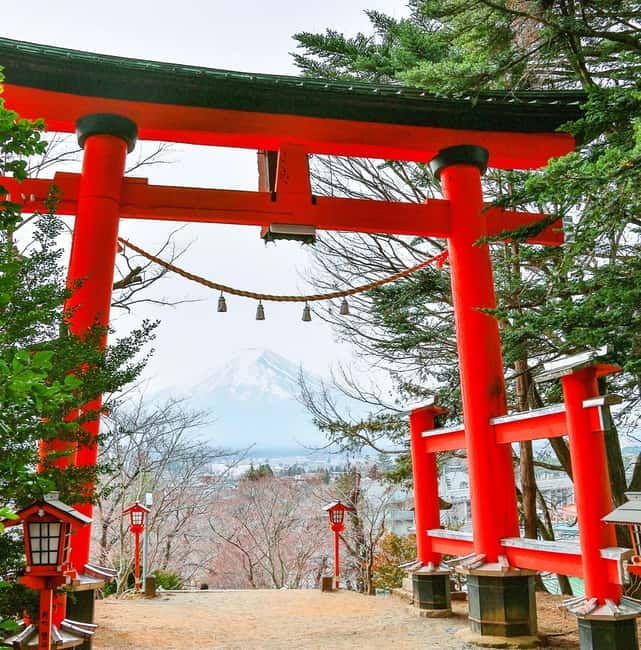
After the lake area, the tour moves to Arakurayama Sengen Park. This is the stop most closely tied to the classic Fuji photograph: Chureito Pagoda in the foreground, with Mt. Fuji behind it.
The visit includes Arakura Fuji Sengen Shrine, Arakurayama Sengen Park, and Chureito Pagoda. Together, the stops total about 70 minutes, with the listed schedule allowing roughly 40 minutes at the park, 15 minutes at the shrine, and 15 minutes at the pagoda.
You need to climb steps to reach the upper viewpoint. The climb is manageable for many people, but this is not a flat sightseeing stop. Wear proper shoes, especially if the steps are wet or you are traveling with children. The top provides the reward: a wide view over the area, the pagoda, and, on a clear day, Fuji.
The shrine below makes the visit feel less like a single photo mission. Take a moment to notice the gates and worship area before heading upward. Guides can explain how to behave at the shrine, and several guides are praised for giving clear directions around the complex.
Time is the main limitation. Photographers may want longer to wait for a clear gap in the clouds or find a less crowded angle. You may also want a goshuin, a calligraphic shrine stamp, but do not leave this until the last minute. One visitor found the wait for a stamp was about 20 minutes, which could take up most of the pagoda stop.
For families, the stairs require planning. A child may manage them well, but a stroller is not a sensible choice for the climb. The tour is not suitable for wheelchair users, and anyone with limited mobility should consider this stop carefully.
More temples and shrines near Tokyo:
- Tokyo: Meiji Shrine, Asakusa, Skytree Bus Tour and Cruise
★ 4.7 · 1,986 reviews - Tokyo: Asakusa Walking Tour with Sensoji Temple Visit
★ 4.8 · 1,583 reviews - Nikko: Kegon Falls, Lake Chuzenji & Toshogu Temple
★ 4.6 · 1,577 reviews - Tokyo: Kamakura & Enoshima Day Trip including Temple Tickets
★ 4.5 · 1,375 reviews
Lunch without a built-in meal
Lunch is not included, and this affects the day more than the low price might suggest. You can bring food, buy something at one of the attractions, or eat at a restaurant suggested by the guide.
The schedule allows about 40 minutes for a restaurant break. Some guides collect lunch orders early so food is ready when the group arrives, which can save time. That convenience depends on the arrangement for your particular departure.
I would bring a backup snack even if you plan to eat at the restaurant. Food choices may feel limited, and one dining stop received mixed feedback compared with the food vendors seen at other attractions. Cash is also wise because some locations may not accept credit cards.
This is not a food-focused tour. You are paying for transport, access to a wide route, a guide, and a driver, not a carefully planned culinary day. If you bring rice balls, sandwiches, or snacks from Tokyo, you gain control over both cost and timing.
Oshino Hakkai and its clear spring ponds
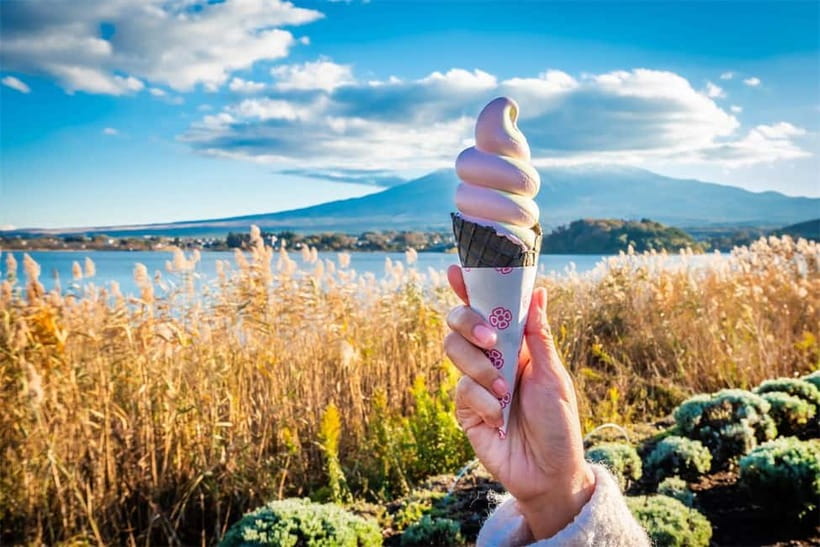
The final sightseeing stop is Oshino Hakkai, a small area known for eight spring-fed ponds. The water comes from Mt. Fuji’s snowmelt and is famously clear. With traditional buildings, reflections, mountain views, and small local food stalls, the setting offers a quieter finish than the pagoda stop.
You have about 70 minutes here, the longest sightseeing period of the day. That gives you time to walk among the ponds, take photographs, browse small shops, and sample local treats. Fresh rice crackers and wasabi ice cream are two unusual choices to look for.
Oshino Hakkai can feel more commercial than Saiko Iyashi no Sato Nenba, with souvenir shops and food sellers around the viewing areas. That is not necessarily a flaw. It makes the stop easy for snacks and gifts, but you should set aside time to look beyond the stalls and focus on the water and old village details.
The ponds work in every season, even when Fuji is hidden. If clouds spoil the mountain view, Oshino Hakkai still gives you a worthwhile visit because the springs are the main attraction. Carry cash for small purchases, and remember that the shops operate independently from the tour.
How much Fuji can you really expect to see?
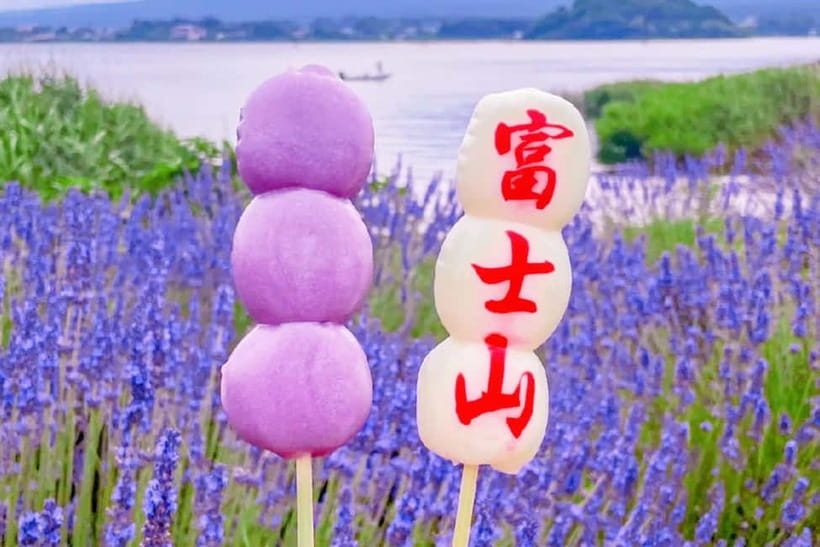
The tour offers four main chances for Fuji views: Saiko, Lake Kawaguchi, Arakurayama, and Oshino Hakkai. That improves your odds, but it cannot control the weather. Clouds may gather during the afternoon, and even a good forecast does not promise a clear summit.
Several people have enjoyed seeing Fuji from three of the four main areas, while others had a cloudy day and still liked the villages, shrines, and ponds. That is the right way to think about this excursion. You are visiting the Fuji region, not buying a guaranteed mountain photograph.
For the clearest views, an early start and a favorable forecast help, but the tour’s fixed timing means you cannot move freely between stops. Bring a camera, but also enjoy the cultural sights that remain attractive when the peak disappears.
Is $50 a fair price for ten hours?
At $50 per person, this is strong value if you want to cover several Fuji-area sights in one day. Admission to Saiko Iyashi no Sato Nenba, the guide, driver, parking, and round-trip coach transport are included. Recreating the same route independently would require careful planning and several separate fares.
The price is especially appealing for families and first-time visitors. A guide can keep the day moving, explain meeting points, and help with the practical details. One family even managed the outing with a three-year-old and a five-month-old, though every family should judge the long bus ride and stair climb for itself.
The bargain has limits. Lunch, personal purchases, costume rental, and other extras come out of your pocket. You also give up the freedom to linger. Forty minutes at Oishi Park or 15 minutes at Chureito Pagoda works for a broad introduction, but not for slow photography or a detailed shrine visit.
The bus itself is a major part of the value. A smooth driver and an organized guide can make the long transfers restful. If traffic causes delays, however, the fixed return time becomes less predictable.
Who will enjoy this tour most?
I would recommend it to you if this is your first visit to the Fuji area and you want the main views without building your own route. It also suits families, couples, and small groups who value straightforward transport and a full day of varied stops.
It is a good fit for photographers who want several classic viewpoints, provided you accept short stops and uncertain weather. The thatched village and Chureito Pagoda offer the strongest photo settings, while Oshino Hakkai gives you details and reflections rather than one grand mountain panorama.
You may want a different plan if you prefer long walks, quiet shrine time, local food, or a single destination explored at an easy pace. This tour covers ground. Its strength is range, not depth.
Comfortable shoes and water are essential. Cash is useful. Check the weather before booking, and leave your evening open after the return to Tokyo. The tour is not suitable for wheelchair users.
Should you book the Mt. Fuji Heritage Tour?
Book it if you want a well-priced introduction to the Fuji region, especially if you are staying in Tokyo and do not want to manage rural transport. The combination of Saiko’s thatched village, Lake Kawaguchi’s seasonal gardens, Arakurayama’s pagoda, and Oshino Hakkai gives you a satisfying mix of scenery and culture.
The best reason to choose it is efficiency. For $50, you see several major sights, receive transport and guiding, and get help staying on schedule. Guides such as Sia, Kazi, Wanting, Alex, and Rachel have been praised for being warm, clear, and careful with meeting instructions.
Skip it if a late return would cause trouble, if you need a wheelchair-accessible route, or if you want a relaxed day with plenty of time at each place. Also skip it if your only goal is a guaranteed Fuji photograph. The mountain makes its own schedule.
For most first-time visitors, I think the value is hard to beat. Pack lunch, wear good shoes, check the forecast, and regard the pagoda climb and long bus ride as part of the deal.
FAQ
How long does the Mt. Fuji Heritage Tour last?
The tour lasts 10 hours, including the coach rides from Tokyo to the Fuji area and back.
Where does the tour begin and end?
The listed meeting and drop-off point is near Tokyo MODE Gakuen at 1-chōme-5-1 Marunouchi. The exact meeting point may vary with the option booked, so check your booking details.
Is lunch included?
No. You can bring your own food, buy lunch at an attraction, or use a restaurant suggested by the guide. Carrying cash is recommended.
Will I see Mt. Fuji clearly?
A clear view is not guaranteed because weather can cover the mountain. The tour visits several Fuji viewpoints, including Saiko, Lake Kawaguchi, Arakurayama, and Oshino Hakkai.
Which languages are available?
Guiding is available in English, Japanese, and Traditional Chinese. Explanations may be given in multiple languages during the shared group tour.
Is the tour suitable for wheelchair users?
No. The experience is not suitable for wheelchair users, and the visit to Chureito Pagoda includes a stair climb.
More Historical Tours in Tokyo
- Tokyo: Imperial Palace and Shogun Historical Walking Tour
★ 5.0 · 2,251 reviews - Tokyo: Imperial Palace Japanese History Walking Tour
★ 4.9 · 987 reviews - Tokyo: Shinjuku Historical Walking Tour & Secret Backstreets
★ 5.0 · 530 reviews - Yanaka Walking Tour: Historic and Traditional District of Tokyo
★ 5.0 · 530 reviews
New on our Tokyo list
- From Tokyo: Mount Fuji & Hakone Full Day Private Tour★ 4.9 · 25 reviews
- Tokyo Spectacular View Day-Cruise in 90 Minutes★ 5.0 · 25 reviews
- Real Tokyo Runner Club : Daikoku Car Meet Night Tour with JDM Car★ 5.0 · 25 reviews
- 2.5 Hour-Guided Cycle Tour in the Central Tokyo★ 5.0 · 25 reviews
- Ramen Making from Scratch +Akihabara Tour –Cooking Class★ 5.0 · 25 reviews
- [Self-Drive] Tokyo & Daikoku Custom Car Driving Tour★ 4.9 · 25 reviews
- Tokyo: 2-Hour Night Bike Tour of the City’s Hidden Gems★ 4.9 · 25 reviews
- Buddha, Bamboo & Zen – Bespoke Kamakura Private Walking Tours★ 5.0 · 25 reviews
Temple & Shrine Tours, compared.
Meiji Shrine, Asakusa, Skytree Bus Tour and Cruise
Read our review →
Asakusa Walking Tour with Sensoji Temple Visit
Read our review →
Kamakura & Enoshima Day Trip including Temple Tickets
Read our review →
Nikko Toshogu Shrine and Kegon Waterfall Tour
Read our review →
Tokyo Panoramic 1 Day: Meiji Shrine, Asakusa, Odaiba and SKYTREE®
Read our review →
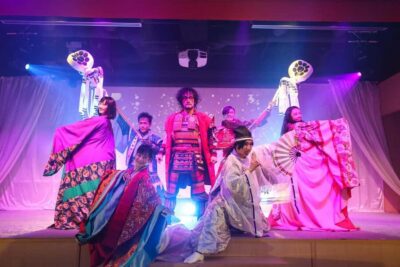
Samurai Entertainment Night Show in Kanda Shrine
Read our review →Browse the lists this tour appears in