
Reviewed · TEMPLE & SHRINE TOURS
Nikko: Toshogu Shrine Ticket(Exchange at Tobu Nikko Station)
Toshogu Shrine is Japan at its most ornate: gold leaf, fierce guardian figures, and carved animals replace the plain timber you may expect from a Shinto shrine. The complex honors Tokugawa Ieyasu, founder of the shogunate that ruled Japan for more than 250 years.
I like the way this ticket gives you a simple route from Tobu Nikko Station to one of Nikko’s main sights, and I like the chance to study details such as the three wise monkeys and the blend of Shinto and Buddhist design. The catch is that you must exchange the digital voucher before reaching the shrine, and one poorly handled phone screen can cause trouble.
In This Review
- Key points before you book
- Why Toshogu feels different from other Japanese shrines
- From Tobu Nikko Station to the shrine
- Passing through Toshogu’s gates
- The three wise monkeys and other carved details
- Tokugawa Ieyasu and the meaning of the shrine
- What the $10 ticket is really worth
- Timing your one-day visit
- Accessibility and the physical visit
- Who will enjoy Toshogu most
- FAQ
- Where do I exchange the digital voucher?
- Can I enter Toshogu Shrine with the digital ticket?
- Can I use a screenshot or printed voucher?
- How do I reach Toshogu Shrine from Tobu Nikko Station?
- What does the $10 ticket include?
- Is the activity wheelchair accessible?
- Should you book the Toshogu ticket?
Key points before you book
- Toshogu honors Tokugawa Ieyasu: You are visiting a memorial to the man who began Japan’s long Tokugawa era.
- The decoration is unusually lavish: Expect extensive gold leaf and countless wood carvings, not the restrained look found at many Japanese shrines.
- The ticket is exchanged at Tobu Nikko Station: A digital voucher alone will not get you through the shrine entrance.
- The famous three monkeys are here: The carved figures represent see no evil, hear no evil, and speak no evil.
- The $10 price covers Toshogu admission only: Other Nikko sights and the audio guide cost extra.
- Phone access matters: Screenshots and printed vouchers are not accepted, so you need a working internet connection.
Why Toshogu feels different from other Japanese shrines
Toshogu was first built as a relatively modest mausoleum for Tokugawa Ieyasu. His grandson, Tokugawa Iemitsu, expanded it during the first half of the 17th century into the elaborate complex you see today.
That change tells you something important about the site. Toshogu is not simply a quiet religious building in the woods. It is also a carefully designed statement of power, wealth, and loyalty to the Tokugawa family.
I find the contrast striking. Nikko’s forest gives the shrine a calm setting, while the buildings call for your attention with carved animals, bright finishes, and large amounts of gold leaf. You can spend much of your visit looking upward and sideways, since the decoration is spread across gates, beams, walls, and roof details.
The shrine is part of Nikko’s UNESCO World Heritage area. The ticket described here covers Toshogu itself, not every historic site in the area. You should budget extra time and money if you want to visit other buildings nearby.
More Temple & Shrine Tours in Nikko
- Nikko: Kegon Falls, Lake Chuzenji & Toshogu Temple
★ 4.6 · 1,577 reviews - Tokyo: Nikko Toshogu Shrine and Kegon Waterfall Tour
★ 4.5 · 1,266 reviews - From Tokyo: Nikko Toshogu Shrine and Kegon Waterfall Tour
★ 4.0 · 42 reviews
From Tobu Nikko Station to the shrine
The ticket process begins at the Tobu Nikko Station Tourist Center, open from 8:20 a.m. to 5 p.m. year-round. This is not the shrine entrance. You must go there first and change your digital voucher for a physical admission ticket.
The usual route to Nikko begins with the express train from Tobu Railway’s Asakusa Station in Tokyo. The journey takes about two hours to Tobu Nikko Station. From there, the Tobu Bus World Heritage Tour Route takes about 15 minutes to the Omotesando bus stop, followed by a walk of roughly 10 minutes to Toshogu.
That makes this ticket most useful for an independent day trip rather than a guided outing. You handle the train, bus, and shrine visit yourself, but you also keep control of your timing.
The station exchange is usually straightforward. Still, I would not leave it until the last minute. Open the voucher on your phone while you have a reliable connection, and make sure you can access the usage screen. After exchanging the voucher, open the usage screen from the link in the voucher email, press the Use button, and show it to a staff member.
This detail matters. Screenshots and printed copies cannot be used. One booking problem came from being unable to open the hyperlink below the QR code, although station staff were able to help when the booking application was visible. Another person could not complete the exchange and had to buy a replacement ticket in Nikko.
My practical advice is simple: charge your phone, keep the booking email easy to find, and connect to a stable network before you reach the counter. The voucher exchange is not complicated, but it depends on the live web page working properly.
Passing through Toshogu’s gates
Once you reach the shrine, the setting does much of the work. Toshogu’s buildings sit among forest, giving the visit a sense of separation from the station and bus route. The path and structures provide a gradual change from ordinary Nikko sightseeing to a ceremonial complex.
Toshogu contains more than a dozen buildings. You will move through gates and open areas rather than follow a guided route with a fixed schedule. That freedom is useful because the shrine rewards slow looking.
At first, the number of details can feel overwhelming. Take time to separate the parts of the decoration. Some carvings show animals, some have religious meaning, and others serve as visual ornaments. The gold leaf catches the light, but it is worth looking past the shine to see the individual shapes cut into the wood.
You should also pay attention to how the site combines Shinto and Buddhist elements. Modern visitors often expect these traditions to be clearly separated, but Japanese religious sites have often shared buildings, symbols, and practices. Toshogu gives you a direct example of that overlap.
The three wise monkeys and other carved details
The three wise monkeys are one of Toshogu’s best-known sights. The small figures represent see no evil, hear no evil, and speak no evil. They are easy to recognize, but their place among the wider wood carving program is just as interesting.
Do not rush past the carvings simply to reach the most famous image. Toshogu uses wood decoration across the complex, and the smaller details help explain why the shrine is so visually distinctive.
I recommend looking for changes in expression, posture, and subject matter. The buildings are not decorated in one single style. Some carvings feel playful, while others are formal or protective. This makes the visit better suited to people who enjoy close observation than to anyone hoping to take one quick photograph and leave.
Flash photography is not allowed. You also must not touch plants or litter on the grounds. These rules are easy to follow, and they help protect a site where the setting is part of the experience.
More temples and shrines near Nikko:
- Nikko Private Day Tour – Temples, Nature & Hidden Gems
★ 5.0 · 41 reviews - Tokyo: Nikko Day Tour Shrines, Lake Chūzenji & Kegon Falls
★ 4.9 · 26 reviews - Tokyo: Nikko Kegon Falls Lake Chuzenji Toshogu Temple & More
★ 4.9 · 12 reviews - Tokyo: Toshogu Shrine (Nikko Toshogu), Lake Chuzenji, Kegon Falls
★ 3.0 · 3 reviews
Tokugawa Ieyasu and the meaning of the shrine
Toshogu commemorates Tokugawa Ieyasu, the founder of the Tokugawa Shogunate. His government ruled Japan for more than 250 years, until 1868.
You do not need a long study of Japanese history to appreciate the shrine, but knowing this basic outline makes the buildings easier to understand. Toshogu was not created as an ordinary neighborhood place of worship. It was a memorial to a leader whose family shaped Japan for centuries.
The later expansion by Iemitsu is also worth keeping in mind. The complex you see reflects not only Ieyasu’s memory but also the power of his descendants. The scale, decoration, and use of gold leaf communicate status in a way that a simpler mausoleum could not.
An audio guide is available for an additional 500 yen, according to the information provided. I consider that a sensible extra if you want to understand what each building represents. Without added explanation, it is possible to admire the shrine while missing the purpose of many structures and carvings.
The audio guide is not included in the $10 admission price, so decide how you like to visit. If you enjoy making your own discoveries, the ticket alone may be enough. If religious symbols and Tokugawa politics are new to you, the extra 500 yen could make the visit much clearer.
What the $10 ticket is really worth
At $10 per person, this is a modest admission cost for one of Nikko’s main historic sites. The value depends on how much time you give Toshogu.
If you are already making the two-hour train trip from Tokyo, the ticket is an efficient way to secure entry to a major part of the day. The shrine has enough buildings and decoration to justify a careful visit, especially for anyone interested in Japanese architecture, religious history, or the Tokugawa period.
The price does not cover transportation, the bus from the station, other nearby sights, or the optional audio guide. You should treat it as a single-site admission ticket, not a full Nikko sightseeing pass.
Advance purchase is not always essential during quieter periods. A late-August visit was reported to have little crowd pressure, making a same-day ticket exchange seem unnecessary. Still, booking ahead may help you feel organized, particularly during a busy season or if you want the flexibility of free cancellation up to 24 hours before the activity.
The tradeoff is the exchange step. You are not buying a ticket that takes you directly from your phone to the shrine entrance. You are buying a voucher that must be processed at the station first.
Timing your one-day visit
The ticket is valid for one day, with availability shown during booking. Toshogu’s opening and closing times vary by date and season, so check the shrine’s official schedule before setting out.
The station tourist center operates from 8:20 a.m. to 5 p.m. all year. That window is important because you cannot exchange the voucher after the counter closes, even if the shrine itself remains open.
I would plan to reach Tobu Nikko Station with enough time for the exchange, the bus ride, and the walk. Avoid building a tightly packed schedule around the exact last admission time, since the bus and station exchange add separate steps.
You can visit Toshogu independently once you arrive. There is no guide or fixed group departure included, so you can move at your own pace. That works well if you want to spend extra time with the carvings, but you must provide your own historical context or pay for the audio guide.
Accessibility and the physical visit
The activity information gives mixed accessibility details. It identifies the experience as wheelchair accessible, but it also says it is not suitable for wheelchair users. Because those statements conflict, I would contact the operator or shrine directly before booking if you use a wheelchair or need step-free access.
The route includes public transport, a bus transfer, and a walk from the Omotesando stop. The provided information does not give a detailed description of ramps, steps, or accessible entrances at every point, so you should not assume the whole journey will be easy without confirmation.
For other mobility concerns, the same advice applies. Ask specifically about the station exchange, bus boarding, the walk, and access within Toshogu.
Who will enjoy Toshogu most
I would recommend this ticket to you if you want a major cultural sight without paying for a guided tour. It suits people who enjoy architecture, carved details, religious art, and Japanese political history.
It also works well for independent day trippers from Tokyo. The train and bus route are clearly defined, and the ticket keeps the shrine admission separate from the rest of your Nikko plans.
You may want a different arrangement if you prefer a guide to explain every building, or if you want one pass covering several Nikko attractions. The included admission is narrow by design.
Families and photographers should note the no-flash rule. The shrine offers plenty to look at, but younger children may need encouragement to slow down and notice the details rather than treating it as a quick photo stop.
FAQ
Where do I exchange the digital voucher?
Exchange it at the Tobu Nikko Station Tourist Center. The center is open from 8:20 a.m. to 5 p.m. year-round.
Can I enter Toshogu Shrine with the digital ticket?
No. You must exchange the digital voucher for a physical ticket at the Tobu Nikko Station Tourist Center before going to the shrine.
Can I use a screenshot or printed voucher?
No. Screenshots and printed versions cannot be used. You need to open the voucher’s web screen on your smartphone and have a stable network connection.
How do I reach Toshogu Shrine from Tobu Nikko Station?
Take the Tobu Bus World Heritage Tour Route to the Omotesando bus stop. The bus ride takes about 15 minutes, followed by a walk of about 10 minutes.
What does the $10 ticket include?
It includes admission to Toshogu Shrine. Transportation, other Nikko sites, and the optional audio guide are not included.
Is the activity wheelchair accessible?
The information provided is conflicting. It describes the activity as wheelchair accessible but also lists it as not suitable for wheelchair users. If you use a wheelchair, confirm access details before booking.
Should you book the Toshogu ticket?
Book it if you want to visit Nikko’s most ornate shrine and are comfortable handling a short station exchange before heading up to the site. The $10 admission is good value for a UNESCO World Heritage shrine filled with gold leaf, wood carvings, Tokugawa history, and a striking mix of Shinto and Buddhist features.
Skip it if you need a ticket that works directly from your phone at the entrance, or if you want a complete Nikko pass. The digital voucher process requires attention, and the shrine ticket covers Toshogu only.
For the smoothest visit, exchange the voucher soon after arriving at Tobu Nikko Station, keep your phone connected, check the shrine’s current hours, and consider the 500-yen audio guide. With those details handled, Toshogu gives you a memorable look at Japan’s most powerful shogunal family in a forest setting that is as important to the mood as the gold and carvings are to the view.
New on our Nikko list
- Nikko Private Custom Tour with Local Guide★ 5.0 · 3 reviews
- Nikko’s Majestic Landscapes: Private Guided Tour★ 4.6 · 3 reviews
- World Heritage Nikko Walking Tour Toshogu and Kanmangafuchi★ 4.0 · 3 reviews
- Tokyo: Toshogu Shrine (Nikko Toshogu), Lake Chuzenji, Kegon Falls★ 3.0 · 3 reviews
- Luxury Nikko Gateway;Private Guided tour★ 4.2 · 3 reviews
- Tokyo/yokohama: Full Day Nikko Private Sightseeing Trip★ 5.0 · 3 reviews
- Explore the Culture and History of Nikko with this Private Tour★ 5.0 · 3 reviews
- Experience Nature and Culture Private Day Tour in Nikko★ 5.0 · 3 reviews
Temple & Shrine Tours, compared.
Meiji Shrine, Asakusa, Skytree Bus Tour and Cruise
Read our review →
Asakusa Walking Tour with Sensoji Temple Visit
Read our review →
Kamakura & Enoshima Day Trip including Temple Tickets
Read our review →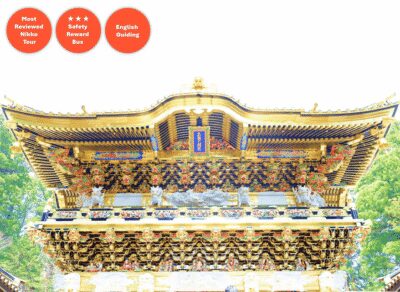
Nikko Toshogu Shrine and Kegon Waterfall Tour
Read our review →
Tokyo Panoramic 1 Day: Meiji Shrine, Asakusa, Odaiba and SKYTREE®
Read our review →
Mt. Fuji Heritage Tour: Traditional Villages, Lakes & Shrine
Read our review →Browse the lists this tour appears in