
Reviewed · TEMPLE & SHRINE TOURS
Tokyo: Asakusa Walking Tour with Sensoji Temple Visit
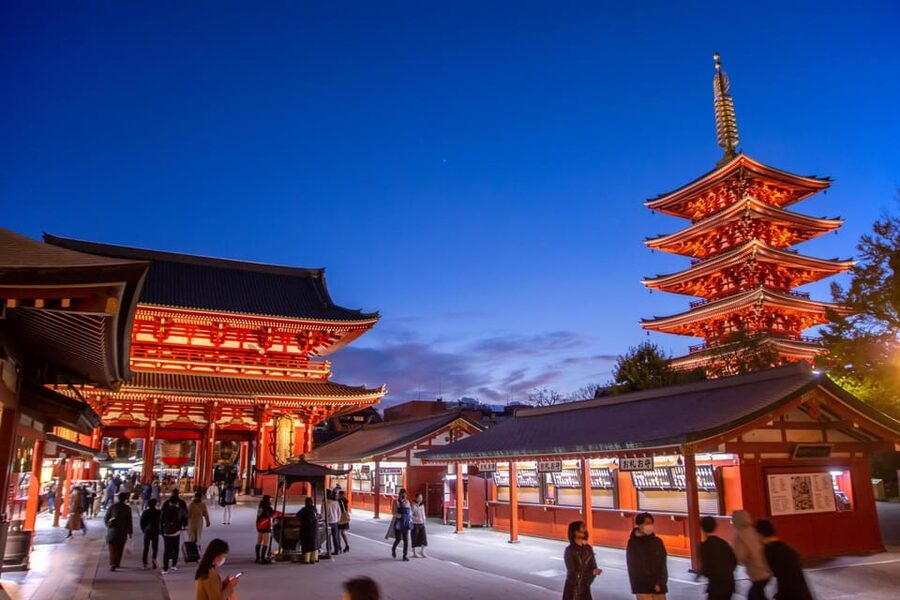
Asakusa gives you Tokyo at its most recognizable and traditional: a giant red gate, incense smoke, temple roofs, souvenir stalls, and narrow streets full of food. This two-hour walking tour helps you understand what you are seeing instead of simply taking photos and moving on.
I like the way the route pairs Sensoji Temple with Asakusa Shrine, showing you both Buddhist and Shinto traditions in one compact outing. I also like the practical local advice. Guides such as Aya, Keiko, Hiroko, and Polina have pointed guests toward nearby restaurants, snacks, shops, and other Tokyo sights.
The main drawback is the fixed pace. Asakusa can be crowded, and two hours is enough for an introduction rather than a slow, detailed exploration. You will also be walking outdoors, so comfortable shoes and attention to the meeting time matter.
In This Review
- Key points to know before booking
- Why Asakusa makes a smart first Tokyo stop
- Meeting at the red Thunder Gate
- Walking Nakamise Street without rushing past it
- Understanding Sensoji Temple beyond the photo
- Seeing Buddhist and Shinto traditions side by side
- Hoppy Street and the everyday side of Asakusa
- A final pass through Shin-Nakamise
- Finishing at Azuma Bridge
- What the guides add
- Is $22 good value for two hours?
- Who should book this Asakusa walk?
- Should you book it?
- FAQ
- How long is the Asakusa walking tour?
- Where does the tour begin?
- Where does the tour finish?
- Is the tour conducted in English?
- What sights are included?
- Can I cancel for a full refund?
Key points to know before booking
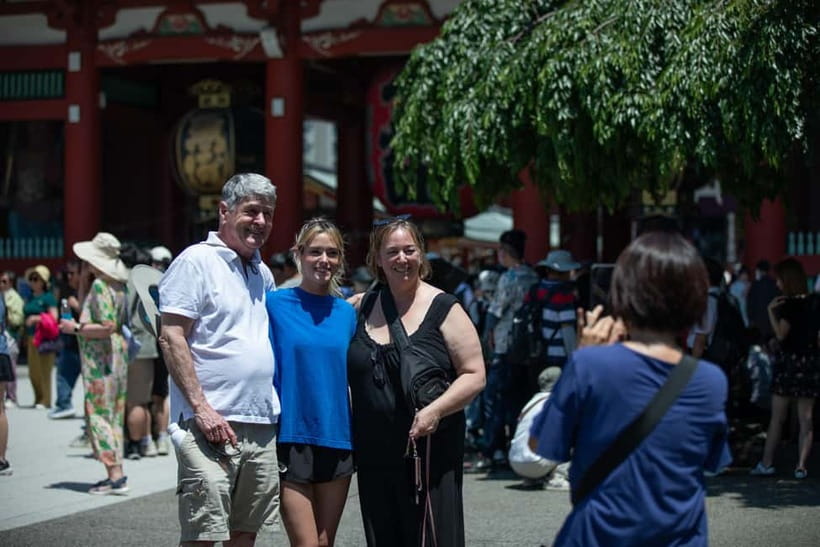
- Kaminarimon is an easy landmark: Meet on the left side of Thunder Gate, near the Tokiwado Kaminari-okoshi Honpo shop, where your guide holds a tour sign.
- Sensoji gets the most attention: You have time for the temple grounds, photographs, free exploration, incense rituals, and an explanation of its religious meaning.
- You see two faith traditions: The route includes both Sensoji Temple and Asakusa Shrine, a useful pairing for understanding Japanese religious culture.
- The tour ends near food: Finishing at Azuma Bridge leaves you well placed to return toward Asakusa’s many eateries.
- English guidance is included: The live tour is conducted in English, with guides praised for clear explanations, humor, patience, and useful Tokyo tips.
- The price is modest: At $22 per person, the tour offers a low-cost way to get context in one of Tokyo’s busiest sightseeing areas.
Why Asakusa makes a smart first Tokyo stop
Tokyo can feel huge and hard to read at first. Asakusa gives you a manageable starting point, with major sights close together and a clear visual sense of old Tokyo. The area combines temples, shrines, shopping streets, food stalls, traditional crafts, and modern city life without requiring a long train journey between attractions.
I especially like this tour for a first or second day in the city. A good guide can explain the customs you will see elsewhere in Japan, such as how to approach a temple, how incense is used, and why certain gates and statues matter. The information also gives you a better basis for visiting other temples and shrines on your own.
The route is not a wilderness walk or a private historical lecture. It is a social group stroll through a busy district. That makes it friendly and accessible, but you should expect other pedestrians, pauses for photographs, and some moments when you need to stay close to the guide.
More temples and shrines near Tokyo:
- Tokyo: Meiji Shrine, Asakusa, Skytree Bus Tour and Cruise
★ 4.7 · 1,986 reviews - Nikko: Kegon Falls, Lake Chuzenji & Toshogu Temple
★ 4.6 · 1,577 reviews - Tokyo: Kamakura & Enoshima Day Trip including Temple Tickets
★ 4.5 · 1,375 reviews
Meeting at the red Thunder Gate
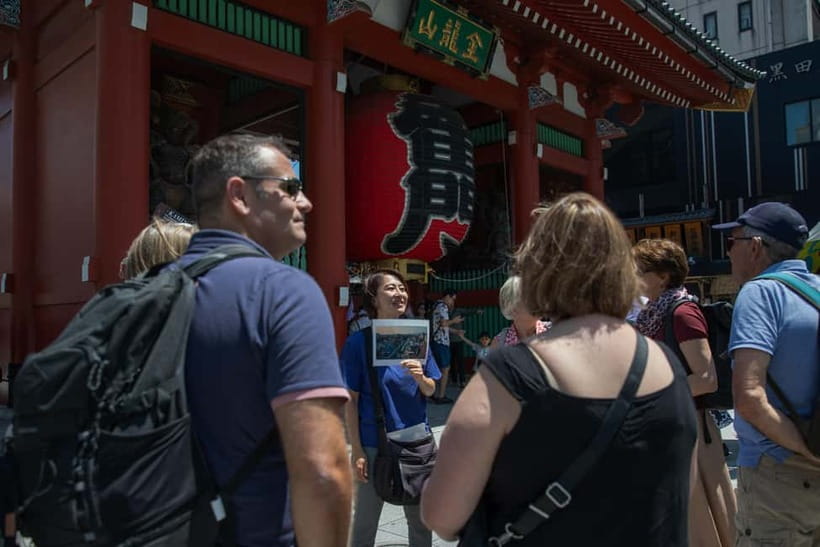
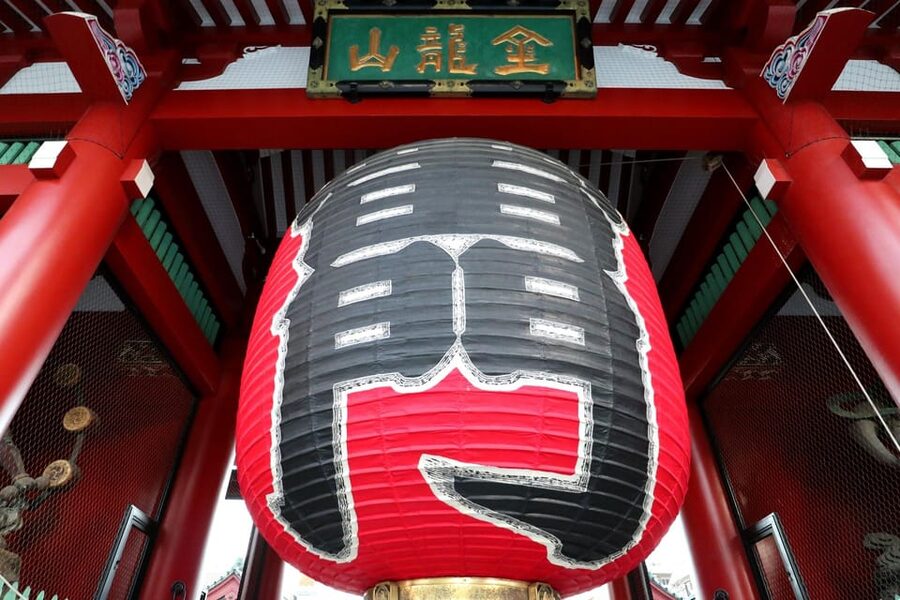
The tour begins at Kaminarimon, the Thunder Gate. This is one of Asakusa’s most familiar sights, with its large lantern and bold red structure creating an immediate sense of place. Your guide waits on the left side of the gate, close to Tokiwado Kaminari-okoshi Honpo, holding a sign.
Arrive early. The guide cannot wait long for late arrivals because the group has a timed route. The meeting point is easy to recognize, but the area around Kaminarimon can be crowded, especially when people stop for photographs. Give yourself enough time to locate the correct side of the gate rather than arriving at the last second.
The opening explanation lasts about 10 minutes. This is a useful pause before walking because the gate is more than a photo background. Your guide sets up the religious and local context for the temple complex ahead, helping you notice details that are easy to miss when you are exploring alone.
Walking Nakamise Street without rushing past it
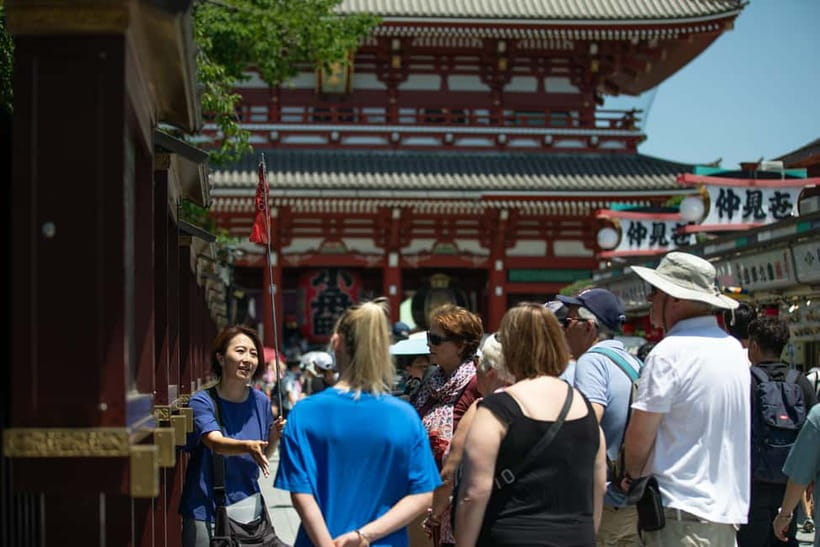
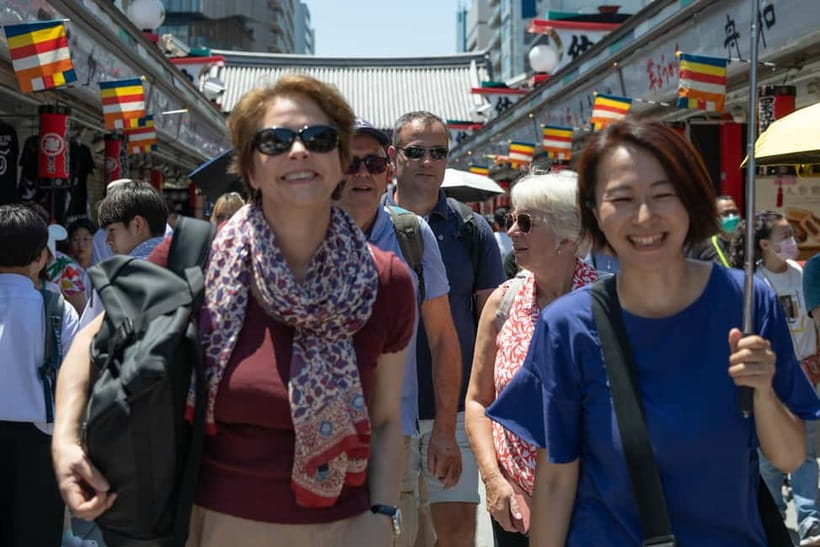
From Kaminarimon, you continue along Nakamise Shopping Street, one of Japan’s oldest shopping centers. The street leads toward Sensoji and is lined with small shops selling traditional goods, souvenirs, crafts, sweets, and snacks.
You spend about 15 minutes here with the guide. That is enough for an introduction, but not enough for a serious shopping session. Think of this stop as a quick orientation. Your guide can point out items worth noticing and help you understand how the shopping street fits into the temple approach.
The practical advantage is that you can return later. Several guides, including Aya, Keiko, and Polina, have offered suggestions for food and local shops after the formal tour ends. Keep track of places that interest you, then come back when you have more time and the group is gone.
Nakamise is also one of the places where the tour’s pace may feel brisk. If you see something you want to buy, you may need to remember the shop and return later. The guide’s main job here is interpretation, not allowing a long browse at every stall.
Understanding Sensoji Temple beyond the photo
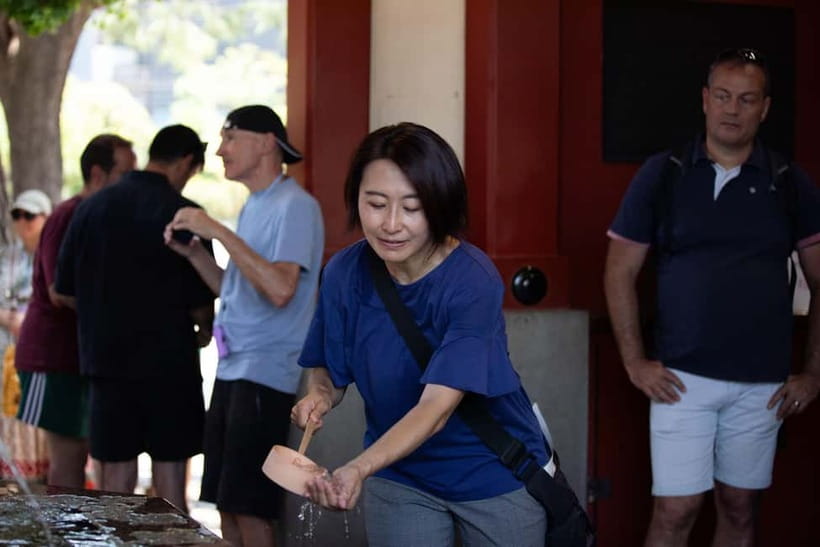
Sensoji, also called Asakusa Kannon, is the heart of the walk. It is Tokyo’s oldest-established temple and one of the city’s major Buddhist sites. You get roughly 30 minutes for a guided visit, photographs, and free time.
This is where a guide adds real value. The temple complex contains visual details, rituals, and stories that can seem confusing if you simply walk through on your own. The guides explain the temple’s history, architecture, traditions, and religious importance in plain English.
You can also take part in the incense-burning ritual. The smoke is part of the temple experience, and your guide explains how to approach it and what the practice means. This small moment helps turn the visit from sightseeing into participation, while still respecting the setting.
The free time matters. You are not required to listen every second, and you can look around, take photographs, or absorb the atmosphere at your own pace. Families may appreciate this flexibility. One guide, Keiko, was noted for adjusting the pace, making sure everyone could hear, and keeping younger visitors involved.
Do not expect a private or quiet temple visit. Sensoji is a major attraction, and the grounds can be full of people. The tour gives you orientation and context, but it cannot remove the crowds. If you want more peaceful photographs, use the guide’s introduction as a starting point and return at a quieter time on your own.
More Asakusa visits:
- Tokyo: Japanese Dance Cabaret Theater Asakusa-Kaguwa Ticket
★ 4.8 · 2,270 reviews - Tokyo: Roll and Authentic Sushi Making Class in Asakusa
★ 4.9 · 1,957 reviews - Tokyo Asakusa Rickshaw Tour
★ 5.0 · 1,375 reviews - Tokyo Panoramic 1 Day: Meiji Shrine, Asakusa, Odaiba and SKYTREE®
★ 4.5 · 1,222 reviews
Seeing Buddhist and Shinto traditions side by side
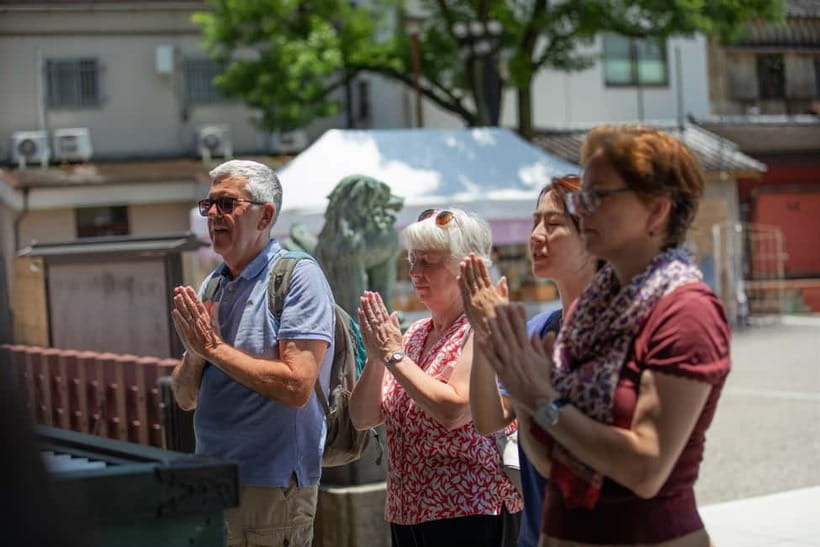
The next major stop is Asakusa Shrine, with about 20 minutes for a visit, photographs, and explanation. Pairing the shrine with Sensoji is one of the strongest parts of this experience.
Japan’s Buddhist and Shinto traditions can overlap in everyday life, but the buildings, customs, and symbols are not identical. A guide can help you identify those differences without turning the visit into a difficult academic lesson. Several guides have been praised for explaining the cultural and religious meaning of both sites clearly.
This stop also gives the walk a more rounded shape. Sensoji is the famous headline attraction, while Asakusa Shrine adds another layer to the neighborhood. You are not only seeing one grand temple and leaving. You are getting a basic understanding of how different sacred places fit into Japanese life.
As with the temple, respectful behavior is important. Listen to the guide’s instructions, avoid blocking worshippers, and treat photography as a privilege rather than the main purpose of the stop.
Hoppy Street and the everyday side of Asakusa
Hoppy Street offers a change of mood. After the formal temple grounds, the route heads toward a local food and drink area known for casual eateries. You spend about 10 minutes here with the guide.
This short visit is less about sitting down for a full meal and more about seeing another side of Asakusa. The street gives you a look at the neighborhood as a place where people eat and socialize, not just a monument district.
The timing works well if you take the tour in the morning and finish around lunchtime. You can ask your guide for suggestions and return to the area afterward. Do not assume that every restaurant or stall is included in the tour price. Food and personal purchases are not listed as included, so plan to pay separately if you decide to eat.
A final pass through Shin-Nakamise
The route continues to Shin-Nakamise Shopping Street for about 10 minutes. This adds a second shopping area to the walk and helps you see that Asakusa is larger than the approach to Sensoji.
Shin-Nakamise is useful for a quick look at local retail life. It also gives your guide another chance to point out places to eat or shop. The stop is brief, so treat it as a guide-led orientation rather than a dedicated shopping visit.
I like this part because it keeps the experience connected to the neighborhood. The tour does not end immediately after the temple. Instead, it shows you how religious landmarks, shops, food streets, and ordinary city activity sit together in Asakusa.
Finishing at Azuma Bridge
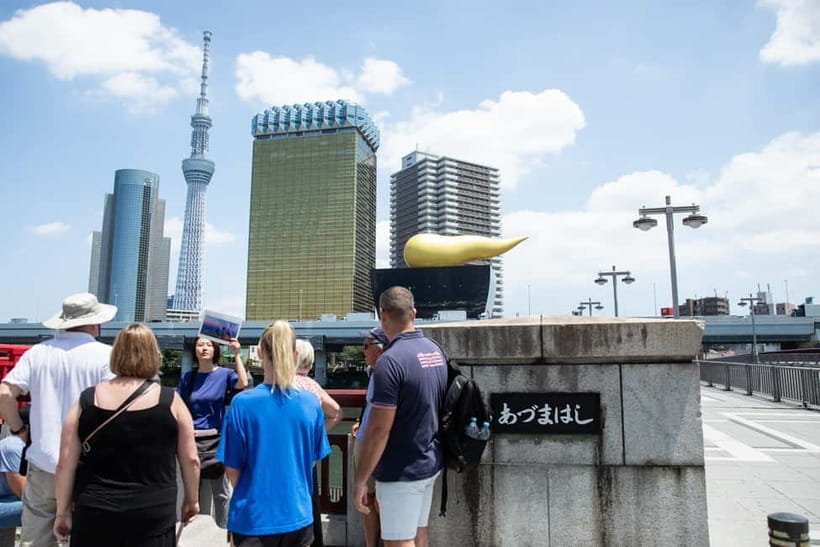
The tour ends at Azuma Bridge. This gives you a clear endpoint and leaves you with options. You can continue exploring Asakusa, head back toward the temple and shopping streets, or use the guide’s recommendations for lunch.
The ending is also practical for visitors who want a short morning activity. You finish with time left in the day, rather than spending hours on a single attraction. Guides have offered suggestions not only for Asakusa but also for other parts of Tokyo and Japan, so this can be a useful moment to ask questions about the rest of your trip.
The route does not return you to the original meeting point. That is not a serious problem, but you should know it before booking. Make sure you understand that the walk begins at Kaminarimon and finishes at Azuma Bridge.
What the guides add
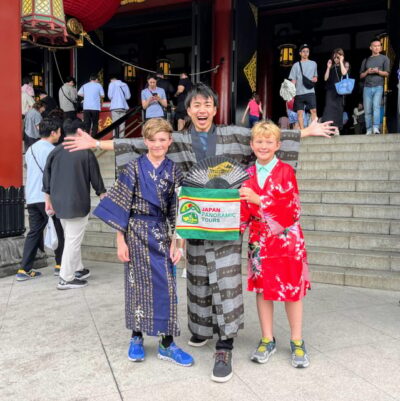
The guide is the main reason to choose this experience instead of simply following a map. The most consistently praised qualities are clear English, cultural explanations, patience, humor, and practical advice.
Guides named in the feedback include Aya, Keiko, Hiroko, Polina, Glenda, Loc, Miyu, Mei, Rio, Paulina, and Augustina. Your assigned guide may be different, but the repeated strengths are useful clues about the style of the tour.
Aya was often described as especially attentive and well informed about history, architecture, traditions, and local food. Keiko was noted for her energy, patience, humor, and ability to engage children and teenagers. Hiroko was praised for answering questions and making sure everyone could hear and keep up. Polina combined historical information with advice about modern food vendors.
That variety matters because a walking tour depends heavily on the person leading it. You should expect a friendly, educational introduction rather than a formal lecture. If you enjoy asking questions, this format appears well suited to you. If you prefer complete independence or long periods of quiet observation, walking alone may suit you better.
Is $22 good value for two hours?
At $22 per person, this is a reasonable price for a guided introduction to one of Tokyo’s key districts. You are paying for a live English-speaking guide, a planned route, explanations at several major sights, and help making sense of local customs.
The value is strongest if you are new to Tokyo. Without a guide, you can still see Kaminarimon, Nakamise, Sensoji, Asakusa Shrine, Hoppy Street, and Shin-Nakamise. What you may miss is the connection between them, along with the stories, rituals, and practical tips that make the area easier to understand.
The price is less compelling if you already know Asakusa well or plan to spend an entire day browsing every shop and restaurant. The two-hour format is an overview, not a full neighborhood study. Still, the cost is low enough that it can work as a useful orientation before exploring independently.
Free cancellation is available up to 24 hours before the activity for a full refund. You can also reserve and pay later, which helps if your Tokyo schedule is still changing.
Who should book this Asakusa walk?
I would choose this tour for first-time Tokyo visitors, families, couples, and solo visitors who want cultural context without committing to a full-day excursion. It is also a good fit if you have limited time and want several important sights covered in one compact route.
Families may like the moderate length and free time at Sensoji. The guide style described in the feedback includes attention to children and teenagers, along with explanations that are lively rather than overly formal.
The tour is wheelchair accessible, but the route takes place in public streets and busy temple areas. If you have specific mobility needs, confirm the details when booking, since the provided information does not describe surfaces, slopes, or restroom access.
You should bring comfortable shoes and allow extra time to find the meeting point. The activity lasts two hours, but the walking happens outside and includes crowded shopping streets and temple grounds.
Should you book it?
Book this Asakusa walking tour if you want a clear, affordable introduction to Tokyo’s traditional side. The strongest reasons are the well-planned route, the contrast between Sensoji and Asakusa Shrine, and the guides’ repeated focus on history, customs, humor, and food advice.
Skip it if you want a private tour, extensive shopping time, or a slow photographic study of every corner. For most visitors, though, $22 buys a useful start to Asakusa and a better understanding of what you are seeing. Take the tour early in your Tokyo stay, then return to the streets, shops, and restaurants that catch your attention.
FAQ
How long is the Asakusa walking tour?
The tour lasts two hours.
Where does the tour begin?
It begins in front of Kaminarimon, or Thunder Gate. The guide waits on the left side near the Tokiwado Kaminari-okoshi Honpo shop and holds a sign.
Where does the tour finish?
The walk finishes at Azuma Bridge.
Is the tour conducted in English?
Yes. It includes a live English-speaking guide.
What sights are included?
The route includes Kaminarimon, Nakamise Shopping Street, Sensoji Temple, Asakusa Shrine, Hoppy Street, and Shin-Nakamise Shopping Street.
Can I cancel for a full refund?
Yes. You can cancel up to 24 hours in advance for a full refund.
More Walking Tours in Tokyo
- Tokyo Tsukiji Fish Market Food and Culture Walking Tour
★ 5.0 · 3,184 reviews - Tokyo: Imperial Palace and Shogun Historical Walking Tour
★ 5.0 · 2,251 reviews - Tokyo: Shinjuku Local Bar and Izakaya Guided Walking Tour
★ 4.9 · 1,794 reviews - Tokyo: Tsukiji Fish Market Food and Walking tour
★ 5.0 · 1,724 reviews
New on our Tokyo list
- From Tokyo: Mount Fuji & Hakone Full Day Private Tour★ 4.9 · 25 reviews
- Tokyo Spectacular View Day-Cruise in 90 Minutes★ 5.0 · 25 reviews
- Real Tokyo Runner Club : Daikoku Car Meet Night Tour with JDM Car★ 5.0 · 25 reviews
- 2.5 Hour-Guided Cycle Tour in the Central Tokyo★ 5.0 · 25 reviews
- Tokyo: 2-Hour Night Bike Tour of the City’s Hidden Gems★ 4.9 · 25 reviews
- Ramen Making from Scratch +Akihabara Tour –Cooking Class★ 5.0 · 25 reviews
- [Self-Drive] Tokyo & Daikoku Custom Car Driving Tour★ 4.9 · 25 reviews
- Samurai themed Entertainment show in Shinjuku★ 4.5 · 25 reviews
Temple & Shrine Tours, compared.
Meiji Shrine, Asakusa, Skytree Bus Tour and Cruise
Read our review →
Kamakura & Enoshima Day Trip including Temple Tickets
Read our review →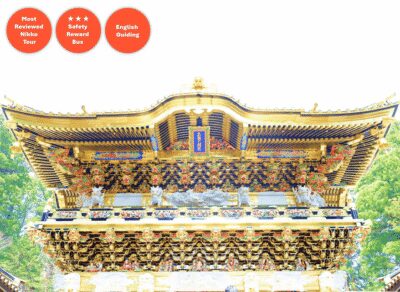
Nikko Toshogu Shrine and Kegon Waterfall Tour
Read our review →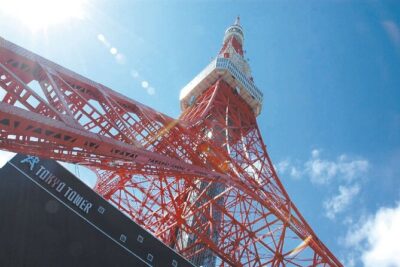
Tokyo Panoramic 1 Day: Meiji Shrine, Asakusa, Odaiba and SKYTREE®
Read our review →
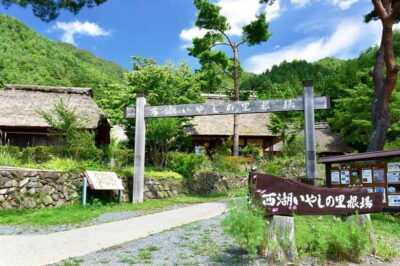
Mt. Fuji Heritage Tour: Traditional Villages, Lakes & Shrine
Read our review →
Samurai Entertainment Night Show in Kanda Shrine
Read our review →Browse the lists this tour appears in