
Reviewed · TEMPLE & SHRINE TOURS
Tokyo: Kamakura & Enoshima Day Trip including Temple Tickets
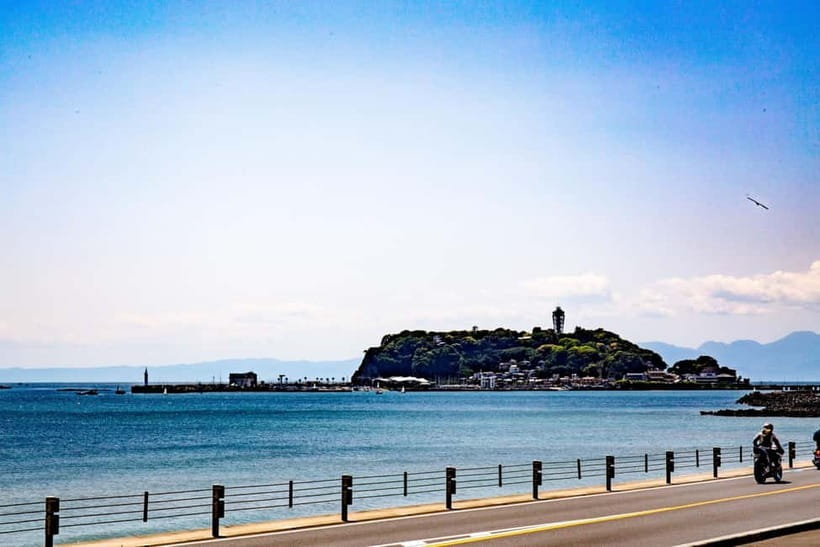
Kamakura gives you Japan in a compact, memorable package: a samurai-era shrine, an old shopping street, flower-filled temple grounds, and one enormous bronze Buddha. Then the tour heads to Enoshima, a small coastal island where sea views, seafood, caves, and the chance to spot Mt. Fuji finish the day on a high note. I like the mix of culture and scenery, and I like that you get from central Tokyo to several major sights without planning a web of train connections.
The main trade-off is time. You see a lot in nine hours, but you do not linger long at every place. Enoshima receives about two hours, and some people will want much longer there. Traffic can also affect the schedule, with stop times adjusted if the bus runs late.
In This Review
- Key points at a glance
- Why Kamakura makes such a good escape from Tokyo
- Tsurugaoka Hachimangu and the memory of samurai rule
- Komachi Street: Kamakura’s easiest food stop
- Hasedera’s flowers, views, and Kannon statue
- Meeting the Great Buddha at Kōtoku-in
- Two hours on Enoshima Island
- How the guided format works
- Transport, timing, and comfort
- Is $58 a good price?
- Who should book this Kamakura and Enoshima day trip?
- Should you book it?
- FAQ
- How long does the Kamakura and Enoshima tour last?
- Where does the tour start?
- Where does the tour end?
- What languages does the guide speak?
- Are temple tickets included?
- Is transportation included?
- How much free time do you get at Enoshima?
- Can you see Mt. Fuji at Enoshima?
- What happens if you want to leave the tour early?
Key points at a glance
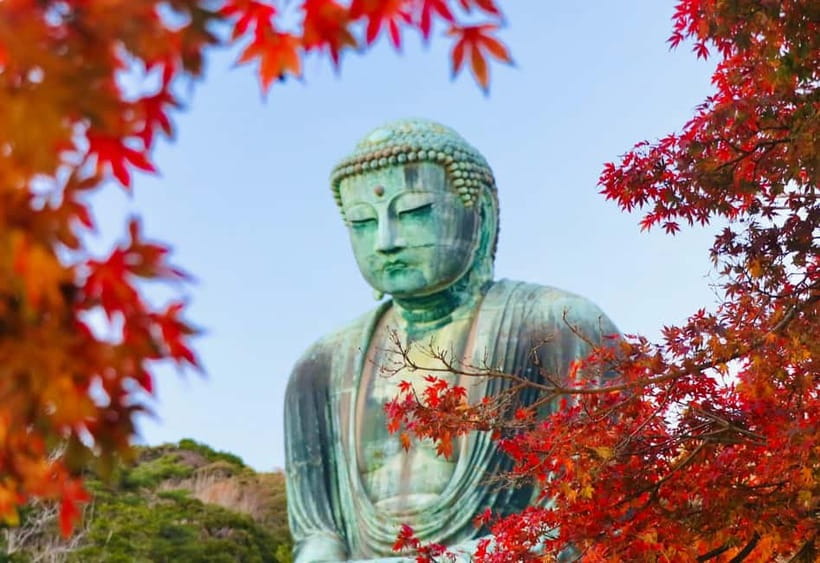
- The Great Buddha is close enough to inspect in detail, including an optional look inside the bronze statue.
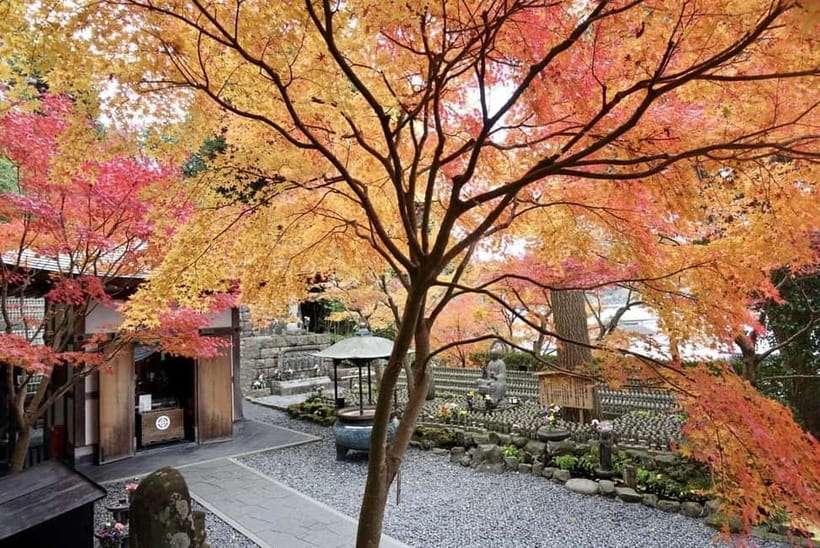
- Hasedera changes with the seasons, from cherry blossoms and peonies to hydrangeas and autumn leaves.
- Komachi Street turns lunch into part of the sightseeing, with shirasu dishes, dumplings, croquettes, and roughly 250 shops.
- Enoshima packs several sights into one island, including the Sea Candle, Enoshima Shrine, Iwaya Cave, and Samuel Cocking Garden.
- The guide can make or break the day, and guides such as Eric, Yuki, Mitsuko, Omar, and Koji have earned strong praise for clear explanations and good time management.
- At $58 per person, the tour offers solid value if you want an efficient first look at Kamakura and Enoshima rather than a slow, independent visit.
Why Kamakura makes such a good escape from Tokyo
Kamakura was Japan’s political and cultural center during the Kamakura period. That past still shapes the town, but Kamakura is not only a history stop. It gives you a change of pace from Tokyo, with shrine paths, temple gardens, local food, and the nearby Shonan coast.
This tour is built for seeing the area’s major sights in one day. Your air-conditioned vehicle handles the longer transfer from Tokyo and the movement between stops. That matters because Kamakura’s attractions are spread around town, while Enoshima adds another change of scenery farther along the coast.
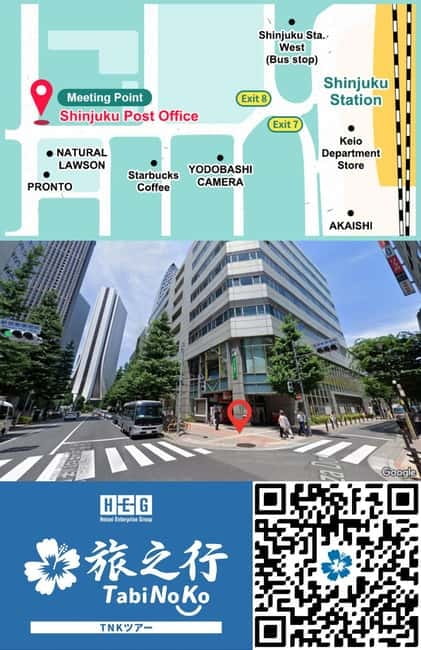
You choose from two possible starting points: Shinjuku Post Office or GLOBAL RING CAFÉ. The exact meeting point depends on the option you book, so check the selected option carefully and use the correct QR code. Arrive 10 minutes early. The vehicle leaves on time, and a late start can cut into the time at the sights.
The only stated drop-off is in the Shinjuku area. That is convenient if you are staying nearby, but less useful if your hotel is elsewhere in Tokyo and you had hoped to finish close to your accommodation.
More Temple & Shrine Tours in Kamakura
- Kamakura Historical Walking Tour with the Great Buddha
★ 5.0 · 129 reviews - Kamakura Private Tour: Temples, Nature, and the Great Buddha
★ 5.0 · 121 reviews - From Tokyo Kamakura, Hachimangu Shrine and Enoshima Full Day Tour
★ 4.5 · 36 reviews
Tsurugaoka Hachimangu and the memory of samurai rule
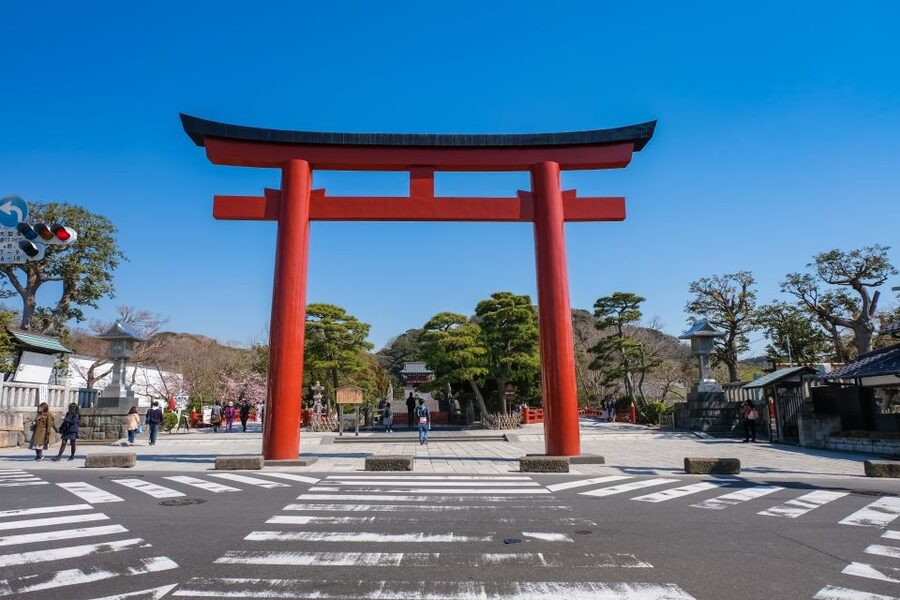
The first major stop is Tsurugaoka Hachimangu, Kamakura’s best-known shrine and a spiritual symbol of the samurai government that once ruled from here. The shrine has more than 800 years of history and remains one of Japan’s most visited religious sites. During New Year’s hatsumode, about 2.5 million people come to pray here.
You have about an hour for sightseeing and photos. The approach gives you a clear sense of the shrine’s importance, with ceremonial spaces and long views through the grounds. I recommend listening carefully to the guide’s short explanation before exploring on your own. The history is easier to understand when you know why this shrine mattered to the military leaders of medieval Japan.
One hour is useful for a first visit, though it will not cover every corner. If you enjoy quiet gardens, small museums, or detailed shrine architecture, you may wish for more time. The tour favors a broad introduction over a slow study of one complex.
Komachi Street: Kamakura’s easiest food stop
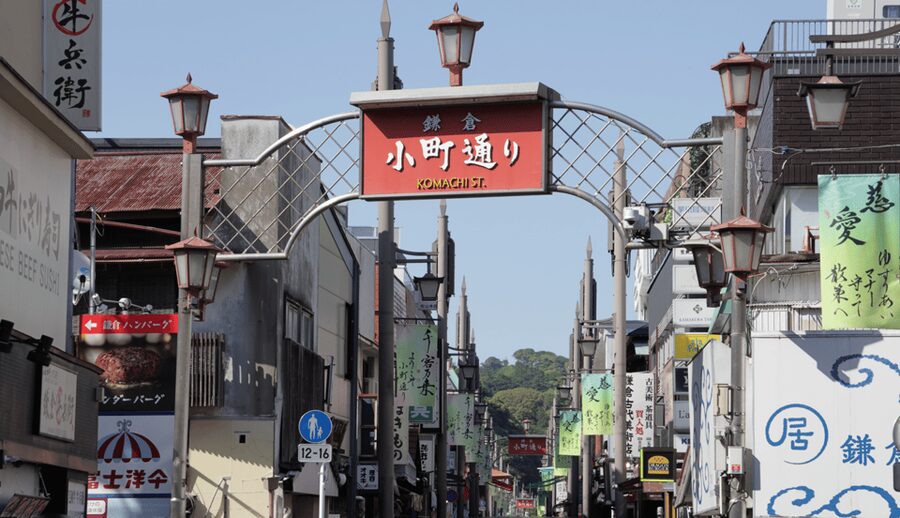
From the shrine, the tour moves to Komachi Street, which runs roughly 360 to 600 meters between Kamakura Station and Tsurugaoka Hachimangu. About 250 shops line the street, selling souvenirs, traditional goods, clothing, sweets, and local food.
This is your chance to replace formal sightseeing with a little wandering. Look for shirasu dishes, dumplings, croquettes, and other regional snacks. You can eat as you walk, or use the break for a quick meal. The street mixes old-fashioned Kamakura touches with modern retail, so it feels less solemn than the temples and shrines.
You have about an hour here. That is enough to sample something and browse, but a sit-down meal can consume most of the stop. One useful tip is to favor quick food if you want to protect time for Enoshima’s sights later. The day covers many places, so an efficient lunch works better than a leisurely restaurant visit.
Hasedera’s flowers, views, and Kannon statue
Hasedera is one of Kamakura’s oldest temples, founded in 736. Its main religious treasure is a 9.18-meter Eleven-Headed Kannon statue. The temple grounds also climb high enough to offer views across Kamakura and Sagami Bay.
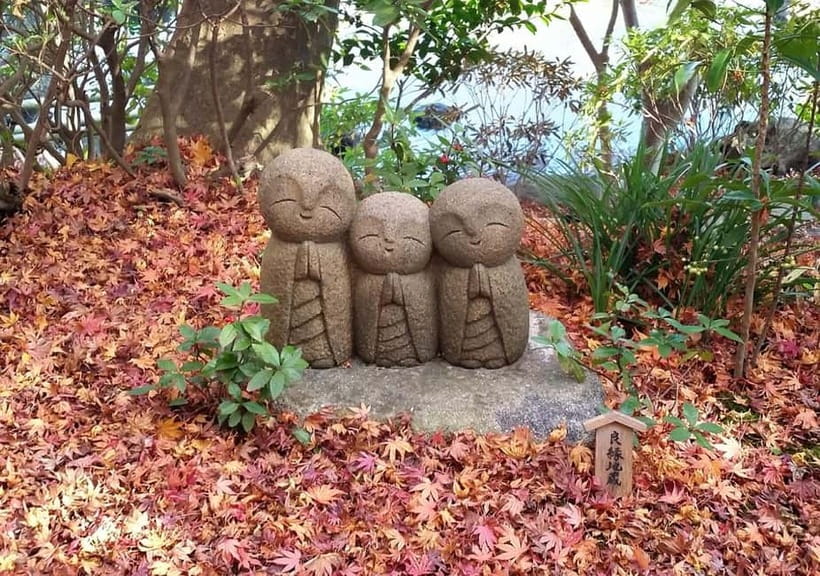
The scheduled visit lasts about 50 minutes. Hasedera is especially appealing if you care about gardens and seasonal plants. Cherry blossoms, peonies, hydrangeas, and autumn leaves each change the mood of the grounds. Small Jizo statues add a gentle, memorable detail as you walk.
Because the temple has slopes and walking paths, wear comfortable shoes. The stop is not simply a quick photo beside a famous building. You will want time to look around, take in the view, and notice the flowers. Still, 50 minutes is tight during a busy season or if you move slowly.
The guide may walk with the group and explain the setting, or allow you to explore independently before meeting at a set time. That balance works well for people who want context but also prefer to take their own photos without being rushed from one viewpoint to the next.
More temples and shrines near Kamakura:
- Day Trip to Kamakura & Enoshima: Shrines, Seaside, Temples & Tea
★ 5.0 · 32 reviews - Tokyo: Meiji Shrine, Asakusa, Skytree Bus Tour and Cruise
★ 4.7 · 1,986 reviews - Tokyo: Asakusa Walking Tour with Sensoji Temple Visit
★ 4.8 · 1,583 reviews - Nikko: Kegon Falls, Lake Chuzenji & Toshogu Temple
★ 4.6 · 1,577 reviews
Meeting the Great Buddha at Kōtoku-in
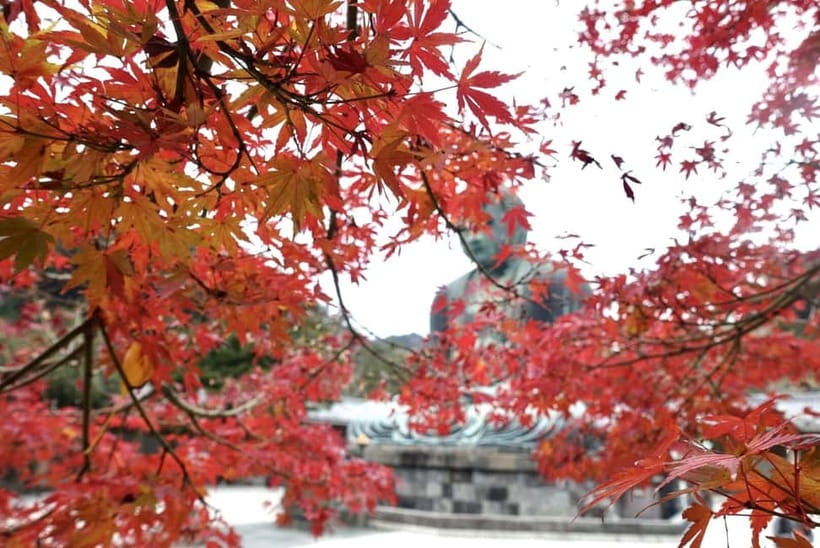
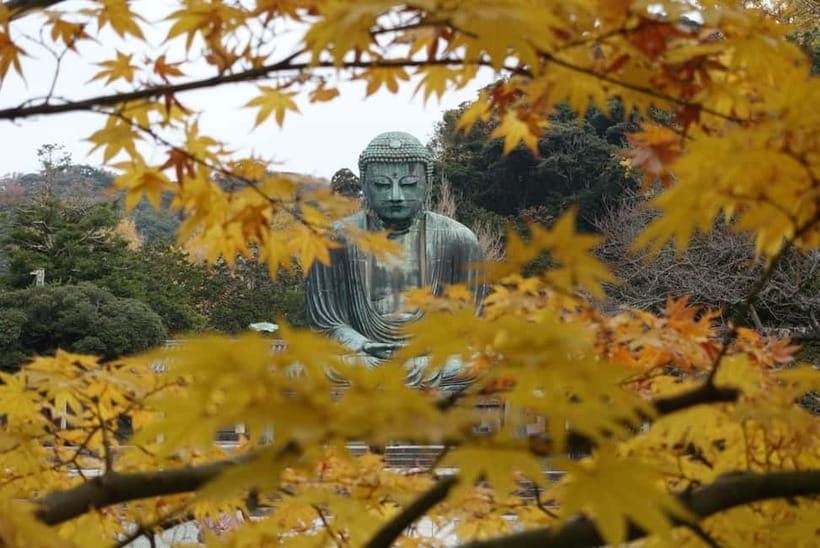
Kōtoku-in is home to Kamakura’s Great Buddha, a bronze Amida Buddha that rises about 13.3 meters and weighs around 121 tons. It is a National Treasure and one of Japan’s most recognizable Buddhist statues.
The visit lasts about 30 minutes. That is enough to see the statue close up, photograph its scale, and take in the calm temple setting. In spring, cherry blossoms add color, while autumn brings foliage around the grounds.
You may also enter the Buddha itself to see its internal structure. This is a rare detail that makes the stop more than a standard exterior photo opportunity. Check the available time with your guide, since the short visit means you may need to choose between exploring the grounds, viewing the interior, and taking a longer look at the statue.
This is one of the clearest limits of the schedule. Thirty minutes can feel brief, especially if the area is crowded. If the Great Buddha is your main reason for visiting Kamakura, an independent return trip would give you more breathing room. For a first overview, however, the stop delivers the essential experience.
Two hours on Enoshima Island
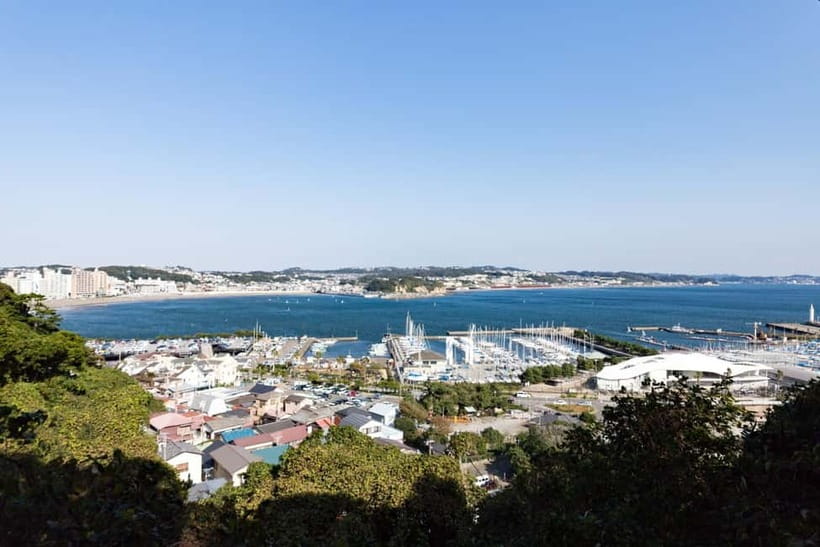
Enoshima changes the tone of the tour. After Kamakura’s temples and shrine paths, you reach a coastal setting with island walks, seafood, cafés, shopping, and views over the water. On a clear day, higher points on the island can reveal Mt. Fuji.
You have about two hours for Enoshima, including the Sea Candle, Enoshima Shrine, Iwaya Cave, and the Benzaiten shopping street. That sounds generous until you account for walking, stairways, food, and photo stops. You need to decide what matters most before setting off.
The island’s main sights include the following:
- Enoshima Sea Candle: This observation tower gives you a high viewpoint over the coast. Clear weather is the key to seeing Mt. Fuji, so treat the mountain view as a bonus rather than a promise.
- Enoshima Shrine: More than 1,000 years old, the shrine gives the island its spiritual center. It is a good place to pause after the commercial streets and consider Enoshima’s older identity.
- Enoshima Iwaya Cave: The cave adds a darker, more unusual stop to the day. You walk through the historic cave area, but the available time may require you to keep food simple and moving. One practical approach is to buy food from a vendor instead of sitting down for a full meal if you want to see the caves.
- Benzaiten Shopping Street: This is where you can browse souvenirs and try local snacks or seafood. The street is part of the island experience, not just a place to pass through on the way to the shrines.
- Samuel Cocking Garden: The garden provides pleasant walking paths and a break from the denser shopping areas.
Enoshima is the part of the tour most likely to leave you wishing for another hour. You can cover the highlights, but you cannot explore every path at a slow pace. If you already know Enoshima is a priority, make a short plan before arrival: choose the Sea Candle and cave, or focus on the shrine, food, and views.
How the guided format works
The guide speaks English or Chinese, depending on your booking. The guide assignment changes, but Eric, Yuki, Mitsuko, Omar, Koji, Yumi, Sumi, and others have led recent departures. The strongest pattern is clear organization, historical background, friendly help, and firm timekeeping.
That last point matters on a bus tour. The day has several fixed stops, and the group needs to return to the vehicle together. Guides such as Omar and Mitsuko are particularly praised for keeping the schedule on track, while Eric and Yuki are noted for useful explanations and practical advice at each stop.
You should expect a mixture of guided information and free exploration. At some stops, the guide may explain the site before giving you time to walk independently. This suits you if you want help understanding the setting but do not want to remain in a single group for every minute.
English delivery can vary by guide. One guide may speak quickly, so ask for a repeat if you miss a detail. The tour can combine passengers who booked different languages in the same vehicle, and the vehicle size may change according to the number of people or conditions that day.
Transport, timing, and comfort
The air-conditioned vehicle removes much of the day’s transport work. You do not need to arrange separate train rides between Kamakura’s scattered sights or work out the route to Enoshima. Assigned seating has been used on some departures, and the bus and drivers receive strong praise for handling Kamakura’s narrow streets.
Traffic remains the main variable. If the bus is delayed, the time at attractions may be adjusted. This is worth remembering when you judge the schedule. The advertised nine hours, or 570 minutes, is a full day, but the actual balance between riding and sightseeing can change.
Weather also affects comfort. Summer departures can be very hot, and one departure began with an overly warm bus. Bring water, sun protection, and shoes suited to walking. Winter can bring crisp, clear conditions that improve the chance of seeing Mt. Fuji, while spring, hydrangea season, and autumn offer different reasons to enjoy Hasedera and Kōtoku-in.
If you need to leave before the final stop, tell the guide in advance and complete the required departure form. The regular return is to the Shinjuku area only.
Is $58 a good price?
At $58 per person, this is a strong value for a nine-hour day if you place a high value on convenience. The price includes transport in an air-conditioned vehicle, an English or Chinese-speaking guide, Hasedera admission, and Kōtoku-in admission.
You are paying for a route that covers several places that would take more planning by yourself. You also avoid the mental cost of watching train times, finding the right local connections, and getting back to Tokyo after a long day.
The price is less compelling if you prefer slow travel. You could spend a full day at Kamakura alone, or devote most of a day to Enoshima, and see fewer places in greater detail. Here, the value comes from range and structure: shrine, shopping street, two major temples, Great Buddha, island, cave, tower, and coastal views in one outing.
Who should book this Kamakura and Enoshima day trip?
I would choose this tour for a first visit to the area, especially if you have limited time in Tokyo and want to see beyond the city without arranging everything yourself. It also suits families and mixed-interest groups, since the day includes history, food, gardens, shopping, religious sites, and sea views.
It is a good match for you if:
- You want a simple day outside Tokyo.
- You prefer a guide to explain the cultural setting.
- You want to see both Kamakura and Enoshima in one day.
- You are comfortable with a firm schedule.
- You enjoy sampling local food rather than planning one long meal.
- You want included admission to Hasedera and Kōtoku-in.
I would hesitate if you are a slow photographer, want long temple visits, or already know that Enoshima deserves a full day. The Great Buddha receives only about 30 minutes, and Enoshima about two hours. Those limits are manageable, but you should set your expectations before booking.
Should you book it?
Book this tour if you want an efficient and well-organized introduction to Kamakura and Enoshima from Tokyo. The best features are the broad route, included temple tickets, capable guide support, and the chance to finish with coastal scenery and perhaps Mt. Fuji.
Skip it if your ideal day means lingering at one temple, taking a long seafood lunch, or exploring every island path. For most first-time visitors with only one free day, $58 is a sensible way to see the area’s main sights, learn enough to understand them, and decide which places deserve a return visit.
FAQ
How long does the Kamakura and Enoshima tour last?
The activity lasts nine hours, or 570 minutes.
Where does the tour start?
There are two possible starting locations: Shinjuku Post Office and GLOBAL RING CAFÉ. The exact meeting point depends on the option booked.
Where does the tour end?
The available drop-off location is in the Shinjuku area, with Shinjuku Post Office listed as the return point.
What languages does the guide speak?
Live guides are available in English and Chinese.
Are temple tickets included?
Yes. Admission to Hasedera and Kōtoku-in Temple is included.
Is transportation included?
Yes. The tour uses an air-conditioned vehicle. Vehicle size may change according to the number of passengers or conditions on the day.
How much free time do you get at Enoshima?
The planned Enoshima visit lasts about two hours. This includes time for sights, food, shopping, and walking.
Can you see Mt. Fuji at Enoshima?
You can see Mt. Fuji from high vantage points on a clear day. The view depends on weather and visibility.
What happens if you want to leave the tour early?
Tell the guide in advance on the day and complete a departure form. You are responsible for arranging your own onward travel after leaving the group.
More Day Trips from Kamakura
- Tokyo: Mt. Fuji, Kamakura, Big Buddha, & Lake Ashi Day Trip
★ 4.5 · 867 reviews - From Tokyo: Kamakura & Enoshima 1-Day Bus Tour
★ 4.5 · 189 reviews - Exciting Kamakura – One Day Tour from Tokyo
★ 5.0 · 40 reviews - Tokyo: Kamakura and Yokohama Private Day Trip with Guide
★ 4.6 · 27 reviews
New on our Kamakura list
- Buddha, Bamboo & Zen – Bespoke Kamakura Private Walking Tours★ 5.0 · 25 reviews
- Yokohama and Kamakura 6hr Private Trip Government-Licensed Guide★ 5.0 · 25 reviews
- Tokyo: Kamakura and Yokohama Private Day Trip with Guide★ 4.6 · 27 reviews
- Private Kamakura plus Yokohama Tour – English Speaking Driver★ 4.5 · 28 reviews
- Day Trip to Kamakura & Enoshima: Shrines, Seaside, Temples & Tea★ 5.0 · 32 reviews
- Kamakura: A Journey Through Medieval Japan★ 4.9 · 32 reviews
- From Tokyo: Kamakura Private Customize Tour by Luxury Van★ 4.6 · 38 reviews
- Exciting Kamakura – One Day Tour from Tokyo★ 5.0 · 40 reviews
Temple & Shrine Tours, compared.
Meiji Shrine, Asakusa, Skytree Bus Tour and Cruise
Read our review →
Asakusa Walking Tour with Sensoji Temple Visit
Read our review →
Nikko Toshogu Shrine and Kegon Waterfall Tour
Read our review →
Tokyo Panoramic 1 Day: Meiji Shrine, Asakusa, Odaiba and SKYTREE®
Read our review →
Mt. Fuji Heritage Tour: Traditional Villages, Lakes & Shrine
Read our review →
Samurai Entertainment Night Show in Kanda Shrine
Read our review →Browse the lists this tour appears in