
Reviewed · JDM & CAR CULTURE TOURS
Tokyo: Daikoku Car Meet Tour at Night with JDM Guides
Tokyo’s car culture comes alive on the expressways after dark, and this three-hour tour takes you straight into it. You ride a random sports or JDM car, cruise the Bayside Line, pass Tokyo Tower and Rainbow Bridge, then spend time at Daikoku Parking Area, the meeting place at the heart of Japan’s modified-car scene.
I like the mix of fast-moving city views and real car culture, rather than a staged display. I also like the guides’ enthusiasm, especially names such as Renon, JJ, Daiki, and Wangun OG, who add local stories and explain what you are seeing. The main catch is simple: Daikoku can be quiet or closed, and the cars gathered there depend heavily on the day, weather, and police activity.
In This Review
- Key points to know before you book
- Why Daikoku PA matters to the Tokyo car scene
- The Tokyo Station meeting point and evening schedule
- APIT, engines, parts, and souvenirs
- Cruising Tokyo’s expressways after dark
- What the random JDM car ride really means
- Exploring Daikoku without expecting a guaranteed show
- The return drive and landmark views
- Is $160 a fair price?
- Timing, comfort, and useful preparation
- Who will enjoy this most?
- Should you book the Daikoku car meet tour?
- FAQ
- Where does the tour meet?
- What time does the tour start?
- Is hotel pickup available?
- Which cars can I ride in?
- What happens if Daikoku Parking Area is closed?
- Can I cancel the tour?
Key points to know before you book
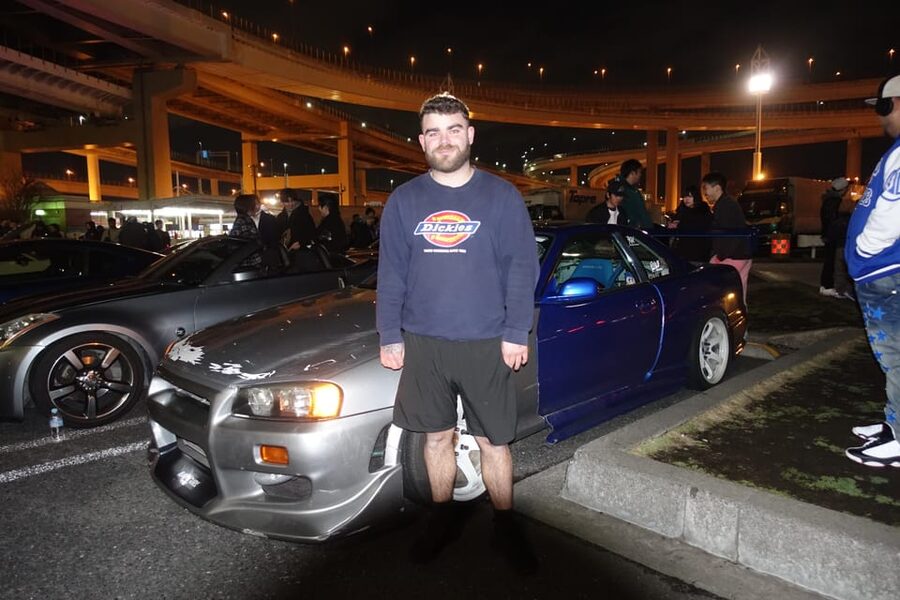
- Daikoku PA is the main event: You get time to walk around and see the cars gathered at this famous service area.
- The drive is part of the tour: The route uses Tokyo’s expressways, Bayside Line, Rainbow Bridge, and popular runner routes.
- Your car is not guaranteed: The standard ride is a random sports or JDM car, with Subaru and RX8 examples listed. R34, RX7, Silvia, and other special cars require a VIP option or are not included.
- APIT adds a useful daytime stop: On Monday through Thursday, the tour may visit this large car shop for parts, souvenirs, and engine displays.
- The experience can change quickly: If police close Daikoku, the guide may redirect the group to another parking area such as Umihotaru PA.
- Punctuality matters: Late arrivals or late companions can reduce your time at Daikoku, so arrive early and keep your phone available.
Why Daikoku PA matters to the Tokyo car scene
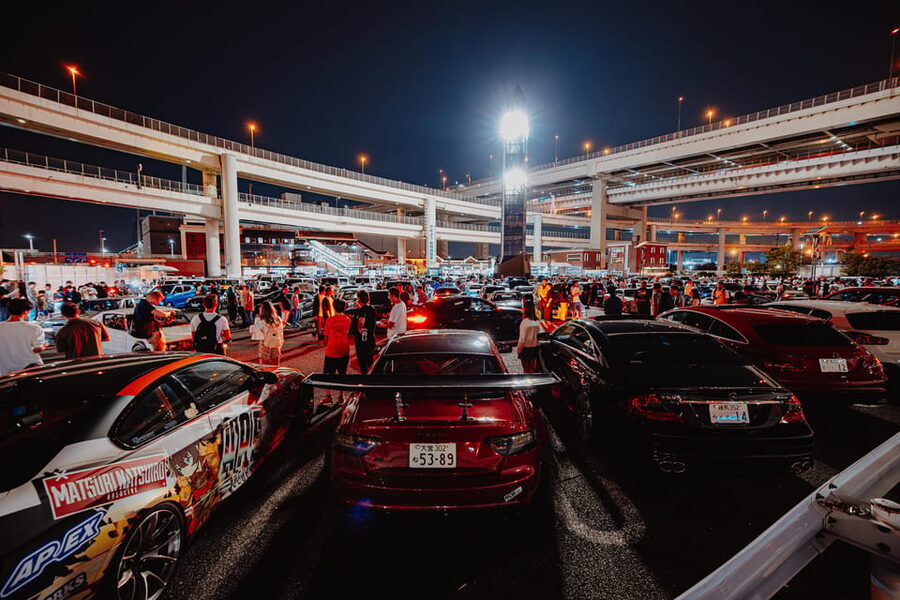
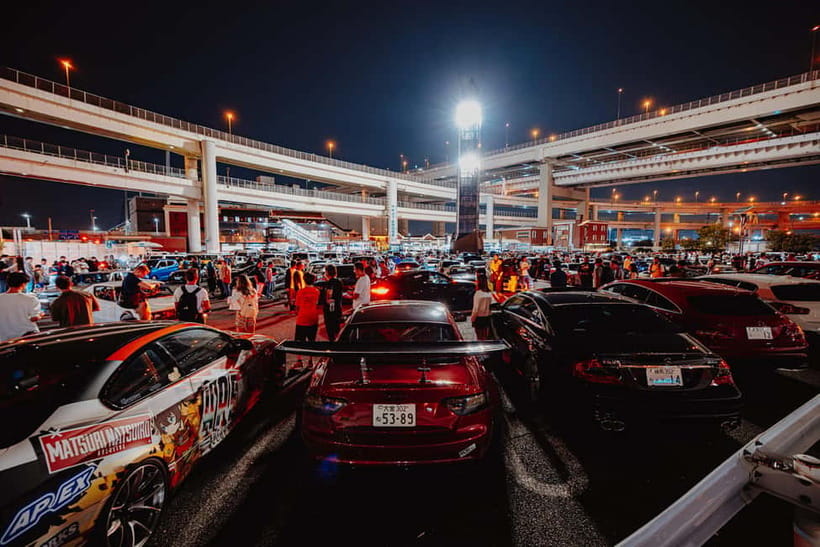
Daikoku Parking Area is not a museum or a permanent car show. It is a working expressway rest stop where car owners gather, often in changing combinations. One night may bring an impressive line of tuned Japanese cars. Another may offer a smaller mix of JDM models, sports cars, and exotics.
That uncertainty is part of the appeal, but it also shapes your expectations. You are not buying a guaranteed R34 photo session. You are paying for a guided chance to reach a difficult place, understand the local scene, and see what happens to be there that evening.
The location is on an expressway network outside central Tokyo, so it is not a simple train-and-walk outing. A taxi can be late, costly, or unable to provide the right access. This tour solves the transport problem while adding a guide who follows the car scene and knows how the route works.
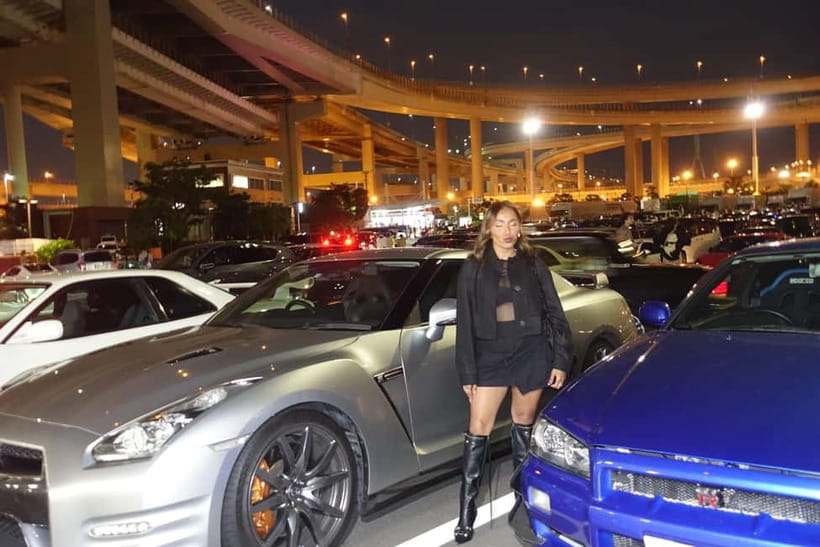
At Daikoku, you can get out, walk around, take photos, and look at the cars from several angles. The site also has restrooms and convenience stores, where you can buy food, drinks, and small car-related items. Food is not included, so carrying some cash or a payment card is sensible.
Your time at the parking area is usually limited within the three-hour schedule. One detailed account put the stop at about an hour, with the remaining time spent driving to and from the site. That is enough for a good look, but not enough to inspect every car slowly if the lot is busy.
More car-culture meets:
- GT-R35 800hp Club Membership – secret underground car meet
★ 4.8 · 998 reviews - Tokyo: Fast & Furious Tokyo Drift 3 Experience (Kaila Yu SP)
★ 4.8 · 947 reviews - Tokyo: Daikoku JDM Car Meet & Night Car Culture Tour
★ 4.8 · 626 reviews
The Tokyo Station meeting point and evening schedule
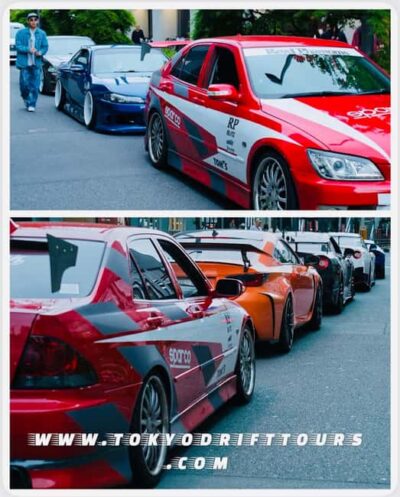
The main meeting point is in front of Bar Stand T at 1-5-1 Marunouchi, Chiyoda-ku, on the Tokyo Station side of central Tokyo. The tour cars are parked near the shop, and you are asked to meet the guides beside the custom cars.
The start time changes by day:
- Monday through Thursday: 7:30 p.m.
- Friday through Sunday: 6 p.m.
The earlier weekend departure gives you more evening time and may line up well with the days when the car scene is most active. It also gives you a little more room for traffic delays. Still, I would not treat Friday or Saturday as a promise of a packed parking area. Weather, police action, and local activity can change the scene.
Pickup and drop-off options vary. Free pickup and drop-off are available near Shinbashi Station, and optional hotel pickup is offered in some arrangements. The listed drop-off points include Shinbashi Station, Hibiya Park, Shinjuku, Minato, and Shibuya.
If you use hotel pickup, wait outside five minutes before the scheduled time. Traffic can cause changes, and a delay of up to 30 minutes is possible in rare cases. The smart move is to avoid booking a restaurant reservation or show immediately after the tour.
APIT, engines, parts, and souvenirs
On Monday through Thursday, the first stop may be APIT, one of the largest car shops in the Tokyo area. This stop is not part of the Friday, Saturday, and Sunday schedule.
APIT gives you a different look at Japan’s car culture. Instead of only seeing finished cars in a parking lot, you can browse parts, accessories, souvenirs, and actual engines on display. For a car fan, this is a useful introduction to the practical side of tuning and maintenance.
Do not expect a long shopping visit on every tour. The activity remains focused on the drive and Daikoku, and the exact timing can change with traffic and the group. Still, APIT is a good bonus if you want more than photos of parked cars.
The stop also helps explain why Daikoku works as a social meeting point. Car culture here is tied to parts, workshops, styling, engines, and owner-built machines. Even if you do not know every model, the shop gives you some context before you reach the parking area.
Cruising Tokyo’s expressways after dark
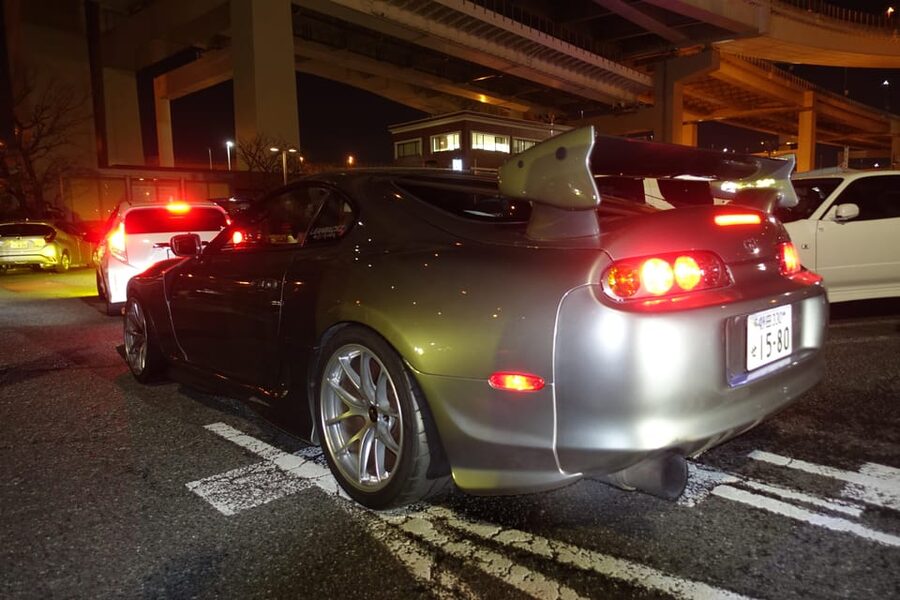
The drive is not merely a transfer. It is a major part of the evening.
You move through Tokyo’s expressway system and the Bayside Line, with views of landmarks such as Tokyo Tower and Rainbow Bridge. These landmarks are generally viewed from the car rather than visited with a formal stop. That matters if you want sightseeing photos, but it works well if your main goal is the nighttime drive.
The route also passes popular runner routes associated with Tokyo’s car scene. The guides can point out views and explain parts of the city and local car culture as you go. Several guides are car enthusiasts themselves, so the conversation often covers models, modifications, driving routes, and the way the local scene works.
Guides include Renon, JJ, Daiki, Wangun OG, Ryosuke, and others. English ability can vary by guide. Some speak fluent English, while others use simpler English with help from translation apps. If you need a highly fluent English-speaking guide, contact the provider ahead of time.
That language note is worth taking seriously, but it should not stop a car enthusiast from booking. The tour’s strongest feature is shared interest. A guide who knows the cars and routes can still communicate a lot through photos, translation, and the cars themselves. If detailed historical or technical explanation is essential to you, ask about the guide when booking.
A few more Tokyo bookings worth comparing
- Tokyo Night Foodie Tour in Shinjuku – Seasonal Sushi, Wagyu Beef
★ 5.0 · 1,161 reviews - Tokyo After 5: Authentic Japanese Food & Drink Night Tour
★ 4.5 · 560 reviews - EVO, WRX, Skyline – JDM Night Run to Daikoku Car Meet
★ 4.9 · 478 reviews - Tokyo: Samurai Entertainment Night Show in Kanda Shrine
★ 4.6 · 417 reviews
What the random JDM car ride really means
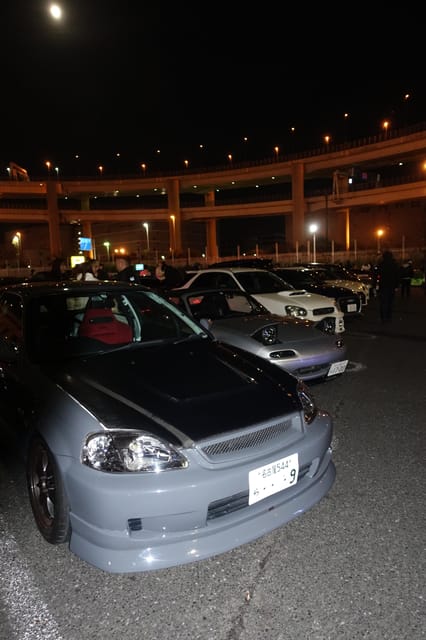
The standard experience includes a ride in a random sports or JDM car. Subaru and RX8 are specifically listed as examples. You may share a car with other participants, depending on the group and available vehicles.
The word random is important. You cannot assume that you will ride in a Nissan GT-R, RX7, R34, or Silvia. The standard package does not include those special cars, and the information specifically directs you to check the VIP package for certain models.
Some participants have ridden in impressive cars, including a Skyline or S15, but those examples should not be treated as the normal promise. Vehicle availability can change from one evening to the next. I would book this for the chance to ride in an interesting car, not for one exact badge.
The social side can be just as valuable as the vehicle. You may share a car, talk with other people who came for the same reason, and compare what you see at Daikoku. If you want a private ride and more control over the schedule, ask about the private-group option before booking.
The guides are often praised for being friendly and easy to talk with. Renon is noted for car-scene knowledge and conversation, while JJ is known for explaining the scene and keeping the mood relaxed. Wangun OG is also described as both a guide and an active part of Tokyo’s car community.
Exploring Daikoku without expecting a guaranteed show
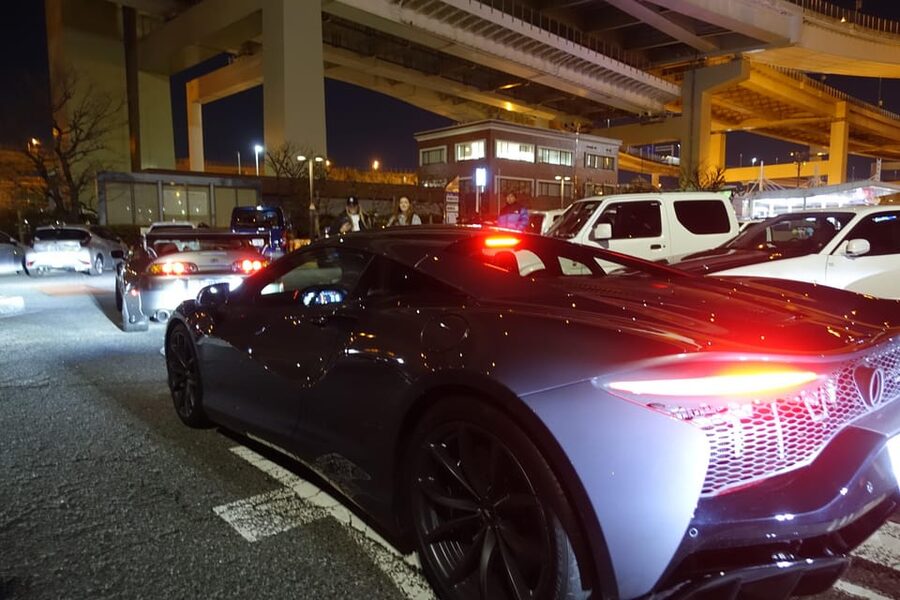
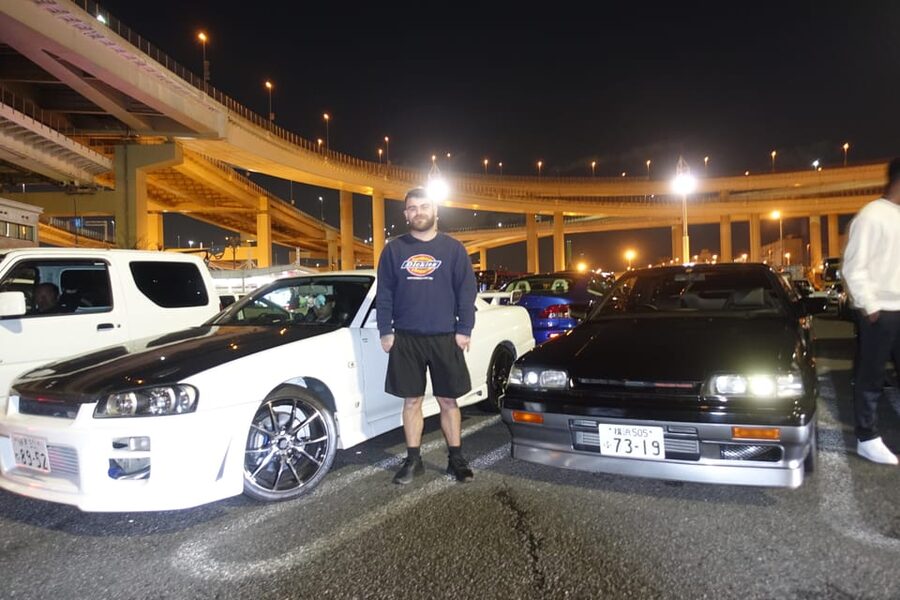
When Daikoku is open and active, the arrival can be the high point of the evening. You step out of the car into a setting where modified Japanese cars gather beside an expressway. The cars may include familiar JDM icons, tuned street cars, and other unusual vehicles.
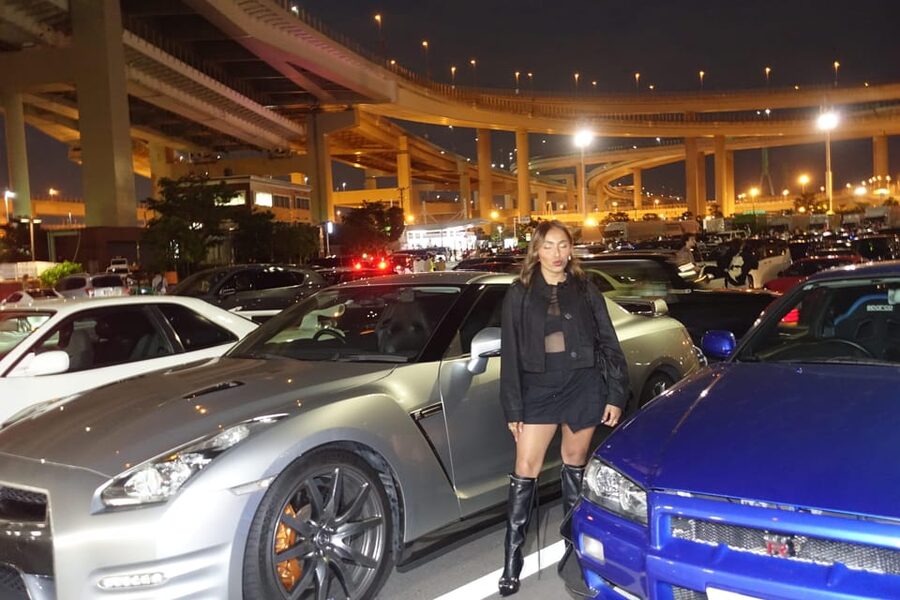
The exact mix is never fixed. On one evening you might see multiple R34s and R35s, an NSX, or an RX7 with a VeilSide kit. On another, the turnout may be modest. A Sunday can still offer a good selection, but no day guarantees a full parking lot.
The tour aims to visit during active hours, yet the scene can be limited by rain, cold, time of day, or police restrictions. Daikoku has sometimes been closed while a group was on its way. In that situation, guides may redirect you to Umihotaru Parking Area, where the gathering has moved.
That kind of change is frustrating if Daikoku is the only reason you booked. It is also why a local guide has value. A guide may know where the cars have gone and can keep the night moving instead of leaving you stranded at a closed entrance.
Respect matters here. You are visiting a working rest area, not entering a private car collection. Follow guide instructions, do not touch cars without permission, and ask before sitting in one. Photo service is available on request during the tour, but you should still bring your own camera or phone.
The return drive and landmark views
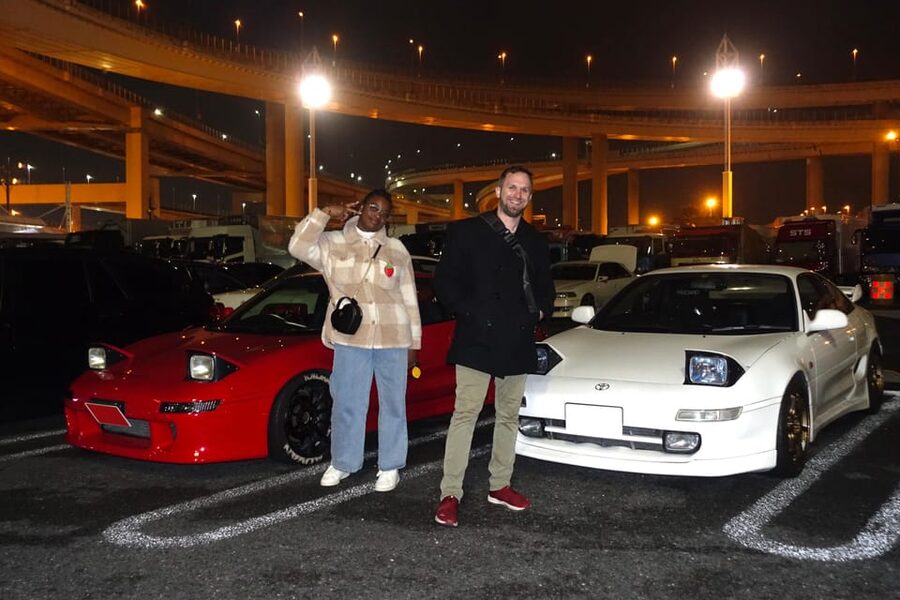
After the parking area, the tour returns through Tokyo’s expressway network. The ride back can offer a second look at the city lights, Rainbow Bridge, Tokyo Tower, and the industrial waterfront around Yokohama and Tokyo Bay.
For some people, this is where the tour feels closest to the video-game and film version of Tokyo car culture. The roads, tunnels, lights, and tuned cars create the right setting, but you should not expect illegal racing or a guaranteed high-speed show. The tour is a sightseeing and car-culture experience, not a race.
One participant reported seeing an actual race in the tunnels, but that is not a promised part of the tour and should never be your expectation. The guide’s role is to drive safely and show you the routes, not encourage dangerous behavior.
The final drop-off can be arranged near Shinbashi Station or at one of the listed Tokyo areas, depending on the selected option. Confirm your exact return point before the tour, especially if you are staying far from central Tokyo.
Is $160 a fair price?
At $160 per person, this is not a cheap sightseeing ride. The value comes from access and logistics rather than from the amount of time at one attraction.
You are paying for roughly three hours of transport, a local English-speaking guide, a sports or JDM car ride, expressway cruising, help reaching Daikoku, and possible photo service. You also get a chance to interact with local car owners, something you would not reliably arrange on your own.
The price makes more sense if you have already seen Tokyo’s main temples, shopping districts, and observation decks and want something outside the usual tourist program. It is also useful if Daikoku is high on your list but you do not want to solve the transport and access problems yourself.
The value is weaker if you only want a guaranteed collection of famous cars. A quiet night, a closure, or a substitute location can change the result. The tour provider offers free cancellation up to 24 hours ahead and allows you to reserve now and pay later, which reduces some booking risk, but it cannot control the turnout.
I would compare the price with a private taxi, fuel, expressway access, and the difficulty of finding the parking area independently. Once you add those factors, the guided option can be reasonable for a dedicated car fan. For a casual visitor, it may feel expensive.
Timing, comfort, and useful preparation
Bring comfortable shoes and warm clothing. Even if Tokyo feels mild in the afternoon, the parking area can be chilly at night, and you may spend time outside looking at cars.
Bring a camera, but keep the practical side in mind. The tour includes landmarks viewed from the car, so you may not have time to frame every shot. At Daikoku, you can take more photos, but the stop remains limited by the overall schedule.
Arrive early at the meeting point. The most serious practical warning is lateness. One late arrival caused a long wait for another participant, cutting into the group’s time at Daikoku. If you are running behind, contact the provider at once, but do not assume the cars can wait.
Alcohol and drugs are not allowed, and baby strollers are not permitted. The tour may involve shared seating, so tell the provider in advance if you need a private group or have a strong preference about language support.
Who will enjoy this most?
This is a strong choice for:
- JDM fans who want to see Japan’s car scene in person
- Visitors who enjoy driving routes as much as formal attractions
- Couples or families with at least one serious car enthusiast
- People who want a local guide rather than a self-guided visit
- Repeat visitors looking for a different side of Tokyo
It can also work for someone who is not deeply into cars, especially if you enjoy city lights, unusual vehicles, and a relaxed evening out. The guides’ friendliness helps, and the landmark views give the tour more range than a simple parking-lot visit.
I would hesitate if you dislike sitting in cars for much of an excursion, need a fixed schedule, or want a specific model. I would also think twice if a full Daikoku turnout is essential to your trip. The tour is built around possibility, not certainty.
Should you book the Daikoku car meet tour?
Book it if you see the drive, the expressway routes, and the chance to meet Japan’s car community as part of the attraction. The best evenings combine a fun guide, a good random car, clear weather, an open Daikoku, and a strong turnout. Guides such as Renon, JJ, Daiki, and Wangun OG add real personality to the ride.
Do not book it expecting a guaranteed GT-R, RX7, R34, or packed parking area. Choose the VIP option if a special car matters, arrive early, bring warm clothes, and keep your schedule flexible after the three-hour tour.
For a committed JDM fan, the price is justified by the access and the atmosphere. For everyone else, it is a fun but specialized night out, best treated as a window into Tokyo’s underground car scene rather than a standard sightseeing tour.
FAQ
Where does the tour meet?
The main meeting point is in front of Bar Stand T at 1-5-1 Marunouchi, Chiyoda-ku, Tokyo. The cars are parked in front of the shop, and you should meet the guides near the custom cars.
What time does the tour start?
The start time is 7:30 p.m. from Monday through Thursday and 6 p.m. from Friday through Sunday.
Is hotel pickup available?
Pickup is optional, with free pickup and drop-off available near Shinbashi Station. Hotel pickup may be available depending on the selected option. If arranged, wait outside your hotel five minutes before pickup.
Which cars can I ride in?
The standard tour provides a random sports or JDM car, with Subaru and RX8 listed as examples. Specific cars are not guaranteed, and R34, RX7, Silvia, and other special JDM cars require checking the VIP package or are excluded.
What happens if Daikoku Parking Area is closed?
The schedule or destination may change because of weather, traffic, police action, or other unexpected events. If Daikoku is closed, the guide may redirect the group to another location such as Umihotaru Parking Area.
Can I cancel the tour?
You can cancel up to 24 hours in advance for a full refund. The tour also offers a reserve-now-and-pay-later option.
New on our Tokyo list
- From Tokyo: Mount Fuji & Hakone Full Day Private Tour★ 4.9 · 25 reviews
- Tokyo Spectacular View Day-Cruise in 90 Minutes★ 5.0 · 25 reviews
- Real Tokyo Runner Club : Daikoku Car Meet Night Tour with JDM Car★ 5.0 · 25 reviews
- 2.5 Hour-Guided Cycle Tour in the Central Tokyo★ 5.0 · 25 reviews
- Ramen Making from Scratch +Akihabara Tour –Cooking Class★ 5.0 · 25 reviews
- [Self-Drive] Tokyo & Daikoku Custom Car Driving Tour★ 4.9 · 25 reviews
- Tokyo: 2-Hour Night Bike Tour of the City’s Hidden Gems★ 4.9 · 25 reviews
- Samurai themed Entertainment show in Shinjuku★ 4.5 · 25 reviews
JDM & Car Culture Tours, compared.
GT-R35 800hp Club Membership – secret underground car meet
Read our review →
Fast & Furious Tokyo Drift 3 Experience (Kaila Yu SP)
Read our review →
Secret Car Meet: R34 Skyline Car Club Membership
Read our review →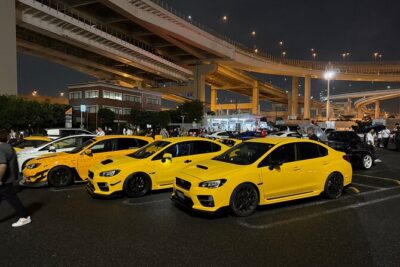
EVO, WRX, Skyline – JDM Night Run to Daikoku Car Meet
Read our review →
Tokyo Drift: Daikoku PA Supreme Car Experience 大黒PA
Read our review →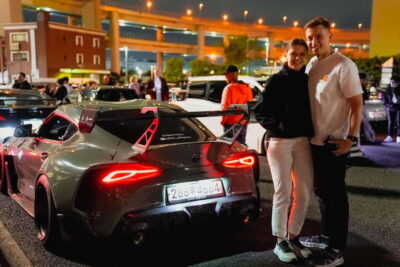
Go Daikoku PA Fast & Furious 3 Sports Car Meetup
Read our review →Browse the lists this tour appears in