
Reviewed · EVENING EXPERIENCES
Tokyo After 5: Authentic Japanese Food & Drink Night Tour
Tokyo after 5 pm is best understood one small plate at a time. This 3.5-hour walk takes you from polished Ginza to old-school monjayaki counters and the cramped drinking alleys of Yurakucho. You cook a Tokyo specialty at the table, try grilled skewers, and use the subway with a local guide who can handle menus and customs.
I like the small group of no more than eight, which makes a tiny bar much easier to manage. I also like the chance to try monjayaki, a soft, savory Tokyo pancake that is not as familiar to most international visitors as sushi or ramen. The main caution is simple: this is not a full progressive dinner at three restaurants. The opening wagashi stop is more of a tasting or takeaway, followed by two substantial food venues.
In This Review
- Key points to know before booking
- Starting beneath the Lion at Mitsukoshi Ginza
- Ginza lights, stationery, and a slow beginning
- Tsukishima Monja Street and the hotplate lesson
- Yurakucho’s narrow alleys and yakitori
- What the guide adds to the night
- How much food and drink do you receive?
- Walking, timing, and practical comfort
- Who will enjoy this Tokyo food walk?
- Is $122.33 a fair price?
- Should you book it?
- FAQ
- Where does the Tokyo After 5 food tour start?
- Where does the tour finish?
- How long does the experience last?
- How many people can join the tour?
- What food is included?
- Are drinks included?
- Can children join the tour?
- Are vegetarian, vegan, or gluten-free options available?
- Is public transportation included?
- How much walking is involved?
- Can I cancel for a refund?
Key points to know before booking
- Monjayaki is the star dish: You cook this runny Tokyo pancake on a hotplate in Tsukishima.
- The evening uses two neighborhood styles: Ginza provides polished city lights, while Yurakucho offers small local drinking alleys.
- Two drinks are included: Choose options such as sake, beer, or a soft drink, depending on age and availability.
- Only two true restaurant stops are likely: Wagashi comes earlier, often from a department-store food area.
- The group is limited to eight: That helps in tight eateries and allows more direct help from the guide.
- Plan for brisk walking and stairs: Comfortable shoes matter, and the subway transfers add some effort.
Starting beneath the Lion at Mitsukoshi Ginza
The meeting point is the famous Lion statue outside Mitsukoshi Ginza, at 4-chome 6-16 Ginza. It is a sensible place to begin because Ginza Station and several subway lines are close by, but do not arrive at the last minute. The tour starts on time, and Ginza’s wide streets can make a short distance feel longer when you are trying to find the correct corner.
Your guide gathers the group after 5 pm, when the department stores and office districts take on their evening character. The first walk is not a food crawl in the usual sense. You may visit the food section of Mitsukoshi and receive wagashi, a traditional Japanese sweet, before looking around the store.
This opening can be useful if you want a quick introduction to Japanese sweets and department-store food culture. It can also feel light on food, especially if you arrive hungry. One of the practical lessons here is to eat a small snack beforehand, while still leaving room for the main stops.
A few more Tokyo bookings worth comparing
- Tokyo Night Foodie Tour in Shinjuku – Seasonal Sushi, Wagyu Beef
★ 5.0 · 1,161 reviews - Tokyo: Daikoku JDM Car Meet & Night Car Culture Tour
★ 4.8 · 626 reviews - EVO, WRX, Skyline – JDM Night Run to Daikoku Car Meet
★ 4.9 · 478 reviews
Ginza lights, stationery, and a slow beginning
The Ginza section lasts about 15 minutes and may include Itoya, the well-known stationery shop. This is a pleasant side note for anyone who enjoys Japanese design, paper goods, and clever everyday objects. It is not a major sightseeing visit, so you should not book this experience expecting a full Ginza shopping tour.
The early portion has received mixed reactions for that reason. Some people enjoy seeing a department store and sampling wagashi. Others find the food-store visit and a possible stop to see indoor growing displays too much like shopping, especially when they are waiting for a proper meal.
I would treat this part as orientation rather than the culinary heart of the evening. The value comes from seeing how Japanese food is presented in an upscale city store, then moving from central Ginza toward older, more casual neighborhoods. If you want food from the first minute, this may test your patience.
Tsukishima Monja Street and the hotplate lesson
The tour then uses the subway, with two subway tickets included during the evening. You head to Tsukishima Monja Street, a local area associated with monjayaki. The ride is part of the experience because it shifts the setting from Ginza’s department stores to a downtown neighborhood built around informal food shops.
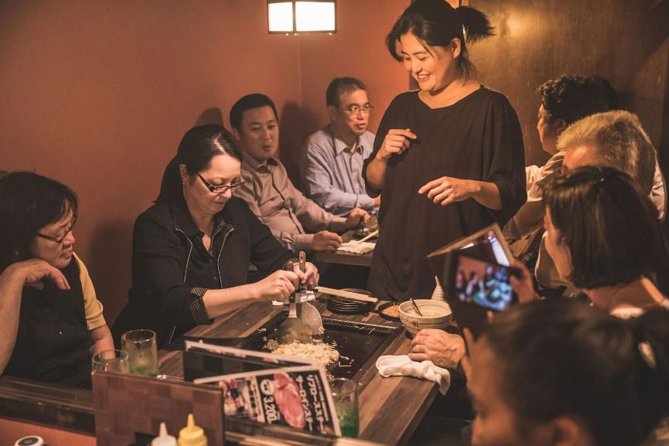
Monjayaki is related to okonomiyaki, but the texture is much softer and wetter. Instead of arriving as a neat pancake, it cooks into a loose mixture on the griddle. Cabbage forms much of the base, with seafood or other small additions depending on the serving.
You will usually watch the cook prepare it, or help cook it at the table. The sizzling hotplate, the spreading of the mixture, and the small spatula used to eat it make this more hands-on than simply receiving a dish. Your guide can explain the food’s local background and help you follow the restaurant’s method.
This is the most distinctive food stop. I like it because it gives you a dish tied closely to Tokyo rather than another standard Japanese favorite found in cities around the world. It also creates an easy social moment, since everyone gathers around the same grill and tries the food as it cooks.
Still, monjayaki is not for every appetite. The cabbage-heavy mixture may seem modest, and seafood can appear in the dish. If you are expecting a large pancake or a generous restaurant meal, you may be surprised by the portion and texture. The experience is best approached as a local specialty and cooking lesson, not as the evening’s only dinner.
People with serious food restrictions should take note. The establishments used here cannot meet all dietary needs, and vegetarian, vegan, and gluten-free versions are not available. Allergies should be raised with the guide at the start, but you should not assume that a suitable replacement can be arranged.
Yurakucho’s narrow alleys and yakitori
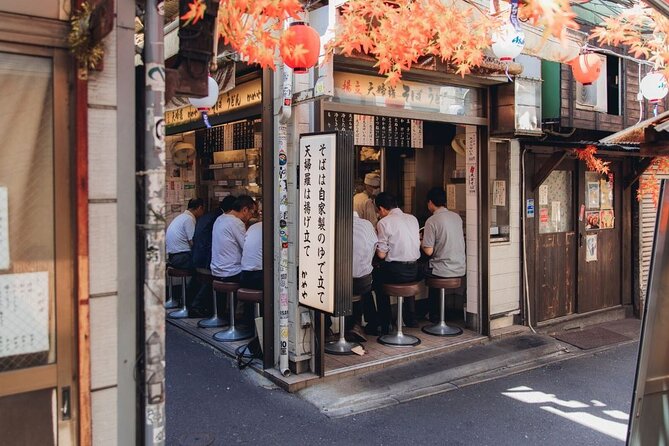
After Tsukishima, the route returns by subway toward Yurakucho Sanchoku Inshokugai, also known as Yurakucho Farm to Table Dining Alley. This is the evening’s most atmospheric setting: compact bars and casual eateries tucked beneath or around the railway area, with office workers settling in after work.
The final food stop centers on yakitori, grilled skewers served with a savory tare sauce. The food may include familiar chicken pieces, but you could also encounter less familiar cuts such as cartilage. That detail matters. If you want only standard chicken meat, ask your guide what is being served before choosing.
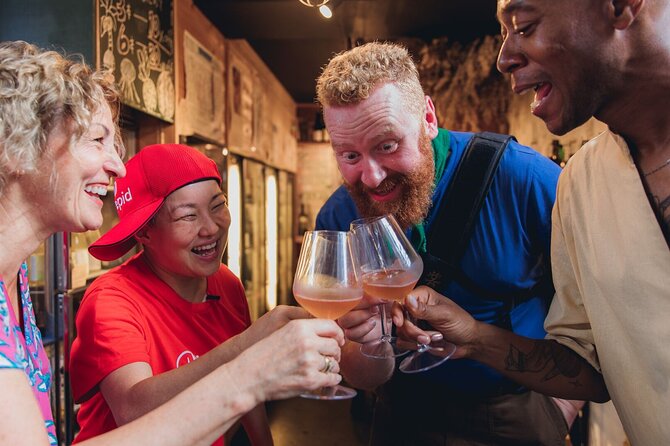
The skewers are paired with one of the two included drinks. Sake and beer are the natural choices for this setting, while a soft drink is available for people who do not drink alcohol. Japan’s legal drinking age is 20, and anyone under 20 receives a non-alcoholic drink. The minimum age for the tour itself is 12.
This stop often delivers the strongest sense of local nightlife. The bars are fully locally owned and run, and the small rooms are the sort of places you might hesitate to enter alone. A guide helps you cross that threshold, interpret the menu, and explain basic food customs without making the experience feel like a formal lecture.
The tradeoff is comfort. These are not polished restaurants with wide tables and lots of personal space. Seating can be tight, service is built for a quick evening meal, and grilled meat may not be cooked to the same level you prefer. Tell the guide your preference, but remember that the kitchen controls the final preparation.
Same corner of Tokyo, a completely different plan:
- Mt Fuji and Hakone 1-Day Bus Tour Return by Bullet Train
★ 5.0 · 26,383 reviews - 1-Day Tokyo Bus Tour
★ 5.0 · 14,250 reviews - Tokyo: TOKYO SKYTREE® Admission ticket
★ 4.5 · 11,192 reviews - Tokyo: teamLab Planets TOKYO Digital Art Museum Entry Ticket
★ 4.6 · 9,779 reviews
What the guide adds to the night
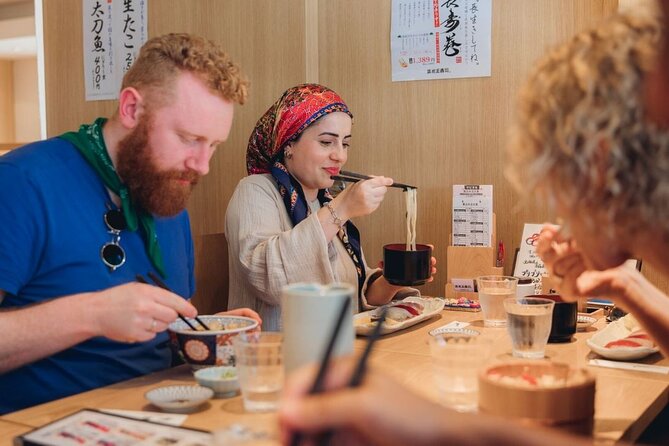
A good guide is important here because the route is only half the product. You are paying for help with the subway, translation, ordering, local etiquette, and the confidence to enter small places that can seem closed to outsiders.
Guides who have led this experience include Yuko, Yuki, Mizuki, Shohei, and Rocky. Yuko has been especially effective at handling the Tokyo underground system and explaining the overflowing sake-pour style, in which the server fills both a glass and the small wooden box beneath it. Mizuki has been praised for humor and warm group conversation, while Shohei has been noted for making the food stops enjoyable. Rocky has also made a strong effort with groups despite being new to the food-guide role.
Guide quality can vary. Clear English and active explanation are central to the experience, and a quiet guide can leave you wondering why you paid for a guided food walk instead of visiting an izakaya on your own. When the guide is engaged, the evening becomes much more than three tastings. You learn how to approach unfamiliar dishes and gain suggestions for places to eat later in your stay.
The maximum group size is eight, which is a real advantage. A larger group would be awkward in the narrow bars, and it would be harder to hear explanations or reach the shared grill. You should still stay close during the Ginza walks and subway transfers, especially because the route can move at a brisk pace.
How much food and drink do you receive?
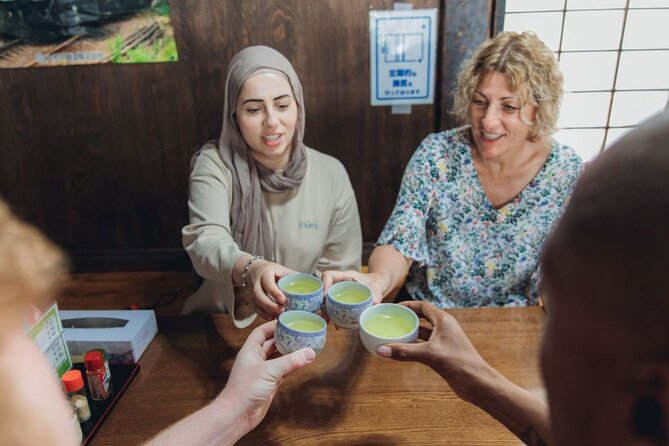
The included food is described as three local dishes on sticks or small portions: wagashi, monjayaki, and yakitori. In practical terms, the evening has a sweet opening, a monjayaki tasting, and a final yakitori meal with small side dishes possible at the izakaya.
That is enough for a satisfying introduction, but I would not assume it replaces dinner for every appetite. One particularly critical experience found the early food too small and the final meal limited to yakitori, beer, and a few little dishes. Another person found the food excellent and felt the portions worked well. The difference may come from expectations, group size, and exactly what each restaurant serves that night.
Come moderately hungry rather than starving. You want room for the cabbage and seafood at the monja shop, but waiting through Ginza while very hungry can make the first part drag. Additional drinks are not included, though you can buy them at the bars.
The two included drinks help the price feel more reasonable, especially in central Tokyo where restaurant and bar purchases add up quickly. Yet $122.33 per person is not cheap for the amount of food alone. The stronger value is the access and guidance: subway assistance, English menu help, local-owned venues, and a small group that can enter places you might otherwise pass.
Walking, timing, and practical comfort
The experience lasts about three hours and 30 minutes. The walking is moderate on paper, but the evening can feel more active because you move through Ginza, use the subway twice, walk from stations to food streets, and may deal with stairs.
Wear comfortable shoes. One portion can involve a long walk before the first substantial food, and a few people have found the pace too fast. Stay alert at crossings and station entrances, and tell the guide if you need the group to slow down.
The end point is near Ginza Station at 4-chome 1-2 Ginza. This is useful for continuing your night in central Tokyo, returning to your hotel, or taking the subway elsewhere. You may also remain at the final bar after the official tour ends, though any extra drinks are yours to pay for.
The experience requires good weather. If poor weather cancels it, you can receive a different date or a full refund. For a full refund after booking, cancel at least 24 hours before the local start time. Changes made within 24 hours are not accepted.
Who will enjoy this Tokyo food walk?
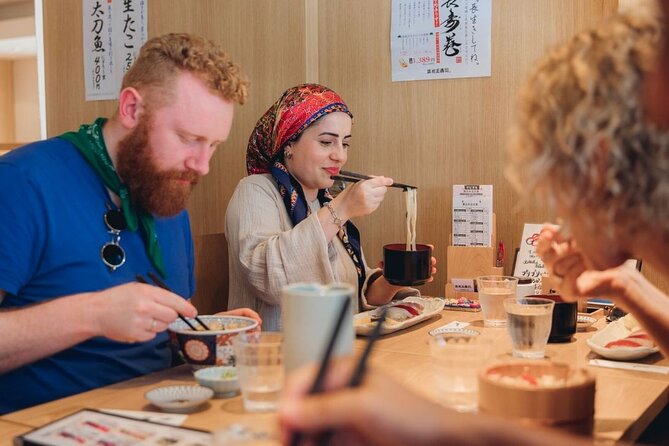
I would recommend it most strongly to a first-time Tokyo visitor who wants a guided start to the city’s food culture. The route gives you a useful contrast between Ginza’s polished center, Tsukishima’s monjayaki district, and Yurakucho’s after-work drinking alleys.
It also suits solo visitors and couples who want company at small tables. The group limit makes it easier to meet people without turning the evening into a large bus-style outing. You receive recommendations for other places to eat and see during your stay, which can make the tour more useful on an early evening in Tokyo.
You should think twice if you need vegetarian, vegan, or gluten-free food. You may also prefer another tour if your priority is a large meal, a broad range of dishes, or three full restaurant visits. The first stop is light, and the food selection can include seafood, cartilage, and other ingredients that may not suit everyone.
This is also not ideal for anyone who dislikes shared grills, small bars, or a bit of uncertainty about the exact skewers. The reward is local character, but local character rarely comes with a wide menu and guaranteed familiar cuts.
Is $122.33 a fair price?
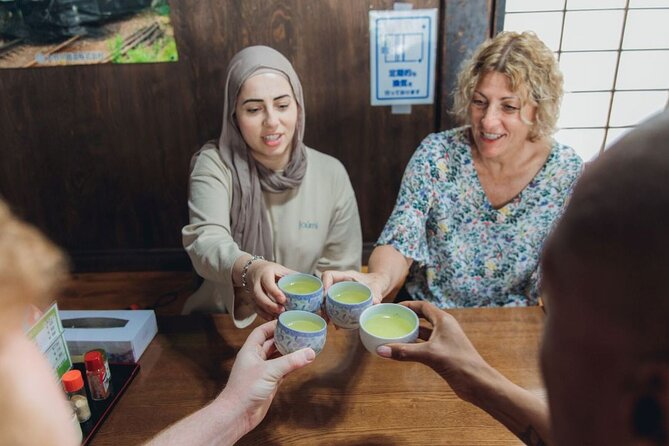
At $122.33, the tour sits in the premium range for a three-and-a-half-hour food outing. Two drinks and two subway tickets are included, and the guide handles the parts of Tokyo nightlife that can be confusing: finding the meeting points, changing areas, reading menus, and ordering in compact restaurants.
The price is harder to justify if you count only the food. Wagashi is a small beginning, monjayaki can be a modest serving, and yakitori portions depend on the venue. You are not buying a lavish dinner.
I see the cost as fair for the right person: someone who values local access, translation, and a small group more than quantity. If you are comfortable ordering food and navigating Tokyo’s subway, you can spend less on your own. If you want an easy first-night introduction with a guide who can explain what is on the grill, the added cost has a clear purpose.
Should you book it?
Book this tour if you want to cook monjayaki, try yakitori in a local alley, and learn how Tokyo’s evening food culture works from an English-speaking guide. It is especially useful near the start of your stay, when advice about food and neighborhoods can shape the rest of your trip.
Skip it if you expect three substantial restaurants, a full dinner, or reliable dietary substitutions. Go in with a snack already eaten, comfortable shoes on your feet, and curiosity about cabbage pancakes and unfamiliar skewers. With those expectations, the tour offers a lively and practical introduction to Tokyo after dark.
FAQ
Where does the Tokyo After 5 food tour start?
The tour starts at the Lion statue in front of Mitsukoshi Ginza, at 4-chome 6-16 Ginza, Chuo City, Tokyo.
Where does the tour finish?
It ends near Tokyo Metro Ginza Station at 4-chome 1-2 Ginza, Chuo City, Tokyo.
How long does the experience last?
The tour lasts approximately three hours and 30 minutes.
How many people can join the tour?
The group has a maximum of eight participants.
What food is included?
The included food consists of wagashi, monjayaki, and yakitori, with local dishes and small portions served during the evening.
Are drinks included?
Two drinks are included. Options may include sake, beer, or a soft drink. Additional drinks are available for purchase.
Can children join the tour?
The minimum age is 12. The legal drinking age in Tokyo is 20, and anyone under 20 will receive non-alcoholic drinks.
Are vegetarian, vegan, or gluten-free options available?
No. The establishments used on this experience cannot provide vegetarian, vegan, or gluten-free options.
Is public transportation included?
Yes. Two subway tickets needed during the experience are included.
How much walking is involved?
A moderate amount of walking is involved, along with subway travel and some stairs. Comfortable walking shoes are recommended.
Can I cancel for a refund?
Yes. You can cancel at least 24 hours before the start time for a full refund. If poor weather causes the provider to cancel, you will be offered another date or a full refund.
New on our Tokyo list
- From Tokyo: Mount Fuji & Hakone Full Day Private Tour★ 4.9 · 25 reviews
- Tokyo Spectacular View Day-Cruise in 90 Minutes★ 5.0 · 25 reviews
- Real Tokyo Runner Club : Daikoku Car Meet Night Tour with JDM Car★ 5.0 · 25 reviews
- 2.5 Hour-Guided Cycle Tour in the Central Tokyo★ 5.0 · 25 reviews
- Ramen Making from Scratch +Akihabara Tour –Cooking Class★ 5.0 · 25 reviews
- [Self-Drive] Tokyo & Daikoku Custom Car Driving Tour★ 4.9 · 25 reviews
- Tokyo: 2-Hour Night Bike Tour of the City’s Hidden Gems★ 4.9 · 25 reviews
- Samurai themed Entertainment show in Shinjuku★ 4.5 · 25 reviews
Evening Experiences, compared.
Tokyo Night Foodie Tour in Shinjuku – Seasonal Sushi, Wagyu Beef
Read our review →
EVO, WRX, Skyline – JDM Night Run to Daikoku Car Meet
Read our review →
Samurai Entertainment Night Show in Kanda Shrine
Read our review →
The Dark Side of Tokyo – Night Walking Tour Shinjuku Kabukicho
Read our review →
Daikoku Car Meet Tour at Night with JDM Guides
Read our review →Browse the lists this tour appears in