
Reviewed · JDM & CAR CULTURE TOURS
Tokyo: Daikoku JDM Car Meet & Night Car Culture Tour
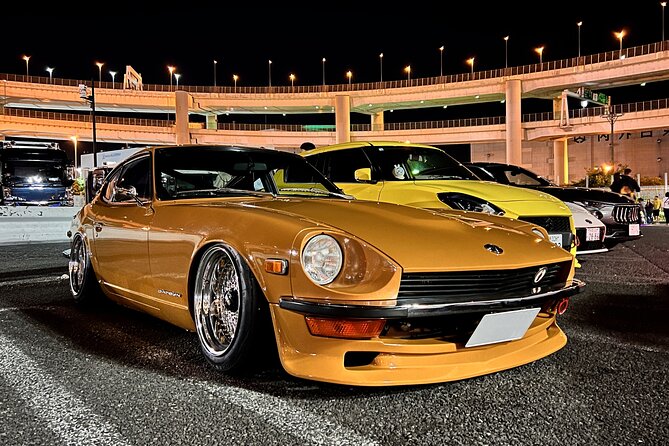
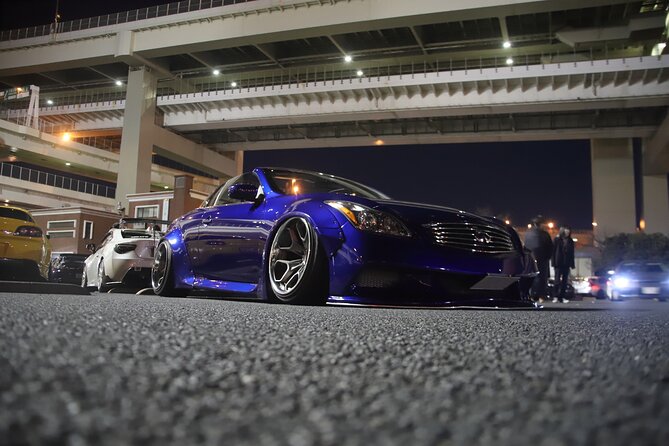
Daikoku Parking Area is not a museum or staged car show. It is a real highway rest stop where the scene changes by the hour. On a good night, you might see tuned JDM cars, luxury models, German performance cars, classic machines, and the occasional American car, all while Tokyo and Yokohama slide past the windows. The Daikoku meet is the main event, but the drive is half the fun.
I like two things here. First, your guide rides with you and explains the cars, roads, and local scene instead of simply dropping you at a parking lot. Second, the route adds A PIT Autobacs, Tatsumi Parking Area, Rainbow Bridge, Tokyo Tower, and Yokohama views. The main caution is simple: specific cars cannot be promised, and a rainy or quiet night may feel less dramatic than the social-media version of Tokyo car culture.
In This Review
- Key points to know before booking
- Why Daikoku feels different from a normal Tokyo attraction
- Starting in Shibuya and heading onto the expressways
- A PIT Autobacs, where car culture becomes retail
- Tatsumi Parking Area and the Tokyo car scene
- The drive to Daikoku through Tokyo and Yokohama
- One hour at Daikoku Parking Area
- The return route brings more city views
- Choosing the right vehicle
- What the guides add to the night
- Is $99.49 a fair price?
- Who should book this experience?
- Should you book the Daikoku car culture tour?
- FAQ
- Where does the Tokyo Daikoku car meet tour start?
- How long does the experience last?
- Does the tour visit Daikoku Parking Area?
- What other places are included?
- Can I choose the vehicle?
- Are specific cars guaranteed at Daikoku?
- What happens if bad weather cancels the tour?
Key points to know before booking
- Daikoku is a real meet, not a guaranteed car show: The cars and crowd change with the day, weather, and police activity.
- The route includes more than Daikoku: A PIT Autobacs and Tatsumi PA add useful stops for anyone interested in Japanese car culture.
- The highway ride is part of the experience: You cross Rainbow Bridge, pass Haneda Airport, follow the Wangan Highway, and see Tokyo from the road.
- Guides make the difference: Michael, Mori, Kareem, and other hosts focus on car knowledge, local context, and conversation.
- Vehicle choice affects the feel: You can select a JDM Legend car, Performance Van, or Premium Sports Sedan, subject to availability.
- Saturday night is your best bet for activity: It is often the busiest time, but even then, Daikoku can close unexpectedly.
Why Daikoku feels different from a normal Tokyo attraction
Most Tokyo sightseeing happens on foot, underground, or from a train window. This outing gives you a moving view of the city from the expressways, with car culture as the thread connecting each stop.
Daikoku is located in Yokohama, not central Tokyo. That matters because getting there alone is difficult. It is a highway rest area, and public transport does not offer the simple, direct access you might expect from a major attraction. The tour solves that problem with a pick-up in Shibuya and a comfortable vehicle for the full loop.
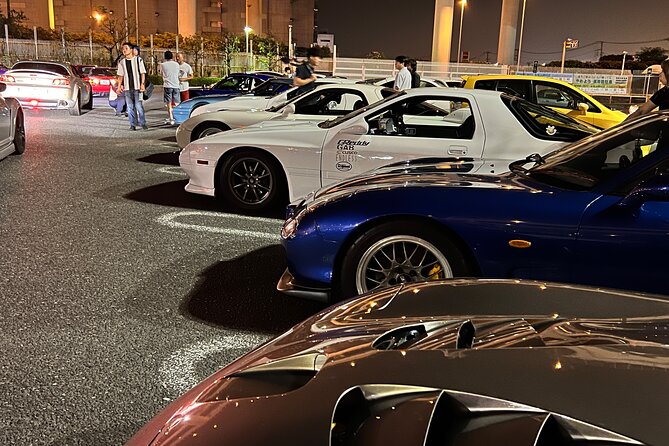
The setting also keeps the experience grounded. You are not entering a private collection or attending a formal exhibition. You are looking at cars that owners have brought out, often to meet friends, stop during a drive, or show off a carefully built machine. Some nights are packed. Other nights are quieter.
That uncertainty is part of the deal. If you need a guaranteed lineup of specific Nissan Skylines, Mazda RX-7s, or other icons, this is not the right format. If you enjoy seeing what turns up and hearing how the local scene works, the lack of a fixed program makes the outing more interesting.
More car-culture meets:
- GT-R35 800hp Club Membership – secret underground car meet
★ 4.8 · 998 reviews - Tokyo: Fast & Furious Tokyo Drift 3 Experience (Kaila Yu SP)
★ 4.8 · 947 reviews - Tokyo: Daikoku JDM Car Meet & Night Car Culture Tour
★ 4.8 · 626 reviews
Starting in Shibuya and heading onto the expressways
The meeting point is on Dōgenzaka, a few blocks from Shibuya Crossing. It is near public transportation, but give yourself extra time. After-work traffic can slow taxis and road travel, so arriving early is a sensible move.
The advertised duration is about three to four hours. The exact length depends on traffic, the selected route, the time spent at each stop, and the condition of the meet. Morning and evening departures are available, but the night option naturally gives you the strongest city lights and car-meet atmosphere.
The first part of the ride takes you past Roppongi Hills Mori Tower, with its offices, shops, and restaurants. Soon after, the route reaches Rainbow Bridge. From the road, you get a view that trains cannot provide, especially after dark. Odaiba appears across the water, with its unusual Fuji TV building and large-scale development on the man-made island.
This is a useful early reminder that the tour is not only about parked cars. You are also seeing how Tokyo’s expressway network connects its dense central districts with the waterfront and Yokohama.
A PIT Autobacs, where car culture becomes retail
The first main stop is A PIT Autobacs in Koto. The ride there takes about 25 minutes, followed by roughly 25 minutes inside the store.
A PIT is Autobacs’ flagship location, and it is a good stop even if you are not planning to buy parts. You can browse automotive goods, accessories, tools, and other car-related items in a setting that feels more like a specialist lifestyle shop than a basic service center.
For car fans, this stop gives useful context. Daikoku shows you the owners and their cars. A PIT shows the retail and customization side of the culture. You may also see interesting vehicles at the store, though no particular car is guaranteed.
The main limitation is time. Fifty minutes is enough to browse and take in the atmosphere, but not enough for a slow, detailed shopping trip. If you want souvenirs or parts, keep your priorities clear. Food, drinks, and purchases are not included in the tour price.
Tatsumi Parking Area and the Tokyo car scene
Next comes Tatsumi No. 1 Parking Area, reached by a short drive of about 10 minutes. The scheduled stop lasts around 15 minutes, so think of it as a quick break and viewing point rather than a second Daikoku.
Tatsumi is another place where car enthusiasts may stop while making a loop on the expressways. The atmosphere can be quieter and more relaxed than Daikoku. That makes it useful for seeing how the car scene works outside the headline location.
The short visit is both a strength and a weakness. You get another location without spending the whole evening in parking areas, but you may not have much time to inspect every car or wait for more arrivals. On some days, Tatsumi or A PIT is replaced by Umihotaru or Gaienmae. The route can change, but the Daikoku stop remains part of the experience.
A few more Tokyo bookings worth comparing
- Tokyo Night Foodie Tour in Shinjuku – Seasonal Sushi, Wagyu Beef
★ 5.0 · 1,161 reviews - Tokyo After 5: Authentic Japanese Food & Drink Night Tour
★ 4.5 · 560 reviews - EVO, WRX, Skyline – JDM Night Run to Daikoku Car Meet
★ 4.9 · 478 reviews - Tokyo: Samurai Entertainment Night Show in Kanda Shrine
★ 4.6 · 417 reviews
The drive to Daikoku through Tokyo and Yokohama
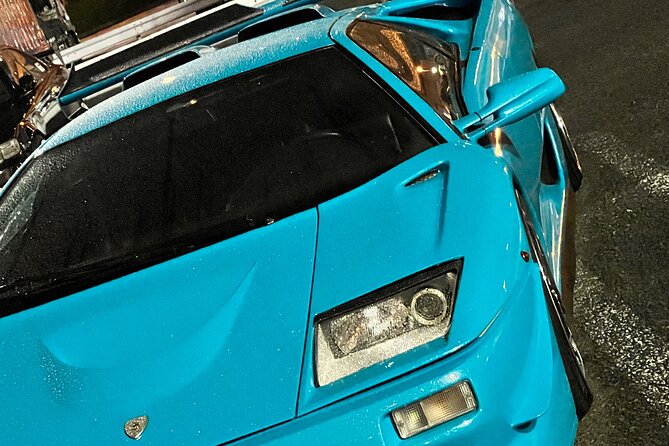
The route toward Daikoku follows the Wangan Highway and includes about 40 minutes of driving and conversation before the one-hour stop. This is where the experience becomes more than a transfer between attractions.
Along the way, the Furukawa Line provides views of Tokyo Skytree. The route also passes through tunnels beneath Haneda Airport runways. If the timing is right, you might see aircraft taxiing above as you enter the tunnels. That possibility is not guaranteed, but it is an unusual detail that makes the drive memorable.
Before reaching Daikoku, you get views of Yokohama Bay Bridge and the Yokohama skyline. Yokohama is a major port and cruise stop, so ships may be visible as well. At night, the city lights, elevated roads, bridge structures, and harbor views give the ride a very different feel from daytime sightseeing.
Your guide is an important part of this stretch. Michael is often praised for his easy conversation, engineering background, and broad understanding of cars. Mori, Kareem, and Sasha are also named as hosts who bring strong enthusiasm to the subject. The best part of the drive is not simply hearing specifications. It is being able to ask why certain cars matter, how the local scene differs from movie portrayals, and what you are actually seeing on the road.
One hour at Daikoku Parking Area
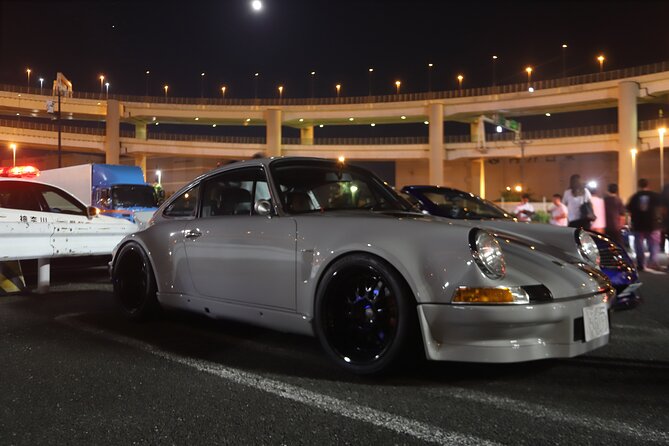
Daikoku is the reason most people book this outing. The standard schedule allows about one hour at the parking area, after the 40-minute ride from Tatsumi.
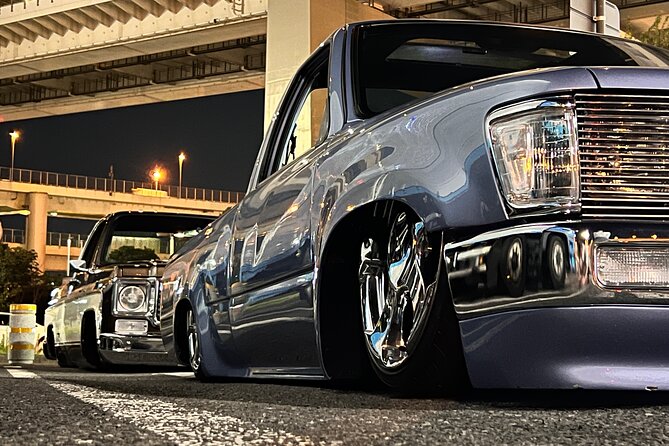
On a busy evening, the mix can be wide. Expect the possibility of JDM sports cars, modified vehicles, luxury sedans, German performance cars, classics, and American models that are less common in Japan. You might see a car you have admired for years, or you might find the most interesting vehicle is something you did not expect.
Saturday night is generally the strongest choice if your main goal is a full meet. Several families and car-focused groups found the Saturday atmosphere especially rewarding. Still, do not treat the day as a guarantee. Rain can reduce attendance, and police may close the area if activity becomes a problem. One outing included a meet of more than 100 cars before police shut it down.
That kind of closure can be frustrating, but it also shows the difference between a real public meet and a paid display. The operator cannot control who arrives, how long they stay, or whether authorities close the parking area.
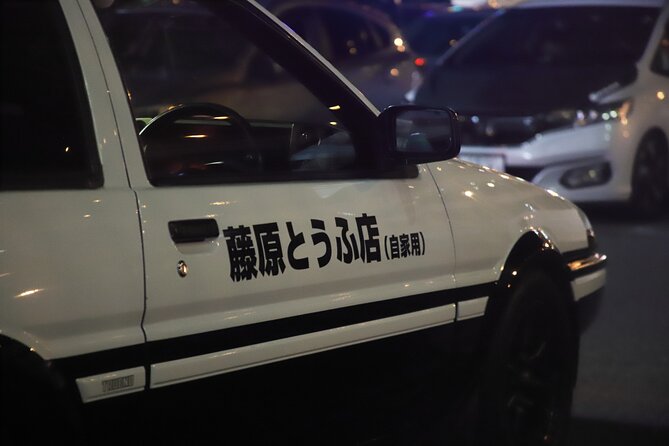
You should also expect a social atmosphere rather than a race event. Some visitors arrive with Hollywood ideas about illegal expressway racing and nonstop action. The actual scene is often calmer: owners look at cars, talk with other enthusiasts, and enjoy the drive. The guide can explain the difference between the image of Japanese car culture and its everyday reality.
The return route brings more city views
After Daikoku, the ride returns toward Shibuya, with about 45 minutes of driving. You get views of Yokohama’s Minatomirai area and port before crossing Rainbow Bridge again from the Odaiba side.
The return trip offers some of the best night scenery of the experience. Tokyo Tower can appear from the C1 Loop Highway, and the Rainbow Bridge crossing gives you another angle on the central city. These views are especially valuable if you have already done the usual temple, shopping, and observation-deck circuit and want to see Tokyo from its road network.
The activity ends back at the Shibuya meeting point. One guide has occasionally helped with a convenient drop-off near Yokohama when it was close to the company’s base, but you should not count on a custom drop-off unless it is arranged in advance.
Choosing the right vehicle
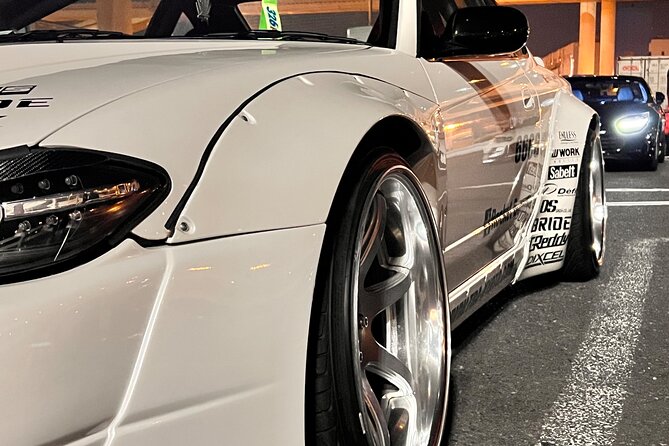
The tour offers a choice of a JDM Legend car, Performance Van, or Premium Sports Sedan, based on the option you book. The sedan and van are the practical choices for families, taller passengers, and groups that want more space.
The luxury sedan has been praised for its clean, comfortable interior and strong highway performance. The vans have a comfortable capacity of five and a maximum capacity of six. For groups of four or five, the Small Group Performance Van option is specifically recommended.
The operator has two luxury vans, so a group or pair may occasionally be split during the road portions. That is worth knowing if your main reason for booking is to sit together and talk as one group.
If you book an RX-7 option, seating deserves attention. The rear seat is best for passengers under 170 centimeters and of slim build, while the front seat is recommended for people under 185 centimeters. Ask about seating before confirming if you are tall.
A booster seat is available for children. Small folding strollers may fit in the sedan and van, depending on their size. Most people can take part, but the experience does involve getting in and out of vehicles and visiting car-related locations.
What the guides add to the night
The strongest feature is the guide, not the promise of a particular car. Michael, Mori, Kareem, and the other hosts are presented as car enthusiasts who can discuss JDM history, wider Japanese car culture, engineering, and the city itself.
That range matters for mixed groups. A parent may not care about every engine code, while a teenager may want to talk about cars for the whole evening. A good guide can keep both people involved. Several family groups found the experience worked well for parents, teenagers, and young adults together.
The tone is meant to feel like spending an evening with people who genuinely enjoy cars. That can be a plus if you want relaxed conversation and the chance to ask questions. It can be less appealing if you want a tightly scripted sightseeing tour with constant narration and a fixed sequence of sights.
Safety is another important point. The drive can feel fast and exciting on the expressway, but the operator says safety is a priority. You are still on public roads, and weather and traffic affect the ride.
Is $99.49 a fair price?
At $99.49 per person, this is not the cheapest way to spend an evening in Tokyo. You are paying for transport to a difficult-to-reach location, a three to four-hour route, several stops, a small-group setting, and a guide who can explain the cars and places along the way.
The price makes the most sense if you would otherwise struggle to reach Daikoku. It also offers better value for a family or small group than hiring a private car and trying to plan the route alone. All fees and taxes are included, and private options are available.
The value drops if you only want 60 minutes at Daikoku and do not care about A PIT, Tatsumi, the highway route, or the city views. In that case, you are paying for a full experience when your interest is limited to the final stop.
Free cancellation is available up to 24 hours before departure. Within 24 hours, there is no refund. The activity requires good weather, and if the operator cancels because of poor conditions, you can choose another date or receive a full refund.
Who should book this experience?
I would choose this tour for a serious car fan, a teenager who loves JDM culture, or a family looking for something outside the standard Tokyo plan. It is also a good fit if you enjoy driving, city lights, bridges, and industrial waterfront views.
You do not need to know every model to have a good time. The guides can explain the wider scene, which includes European and American cars as well as Japanese models. Still, the experience is car-centered. If your group has no interest in vehicles, several hours of driving and parking-area stops may feel long.
Book a Saturday evening if your priority is the largest possible meet, but accept that weather and police closures remain outside anyone’s control. For a quieter outing, a weekday can work, with the understanding that the selection may be smaller.
Should you book the Daikoku car culture tour?
Book it if you want access to Daikoku without solving the transport puzzle yourself, and if you value conversation with a real car enthusiast. The combination of A PIT Autobacs, Tatsumi, Daikoku, expressway driving, and Tokyo night views gives you much more than a single parking-lot visit.
Skip it if you need a guaranteed list of cars, dislike flexible plans, or expect a nonstop racing spectacle. The real appeal is more relaxed and social. At its best, you spend an evening seeing the city from the road, learning how local car culture works, and discovering what happens to be parked at Daikoku that night.
FAQ
Where does the Tokyo Daikoku car meet tour start?
The tour starts at Japan, 150-0043 Tokyo, Shibuya, Dōgenzaka, 2-chōme 29-8, Dōgenzaka Center Building.
How long does the experience last?
The tour lasts approximately three to four hours, depending on traffic, stops, and route conditions.
Does the tour visit Daikoku Parking Area?
Yes. Every version of the experience visits Daikoku Parking Area, even though some weekday stops may change.
What other places are included?
The representative route includes A PIT Autobacs, Tatsumi No. 1 Parking Area, Rainbow Bridge, Odaiba views, Tokyo Skytree views, Haneda Airport tunnels, Yokohama Bay Bridge, and city views on the return to Shibuya.
Can I choose the vehicle?
Yes. Options include a JDM Legend car, Performance Van, or Premium Sports Sedan, based on the selection you book.
Are specific cars guaranteed at Daikoku?
No. Specific car sightings cannot be guaranteed. The selection changes with the day, weather, attendance, and possible parking-area closures.
What happens if bad weather cancels the tour?
If the operator cancels because of poor weather, you can choose a different date or receive a full refund. If you cancel, you must do so at least 24 hours before the start time for a full refund.
New on our Tokyo list
- Tokyo Spectacular View Day-Cruise in 90 Minutes★ 5.0 · 25 reviews
- From Tokyo: Mount Fuji & Hakone Full Day Private Tour★ 4.9 · 25 reviews
- Real Tokyo Runner Club : Daikoku Car Meet Night Tour with JDM Car★ 5.0 · 25 reviews
- 2.5 Hour-Guided Cycle Tour in the Central Tokyo★ 5.0 · 25 reviews
- Ramen Making from Scratch +Akihabara Tour –Cooking Class★ 5.0 · 25 reviews
- [Self-Drive] Tokyo & Daikoku Custom Car Driving Tour★ 4.9 · 25 reviews
- Tokyo: 2-Hour Night Bike Tour of the City’s Hidden Gems★ 4.9 · 25 reviews
- Samurai themed Entertainment show in Shinjuku★ 4.5 · 25 reviews
JDM & Car Culture Tours, compared.
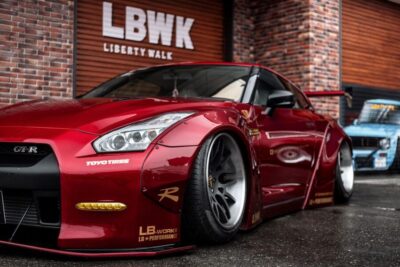
GT-R35 800hp Club Membership – secret underground car meet
Read our review →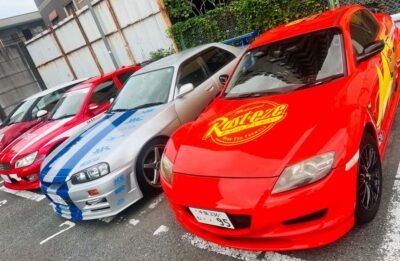
Fast & Furious Tokyo Drift 3 Experience (Kaila Yu SP)
Read our review →
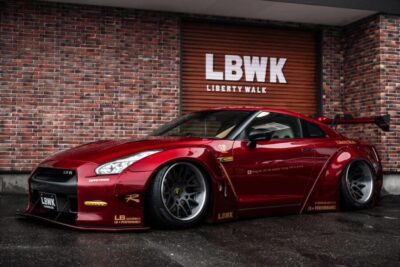
Secret Car Meet: R34 Skyline Car Club Membership
Read our review →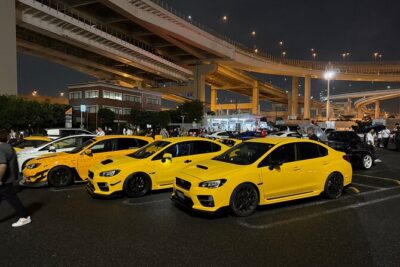
EVO, WRX, Skyline – JDM Night Run to Daikoku Car Meet
Read our review →
Tokyo Drift: Daikoku PA Supreme Car Experience 大黒PA
Read our review →
Go Daikoku PA Fast & Furious 3 Sports Car Meetup
Read our review →Browse the lists this tour appears in