
Reviewed · BOAT TOURS IN TOKYO
Tokyo Spectacular View Day-Cruise in 90 Minutes
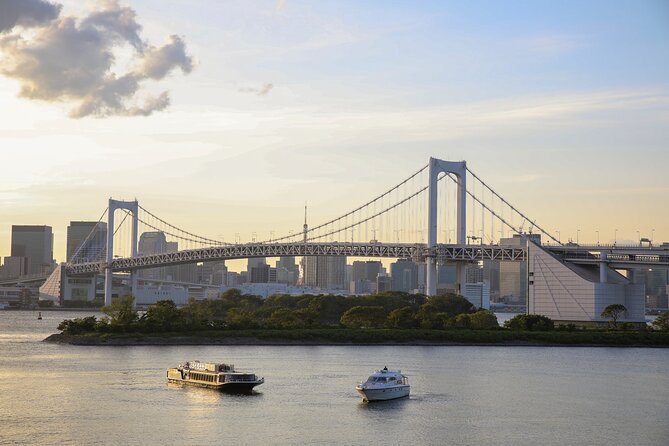
Tokyo looks different from the water. On this 90-minute Tokyo Bay cruise, you pass beneath Rainbow Bridge, glide by Tokyo Tower, and watch the city lights gather around Odaiba and the Sumida River. It is a calm way to see several landmarks without weaving through packed streets or fighting for a clear photo.
I like the choice between an afternoon and night sailing, and I like having both an open top deck and a warm lower cabin. The crew adds background on the bridges and buildings, while the boat provides tables, a restroom, and air conditioning. The main drawback is the price, $65.89 per person, which feels high if you only want a quick ride and do not plan to buy drinks or snacks aboard.
In This Review
- Key points to know before booking
- Why seeing Tokyo from the water changes the city
- Boarding at Tennozu Yamatsu Pier
- Choosing afternoon light or Tokyo after dark
- Passing beneath Rainbow Bridge
- Tokyo Tower from the bay
- Kachidoki Bridge and Tokyo’s working waterways
- Tsukiji, Toyosu, and the city’s food markets
- Eitai Bridge and the changing Sumida River
- Odaiba Seaside Park and the final waterfront views
- What the $65.89 price buys you
- Who will enjoy this cruise most
- Should you book the 90-minute Tokyo cruise?
- FAQ
- How long does the Tokyo Spectacular View Day-Cruise last?
- Where does the cruise begin?
- Where does the cruise end?
- Is the cruise available during the day and at night?
- What landmarks can I see from the boat?
- Is food or alcohol included in the ticket?
- What facilities are included on the boat?
- How many people can join the cruise?
- What happens if the weather is poor?
Key points to know before booking
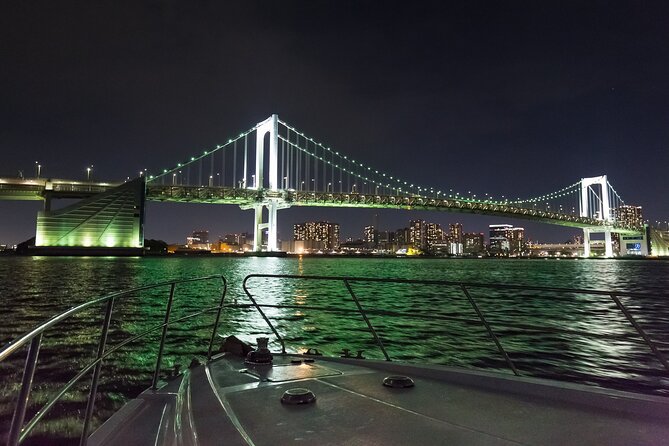
- Rainbow Bridge from below: The boat passes under one of Tokyo’s biggest bridges, with the roadway about 50 meters above the water.
- Tokyo Tower by boat: You get a view of this famous orange landmark from the bay rather than from the usual city streets.
- Afternoon or night sailing: Daylight helps with structure and detail, while the later cruise brings lit bridges, towers, and city reflections.
- Two viewing areas: Use the open top deck for photos, or sit downstairs in an air-conditioned cabin with tables.
- Small-to-medium group size: The boat holds a maximum of 57 people, though some sailings can be much quieter.
- A practical short outing: The cruise leaves from Tennozu Yamatsu Pier, returns to the same point, and includes a restroom and boarding fee.
Why seeing Tokyo from the water changes the city
Tokyo can feel like a city of hidden angles. From street level, a tower may disappear behind office blocks, and a bridge may seem like little more than a roadway overhead. From the boat, you get space between yourself and the buildings. That distance helps you see how Tokyo’s older waterways, modern towers, ports, and reclaimed waterfront fit together.
This is not a long sightseeing voyage. At about an hour and a half, it is short enough to add to a busy Tokyo day. You are not spending half a day getting to a distant harbor or sitting through a long lecture. The route gives you a string of recognizable sights, with the crew explaining the architecture and background as you go.
The cruise works best as a visual experience with commentary, not as a replacement for visiting Tokyo Tower, Odaiba, Tsukiji, or the bridges on foot. You will not have time to get off and explore. Instead, you get a moving view and a chance to rest your feet.
The boat carries up to 57 people. That is large enough to give the cruise a social feel, but not so large that it resembles a major sightseeing ship. On a quiet Wednesday night, one sailing had only about 10 people aboard, creating an unusually private feeling. You cannot count on that, but a less crowded departure is possible.
More Boat Tours in Tokyo
- Mt Fuji & Hakone Cruise, Drum Show Bullet Train 1 Day from Tokyo
★ 4.0 · 7,413 reviews - Tokyo Mt Fuji 5th St & Hakone Cruise Bus Tour w/Bullet Train
★ 4.4 · 5,024 reviews - Tokyo: Meiji Shrine, Asakusa, Skytree Bus Tour and Cruise
★ 4.7 · 1,986 reviews
Boarding at Tennozu Yamatsu Pier
The starting point is Tennozu Yamatsu Pier at 1-chōme-39-21 Higashishinagawa, in Shinagawa City. The pier is near public transportation, which makes it a practical base for a waterfront outing. Your mobile ticket is confirmed at booking, and the boarding fee is included in the price.
The cruise returns to the same meeting point. That matters when you plan dinner or another evening activity. You do not need to arrange a one-way transfer from the end of the route, and you can leave your schedule open for the area around Tennozu afterward.
Give yourself enough time to locate the pier. The supplied information does not state a precise check-in deadline, so you should not assume the boat will wait for late arrivals. Keep your confirmation easy to open on your phone, especially if you are moving around Tokyo with limited data or a low battery.
The boat has a restroom, which is useful on a 90-minute ride. Children’s chairs are also available. The information does not give an age restriction, and most people can participate, so this is not an outing limited to serious walkers or physically active visitors.
Choosing afternoon light or Tokyo after dark
The departure choice can shape the entire mood of the cruise. In the afternoon, you have a better chance to study the bridges, waterfront structures, and outlines of the buildings. The top deck should be the natural choice for clear photos, provided the weather is comfortable.
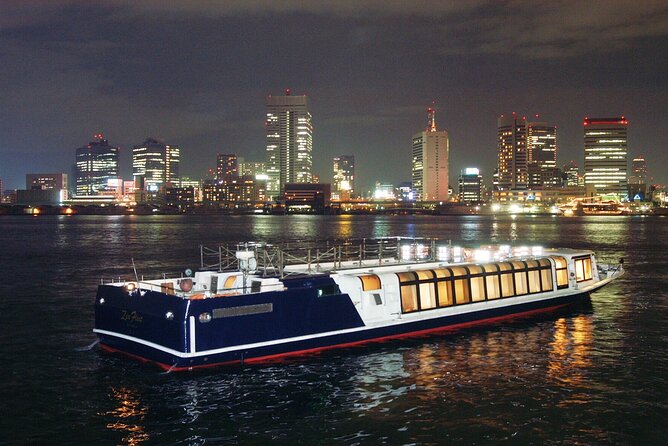
The night sailing is more atmospheric. Tokyo Tower is lit after dark, and the city’s colors reflect on the water. Rainbow Bridge and the other waterfront structures become points of light rather than just pieces of steel and concrete. If you want a classic city-at-night experience, the later option has the stronger visual effect.
Night also brings tradeoffs. The upper deck can feel cold, and one useful improvement would be blankets for people sitting outside. You can stay below deck, where the boat is air-conditioned and tables are available, but the windows may not give you the same unrestricted photo angle.
The best seat depends on your priority. Choose the open top deck if you want wide views and photographs. Choose the lower level if you value warmth, a table, and a more relaxed ride. You can also move between the two areas when conditions allow, though the practical details of seat availability are not specified.
Passing beneath Rainbow Bridge
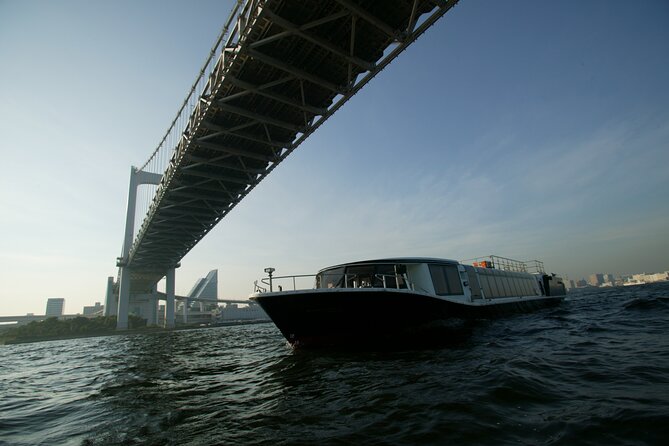
Rainbow Bridge is one of the route’s headline moments. The boat passes under the bridge, giving you a view that road traffic cannot provide. The bridge connects Shibaura and Odaiba, and its roadway sits about 50 meters above sea level.
From the water, the bridge feels larger and more three-dimensional. You see the underside, support structures, and span overhead as the boat moves through it. Have your camera ready before the approach. A moving boat gives you only a short window for the best angle.
Rainbow Bridge also helps you understand the route. It links the more central Tokyo side of the waterfront with Odaiba, the modern island district farther out in the bay. Passing below it makes the connection between those areas tangible in a way that a map cannot.
The view is weather dependent. Rain, wind, or poor visibility can reduce the appeal of the upper deck, and the operator may cancel the cruise in bad weather. A different date or full refund is offered if poor conditions cause cancellation.
A few more Tokyo bookings worth comparing
- Mt Fuji and Hakone 1-Day Bus Tour Return by Bullet Train
★ 5.0 · 26,383 reviews - 1-Day Tokyo Bus Tour
★ 5.0 · 14,250 reviews - Tokyo: TOKYO SKYTREE® Admission ticket
★ 4.5 · 11,192 reviews - Tokyo: teamLab Planets TOKYO Digital Art Museum Entry Ticket
★ 4.6 · 9,779 reviews
Tokyo Tower from the bay
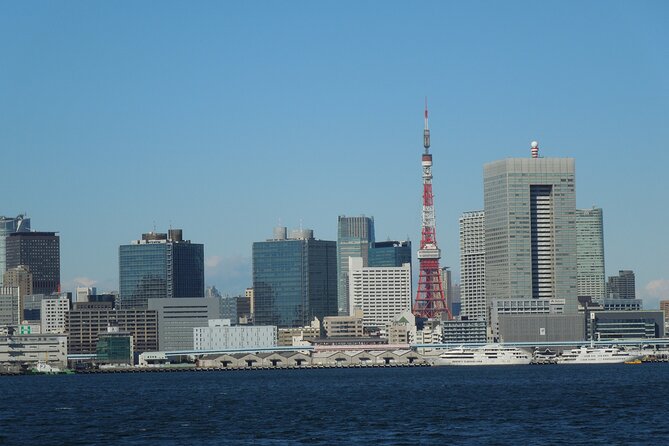
Tokyo Tower is usually photographed from streets, parks, or observation decks. Here, you see it from above the water, with the city arranged around it. The tower was Japan’s tallest television tower from 1958 to 2011 and remains one of Tokyo’s most familiar landmarks.
The boat does not stop at Tokyo Tower. You pass a place where the tower can be seen from the water, so the value is the unusual angle rather than close access. If you have already visited the tower, this gives you a different view. If you have not, treat it as a preview, not a substitute for going there.
At night, Tokyo Tower is especially useful as a landmark. Its lights help you orient yourself among the darker spaces of the bay and river. On an afternoon sailing, you can pay more attention to its shape and position within the city.
Crew commentary adds context as the boat passes. The guides explain architecture and history, and an English-speaking guide has been noted on the cruise. No language guarantee is provided in the supplied details, so you should book this mainly for the views, with the spoken information as an added benefit.
Kachidoki Bridge and Tokyo’s working waterways
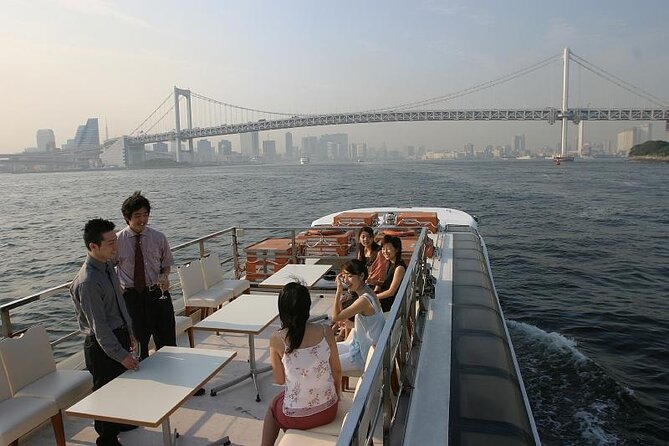
The route also passes beneath Kachidoki Bridge, one of the few bascule bridges in Japan. A bascule bridge lifts to let ships pass, which gives this crossing a mechanical purpose beyond carrying road traffic.
The bridge’s design reflects an earlier period when large ships used the Sumida River more often. The route’s commentary connects the bridge with the need to lift sections for passing vessels. From a boat, that explanation makes more sense because you are looking at the waterway the bridge was built to serve.
This section is a good reminder that Tokyo’s rivers are not only scenic backdrops. They carried cargo, linked neighborhoods, and helped shape the city’s waterfront. You see a working side of Tokyo that is easy to miss when you stick to rail stations and shopping streets.
The route includes several bridge passages and waterfront views, but it does not promise long stops for close inspection. If you want architectural detail, listen carefully as the boat approaches and keep your camera ready. The commentary may be harder to hear outside, especially on a windy night. One useful improvement would be a microphone or stronger volume, since sound carries less clearly on the upper deck.
Tsukiji, Toyosu, and the city’s food markets
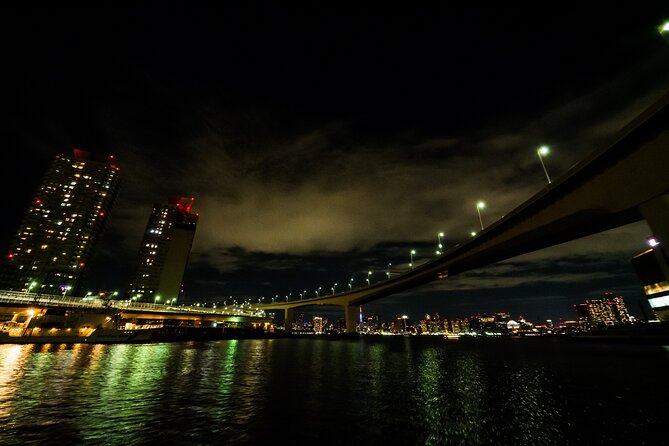
From the water, you pass the area associated with Tsukiji, once Japan’s largest central market. The wholesale functions later moved to Toyosu because of the aging Tsukiji buildings. That change is part of Tokyo’s continuing effort to adapt old waterfront facilities to modern needs.
The boat also passes the newer market center at Toyosu. Its building has an unusual shape and can be viewed as a whole from the water. This is one of the cruise’s quieter strengths: instead of seeing only a market street, you get a sense of the larger waterfront district and how its buildings sit beside the bay.
Do not expect a market visit during the cruise. There is no stop for seafood, shopping, or a meal on land. The boat only passes these places, so plan a separate Tsukiji or Toyosu visit if eating your way through Tokyo is your main goal.
Still, the view adds useful context. You see how food distribution, shipping, bridges, and city expansion all connect along the waterfront. The crew’s explanations help turn a passing building into part of Tokyo’s story.
Eitai Bridge and the changing Sumida River
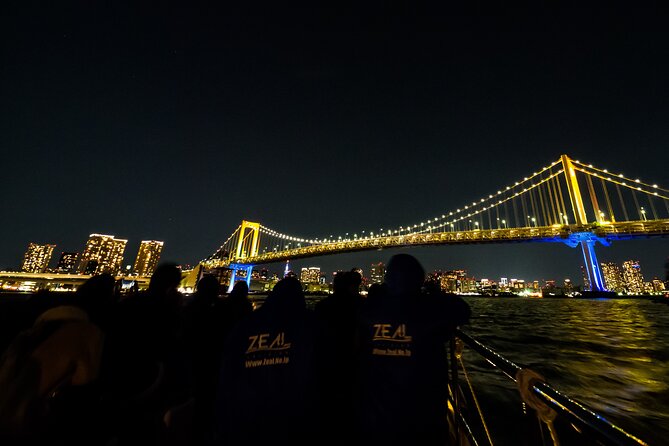
Eitai Bridge was built in 1926. The bridge is tied to the development of modern bridge construction in Japan, including the early use of iron for road bridges. An earlier bridge with a wooden floor was destroyed by fire, giving the structure a practical history that goes beyond its appearance.
Again, the boat gives you the right viewing position. Bridges are designed to be crossed, so most people see only the roadway or railings from above. On the water, you can look up at the span and see how it connects both riverbanks.
The route does not turn every bridge into a lengthy stop. That is a benefit if you want a flowing 90-minute ride, but a limitation if you want a detailed architecture lesson at each crossing. The experience gives you a broad introduction to Tokyo’s waterways rather than a specialist bridge tour.
Odaiba Seaside Park and the final waterfront views
The cruise passes through Odaiba Seaside Park. The name Odaiba comes from daiba, a place where a cannon was installed. At the end of the Edo period, the Tokugawa shogunate built these defensive positions in response to the threat of foreign ships.
That old defensive purpose contrasts with Odaiba’s modern identity. Today, it is known as a planned waterfront district, and the cruise lets you see its shoreline from a more open angle. The change from defensive island to leisure and development zone is one of the route’s most interesting pieces of context.
Odaiba is also closely tied to Rainbow Bridge, so this part of the cruise helps complete the geographic picture. You have passed from the inner waterfront toward the bay and then around the modern island district before returning to the pier.
The route ends back at Tennozu Yamatsu Pier. You leave with a broad visual map of Tokyo’s waterfront, even if you never set foot on most of the places you passed.
What the $65.89 price buys you
At $65.89 per person, this is not a bargain transportation ride. You are paying for a planned sightseeing route, the boat, commentary, an open viewing deck, an air-conditioned lower level, a restroom, and the boarding fee.
The value is strongest if you choose the night sailing, care about photography, and want a comfortable way to see several distant landmarks in one outing. It can also be worthwhile near the end of a Tokyo trip, when your feet need a break but you still want one more memorable view of the city.
The price feels less convincing if you only want to ride under one bridge or if you expect a meal and drinks to be part of the ticket. Alcoholic beverages and snacks are available for onboard purchase, but they are not included. Set aside extra money if you want refreshments.
The cruise has received a 4.9 rating from 25 reviews, with 100 percent recommendation shown in the supplied information. The strongest praise centers on the beautiful night views, kind crew, clean facilities, smooth operation, and the open-air photo area. One sailing had only about 10 people, though you should not book expecting that level of space.
Who will enjoy this cruise most
I would choose this for you if you want a low-effort way to see Tokyo from a new angle. It suits couples looking for an evening activity, families who need a seated break, and photographers who want open views of bridges and city lights.
It also works well as a final-night activity. The boat returns to where it began, the ride is short, and the waterfront setting gives your trip a clear closing scene. You can sit, listen, take photographs, and let the city move past without adding another complicated transfer.
This is less suitable if you want extensive time at each landmark. The cruise does not include visits to Tokyo Tower, Tsukiji, Toyosu, or Odaiba, and you cannot explore the bridges from the boat. It is also not ideal if you dislike cool outdoor conditions on night sailings or want all food and drinks included.
The maximum group size is 57 people, and most people can participate. Children’s chairs are available, but the supplied information does not provide detailed accessibility specifications beyond that. If you have specific mobility needs, confirm the boat setup before booking.
Should you book the 90-minute Tokyo cruise?
Book it if the idea of Tokyo by water appeals to you more than another crowded city street. The night sailing offers the most striking combination of lit landmarks, dark water, and waterfront reflections. The afternoon option is better for seeing bridge structure and city details.
At $65.89, I would not call it an automatic purchase for every Tokyo itinerary. But if you value a quiet seat, unusual photo angles, friendly crew service, and a short route that covers Rainbow Bridge, Tokyo Tower, Odaiba, Tsukiji, Toyosu, Kachidoki Bridge, and Eitai Bridge, the cost can make sense.
Choose the upper deck for pictures, bring a warm layer at night, and keep the phone ready before each bridge. If bad weather cancels the sailing, you can accept another date or receive a full refund. You can also cancel for a full refund up to 24 hours before the start time, which gives you some useful planning flexibility.
FAQ
How long does the Tokyo Spectacular View Day-Cruise last?
The cruise lasts approximately 1 hour and 30 minutes.
Where does the cruise begin?
It begins at Tennozu Yamatsu Pier, 1-chōme-39-21 Higashishinagawa, Shinagawa City, Tokyo 140-0002, Japan.
Where does the cruise end?
The activity ends back at the same meeting point at Tennozu Yamatsu Pier.
Is the cruise available during the day and at night?
Yes. You can choose an afternoon or night option, depending on the available schedule.
What landmarks can I see from the boat?
The route includes views of Rainbow Bridge, Tokyo Tower, Kachidoki Bridge, Tsukiji, Toyosu, Eitai Bridge, and Odaiba Seaside Park.
Is food or alcohol included in the ticket?
No. Alcoholic beverages and snacks are available for purchase onboard, but they are not included in the ticket price.
What facilities are included on the boat?
The boat includes a restroom, air conditioning, and the boarding fee. Tables are available on the downstairs level.
How many people can join the cruise?
The activity has a maximum capacity of 57 people.
What happens if the weather is poor?
If the cruise is canceled because of poor weather, you will be offered a different date or a full refund. You can also cancel at least 24 hours before the start time for a full refund.
New on our Tokyo list
- From Tokyo: Mount Fuji & Hakone Full Day Private Tour★ 4.9 · 25 reviews
- Real Tokyo Runner Club : Daikoku Car Meet Night Tour with JDM Car★ 5.0 · 25 reviews
- 2.5 Hour-Guided Cycle Tour in the Central Tokyo★ 5.0 · 25 reviews
- Ramen Making from Scratch +Akihabara Tour –Cooking Class★ 5.0 · 25 reviews
- [Self-Drive] Tokyo & Daikoku Custom Car Driving Tour★ 4.9 · 25 reviews
- Tokyo: 2-Hour Night Bike Tour of the City’s Hidden Gems★ 4.9 · 25 reviews
- Buddha, Bamboo & Zen – Bespoke Kamakura Private Walking Tours★ 5.0 · 25 reviews
- Samurai themed Entertainment show in Shinjuku★ 4.5 · 25 reviews
Boat Tours in Tokyo, compared.
Mt Fuji & Hakone Cruise, Drum Show Bullet Train 1 Day from Tokyo
Read our review →
Tokyo Mt Fuji 5th St & Hakone Cruise Bus Tour w/Bullet Train
Read our review →
Meiji Shrine, Asakusa, Skytree Bus Tour and Cruise
Read our review →
Mt Fuji & Hakone Cruise, Drum Show Bus 1 Day from Tokyo
Read our review →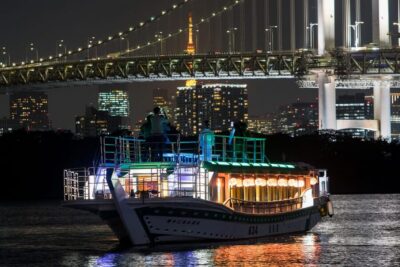
Sumida River: Japanese Traditional Yakatabune Dinner Cruise
Read our review →
Hakone Fuji Day Tour w/ Cruise, Cable Car, Volcano
Read our review →
Dynamic Tokyo: Tokyo Tower, Tea Experience, Bay Cruise Day Tour
Read our review →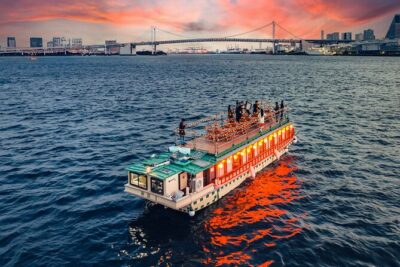
Tokyo Bay Yakatabune Dinner/Day Cruise with Japan Show and Drinks
Read our review →Browse the lists this tour appears in