Reviewed · TOKYO TOURS
Celebrate Unique Japanese New Year Tradition Culture Festivity
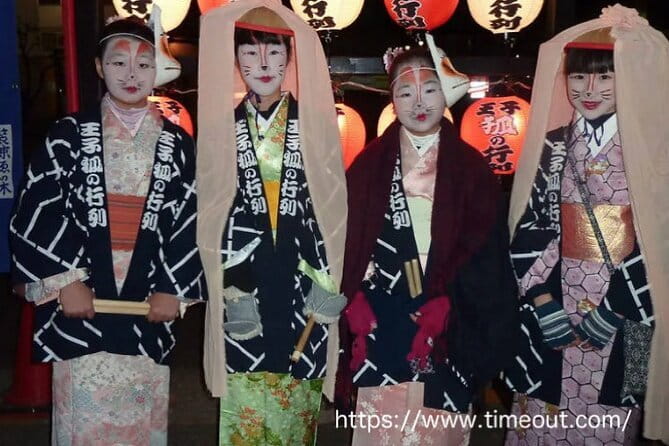
Oji’s New Year celebration turns an old fox legend into a real street spectacle. More than 200 participants carry yellow lanterns, wear fox masks or makeup, and follow a procession linked to Oji Inari Shrine and ukiyo-e artist Utagawa. You visit three shrines, learn about sake, eat at an izakaya, and reach the procession before midnight.
I like the local focus and the way the evening connects shrine customs, food, sake, and folklore. I also like the practical setup: drinks and snacks are included, and the host takes you to the procession’s starting point. The main concern is group size. The activity lists a maximum of 30 people, but one recent account described a group of more than 50, so confirm the current arrangement before paying.
In This Review
- Key points to know before booking
- Why Oji is a fine place for New Year
- Starting at JR Oji Station
- Three shrines before the celebrations begin
- Sake, hinoki cups, and izakaya snacks
- Following the foxfires to the procession
- What the $106.74 price really covers
- Who will enjoy this New Year plan
- Practical details that can affect the night
- Should you book Celebrate Unique Japanese New Year Tradition Culture Festivity?
- FAQ
- Where does the experience begin?
- Where does the experience end?
- How long does the experience last?
- What drinks are included?
- What food is included?
- Can I cancel for a full refund?
Key points to know before booking
- Fox lantern procession: Yellow lanterns represent foxfires in the Oji New Year tradition.
- Three shrines: You visit local shrines with a Japanese host before the evening meal.
- Sake lesson and tasting: A sake sommelier explains brewing, followed by five kinds of snacks.
- Food and drinks included: Adults receive free-flow sake, beer, or other alcoholic drinks. Soft drinks are provided for underage participants.
- Midnight entertainment: The final procession includes traditional dances and a powerful lion dance.
- Small-group promise to check: The stated limit is 30 people, though group size has been a concern.
Why Oji is a fine place for New Year
Tokyo’s New Year celebrations often focus on famous temples and shrines in central districts. Oji offers something different: a neighborhood festival shaped by a fox legend, local organizing, and a procession that turns the streets into a stage.
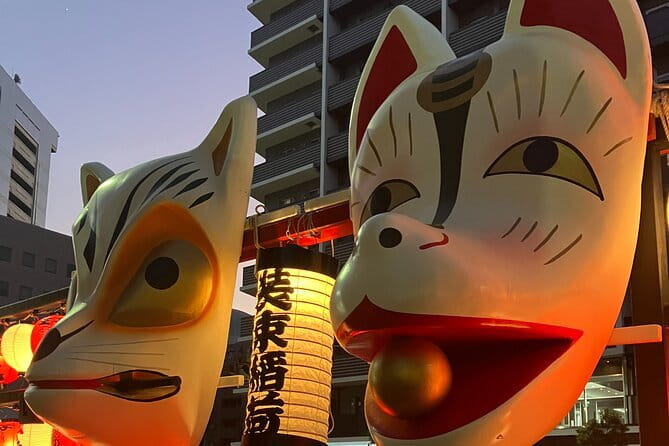
The story says foxes from across the region gathered at Oji Inari Shrine on New Year’s Eve. The foxes carried lanterns, creating mysterious lights in the night. This scene was captured in ukiyo-e artwork by Utagawa, helping preserve the tale as part of Japanese popular culture.
That background matters because the event is not simply a costume parade created for tourists. The fox masks, makeup, lanterns, shrine visits, dances, and lion performance all connect to a local tradition. You get a clearer sense of the celebration when you see the shrines first, then hear about the folklore before the procession begins.
The experience lasts about three hours. That is long enough to give the evening some shape without taking over your entire New Year night. Still, the timing deserves attention. The supplied meeting information says 8:30 am, while the description places the main activity on New Year’s Eve and around midnight. This is an important detail to confirm with the operator before booking, since the listed start time may be a data error or may refer to a different local schedule.
A few more Tokyo bookings worth comparing
- Mt Fuji and Hakone 1-Day Bus Tour Return by Bullet Train
★ 5.0 · 26,383 reviews - 1-Day Tokyo Bus Tour
★ 5.0 · 14,250 reviews - Tokyo: TOKYO SKYTREE® Admission ticket
★ 4.5 · 11,192 reviews
Starting at JR Oji Station
The meeting point is the north entrance of JR Oji Station, at 1-chōme-10-18 Ōji, Kita City, Tokyo. Starting at a rail station is helpful in Tokyo, where finding a small restaurant or neighborhood shrine can take time.
Plan to arrive early. On New Year’s Eve, stations and streets can be crowded, and the group may need to gather before moving between stops. The activity ends back at the meeting point, so you are not left to find your own way home from an unfamiliar part of Tokyo.
You should also save the mobile ticket before leaving your hotel. Mobile tickets are convenient, but phone batteries, crowded stations, and poor reception can create needless trouble. Bring your booking details and the operator’s contact information in an easy-to-reach place.
Three shrines before the celebrations begin
The first portion takes you to three local shrines. The names of all three are not provided, so you should not book this expecting a detailed tour of a specific list of famous sites. The appeal is the sequence: you begin with religious places and local customs before moving into food, drink, and public celebration.
A Japanese host leads this part of the experience and explains what you are seeing. That guidance can be useful at shrines, where visitors may not know how to behave, what different areas mean, or how New Year customs fit together.
You will want to treat these stops with care. One account described a large group that felt intrusive at the shrines, with the party taking over too much space and drawing attention as it passed. That is a serious concern for an activity built around local religious sites. Keep your voice low, follow the host’s instructions, and avoid blocking entrances, prayer areas, or narrow paths.
The operator says it works with local tourism associations and the organizing committee. That connection suggests the event has local support, but it does not remove the need for respectful behavior. A group can be officially welcomed and still feel too large if everyone gathers in one tight area.
Sake, hinoki cups, and izakaya snacks
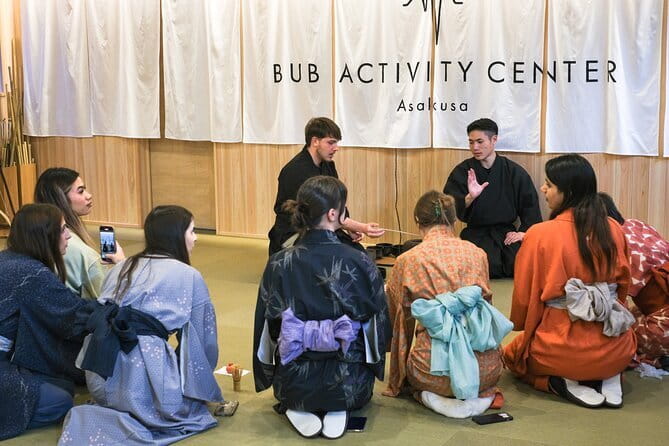
After the shrine visits, the group heads to a cozy izakaya. In Japan, an izakaya is a casual place for drinks and small dishes. This part gives the evening a social center, and it keeps you indoors during the coldest part of the night.
The drink program is one of the strongest practical benefits. Adults receive free-flow sake, beer, or other alcoholic drinks. Participants under the legal drinking age receive soft drinks instead. The exact range of beer and other beverages is not specified, so do not assume a premium sake list or an unlimited menu of every drink in the restaurant.
You begin with sake served in hinoki cypress masu cups. A masu is a traditional wooden cup, and hinoki gives it a fresh, aromatic scent. It is a small touch, but it makes the tasting feel tied to Japanese drinking customs rather than simply being a standard bar stop.
A sake sommelier explains how sake is brewed before the tasting begins. That lesson can help you notice differences between samples instead of treating every pour as the same. The experience includes five kinds of snacks, with edamame, fried chicken, and French fries specifically listed. These are straightforward izakaya foods, and that is part of the charm. You are not being promised an elaborate formal meal.
The snack selection also makes sense with an all-you-can-drink format. Salty, familiar foods are easy to share and pair with drinks. If you want a full dinner, though, you should not count on these portions replacing one. The details provided describe snacks, not a complete meal.
The free-flow drinks are valuable at this price, but they also change the mood of the evening. You are joining a social New Year gathering, not a quiet tasting class. If you want to sample sake carefully, pace yourself and use the brewing lesson as a reason to compare flavors slowly.
Same corner of Tokyo, a completely different plan:
- Tokyo: teamLab Planets TOKYO Digital Art Museum Entry Ticket
★ 4.6 · 9,779 reviews - Mt Fuji & Hakone Cruise, Drum Show Bullet Train 1 Day from Tokyo
★ 4.0 · 7,413 reviews - Tokyo: Sumo Show Experience with Chicken Hot Pot and a Photo
★ 4.8 · 6,678 reviews - Tokyo: Shinjuku Food Tour (13 Dishes at 4 Local Eateries)
★ 5.0 · 6,603 reviews
Following the foxfires to the procession

As midnight approaches, the host takes the group to the starting point of the fox procession. This is an important service. Oji’s event may be easy for locals to recognize, but a first-time visitor may not know where to stand or how to reach the action through New Year crowds.
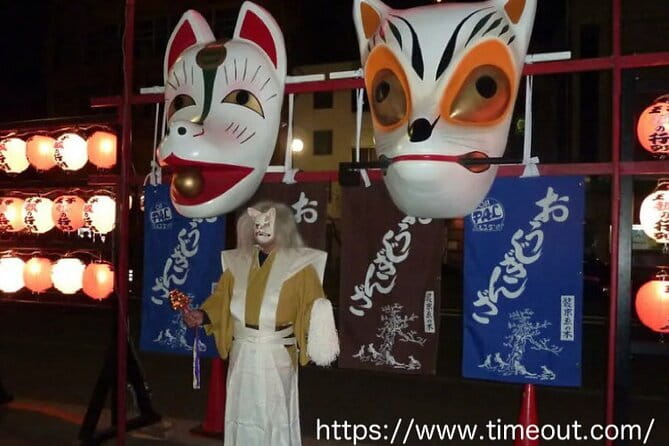
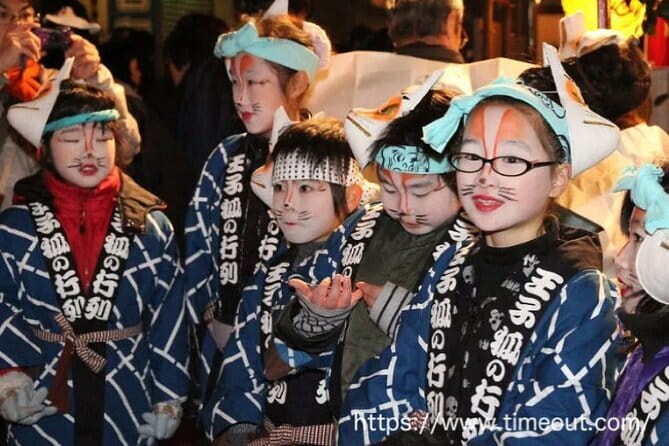
The procession is the visual heart of the experience. More than 200 participants carry yellow lanterns, which represent foxfires. Some wear kimonos, while others use fox masks or fox makeup. The combination should make for strong photographs, though you need to be mindful of the people taking part. Ask before photographing close-up faces, especially performers and children.
The fox theme comes from the legend connected with Oji Inari Shrine. It also reflects the way Japanese festivals often bring together sacred places, folktales, neighborhood groups, and performance. You are not only watching people in costumes. You are seeing a local story presented in public at the turning of the year.
The final program includes traditional dances and a lion dance. The lion dance is described as powerful, and it provides a lively finish after the quieter shrine visits and sake talk. Since the precise viewing position is not given, your sightline may depend on where the group arrives and how crowded the route is.
This is where group size matters most. A large party may be difficult to keep together in a crowded street, and it may make it harder for you to find a clear view. The advertised maximum is 30 participants, which would be manageable for a host-led walk. Yet one account described more than 50 people and found the group uncomfortable at the shrines. Ask OMAKASE to confirm the expected size for your date.
What the $106.74 price really covers
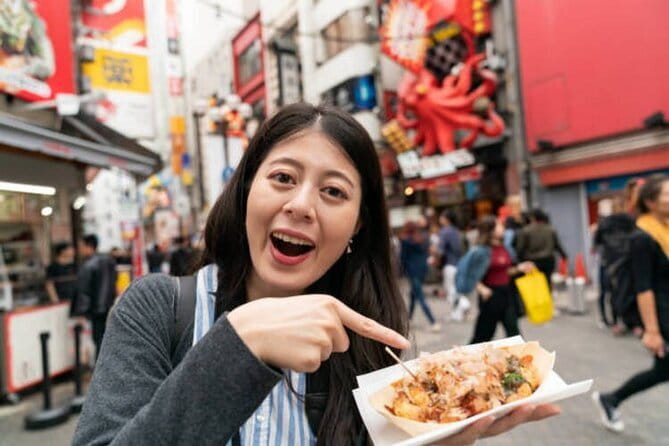
At $106.74 per person, the experience is not cheap for a three-hour evening. Its value depends on how much you want the structure and access.
You are paying for a host-led route through three shrines, a sake explanation, the izakaya stop, snacks, free-flow drinks, and guidance to the fox procession. If you arranged those parts yourself, the drinks and food would still cost money, and the procession’s starting point might not be obvious.
The price makes more sense for a first visit to Tokyo or for someone who wants a ready-made New Year plan. You do not need to research three shrines, find a suitable izakaya, arrange a sake tasting, and then work out where the procession begins. The host handles that sequence.
The value is weaker if you mainly want to watch the procession. You may be able to attend the public event without paying for the full tour, though the supplied information does not state admission rules or independent access details. The paid experience gives you context, food, drinks, and a route, not a private performance.
The overall rating is 3.4 from five ratings, so the experience has a limited and mixed record. There is not enough feedback to draw a firm conclusion about every guide or every date. The clearest concern is crowd management, and that should be part of your price decision.
Who will enjoy this New Year plan
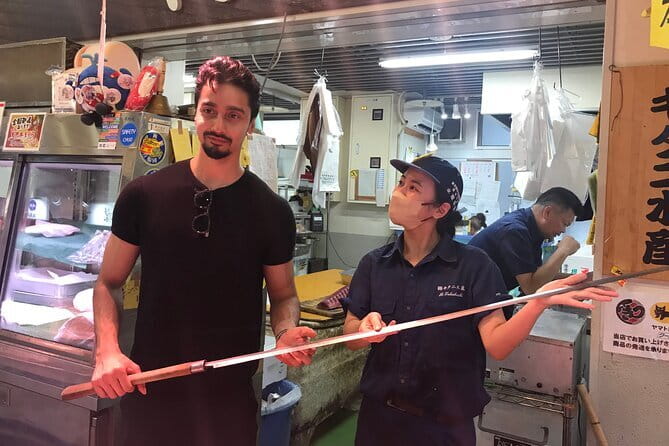
I would recommend this for you if you want a social night with several Japanese customs in one outing. It suits visitors who enjoy folklore, shrine visits, casual food, sake, and public festivals more than polished stage shows.
It also works well for adults who appreciate included drinks and want an easy way to meet other people. Underage participants can join because soft drinks are offered, though the atmosphere is still built around an izakaya and sake tasting.
You should think twice if you dislike crowds, group walks, or alcohol-centered activities. The three-hour schedule leaves little room to wander at your own pace. You will follow the host, move with the group, and spend part of the evening in a shared restaurant setting.
Photographers may find the lanterns, fox masks, kimono, and lion dance appealing. Just remember that the best images are not guaranteed. The group’s position, street crowd, and timing will affect what you can see.
Practical details that can affect the night
The experience is near public transportation, starts at JR Oji Station, and returns to the same meeting point. Most people can participate, and the stated maximum is 30 participants.
The weather policy matters because the activity requires good weather. If poor weather causes cancellation, you are offered another date or a full refund. You can cancel for a full refund up to 24 hours before the start time. Changes or cancellations inside that 24-hour window are not accepted.
Confirmation arrives within 48 hours of booking, subject to availability. Since the event is tied to New Year and has a fixed public celebration, book early enough to receive confirmation and check the start time. The average booking point is six days before the activity, but that is only a general pattern, not a guarantee of space.
Wear warm clothing and comfortable shoes. The information does not specify how much walking occurs, but three shrines, a restaurant, and a procession route require movement. Keep your hands free for your mobile ticket and personal items, and avoid bringing anything that would make it hard to move with a group.
Should you book Celebrate Unique Japanese New Year Tradition Culture Festivity?
Book it if you want the whole evening, not just the midnight procession. The mix of shrines, fox folklore, sake instruction, hinoki cups, simple izakaya snacks, lanterns, and traditional dances gives you a well-shaped introduction to Oji’s New Year custom.
Before committing, contact OMAKASE and confirm two points: the actual start time and the expected group size. The stated 30-person limit is reassuring, but the report of a group above 50 makes that check worthwhile.
I would skip it if your priority is quiet shrine time, independent exploration, or a small sake class. For everyone else, especially first-time visitors who want an organized and sociable New Year night, the experience offers a practical way to reach a distinctive local celebration.
FAQ
Where does the experience begin?
It begins at the north entrance of JR Oji Station, at 1-chōme-10-18 Ōji, Kita City, Tokyo 114-0002, Japan.
Where does the experience end?
The activity ends back at the meeting point near JR Oji Station.
How long does the experience last?
It lasts approximately three hours.
What drinks are included?
Adults receive free-flow sake, beer, or other alcoholic beverages. Soft drinks are provided for participants under the legal drinking age.
What food is included?
The experience includes five kinds of snacks. Listed examples include edamame, fried chicken, and French fries.
Can I cancel for a full refund?
Yes. You can cancel at least 24 hours before the experience start time for a full refund. Cancellations or changes made less than 24 hours before the start time are not accepted.
New on our Tokyo list
- Tokyo : Kamikaze Street Drift Ride★ 5.0 · 3 reviews
- Private Zen Meditation in English in Shinjuku, Tokyo★ 5.0 · 3 reviews
- Sumi-e Experience in a relaxing green tea shop in Tokyo★ 5.0 · 3 reviews
- Onsen Spa in Tokyo and Asakusa Bar Hopping with Local Guide★ 5.0 · 3 reviews
- Easy for everyone! Now you can play handmade mini shamisen and show off to everyone! Musical instruments, sweets and live music★ 5.0 · 3 reviews
- Tokyo: Private Tsukiji Street Food & Sake with Local Guide★ 5.0 · 3 reviews
- Mt Fuji Exploration Tour with Free Japanese Kusa Mochi from Tokyo★ 4.5 · 3 reviews
- Tokyo Tsukiji Fish Market Walking and Exploring Hidden Gems Tour★ 5.0 · 3 reviews
Tokyo Tours, compared.
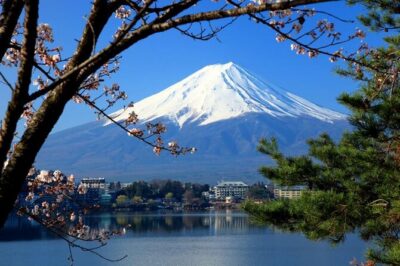
Mt Fuji and Hakone 1-Day Bus Tour Return by Bullet Train
Read our review →

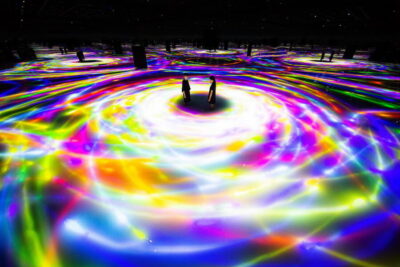
teamLab Planets TOKYO Digital Art Museum Entry Ticket
Read our review →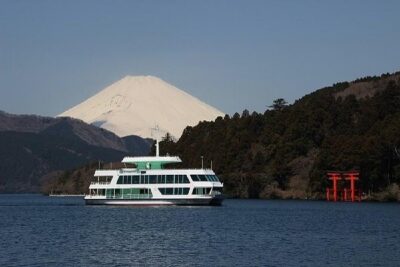
Mt Fuji & Hakone Cruise, Drum Show Bullet Train 1 Day from Tokyo
Read our review →
Sumo Show Experience with Chicken Hot Pot and a Photo
Read our review →
Shinjuku Food Tour (13 Dishes at 4 Local Eateries)
Read our review →