Reviewed · TOKYO TOURS
Chichibu’s Weaving Story: A Journey of Tradition and Festival
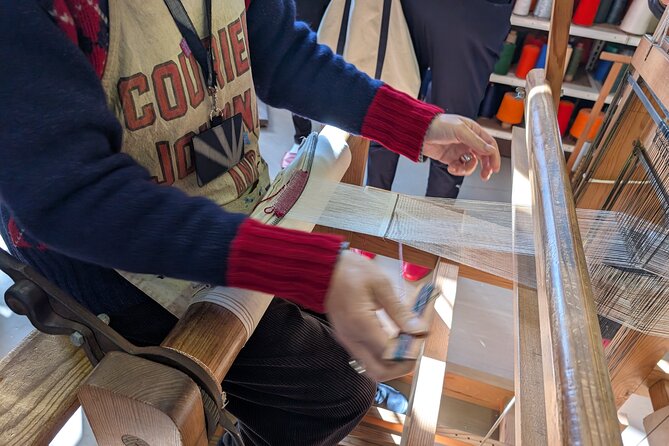
Chichibu’s silk story comes alive when you sit at a loom and make your own coaster, then see the giant floats built for the town’s famous Night Festival. This is not just a museum circuit. You move through the old silk district, the festival grounds, and the shrine that anchors the celebration.
I especially like the hands-on weaving workshop, which gives the local textile story a practical shape, and the small group limit of five, which should make it easier to ask questions and keep pace with the guide. You also get a useful mix of indoor exhibits and an outdoor walk through Chichibu’s older streets.
The main consideration is time. Three hours goes quickly, and several stops are brief. If you want a long shopping stop, a full shrine visit, or a slow look at every textile display, you will need to return to Chichibu after the tour.
In This Review
- Key Points at a Glance
- Why Chichibu Silk Makes This Tour Different
- Starting at the Chichibu Meisen Silk Center
- Meeting the Floats at Chichibu Festival Museum
- Walking Banba Street and the Old Merchant District
- A Short Look Inside Chichibu Furusato-kan
- Ending at Chichibu Shrine
- What the Three-Hour Schedule Really Gives You
- Is the $100.99 Price Worth It?
- Getting There From Tokyo
- Who Will Enjoy This Chichibu Tour Most?
- Should You Book Chichibu’s Weaving Story?
- FAQ
- How long does the Chichibu weaving and festival tour last?
- Where does the tour begin?
- Where does the tour end?
- Is the coaster-making activity included?
- Is admission to the Chichibu Festival Museum included?
- How many people can join the tour?
- Can I cancel for a full refund?
Key Points at a Glance
- Make a coaster on a real loom: The workshop turns Chichibu Meisen from an abstract craft into something you can try with your own hands.
- See the floats without December crowds: The Chichibu Festival Museum displays lavish yatai floats and kasaboko year-round.
- Walk the route of the Night Festival: You visit the slope where the floats are pulled during the festival’s climax.
- Follow old silk merchant streets: Banba Street, Kuromon Street, and Kaitsuisho Street preserve early Showa-era commercial buildings.
- Finish at a 2,100-year-old shrine: Chichibu Shrine is both a sacred site and the focal point of the local festival.
- Easy day trip planning: The tour begins at 9:30 am, ends at Chichibu Shrine, and Chichibu is about 90 minutes from Tokyo by Seibu Railway’s Limited Express Laview.
Why Chichibu Silk Makes This Tour Different
Chichibu is best understood through its old silk trade. For generations, sericulture and weaving supported the local economy, and Chichibu Meisen became especially popular as casual, stylish kimono clothing about 100 to 130 years ago.
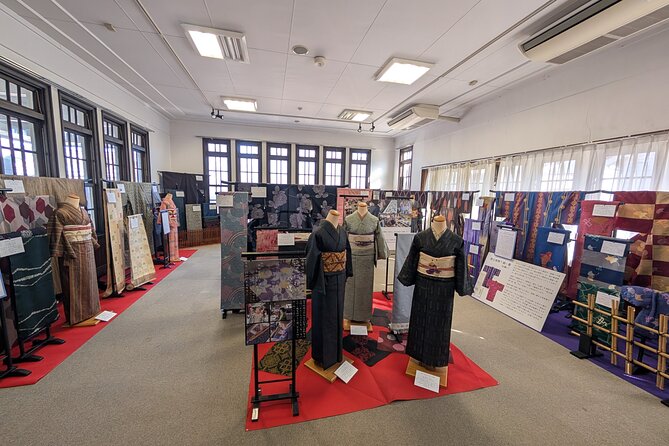
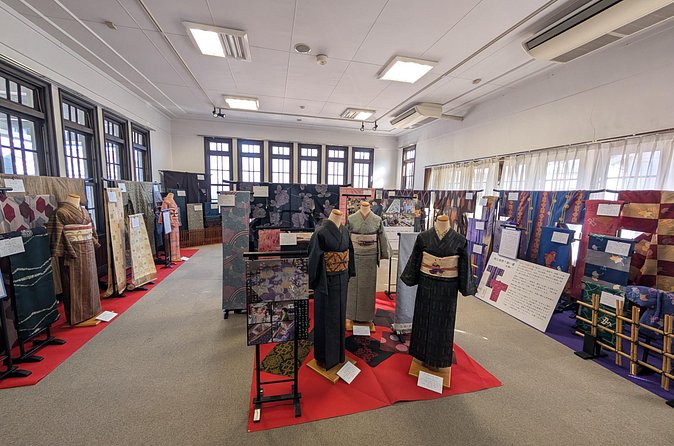
That detail matters. This is not a tour about court dress or rare ceremonial garments alone. Meisen belonged to everyday fashion. The museum’s textiles show how practical clothing could also use bold color, strong patterns, and careful weaving.
The town’s silk trade also helps explain the Chichibu Night Festival. Silk merchants came to town, and the grand float parades helped attract business and attention. The festival, held annually on December 2 and 3, has continued for more than 300 years and is sometimes called the Silkworm Festival.
I like this connection because it joins craft, commerce, religion, and public celebration. You are not looking at unrelated sights. The silk workshops, merchant streets, festival floats, and shrine all fit into the same local story.
A few more Tokyo bookings worth comparing
- Mt Fuji and Hakone 1-Day Bus Tour Return by Bullet Train
★ 5.0 · 26,383 reviews - 1-Day Tokyo Bus Tour
★ 5.0 · 14,250 reviews - Tokyo: TOKYO SKYTREE® Admission ticket
★ 4.5 · 11,192 reviews
Starting at the Chichibu Meisen Silk Center
The tour begins at 9:30 am at 1-chōme-16-15 Nosakamachi. Your first major stop is the Chichibu Meisen Museum, where admission and the coaster-making experience are included.
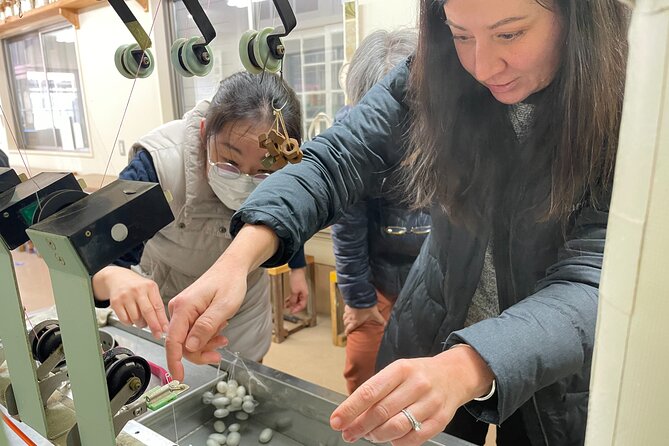
Expect about an hour here. You can see how silk thread is made, including live spinning demonstrations, and learn how the finished material became kimono fabric. The museum staff also guide the weaving activity and answer questions while you try the loom.
The coaster is the star of this stop. You do not merely watch a craft worker behind glass. You make a small textile item yourself, using the same basic idea of interlacing threads. It is a modest souvenir, but it gives you a better sense of how much control and patience weaving requires.
I would pay attention to the fabric patterns as well as the machinery. Chichibu Meisen is known for its attractive designs, and the museum helps you see the difference between raw silk, thread, woven fabric, and finished clothing.
This part suits families, craft fans, and anyone who likes to take home something connected to a place. It also works well for people who do not usually visit textile museums, since the workshop gives the visit a clear purpose.
The drawback is that one hour is not a lot of time. If you spend too long examining every kimono, you may feel rushed during the hands-on portion. I would join the weaving activity early, then look around the displays with the remaining minutes.
Meeting the Floats at Chichibu Festival Museum
The Chichibu Festival Museum, also called the Chichibu Matsuri Kaikan, is the tour’s second major indoor stop. Admission is included, and the visit lasts about 30 minutes.
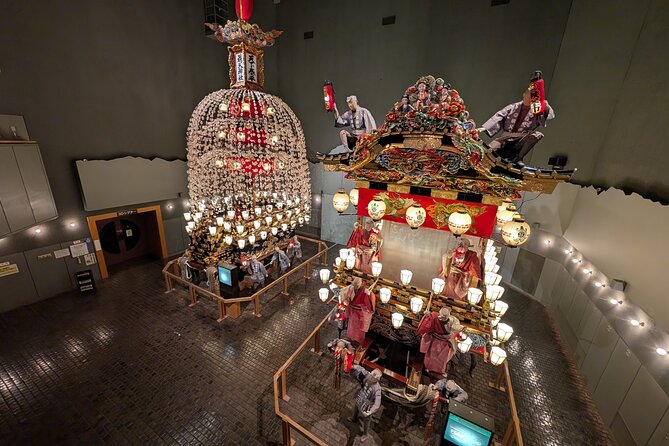
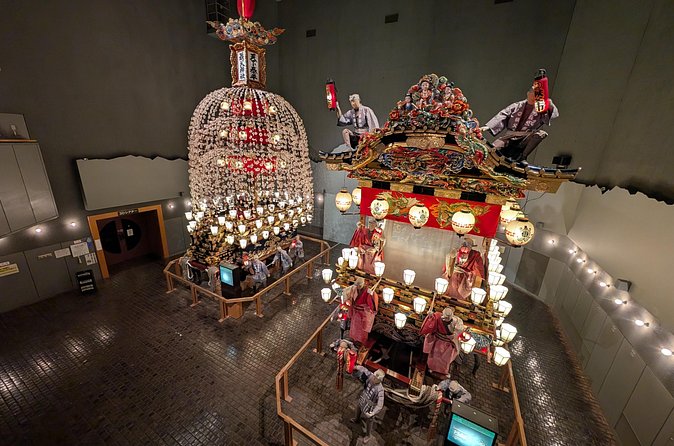
The museum displays the huge yatai floats and kasaboko used during the Night Festival. These are lavish structures, and seeing them indoors gives you a sense of their scale without the crowds, cold weather, and packed streets of the December event.
The festival is counted among Japan’s three great float festivals, alongside Kyoto’s Gion Festival and the Takayama Festival in Hida. The displays show why the event matters so much to Chichibu. The floats are not simple parade props. They represent local craft, money, labor, and religious devotion.
A 3D presentation helps recreate the movement of the floats and the fireworks. That visual element is useful because a stationary float cannot show you the full drama of the Night Festival. You can picture the procession more clearly, even if you visit in another season.
The museum is particularly valuable if your schedule does not allow a December visit. The real festival takes place only on December 2 and 3, while the displays are available throughout the year.
Still, a museum cannot replace the live celebration. You will not experience the noise, winter air, crowds, or actual float procession on this tour. If the festival is your main reason for coming to Chichibu, use this visit as preparation, then consider returning on December 3.
The guide also takes you to the slope where the floats are pulled upward during the festival’s climax. That short stop adds an important sense of place. You see not only the objects inside the museum, but also the physical challenge of moving them through town.
Walking Banba Street and the Old Merchant District
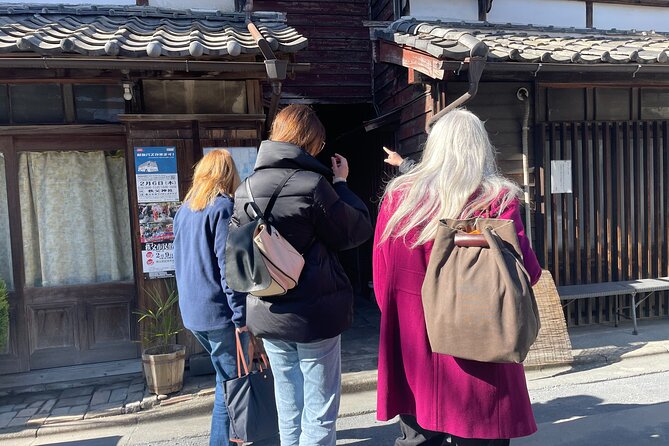
After the museum, the route continues through Chichibu’s historic center. Banba Street is the stone-paved approach to Chichibu Shrine and is lined with modern buildings from the late Taisho to early Showa period, roughly a century ago.
The word modern here refers to the buildings’ time, not their present-day appearance. Their age and design show how Chichibu looked when silk wholesalers and merchants drove the local economy.
The walk helps you read the town in a different way. Instead of seeing only a shrine road, you can notice shopfronts, commercial buildings, and the relationship between the center of town and the festival route.
You also visit streets once associated with Chichibu Meisen wholesalers. Kuromon Street and Kaitsuisho Street retain buildings tied to the silk trade, with an early Showa atmosphere that is easy to miss if you simply walk from the station to the shrine.
This is where a guide adds real value. The buildings may not announce their former purpose in English, and you could easily pass them without understanding why they matter. The tour gives these streets a place in the larger silk story.
The outdoor sections are not long sightseeing walks with major viewpoints. They are short town walks between museums and the shrine. Wear comfortable shoes, and keep your pace steady so you have time at the main stops.
Same corner of Tokyo, a completely different plan:
- Tokyo: teamLab Planets TOKYO Digital Art Museum Entry Ticket
★ 4.6 · 9,779 reviews - Mt Fuji & Hakone Cruise, Drum Show Bullet Train 1 Day from Tokyo
★ 4.0 · 7,413 reviews - Tokyo: Sumo Show Experience with Chicken Hot Pot and a Photo
★ 4.8 · 6,678 reviews - Tokyo: Shinjuku Food Tour (13 Dishes at 4 Local Eateries)
★ 5.0 · 6,603 reviews
A Short Look Inside Chichibu Furusato-kan
Chichibu Furusato-kan provides a brief look at buildings and storehouses once used by Meisen wholesalers. The scheduled visit lasts about 10 minutes, and admission is free.
Ten minutes may sound minor, but this stop fills in a useful gap. At the silk museum, you see the craft. At the streets, you see the old commercial setting. Here, you get a closer look at the kind of buildings connected with wholesalers who handled the finished goods.
Do not expect a large museum visit. This is a quick historical pause within the walking route. I would treat it as a chance to examine construction details and listen to the guide rather than as a place requiring a long independent visit.
The short timing also helps keep the tour within three hours. The route has several pieces, and this compact stop prevents the day from becoming a long lecture.
Ending at Chichibu Shrine
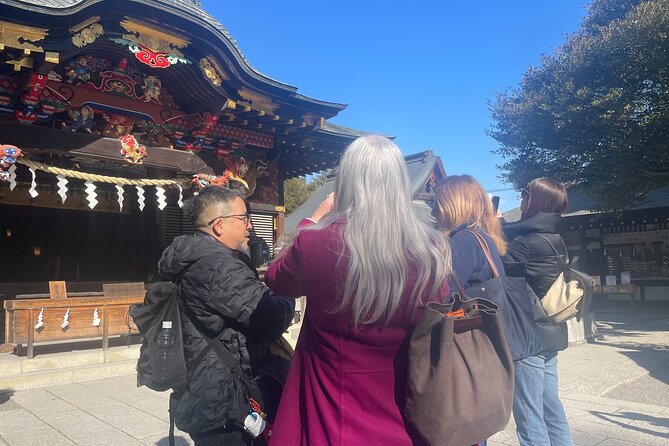
The final stop is Chichibu Shrine, where the tour ends. The shrine is believed to have been founded more than 2,100 years ago and is known for its detailed carvings and sacred atmosphere.
You have about 30 minutes here. That is enough for an introduction, a look at the architecture, and time to take in the setting, though it is not a full religious-site visit.
Chichibu Shrine is central to the Night Festival. The floats are not simply touring the town for entertainment. The shrine gives the festival its spiritual focus, which makes this final stop an important finish rather than an unrelated attraction.
The location also makes the ending practical. After saying goodbye at the shrine, you are free to continue walking around Chichibu on your own. You could use the rest of the day for local food, additional sights, or a return to a museum at your own pace. One tour response specifically points to local soba and an onsen as possible ways to extend the day, though neither is included in the tour.
A fortune slip is also available at the shrine for an extra fee. It is not included, so bring a little cash if that small ritual interests you.
What the Three-Hour Schedule Really Gives You
The timing is fairly tight but sensible:
- Chichibu Meisen Museum and weaving activity: about 60 minutes
- Chichibu Festival Museum: about 30 minutes
- Chichibu Furusato-kan: about 10 minutes
- Chichibu Shrine: about 30 minutes
- Additional time for walking between the sites and the guided street stops
That schedule gives you four distinct angles on Chichibu: making silk goods, seeing festival equipment, understanding the old trade district, and visiting the shrine behind the celebration.
You should not expect a slow, open-ended day. This is a focused morning introduction. I like that design for a first visit, especially if you are making a day trip from Tokyo. You get enough context to decide what deserves a second look later.
The small group maximum of five is another advantage. A group that size can usually move through narrow streets more easily and gives you a better chance to ask about the textiles, carvings, or festival customs. The booking data also suggests many people reserve about 29 days ahead, so I would not leave it until the last moment if your dates are fixed.
Is the $100.99 Price Worth It?
At $100.99 per person, this is not the cheapest way to walk around Chichibu. The price includes the guide, admission to the Chichibu Meisen Museum, the coaster-making activity, and admission to the Chichibu Festival Museum.
The value comes from the combination. If you visited the shrine and streets alone, you would save money, but you could miss the meaning behind the old merchant buildings and the connection between silk and the festival. The included weaving activity also gives the tour something more personal than a standard museum visit.
The price makes the most sense if you want a guided introduction and would otherwise need to arrange several separate visits. It is less compelling if you only want to see Chichibu Shrine or stroll the old streets, since those parts can be enjoyed without the full package.
Group discounts may be available, and mobile tickets are supported. The activity is limited to five people, which is a useful feature for anyone who dislikes large coach groups.
Getting There From Tokyo
Chichibu is about 90 minutes from Tokyo by Seibu Railway’s Limited Express Laview, according to the tour information. That makes this a realistic day trip rather than an overnight commitment.
You need to reach the starting point in Nosakamachi before 9:30 am. The tour ends at Chichibu Shrine, not back at the starting point, so plan your return route from the shrine or continue exploring the town.
The experience is near public transportation, and most people can participate. The information does not provide detailed accessibility notes, so if you need step-free access or have mobility concerns, ask the provider before booking.
Free cancellation is available if you cancel at least 24 hours before the local start time. Changes or cancellations inside that window are not refunded.
Who Will Enjoy This Chichibu Tour Most?
I would choose this experience if you want local culture with a clear story tying the stops together. It is especially well suited to:
- First-time visitors to Chichibu
- Families and older children who enjoy making things
- People interested in Japanese textiles and kimono
- Anyone planning a Tokyo day trip by train
- Visitors who cannot come during the December Night Festival
- Small groups who prefer a compact morning tour
It is less suited to you if you want a full-day nature outing, extensive shopping, or a long temple and shrine circuit. The tour stays focused on silk, the festival, old commercial streets, and Chichibu Shrine.
Should You Book Chichibu’s Weaving Story?
Book it if you want to understand why Chichibu’s silk trade, Night Festival, and shrine belong in the same story. The coaster-making workshop is the strongest feature because you move from watching a craft to trying it yourself. The float museum and festival route then give the town’s December celebration a physical setting.
I would also recommend it for a first Chichibu visit from Tokyo. The three-hour format leaves you free to eat soba, visit another attraction, or relax in an onsen afterward.
Skip it if you already know the town well or want to spend most of your day at the shrine or festival museum alone. For everyone else, the $100.99 cost buys a useful introduction, included admissions, a practical craft activity, and a small group setting that is hard to reproduce by wandering without a guide.
FAQ
How long does the Chichibu weaving and festival tour last?
The tour lasts approximately three hours. It begins at 9:30 am and finishes at Chichibu Shrine.
Where does the tour begin?
The meeting point is 1-chōme-16-15 Nosakamachi, Chichibu, Saitama 368-0033, Japan.
Where does the tour end?
The tour concludes at Chichibu Shrine, located at 1-3 Banbamachi, Chichibu, Saitama 368-0041, Japan. You are free to continue exploring Chichibu after the tour.
Is the coaster-making activity included?
Yes. The coaster-making experience fee is included, along with admission to the Chichibu Meisen Museum.
Is admission to the Chichibu Festival Museum included?
Yes. The Chichibu Festival Museum admission fee is included in the tour price.
How many people can join the tour?
The activity has a maximum of five participants. Group discounts are available.
Can I cancel for a full refund?
Yes. You can receive a full refund if you cancel at least 24 hours before the experience begins. Cancellations or changes made less than 24 hours before the start time are not accepted for a refund.
New on our Tokyo list
- Sumi-e Experience in a relaxing green tea shop in Tokyo★ 5.0 · 3 reviews
- Tokyo : Kamikaze Street Drift Ride★ 5.0 · 3 reviews
- Private Zen Meditation in English in Shinjuku, Tokyo★ 5.0 · 3 reviews
- Onsen Spa in Tokyo and Asakusa Bar Hopping with Local Guide★ 5.0 · 3 reviews
- Easy for everyone! Now you can play handmade mini shamisen and show off to everyone! Musical instruments, sweets and live music★ 5.0 · 3 reviews
- Mt Fuji Exploration Tour with Free Japanese Kusa Mochi from Tokyo★ 4.5 · 3 reviews
- Tokyo Tsukiji Fish Market Walking and Exploring Hidden Gems Tour★ 5.0 · 3 reviews
- Tokyo: Private Tsukiji Street Food & Sake with Local Guide★ 5.0 · 3 reviews
Tokyo Tours, compared.

Mt Fuji and Hakone 1-Day Bus Tour Return by Bullet Train
Read our review →


teamLab Planets TOKYO Digital Art Museum Entry Ticket
Read our review →
Mt Fuji & Hakone Cruise, Drum Show Bullet Train 1 Day from Tokyo
Read our review →
Sumo Show Experience with Chicken Hot Pot and a Photo
Read our review →
Shinjuku Food Tour (13 Dishes at 4 Local Eateries)
Read our review →