
Reviewed · DRINKING TOURS
EXCLUSIVE Tokyo: Kichijoji Small-Group Food & Bar Hopping
Kichijoji is the kind of Tokyo neighborhood where the best night may begin behind a plain door in a narrow alley. This three-hour small-group tour takes you into local izakaya and family-run bars around Harmonica Alley, places that can feel hard to enter without Japanese language skills or a local connection. Guide Hibi handles the ordering, customs, and conversation.
I like two things right away: the group is limited to six, so you can fit into tiny bars, and the evening is built around three to five different stops rather than one set restaurant. I also like the practical language help, since Hibi is a language instructor and can show you how to order, toast, and behave at the drinking table.
The main catch is cost control. The $109 price covers the guiding and food recommendations, but drinks are extra, usually 400 to 700 yen apiece, and you need cash. Strict vegans, vegetarians, and people with severe gluten allergies may find the food choices too limited.
In This Review
- Key points before you book
- Why Kichijoji makes a good night out
- Meeting Hibi at Kichijoji Station
- The first alley stop and a 20-minute orientation
- Guided Kichijoji streets, then the bar-hopping route
- What you will eat at the izakaya
- Drinks, cash, and the real cost of the evening
- Japanese drinking manners without the guesswork
- What the five-star feedback tells you
- Who will get the most from this experience
- A few practical ways to prepare
- Should you book the Kichijoji bar tour?
- FAQ
- Where does the Kichijoji food and bar tour meet?
- How long does the experience last?
- How many people can join the public tour?
- Are drinks included in the $109 price?
- What food and venues are included?
- Can people with dietary restrictions join?
Key points before you book
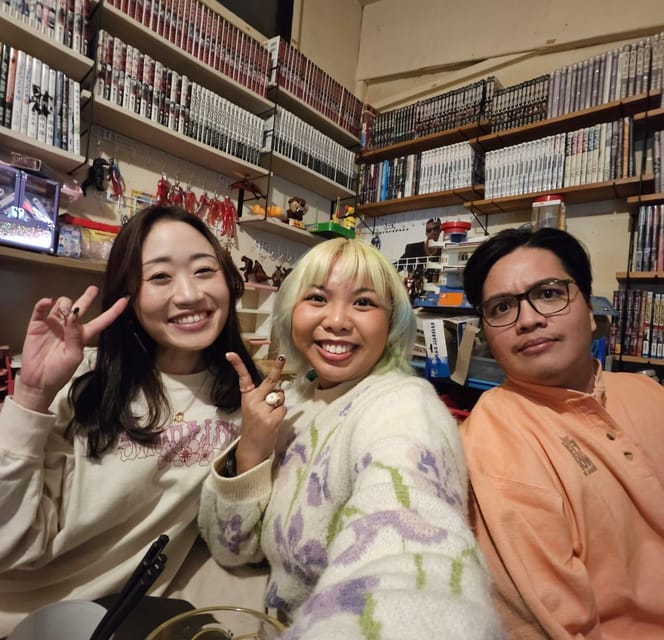
- Hibi opens local doors: Her relationships with Kichijoji shopkeepers make small, locals-focused bars easier for you to enter.
- Only six people maximum: The small party suits narrow counters and quiet neighborhood establishments.
- Food changes from stop to stop: You will sample recommended dishes at several izakaya and local food stalls, rather than eat one large meal.
- Drinks cost extra: Plan to bring cash, including coins, for drinks that usually run 400 to 700 yen.
- This is a social night out: You will learn drinking etiquette, practice useful Japanese phrases, and may chat with people in the bars.
Why Kichijoji makes a good night out
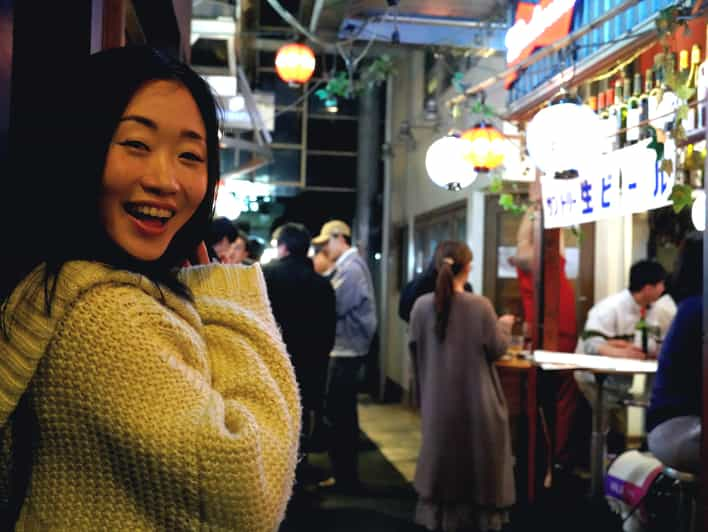
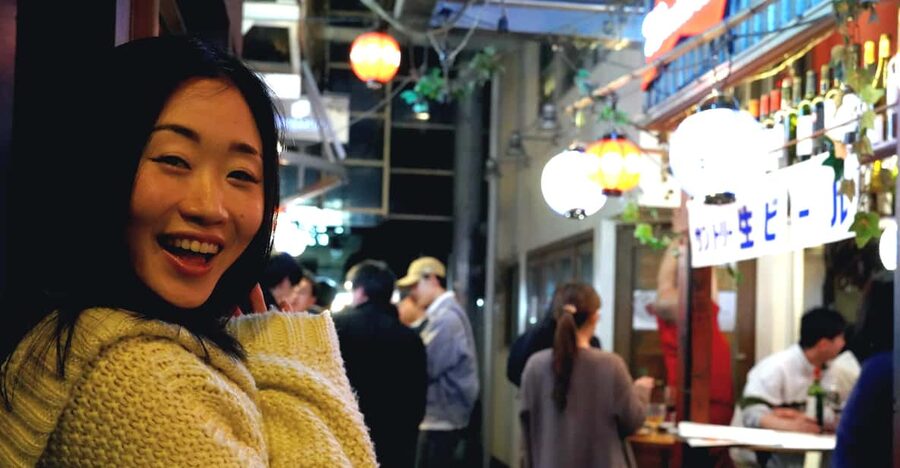
Kichijoji gives you a different side of Tokyo nightlife. It is known for Harmonica Alley, a tight collection of small eating and drinking spots where counters and tables can be close together. The neighborhood also has family-run places with little English signage and a strong sense of regular customers.
That can be fun if you know where to go. It can also be awkward if you do not know how to read the room, order from a Japanese menu, or tell if a bar has space for newcomers. This is where the guide adds real value. You are not simply following someone between restaurants. You are being introduced to places through a person who already knows the people working there.
I particularly like that the evening is not designed around Tokyo’s famous tourist districts. You are spending time in a neighborhood where local people eat and drink after work. The setting should feel less polished than a restaurant made for international visitors, but that is part of the point.
The tradeoff is that small local bars are not designed around predictable service. A particular dish, table, or stop may change. If you prefer a fixed menu, a quiet meal, and a clear schedule, this format may feel loose. If you enjoy trying what a local guide recommends, the uncertainty becomes part of the fun.
More old-Tokyo backstreet walks:
- The Old Quarter of Tokyo – Yanaka Walking Tour
★ 4.5 · 590 reviews - Yanaka Walking Tour: Historic and Traditional District of Tokyo
★ 5.0 · 530 reviews - Tokyo: Old Quarter Yanaka Walking Tour
★ 4.8 · 406 reviews
Meeting Hibi at Kichijoji Station
The meeting point is easy to identify if you use the north exit of Kichijoji Station. Look for the Baskin-Robbins, written in the local information as サーティワンアイスクリーム 吉祥寺店, near the bus stop.
Give yourself enough time to find the north exit. The tour asks you to arrive promptly because other people may be joining the same outing, and a bar-hopping schedule depends on the whole group moving together. Comfortable shoes are a sensible choice. You will be walking through station streets and alleyways for much of the evening.
Hibi is the guide named throughout the experience. She speaks English and Japanese, and she also teaches languages. That combination matters here. You can ask about a phrase, hear how it should sound, and use it almost immediately when ordering or greeting someone.
The group limit of six is one of the strongest practical features. A large party could not easily fit at the counters and tables found in Kichijoji’s smallest establishments. A group of six is still social, but it is small enough for Hibi to answer questions and keep conversations moving.
The first alley stop and a 20-minute orientation
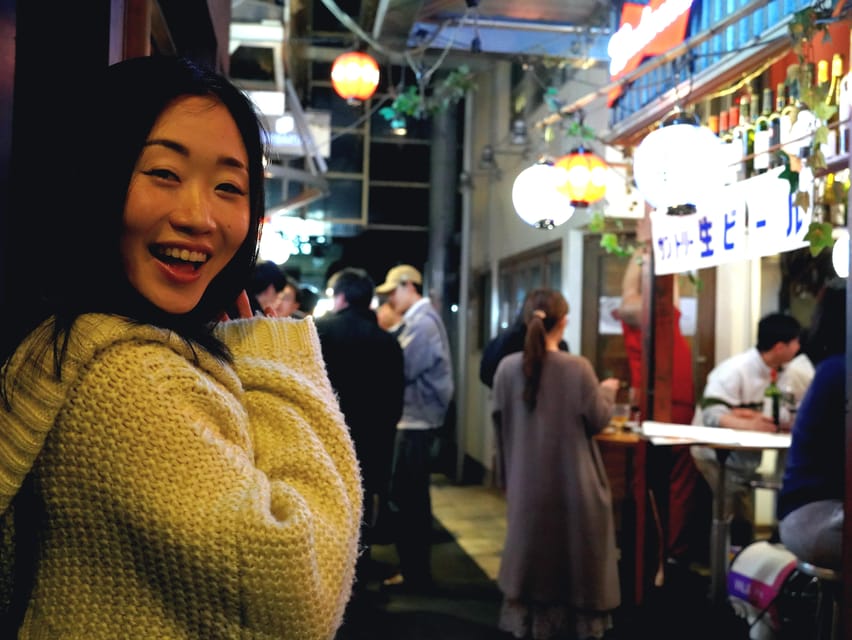
The evening begins with a local bar visit and a roughly 20-minute photo stop. This gives you time to get your bearings and see the kind of narrow, compact setting that defines the area.
Do not expect a major sightseeing viewpoint or a long history lecture here. The value is seeing the streets at ground level and understanding how the bars fit into the neighborhood. Harmonica Alley can look simple at first, but its tight passages and small entrances are easier to appreciate when someone points out the places that matter.
Photography may not be welcome inside some establishments. The tour specifically notes that certain local bars have no photography signs, so follow Hibi’s instructions and ask before taking pictures. You will get a better reception by treating the places as working businesses, not display rooms.
Bring a camera for permitted moments, but do not make photography the purpose of the evening. The best part of this experience is likely to be a conversation, a dish, or an ordering tip that cannot be captured in a picture.
Guided Kichijoji streets, then the bar-hopping route
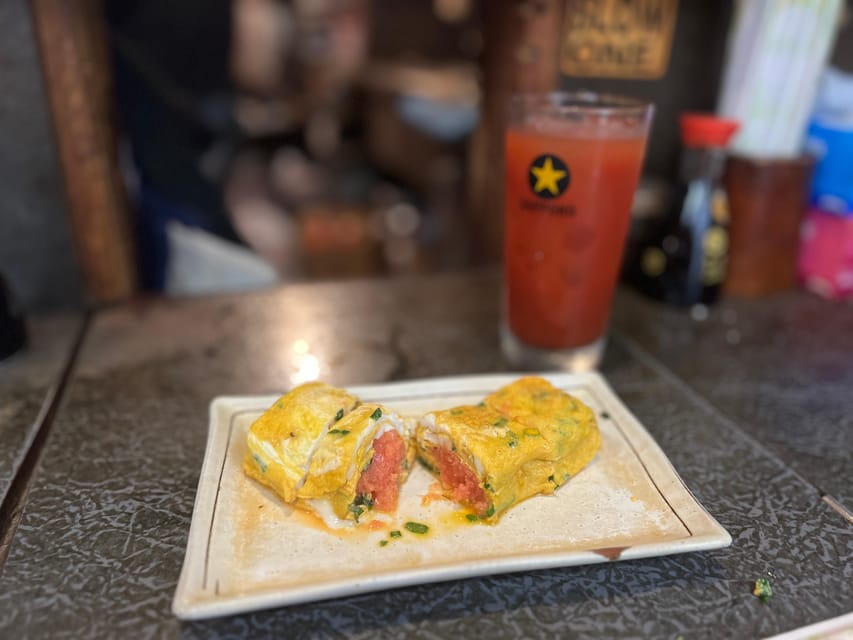
A short guided segment follows, and the overall Kichijoji outing lasts about three hours. The route is not presented as a standard restaurant crawl with a fixed list of public attractions. Instead, Hibi leads you between local bars, izakaya, and food stalls chosen for the evening.
The advertised plan includes three to five izakaya and bar visits. That range is worth noting. You may spend more time in one especially welcoming place and less time in another, depending on space, service, and the flow of the night. The goal is variety and local contact, not racing through a checklist.
This style is called hashigo-zake, or bar hopping. In Japan, that often means having a drink and a few small dishes in one place before moving to another. You are not necessarily ordering a full dinner at every stop. Instead, each place gives you another taste of the neighborhood and another chance to see how Japanese drinking culture works.
Hibi helps with ordering and interpretation, which is important in compact izakaya. She can explain what the recommended food is, how it is usually eaten, and which drink pairs well with it. The information provided does not promise a fixed menu, so you should expect the dishes to depend on what each shop is serving.
More Tokyo nights out:
- Tokyo Bar Hopping Tour in Shinjuku (All-You-Can-Drink + Dinner)
★ 5.0 · 3,587 reviews - Best of Shinjuku: Izakaya Food Tour (4 Stops, 14+ Tastings)
★ 5.0 · 1,863 reviews - Tokyo: Shinjuku Local Bar and Izakaya Guided Walking Tour
★ 4.9 · 1,794 reviews - Shibuya Meltdown Nightlife Tour: All-You-Can-Drink Bar Hopping
★ 5.0 · 1,058 reviews
What you will eat at the izakaya
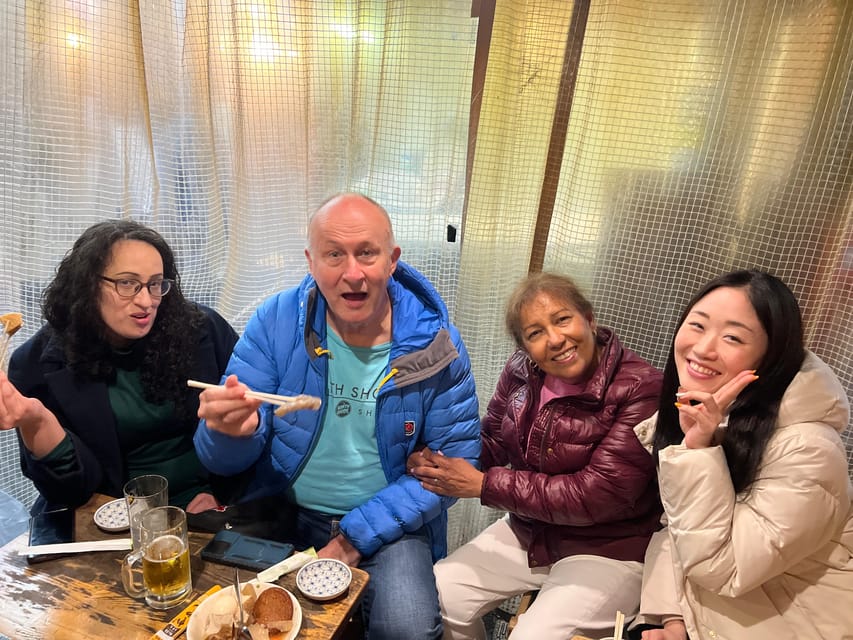
The food is the heart of the night, but this is not a formal tasting menu. At each izakaya or shop, Hibi recommends local food, and the group tries examples of Japanese dishes that may be unfamiliar to you.
That format has an advantage: you can sample more kinds of food without committing to a large portion of one dish. It also reflects how many people actually eat at an izakaya, ordering several smaller plates to share with drinks.
The food descriptions are intentionally broad, so you should not book this expecting specific items such as sushi, ramen, or a guaranteed regional specialty. The promise is a changing selection of local dishes and food stall stops. That is useful for curious eaters, but less suitable if you want to control every ingredient or plan your night around one particular food.
The dietary limits deserve serious attention. Strict vegan and vegetarian diets cannot be accommodated, and severe gluten allergies, including Celiac disease, are not suitable for this outing because of traditional kitchen methods. If you have flexible dietary needs, tell the provider at booking and discuss what may be possible.
Food allergies can be difficult in small kitchens even when a guide speaks Japanese. This is not the place to hope that a last-minute request will work out. Tell Hibi ahead of time, and choose another experience if your health depends on strict avoidance.
Drinks, cash, and the real cost of the evening
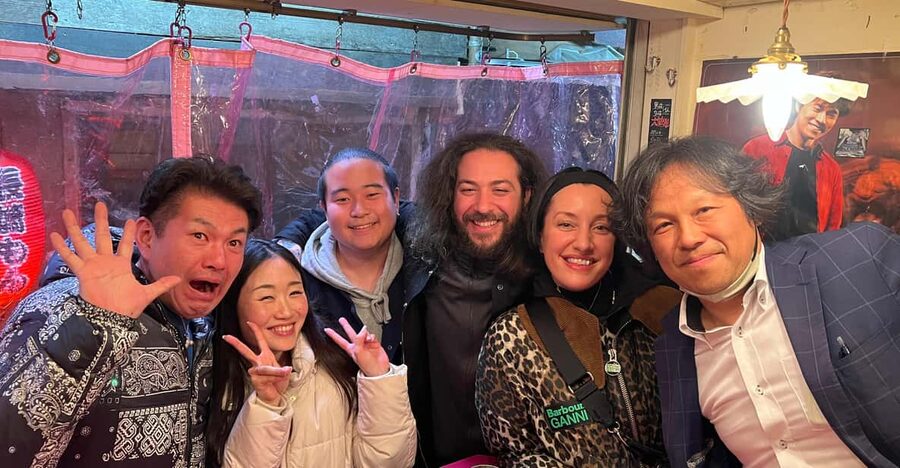
The tour costs $109 per person, with drinks not included. Drinks are usually 400 to 700 yen each, but your final spending depends on how many stops you visit and how much you order.
I see the price as paying for access, interpretation, and a carefully managed social experience rather than simply buying food. Without a local guide, you might spend the same evening wandering past small bars without knowing which places welcome newcomers. Hibi’s established relationships with shopkeepers are a central part of what you are paying for.
Still, you should budget honestly. The listed tour price is not your complete night-out cost. Bring Japanese cash, and bring coins if you have them. The instructions specifically suggest using coins for drinks, which is useful in smaller bars where cash payment is expected.
The price is easier to justify if you value local contact and want a guide to remove the language and etiquette barriers. It is harder to justify if you mainly want a cheap dinner. For that purpose, you can find less expensive ways to eat in Tokyo.
Japanese drinking manners without the guesswork
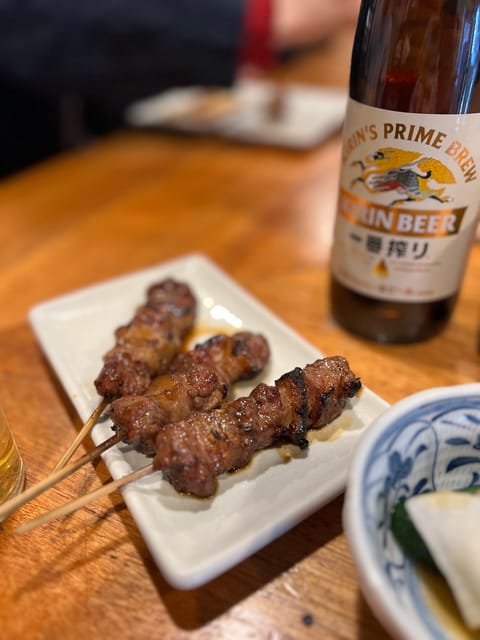
An izakaya is not just a restaurant with alcohol. It has its own rhythm, shared customs, and small social signals. Hibi explains Japanese drinking etiquette and useful phrases, so you can participate instead of sitting quietly while someone else orders.
You may learn how to offer a toast, ask for a recommendation, thank the staff, or respond politely when someone at the bar speaks with you. Even a few phrases can change how comfortable you feel. You do not need to become fluent. You simply need enough language to show respect and join in.
The bilingual interpretation is especially valuable when conversations begin with local people. Hibi can help both sides understand one another, which gives you a better chance to have a real exchange rather than a quick smile and a polite nod.
The social element is strong. The experience includes time to chat and cheer with people in the area, and the small group means you will likely spend much of the evening talking with the other participants as well. If you are hoping for a private date night, this may not be the right choice. If you want to make friends while eating and drinking, it fits well.
What the five-star feedback tells you
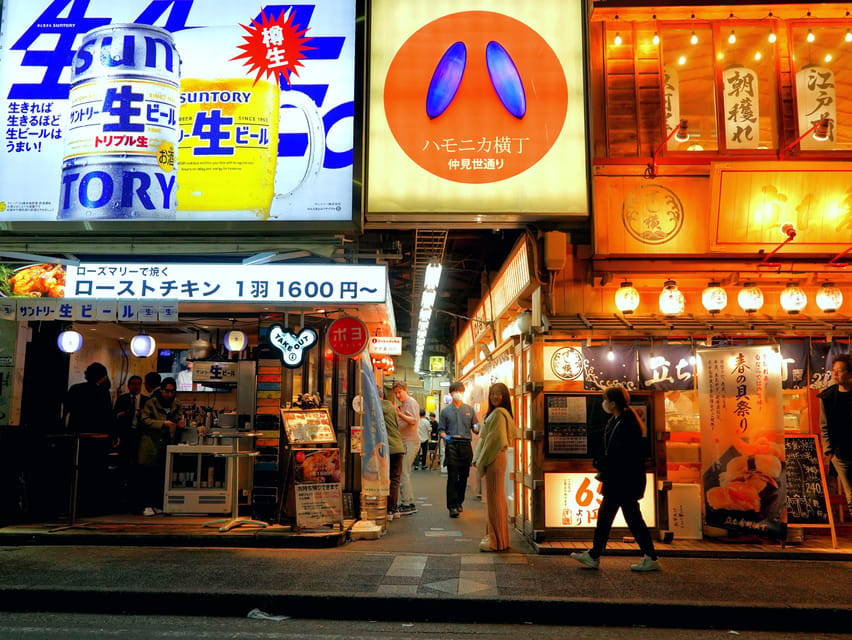
The strongest pattern in the available feedback is Hibi herself. Sophie called the evening unforgettable and praised the chance to see a unique part of Tokyo. Ashley highlighted Hibi’s friendly manner, food choices, and drink recommendations. Jack focused on the local-only feel of the stops.
Joe described the food as unusual and memorable, while Robert emphasized the laughter and the sense of seeing local people enjoying themselves outside the usual visitor districts. Bernd valued Hibi’s personal connections and the conversations they made possible.
That consistency is useful. The guide appears to be the main reason the tour works. You are not booking a self-guided map with restaurant names. You are booking Hibi’s judgment, language support, and ability to introduce you to people in Kichijoji.
The number of ratings is small, so I would not treat a perfect score as proof that every night will be identical. Bar space, food availability, group chemistry, and your own comfort with unfamiliar dishes can all affect the experience. Still, the feedback clearly points to the same strengths: Hibi, the local atmosphere, the food selection, and the warm contact with people along the route.
Who will get the most from this experience
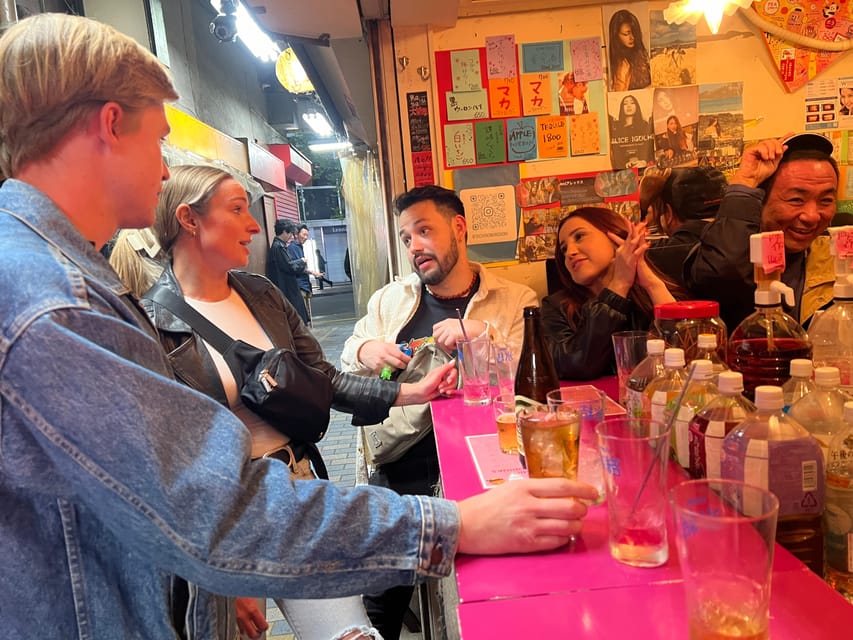
I would recommend this tour to a first-time visitor who wants help entering Tokyo’s less obvious nightlife. It also suits solo travelers who want company, couples who enjoy casual food, and small groups looking for an evening beyond the usual central Tokyo circuit.
You should be comfortable walking, standing, sharing food, and spending time in compact bars. You should also enjoy some social uncertainty. The tour is about following local advice, not selecting every dish and stop yourself.
It is less suitable for children on the public tour because the minimum age is 20. Private tours allow all ages, according to the activity information, so families should ask about that option rather than assume the public tour is appropriate.
You should also skip it if you need a strict diet, dislike alcohol-centered settings, or want a highly structured culinary class. The focus is neighborhood drinking culture, with food as an important part of the evening.
A few practical ways to prepare
Wear shoes that are comfortable for several hours. Kichijoji’s narrow streets and bar interiors are more enjoyable when you are not worrying about your feet.
Bring cash and coins. Drinks are separate from the tour fee, and smaller local businesses may not be the place to depend on a card. Keep your camera ready for outdoor scenes, but ask before photographing inside.
Arrive at the Baskin-Robbins near the north exit bus stop on time. The published return point is the same shop, so you will finish back where you began.
The tour offers free cancellation up to 24 hours before departure and allows you to reserve now and pay later. Starting times vary, so check the available schedule when booking. The total duration is three hours.
Should you book the Kichijoji bar tour?
Book it if you want a guided doorway into local nightlife, especially if Japanese menus and small neighborhood bars feel intimidating. Hibi’s language skills and personal ties are the main advantages, and the six-person limit gives the evening a more personal feel than a large group crawl.
I would be cautious if you are counting every yen, need guaranteed dishes, or cannot manage the dietary restrictions. Remember to add drinks to the $109 price and carry cash.
For an evening of shared plates, small bars, useful Japanese phrases, and conversation with people in Kichijoji, this is a strong choice. It gives you a reason to leave Tokyo’s familiar visitor routes and lets a local guide handle the parts that are hardest to manage alone.
FAQ
Where does the Kichijoji food and bar tour meet?
Meet at the Baskin-Robbins near the bus stop by the north exit of Kichijoji Station. The Japanese name is サーティワンアイスクリーム 吉祥寺店.
How long does the experience last?
The tour lasts three hours and returns to the Baskin-Robbins meeting point near Kichijoji Station.
How many people can join the public tour?
The public tour is limited to six participants.
Are drinks included in the $109 price?
No. Drinks are extra and usually cost about 400 to 700 yen each. Bring cash, including coins, for the local bar area.
What food and venues are included?
You will visit three to five izakaya and bars, along with local food stalls. Hibi recommends food at each stop, but the exact dishes and venues are not specified in advance.
Can people with dietary restrictions join?
Strict vegan, vegetarian, and severe gluten allergy needs, including Celiac disease, cannot be accommodated because of traditional kitchen methods. Flexible dietary needs should be discussed when booking.
More Drinking Tours in Tokyo
- Tokyo: Pub Crawl and Bar Tour
★ 4.5 · 951 reviews - Tokyo: Shinjuku Local Bar & Izakaya Crawl Tour
★ 5.0 · 890 reviews - Tokyo: Shinjuku Bar Hopping with All-You-Can-Drink & Dinner
★ 4.9 · 440 reviews - Shibuya: Local Bar & Izakaya Crawl
★ 4.9 · 354 reviews
New on our Tokyo list
- Sumi-e Experience in a relaxing green tea shop in Tokyo★ 5.0 · 3 reviews
- Tokyo : Kamikaze Street Drift Ride★ 5.0 · 3 reviews
- Private Zen Meditation in English in Shinjuku, Tokyo★ 5.0 · 3 reviews
- Onsen Spa in Tokyo and Asakusa Bar Hopping with Local Guide★ 5.0 · 3 reviews
- Easy for everyone! Now you can play handmade mini shamisen and show off to everyone! Musical instruments, sweets and live music★ 5.0 · 3 reviews
- Tokyo: Private Tsukiji Street Food & Sake with Local Guide★ 5.0 · 3 reviews
- Mt Fuji Exploration Tour with Free Japanese Kusa Mochi from Tokyo★ 4.5 · 3 reviews
- Tokyo Tsukiji Fish Market Walking and Exploring Hidden Gems Tour★ 5.0 · 3 reviews
Drinking Tours, compared.
Tokyo Bar Hopping Tour in Shinjuku (All-You-Can-Drink + Dinner)
Read our review →
Best of Shinjuku: Izakaya Food Tour (4 Stops, 14+ Tastings)
Read our review →
Shinjuku Local Bar and Izakaya Guided Walking Tour
Read our review →
Shibuya Meltdown Nightlife Tour: All-You-Can-Drink Bar Hopping
Read our review →

Shinjuku Bar Hopping with All-You-Can-Drink & Dinner
Read our review →
Browse the lists this tour appears in