
Reviewed · YANAKA & OLD TOKYO WALKS
The Old Quarter of Tokyo – Yanaka Walking Tour
Yanaka gives you a Tokyo of wooden houses, temple bells, narrow lanes, and neighborhood shops, far removed from the bright signs of Ginza or Omotesando. This three-hour walk moves through one of the city’s quieter old districts, with useful explanations of Buddhist and Shinto customs along the way. The small group, capped at 10, makes it easier to ask questions and keep a relaxed pace.
I like the contrast between the peaceful Yanaka Cemetery and Nezu Shrine and the everyday life of Yanaka Ginza at the end. I also like the local details: an old cider tree, renovated wooden houses, a temple devoted to strong legs, and a back street called Hebimichi. The main consideration is that you walk outdoors for about three hours, and food, drinks, and entry costs at places such as Ueno Sakuragi Atari are extra.
In This Review
- Key points to know before you book
- Why Yanaka feels unlike central Tokyo
- Starting at Nippori and Tennoji Temple
- Yanaka Cemetery and the customs of remembrance
- Ueno Sakuragi Atari and the old cider tree
- Enju-ji and the temple for strong legs
- Nezu Shrine and its red torii gates
- Hebimichi and a close look at daily life
- Yanaka Ginza brings the walk to life
- How the three-hour pace works
- What the $40 price really buys
- The guide makes the difference
- Who should book this walk
- My call on the Yanaka experience
- FAQ
- How long is the Yanaka walking tour?
- Where does the tour begin and end?
- What is included in the $40 price?
- Are food and drinks included?
- How many people can join the tour?
- Can I cancel for a full refund?
Key points to know before you book
- Yanaka shows a quieter Tokyo: Expect residential lanes, wooden homes, temples, shrines, and small shops rather than major city landmarks.
- The route connects Nippori Station with Yanaka Ginza: You begin at 2 Chome-19 Nishinippori and finish at 3-chome-13-1 Yanaka.
- The religious context is a major strength: Your guide explains how Buddhist and Shinto practices appear in daily Japanese life.
- The group stays small: No more than 10 people means a more personal walk and better access to your guide.
- The final stop is useful for lunch or snacks: Yanaka Ginza offers local foods and sweets, but you pay for anything you eat.
- Comfortable shoes matter: The route includes walking through cemeteries, temple grounds, residential lanes, and shopping streets, often in exposed weather.
Why Yanaka feels unlike central Tokyo
Tokyo can feel polished, fast, and very new. Yanaka gives you another version of the city. Parts of the neighborhood escaped the World War II bombings, and some older wooden homes and religious sites remain in place. You are not walking through a museum, though. People still live here, shop here, worship here, and use the narrow lanes as part of ordinary life.
That mix makes the tour worthwhile. You see old buildings, but you also see renovated homes turned into cafés and bakeries. You pass shrines used for prayer and streets where locals buy food. The setting helps you connect Japanese history with present-day routines instead of treating the past as a separate attraction.
The walk is also a useful counterpoint to Tokyo’s better-known districts. If you have already seen Shibuya, Shinjuku, or Ginza, Yanaka offers a slower afternoon and a clearer sense of neighborhood life. If this is your first day in Tokyo, it can also help you understand how temples, shrines, homes, and shops fit together in the city.
More old-Tokyo backstreet walks:
- Yanaka Walking Tour: Historic and Traditional District of Tokyo
★ 5.0 · 530 reviews - Tokyo: Old Quarter Yanaka Walking Tour
★ 4.8 · 406 reviews - Small Town in the Big City: Tasting Tokyo’s Kichijoji
★ 5.0 · 195 reviews
Starting at Nippori and Tennoji Temple
The meeting point is at Nippori Station, a practical starting place for this part of Tokyo. You meet your English-speaking local guide and the rest of the small group before setting off on foot. Since the route ends elsewhere, you should arrive with anything you need for the walk and avoid treating the start as a return-to-station excursion.
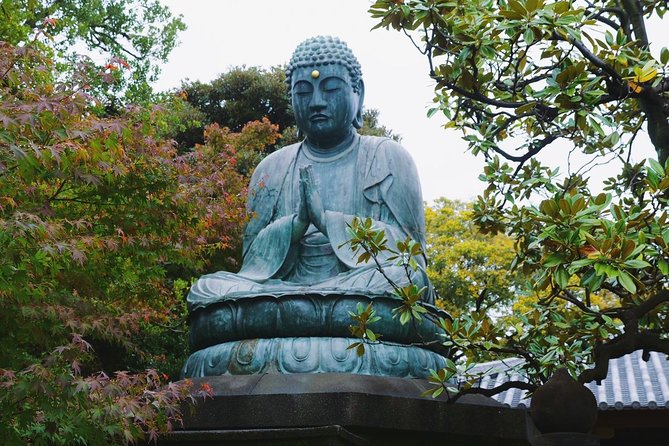
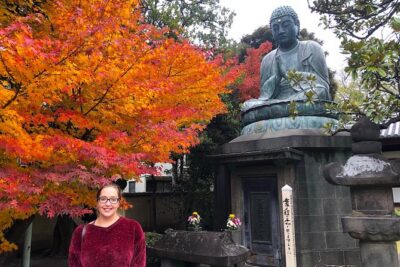
Tennoji Temple is the first main stop. Here you see the Yanaka Buddha, created in 1690, and hear how the temple fits into Japanese religious life. The stop lasts about 15 minutes, so expect an introduction rather than a long temple visit.
This is where the guide’s role becomes important. A quick look at a Buddhist statue can mean little without context. Your guide explains the customs and ideas connected with the site, giving you a better basis for understanding later temples and shrines on the route.
Past guides have included Aya, Junko, Rei, Kiyo, Mei, Mami, and Polina. The assigned guide can vary, but the strongest part of the experience is the chance to ask questions as you walk. Some guides have used laminated photographs to clarify details and have offered practical suggestions for food and nearby places.
Yanaka Cemetery and the customs of remembrance
From Tennoji, the route continues into Yanaka Cemetery. This is not presented as a dramatic sightseeing stop. Instead, it gives you a respectful look at what a Japanese cemetery is like and how local customs shape the way people use such places.
The cemetery stop takes about 15 minutes. You learn about Japanese memorial practices and the relationship between religious traditions and ordinary family life. This is one of the more useful parts of the walk because it explains details you might otherwise pass without noticing.
You should treat the cemetery as a place of remembrance, not simply as a photo stop. The quiet setting also changes the pace of the tour. After the temple, you have time to take in a more open and reflective part of the neighborhood before returning to streets with cafés and shops.
Ueno Sakuragi Atari and the old cider tree
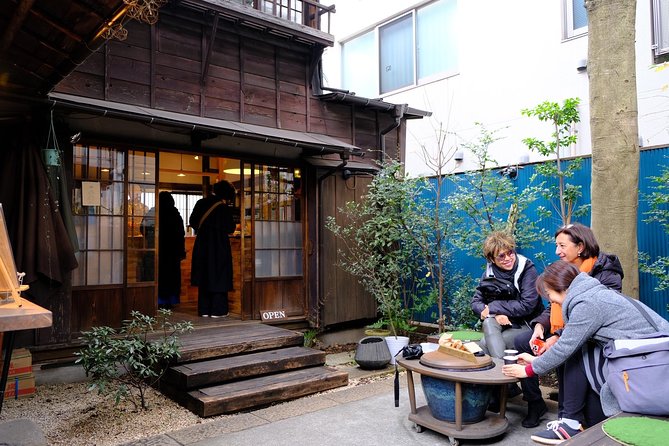
Ueno Sakuragi Atari adds an architectural and social angle to the route. Around 80-year-old wooden houses were renovated into a café, bakery, and beer hall, creating a shared community space. You get roughly 15 minutes here, enough for a look and possibly a short break.
Admission is not included, and food and drinks are your responsibility. That is not a serious problem, but you should budget a little extra if you want to buy something. The stop works best as a glimpse of how old buildings can be given a new purpose without wiping away their character.
The route also points out a 100-year-old cider tree, described as a symbol of Yanaka. It is a small detail, but this is exactly the kind of detail that gives a walking tour its personality. You are not only checking off famous sights. You are learning which ordinary-looking features matter to people who know the area.
More walking routes in Tokyo:
- Tokyo Tsukiji Fish Market Food and Culture Walking Tour
★ 5.0 · 3,184 reviews - Tokyo: Imperial Palace and Shogun Historical Walking Tour
★ 5.0 · 2,251 reviews - Tokyo: Shinjuku Local Bar and Izakaya Guided Walking Tour
★ 4.9 · 1,794 reviews - Tokyo: Tsukiji Fish Market Food and Walking tour
★ 5.0 · 1,724 reviews
Enju-ji and the temple for strong legs
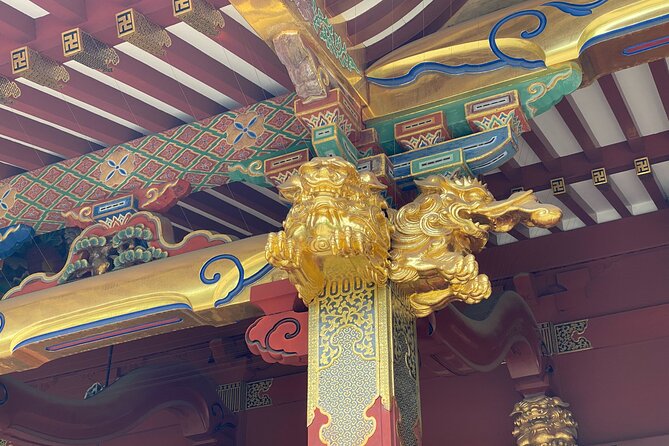
Enju-ji Temple is a short stop, about five minutes. Its focus is unusual: a deity associated with strong legs rather than the more familiar Buddhist figures many people expect to see.
Wooden boards at the temple carry wishes from people with foot problems. The site offers a simple example of how religion can be practical and personal. People bring concerns about health, work, family, or daily life to religious places, and this temple’s focus makes that connection especially clear.
Because the stop is brief, you should not expect a large complex or a long independent visit. Its value comes from the explanation and the way it fits into the wider discussion of Japanese beliefs. It is one of the route’s more memorable small discoveries.
Nezu Shrine and its red torii gates
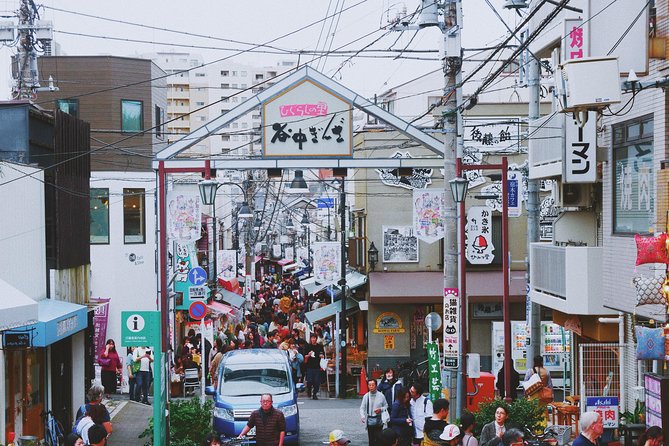
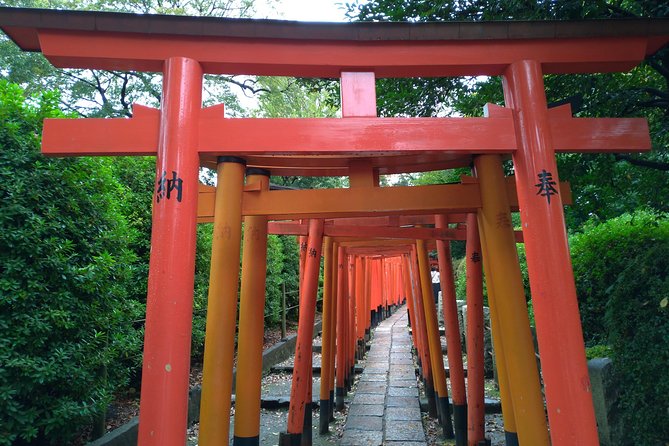
Nezu Shrine is the most immediately photogenic stop. You see rows of red torii gates, recalling the famous paths at Fushimi Inari in Kyoto, and have about 20 minutes to explore and take photographs.
The shrine also gives your guide a chance to explain Shinto etiquette. You learn how to behave at a shrine, rather than simply walking through, taking pictures, and leaving. That practical information can help you at other Japanese shrines during the rest of your trip.
The stop is free, but the time is limited. If you want a long, unhurried visit or extensive photography, this tour may feel too structured. For most people, the 20-minute visit provides a good introduction and keeps the walk moving.
Hebimichi and a close look at daily life
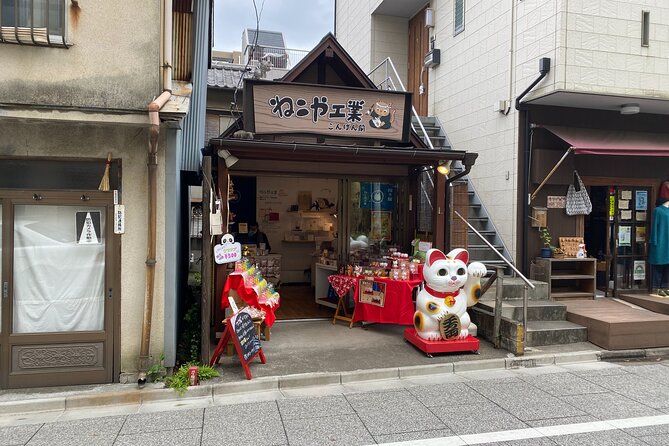
After Nezu Shrine, the route turns into Hebimichi, a back street in a residential area. The name refers to its winding, snake-like shape. Here, the appeal is not a grand building. You see the small scale of local Tokyo: homes, narrow lanes, and the everyday setting that large central districts tend to hide.
This part of the route helps explain why a guide adds value. Residential streets can be easy to walk through without understanding what you are seeing. Your guide can point out features of local life and help you stay respectful around private homes.
You should also keep your group together and avoid blocking narrow lanes. This is a lived-in neighborhood, not a stage set. A little awareness makes the experience better for you and for the people who call Yanaka home.
Yanaka Ginza brings the walk to life
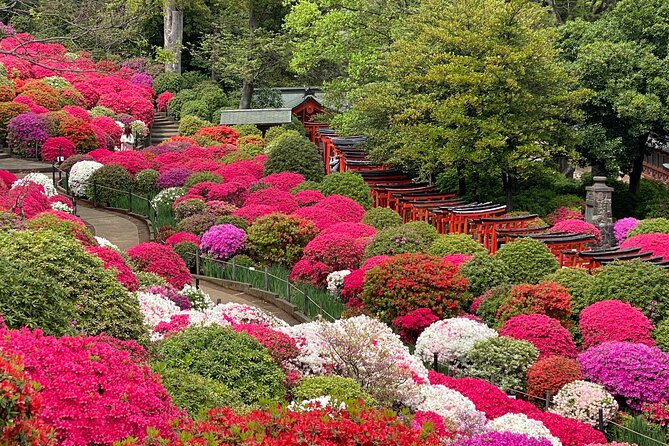
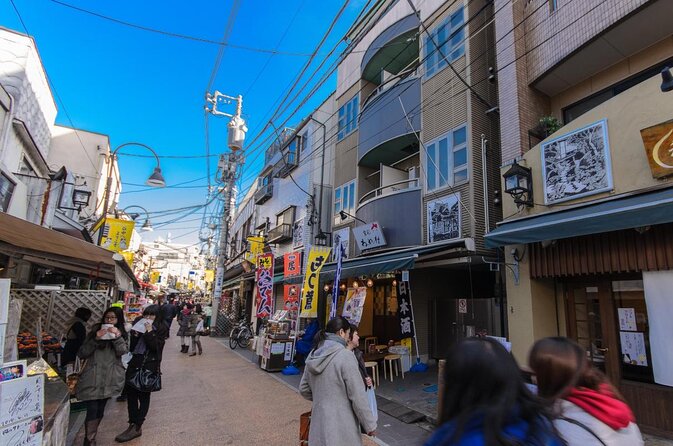
The final main stop is Yanaka Ginza Shopping Street. The tour ends here, after about 20 minutes of guided orientation. Your guide explains the shops and the kind of food associated with the street, then gives you a chance to browse or buy local snacks and sweets.
This is a smart finish. The earlier stops focus on worship, history, architecture, and residential streets. Yanaka Ginza brings you back to daily routines, with shopfronts and food stalls where you can see how the neighborhood serves local residents.
Food is not included in the $40 price. That gives you control over your spending, but it also means the final stop can cost more if you are tempted by several snacks. I would plan to eat here if the timing suits you, since the tour ends at the market street rather than returning to Nippori.
How the three-hour pace works
The advertised duration is about three hours. The scheduled stops add up to roughly 90 minutes, leaving the rest of the time for walking between sites, explanations, questions, photographs, and the transitions through residential streets.
That pacing should suit you if you want detail without spending an entire day on your feet. The walk is not a sprint between landmarks, and several stops are short. Enju-ji, for example, takes only five minutes, while Nezu Shrine receives about 20 minutes.
The tour is outdoors and requires steady walking. One departure took place in 35-degree heat and humidity, so a hat, sun protection, water, and comfortable shoes are sensible choices. The experience requires good weather, and poor conditions can lead to a different date or a full refund.
What the $40 price really buys
At $40 per person, this is not a bargain-basement free walk, but it offers solid value if you want cultural context. You are paying for about three hours with an English-speaking local guide, a group of no more than 10, and a route that links several sites you might not understand as well on your own.
The price does not include food, drinks, personal expenses, gratuities, or admission charges where applicable. Most of the major listed sites are free, but you should still bring money for Yanaka Ginza and possibly Ueno Sakuragi Atari.
The best value comes from the explanations. A self-guided walk can take you to Nezu Shrine or Yanaka Ginza, but it may not explain the difference between Buddhist and Shinto sites, the customs at a cemetery, or why a temple honors strong legs. If those details matter to you, the fee is reasonable.
The guide makes the difference
This experience depends heavily on the person leading it. The guide names associated with the tour include Aya, Junko, Rei, Kiyo, Mei, Mami, and Polina. Each guide brings a different personality, but the strongest qualities to look for are clear English, patience with questions, and familiarity with the neighborhood.
Aya has been praised for using printed photographs, answering questions carefully, and pointing out an old-house bakery. Junko has led walks with a calm pace and local familiarity. Rei has been especially useful for explaining cultural and religious customs. Mei has helped visitors find street food, while Polina has shared folk stories and local history.
You should not assume a particular guide unless your booking confirms one. Still, the repeated emphasis on English communication and personal attention is encouraging. With a maximum group of 10, you have a better chance to hear the explanations and ask about subjects that interest you.
Who should book this walk
I would choose this tour if you want to see Tokyo beyond major stations and shopping districts. It suits first-time visitors who want cultural orientation, as well as repeat visitors who have already covered the standard sights.
It is especially good for you if you enjoy:
- Quiet streets and older wooden buildings
- Temples, shrines, and explanations of religious customs
- Local food stops where you choose what to buy
- A moderate half-day walk rather than a full-day excursion
- Small groups and the chance to ask questions
- A neighborhood that feels residential rather than designed for sightseeing
You may want to skip it if you dislike walking outdoors, prefer large headline attractions, or need a tour with no extra spending after the booking fee. The route also offers limited time at each formal site, so it is better for an overview than for deep independent exploration.
The tour is near public transportation, service animals are allowed, and most people can participate. A mobile ticket keeps the entry process simple. Free cancellation is available up to 24 hours before the start time, but late cancellations and late changes are not refunded or accepted.
My call on the Yanaka experience
I recommend booking this walk if you want a more human-scale view of Tokyo. The combination of Tennoji Temple, Yanaka Cemetery, Nezu Shrine, old wooden houses, Hebimichi, and Yanaka Ginza gives you a clear sense of how history and daily life share the same streets.
The best reason to go is not one spectacular sight. It is the connection between small details: a 1690 Buddha, a century-old cider tree, wishes for strong legs, red torii gates, and a shopping street where you can finish with a snack.
At $40, the walk is worth it for the guide’s explanations and the small group. Bring comfortable shoes, sun protection, and extra money for food. If that sounds like your kind of afternoon, Yanaka is one of Tokyo’s better choices for seeing a quieter, more traditional side of the city.
FAQ
How long is the Yanaka walking tour?
The tour lasts approximately three hours, including walking time and stops at temples, a cemetery, a shrine, residential lanes, and Yanaka Ginza.
Where does the tour begin and end?
The tour begins at Nippori Station at 2 Chome-19 Nishinippori, Arakawa City. It ends at Yanaka Ginza at 3-chome-13-1 Yanaka, Taito City.
What is included in the $40 price?
The price includes a guided walking tour with an English-speaking local expert and photo opportunities throughout the route.
Are food and drinks included?
No. Food, drinks, and personal expenses are not included. You can buy local foods and sweets at Yanaka Ginza, but you pay separately.
How many people can join the tour?
The tour has a maximum of 10 participants, making it a small-group experience.
Can I cancel for a full refund?
Yes. You must cancel at least 24 hours before the local start time for a full refund. If poor weather causes the tour to be canceled, you will be offered another date or a full refund.
New on our Tokyo list
- From Tokyo: Mount Fuji & Hakone Full Day Private Tour★ 4.9 · 25 reviews
- Tokyo Spectacular View Day-Cruise in 90 Minutes★ 5.0 · 25 reviews
- Real Tokyo Runner Club : Daikoku Car Meet Night Tour with JDM Car★ 5.0 · 25 reviews
- 2.5 Hour-Guided Cycle Tour in the Central Tokyo★ 5.0 · 25 reviews
- Ramen Making from Scratch +Akihabara Tour –Cooking Class★ 5.0 · 25 reviews
- [Self-Drive] Tokyo & Daikoku Custom Car Driving Tour★ 4.9 · 25 reviews
- Tokyo: 2-Hour Night Bike Tour of the City’s Hidden Gems★ 4.9 · 25 reviews
- Samurai themed Entertainment show in Shinjuku★ 4.5 · 25 reviews
Yanaka & Old Tokyo Walks, compared.
Yanaka Walking Tour: Historic and Traditional District of Tokyo
Read our review →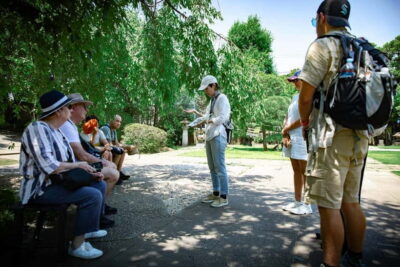

Small Town in the Big City: Tasting Tokyo’s Kichijoji
Read our review →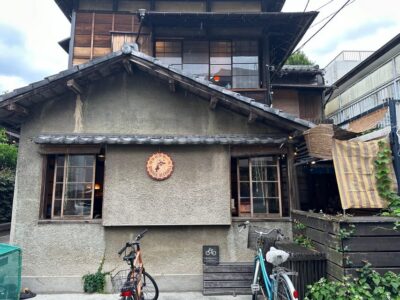
Stroll in Old traditional culture towns~Yanaka & Nezu
Read our review →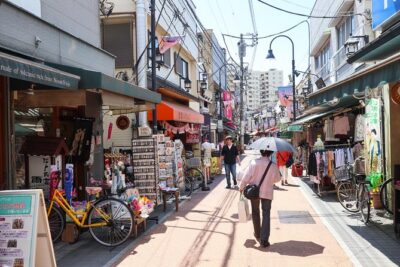
Yanaka Historical Walking Tour in Tokyo’s Old Town
Read our review →
Private Home Cooking in Yanaka – Local Flavors in a Warm Setting
Read our review →
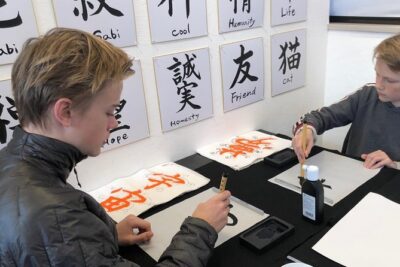
Let’s experience calligraphy in YANAKA, Taito-ku, TOKYO !!
Read our review →Browse the lists this tour appears in