Reviewed · TOKYO TOURS
From the Imperial Palace to Odaiba : Time travel to Tokyo
Tokyo makes the most sense when you connect its old and new parts. This private tour does that neatly, moving from the former shōgun’s castle grounds to Tokyo Station, the bold Tokyo International Forum, and the artificial islands of Odaiba. History and architecture provide the thread, so the city feels less like a checklist of sights.
I like two things right away: the route gives you a useful first look at Tokyo without chasing the usual Shibuya and Harajuku circuit, and guide Matteo Leone is there to explain the social and historical links between each stop. The drawback is the public transport cost, about ¥1,500 per person, plus the fairly active walking involved.
In This Review
- Key points
- Tokyo’s story begins in the East Gardens
- Tokyo Station shows old style beside modern speed
- The Tokyo International Forum offers a quiet architectural pause
- Odaiba brings the route to Tokyo Bay
- Matteo’s guiding style is central to the experience
- The 6 to 8-hour length rewards a steady pace
- What the route does better than a standard Tokyo checklist
- Practical points to know before you go
- Should you book this Tokyo tour?
- FAQ
- How long does the tour last?
- Where does the tour start?
- Where does the tour end?
- Is hotel pickup available?
- Is public transportation included in the price?
- Are meals and attraction entrance fees included?
- Is the tour suitable for people with reduced mobility?
Key points
- Edo Castle begins the story: Spend about 90 minutes in the East Gardens, where the shōgun’s castle once shaped Tokyo’s growth.
- Four very different Tokyo scenes: The route moves from palace gardens to red-brick rail architecture, a glass-and-steel forum, and Tokyo Bay.
- A private experience: Your group participates alone, allowing Matteo to adjust explanations and the ending point to your needs.
- A useful orientation tour: The route helps first-time visitors connect central Tokyo with Odaiba rather than seeing each area in isolation.
- Transport is extra: Budget around ¥1,500 per person for public transportation. Meals, drinks, attractions, and insurance are also separate.
- Plan for walking: The experience is not recommended for people with reduced mobility or those using prams, walkers, or strollers.
Tokyo’s story begins in the East Gardens
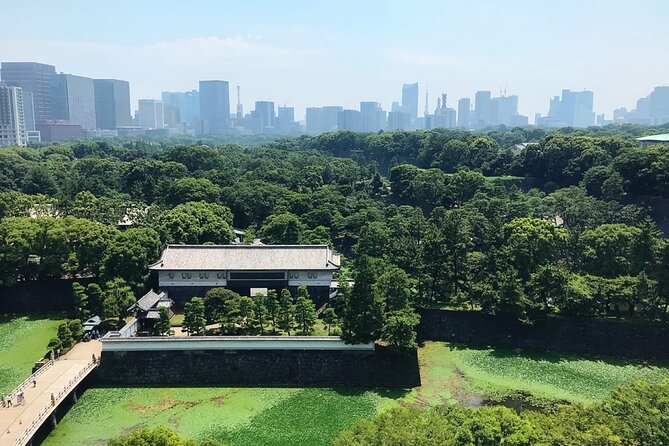
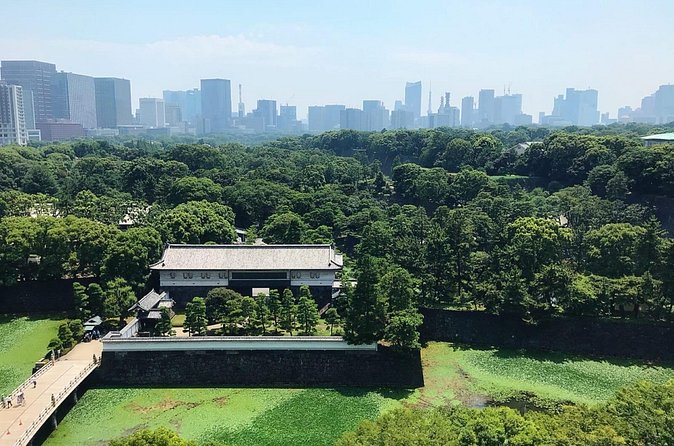
The tour starts at Starbucks Coffee near the Kōkyogaien Wadakura Fountain Park, at 3-1 Kōkyogaien in Chiyoda City. From there, you enter the East Gardens of the Imperial Palace, the site of what was once Edo Castle, the seat of shōgun power.
This is a strong opening because the gardens are not simply a pleasant patch of green in central Tokyo. They give Matteo a place to explain how Edo developed into the city now known as Tokyo. You get a sense of the political power once concentrated here, and of how the old castle grounds fit into the modern capital.
Allow about 90 minutes for this section. Admission to the gardens is free, but the pace is still active because you are walking rather than sitting through a formal museum talk. Wear comfortable shoes, especially in warm weather, and keep water handy.
I like this first stop because it gives later parts of the tour a clear frame. When you reach Tokyo Station and Odaiba, you are not just looking at newer buildings. You are seeing how Tokyo changed from a fortified seat of power into a dense, highly organized capital.
The East Gardens also offer a calmer start than many famous Tokyo districts. You will not be thrown straight into a crowded commercial center. Instead, the route begins with space, history, and a chance to ask questions. Matteo’s role is important here, since the value of the stop depends less on a long list of dates than on how clearly the past is connected to the city around you.
A few more Tokyo bookings worth comparing
- Mt Fuji and Hakone 1-Day Bus Tour Return by Bullet Train
★ 5.0 · 26,383 reviews - 1-Day Tokyo Bus Tour
★ 5.0 · 14,250 reviews - Tokyo: TOKYO SKYTREE® Admission ticket
★ 4.5 · 11,192 reviews
Tokyo Station shows old style beside modern speed
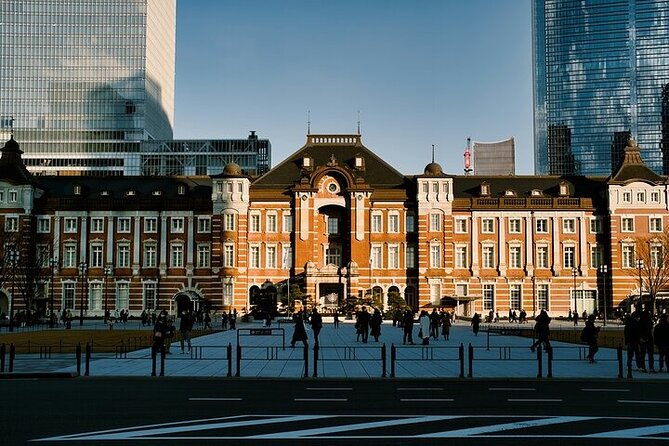
The next stop is Tokyo Central Railway Station, generally known simply as Tokyo Station. Its red-brick European-style facade gives the building a very different character from the palace grounds you have just left.
The station is one of Japan’s most important rail hubs, so this stop works on two levels. You can look at the architecture, then consider the role of trains in everyday Tokyo. The tour uses the station to show how the city’s past and present sit side by side, rather than treating history as something separated from daily life.
About an hour is planned here. That may feel generous if you only want a quick photograph of the facade, but it makes sense if you want an explanation of the station’s place in Tokyo. Matteo can help you notice details you might otherwise pass without a second glance.
The practical point is that this is not a dedicated railway museum visit. You should expect an exterior and city-orientation stop, with architecture and urban life as the focus. Any entrance fees for attractions are not included, and the basic tour price does not cover meals or personal spending.
For a first visit to Tokyo, I find this transition useful. The palace grounds show the city’s earlier power structure, while Tokyo Station reveals a capital built around movement, commerce, and connection. You begin to see Tokyo as a city that keeps its older layers while adding new ones.
The Tokyo International Forum offers a quiet architectural pause
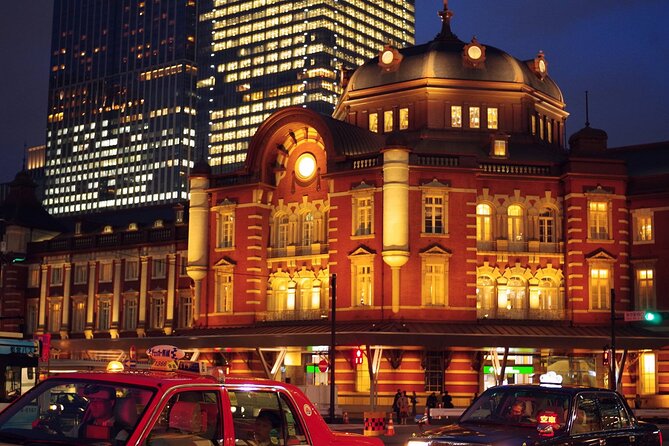
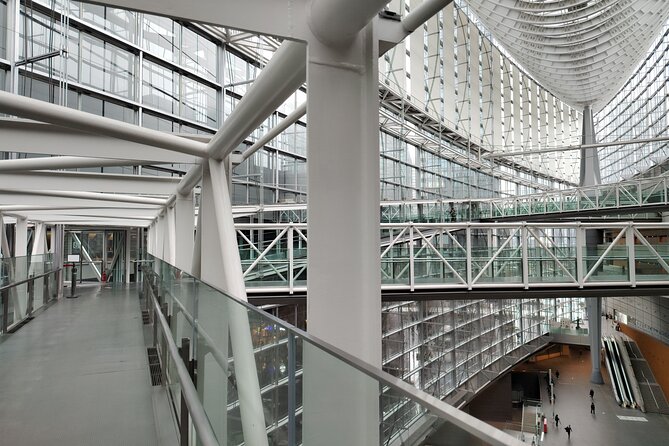
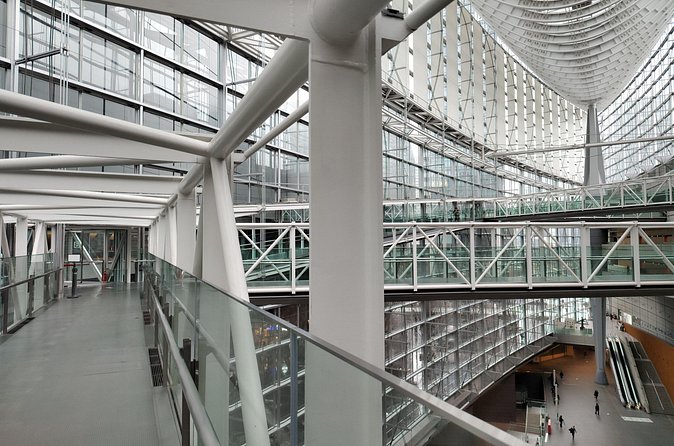
The Tokyo International Forum brings you into a very different mood. Its glass-and-steel design has a distinctive shape, and the building provides a spacious place to pause in the middle of the city.
The scheduled visit lasts about an hour. That makes this more than a quick photo stop, though the attraction here is the building itself rather than a scheduled performance or event. The tour presents contemporary architecture as part of Tokyo’s identity, not as a distraction from its historic sights.
I appreciate the change of pace. After the gardens and the busy station, the forum gives you room to look up, examine the structure, and talk with Matteo. The stop is especially useful if you enjoy buildings but do not want an architecture tour packed with technical terms.
You should also keep expectations in check. The itinerary does not include admission to events, museums, or other attractions, and no reservations are made for you. If something is taking place at the forum, it is not included automatically. The core experience is the guided visit and discussion of the building.
This section also shows why the tour is different from a standard list of famous Tokyo neighborhoods. It is built around links between architecture, public space, and the way people use the city. You are encouraged to look at Tokyo as a changing place, not just a collection of postcard views.
Odaiba brings the route to Tokyo Bay
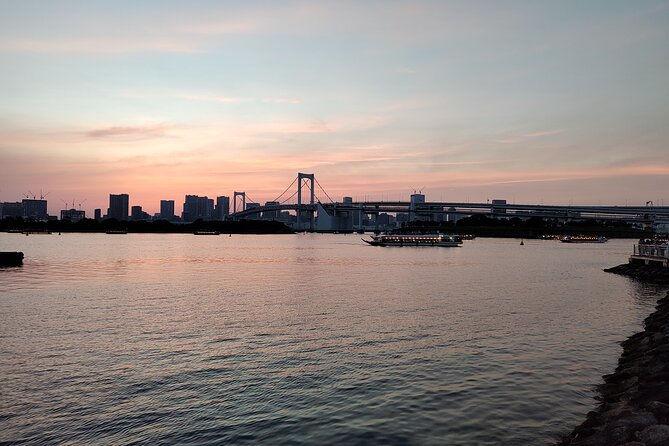
The final major stop is Odaiba, an artificial island in Tokyo Bay. The setting changes again, with open areas, broad views, and modern buildings. After the older castle grounds and central city architecture, Odaiba gives the tour a more open finish.
About two hours are planned here. That longer block lets you slow down and take in a different side of Tokyo. The area is suited to walking, views, and a relaxed final stretch rather than a tightly packed program of indoor attractions.
Odaiba is also a good closing chapter because it makes Tokyo feel physically larger. The tour begins at the center of political history and ends on land created as part of the city’s modern expansion. That contrast gives the full day a clear shape.
You should not expect every Odaiba attraction to be included. Entrance fees, food, drinks, and personal expenses are separate, and the tour provider does not reserve restaurants, museums, events, or other activities. If you want to add one of those stops, ask Matteo during the tour, but any extra cost is yours.
The end point is listed as Odaiba, though the exact arrival point can be agreed during the tour. It may be adjusted for your hotel location, personal preference, or return plans. That flexibility is useful after a long day, particularly if you do not want to retrace the route.
Same corner of Tokyo, a completely different plan:
- Tokyo: teamLab Planets TOKYO Digital Art Museum Entry Ticket
★ 4.6 · 9,779 reviews - Mt Fuji & Hakone Cruise, Drum Show Bullet Train 1 Day from Tokyo
★ 4.0 · 7,413 reviews - Tokyo: Sumo Show Experience with Chicken Hot Pot and a Photo
★ 4.8 · 6,678 reviews - Tokyo: Shinjuku Food Tour (13 Dishes at 4 Local Eateries)
★ 5.0 · 6,603 reviews
Matteo’s guiding style is central to the experience
This is not a tour where the guide simply points at buildings and recites facts. Matteo Leone is expected to guide the group for the full experience, answer questions, and connect Japanese history and culture with the places in front of you.
That matters because several stops could feel quiet or abstract without context. The East Gardens need an explanation of Edo Castle and the shōgun era. Tokyo Station benefits from a link between historic design and present-day rail life. The Tokyo International Forum needs a little help for you to see why its shape and scale matter. Odaiba becomes more meaningful when you consider its place in Tokyo Bay and the city’s continuing expansion.
The feedback about Matteo is consistent in its emphasis on preparation, kindness, and his ability to answer questions. The strongest praise focuses on how he helps people notice parts of Tokyo they might miss alone, and how he explains the city from historical and social viewpoints.
I would treat that as the main reason to book this experience. The stops themselves are accessible without a guide, and admission to the gardens is free. You are paying for the connections, the interpretation, and the convenience of moving through four distinct parts of Tokyo with someone who can respond to your interests.
Because the tour is private, only your group takes part. That gives you more room to ask about Japanese history, architecture, or everyday life without worrying about slowing down a large group. It also makes the tour a better fit for families, couples, or friends who prefer a conversation to a fixed lecture.
The 6 to 8-hour length rewards a steady pace
The listed duration is about six to eight hours. The scheduled stops add up to roughly five and a half hours, before transport and breaks. That leaves room for moving between locations, dealing with the pace of the day, and making small adjustments.
Do not book this as a quick half-day outing. The experience is designed as a full city walk with several changes of scene. You will get more from it if you accept a measured pace and allow time for explanations rather than rushing from one landmark to the next.
Hotel pickup is offered if your hotel is centrally located. The exact arrangement should be confirmed when booking, since the published meeting point is the Starbucks near Wadakura Fountain Park. Pickup does not automatically include transfers from every hotel, and hotel transfers outside the agreed arrangement are not included.
Public transportation costs about ¥1,500 per person and are separate from the tour price. Assistance with buying transport or attraction tickets is included if needed, but the ticket costs themselves are not. This is worth noting when comparing the $91.21 tour price with a self-guided day.
At $91.21 per person, the value depends on what you want from a guide. If you only need transportation between free public spaces, you can spend less on your own. If you want someone to shape the day, explain the historical links, answer questions, and help with transport, the price is more reasonable.
The private format improves that value for a small group. A couple or family can share the cost while getting direct attention. A solo visitor may find the price harder to justify, but could still appreciate the structure and guidance on a first Tokyo visit.
What the route does better than a standard Tokyo checklist
This tour skips the familiar focus on Shibuya, Shinjuku, and Harajuku. That is not a flaw, but you should know what you are choosing. The route is less about neon streets, shopping, and nightlife, and more about how Tokyo developed across time.
I like that it begins with the former Edo Castle and finishes in Odaiba. Those locations create a clear geographic and historical line. Tokyo Station and the International Forum fill in the middle, showing how the central city moved from old authority to transport power and modern public architecture.
The route may suit you especially well if you have already seen the major shopping districts and want a more thoughtful second look at Tokyo. It also works for a first-time visitor who wants orientation before exploring other neighborhoods alone.
The tour is not ideal if your main goal is food tasting, shopping, nightlife, or entry to major attractions. Meals are not included, and there are no restaurant reservations. You will need to arrange those separately.
Practical points to know before you go
The experience runs Monday through Sunday from 9:00 AM to 6:00 PM during the stated operating period, July 14, 2025 through December 9, 2026. Your selected start time should fit within those hours.
The meeting point is near public transportation, and confirmation is provided at booking. Since the final arrival point can be adjusted, discuss your return plan with Matteo early in the day.
The walking level is moderate. The provider does not recommend the tour for people with reduced mobility, mobility difficulties, or special needs involving prams, walkers, or strollers. That warning is important because the route includes gardens, city streets, station areas, and open spaces across several locations.
Bring comfortable footwear and plan for weather changes, but the supplied details do not specify what equipment or clothing is provided. Food, drinks, insurance, attraction admissions, and personal expenses are all your responsibility.
Free cancellation is available if you cancel at least 24 hours before the local start time. Cancellations or changes made less than 24 hours in advance are not accepted for a refund.
Should you book this Tokyo tour?
Book it if you want Tokyo explained as a connected city rather than a set of famous stops. The strongest part is Matteo Leone’s role in tying the former Edo Castle, Tokyo Station, the International Forum, and Odaiba into one story.
I would choose it for a first visit when you value orientation, or for a return visit when you have already covered the usual districts. The private format, adjustable ending point, and question-friendly approach add real value.
Skip it if you want maximum free time, a food-focused outing, or included admission to attractions. You should also reconsider if long walks and public transportation are difficult. For the right person, though, this is a thoughtful way to see Tokyo’s older foundations, modern center, and bayfront future in one well-shaped day.
FAQ
How long does the tour last?
The tour lasts approximately six to eight hours.
Where does the tour start?
The stated meeting point is Starbucks Coffee at Kōkyogaien Wadakura Fountain Park, 3-1 Kōkyogaien, Chiyoda City, Tokyo 100-0002, Japan.
Where does the tour end?
The tour ends in Odaiba, Tokyo. The arrival point can be agreed during the tour based on your hotel location, preferences, or return plans.
Is hotel pickup available?
Hotel pickup is available if your hotel is centrally located. Hotel transfers outside the agreed arrangement are not included.
Is public transportation included in the price?
No. Public transportation costs about ¥1,500 per person. Assistance with purchasing transport tickets is available if needed, but the ticket cost is separate.
Are meals and attraction entrance fees included?
No. Meals, drinks, personal expenses, entrance fees, and travel insurance are not included. Restaurant, museum, event, and other activity reservations are also not provided.
Is the tour suitable for people with reduced mobility?
The tour is not recommended for people with reduced mobility, mobility difficulties, or special needs involving prams, walkers, or strollers. A moderate level of physical fitness is advised.
New on our Tokyo list
- Sumi-e Experience in a relaxing green tea shop in Tokyo★ 5.0 · 3 reviews
- Tokyo : Kamikaze Street Drift Ride★ 5.0 · 3 reviews
- Private Zen Meditation in English in Shinjuku, Tokyo★ 5.0 · 3 reviews
- Onsen Spa in Tokyo and Asakusa Bar Hopping with Local Guide★ 5.0 · 3 reviews
- Easy for everyone! Now you can play handmade mini shamisen and show off to everyone! Musical instruments, sweets and live music★ 5.0 · 3 reviews
- Tokyo: Private Tsukiji Street Food & Sake with Local Guide★ 5.0 · 3 reviews
- Mt Fuji Exploration Tour with Free Japanese Kusa Mochi from Tokyo★ 4.5 · 3 reviews
- Tokyo Tsukiji Fish Market Walking and Exploring Hidden Gems Tour★ 5.0 · 3 reviews
Tokyo Tours, compared.
Mt Fuji and Hakone 1-Day Bus Tour Return by Bullet Train
Read our review →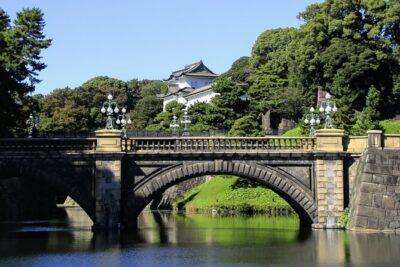
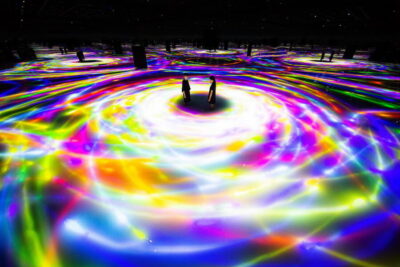
teamLab Planets TOKYO Digital Art Museum Entry Ticket
Read our review →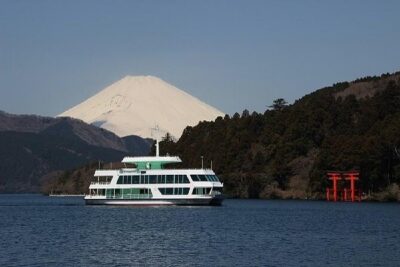
Mt Fuji & Hakone Cruise, Drum Show Bullet Train 1 Day from Tokyo
Read our review →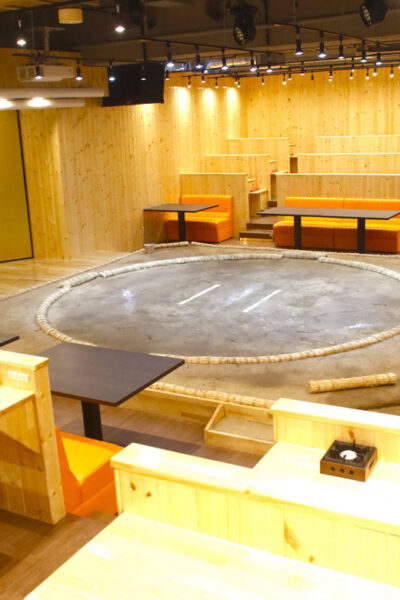
Sumo Show Experience with Chicken Hot Pot and a Photo
Read our review →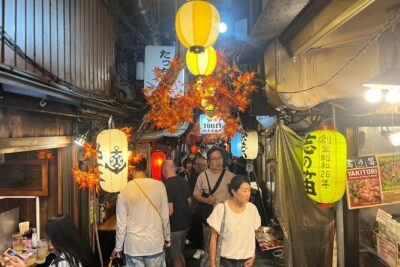
Shinjuku Food Tour (13 Dishes at 4 Local Eateries)
Read our review →