Reviewed · FULL-DAY
Full-Day Accessible Tour of Tokyo for Wheelchair Users
Tokyo is easiest to enjoy when someone else handles the station ramps, route changes, and crowded sidewalks. This private tour builds the day around wheelchair access, with a guide such as Fumiko, Kaori, Yumi, or Emiko helping you move between major sights by train and adjusting the pace when needed.
I like the hotel pickup within Tokyo’s 23 wards, which removes an awkward first trip across town. I also like the included train tickets and private format, since you can ask questions, pause when needed, and change the order of stops. The main drawback is the amount of ground covered: seven hours in Tokyo can still mean long stretches of walking or rolling, and lunch is not included.
In This Review
- Key points at a glance
- Why this private Tokyo tour works well for wheelchair users
- Starting in Asakusa at 9:30 am
- Senso-ji and the river views at Sumida Park
- Shibuya Crossing and Cat Street
- Meiji Jingu, a quieter pause beside Harajuku
- Omotesando and the end of the sightseeing route
- Using Tokyo trains with a guide beside you
- What the guides add to the day
- Price, timing, and what you actually receive
- Who should book this experience?
- Should you book the accessible Tokyo tour?
- FAQ
- How long does the accessible Tokyo tour last?
- What time does the tour begin?
- Where does the tour start?
- Is hotel pickup included?
- Is this a private tour?
- Are train tickets included?
- Are meals included?
- How many people are required to book?
- What is the cancellation policy?
Key points at a glance
- Wheelchair-aware route: The guide plans around ramps, station assistance, and routes with fewer steps.
- Private attention: Only your group takes part, so the pace can be adjusted to your needs.
- Tokyo by train: Tickets are included, and the guide helps you manage the rail system.
- Eight classic stops: The day links Asakusa, Sumida Park, Shibuya, Harajuku, Meiji Shrine, and Omotesando.
- Pickup from 23 wards: Hotel pickup and drop-off are included within Tokyo’s central wards.
- Plan for a full day: The tour lasts about seven hours, starts at 9:30 am, and requires at least two people, including caregivers.
Why this private Tokyo tour works well for wheelchair users
Tokyo has a good public transportation system, but good does not always mean simple. Stations can be large, routes may involve long corridors, and finding the right elevator or accessible entrance can take time. This tour gives you a guide who handles much of that planning while you focus on the city.
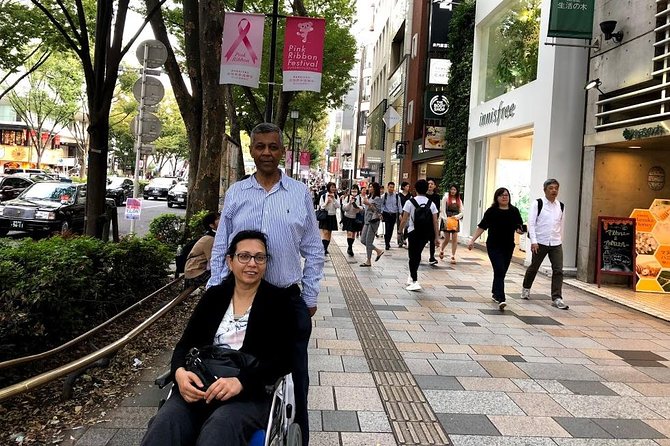
The strongest part of the experience is the combination of private guiding and public transportation. You are not confined to a sightseeing bus route. Instead, you use trains like a local, with the guide helping obtain tickets and coordinate station assistance. One particularly useful detail is the support from station attendants, who provide slope ramps at stations used during the tour.
The guide can also adapt the day. Kaori has adjusted the itinerary quickly when mobility needs changed, while Yumi chose routes with fewer steps when tired legs became a concern. That kind of flexibility matters more than a long list of sights. Tokyo rewards curiosity, but it also demands energy.
The tour is designed for wheelchair users, yet you should not assume that every meter is effortless. The day includes crowded areas, shopping streets, shrine grounds, city sidewalks, and rail stations. One account describes a group covering 15,000 steps with a 96-year-old using a combination rollator-wheelchair. That shows what may be possible, but it should not be treated as a target. Tell the operator about your mobility needs when booking and use the private format to set a comfortable pace.
A few more Tokyo bookings worth comparing
- From Tokyo: Mount Fuji Full-Day Sightseeing Trip
★ 4.5 · 4,970 reviews - Mount Fuji Full-Day Private Tour from Tokyo (Customizable)
★ 4.9 · 1,470 reviews - Tokyo Private Full-Day Tour by Car or Van
★ 5.0 · 684 reviews
Starting in Asakusa at 9:30 am
The published meeting point is the Asakusa Culture Tourist Information Center at Kaminarimon, 2-chome, in Taito City. Pickup is also offered from hotels within Tokyo’s 23 wards, which is likely the easier choice if getting to Asakusa by yourself would be tiring or confusing.
The center is worth a brief look before you head toward Senso-ji. Designed by Kengo Kuma, the eight-story building is both a practical source of local information and an architectural sight. The planned visit lasts about 15 minutes, so you will not spend much of the day indoors.
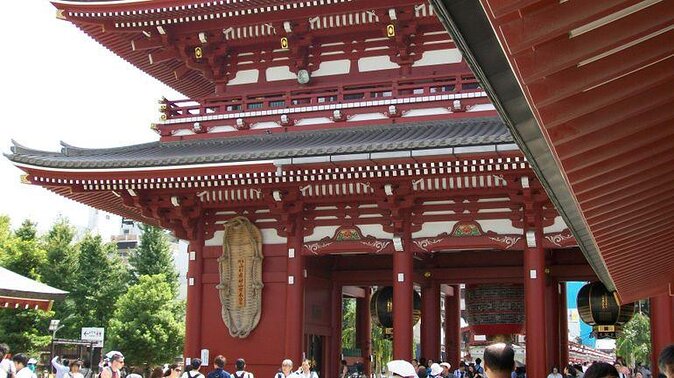
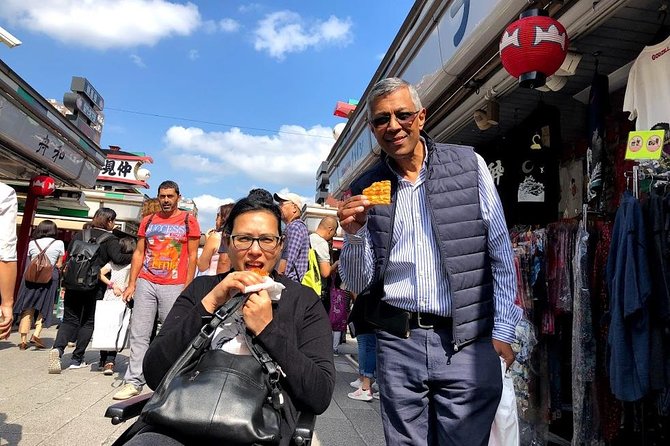
From there, you reach Kaminarimon, the Thunder Gate. Its large lantern marks the entrance to Senso-ji and is one of Tokyo’s best-known images. The route continues along Nakamise Shopping Street, a roughly 20-minute stop lined with shops selling snacks, souvenirs, and traditional goods.
Nakamise is also one of the day’s harder sections for mobility. It can be crowded, and the shopping street is not a quiet open plaza. Your guide’s job here is less about rushing you through and more about finding a workable line through the crowd. If you prefer fewer people, ask about the timing and pace.
Senso-ji and the river views at Sumida Park
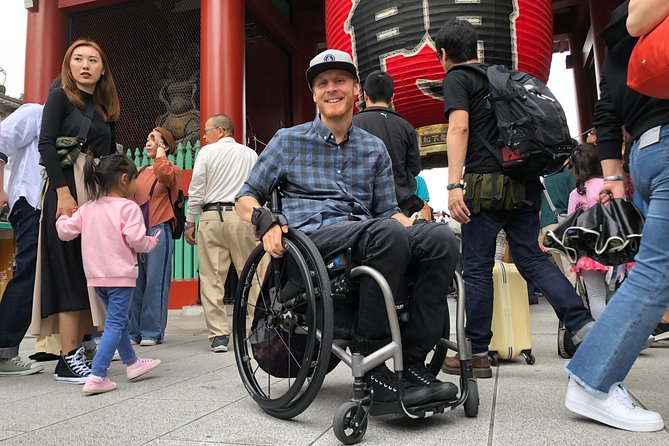
Senso-ji is Tokyo’s best-known Buddhist temple and a natural place to begin a first visit. The temple’s origin story reaches back to 628, when two brothers reportedly found a statue of Kannon in the Sumida River. The short visit is scheduled for about 20 minutes, enough to see the main setting and hear the basic story without turning the morning into a long temple study.
The value of a guide here is cultural context. Tokyo has both Buddhist temples and Shinto shrines, and the differences can be easy to miss when you are moving quickly. Yumi has been especially good at explaining how temple and shrine architecture differ, a useful introduction before the later visit to Meiji Jingu.
Next comes Sumida Park, near Asakusa Station and along the Sumida River. The stop lasts about 15 minutes and gives you a change of scene after the temple and shopping street. The view toward Tokyo Skytree is the main reason to pause here, with cherry blossoms adding seasonal appeal in spring.
Do not expect a long park walk. This is a short viewpoint stop, not a full garden visit. It works well as a breathing space before the train ride to western Tokyo.
Shibuya Crossing and Cat Street
Shibuya Crossing is Tokyo at full volume. At peak times, as many as 3,000 people cross with one green light, and the crossing can handle hundreds of thousands of crossings in a day. Your scheduled stop is about 20 minutes, giving you time to watch the flow and take in the scale of the district.
For a wheelchair user, the crossing is more than a famous photo opportunity. It is a crowded public space where timing, positioning, and a clear route matter. A private guide can help you approach it with less guesswork, but you should still expect crowds and movement around you.
The next stop, Cat Street, is a different side of Shibuya and Harajuku. This half-mile street runs between two major shopping areas and is known for fashion shops aimed at younger shoppers. The visit lasts about 25 minutes.
Cat Street is useful because it adds ordinary city life to the famous sights. You are not just checking off temples and viewpoints. You get a feel for how Tokyo’s neighborhoods connect, from the giant intersection to smaller retail streets. The drawback is that shops and sidewalks may be tight in places, so keep the visit flexible rather than treating it like a long shopping session.
Same corner of Tokyo, a completely different plan:
- Mt Fuji and Hakone 1-Day Bus Tour Return by Bullet Train
★ 5.0 · 26,383 reviews - 1-Day Tokyo Bus Tour
★ 5.0 · 14,250 reviews - Tokyo: TOKYO SKYTREE® Admission ticket
★ 4.5 · 11,192 reviews - Tokyo: teamLab Planets TOKYO Digital Art Museum Entry Ticket
★ 4.6 · 9,779 reviews
Meiji Jingu, a quieter pause beside Harajuku
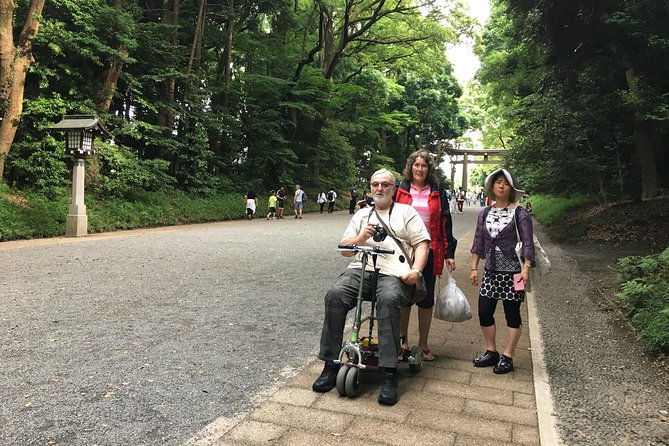
Meiji Jingu is dedicated to Emperor Meiji and Empress Shoken. It sits beside Harajuku Station, yet the shrine offers a sharp change from the commercial streets nearby. The scheduled visit is 50 minutes, making it the longest stop of the day.
This is where the tour’s slower pace matters. You can ask about Shinto customs, the shrine’s design, and the role of the site in modern Tokyo. The guide can also help you find a route that avoids unnecessary steps. Fumiko is experienced with accessible tours and has been praised for knowing routes that avoid stairs.
The shrine grounds can still require effort. A wheelchair-friendly route does not mean every path is smooth or short. If you use a manual wheelchair, rollator, or a combination chair, tell the guide how much pushing assistance you need and how often you want to rest.
Meiji Jingu also gives you one of the day’s best contrasts. In the morning, Asakusa presents old Tokyo through a temple, a gate, and a market street. Here, you see a major shrine beside one of the city’s busiest rail areas. The guide helps connect those pieces instead of presenting them as unrelated photo stops.
Omotesando and the end of the sightseeing route
Omotesando is a tree-lined boulevard running through the fashionable Aoyama area and parts of Shibuya and Minato wards. The planned visit lasts about 20 minutes. It is a good final stop because the broad avenue and modern architecture offer a different view of Tokyo after the older religious sites.
You might enjoy this section most if you like design, shopping, and city streets more than formal attractions. It also gives the guide room to tailor the ending. If you want more time in a particular area, the private format may allow a change, as long as the timing and mobility needs make it practical.
The tour ends back at the meeting point according to the stated arrangement, while hotel drop-off is included for pickups within the 23 wards. Since the exact route between stops can change with accessibility needs, crowd levels, and the group’s pace, you should think of this as a guided framework rather than a rigid timetable.
Using Tokyo trains with a guide beside you
Train travel is one of the tour’s most useful features. Private car transport is not included, though a taxi, private car, or bus can be arranged for an extra fee. By using trains, you avoid spending the whole day in road traffic and get a practical look at how Tokyo works.
The guide provides the train tickets and helps with the system. That includes finding accessible routes and coordinating with station staff for slope ramps. Lisa’s experience with Michiko showed the value of this support: the guide met the group at its hotel, arranged the tickets, and made the rail system much easier to manage.
You should still expect some station walking. Tokyo rail stations can involve long distances between entrances, platforms, and elevators. A guide reduces the planning burden, but does not erase the physical demands of a major city transit network.
If trains sound too tiring for your group, ask about the extra-cost private transport option before booking. The public transit choice is a strength for independence and local experience, but private vehicles may better suit a group with limited stamina.
What the guides add to the day
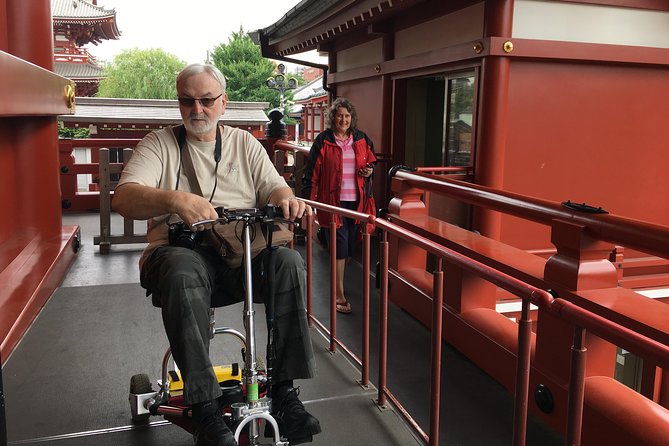
The tour’s success depends heavily on the individual guide. The strongest pattern in the available feedback is not simply friendliness. It is careful attention to pace, route choice, mobility, and explanation.
Several guides are named in the tour information:
- Fumiko is experienced with accessible routes and avoids stairs when possible.
- Kaori is organized and adapts the plan quickly when needs change.
- Yumi explains Japanese culture, temple and shrine design, and routes with fewer steps.
- Emiko has helped a 96-year-old use the subway and find wheelchair assistance.
- Michiko has been praised for making train travel easier.
- Machiko has adjusted sightseeing around wheelchair access and offered a useful lunch recommendation.
- Keita Mizuri is described as warm and pleasant while guiding through Tokyo’s main sights.
You cannot choose a specific guide from the information provided, but you can make the most of the private setup by explaining your group clearly. Mention the type of wheelchair, the need for a caregiver, walking limits, rest preferences, and any sights that matter most to you.
Price, timing, and what you actually receive
The listed price is $191.08 per person, with group discounts offered. For roughly seven hours, that is not a budget walking tour. But the comparison should not be made against a standard sightseeing excursion. You are paying for private guiding, hotel pickup and drop-off within the 23 wards, train tickets, route planning, and help with accessibility.
The value is strongest for a first day in Tokyo, especially if your group would otherwise spend hours finding elevators, arranging station help, and working out a workable route. The guide’s undivided attention is also important for families and caregivers who do not want to manage every transport detail alone.
Food and drinks are not included. A guide can recommend lunch, as Machiko did for one group, but you should budget separately and allow time for eating. The tour requires a minimum of two people, including caregivers, and the minimum age is six.
The activity has a 4.9 rating from 32 ratings, with 100 percent recommending it. Those figures suggest a strong record, but the practical details matter more: this is a private, active day with eight planned sightseeing areas and public transit between them.
Who should book this experience?
I would recommend it most strongly to a wheelchair user visiting Tokyo for the first time with a companion or caregiver. It is also a good match for families who want major sights without building an accessible route from scratch.
You will get the most from it if you want a broad introduction rather than an in-depth visit to one neighborhood. Asakusa, Shibuya, Harajuku, Meiji Jingu, Sumida Park, and Omotesando cover a lot of ground. The tradeoff is that each stop is fairly short, so you will see the highlights rather than study every site.
This may not suit you if you want a relaxed day with little transit or long meals. It may also be less appealing if you already know Tokyo’s rail system and have a carefully planned accessible itinerary. In that case, the price may be better spent on a specialist guide for one or two districts.
Should you book the accessible Tokyo tour?
Book it if station navigation, stairs, crowds, and route planning could make Tokyo stressful. The guide’s help with ramps, train tickets, and fewer-step paths can turn a difficult day into a manageable one, while the private format lets you slow down or adjust the plan.
Before booking, be realistic about stamina. Seven hours is a long outing, and one group covered 15,000 steps even with a wheelchair and rollator. Ask about your needs, consider the extra-cost private transport option if trains are too demanding, and remember to budget for lunch.
For a first look at Tokyo with strong practical support, this tour offers good value. Its best feature is not simply the list of famous sights. It is having someone beside you who knows how to connect them in a way that works for your group.
FAQ
How long does the accessible Tokyo tour last?
The tour lasts approximately seven hours.
What time does the tour begin?
The stated start time is 9:30 am.
Where does the tour start?
The listed meeting point is the Asakusa Culture Tourist Information Center at Kaminarimon, 2-chome, Taito City, Tokyo.
Is hotel pickup included?
Yes. Hotel pickup and drop-off are included for locations within Tokyo’s 23 wards.
Is this a private tour?
Yes. Only your group participates.
Are train tickets included?
Yes. Train tickets are included as part of the tour.
Are meals included?
No. Food and drinks are not included.
How many people are required to book?
At least two people are required per booking, and caregivers count toward that minimum.
What is the cancellation policy?
You can cancel for a full refund up to 24 hours before the experience starts. Cancellations or changes made less than 24 hours before the start time are not accepted for a refund.
New on our Tokyo list
- From Tokyo: Mount Fuji & Hakone Full Day Private Tour★ 4.9 · 25 reviews
- Tokyo Spectacular View Day-Cruise in 90 Minutes★ 5.0 · 25 reviews
- Real Tokyo Runner Club : Daikoku Car Meet Night Tour with JDM Car★ 5.0 · 25 reviews
- 2.5 Hour-Guided Cycle Tour in the Central Tokyo★ 5.0 · 25 reviews
- Ramen Making from Scratch +Akihabara Tour –Cooking Class★ 5.0 · 25 reviews
- [Self-Drive] Tokyo & Daikoku Custom Car Driving Tour★ 4.9 · 25 reviews
- Tokyo: 2-Hour Night Bike Tour of the City’s Hidden Gems★ 4.9 · 25 reviews
- Samurai themed Entertainment show in Shinjuku★ 4.5 · 25 reviews
Full-Day, compared.

Mount Fuji Full-Day Private Tour from Tokyo (Customizable)
Read our review →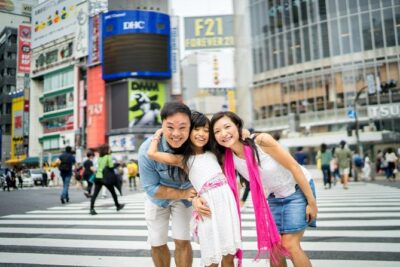
Mt. Fuji, Hakone Full-Day Private Tour with English Driver Guide
Read our review →
Nikko Full-Day Private Tour with Government-Licensed Guide
Read our review →