Reviewed · FULL-DAY
Full Day Private Tokyo Tour for Wheelchair Users
Tokyo can be a tough city to see from a wheelchair. Train stations are busy, sidewalks can be crowded, and access details are not always easy to confirm before you arrive. This private tour solves much of that by putting you with a guide and private vehicle for roughly eight hours, from Tsukiji and Asakusa to Harajuku and Shibuya.
I like the flexible route, which lets you spend more time on the places you care about instead of rushing through a fixed group schedule. I also like the small practical touches: bottled water, snacks, air conditioning, and Wi-Fi in the vehicle. The main drawback is that several stops are drive-by sightseeing, and the high group price makes the most sense when shared by a larger party.
In This Review
- Key points to know before booking
- Why this private Tokyo tour makes sense for wheelchair users
- Tsukiji Outer Market: an easy start with food and local color
- Hama Rikyu Gardens: a quieter hour beside the city
- Ginza, the Imperial Palace, and the National Diet Building from the vehicle
- Senso-ji in Asakusa: Tokyo’s oldest temple
- Omotesando and Harajuku: architecture beside youth culture
- Meiji Jingu: a calm break from the city
- Shibuya Crossing and Daikanyama: two very different city scenes
- What the guides add to the experience
- Price, timing, and what you receive
- Who should book this Tokyo day
- Should you book this private Tokyo tour?
- FAQ
- How long does the tour last?
- Where does the tour start?
- Where does the tour end?
- Is pickup available?
- How many people can join the private tour?
- Is transportation included?
- Is the vehicle equipped with Wi-Fi?
- Are food and drinks included?
- Are admission fees included?
- Can the tour be canceled for a full refund?
Key points to know before booking
- Private transport removes the hardest part of Tokyo sightseeing: You do not need to manage trains, buses, or station transfers between stops.
- The route can be adjusted: Your guide can shape the day around your interests and preferred schedule.
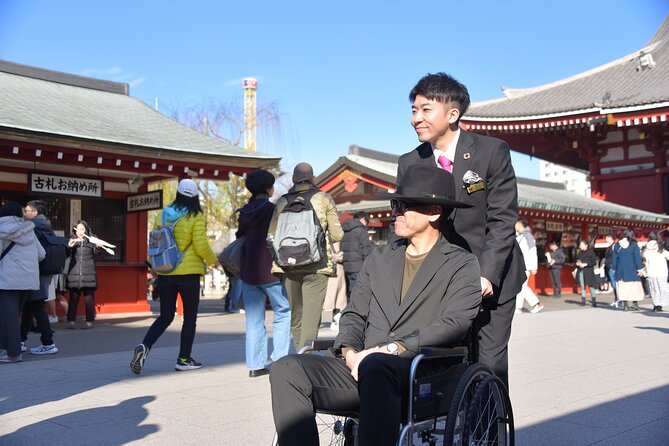
- Guides help with mobility equipment: Umi and Roberto handled a mobility scooter during one particularly hot day.
- The day mixes real stops with drive-by views: Tsukiji, Hama Rikyu Gardens, Senso-ji, and Meiji Jingu receive about an hour each, while Ginza, Shibuya, and other districts are mainly viewed from the vehicle.
- The group limit is generous: Up to nine people can join, making the $731.60 price easier to justify for families or larger groups.
- You get useful onboard comforts: Wi-Fi, water, snacks, and an air-conditioned vehicle help make a long Tokyo day less tiring.
Why this private Tokyo tour makes sense for wheelchair users
The biggest value here is not simply seeing famous Tokyo sights. It is removing the uncertainty between them.
Tokyo has an excellent public transport system, but that does not mean every journey is easy with a wheelchair. You may need to find an accessible entrance, wait for station staff, locate an elevator, and work out whether the next connection is practical. A private vehicle gives you one consistent base throughout the day.
You also have a private guide rather than a large group leader trying to keep everyone moving. That matters when you need more time at a stop, want to avoid an overly crowded area, or would rather change the order of the day. The vehicle also gives you a place to rest between visits.
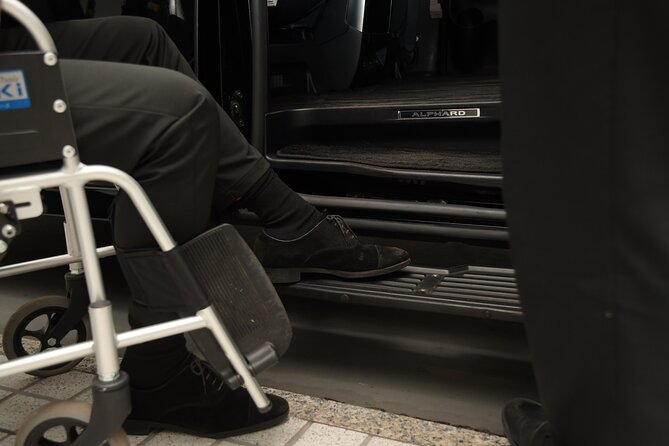
The tour is described as being designed for wheelchair users, but the supplied details do not specify the vehicle’s ramp, lift, interior dimensions, or weight limit. If you use a large powered chair or mobility scooter, ask for those details before paying. One especially useful point is that guides Umi and Roberto handled a mobility scooter for their clients, which took pressure off the person accompanying them. That suggests hands-on help is part of the service, but you should still confirm exactly what assistance and equipment are available for your own needs.
The tour is private, so only your group participates. That is a major advantage for families, couples, or friends who do not want to explain accessibility needs to strangers. The group limit is up to nine people, though the vehicle’s practical capacity for passengers and mobility equipment should be confirmed directly.
A few more Tokyo bookings worth comparing
- From Tokyo: Mount Fuji Full-Day Sightseeing Trip
★ 4.5 · 4,970 reviews - Mount Fuji Full-Day Private Tour from Tokyo (Customizable)
★ 4.9 · 1,470 reviews - Tokyo Private Full-Day Tour by Car or Van
★ 5.0 · 684 reviews
Tsukiji Outer Market: an easy start with food and local color
The day begins at Tsukiji Jogai Market, the outer market that remains after the main Tsukiji fish market moved to Toyosu in 2018. Allow about an hour here.
This is a good first stop because it gives you a taste of Tokyo’s food culture without requiring a long historical lecture or a complicated journey. You will find restaurants, small shops, and stalls selling a wide range of interesting food items and kitchen goods. Admission is free, though anything you eat or buy is your own expense.
The market can be crowded, so your guide’s role matters. You can ask for a route that fits your chair and energy level rather than trying to cover every lane. Since lunch is not included, Tsukiji may also be the most natural place to arrange a meal, but the tour information does not promise a specific restaurant or accessible dining setup. Discuss your needs with the guide early in the day.
Hama Rikyu Gardens: a quieter hour beside the city
Hama Rikyu Gardens provides a welcome change of pace after Tsukiji. Plan on about an hour, with admission not included.
The garden began as a feudal lord’s Tokyo residence and duck-hunting grounds between the seventeenth and nineteenth centuries. That background gives the stop more weight than a simple green space. You are seeing a former private estate that later became a public garden, set against the modern city.
For a wheelchair user, this is one of the stops where pace and route planning are important. The tour is designed with access in mind, but no detailed surface or route information is supplied. Ask the guide which sections are easiest to reach and how much walking or rolling is involved.
I like having this garden in the middle of the day because it breaks up the urban sequence. Still, admission is extra, and you may prefer to use the hour for another stop if gardens are not high on your list. The route is flexible, so say so.
Ginza, the Imperial Palace, and the National Diet Building from the vehicle
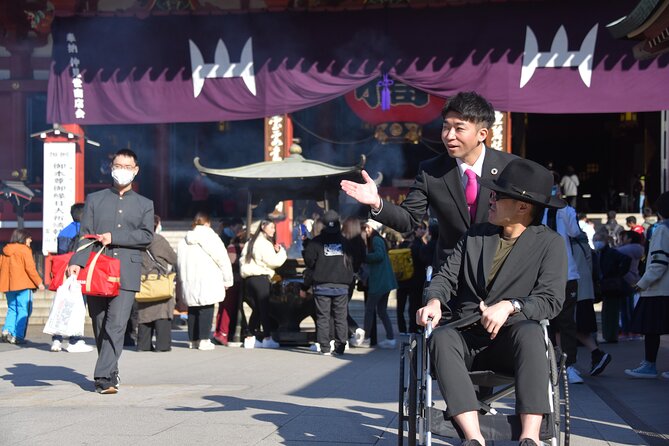
The next part of the tour covers three major Tokyo sights, but they are primarily viewed through the car window.
Ginza receives about an hour of sightseeing by vehicle. This polished shopping district combines luxury boutiques, art galleries, Japanese crafts, restaurants, and modern architecture. It is a useful place to see how Tokyo mixes old design traditions with expensive contemporary retail.
The Imperial Palace follows with about 30 minutes of drive-by viewing. The grounds once belonged to the Tokugawa shoguns, who ruled Japan from 1603 to 1868. The site became the Imperial Palace after political power returned to Emperor Meiji. Since this is not presented as an interior visit, think of it as a quick look at the area and a chance to hear the historical context from your guide.
The National Diet Building also receives about 30 minutes from the vehicle. Built in 1936, it survived the 1945 air raids and remains one of the few Tokyo buildings from that period to do so. This is a short architectural and civic-history stop, not a tour inside the parliament.
These drive-by sections are practical, but you should set your expectations correctly. You will see important districts and buildings without needing to navigate their entrances, yet you may not get close enough for a long photo session or detailed visit. If one of these places matters greatly to you, ask whether the guide can adjust the route for a closer accessible stop.
Same corner of Tokyo, a completely different plan:
- Mt Fuji and Hakone 1-Day Bus Tour Return by Bullet Train
★ 5.0 · 26,383 reviews - 1-Day Tokyo Bus Tour
★ 5.0 · 14,250 reviews - Tokyo: TOKYO SKYTREE® Admission ticket
★ 4.5 · 11,192 reviews - Tokyo: teamLab Planets TOKYO Digital Art Museum Entry Ticket
★ 4.6 · 9,779 reviews
Senso-ji in Asakusa: Tokyo’s oldest temple
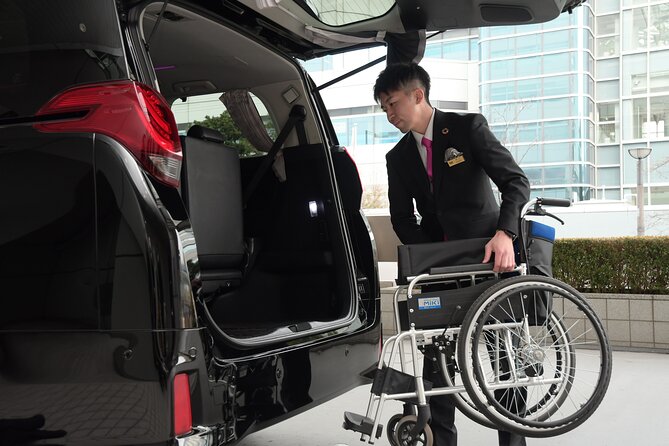
Senso-ji receives about an hour and is one of the day’s main cultural visits. It is Tokyo’s oldest temple, with a founding story linked to 628, when two fishermen found a small statue of Kannon in the nearby river.
Asakusa gives you a different feel from Ginza or Omotesando. The temple area is a place to see traditional religious architecture and one of Tokyo’s best-known historic districts. Your guide can provide context while helping you decide how much of the area is practical to visit.
The temple is free to enter, but the surrounding approach can be crowded. That makes the private format useful: you can move at your own pace and return to the vehicle when you need a break. Still, the route through the temple grounds and nearby streets may involve uneven or crowded areas, so ask your guide about the easiest approach.
This is one stop I would protect in the schedule. If you have limited energy, I would give Senso-ji priority over some of the drive-by shopping districts. It offers a stronger sense of old Tokyo and a clear contrast with the glass towers and fashion streets later in the day.
Omotesando and Harajuku: architecture beside youth culture
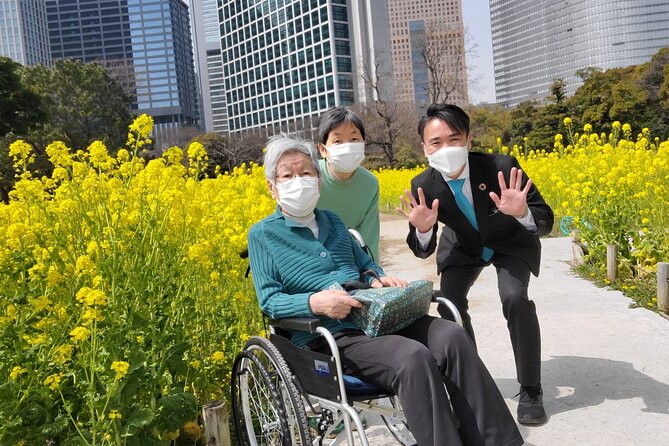
Omotesando and Harajuku are close in spirit but different in character.
Omotesando is known for buildings by leading international architects, along with high-end fashion and famous brands. The tour allows about 30 minutes, mainly as sightseeing from the car. That is enough to take in the broad look of the avenue, but not enough for a serious shopping visit.
Harajuku also receives about 30 minutes. This is Tokyo’s youth-culture district, known for unusual fashion, bold building designs, and changing street trends. Again, the schedule is brief, so expect a snapshot rather than a long walk through every side street.
These stops work best if you want to see how Tokyo’s neighborhoods change from one block to the next. If you care more about temples, gardens, or food than fashion, you can ask the guide to shorten or replace them. That ability to customize is one of the strongest reasons to choose a private tour instead of a standard city circuit.
Meiji Jingu: a calm break from the city
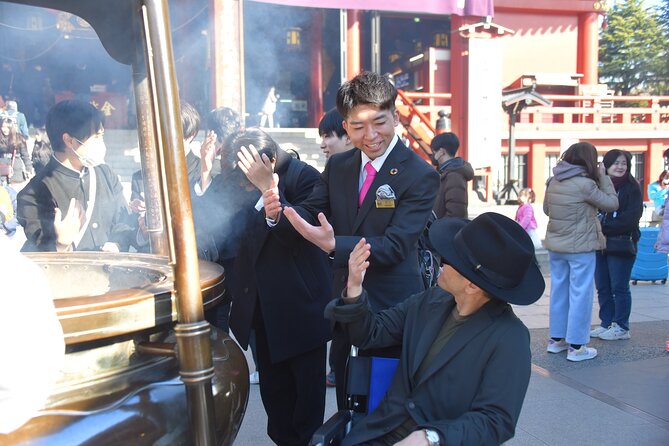
Meiji Jingu receives about an hour and offers one of the day’s most peaceful settings. The shrine has a pleasant atmosphere and provides a break from Tokyo’s busy streets. On Saturdays and Sundays, you might also see a traditional Japanese wedding ceremony.
The shrine is free to enter. As with Hama Rikyu and Senso-ji, the tour description does not give detailed information about surfaces, slopes, or the precise accessible route. Your guide can help you decide how far to go and where to pause.
I would place real value on this stop if you want a quieter cultural experience. It gives the day breathing room after Harajuku and before the visual rush of Shibuya. The possibility of seeing a wedding adds a small human touch, though it is not guaranteed.
Shibuya Crossing and Daikanyama: two very different city scenes
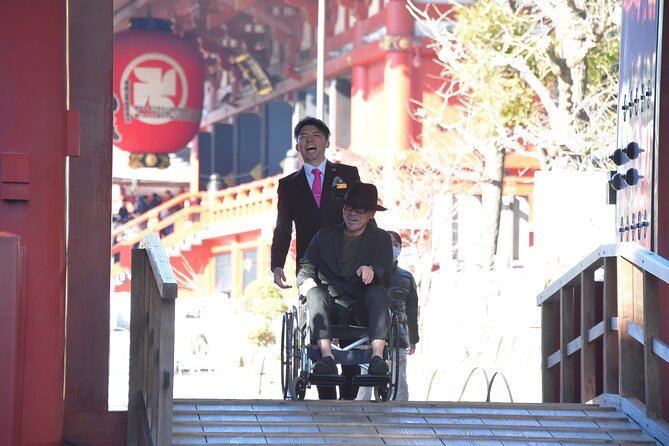
Shibuya Crossing is scheduled for about 30 minutes of sightseeing from the vehicle. It is famous as one of the world’s busiest intersections, and the comparison to Times Square gives you the right idea about its scale and energy.
Because this is a drive-by stop, you should not expect a dedicated visit to a viewing platform or a long pause beside the crossing. Traffic conditions may also affect how much you see. The advantage is that you can experience one of Tokyo’s most recognizable scenes without dealing with the crowds on foot.
Daikanyama, with neighboring Nakameguro, receives another 30 minutes from the vehicle. These areas are known for boutiques and cafes, with a less hectic pace than Ginza, Harajuku, or Shibuya. They make a pleasant final contrast, especially if you prefer neighborhood character to major landmarks.
The schedule is ambitious. Add up the listed times and you get a full day of moving between many districts, before allowing for traffic. Your guide can adjust the plan, but you should not assume every stop will receive its full advertised time if Tokyo roads are slow. A private tour gives you control, not a magic escape from traffic.
What the guides add to the experience
The guide can make or break an accessibility-focused day. Here, Umi, Roberto, and Gen are specifically associated with a helpful, personal approach.
Umi and Roberto looked after a mobility scooter on a very hot day and regularly checked what their clients wanted to experience. That kind of attention is important because Tokyo summers can be hard on anyone, especially when a mobility device and outdoor stops are involved. The air-conditioned vehicle, bottled water, and snacks add comfort, but a guide who notices when you need a pause matters even more.
Gen is associated with allowing a family to customize the route to their liking. That is exactly the right use of a private tour. You can focus on the places that match your interests instead of treating the itinerary as a checklist.
The booking information does not guarantee a particular guide. If you have a strong preference or specific accessibility concern, request it when booking, then wait for confirmation. Confirmation is sent within 48 hours, subject to availability.
Price, timing, and what you receive
The price is $731.60 per group of up to nine people. That is expensive for one or two people, but the calculation changes for a family or larger party. Split nine ways, the listed price is about $81 per person before any meals or admission costs. A smaller group will pay more per person, but you are paying for a private vehicle, guide, flexibility, and reduced transport stress.
The tour lasts about eight hours and begins and ends at Tokyo Station, 1 Chome-9 Marunouchi, Chiyoda City. Pickup is offered, but confirm the exact pickup arrangement when booking, especially if you are staying somewhere other than the stated meeting point.
The operating hours shown are 7:00 AM to 2:00 PM every day during the listed booking periods. Since the activity lasts about eight hours, confirm the exact start time and return timing before finalizing your plans.
Lunch and dinner are not included. Snacks and bottled water are provided, but you should budget separately for a meal and any food at Tsukiji. Hama Rikyu admission is also not included, while the other listed sightseeing stops are free.
Free cancellation is available up to 24 hours before the start time for a full refund. Changes or cancellations made inside that window are not accepted or refunded.
Who should book this Tokyo day
I would recommend this tour most strongly to a wheelchair user traveling with family or friends, especially a group large enough to share the private price. It also suits anyone who wants to see many parts of Tokyo without handling trains, buses, station elevators, and transfers.
It is less suitable if you want long, detailed visits inside museums, a slow food tour, or a full day on foot in one district. Several stops are viewed from the vehicle, and the route covers a lot of ground.
You should also confirm the vehicle’s exact wheelchair setup before booking. The tour is built around accessibility, and the guides have assisted with a mobility scooter, but the supplied information does not state whether every type of chair can remain in the vehicle or how transfers are handled.
Should you book this private Tokyo tour?
Book it if your main goal is a low-stress overview of Tokyo with a guide who can adjust the day around your mobility and interests. The private vehicle, onboard Wi-Fi, snacks, water, and air conditioning are practical benefits, while the personal help described from Umi, Roberto, and Gen gives the tour a reassuring human side.
Skip it if the price is too high for your party or if drive-by sightseeing will leave you dissatisfied. Before booking, confirm the vehicle dimensions, scooter or wheelchair handling, pickup details, and which stops can be adapted. With those questions answered, this is a sensible way to connect Tokyo’s old temples, imperial landmarks, food districts, fashion streets, and modern neighborhoods in one carefully managed day.
FAQ
How long does the tour last?
The tour lasts approximately eight hours.
Where does the tour start?
The stated meeting point is Tokyo Station at 1 Chome-9 Marunouchi, Chiyoda City, Tokyo 100-0005, Japan.
Where does the tour end?
The activity ends back at the meeting point.
Is pickup available?
Pickup is offered. Confirm the exact pickup details when booking.
How many people can join the private tour?
The private tour can accommodate a group of up to nine people.
Is transportation included?
Yes. Private transportation in an air-conditioned vehicle is included.
Is the vehicle equipped with Wi-Fi?
Yes. Wi-Fi is available onboard.
Are food and drinks included?
Bottled water and snacks are included. Lunch and dinner are not included.
Are admission fees included?
Most listed stops are free. Admission to Hama Rikyu Gardens is not included.
Can the tour be canceled for a full refund?
Yes. You can cancel at least 24 hours before the start time for a full refund. Cancellations or changes made less than 24 hours before the start time are not accepted or refunded.
New on our Tokyo list
- Sumi-e Experience in a relaxing green tea shop in Tokyo★ 5.0 · 3 reviews
- Tokyo : Kamikaze Street Drift Ride★ 5.0 · 3 reviews
- Private Zen Meditation in English in Shinjuku, Tokyo★ 5.0 · 3 reviews
- Onsen Spa in Tokyo and Asakusa Bar Hopping with Local Guide★ 5.0 · 3 reviews
- Easy for everyone! Now you can play handmade mini shamisen and show off to everyone! Musical instruments, sweets and live music★ 5.0 · 3 reviews
- Tokyo: Private Tsukiji Street Food & Sake with Local Guide★ 5.0 · 3 reviews
- Mt Fuji Exploration Tour with Free Japanese Kusa Mochi from Tokyo★ 4.5 · 3 reviews
- Tokyo Tsukiji Fish Market Walking and Exploring Hidden Gems Tour★ 5.0 · 3 reviews
Full-Day, compared.

Mount Fuji Full-Day Private Tour from Tokyo (Customizable)
Read our review →
Mt. Fuji, Hakone Full-Day Private Tour with English Driver Guide
Read our review →
Nikko Full-Day Private Tour with Government-Licensed Guide
Read our review →