
Reviewed · CHERRY BLOSSOM TOURS
Licensed Guide Tokyo Meguro Cherry Blossom Walking Tour
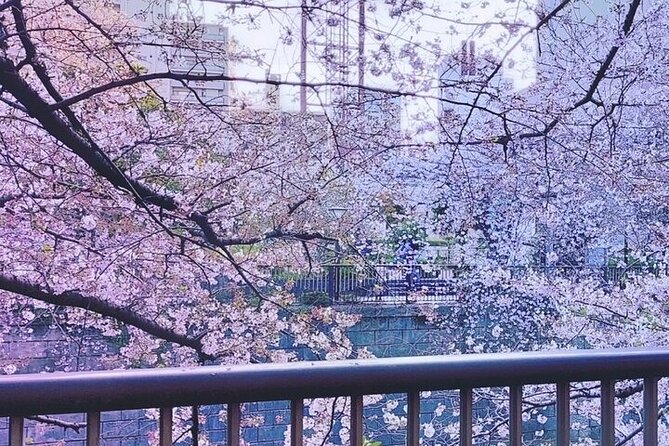
Tokyo’s Meguro River is one of the city’s most graceful spring walks. Cherry trees spill over the water, with fashionable shops and cafes along the banks, while a private guide gives the scenery some useful context. The walk then turns inland toward Daienji Temple and Hotel Gajoen Tokyo, two places that reveal a very different side of Tokyo.
I like two things here: your group gets the guide’s full attention, and the route mixes classic blossom views with less obvious cultural stops. You can pause for photos without holding up strangers, and guides including Terry, Nao, and Micky have been praised for clear English, humor, and strong local knowledge.
The main caution is timing. Blossoms are not guaranteed, and the tour begins at 3:30 pm, so a late-season or early-season visit may look more like a pleasant neighborhood walk than a full pink canopy. Check the bloom outlook before booking, especially since cancellations are free only until 24 hours before the start.
In This Review
- Key points at a glance
- Why the Meguro River makes a fine first look at Tokyo
- Starting at Naka-Meguro at 3:30 pm
- Forty minutes beside the cherry-lined river
- Daienji Temple and the story of Edo’s fires
- Hotel Gajoen Tokyo, the final stop
- What the private format is really worth
- Weather, blossoms, and the small print
- Who should book this Meguro walk?
- Should you book it?
- FAQ
- How long does the Meguro cherry blossom walking tour last?
- Where does the tour begin?
- What time does the tour start?
- Where does the tour end?
- Is this a private tour?
- Can I cancel for a full refund?
Key points at a glance
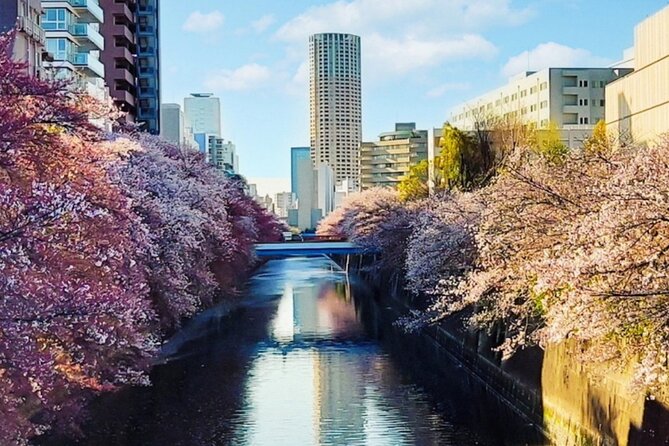
- Meguro River in spring: Spend about 40 minutes beside one of Tokyo’s best-known cherry blossom corridors, with shops and photo spots along the water.
- Private attention: Only your group joins the activity, making it easier to ask questions and stop for pictures.
- Three contrasting stops: The route combines river scenery, the fire-linked story of Daienji Temple, and the ornate Hotel Gajoen Tokyo.
- Strong guide element: Terry, Nao, and Micky are among the guides named in guest feedback, with English ability and an entertaining approach praised.
- Short afternoon format: The 90-minute walk starts at 3:30 pm near Naka-Meguro and ends close to JR Meguro Station.
- Bloom timing matters: The walk can still be worthwhile without flowers, but the central appeal is seasonal and weather-dependent.
Why the Meguro River makes a fine first look at Tokyo
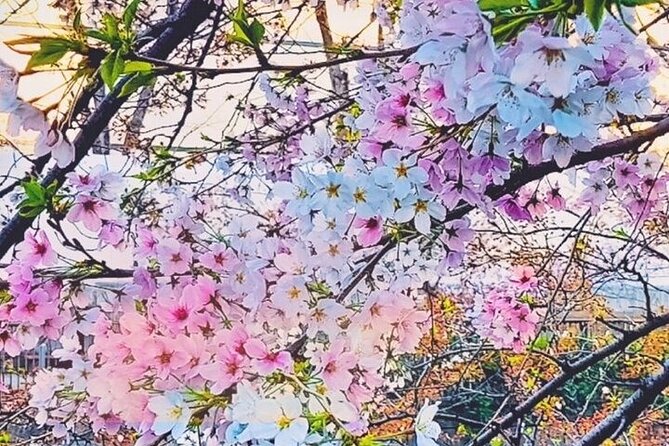
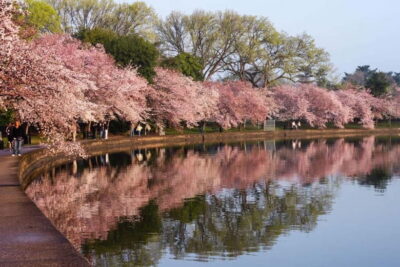
Tokyo is often pictured as a city of packed trains, tall buildings, and bright signs. The Meguro River offers a calmer counterpoint. For roughly 40 minutes, you follow the water through Meguro, where rows of cherry trees frame the path and stylish shops give the area a polished neighborhood feel.
During blossom season, the river is the star. The trees create a long corridor of flowers rather than a single park display, so you keep finding new angles for photographs as the path bends. The water, bridges, branches, and surrounding buildings give you more variety than a quick stop at one viewing platform.
I also like that the walk does not treat cherry blossoms as a separate attraction cut off from daily life. You see the trees beside shops, restaurants, and ordinary city streets. That connection between nature and urban life is one of the most interesting parts of Japanese spring culture, and a guide can explain it while you walk instead of leaving you to guess at the meaning behind the scene.
The private format matters here. Meguro River can be busy during peak blossom days, and photography is easier when you do not have to keep pace with a large group. Your guide can wait while you frame a shot, point out a detail you might miss, or adjust the walk to suit your interests.
The route is not described as a strenuous hike. Still, it is a walking tour, and the experience depends on being comfortable outside for about an hour and a half. Wear shoes you can walk in easily. The tour includes no admission charge at the stops, but your time is spent on foot.
More blossom-season plans:
- Mt. Fuji, Cherry Blossom & Shiba Sakura Pvt. Day Tour
★ 5.0 · 326 reviews - Mt. Fuji & Hakone Cherry Blossom private One Day Tour
★ 4.5 · 35 reviews - Tokyo Cherry Blossoms blooming spots E-bike Tour, 3hrs
★ 5.0 · 27 reviews
Starting at Naka-Meguro at 3:30 pm
The meeting point is Starbucks Coffee at Naka-Meguro Tsutaya Books, at 1-chome-22-10 Kamimeguro. The 3:30 pm start gives you a useful late-afternoon window. Light can be attractive for photographs, and the tour ends near Meguro Station, which is convenient if you want to continue exploring or return to your hotel.
You should allow enough time to find the meeting point. The tour uses a mobile ticket, and booking confirmation is sent at the time of reservation. Keep the ticket easy to open on your phone, particularly if you are arriving in an unfamiliar part of Tokyo.
Because this is a private activity, you are not joining a mixed group of strangers. That can make the start feel simpler. You can tell the guide what interests you, ask for more explanation about local customs, or keep the pace relaxed for photographs.
The guide names that appear in the feedback include Terry, Nao, and Micky. Terry is described as entertaining and personable, with excellent English. Nao handled a difficult end-of-season visit by making sure the important blossom spots were included, even with threatening weather. Micky was praised for attention to detail and interesting facts. Your assigned guide may be different, but these comments give you a good sense of the service style to expect.
Forty minutes beside the cherry-lined river
The Meguro River section is the heart of the experience. You can expect about 40 minutes walking along the water, with cherry trees overhead and fashionable businesses nearby. The route gives you a clear sense of why Meguro is popular in spring without requiring a full-day commitment.
This is also the best part of the tour for photographs. The guide can help you find strong viewpoints and give you time to take pictures. Since only your party participates, you do not need to worry about disrupting a large procession every time you stop.
I would keep your expectations realistic. The river is famous, so it is not an empty country path. The area can feel lively, particularly when blossoms are at their best. Yet the presence of shops and city life is part of the appeal. You are not simply looking at flowers. You are seeing how Tokyo residents use and enjoy a public urban space.
The season is the biggest variable. One visitor joined when the blossoms were not yet open and still found the tour worthwhile because of the guide and the neighborhood information. Another joined near the end of the season, with rain threatening, and still reached the important viewing points. Those experiences suggest the tour has some value beyond flowers, but the visual payoff is strongest when the trees are in bloom.
If blossoms are your main reason for booking, check current conditions before committing. The operator had warned one disappointed participant that the flowers were not ready, but the participant chose to attend. That situation points to an important practical rule: the tour cannot make early or late blossoms appear. You need to decide how much seasonal risk you are willing to take.
Daienji Temple and the story of Edo’s fires
After the river, the walk continues to Daienji Temple for about 20 minutes. This stop changes the mood from spring scenery to Tokyo history.
The temple is tied to a major fire in the middle of the 18th century. A fire that began there helped turn Edo, the old name for Tokyo, into a sea of flames. The temple was not allowed to be rebuilt until the end of the Edo period, and it was later rebuilt as a memorial to those who died.
That story gives the stop real weight. You are not only entering a religious site after a pleasant stroll. You are seeing a place connected to the danger of fire in an old wooden city and to the way communities remembered loss.
A short stop like this is useful for first-time visitors because it adds historical scale. The river walk shows present-day Meguro, with shops and leisure. Daienji reminds you that Tokyo has been repeatedly shaped by disaster, rebuilding, and memorial customs.
The supplied details do not promise a long temple visit or a formal ceremony. Think of Daienji as a focused historical stop within a walking route. The guide’s explanation is likely to be more valuable than the amount of time spent there, especially if you would otherwise pass by without knowing its connection to Edo’s past.
More walking routes in Tokyo:
- Tokyo Tsukiji Fish Market Food and Culture Walking Tour
★ 5.0 · 3,184 reviews - Tokyo: Imperial Palace and Shogun Historical Walking Tour
★ 5.0 · 2,251 reviews - Tokyo: Shinjuku Local Bar and Izakaya Guided Walking Tour
★ 4.9 · 1,794 reviews - Tokyo: Tsukiji Fish Market Food and Walking tour
★ 5.0 · 1,724 reviews
Hotel Gajoen Tokyo, the final stop
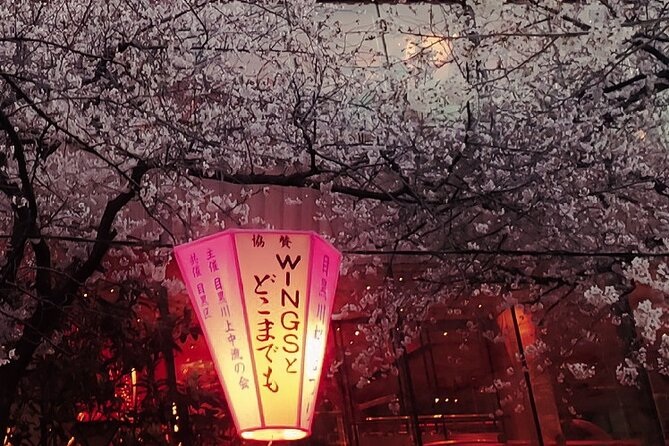
The last stop is Hotel Gajoen Tokyo, where the tour spends about 20 minutes. It is close to JR Meguro Station, so the ending is practical as well as interesting.
Gajoen began in 1931 as a restaurant in Meguro. It served authentic Beijing and Japanese cuisine and later became Japan’s first general wedding hall. That combination tells you something about the changing social life of Tokyo: dining, celebration, ceremony, and hospitality came together in one major venue.
The stop provides a sharp contrast with the river and temple. The river is open-air and seasonal. Daienji is tied to religion and disaster. Gajoen represents grand dining and weddings in modern Tokyo. The route works because these places are not variations on the same theme.
You should not book this walk expecting a long hotel tour or a full architectural visit. The scheduled stop is about 20 minutes, and the available details focus on its background. The value lies in seeing the building and understanding why it matters, not in spending hours inside.
Ending here is convenient. The final point is close to JR Meguro Station, giving you a straightforward next step after the tour. You could make your own plans nearby, return to your accommodation, or use the station to continue across Tokyo.
What the private format is really worth
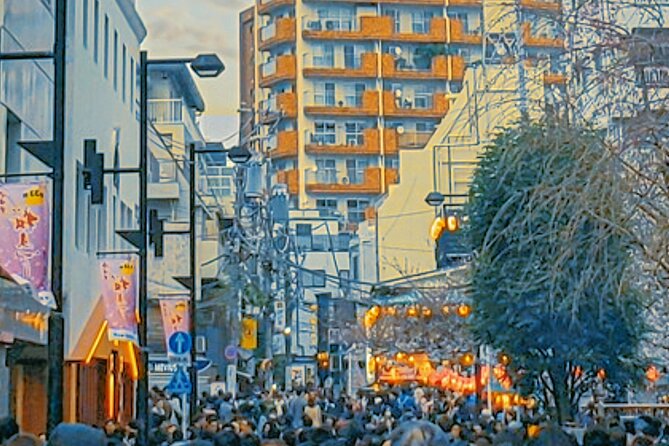
At $22.86 per person, this is a modestly priced private tour. The value depends on the size of your group. For one person, the cost buys a guide’s attention for 90 minutes. For two or more people, the per-person price remains reasonable while you gain a more personal walk than a standard group outing.
There are no admission tickets included because the listed stops are free. You are paying mainly for the guide’s time, interpretation, route planning, and help with the seasonal viewing spots.
That is a fair trade if you want context. You can walk beside the Meguro River on your own, but you may not know the story behind Daienji, the importance of Gajoen, or the best way to connect the three places. The tour also removes some of the uncertainty of navigating a new neighborhood.
I would value it most at the beginning of a Tokyo stay. The route introduces Meguro, gives you a calm first look at the city, and ends in a location with good onward access. A private format is especially useful for a parent with a teenager, a couple who takes many photos, or anyone who prefers questions and conversation over a fixed group pace.
The price is less compelling if you only want to photograph blossoms and already know the area. In that case, you can walk the river independently and spend as long as you like at each spot. The guide fee earns its keep through explanation and personal attention, not through exclusive access.
Weather, blossoms, and the small print

Spring weather can change quickly. One tour went ahead under skies that looked ready for heavy rain, and another took place when the blossom season was almost over. The guide still made the most of the route, but you should bring clothing suitable for a 90-minute outdoor walk.
The tour has a free cancellation policy up to 24 hours before the start time. Cancel at least 24 hours ahead for a full refund. Inside that window, the payment is not refunded, and changes are not accepted. The cut-off follows local Tokyo time.
Most people can participate, according to the supplied booking information. No separate accessibility details are provided, so you should ask the provider directly if your group has specific mobility needs.
The experience has a 4.5 rating from 13 reviews, with praise concentrated on the guides, the river scenery, and the useful mix of stops. There is also one serious complaint tied to a participant leaving shortly after the tour began when blossoms were not ready. That dispute reinforces the need to check the seasonal conditions and understand that the flowers cannot be guaranteed.
Who should book this Meguro walk?
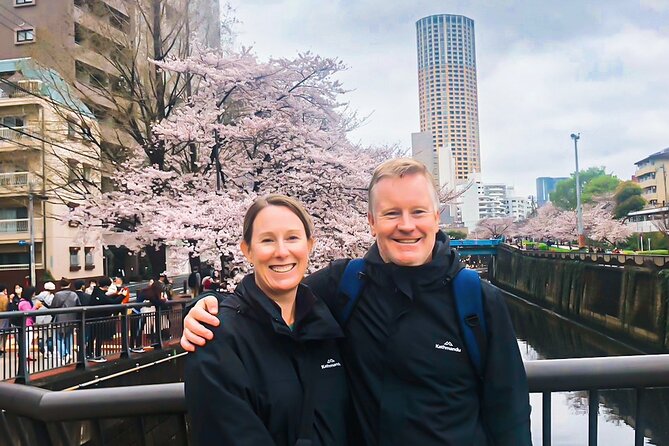
I would recommend it to you if you want a short, guided introduction to one of Tokyo’s prettiest districts. It suits first-time visitors, couples, families, photographers, and anyone who prefers a private conversation to a large group lecture.
It is also a good choice if you want more than a blossom photo. The temple story and Gajoen visit give the route substance, while the river keeps it visually appealing. Guides who are personable, humorous, and comfortable in English can make the 90 minutes feel well spent.
You may want to skip it if your schedule is tight and you need a longer sightseeing block, or if your only goal is guaranteed cherry blossom viewing. The tour is seasonal, and even a well-run walk cannot control the bloom dates or weather.
Should you book it?
Book this tour if you want personal guidance, easy photo stops, and three very different Meguro sights in a compact afternoon. At $22.86 per person, it offers good value when you care about the stories behind the scenery and want to finish near JR Meguro Station.
Before booking, check the blossom forecast and keep the cancellation deadline in mind. If the trees are in bloom, this can be a lovely way to see the Meguro River. If they are not, book only if Daienji, Hotel Gajoen, and a guide-led neighborhood walk still sound worthwhile.
FAQ
How long does the Meguro cherry blossom walking tour last?
The tour lasts approximately 1 hour and 30 minutes. About 40 minutes are scheduled for the Meguro River, 20 minutes for Daienji Temple, and 20 minutes for Hotel Gajoen Tokyo.
Where does the tour begin?
The meeting point is Starbucks Coffee at Naka-Meguro Tsutaya Books, 1-chome-22-10 Kamimeguro, Meguro City, Tokyo 153-0051, Japan.
What time does the tour start?
The start time is 3:30 pm.
Where does the tour end?
The tour ends at Hotel Gajoen Tokyo, 1-chome-8-1 Shimomeguro, Meguro City, Tokyo 153-0064. The final stop is close to JR Meguro Station.
Is this a private tour?
Yes. Only your group participates in the activity, and the format gives you the guide’s full attention.
Can I cancel for a full refund?
Yes, if you cancel at least 24 hours before the experience start time. Cancellations made within 24 hours are not refunded, and changes made during that period are not accepted.
New on our Tokyo list
- Sumi-e Experience in a relaxing green tea shop in Tokyo★ 5.0 · 3 reviews
- Tokyo : Kamikaze Street Drift Ride★ 5.0 · 3 reviews
- Private Zen Meditation in English in Shinjuku, Tokyo★ 5.0 · 3 reviews
- Onsen Spa in Tokyo and Asakusa Bar Hopping with Local Guide★ 5.0 · 3 reviews
- Easy for everyone! Now you can play handmade mini shamisen and show off to everyone! Musical instruments, sweets and live music★ 5.0 · 3 reviews
- Tokyo: Private Tsukiji Street Food & Sake with Local Guide★ 5.0 · 3 reviews
- Mt Fuji Exploration Tour with Free Japanese Kusa Mochi from Tokyo★ 4.5 · 3 reviews
- Tokyo Tsukiji Fish Market Walking and Exploring Hidden Gems Tour★ 5.0 · 3 reviews
Cherry Blossom Tours, compared.
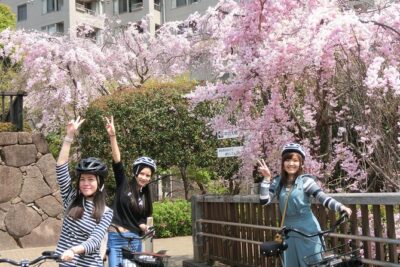
Tokyo Cherry Blossoms blooming spots E-bike Tour, 3hrs
Read our review →

Tokyo Limited-Date Cherry Blossom Route Cruise & Show & Meal
Read our review →
Evening Hanami (Cherry Blossom) Experience with a Local
Read our review →
Tokyo Cherry Blossom Express Tour with Boat Ride
Read our review →Browse the lists this tour appears in