Reviewed · FULL-DAY
Tokyo Full Day Customize Private Tour with English Guide
Tokyo is too large to cover neatly, but this private full-day tour makes a serious attempt. You can move from the old temple streets of Asakusa to the neon of Shibuya, then reach Tokyo Bay without working out train routes or hauling yourself across the city. Your guide and driver shape the day around your priorities.
I like the hotel pickup and private vehicle, which saves time and energy on a packed sightseeing day. I also like the flexible approach: guides including Zohan, Ahmed, Ari, and Ali have adjusted plans for personal requests, poor weather, photo stops, and the pace of the group. The main drawback is cost. At $370 for up to three people, it is good value for a small group, but less so for a solo guest, and observation-deck tickets cost extra.
In This Review
- Key points at a glance
- A private way to get your Tokyo bearings
- Starting with Tokyo Skytree
- Tsukiji and the changing fish-market story
- Asakusa and Sensoji Temple
- A look at the Imperial Palace grounds
- Meiji Jingu, a forest inside the city
- Shibuya Crossing and modern Tokyo
- Tokyo Tower and its extra ticket
- Odaiba and Tokyo Bay
- How the private vehicle changes the day
- Is $370 a fair price for up to three people?
- Who should book this Tokyo day?
- The right way to prepare
- Should you book it?
- FAQ
- How long does the Tokyo private tour last?
- How many people can join the private tour?
- Is hotel pickup included?
- Is transportation provided during the day?
- Is the guide able to speak English?
- Which Tokyo sights are included?
- Are Tokyo Skytree and Tokyo Tower tickets included?
- Is the tour plan fixed?
- What happens if the weather is poor?
Key points at a glance
- Eight major Tokyo stops in one day: The plan can include Skytree, Tsukiji, Asakusa, the Imperial Palace, Meiji Jingu, Shibuya, Tokyo Tower, and Odaiba.
- Private transport from your accommodation: An air-conditioned vehicle, onboard WiFi, water, and coffee keep the long day easier.
- Flexible pacing: You can request places and adjust the schedule rather than follow a fixed large-group route.
- Two tower tickets cost extra: Tokyo Skytree costs 3,200 yen per person, while Tokyo Tower admission costs 1,200 yen per person.
- Guide quality matters: Zohan, Ahmed, Ari, and Ali are named in the available feedback, with special praise for English, patience, planning, and photo help.
- Plan for a full day: The advertised duration is 8 to 10 hours, and the listed stops add up to about nine hours before traffic and pickup time.
A private way to get your Tokyo bearings
The best reason to choose this tour is simple: Tokyo can feel like several cities joined together by rail lines. One neighborhood gives you temple gates and souvenir stalls, another gives you department stores and giant video screens, while Odaiba feels like a planned waterfront district from a different era.
A private vehicle does not erase Tokyo traffic, but it removes much of the planning work. You do not need to compare subway routes, find the right station exit, or decide how to connect Skytree with Odaiba and Tokyo Tower. That convenience is especially useful if you have one free sightseeing day or want an overview before exploring independently.
The tour is designed for up to three people, so your group does not share the vehicle with strangers. That gives you room to request more time at a favorite stop or move on when a site has had enough. You can also ask your guide to tailor the day to your interests.
This is not a specialist food tour, temple tour, or architecture tour. It is a broad first look at Tokyo. You will see famous places, gain basic context from an English-speaking guide, and receive local suggestions for the rest of your stay.
A few more Tokyo bookings worth comparing
- From Tokyo: Mount Fuji Full-Day Sightseeing Trip
★ 4.5 · 4,970 reviews - Mount Fuji Full-Day Private Tour from Tokyo (Customizable)
★ 4.9 · 1,470 reviews - Tokyo Private Full-Day Tour by Car or Van
★ 5.0 · 684 reviews
Starting with Tokyo Skytree
Tokyo Skytree is usually the most dramatic opening stop. At 634 meters, it is the world’s tallest freestanding tower and rises far above Tokyo Tower, which held the city’s height record before Skytree was built.
The tower has two public observation levels. The standard visit is scheduled for about one hour, enough for a look at the city from above if you purchase admission. The view is the main event here, so check the weather before deciding how much of the day to devote to it.
Admission is not included. The stated price is 3,200 yen per person, a meaningful extra for three people. If clouds or rain are expected, you may prefer to keep this stop short and use the tour’s flexibility elsewhere. The provider can cancel the experience for poor weather, offering another date or a full refund, but ordinary low visibility may still affect your personal enjoyment.
Tsukiji and the changing fish-market story
Tsukiji offers a different kind of Tokyo experience. The former wholesale fish market operated from 1935 and was once the world’s largest wholesale fish and seafood market. The wholesale operation moved, but Tsukiji remains a well-known market area and a useful stop near Ginza.
The scheduled visit is about one hour, with no admission fee. That makes it an easy place to explore without adding ticket costs to the day. Your guide can help you understand the difference between the historic market identity and the area you see now.
Keep your expectations sensible. This stop is not presented as a behind-the-scenes wholesale auction visit. It is better understood as a market-area visit that adds food culture and old Tokyo atmosphere to a day otherwise filled with landmarks and viewpoints.
Asakusa and Sensoji Temple
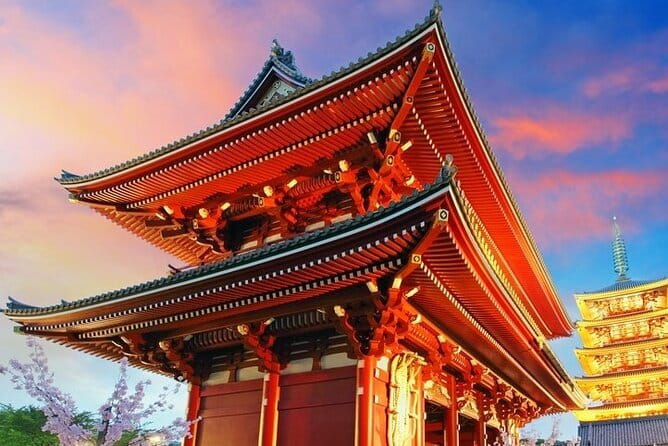
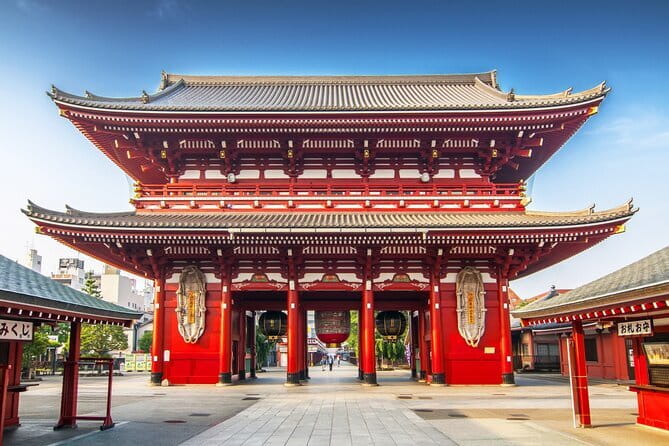
Asakusa is where the tour turns toward Tokyo’s older character. The district is centered on Sensoji, a major Buddhist temple, and is surrounded by water. For many first-time visitors, this is the clearest change of mood during the day.
You have about an hour here. That is enough to see the temple area and get a feel for the neighborhood, though not enough for an unhurried study of every street. If you care more about temples and traditional Tokyo than shopping districts, tell your guide early. The private format lets you make that preference clear.
Asakusa pairs well with Skytree because the two stops are in the same broad part of the city. The contrast is useful: one stop shows Tokyo reaching upward into the future, while the other gives you a sense of its Buddhist and neighborhood traditions.
Same corner of Tokyo, a completely different plan:
- Mt Fuji and Hakone 1-Day Bus Tour Return by Bullet Train
★ 5.0 · 26,383 reviews - 1-Day Tokyo Bus Tour
★ 5.0 · 14,250 reviews - Tokyo: TOKYO SKYTREE® Admission ticket
★ 4.5 · 11,192 reviews - Tokyo: teamLab Planets TOKYO Digital Art Museum Entry Ticket
★ 4.6 · 9,779 reviews
A look at the Imperial Palace grounds
The Imperial Palace occupies the former site of Edo Castle, once home to the shogun before 1868. Wide moats, thick walls, and carefully maintained gardens give the area a formal feel in the middle of central Tokyo.
The planned stop lasts about an hour and is free. The value here is context rather than a long indoor visit. The tour description identifies the palace as the emperor’s home, but it does not promise entry into private palace areas, so you should think of this as an exterior and grounds visit.
This is a good place to ask your guide about Tokyo’s shift from shogun rule to the modern imperial capital. The tour is at its best when you use the driver not just to move between sights, but to ask questions that connect them.
Meiji Jingu, a forest inside the city
Meiji Jingu gives the day a welcome pause. The Shinto shrine sits within a 70-hectare forest in the middle of Tokyo, and its grounds are designed to feel removed from the city around them.
The stop is scheduled for one hour and has no admission fee. You will need to walk through the shrine precinct, so this is one place where comfortable shoes still matter, even though the vehicle reduces the amount of walking between neighborhoods.
I like the contrast with the Imperial Palace. The palace area is defined by moats and stone walls, while Meiji Jingu is defined by forest and shrine space. Together, they give you a more useful picture of Tokyo than a day spent only at shopping centers and towers.
Shibuya Crossing and modern Tokyo
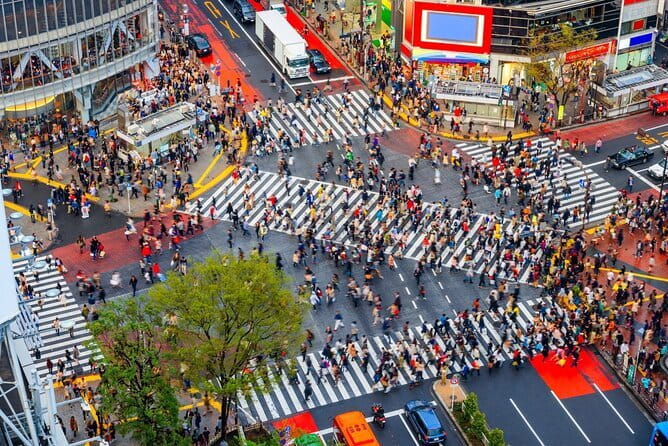
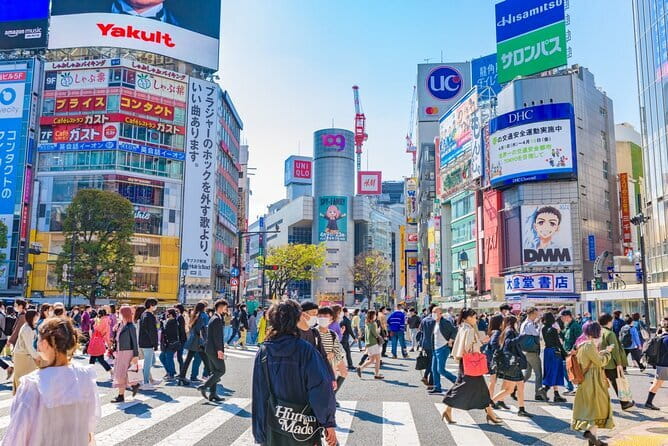
Shibuya is the tour’s clearest dose of modern city energy. Shibuya Scramble Crossing sits outside Shibuya Station near the Hachiko exit, where pedestrians cross from several directions when vehicle traffic stops.
Your scheduled time is about an hour. That gives you a chance to see the crossing, orient yourself around the station, and take photographs. It is not enough time to explore every shopping street in Shibuya, so tell your guide if you want to focus on the crossing rather than a broad neighborhood visit.
The private vehicle is useful here mainly for drop-off and pickup planning, since the station area is busy. Your guide can help you get your bearings and suggest places to return to later. This is one of the tour’s more recognizable photo stops, but it works best when you treat it as a quick look at how Tokyo moves, not as a full Shibuya neighborhood tour.
Tokyo Tower and its extra ticket

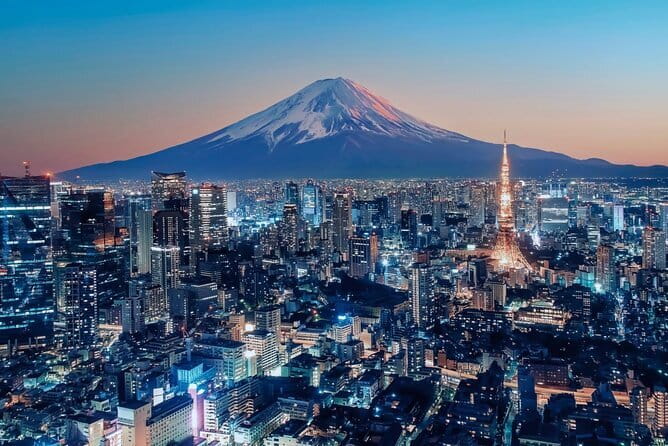
Tokyo Tower offers a classic view of the city and a bit of postwar history. Completed in 1958, the communications and observation tower reaches 332.9 meters and once held the title of Japan’s tallest tower.
The schedule allows two hours here, longer than at most other stops. That gives you more time for the observation areas and the surrounding Shiba-koen district, though admission is not included. The stated entrance fee is 1,200 yen per person.
The choice between Tokyo Skytree and Tokyo Tower is one of the practical decisions to discuss with your guide. Skytree is taller and offers the higher viewpoint. Tokyo Tower has the older landmark identity and may fit better if you want a classic image of Tokyo. Visiting both is possible, but doing so adds ticket costs and can make an already long day feel crowded.
Odaiba and Tokyo Bay
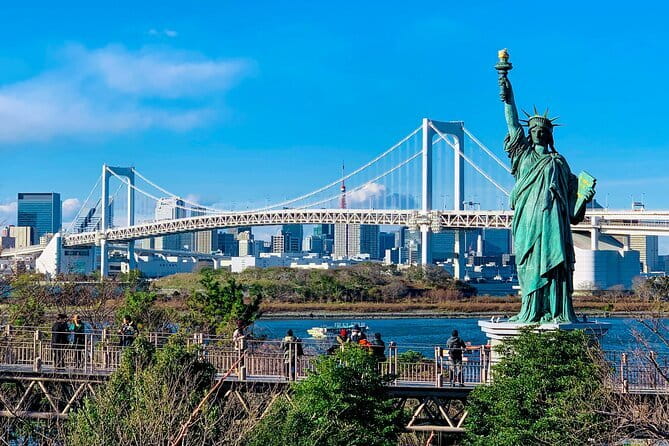
Odaiba closes the route with a change of scenery. The artificial island is reached by Rainbow Bridge or the futuristic Yurikamome train and is known for high-tech entertainment, waterfront spaces, and Seaside Park.
The schedule allows two hours, making this one of the day’s longer stops. You can take in the bay setting, spend time around the beach at Seaside Park, and look for views that may include Mount Fuji when conditions are clear. The supplied details do not promise a specific Mount Fuji view, so weather will matter.
Odaiba is a good final stop because it does not look or feel like Asakusa, Meiji Jingu, or Shibuya. You finish with a modern waterfront district rather than another historic site. On the other hand, it is farther from many central Tokyo sights, and traffic can affect the time available. That is another reason to tell your guide which stops matter most before the day begins.
How the private vehicle changes the day
The vehicle is air-conditioned and private, with WiFi onboard plus water and coffee. Hotel pickup and drop-off are included, so you do not need to reach a meeting point at the start or find your way back after a long day.
The driver is described as English-speaking, and the experience is framed around both driving and guiding. The available feedback gives useful clues about how this works in practice. Zohan is described as patient and funny, with strong English, and he helped with photographs and walked with the group at some stops. Ahmed is described as flexible with a first-time Tokyo schedule.
Ari contacted the group the night before to discuss a poor weather forecast and agree on the schedule. Ali is described as thoughtful about the group’s needs and able to adjust the day when the weather was not ideal. These details point to the real strength of this product: the person assigned to you can matter as much as the route.
Guide names are not guaranteed for every booking, so treat them as examples rather than a promise. The useful question to ask is how much control you want over the day. If you want a fixed lecture with exact departure times, a standard group tour may suit you better. If you want to change the order, reduce a stop, or spend more time at a place you care about, this format has the advantage.
Is $370 a fair price for up to three people?
The price is $370 per group, not per person, for up to three people. For three people, that works out to about $123 each before tower admission. Add both observation towers and the listed admission costs total 8,800 yen for three people, assuming the stated prices remain current.
That price buys more than transportation. You are paying for a private vehicle, hotel pickup and drop-off, an English-speaking driver and guide, onboard WiFi, and a full day that can be adjusted to your group. It is strongest value for a couple or trio that wants to see many parts of Tokyo without managing the transport.
For one person, the same group price is harder to justify. For two or three people, the cost becomes easier to compare with the time and effort required to arrange a similar route alone. Remember that Tokyo traffic can affect how many minutes you actually spend at each stop. The tour can maximize what you see, but no vehicle can make the city small.
Who should book this Tokyo day?
I would choose this experience for a first visit when you want a broad introduction to Tokyo and have limited time. It also suits families, older people, or anyone who would rather limit long transfers between distant neighborhoods.
It is a good match if you want:
- Hotel pickup and drop-off
- A private day for up to three people
- An English-speaking guide and driver
- A flexible plan built around your requests
- A mix of historic sites, towers, markets, city streets, and waterfront views
- Help adjusting the schedule when weather affects tower views or outdoor stops
I would hesitate if you want a slow food crawl, a long temple study, extensive shopping time, or a detailed visit inside each attraction. Eight stops in 8 to 10 hours is ambitious. You will get an overview, not a deep visit at every place.
The tour requires good weather, and poor-weather cancellations may result in another date or a full refund. You can cancel for a full refund up to 24 hours before the start time. Most people can participate, and the experience is private, but the amount of walking at individual sites still varies.
The right way to prepare
Before pickup, decide which three or four stops matter most. Give those priorities to your guide, especially if you want both towers, a longer Asakusa visit, or extra time in Shibuya.
Ask about the order of stops if the forecast is poor. Ari’s advance call about weather shows why this matters. A cloudy day may be better spent at indoor or lower-priority sites, while clear conditions could make Skytree, Tokyo Tower, or Odaiba more worthwhile.
Budget separately for the two tower tickets. Skytree admission is 3,200 yen per person and Tokyo Tower admission is 1,200 yen per person. The other listed stops have free admission, though the tour price does not cover personal purchases.
Wear comfortable shoes and keep your schedule open. The driver reduces the long walks between districts, but you will still explore temple grounds, shrine paths, market streets, palace areas, and waterfront spaces on foot.
Should you book it?
Book this tour if your main goal is to see many sides of Tokyo in one private day with as little transport planning as possible. The flexible format, small group size, hotel pickup, and guide-led adjustments are the strongest reasons to choose it.
I would especially consider it for two or three people on a first visit. You can split the group price, request help with photos and orientation, and let the guide decide when traffic or weather calls for a change.
Skip it if you prefer public transport, slow neighborhood exploration, or a specialist tour built around one subject. This is a fast, broad introduction. Used that way, it offers a practical start to Tokyo and leaves you with a clear idea of where to return on your own.
FAQ
How long does the Tokyo private tour last?
The experience lasts approximately 8 to 10 hours.
How many people can join the private tour?
The price covers one group of up to three people, and only your group participates.
Is hotel pickup included?
Yes. Hotel pickup and drop-off are included.
Is transportation provided during the day?
Yes. The tour includes private transportation in an air-conditioned vehicle.
Is the guide able to speak English?
Yes. An English-speaking driver and guide are included.
Which Tokyo sights are included?
The planned stops are Tokyo Skytree, Tsukiji Fish Market, Asakusa, the Imperial Palace, Meiji Jingu Shrine, Shibuya, Tokyo Tower, and Odaiba District.
Are Tokyo Skytree and Tokyo Tower tickets included?
No. Tokyo Skytree admission costs 3,200 yen per person, and Tokyo Tower admission costs 1,200 yen per person.
Is the tour plan fixed?
No. It is a customizable private tour, and the guide can adjust the itinerary around your requests and the weather.
What happens if the weather is poor?
The experience requires good weather. If the provider cancels because of poor weather, you can choose another date or receive a full refund.
New on our Tokyo list
- Tokyo : Kamikaze Street Drift Ride★ 5.0 · 3 reviews
- Private Zen Meditation in English in Shinjuku, Tokyo★ 5.0 · 3 reviews
- Sumi-e Experience in a relaxing green tea shop in Tokyo★ 5.0 · 3 reviews
- Onsen Spa in Tokyo and Asakusa Bar Hopping with Local Guide★ 5.0 · 3 reviews
- Easy for everyone! Now you can play handmade mini shamisen and show off to everyone! Musical instruments, sweets and live music★ 5.0 · 3 reviews
- Tokyo: Private Tsukiji Street Food & Sake with Local Guide★ 5.0 · 3 reviews
- Mt Fuji Exploration Tour with Free Japanese Kusa Mochi from Tokyo★ 4.5 · 3 reviews
- Tokyo Tsukiji Fish Market Walking and Exploring Hidden Gems Tour★ 5.0 · 3 reviews
Full-Day, compared.

Mount Fuji Full-Day Private Tour from Tokyo (Customizable)
Read our review →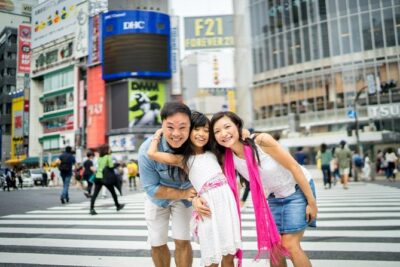
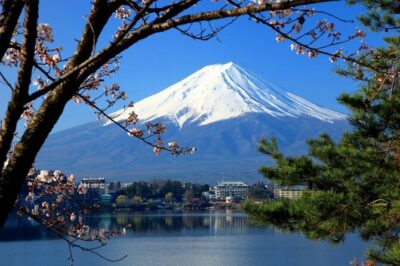
Mt. Fuji, Hakone Full-Day Private Tour with English Driver Guide
Read our review →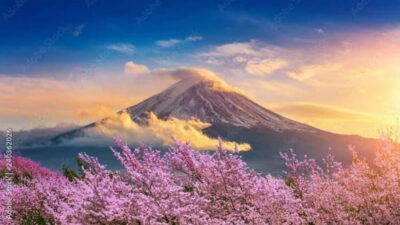
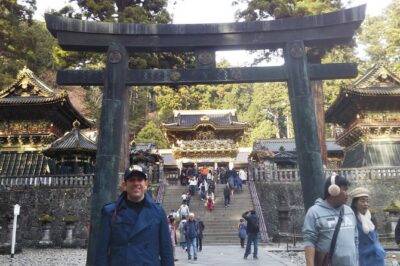
Nikko Full-Day Private Tour with Government-Licensed Guide
Read our review →