Reviewed · TOKYO TOURS
Tokyo Metropolis
Tokyo reveals itself especially well through a camera lens. This 2.5-hour walk takes you from the steam locomotive at Shinbashi Station through Shiodome’s steel towers, Ginza’s narrow side streets, and the striking Tokyo International Forum. Along the way, your local photographer helps you find patterns, reflections, people, and angles that are easy to miss while simply sightseeing.
I like the way the route mixes major modern architecture with small working alleys, where cooks, restaurant staff, and office workers go about their day. I also like the very small group, limited to six people, which gives you time to ask about composition, timing, and camera settings. The main consideration is pace: you cover about 1.3 miles on foot, and the experience requires good weather.
In This Review
- Key points at a glance
- Seeing Tokyo as a photographer
- Starting beside Shinbashi’s steam locomotive
- Shiodome: one hour among glass and steel
- Ginza’s back streets and everyday scenes
- Tokyo International Forum: a dramatic final frame
- What the instruction is really worth
- Who will get the most from this walk
- Timing, weather, and practical planning
- The teaching style to expect
- Final decision: is it worth booking?
- FAQ
- Where does the photography workshop start?
- What time does the experience begin?
- How long does the workshop last?
- How far do you walk?
- Which Tokyo areas does the route visit?
- Where does the experience end?
- How many people can join?
- Is the workshop suitable for beginners?
- Is transportation included?
- What happens if the weather is poor?
Key points at a glance
- A city photography lesson, not just a sightseeing walk: You practice framing, composition, storytelling, and technical settings as you go.
- Three distinct Tokyo settings: Shiodome offers skyscrapers, Ginza brings architecture and street scenes, and the Tokyo International Forum supplies bold interior views.
- Small-group instruction: The group is limited to six, with private departures available for your own party.
- Useful for many skill levels: Beginners receive patient guidance, while experienced photographers can work on stronger composition and more deliberate image-making.
- A practical finish near trains: The route ends at the Tokyo International Forum, where you can continue to your next destination by rail.
- A morning start: Meeting time is 10:00 a.m., beginning at the steam locomotive in Shinbashi.
Seeing Tokyo as a photographer
Most Tokyo sightseeing routes point you toward temples, gardens, neon streets, and famous crossings. This walk takes a different path. It treats the modern city as the subject: hard edges, glass walls, long corridors, repeating windows, reflections, shadows, and people moving through carefully designed spaces.
That focus gives the experience a clear purpose. You are not simply told that a building is interesting. You are shown how to make it interesting in a photograph. Your guide may ask you to change your position, wait for a person to enter the frame, simplify the background, or use lines to pull the eye through the picture.
The instruction is practical rather than academic. You work with the camera you brought and apply ideas immediately. Beginners can ask about basic settings without feeling out of place. More experienced photographers can concentrate on timing, negative space, visual rhythm, and the problem of turning a large building into a focused image.
The guide names associated with this experience include Stephane, Lukasz, and Exel. Stephane is described as especially attentive to artistic choices, camera technique, and the mood of an image. Lukasz is known for finding unusual angles and quiet photo positions that do not obstruct pedestrians. Exel has been praised for patient explanations with very inexperienced photographers.
Guide assignments can change, so you should not book on the assumption that one particular instructor will lead your walk. The important point is the format: a local photographer works beside you, looks at your images, and offers suggestions as you photograph.
A few more Tokyo bookings worth comparing
- Mt Fuji and Hakone 1-Day Bus Tour Return by Bullet Train
★ 5.0 · 26,383 reviews - 1-Day Tokyo Bus Tour
★ 5.0 · 14,250 reviews - Tokyo: TOKYO SKYTREE® Admission ticket
★ 4.5 · 11,192 reviews
Starting beside Shinbashi’s steam locomotive
The meeting point is SL Square, at the west entrance of Shinbashi Station, beside the steam locomotive. This is a practical place to begin because Shinbashi is a major transport hub and the starting landmark is easy to identify.
The walk begins at 10:00 a.m. From there, you head toward the Shiodome business district. The early part of the route helps you shift from ordinary sightseeing into photographic observation. Instead of rushing toward a landmark, you start looking at how buildings relate to one another and how morning light changes their surfaces.
Bring your camera ready to use. The tour is mobile-ticketed, and the supplied information does not specify camera equipment, so a phone camera is likely the simplest option if you do not carry a dedicated camera. Still, the instruction is aimed at photography lovers using cameras of different levels, and past participants have worked with advanced Canon equipment as well as basic gear.
You should also wear comfortable shoes. The stated walking distance is about 2 kilometers, or 1.3 miles. That is not a long hike, but you will stop often, change positions, look upward, and possibly repeat a shot from several angles. Good walking shoes matter more than formal city clothes here.
Shiodome: one hour among glass and steel
The first major stop is Shiodome Siosite, a modern skyscraper district. You spend about an hour here, working on composition in the morning light.
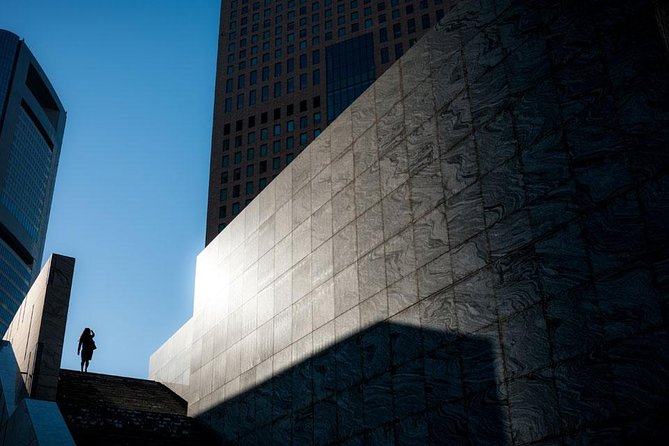
Shiodome is useful for photography because its buildings offer strong geometry. Glass surfaces reflect other towers, vertical lines stretch upward, and open spaces allow you to frame several structures together. Your guide helps you decide what belongs in the picture and what should be left out.
The central lesson here is framing. A tall building can look flat if you simply point the camera upward. By changing your position, including a foreground element, or using a person to show scale, you can give the photograph more structure. The guide also helps you consider the edges of the frame, where stray signs, poles, or bright patches can weaken an otherwise strong image.
The workshop also addresses storytelling. Architecture alone can produce clean, abstract images, but people add a sense of place. Office workers, pedestrians, and passing figures can show how Tokyo’s buildings function in daily life. You are encouraged to use the environment and the people within it, rather than treating the towers as empty objects.
This part should suit photographers who enjoy lines, reflections, and repeated patterns. It may be less satisfying if you want historic streets or traditional Japanese culture. Shiodome is deliberately modern, and that is the point.
Ginza’s back streets and everyday scenes
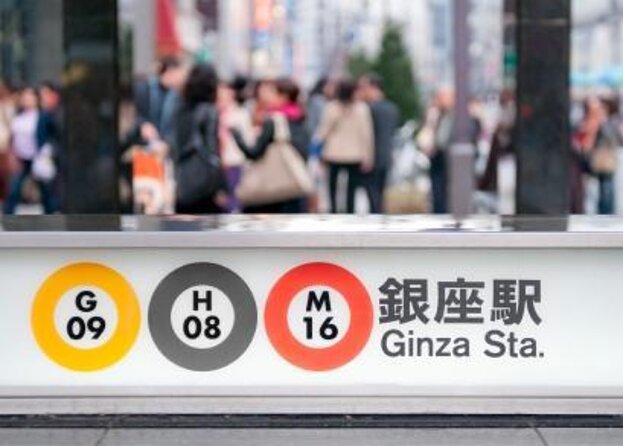
The route continues into Ginza, with about 45 minutes devoted to architecture and street photography. Ginza is famous for its polished main avenues, but the workshop takes you into smaller alleys and less obvious corners.
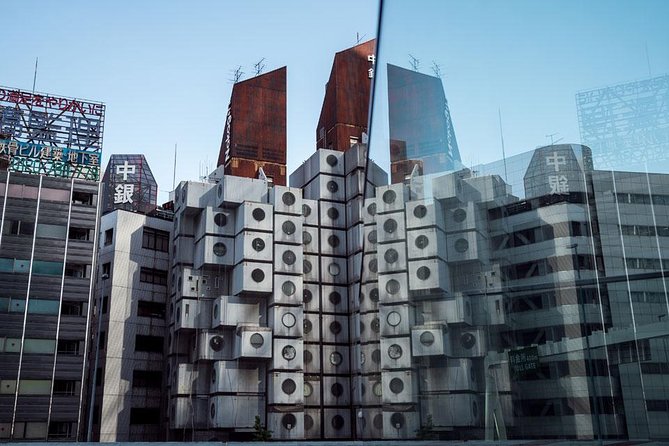
Here the subject changes. You move from large-scale towers to details at street level. Narrow passages, restaurant fronts, older pockets between newer buildings, and working spaces create more intimate images. Cooks, wait staff, and salarymen become part of the visual story.
This is where the instruction about timing becomes especially useful. A street photograph often depends on a brief arrangement of people, light, signs, and architecture. Your guide can help you wait for the right moment instead of taking a quick picture and moving on.
Ginza also offers a good lesson in contrast. Sleek commercial architecture may sit close to a modest alley. A formal facade can frame an ordinary workday. A repeating pattern may be interrupted by one moving person. These juxtapositions give your pictures a stronger sense of Tokyo than a simple postcard view.
The side streets are not presented as a staged attraction. People are going about their business, so you need to remain aware of pedestrians and avoid blocking the way. That is one reason a local guide is useful. Lukasz, in particular, has been praised for locating interesting shooting positions without getting in other people’s way.
You should expect to walk and stop rather than settle into one long lesson. The 45-minute timing is enough to explore several scenes, but it is not a full street-photography day. If you want extensive portrait work, night photography, or a long session in one neighborhood, this workshop will feel brief.
Same corner of Tokyo, a completely different plan:
- Tokyo: teamLab Planets TOKYO Digital Art Museum Entry Ticket
★ 4.6 · 9,779 reviews - Mt Fuji & Hakone Cruise, Drum Show Bullet Train 1 Day from Tokyo
★ 4.0 · 7,413 reviews - Tokyo: Sumo Show Experience with Chicken Hot Pot and a Photo
★ 4.8 · 6,678 reviews - Tokyo: Shinjuku Food Tour (13 Dishes at 4 Local Eateries)
★ 5.0 · 6,603 reviews
Tokyo International Forum: a dramatic final frame
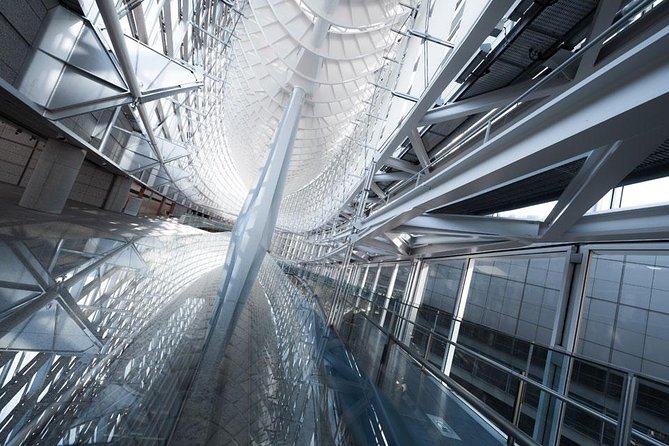
The final stop is the Tokyo International Forum in Yurakucho, where you spend about 45 minutes. Its immense interior offers a different set of photographic problems from the streets outside.
The building gives you height, curves, glass, corridors, and strong perspective lines. It is a place where you can work on symmetry, scale, reflections, negative space, and careful alignment. Instead of photographing a busy street, you may be trying to make a clean, controlled image from a complicated interior.
This is a strong finish because it lets you apply several lessons at once. You can look for a dominant line, position a person as a scale reference, and decide how much empty space the image needs. The large interior also gives you several possible angles, so the guide can compare different approaches using the pictures on your screen.
The ending is convenient. The stated endpoint is near Anthony Caro’s Barcelona Ballad, at 3 Chome-5 Marunouchi. You can easily catch a train afterward, making the workshop a useful morning activity before another part of Tokyo.
The Forum is an architectural subject, not a guided tour of the building’s history. If your main interest is learning about its design or seeing a broad list of sights, this experience may not fit. If you want to leave with better ways to photograph large spaces, it is a sensible final stop.
What the instruction is really worth
The price is $158.52 per group of up to two people. That works out to about $79.26 per person for two, though the value changes if you book alone or as a private party. The experience is private for your group, while the public workshop format is limited to six participants, so you are paying for access to a working photographer rather than a standard large walking tour.
For a beginner, the value comes from immediate correction. You can ask why a picture feels flat, how to use a setting, or where to place the subject, then try again minutes later. That hands-on cycle is more useful than collecting general photography advice and hoping to remember it later.
For an experienced photographer, the value depends on your goals. You may already know how to change shutter speed or aperture, but a local guide can point out less obvious viewpoints and help you edit your choices. The strongest benefit may be learning how to see Tokyo’s architecture differently, not learning basic button functions.
The group limit matters. With up to six people, the guide can give individual attention, check images, and respond to different camera systems. A larger group would make repeated stops harder and leave less time for questions. Because this is a private activity for your own party, two people who book together should have especially direct interaction.
The price is less compelling if you only want a short orientation to Tokyo. You will spend much of the 2.5 hours practicing rather than hearing broad city commentary. It also does not include bus fare, so keep a little extra money available for local transport if needed.
Who will get the most from this walk
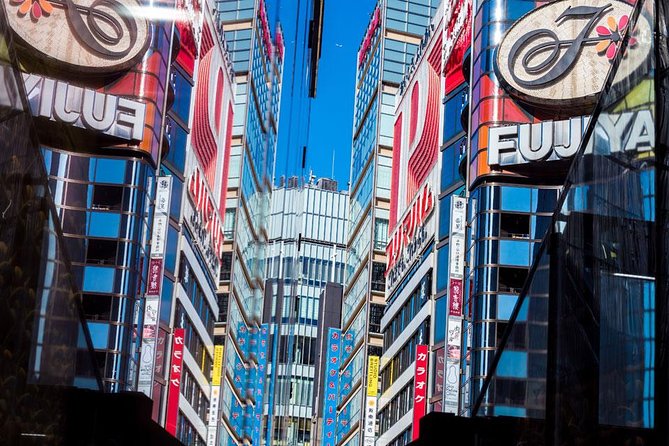
This workshop suits you if you want to improve the pictures you take during the rest of your Tokyo visit. The techniques are portable. Framing, lines, reflections, timing, and the use of people as scale can help in many parts of the city, not just Shiodome and Ginza.
It is a good choice for:
- Beginners who want patient, direct help with camera settings and composition.
- Intermediate photographers who want stronger architecture and street images.
- Couples or friends who prefer a small, focused activity.
- Visitors interested in modern Tokyo rather than a traditional-culture route.
- Photographers who enjoy walking and making several attempts at one scene.
It may not suit you if you dislike stopping frequently or if you want a relaxed sightseeing stroll with little technical discussion. The workshop asks you to pay attention, try different positions, and think about why an image works.
It is also not designed around iconic tourist photographs. You may see impressive buildings, but the goal is to create your own view of them. That makes it a better fit for someone who wants a creative activity than for someone trying to check off famous sights.
Timing, weather, and practical planning
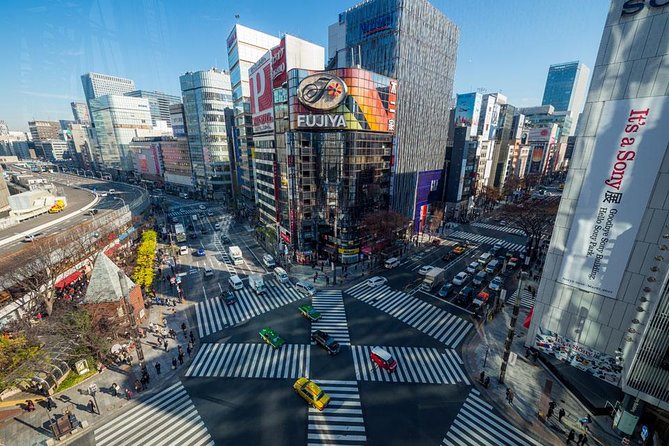
The start time is 10:00 a.m., and the route is planned for about 2.5 hours. Morning light is particularly useful in Shiodome, where the opening hour focuses on towers and composition. The route then moves through Ginza and finishes in Yurakucho.
The experience requires good weather. If poor weather causes a cancellation, you are offered another date or a full refund. You should still avoid booking it as your only possible activity if your schedule is tight, since the standard cancellation terms do not allow you to cancel or amend the booking for personal reasons.
The tour is near public transportation, begins at Shinbashi Station, and ends near the Tokyo International Forum. That makes it easy to pair with another area of the city, provided you leave time for the walk and any train transfer.
Most people can participate, according to the supplied details. No special accessibility information is provided, so if you need specific arrangements, ask the provider before booking. The route includes outdoor walking, alleys, business districts, and an indoor architectural stop.
The experience is booked, on average, 16 days ahead. That is a useful planning signal if your Tokyo dates are fixed, especially since the group is small. Confirmation is normally issued at booking, though a reservation made within one day of the activity is confirmed as soon as possible, subject to availability.
The teaching style to expect
The most praised part of this experience is the combination of technical help and visual thinking. You are not only told how to operate the camera. You are encouraged to notice lines, patterns, reflections, negative space, and the relationship between a person and a building.
Stephane has been singled out for answering questions in detail and helping with mood, story, and technique. Lukasz has been described as an excellent teacher who gives practical, constructive advice and knows unusual city viewpoints. Exel has been praised for explaining photography patiently to two very amateur participants.
That range matters. A good photo walk should not assume everyone knows the same vocabulary or uses the same camera. The small format gives the instructor room to adapt, although the exact experience will depend on the guide assigned to your date.
The strongest outcome may come after the workshop. The lessons can change the way you photograph other parts of Tokyo, from a station corridor to a temple gate. You may start noticing reflections in glass, repeating signs, empty space around a subject, or the moment a passerby completes a composition.
Final decision: is it worth booking?
I would choose this workshop if modern architecture, street photography, or practical camera instruction is high on your Tokyo list. The route is compact, the group is small, and the three stops give you different subjects within one morning.
The clearest reasons to book are the personal instruction, the lesser-known shooting positions, and the chance to leave with techniques you can use for the rest of your trip. The main reasons to skip it are the fixed cancellation terms, dependence on good weather, and the relatively short duration if you want a full photography outing.
Book it if you want to learn by taking pictures in real places, not by sitting through a lecture. Skip it if your priority is traditional Tokyo, extensive sightseeing, or a completely unstructured walk.
FAQ
Where does the photography workshop start?
It starts at SL Square, beside the steam locomotive at Shinbashi Station’s West Entrance Square, at 2-chome-7 Shinbashi, Minato City, Tokyo.
What time does the experience begin?
The scheduled start time is 10:00 a.m.
How long does the workshop last?
The workshop lasts approximately 2.5 hours.
How far do you walk?
The average walking distance is about 1.3 miles, or 2 kilometers.
Which Tokyo areas does the route visit?
The route includes Shiodome, Ginza, and Yurakucho, with the main stops at Shiodome Siosite, Ginza’s streets, and the Tokyo International Forum.
Where does the experience end?
It ends near Anthony Caro’s Barcelona Ballad at 3 Chome-5 Marunouchi, Chiyoda City, near the Tokyo International Forum.
How many people can join?
The small-group format is limited to six participants. The activity is also private, so only your own group participates.
Is the workshop suitable for beginners?
Yes. The experience is designed for both novice and advanced photography enthusiasts, and instruction includes composition, timing, and camera settings.
Is transportation included?
A professional photography instructor is included. Bus fare is not included.
What happens if the weather is poor?
The experience requires good weather. If it is canceled because of poor weather, you are offered a different date or a full refund.
New on our Tokyo list
- From Tokyo: Mount Fuji & Hakone Full Day Private Tour★ 4.9 · 25 reviews
- Tokyo Spectacular View Day-Cruise in 90 Minutes★ 5.0 · 25 reviews
- Real Tokyo Runner Club : Daikoku Car Meet Night Tour with JDM Car★ 5.0 · 25 reviews
- 2.5 Hour-Guided Cycle Tour in the Central Tokyo★ 5.0 · 25 reviews
- Ramen Making from Scratch +Akihabara Tour –Cooking Class★ 5.0 · 25 reviews
- [Self-Drive] Tokyo & Daikoku Custom Car Driving Tour★ 4.9 · 25 reviews
- Tokyo: 2-Hour Night Bike Tour of the City’s Hidden Gems★ 4.9 · 25 reviews
- Samurai themed Entertainment show in Shinjuku★ 4.5 · 25 reviews
Tokyo Tours, compared.
Mt Fuji and Hakone 1-Day Bus Tour Return by Bullet Train
Read our review →
teamLab Planets TOKYO Digital Art Museum Entry Ticket
Read our review →
Mt Fuji & Hakone Cruise, Drum Show Bullet Train 1 Day from Tokyo
Read our review →
Sumo Show Experience with Chicken Hot Pot and a Photo
Read our review →
Shinjuku Food Tour (13 Dishes at 4 Local Eateries)
Read our review →