
Reviewed · MT FUJI AREA TOURS
4 Day Tour – Mount. Fuji, Tokyo, Hakone, Kamakura and Yokohama
Tokyo is only the beginning here. Over four long days, you can move from the seafood stalls of Tsukiji and the temples of Asakusa to Fuji viewpoints, Kamakura’s Great Buddha, Yokohama’s Chinatown, and Hakone’s volcanic valleys. It is a big helping of Japan, served from a private, air-conditioned car.
I like the door-to-door convenience and the ability to adjust the day around your group. I also like the range: this is not just a city tour, and it is not just a Fuji photo run. The main drawback is the pace. With about 10 hours of touring and commuting time, several days ask you to see a lot in one stretch.
- Tokyo in one sweeping day: Tsukiji, Senso-ji, Meiji Jingu, Harajuku, Shibuya, Akihabara, and Odaiba all appear on the opening route.
- Private transport saves time: You avoid arranging local trains and buses between far-flung sights.
- Fuji views depend on weather: Oshino Hakkai, Lake Kawaguchiko, Chureito Pagoda, and the 5th Station all reward clear conditions.
- Kamakura adds a slower cultural note: Bamboo, temple gardens, shrines, and the Great Buddha give Day 2 a different feel from Tokyo.
- You pay for flexibility: The $3,000 price covers the group of up to five, but accommodations and many attraction tickets are extra.
- This is driver-led, not automatically guided: An English-speaking driver is included, while a dedicated guide can be arranged at an additional cost.
In This Review
- A private car for Japan’s far-apart highlights
- Day 1: Tokyo from Tsukiji to Shibuya
- Day 2: Kamakura temples and Yokohama harbor
- Day 3: Fuji viewpoints, villages, and the 5th Station
- Day 4: Hakone’s lake, volcano, and art
- What the $3,000 group price really buys
- Who will get the most from this tour
- Should you book this four-day Japan tour?
- FAQ
- How long is the tour?
- What time does the tour start?
- How many people can join the private tour?
- Is transportation provided?
- Is a tour guide included?
- Are hotel accommodations included?
- Are admission tickets included?
- Can the itinerary be changed?
- What happens if the weather is poor?
A private car for Japan’s far-apart highlights
The main strength of this experience is simple: you can cover places that are awkward to combine by public transport. Tokyo, Kamakura, Yokohama, Mt. Fuji, and Hakone sit in different directions, and moving among them by train and bus takes planning. A private car gives you one meeting point, one vehicle, and a driver who handles the road.
That convenience matters most for families, small groups, and anyone with only a few days in the Tokyo region. You can also ask for a customizable schedule, though the supplied route is already packed. If your priority is a relaxed pace, you should trim stops rather than trying to complete every one.
The car is air-conditioned, and pickup is offered. Your group is private, with no strangers joining the vehicle. The experience is designed for up to five people, and larger groups can be accommodated for an extra charge.
The English-speaking driver offers local information, but this is not automatically a fully guided tour. If you want temple history explained in depth or someone walking beside you at each sight, request a guide at an added cost. A practical benefit still comes from the driver’s role: one review specifically praised Armad for finding convenient parking places and taking photos, while David was praised for making an effort to show unusual attractions. Those details point to the kind of personal service you can request, but they should not be treated as guaranteed for every booking.
Day 1: Tokyo from Tsukiji to Shibuya
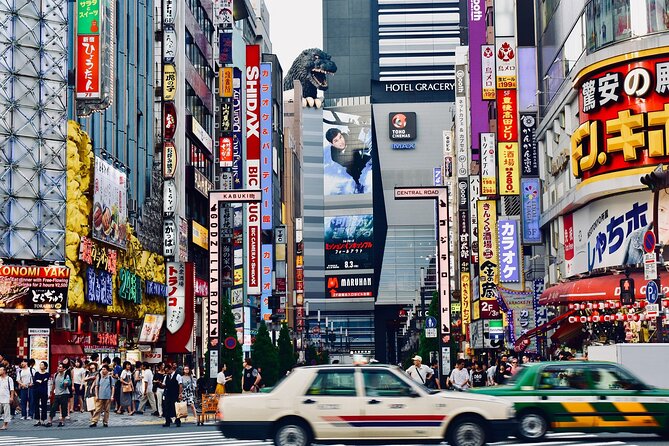
The first day tries to show Tokyo’s old, modern, youthful, and futuristic sides. Start at Tsukiji Fish Market, where 45 minutes gives you time to see the market atmosphere and sample the feel of one of the city’s best-known food districts. Admission is free, though you will want to budget separately for anything you buy to eat.
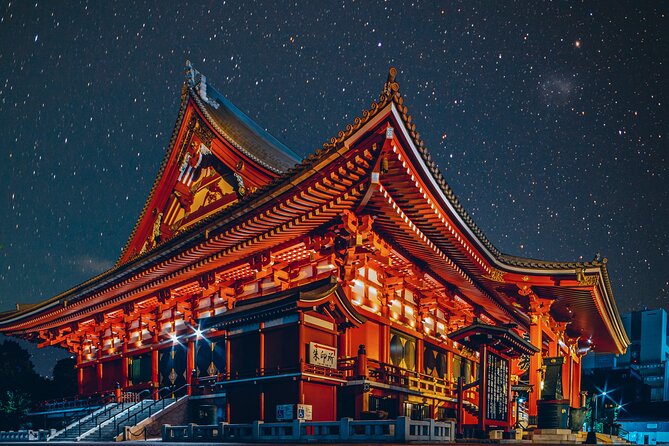
Senso-ji in Asakusa is a stronger cultural stop. Tokyo’s oldest religious building is colorful, popular, and busy, with about an hour allotted for the temple and surrounding approach. This is a good place to slow down, look at the details, and take in the contrast between traditional religious buildings and the modern city around them.
The Tokyo Skytree follows, with an hour planned and admission not included. This is the day’s high viewpoint, useful if you want a broad look at Tokyo from above. Since the stop is optional in practical terms, ask your driver about ticket timing before committing. A line or crowded observation deck can put pressure on an already full day.
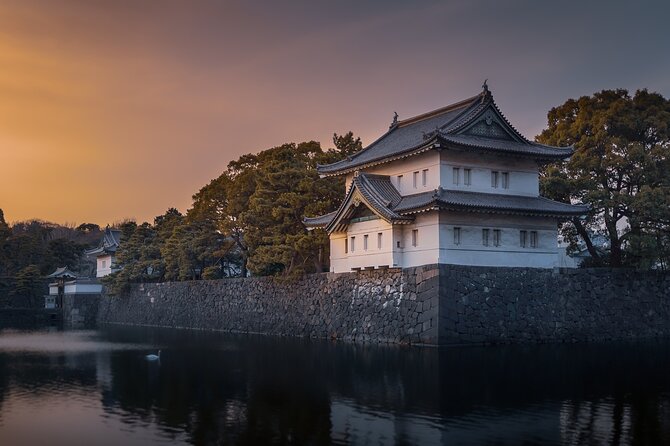
At the Imperial Palace, the visit focuses on the East Garden. The grounds occupy the former site of Edo Castle, once the seat of the Tokugawa shoguns, and admission is free. The scheduled 45 minutes is enough for a walk, but not for a slow garden visit.
Akihabara gets 30 minutes. That is enough for a quick look at the electronics shops and manga, anime, and video game culture, but too little for serious shopping. If this is a major interest, use the customizable nature of the tour to replace another stop or extend your time.
Meiji Jingu gives the day a welcome change of mood. Set in a forested area in central Tokyo, this Shinto shrine honors Emperor Meiji and Empress Shoken. The planned half hour is brief, but it lets you step away from traffic and tall buildings.
Next comes Takeshita Street in Harajuku, with one hour for its youth-oriented shops, accessories, and famous crepes. It is a lively commercial street rather than a quiet cultural site, so it works best if you enjoy people-watching and unusual retail.
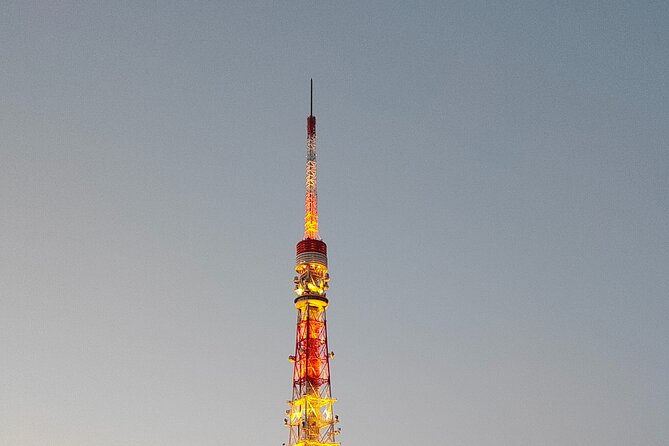
Shibuya Crossing gets only 20 minutes. That is enough to watch the scramble and take photos, but not enough to explore the district. Tokyo Tower is listed as a 10-minute photo stop, so think of it as a quick exterior view rather than a tower visit.
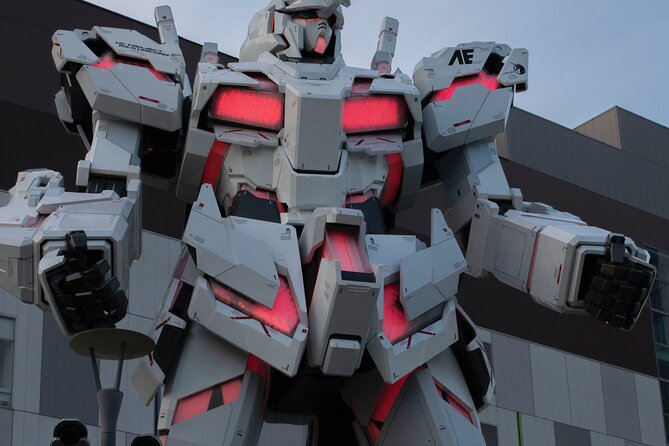
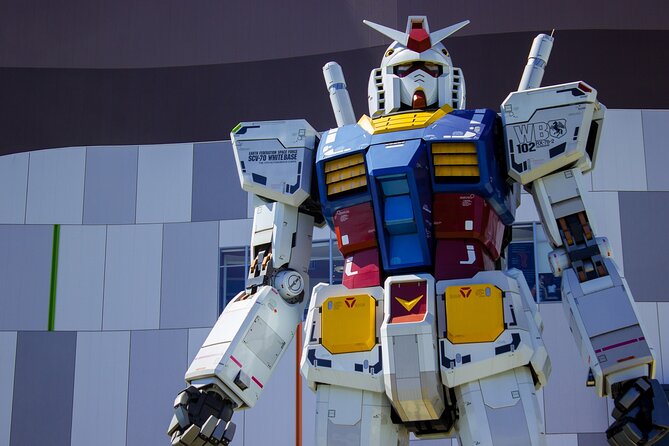
Two late-day options are possible if time allows. At teamLab Planets TOKYO, you walk through water and flower-filled installations, with admission not included. The Statue of Liberty replica on Odaiba is free and makes a quick photo stop with Rainbow Bridge behind it. Both are sensible candidates to skip if the earlier day runs late.
This schedule is ambitious. Tokyo traffic, parking, crowds, and ticket lines can change the rhythm. I would decide in advance which three or four stops matter most to you, then let the driver protect those priorities.
More Mt Fuji days from Tokyo:
- Mt Fuji and Hakone 1-Day Bus Tour Return by Bullet Train
★ 5.0 · 26,383 reviews - Mt Fuji & Hakone Cruise, Drum Show Bullet Train 1 Day from Tokyo
★ 4.0 · 7,413 reviews - Tokyo Mt Fuji 5th St & Hakone Cruise Bus Tour w/Bullet Train
★ 4.4 · 5,024 reviews
Day 2: Kamakura temples and Yokohama harbor
Day 2 trades Tokyo’s scale for historic Kamakura and coastal Yokohama. Begin at Hokoku-ji, often called the Bamboo Temple, where the bamboo garden gives you a calm opening. Admission is not included, and the planned hour allows more than a quick photograph.
Hasedera Temple is another worthwhile stop, known for its large wooden Kannon statue. The visit lasts about 45 minutes and also requires a separate admission fee. The temple is paired with Kotoku-in, home of Kamakura’s Great Buddha. Thirty minutes is scheduled here, with admission again not included.
Tsurugaoka Hachimangu is Kamakura’s central shrine and deserves the full hour assigned to it. Two ponds represent the Taira and Minamoto clans, and the grounds serve as a setting for important festivals. The shrine also has two museums, though the schedule may not leave time for a detailed museum visit.
Komachidori gives you 90 minutes for lunch, sweets, souvenirs, and a little browsing. This pedestrian street is lined with shops and eateries, so it is the natural place to relax between temple visits. It also gives the day some unstructured time, which is useful after a morning of scheduled sights.
The Yokohama portion begins at Chinatown, a district with about 160 years of history and a current population of roughly 3,000 to 4,000. One hour lets you walk through the streets and find a meal or snack, although the included schedule does not specify food costs.
Sankeien Garden follows for an hour. This traditional Japanese-style garden opened in 1906 and was created by silk trader Tomitaro Hara. Admission is not included, and the garden is a good counterpoint to Chinatown’s shops and restaurants.
Minatomirai is a final 30-minute option if time permits. The futuristic waterfront has high-rise views, boutiques, and the Yokohama Landmark Tower and Plaza. Since this is another optional stop, you may prefer it for an evening look at the harbor, or you may give that time to Sankeien or Chinatown.
I like this day’s balance. Kamakura offers temples, gardens, and religious sites, while Yokohama adds food, commerce, and modern waterfront views. The catch is that every paid temple ticket adds to the cost, and the day still involves considerable driving.
Day 3: Fuji viewpoints, villages, and the 5th Station
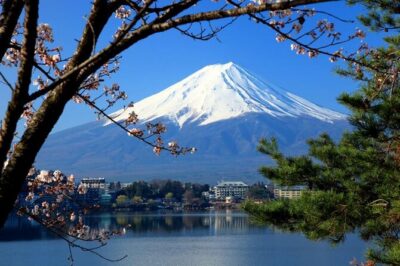
Day 3 is built around Mount Fuji, and weather will decide how rewarding it feels. The route begins at Oshino Hakkai, a group of eight springs fed by water from Fuji’s aquifer. The stop is free and lasts 30 minutes. It is a compact visit, best for seeing the clear spring water and traditional village setting.
Chureito Pagoda is one of the famous Fuji viewpoints. The five-story pagoda sits on Mount Arakura and is especially popular when cherry trees are in bloom. The schedule allows 30 minutes, but reaching the scenic viewpoint involves an uphill route and stairs, so you should account for your own pace.
Lake Kawaguchiko is another short stop, followed by the Mt. Fuji Panoramic Ropeway. The ropeway climbs 400 meters from the eastern shore of the lake to an observation area near Mount Tenjo. Admission is extra, and the one-hour allocation should give you time for the ride and views if queues are manageable.
Oishi Park provides another Fuji viewpoint, with the mountain behind Lake Kawaguchiko and seasonal flowers in front. Lavender is a noted feature, making the view change with the season. The stop is free and lasts 30 minutes.
At Saiko Iyashi no Sato Nenba, you can walk through a reconstructed old village with thatched-roof buildings. Admission is not included. This is a useful cultural stop because it gives the Fuji day more than repeated mountain photographs.
Arakura Fuji Sengen Shrine offers another mountainside view over the city and toward Fuji. The visit is free and scheduled for 30 minutes. It is also associated with cherry blossoms in spring and hiking, although this timetable allows only a short visit.
The Mt. Fuji 5th Station receives two hours, the longest stop of the day. It is the common starting point for many climbs and gives you a chance to feel the mountain setting without attempting a summit ascent. Admission is not included, and access can depend on conditions.
The day ends at Gotemba Premium Outlets, with two hours for shopping. This is a major change of subject after shrines, lakes, and mountain views. It suits you if outlet shopping is part of your holiday plan, but it is the easiest stop to remove if you want more time around Fuji.
There is simply too much here for a slow visit to every location. I would treat Oshino Hakkai, Chureito, the ropeway, Oishi Park, and the 5th Station as the core, then use the driver’s flexibility to adjust based on weather and traffic. If Fuji is hidden by clouds, the village and shrine stops still give the day value, but the tour cannot control visibility.
Day 4: Hakone’s lake, volcano, and art
Hakone begins with Amazake-chaya Tea House, founded 400 years ago. Its sweet rice drink is made from a recipe said to be unchanged since the tea house opened. No visit duration is provided, so ask how it fits into the day before setting expectations.
Hakone Shrine sits by Lake Ashi, with its buildings hidden among dense forest. The visit lasts about an hour, and admission is not included. The setting matters as much as the shrine itself, especially if you enjoy quiet paths and wooded religious sites.
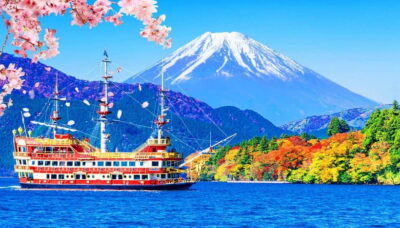
Lake Ashi receives another hour. The lake formed in Mount Hakone’s volcanic caldera after an eruption about 3,000 years ago. It is one of the area’s defining natural sights, but the schedule does not include a boat ride as a specific activity.
The Hakone Ropeway links Sounzan and Togendai through Owakudani. A one-hour stop is planned, with admission extra. Riding the aerial lift is one of the clearest ways to connect the lake and volcanic area, but weather and operating conditions can affect the experience.
Owakudani is the day’s volcanic highlight. Sulfur springs and the famous black eggs give the valley a distinct character. Admission is listed as free, though food purchases are separate. The air and terrain can feel very different from the wooded shrine and lakeside stops.
Gora Park is a Western-style hillside garden with greenhouses, a tea house, and a central fountain. You get about 30 minutes, and admission is not included. That is enough for a brief walk, not a full garden visit.
The Hakone Open-Air Museum closes the tour with about an hour. Its sculpture collection spreads across 70,000 square meters in the mountains, combining art with outdoor views. Admission is extra, and this is one of the day’s best choices if you prefer art to shopping.
Like Day 3, Hakone offers more stops than a leisurely day can comfortably handle. The ropeway, Owakudani, and the open-air museum each need time. If those are your priorities, consider dropping Gora Park or shortening the shrine visit.
More Hakone trips and passes:
- Tokyo: Mt. Fuji Tour, Hakone Ropeway, Owakudani, Lake Ashi
★ 4.7 · 4,002 reviews - Tokyo: Mt. Fuji 5th Station & Hakone Cruise 1-Day Bus Tour
★ 4.2 · 2,381 reviews - Private Tour to Mt. Fuji and Hakone (Fully Licenced Operator)
★ 5.0 · 1,910 reviews - Mt Fuji & Hakone Cruise, Drum Show Bus 1 Day from Tokyo
★ 4.0 · 1,287 reviews
What the $3,000 group price really buys
The price is $3,000 per group of up to five people. At the full five-person capacity, that works out to $600 per person. For four people, it becomes $750 each, and for two people, $1,500 each.
That makes the tour easier to justify for a full group than for a couple. You are paying for a private vehicle, pickup, an English-speaking driver, and the ability to cover a very wide area without building every train and bus connection yourself.
You still need to pay for accommodations, since hotels are not included. Many admission fees are also separate, including Tokyo Skytree, teamLab Planets, several Kamakura temples, the Fuji Panoramic Ropeway, the Fuji 5th Station, Hakone Shrine, the Hakone Ropeway, Gora Park, and the Open-Air Museum.
The value rests on time and convenience, not on having every expense bundled together. If your group would otherwise need several private transfers or taxis, the price may make sense. If you are happy using Japan’s rail network and want a slower schedule, independent travel could offer better value.
Who will get the most from this tour
I would recommend this for a group of up to five that wants to see many major sights in a short visit. It is especially practical for families, older adults who prefer not to change trains, and small groups that value privacy.
It also suits people who want help with parking and routing but do not need a formal guide at every stop. The personalized approach can be useful when you want photos, a convenient drop-off, or a quick change of plan.
I would hesitate if your main goal is slow temple visits, long meals, or serious shopping. The schedule is a sightseeing sampler. You see a great deal, but you will need to choose what deserves your full attention.
Start times are set for 8:00 a.m., and the stated touring duration is about 10 hours including commuting time. Confirmation is provided when you book, and most people can participate. Near public transport is listed, but the important feature is pickup by private car.
Free cancellation is available until 24 hours before the start time. Poor weather can also lead to a new date or a full refund, which matters greatly for Fuji and Hakone.
Should you book this four-day Japan tour?
Book it if you want a broad first look at Tokyo and its surrounding destinations without handling a complicated transport plan. The private car, small group format, customizable schedule, and personal attention associated with drivers such as Armad and David are the strongest reasons to choose it.
Before paying, decide how many paid attractions you truly want and confirm which stops can be shortened. I would also ask for a clear plan for accommodation locations, since hotels are your responsibility and the route crosses a wide area.
For five people, the group price can be sensible. For two people, it is a premium choice. The best way to use it is not to chase every listed stop, but to select your must-see sights and let the driver build a workable day around them.
FAQ
How long is the tour?
The experience lasts four days, with the touring schedule described as approximately 10 hours including commuting time.
What time does the tour start?
The listed start time is 8:00 a.m.
How many people can join the private tour?
The price covers a private group of up to five people. A larger group can be arranged for an additional cost.
Is transportation provided?
Yes. You travel in a private, air-conditioned car, and pickup is offered.
Is a tour guide included?
No dedicated guide is automatically included. The experience includes an English-speaking driver, and a guide can be arranged for an additional cost.
Are hotel accommodations included?
No. You arrange and pay for your own accommodation.
Are admission tickets included?
Not always. Several stops are free, but attractions such as Tokyo Skytree, teamLab Planets, Kamakura temples, the Fuji ropeway, and Hakone attractions have admission fees that are not included.
Can the itinerary be changed?
Yes. The tour is described as customizable, so you can discuss adjustments with the provider. Some stops are included only if time permits.
What happens if the weather is poor?
If the experience is canceled because of poor weather, you can receive a different date or a full refund. You can cancel for a full refund if you do so at least 24 hours before the start time.
New on our Tokyo list
- Sumi-e Experience in a relaxing green tea shop in Tokyo★ 5.0 · 3 reviews
- Tokyo : Kamikaze Street Drift Ride★ 5.0 · 3 reviews
- Private Zen Meditation in English in Shinjuku, Tokyo★ 5.0 · 3 reviews
- Onsen Spa in Tokyo and Asakusa Bar Hopping with Local Guide★ 5.0 · 3 reviews
- Easy for everyone! Now you can play handmade mini shamisen and show off to everyone! Musical instruments, sweets and live music★ 5.0 · 3 reviews
- Mt Fuji Exploration Tour with Free Japanese Kusa Mochi from Tokyo★ 4.5 · 3 reviews
- Tokyo Tsukiji Fish Market Walking and Exploring Hidden Gems Tour★ 5.0 · 3 reviews
- Tokyo: Private Tsukiji Street Food & Sake with Local Guide★ 5.0 · 3 reviews
Mt Fuji Area Tours, compared.
Mt Fuji and Hakone 1-Day Bus Tour Return by Bullet Train
Read our review →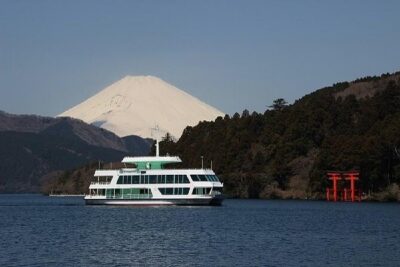
Mt Fuji & Hakone Cruise, Drum Show Bullet Train 1 Day from Tokyo
Read our review →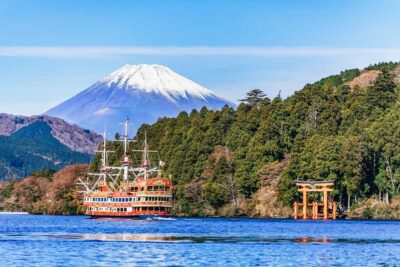
Tokyo Mt Fuji 5th St & Hakone Cruise Bus Tour w/Bullet Train
Read our review →
Mt. Fuji Tour, Hakone Ropeway, Owakudani, Lake Ashi
Read our review →
Mt.Fuji,Kawaguchiko Oishi Park,Arakurayama Sengen Park
Read our review →
Mt. Fuji 5th Station & Hakone Cruise 1-Day Bus Tour
Read our review →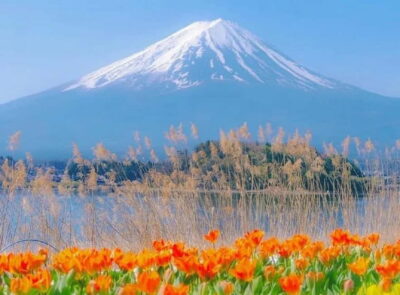
Mt Fuji Top 5 Spots Day Tour: Arakurayama Park,Oshino Hakkai
Read our review →Browse the lists this tour appears in