
Reviewed · DINNER EXPERIENCES
Authentic Geisha Performance with Dinner in Tokyo
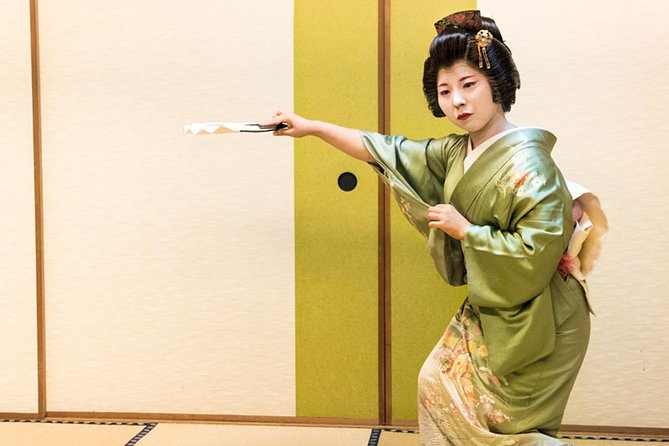
The most memorable part of this two-hour evening is not simply watching a geisha dance. You sit close enough to ask questions, share a meal, and take part in traditional games, with an interpreter helping bridge the language gap. The setting is Sansyūya, a traditional restaurant in Asakusa, and the evening begins at 6 p.m.
I like the personal conversation and the chance to see music, fan dance, and drum performances in a small setting. I also like that the experience leaves your daytime free for temples, museums, and neighborhoods, while the included kaiseki course gives the evening a proper Japanese shape.
The main caution is that the event is not fully guaranteed until the operator has enough people, often six to eight for a shared dinner. The venue and number of geisha can also change, and the meal may not suit every palate or dietary need, so read the conditions carefully before paying.
In This Review
- Key points to know before booking
- What this Asakusa evening actually offers
- Arriving at Sansyūya in Asakusa
- Dinner: kaiseki in a social setting
- Meeting the geisha and learning the craft
- Dance, music, photographs, and geisha games
- How authentic is the evening?
- Is $239.83 a fair price?
- Booking rules that can affect your plans
- Who should book this Tokyo evening?
- Should you book the geisha dinner?
- FAQ
- Where does the geisha dinner take place?
- What time does the activity start?
- Is an English interpreter included?
- How many people can attend?
- Are children allowed?
- Is transportation included?
Key points to know before booking
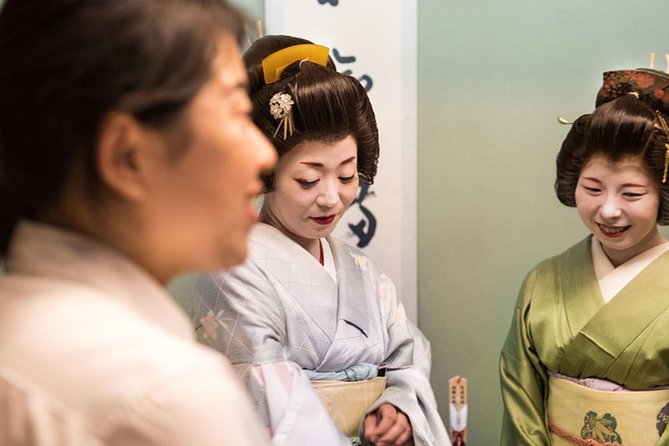
- Conversation is part of the show: An English interpreter helps you ask about geisha life, training, customs, and modern practice.
- The evening includes more than a performance: Expect dance, music, drum songs, photographs, questions, and traditional drinking games.
- One geisha may attend: During busy periods or smaller events, availability may mean only one geisha appears.
- Sansyūya is in Asakusa: Plan your route carefully because the entrance can be difficult to spot, and stairs are involved.
- The price is $239.83 per person: That is a serious splurge, but it covers the dining course, entertainment, interpreter, and cultural access.
- Book well ahead: Three months is recommended, and the required Geisha Form should be completed at least 10 days before the date.
What this Asakusa evening actually offers
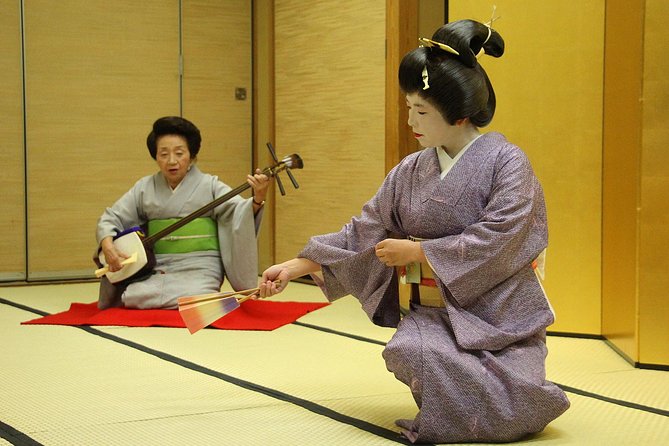
Geisha entertainment can be hard to arrange on your own. Much of it takes place in private restaurants, and the customs can feel closed to outsiders. This event gives you a structured introduction: you arrive at a traditional restaurant, sit down for dinner, and meet performers trained in dance, music, and formal communication.
That structure matters. You are not simply placed in a room and expected to understand what is happening. A host and English interpreter help explain the food, etiquette, conversation, and games. The best evenings appear to be those in which the interpreter keeps the exchange moving and gives you enough background to understand the artistry rather than treating the geisha as a photo prop.
The event lasts about two hours and starts at 6 p.m. That timing works well after a day in Asakusa. You can visit Sensoji and the surrounding streets earlier, then make your way to the restaurant for dinner. Hotel pickup is not included, so you must get yourself there and return afterward.
The group experience is intended for roughly 6 to 20 people, although the stated maximum is 15. That difference is worth noting. Ask for the current group size if having a quieter dinner matters to you. Private events can be requested, and a private booking may be the better choice for a family or celebration, particularly if you want more control over the performers and the flow of the evening.
More geisha evenings:
- Tokyo: Traditional Geisha Experience Show & Japanese Dinner
★ 4.2 · 59 reviews - Asakusa: Geisha Performance and Tea House Experience
★ 5.0 · 52 reviews - Tokyo Traditional Geisha Show and Japanese Fine Dining Experience
★ 4.5 · 35 reviews
Arriving at Sansyūya in Asakusa
The restaurant is in the Asakusa area, one of Tokyo’s most useful neighborhoods for a traditional evening. The precise entrance can be tricky. Directions may lead you to the correct building, but the door can be on the side, with stairs leading first to the second floor and then to the third-floor entry area.
Give yourself extra time. One couple arrived late after changing between trains and a bus, then had to call for help. A hostess eventually found them and led them inside. That is a good reminder to save the operator’s contact details, allow a cushion before 6 p.m., and avoid treating the final few minutes as a race through unfamiliar streets.
Chair seating is the default, which is helpful if you are not comfortable sitting on the floor. Still, stairs are part of the access route according to the available information. The venue is not described as wheelchair accessible, and one account specifically warned that the stairs could prevent someone with mobility limitations from taking part.
The restaurant is non-smoking indoors. Designated smoking areas are outside. Transportation, hotel pickup, and hotel drop-off are not included, so build the cost of getting to Asakusa into your evening budget.
Dinner: kaiseki in a social setting
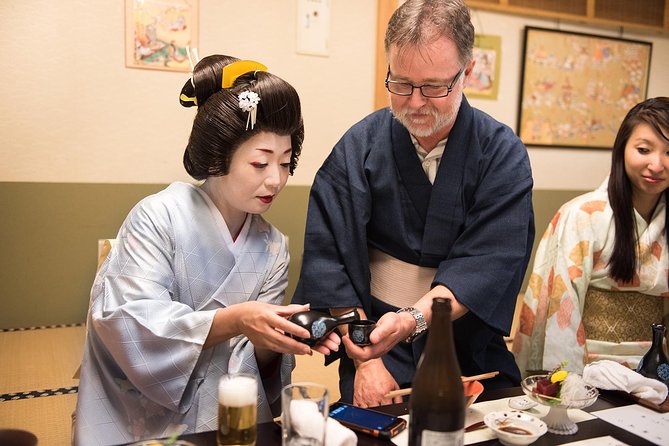
The included meal is an elegant Japanese dining course, described as kaiseki. You should expect a series of traditional dishes rather than one large plate. Food mentioned in the available accounts includes sashimi and several other Japanese dishes, with some people finding the portions generous enough that they could not finish everything.
Food is part of the cultural lesson here. Kaiseki is about sequence, presentation, seasonality, and restraint, so the meal helps make the evening feel like a formal Japanese occasion rather than a stage show with snacks. You will also have time to eat while the interpreter and geisha explain what is being served.
At the same time, do not book this primarily as a guaranteed luxury dinner. Taste is personal, and one account described the food as bland and insufficient, while another said the meal was delicious and plentiful. A separate complaint involved raw food and seafood that was not prepared to the diner’s requested standard during pregnancy. If you have allergies, pregnancy-related restrictions, or strong dietary needs, send those details clearly in the required Geisha Form and confirm that the kitchen can accommodate them before the cancellation deadline.
The all-you-can-drink option is limited. Groups of 10 or more can request nomihodai for 2,900 yen per person, paid in cash at the venue. Groups of nine or fewer cannot use this option. Do not assume unlimited drinks are part of the $239.83 price.
Meeting the geisha and learning the craft
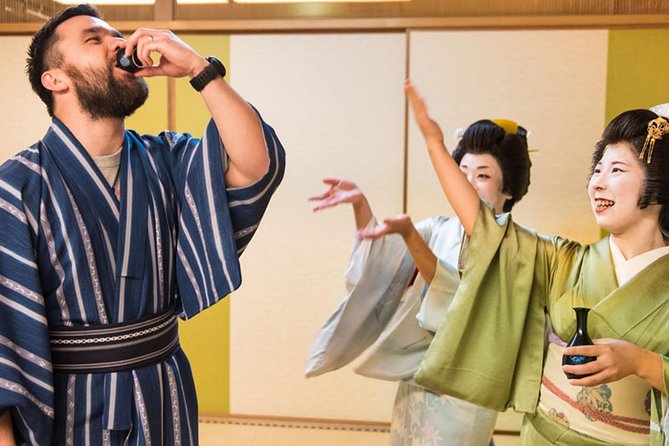
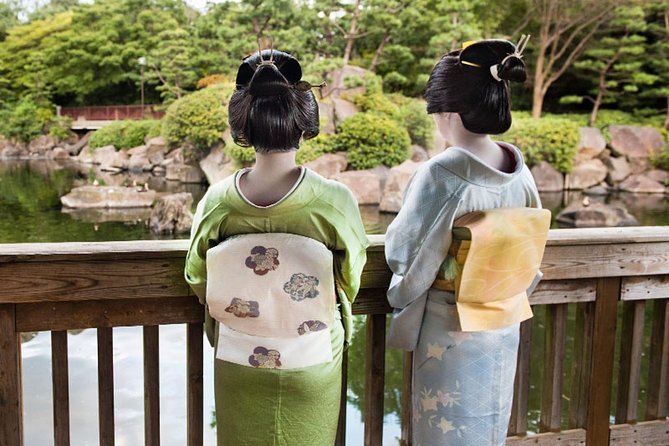
The geisha are trained in traditional arts and the art of conversation. That last point is easy to overlook. The evening is not only about costume, makeup, or dance. It is also about the polished hosting skills that let the performers put people at ease, guide a conversation, and create a formal yet friendly mood.
The interpreter is central to the experience. English-language support lets you ask about daily life, training, older customs, and the place of geisha in modern Japan. Some people found the interpreting energetic and thorough, while one dissatisfied account felt that too little was translated. The quality of this bridge between languages can shape your entire night.
Come prepared with questions. You might ask how training differs from earlier periods, how modern geisha practice their arts, or how regional traditions vary. The supplied information supports discussion of history, training, and present-day customs, but the exact depth will depend on the interpreter, the performers, and the size of your group.
If your group is small, the conversation may feel especially direct. One evening had only two paying diners, a guide and interpreter named Mami H, and geisha Yukimi. That kind of small turnout can be a pleasant surprise, giving you more time for questions, but it is not guaranteed. A larger group means more shared energy, though less one-on-one attention.
A few more Tokyo bookings worth comparing
- Tokyo Bar Hopping Tour in Shinjuku (All-You-Can-Drink + Dinner)
★ 5.0 · 3,587 reviews - Tokyo: Sumo Show and Dining Experience
★ 4.8 · 2,742 reviews - Sumida River: Japanese Traditional Yakatabune Dinner Cruise
★ 4.6 · 779 reviews - Tokyo Bay Yakatabune Dinner/Day Cruise with Japan Show and Drinks
★ 4.5 · 473 reviews
Dance, music, photographs, and geisha games
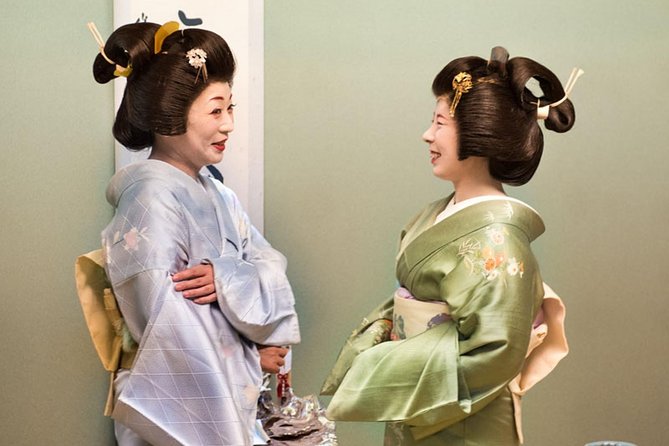
The performance usually includes a fan dance and musical pieces. Accounts also describe drum songs and an accompanying musician at a private event, where performers Kodemari and Ponco handled music and dance. The exact program can vary with availability, so think of this as an intimate arts presentation rather than a fixed theater production.
The games are often the most relaxed part of the evening. Traditional geisha drinking games invite you to participate rather than sit quietly at the edge of the room. You do not need specialist knowledge, and losing a round is part of the fun. If you do not drink alcohol, ask the interpreter how to participate without it.
You will have opportunities for photographs and commemorative moments with the geisha. Follow the host’s lead on when to take pictures. These moments work best when you first pay attention to the performance and conversation, then take photos at the appropriate time.
The tone seems to shift between formal art and easy social fun. One minute you may be watching a precise dance; the next, you may be laughing over a game or asking a direct question about life in the profession. That contrast is a major reason to choose this over a short stage performance.
How authentic is the evening?
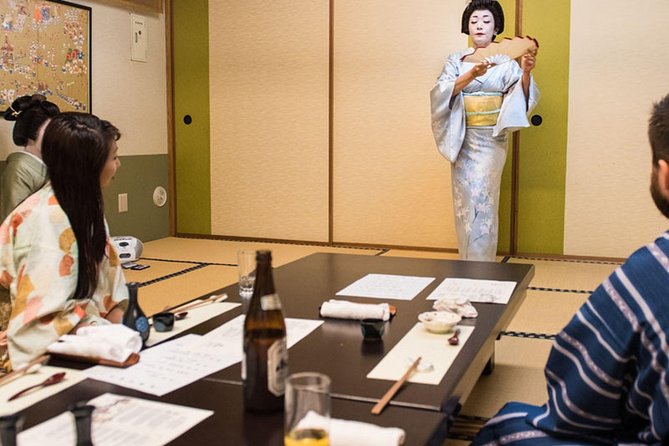
The word authentic needs care. This is an arranged cultural event for international visitors, not a private invitation into a closed geisha district. It is designed to explain and share a traditional practice in a way that outsiders can access, with dinner, translation, and planned entertainment.
That does not make the arts false. The geisha are presented as trained performers, and the dance, music, conversation, and games are meaningful parts of the evening. But you should not expect a full academic lecture on geisha history or an exact recreation of an old-style patron’s evening.
The information and accounts point in both directions. Many people found the event educational, personal, and unusually close to the performers. Others felt the room was plain, the explanation too brief, and the food poor for the price. Your expectations matter. If you want a polished introduction with direct contact, this can work well. If you want extensive historical context, pair it with a museum visit or a dedicated geisha-focused walk elsewhere in Japan.
The setting may also change according to group size and availability. A sparsely decorated room would not necessarily ruin the night, but it can feel disappointing when you are paying $239.83. The true draw is the human exchange and live arts, not ornate surroundings.
Is $239.83 a fair price?
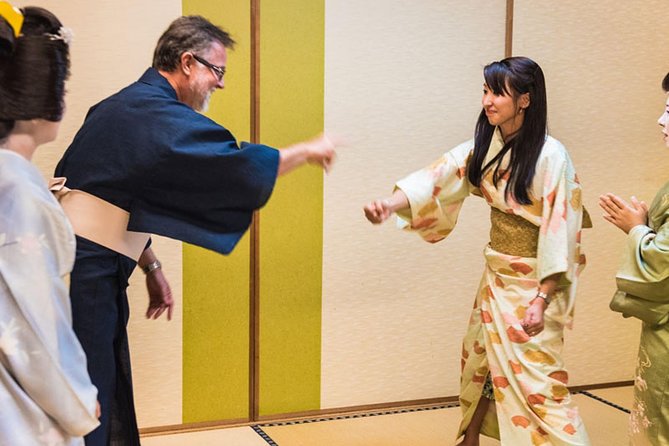
At $239.83 per person, this is one of Tokyo’s more expensive evening activities. You are paying for more than dinner: the restaurant reservation, a multi-course meal, the geisha performance, interpreter support, group coordination, and the chance to ask questions in a setting that is difficult to arrange independently.
I would judge the price by your priorities. If you have a strong interest in Japanese performing arts and want a direct, guided introduction, the cost can make sense as a special-night splurge. If you mainly want a good dinner or a short cultural show, you can probably find better value elsewhere.
The small-group format helps the price. A quiet table with time to speak to the performer offers more than watching from the back of a large auditorium. Private events can also make the cost easier to justify for a celebration, though you should ask how many geisha will attend. For groups of more than five, the operator recommends booking two geisha for a private event.
The 4.7 rating from 101 ratings and 94 percent recommendation figure suggest strong overall satisfaction, but the negative experience is important. The event may not deliver equal value to someone with special food requirements, someone expecting a lavish room, or someone seeking a long historical talk. I would book it for the arts and conversation first, and treat the meal as an important part of the package rather than the sole reason to go.
Booking rules that can affect your plans
Book early. The operator recommends about three months before your travel date, or at least one month ahead. Restaurants and performers need time to be arranged, and the request may be cancelled with a full refund if it cannot be organized in time.
After booking, you receive a link to the Geisha Form within 24 hours. Complete it accurately at least 10 days before the event. This is where you should provide relevant personal information and food needs.
The dinner may wait for six to eight people before it is approved. You can be placed on a waiting list until enough people confirm the same date, or you may be asked to choose another day. Confirmation is expected at least five days before the activity date.
The number of geisha is not fixed. Peak-season availability or a small turnout may mean only one performer attends. A private booking gives you more control, but availability still matters.
Cancellation terms are strict. The information provided includes a 25 percent fee within 30 days, 50 percent within 21 days, and 100 percent within 14 days. It also states that the activity is non-refundable and cannot be changed for any reason, so check the final terms shown at checkout and avoid booking until your schedule is firm.
Who should book this Tokyo evening?
I would recommend it to adults and older children who are curious about Japanese arts, enjoy asking questions, and are happy to spend a large amount for a rare cultural encounter. Children must be at least 10 and accompanied by an adult.
It suits couples looking for an unusual date night, families who want a shared cultural activity, and small groups celebrating a special occasion. It is also a strong choice if you have already seen Tokyo’s major sights and want an evening that feels more personal.
I would hesitate if you need step-free access, have strict dietary requirements that cannot be confirmed in advance, or dislike raw seafood, formal meals, or uncertain group arrangements. I would also look elsewhere if your main goal is a luxurious room or a detailed lecture on geisha history.
Should you book the geisha dinner?
Book this if meeting trained geisha, hearing live music, watching dance, and taking part in traditional games are worth a major splurge for you. The interpreter and small-group format give the evening real value, and the chance to speak directly with performers is much more personal than a standard stage show.
Before committing, confirm the food arrangements, ask whether one or two geisha are expected, and plan your route to Sansyūya with extra time for stairs and a hard-to-find entrance. If those conditions suit you, this can be one of Tokyo’s most distinctive evenings. If you need certainty, easy access, or a predictable fine-dining meal, spend your money elsewhere.
FAQ
Where does the geisha dinner take place?
The event takes place at Sansyūya, a traditional restaurant in Tokyo’s Asakusa area. The entrance can be difficult to find, and stairs lead to the dining area.
What time does the activity start?
The stated start time is 6 p.m., and the experience lasts about two hours.
Is an English interpreter included?
Yes. An English interpreter is included to help explain the food, customs, etiquette, and conversation with the geisha.
How many people can attend?
The event is described as a group dinner for about 6 to 20 people, with a stated maximum of 15 travelers. Smaller events may proceed with only one geisha.
Are children allowed?
Children must be at least 10 years old and accompanied by an adult.
Is transportation included?
No. Transportation to and from the restaurant, hotel pickup, and hotel drop-off are not included.
More Dining Experiences in Tokyo
- Tokyo: Shinjuku Bar Hopping with All-You-Can-Drink & Dinner
★ 4.9 · 440 reviews - Tokyo Dinner Cruise & Tradition Show & Drinks & Tokyo Tower
★ 4.7 · 315 reviews - Tokyo Bay: Traditional Japanese Yakatabune Dinner Cruise
★ 4.7 · 243 reviews - Professional Ramen & Gyoza with Ramen Chef in a restaurant!
★ 5.0 · 223 reviews
New on our Tokyo list
- From Tokyo: Mount Fuji & Hakone Full Day Private Tour★ 4.9 · 25 reviews
- Tokyo Spectacular View Day-Cruise in 90 Minutes★ 5.0 · 25 reviews
- Real Tokyo Runner Club : Daikoku Car Meet Night Tour with JDM Car★ 5.0 · 25 reviews
- 2.5 Hour-Guided Cycle Tour in the Central Tokyo★ 5.0 · 25 reviews
- Ramen Making from Scratch +Akihabara Tour –Cooking Class★ 5.0 · 25 reviews
- [Self-Drive] Tokyo & Daikoku Custom Car Driving Tour★ 4.9 · 25 reviews
- Tokyo: 2-Hour Night Bike Tour of the City’s Hidden Gems★ 4.9 · 25 reviews
- Tokyo: Mt. Fuji, Owakudani, Hakone Shrine, & Open-Air Museum★ 4.7 · 25 reviews
Dinner Experiences, compared.
Tokyo Bar Hopping Tour in Shinjuku (All-You-Can-Drink + Dinner)
Read our review →
Sumida River: Japanese Traditional Yakatabune Dinner Cruise
Read our review →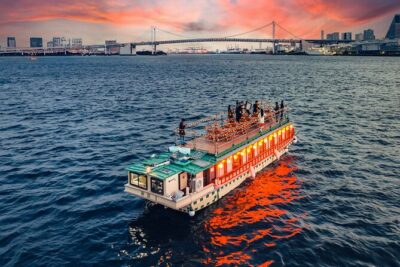
Tokyo Bay Yakatabune Dinner/Day Cruise with Japan Show and Drinks
Read our review →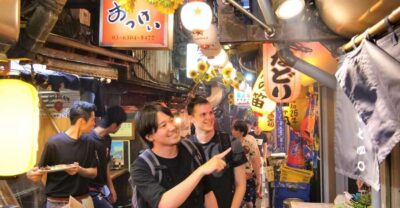
Shinjuku Bar Hopping with All-You-Can-Drink & Dinner
Read our review →
Tokyo Dinner Cruise & Tradition Show & Drinks & Tokyo Tower
Read our review →
Tokyo Bay: Traditional Japanese Yakatabune Dinner Cruise
Read our review →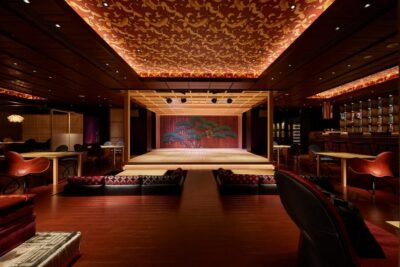
Browse the lists this tour appears in