
Reviewed · JAPANESE COOKING CLASSES
Professional Ramen & Gyoza with Ramen Chef in a restaurant!
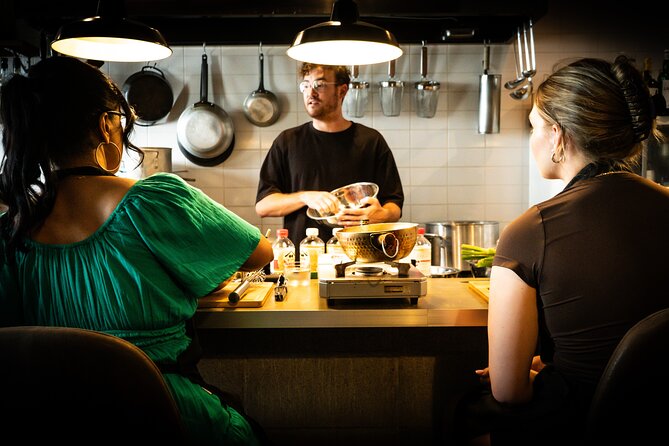
The best part of this Tokyo class is that you do not simply watch a chef prepare ramen. You work through the process yourself, from rolling fresh noodles to handling hot pans, oils, broth, toppings, and gyoza. I especially like the restaurant kitchen setting and the fact that the class tackles several parts of ramen rather than treating noodles as a novelty. I also like the small maximum of six people, which gives the bilingual chefs room to correct your technique.
The main consideration is the price: $159.18 per person is a serious spend for a cooking class. You should also expect real work over roughly four hours, not a relaxed tasting session. That is part of the appeal, but it may not suit anyone looking for a short, low-effort activity.
In This Review
- Key points to know before booking
- Why this class feels different from a standard Tokyo cooking lesson
- Arriving in Meguro for the 9 a.m. start
- Starting with ramen basics and kitchen technique
- Rolling noodles from scratch
- Building the broth and the five layers of a bowl
- Making gyoza alongside the ramen
- Eating the meal you made
- The chefs and the feel of the group
- Dietary requests and practical limits
- Is $159.18 a fair price?
- Who should book Baba Ramen Cooking Meguro?
- Should you book this ramen class?
- FAQ
- Where does the ramen and gyoza class take place?
- What time does the activity start?
- How long does the cooking class last?
- How many people can join the class?
- Is the class taught in English?
- What will I make?
- Can dietary restrictions be accommodated?
- What happens if I need to cancel?
Key points to know before booking
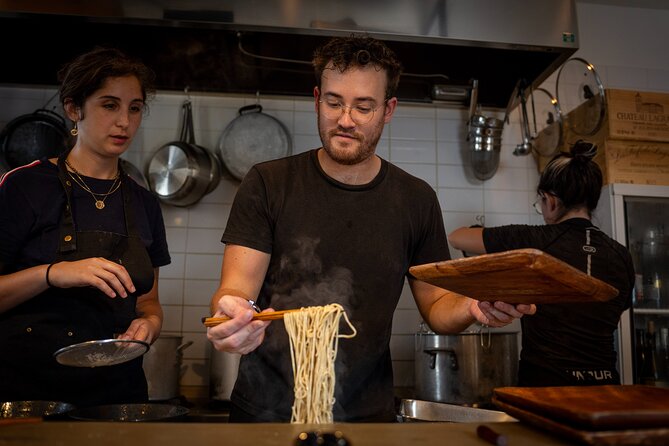
- Fresh noodles are made from scratch, then rolled and prepared for your own bowl.
- Gyoza is part of the class, so you leave with more than one Japanese dish.
- Two broth options let you choose a style that better fits your taste.
- The group is capped at six, allowing more personal help from the chefs.
- A recipe e-book is provided, making it possible to repeat the dishes at home.
- Dietary requests can be accommodated, including vegetarian, vegan, gluten-free, and pork-free options when arranged in advance.
Why this class feels different from a standard Tokyo cooking lesson
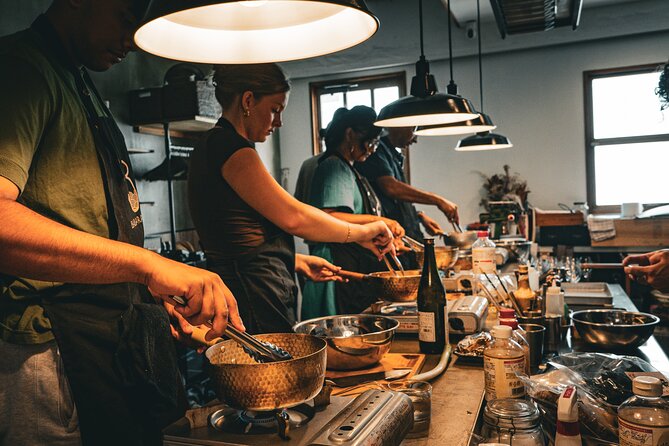
Many cooking classes give you a pleasant introduction to Japanese food, then keep the hardest work in the background. Baba Ramen takes the opposite approach. You are expected to participate in nearly every important stage of the meal.
That can include working with fresh ingredients, rolling noodles, preparing ramen components, handling hot cookware, making gyoza, and learning how the different layers come together. Some parts are physical and messy. That is useful because it shows why restaurant-quality ramen takes planning, time, and steady technique.
The class takes place at Baba Ramen Cooking Meguro, a small restaurant in Meguro City. The space is set up for professional cooking rather than a home kitchen, so you get to work with restaurant-grade equipment. One useful detail is that the restaurant operates as an Italian spot at night, giving the morning class a slightly unusual setting. You are learning Japanese ramen in a real commercial kitchen, not a staged cooking studio.
The chefs teach in English and Japanese. Andrew is repeatedly identified as part of the team, while Eric, Jae, and Leo are also named as instructors in class feedback. The teaching style comes across as organized, friendly, and active, with a good balance between explanation and work.
More ramen stops:
- Eat and Drink Like a Local: Tokyo Ueno Food Tour-Taverns&Ramen
★ 5.0 · 957 reviews - Ramen & Gyoza Cooking Class in Tokyo with Local Supermarket Visit
★ 5.0 · 823 reviews - Tokyo: Ramen Tasting Tour with 6 Mini Bowls of Ramen
★ 4.9 · 432 reviews
Arriving in Meguro for the 9 a.m. start
The meeting point is Baba Ramen Cooking Meguro at 3-chōme-7-32 Shimomeguro, Meguro City, Tokyo 153-0064. The class begins at 9 a.m. and ends back at the same location.
An early start works well for a cooking class. You can finish around lunchtime with a substantial meal, then spend the afternoon exploring Tokyo. Still, leave enough time to reach Meguro without rushing. The class begins at a set time, and arriving late could mean missing an important preparation step.
The location is near public transportation, which helps, but the supplied information does not specify a station exit or walking time. Check the exact route before you leave your hotel. A mobile ticket is provided, so you can keep the booking on your phone rather than printing anything.
The activity lasts approximately four hours, though one class account describes about three hours of instruction. Plan your morning around the longer estimate. With cooking, explanations, eating, and cleanup, the session can easily occupy most of the morning.
Starting with ramen basics and kitchen technique
The opening section gives you the background needed to understand the bowl you are building. Ramen is not one single recipe. Its taste depends on several parts working together, including noodles, broth, seasoning, toppings, and cooking technique.
The chefs explain ramen history, varieties, and etiquette as you go. That cultural context is useful because it keeps the class from becoming a simple recipe swap. You learn not only what to do, but why each step affects the finished bowl.
The instructors also introduce practical shortcuts. The point is not to pretend that home cooks have a restaurant kitchen and endless hours. Instead, you learn where time matters most and where a quicker method may work with only a small loss in quality.
Pay attention during this stage. The class is hands-on from early on, and you may be doing something almost continuously. It is not the best choice if you want to sit back and take notes for most of the morning.
Rolling noodles from scratch
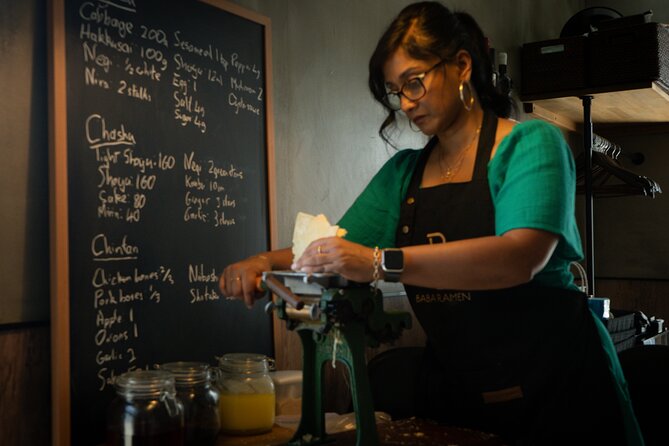
Making the noodles is one of the class highlights. You work with the dough, roll it out, and prepare fresh noodles rather than using packaged noodles as a stand-in.
This is also where the restaurant setting matters. Professional kitchen equipment makes the work feel more serious, and the chefs can show you the techniques used to produce consistent noodles. Fresh noodles give the bowl a texture that dried noodles cannot fully copy.
Do not expect the process to feel effortless. Handmaking noodles requires attention and some muscle, especially when the group is working through the dough and rolling stages. That effort is valuable because it changes the way you judge a bowl of ramen later. You begin to notice texture, thickness, chew, and how the noodles hold the broth.
The small group size helps here. With no more than six people, the chefs can watch your technique and offer corrections. That is more useful than a large demonstration where you are left to guess if your dough is behaving properly.
More cooking classes in Tokyo:
- Tokyo: Easy Ramen Cooking Experience in Kabukicho, Shinjuku
★ 4.6 · 321 reviews - Ramen and Sushi Cooking Class with Sake Pairing Set in Tokyo
★ 5.0 · 291 reviews - Tokyo: Wagyu and 7 Japanese Dishes Cooking Class
★ 4.9 · 273 reviews - Tokyo Washoku 4-hour Cooking Class: From Market to Table
★ 5.0 · 253 reviews
Building the broth and the five layers of a bowl
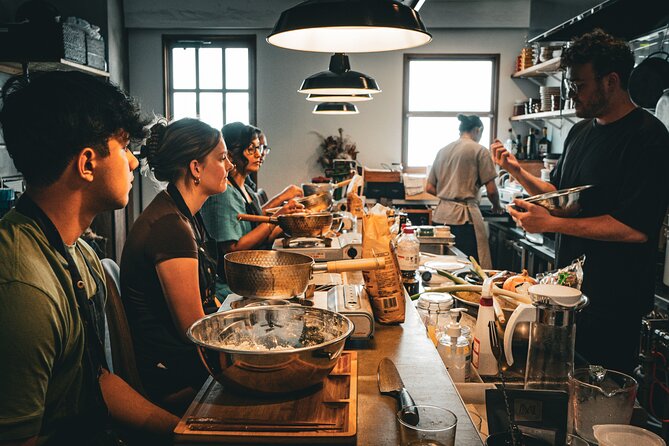
The class covers the separate parts of a ramen bowl, with one participant describing the process as making all five layers from fresh ingredients. The exact five-part breakdown is not specified in the supplied details, but the lesson clearly treats ramen as a collection of components rather than one pot of soup.
You choose between two broth options. That gives you a modest amount of choice without making the class confusing. If you already know which ramen styles you prefer, ask about the options at the start and consider any dietary needs before cooking begins.
The work can include hot pans and oils, and one class account specifically describes breaking down chicken bones. That detail tells you this is not a symbolic cooking activity. You may be asked to handle serious kitchen tasks, under instruction, as part of building the final meal.
The chefs explain how fresh ingredients and long cooking times affect the result. They also show practical ways to shorten the process at home. I find that approach particularly useful. A class that only teaches a restaurant-length method can be inspiring but hard to repeat. Here, you get the full process plus ideas for making it more realistic in your own kitchen.
Making gyoza alongside the ramen
Gyoza adds another worthwhile part to the morning. You are not waiting for the ramen to finish while the chefs prepare a side dish. You take part in making the dumplings as well.
That gives the class a nice change of pace. Ramen involves broth, noodles, and hot cooking equipment. Gyoza brings a different set of tasks, including preparing the filling and shaping the dumplings. The supplied details do not specify the exact folding method or filling, so you should not expect a fixed list of gyoza variations.
The gyoza also improves the value of the meal. At $159.18, you want more than a single bowl and a brief lesson. Learning two dishes, eating what you make, and receiving recipes afterward makes the class feel like a full food workshop rather than an expensive lunch with a demonstration attached.
Eating the meal you made
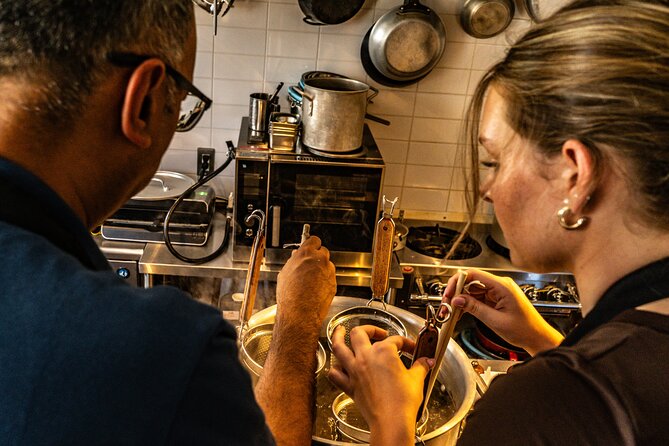
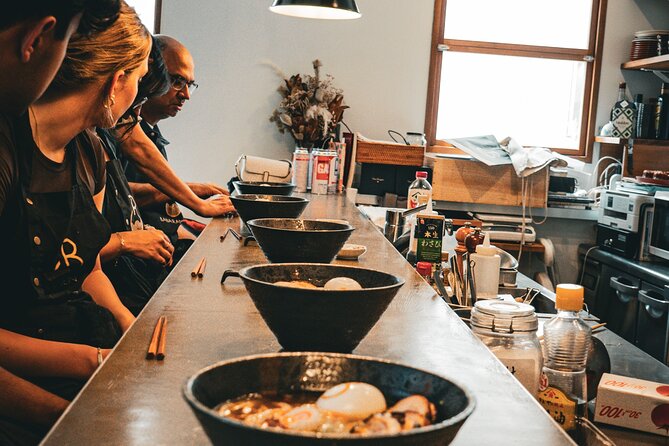
The reward comes at the end, when you sit down with your ramen and gyoza. The food is served as the result of your morning’s work, not as a separate chef-prepared sample.
That distinction matters. You have handled the ingredients, seen the stages, and made choices along the way. The finished meal gives you an immediate way to judge the balance of the broth, the texture of the noodles, and the results of your gyoza work.
The portions appear generous. Several class accounts describe eating plenty of food and leaving very full. Plan accordingly if you have a large lunch booked elsewhere.
The meal also acts as a useful lesson in timing. Ramen components need to come together at the right moment, and fresh noodles should not sit around indefinitely before serving. The final bowl shows how preparation and coordination affect the food as much as the individual recipe steps.
The chefs and the feel of the group
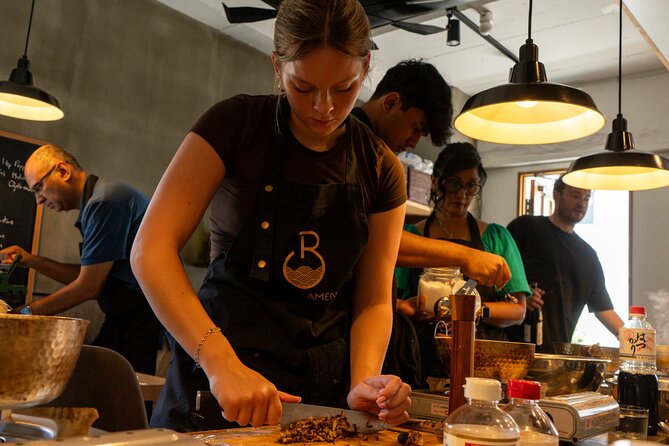
The teaching team is one of the strongest reasons to choose this class. Andrew and the other named instructors, Eric, Jae, and Leo, are described as warm, patient, organized, and fun. The class keeps moving, but the atmosphere is not stiff.
English-speaking visitors should find the bilingual format reassuring. You can ask questions and receive explanations without relying only on gestures or a translated recipe. The chefs also add cultural background, etiquette, and practical cooking advice, so the session covers more than mechanics.
Your classmates will affect the social side of the morning. With a maximum of six people, the group is small enough for conversation and shared work. That can be a plus for solo visitors, couples, and families. A family with a young child also found the staff accommodating, though the activity still includes hot pans and oils, so parents should use their own judgment.
The four-hour format gives the chefs time to teach properly. The tradeoff is that you need to stay engaged. This is a class for people who enjoy doing things, asking questions, and working alongside others.
Dietary requests and practical limits
Vegetarian and vegan versions may be available, along with gluten-free and pork-free options. You must request these in advance, and they remain subject to availability. Do not wait until the morning of the class.
This is especially important for ramen because broth, seasoning, noodles, and gyoza fillings can contain ingredients that are not obvious. If you have allergies, give clear details when booking and confirm that the requested adjustment has been noted.
Service animals are allowed. The activity is near public transportation, and it ends at the starting point. No separate drop-off is offered, so you will need to plan your onward route from Meguro.
The class requires good weather and a minimum number of participants. If poor weather or low enrollment causes cancellation, you are offered another date, another experience, or a full refund. For your own cancellation, you need to cancel at least 24 hours before the 9 a.m. start to receive a full refund. Changes made inside that window are not accepted.
Is $159.18 a fair price?
This is not a budget activity. At $159.18 per person, the price is higher than a casual ramen meal, even a very good one. You are paying for instruction, ingredients, professional equipment, a small group, two dishes, and roughly four hours of guided work.
The value improves if you care about learning techniques you can use again. The recipe e-book is important here. You can recreate the ramen and gyoza at home, and one participant had already started making shoyu tare after returning home.
The cost is harder to justify if you mainly want to eat ramen or take a few photos. Tokyo has plenty of excellent noodle shops where you can enjoy a meal for far less. This class earns its price through participation, instruction, and the chance to understand why the food takes so much work.
A 4.9 rating from 223 ratings and a 96 percent recommendation rate suggest strong satisfaction, but those numbers should not replace your own judgment. The class is active, long, and hands-on. That is precisely why it appeals to serious food fans, but it may feel too involved for someone hoping for a quick cultural activity.
Who should book Baba Ramen Cooking Meguro?
I would recommend this class to you if ramen is more than a convenient lunch. It suits home cooks, food-focused visitors, families with older children, and solo visitors who like meeting people through shared activities.
It is also a good choice if you have already taken a few Japanese food tours and want something more practical. Instead of only learning what to order, you learn how the dish is assembled and why fresh ingredients matter.
You should think twice if you dislike hot kitchen work, have limited mobility that makes active cooking difficult, or want a quiet morning. The supplied information confirms service animals are allowed, but it does not provide detailed accessibility information for the kitchen. Contact Baba Ramen before booking if you need specific arrangements.
Should you book this ramen class?
Book it if you want to work for your lunch and take useful skills home. The fresh noodles, gyoza, restaurant equipment, small group, bilingual chefs, and recipe e-book create a fuller experience than a simple cooking demonstration.
Skip it if $159.18 feels too high for a meal-centered activity, or if you prefer a short lesson with little physical effort. For the right person, this is a serious and very satisfying Tokyo food class. You leave with a full stomach, a better sense of how ramen is made, and recipes you can actually try again at home.
FAQ
Where does the ramen and gyoza class take place?
The class takes place at Baba Ramen Cooking Meguro, located at 3-chōme-7-32 Shimomeguro, Meguro City, Tokyo 153-0064, Japan.
What time does the activity start?
The class starts at 9 a.m. local time.
How long does the cooking class last?
The stated duration is approximately four hours. One class account describes about three hours, so you should allow most of the morning.
How many people can join the class?
The activity has a maximum of six participants.
Is the class taught in English?
The local chefs are bilingual in English and Japanese.
What will I make?
You will make restaurant-style ramen from scratch, including fresh noodles, and prepare gyoza. Two broth options are available.
Can dietary restrictions be accommodated?
Vegetarian, vegan, gluten-free, and pork-free options are available subject to availability. You need to include your request in advance.
What happens if I need to cancel?
You can receive a full refund if you cancel at least 24 hours before the start time. Cancellations or changes made less than 24 hours before the activity are not accepted for a refund.
More Dining Experiences in Tokyo
- Tokyo Bar Hopping Tour in Shinjuku (All-You-Can-Drink + Dinner)
★ 5.0 · 3,587 reviews - Tokyo: Sumo Show and Dining Experience
★ 4.8 · 2,742 reviews - Sumida River: Japanese Traditional Yakatabune Dinner Cruise
★ 4.6 · 779 reviews - Tokyo Bay Yakatabune Dinner/Day Cruise with Japan Show and Drinks
★ 4.5 · 473 reviews
New on our Tokyo list
- From Tokyo: Mount Fuji & Hakone Full Day Private Tour★ 4.9 · 25 reviews
- Tokyo Spectacular View Day-Cruise in 90 Minutes★ 5.0 · 25 reviews
- Real Tokyo Runner Club : Daikoku Car Meet Night Tour with JDM Car★ 5.0 · 25 reviews
- 2.5 Hour-Guided Cycle Tour in the Central Tokyo★ 5.0 · 25 reviews
- Tokyo: 2-Hour Night Bike Tour of the City’s Hidden Gems★ 4.9 · 25 reviews
- Ramen Making from Scratch +Akihabara Tour –Cooking Class★ 5.0 · 25 reviews
- [Self-Drive] Tokyo & Daikoku Custom Car Driving Tour★ 4.9 · 25 reviews
- Samurai themed Entertainment show in Shinjuku★ 4.5 · 25 reviews
Japanese Cooking Classes, compared.
Ramen & Gyoza Cooking Class in Tokyo with Local Supermarket Visit
Read our review →
Easy Ramen Cooking Experience in Kabukicho, Shinjuku
Read our review →
Ramen and Sushi Cooking Class with Sake Pairing Set in Tokyo
Read our review →
Tokyo Washoku 4-hour Cooking Class: From Market to Table
Read our review →
TokyoSumoShow, ChickenHotPot, and Mochi-Pounding by Pro Wrestlers
Read our review →
Small-Group Wagyu Beef and 7 Japanese Dishes Tokyo Cooking Class
Read our review →
Private Home Cooking in Yanaka – Local Flavors in a Warm Setting
Read our review →Browse the lists this tour appears in