
Reviewed · TOKYO GO-KART EXPERIENCES
East Tokyo Go-Kart Tour
Tokyo is usually seen from trains, sidewalks, and observation decks. This tour gives you a much stranger view: you drive through the city on public roads, sitting low in a go-kart as buses, taxis, signs, and towers pass around you. I like the grand Tokyo Bay views and the chance to cover several far-flung districts without wearing out your feet.
I also like the careful setup: a safety briefing, a lead guide, a small group of no more than 10, and photos taken along the way. The tradeoff is clear: you must concentrate on traffic, so this is not the best choice if your main goal is to hear detailed explanations of every landmark. Bring the correct driving documents, or you will not be allowed to drive.
In This Review
- Key points before you book
- What the Tokyo go-kart experience is really like
- Picking the right route: two hours or one
- Tokyo Bay, Rainbow Bridge, and the best views
- Ginza, Nihonbashi, and Kanda from a low seat
- Akihabara, Ueno, and Asakusa
- Safety on Tokyo’s public roads
- Costumes, photos, and the fun factor
- Price, value, and who should book
- The paperwork can make or break your booking
- Meeting point and timing tips
- Should you book the East Tokyo Go-Kart Tour?
- FAQ
- How long does the East Tokyo Go-Kart Tour last?
- What areas does the two-hour tour visit?
- What does the one-hour SkyTree route include?
- What driving documents do I need?
- Are Vienna Convention 1968 international driving permits accepted?
- What is included in the price?
- Can I cancel the tour?
Key points before you book
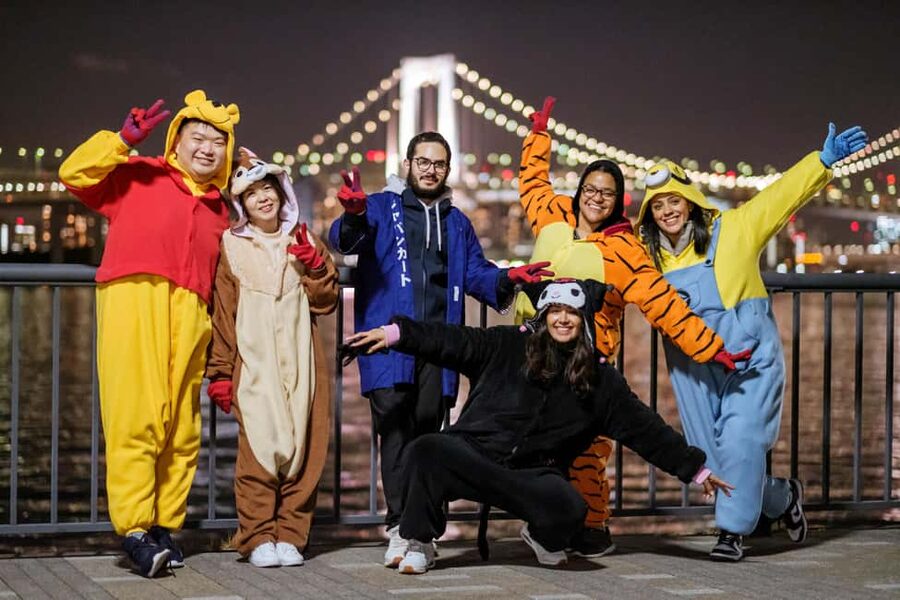
- Rainbow Bridge and Tokyo Bay: The longer route gives you a memorable view of the bridge and waterfront, with a break for photos and a possible toilet stop.
- Two route choices: The main tour lasts about two hours and covers Toyosu, Ginza, Nihonbashi, Kanda, Akihabara, Ueno, and Asakusa. The SkyTree branch offers a roughly one-hour route.
- Public-road driving: This is real city driving, not a theme-park circuit. Traffic, road surfaces, and weather affect the experience.
- Small English-speaking groups: Groups are limited to 10, with a guide leading the way and staff helping keep the group together.
- Important paperwork: You need your home-country license, a Geneva Convention 1949 international driving permit, and your passport, unless special translation rules apply.
- Costumes and photos included: You can choose a costume, and staff take photos during the ride without an extra photo charge.
What the Tokyo go-kart experience is really like
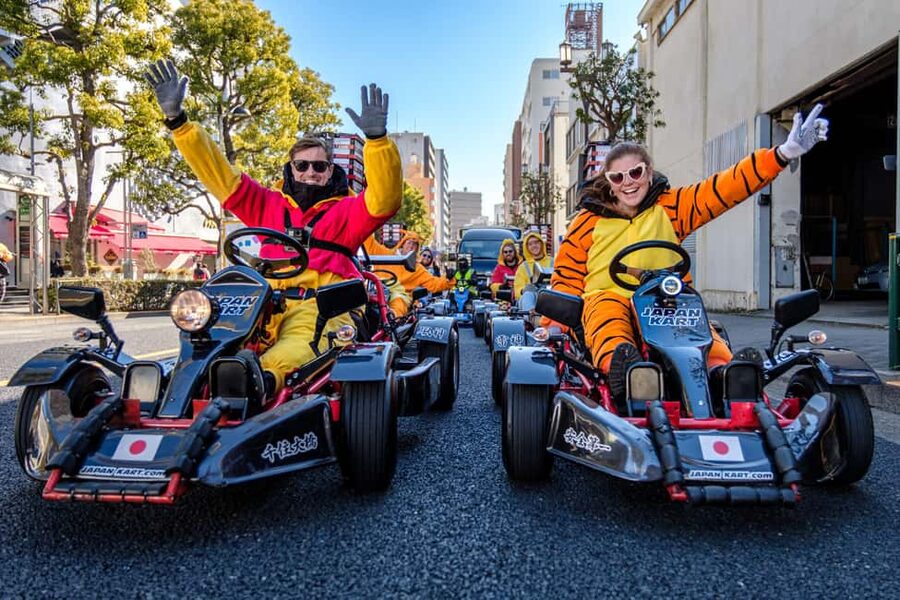
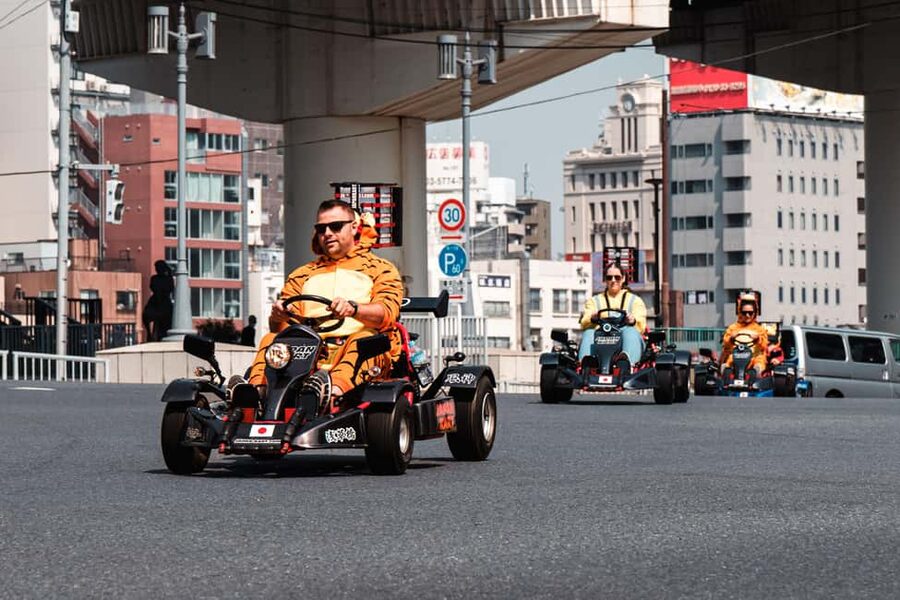
The first few minutes are the most demanding. You leave the shop, join Tokyo traffic, and quickly discover that this is not a slow amusement-park ride. The karts use public roads, so you must follow the guide, obey traffic rules, and watch the road rather than simply wave at pedestrians.
That initial nervousness usually fades once you understand the pace and handling. The staff give a safety briefing and demonstrations before departure, and the group travels with a lead guide. Some rides also use a tail vehicle, which helps prevent anyone from being left behind.
The experience usually takes longer than the driving time alone. Allow roughly 90 minutes to two and a half hours, depending on the route, the briefing, stops, and operating conditions. The longer tour includes about two hours on the road, while the shorter SkyTree option provides about one hour of driving.
The guides focus on keeping the group together and stopping when the line gets split. That matters in Tokyo, where traffic can change quickly and a small vehicle sits low beside full-size cars and trucks. You still need to drive responsibly, but the organized format makes the outing feel less intimidating.
More street-kart slots:
- Flagship 2-Hours Official Street Go-Kart Tour – Tokyo Bay Shop
★ 5.0 · 4,974 reviews - Official Street Go-Kart in Shibuya
★ 5.0 · 3,435 reviews - Official Street Go-Kart Tour – Akihabara
★ 5.0 · 1,578 reviews
Picking the right route: two hours or one
The main JAPANKART tour is the better choice if you want a broad look at east Tokyo. Its route links waterfront scenery with shopping streets, office districts, electronics streets, old neighborhoods, and major sightseeing zones.
The shorter route begins at the JAPANKART SkyTree branch, which has a different meeting point. It focuses on Asakusa, Ueno, Akihabara, Ueno Park, Kappabashi Kitchen Tools Street, and Tokyo SkyTree. It is a sensible pick if you have limited time or want to combine the ride with other attractions near Asakusa and the Skytree.
The longer trip offers better value at $64 per person because it gives you more time in the kart and covers more of the city. One rider found the two-hour route a good way to rest tired feet while still seeing Tokyo. That is a fair point: you are not walking from Ginza to Asakusa, yet you still move through several distinct parts of the city.
The one-hour route has one practical advantage. Driving for a shorter period may suit you if you are unsure about handling a kart in traffic. It also keeps the outing easy to fit around a day at the Skytree, Senso-ji, or Ueno.
Tokyo Bay, Rainbow Bridge, and the best views
The waterfront section is the visual highlight of the longer route. Around Tokyo Bay and Toyosu, the city opens up, giving you more sky and room than the tight streets around Ginza or Akihabara.
Rainbow Bridge is the big photo moment. The guides stop at scenic points and take pictures of the group, including shots with the bridge and water behind you. A short break can also provide time for the restroom, which is useful because the ride itself is not built around frequent stops.
The waterfront is especially effective near sunset or after dark, when Tokyo’s lights begin to show. Several riders preferred evening rides, though that choice comes with less daylight for seeing building details. Daytime trips give you clearer views, while night rides add more atmosphere.
Do not expect a long sightseeing stop at every major view. You are moving through the city, not visiting each place on foot. The kart is the attraction, and the views are part of the route.
Ginza, Nihonbashi, and Kanda from a low seat
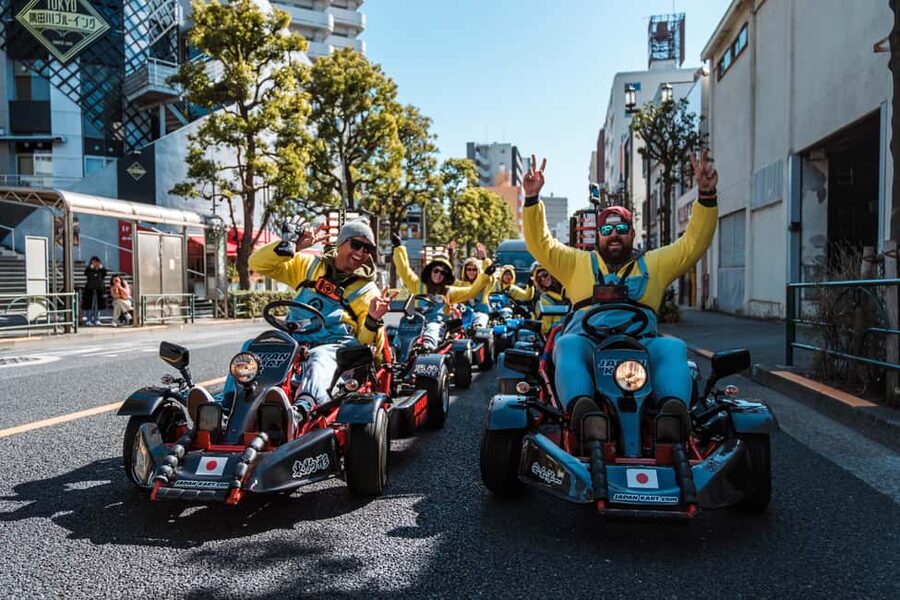
From Tokyo Bay, the route heads toward central Tokyo. Ginza brings wide streets, polished storefronts, department stores, and a more formal side of the city. From a go-kart, you see the district at street level, with traffic signals and shop fronts passing close by.
Nihonbashi offers a different feel. It is one of Tokyo’s old commercial centers, now surrounded by major roads, offices, and department stores. You pass through rather than stop for a guided history lesson, so I would visit the area separately if you want to study its bridges, shrines, or shopping arcades.
Kanda links central Tokyo to the older and more practical neighborhoods farther east. The route is valuable here because it shows how Tokyo changes block by block. Modern commercial streets give way to smaller streets and local businesses, then to the colorful electronics center of Akihabara.
The main drawback is the lack of commentary. One rider specifically wished for a headset explaining the landmarks along the way. The guides can help with safety and directions, but you should not book this as a substitute for a walking tour with a detailed historical guide.
A few more Tokyo bookings worth comparing
- Mt Fuji and Hakone 1-Day Bus Tour Return by Bullet Train
★ 5.0 · 26,383 reviews - 1-Day Tokyo Bus Tour
★ 5.0 · 14,250 reviews - Tokyo: TOKYO SKYTREE® Admission ticket
★ 4.5 · 11,192 reviews - Tokyo: teamLab Planets TOKYO Digital Art Museum Entry Ticket
★ 4.6 · 9,779 reviews
Akihabara, Ueno, and Asakusa

Akihabara is one of the most recognizable sections of the ride. Its signs, stores, and pop-culture energy make it easy to spot, even while you are focused on driving. You get a quick pass through the district rather than time to browse its shops.
Ueno brings a more relaxed change of pace. The tour passes through or near Ueno Park, and the area gives you a look at one of Tokyo’s major cultural and green spaces. One rider singled out Ueno as a favorite part of the route, which makes sense: after the traffic and bright signs of central Tokyo, it feels like a useful change.
Asakusa is the strongest stop for old Tokyo atmosphere. The neighborhood is associated with Senso-ji and the Kaminarimon area, though the kart route itself is a drive-by experience. Plan a separate visit if you want to enter temples, browse traditional shops, or spend time around the main gate.
The one-hour SkyTree route adds Kappabashi Kitchen Tools Street, a good detail for anyone interested in Japanese cooking or restaurant culture. Kappabashi is known for kitchen equipment and food-service supplies, so it offers a less obvious side of Tokyo than the major shopping districts.
Tokyo SkyTree provides a memorable finish or starting point for the shorter outing. Since the shop is near the tower, you can pair the kart ride with a visit to the observation decks, subject to your own ticket and schedule.
Safety on Tokyo’s public roads
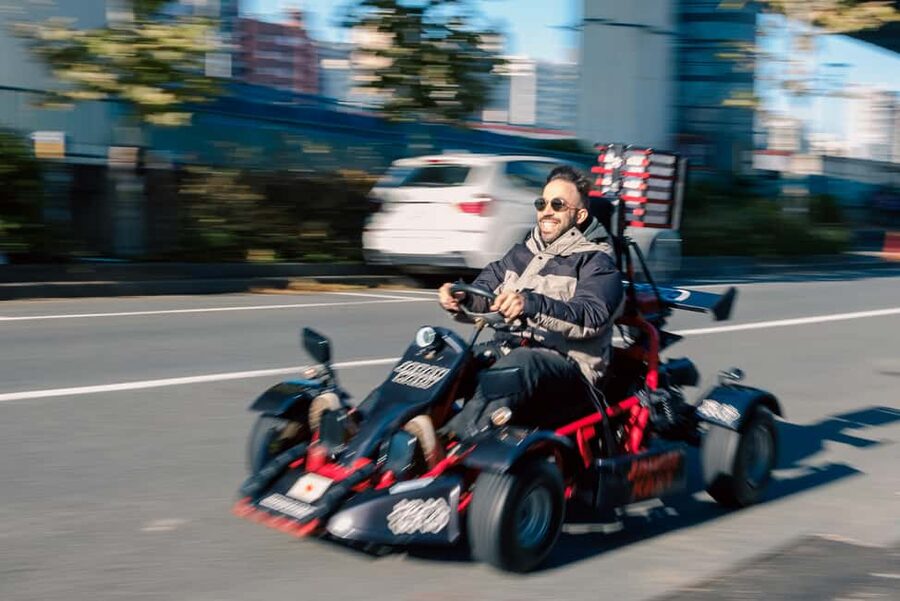
Safety is the part of this experience you should take seriously. The staff explain how to operate the kart and review city traffic rules before departure. You must stay with the group and follow the lead driver’s signals and instructions.
The ride can feel daunting at first, especially if you have never driven a small vehicle in a major city. The positive side is that staff are used to helping first-time participants get comfortable. They repeat instructions when needed, and the group is managed so nobody is intentionally left alone.
Still, this is not a passive sightseeing bus. You need to make decisions, watch the road, and manage the kart. One rider noted that concentrating on driving made it harder to look at landmarks. That is the most useful warning in the whole description of the tour.
Road conditions also matter. A rider had a great time in pouring rain, but another group chose to reschedule from a very wet day and was glad it did. Rain can reduce visibility and make road surfaces slippery, so I would choose a dry day when possible. The operator can cancel for bad weather, with a full refund or a rescheduling option depending on availability.
Costumes, photos, and the fun factor
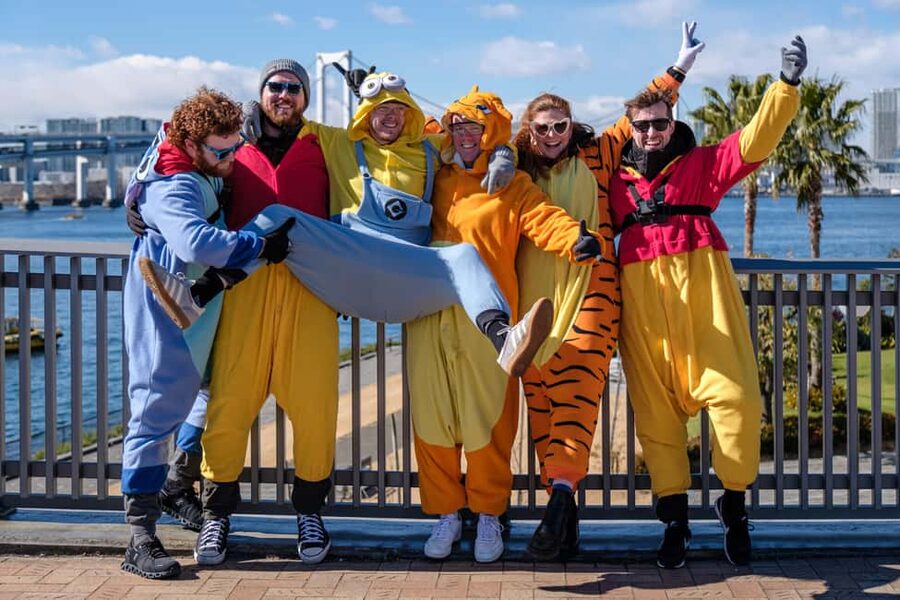
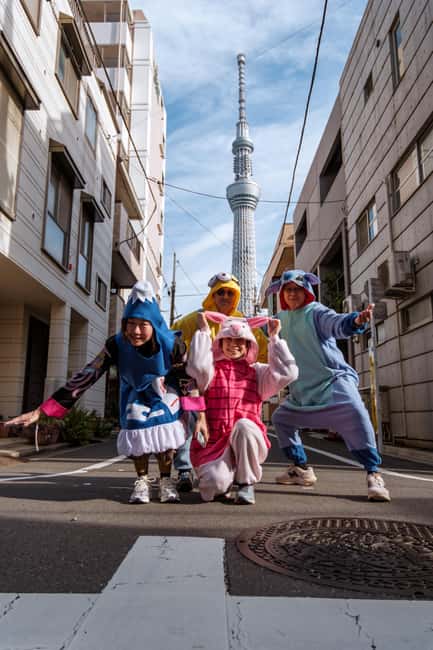
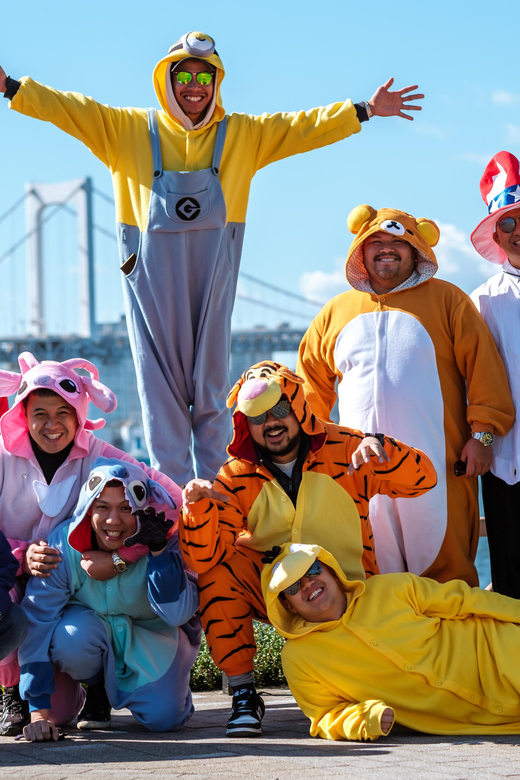
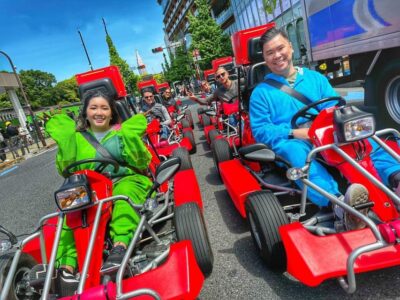
Costumes are included, and the shop offers a variety of choices. The outfits add a playful layer to the ride, especially when pedestrians wave or take pictures as the group passes. You should treat the costumes as part of the fun rather than as a serious sightseeing feature.
Staff take photos during the trip, including group pictures at scenic points. Photos and videos are sent without an extra charge according to the experience details. Harnesses may be available if you bring a phone or action camera, but you still need to follow the staff’s instructions about carrying devices.
The photo service is useful because taking your own pictures while driving is unsafe and impractical. You can focus on the road and let the staff handle the camera work. The result captures the oddness of the experience better than a standard city snapshot.
The staff also provide small touches such as water, snacks, or a drink at the end, depending on the outing. These extras are not the reason to book, but they make the return to the shop pleasant after a long ride.
Price, value, and who should book
At $64 per person, the tour is good value if you want an activity rather than a traditional guided tour. The fee covers the kart, fuel, taxes, costume use, and photos. You also get a route that connects areas you would otherwise need several train rides or a lot of walking to cover.
The value is weaker if you only want landmark information. You pass Ginza, Nihonbashi, Akihabara, Ueno, Asakusa, and Tokyo Bay, but you do not have long visits at each place. Think of it as a moving city experience with sightseeing along the way.
I would recommend it most strongly to:
- Adults who enjoy driving and unusual ways to see a city
- First-time Tokyo visitors who want a memorable east-side overview
- Couples, friends, and families with drivers aged 18 or older
- People who like photos, costumes, and a little public attention
- Visitors staying near Asakusa, Ueno, or Tokyo SkyTree
I would be more cautious if you dislike traffic, have difficulty concentrating for long periods, or want a calm cultural tour. Sandals, flip-flops, bare feet, and high heels are not allowed. Alcohol and drugs are prohibited, and you cannot bring alcoholic drinks into the vehicle.
The paperwork can make or break your booking
This is the most important practical detail. You must arrive with all required documents in physical form. The standard requirement is:
- Your driving license from your home country
- An international driving permit issued under the Geneva Convention of 1949 by an approved authority in your own country
- Your passport
Japan does not accept an international permit issued under the Vienna Convention of 1968. Online permits from unauthorized companies are also not accepted. The IDP must be a hard-copy booklet, not a loose paper document.
Drivers with licenses from Switzerland, Germany, France, Taiwan, Belgium, Estonia, or Monaco need their original license, an official Japanese translation from the authorized organization, and a passport instead of the standard IDP arrangement.
US military participants need a SOFA license, an active military ID, and a stateside driver’s license.
Check your paperwork before paying. If you arrive without the correct license, IDP, translation, or passport, you can be refused participation without a refund. The cancellation rule is otherwise reasonable: cancel at least 24 hours before the start for a full refund. Mechanical problems can also force the operator to adjust or cancel a schedule.
Meeting point and timing tips
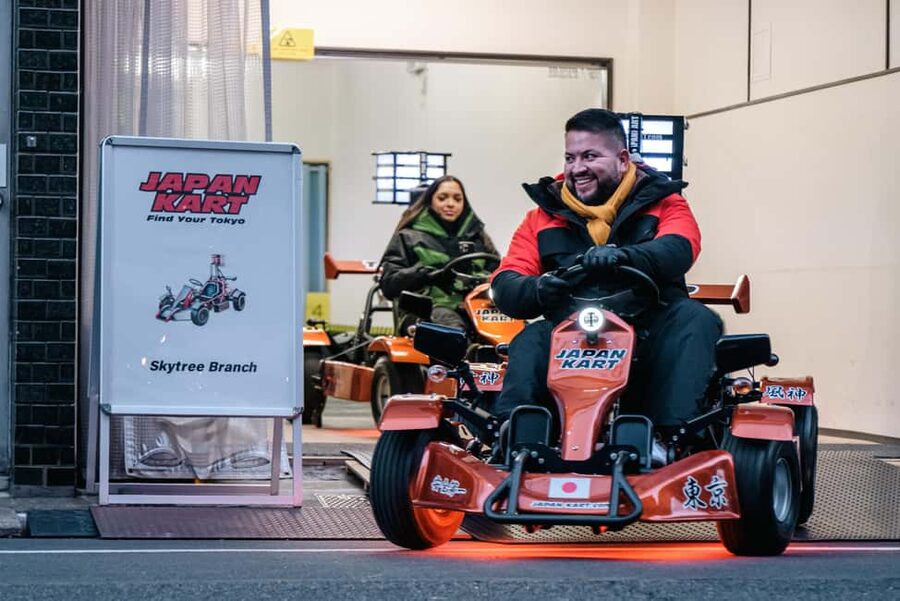
The experience has two possible starting locations, and the SkyTree branch uses a different meeting point from the main route. Confirm the exact shop attached to your booking before setting out.
The shop is near Tokyo SkyTree Tower, making Asakusa and the tower easy additions to your day. Build in time to arrive early, complete the paperwork check, choose a costume, attend the briefing, and get settled before the group leaves.
A small group limit of 10 helps keep the ride manageable. Smaller departures can be even easier to handle, but the exact group size depends on bookings. Mechanical parts can also require the operator to adjust reservations when capacity is full.
For the best chance of comfortable driving, choose dry weather and consider an evening departure if you like city lights. If you want clearer views of the neighborhoods and bay, a daytime ride is the safer choice.
Should you book the East Tokyo Go-Kart Tour?
Book it if you want Tokyo to feel close, noisy, strange, and fun. The ride itself is the sightseeing, and the combination of Rainbow Bridge, Ginza, Akihabara, Ueno, and Asakusa gives you a memorable two-hour sampler of east Tokyo.
Skip it if you want quiet temple visits or detailed narration. You will need valid driving documents, sensible footwear, and enough focus to handle public roads. For drivers who meet those conditions, $64 buys a distinctive way to see a lot of Tokyo, plus costumes and photos that make the day easy to remember.
FAQ
How long does the East Tokyo Go-Kart Tour last?
The available experiences last about 90 to 150 minutes. The main route takes roughly two hours, while the SkyTree branch offers a one-hour route.
What areas does the two-hour tour visit?
The longer route passes through Tokyo Bay, Ginza, Nihonbashi, Kanda, Akihabara, Ueno, and Asakusa. It also includes areas such as Toyosu.
What does the one-hour SkyTree route include?
The shorter route includes Asakusa, Ueno, Ueno Park, Akihabara, Kappabashi Kitchen Tools Street, and Tokyo SkyTree. It starts at a different meeting point.
What driving documents do I need?
You need your home-country driving license, a Geneva Convention 1949 international driving permit issued by an approved authority in your own country, and your passport. Drivers from certain countries need an official Japanese translation instead of an IDP.
Are Vienna Convention 1968 international driving permits accepted?
No. International driving permits issued under the Vienna Convention of 1968 are not accepted in Japan.
What is included in the price?
The $64 price includes the go-kart, fees and taxes, fuel, costumes, and photos. Hotel pickup and drop-off are not included.
Can I cancel the tour?
You can cancel up to 24 hours before the tour starts for a full refund. There is no refund if you arrive without the required driving license, international driving permit, translation, or passport. Weather cancellations qualify for a full refund or possible rescheduling.
New on our Tokyo list
- From Tokyo: Mount Fuji & Hakone Full Day Private Tour★ 4.9 · 25 reviews
- Tokyo Spectacular View Day-Cruise in 90 Minutes★ 5.0 · 25 reviews
- 2.5 Hour-Guided Cycle Tour in the Central Tokyo★ 5.0 · 25 reviews
- Real Tokyo Runner Club : Daikoku Car Meet Night Tour with JDM Car★ 5.0 · 25 reviews
- Ramen Making from Scratch +Akihabara Tour –Cooking Class★ 5.0 · 25 reviews
- [Self-Drive] Tokyo & Daikoku Custom Car Driving Tour★ 4.9 · 25 reviews
- Tokyo: 2-Hour Night Bike Tour of the City’s Hidden Gems★ 4.9 · 25 reviews
- Samurai themed Entertainment show in Shinjuku★ 4.5 · 25 reviews
Tokyo Go-Kart Experiences, compared.
Flagship 2-Hours Official Street Go-Kart Tour – Tokyo Bay Shop
Read our review →
Tokyo Go Kart: Asakusa, Skytree, and Akihabara **IDP MUST**
Read our review →
Shibuya Official Street Go-Kart in Shibuya Annex
Read our review →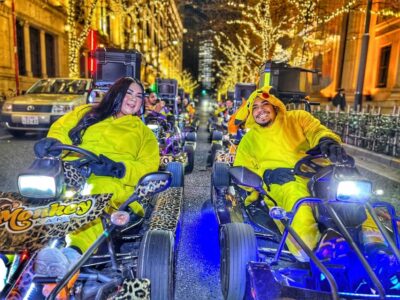
Asakusa, Skytree & Akhihabara Go-Kart City Experience
Read our review →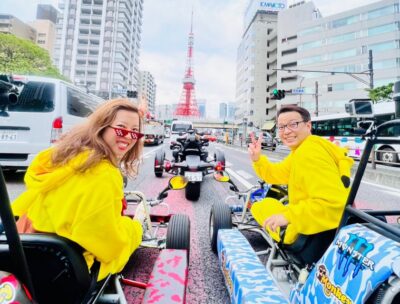
Premium Go-Kart Tour with Tower & Shibuya Crossing
Read our review →Browse the lists this tour appears in