
Reviewed · TOKYO GO-KART EXPERIENCES
Go Karting Tokyo Old Town Experience | 8 Destinations in 100 Mins
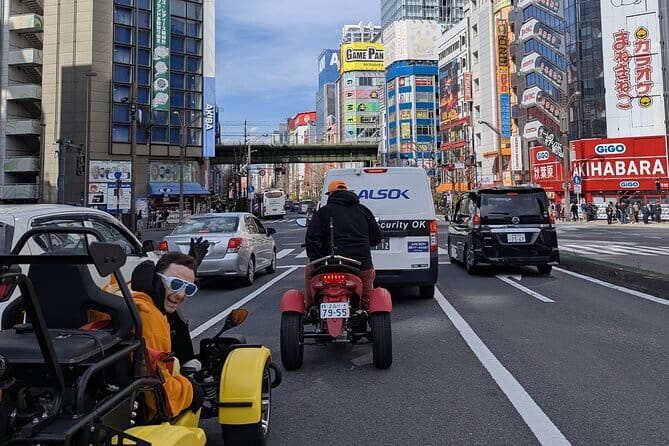
Tokyo’s old town looks very different from the driver’s seat of a go-kart. In about 100 minutes, you follow a guide through eight parts of the city, from Tokyo Skytree and Ryogoku to Asakusa, Akihabara, Ueno, Tokyo Station, and the Imperial Palace.
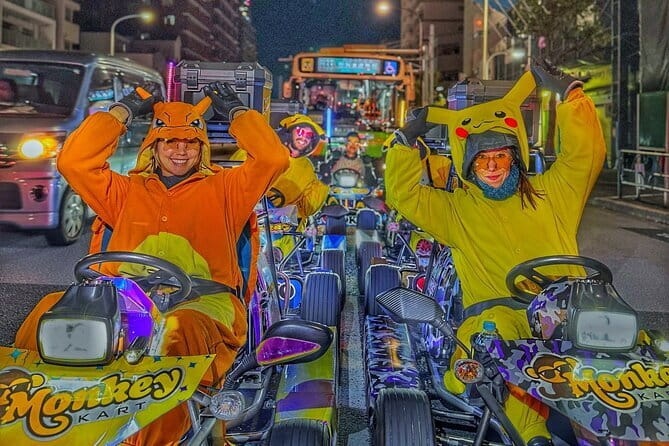
I like the small group, capped at 10 people, and the fact that fuel, insurance, costumes, water, and photos or video are included. The main drawback is strict paperwork: a digital IDP is not accepted. You need the original physical permit or another approved document, or you can lose the tour and your payment.
Key points
- Eight Tokyo stops in 100 minutes: See major districts and landmarks without spending a full day on the road.
- A small convoy: The group limit of 10 keeps the outing more personal than a large sightseeing bus.
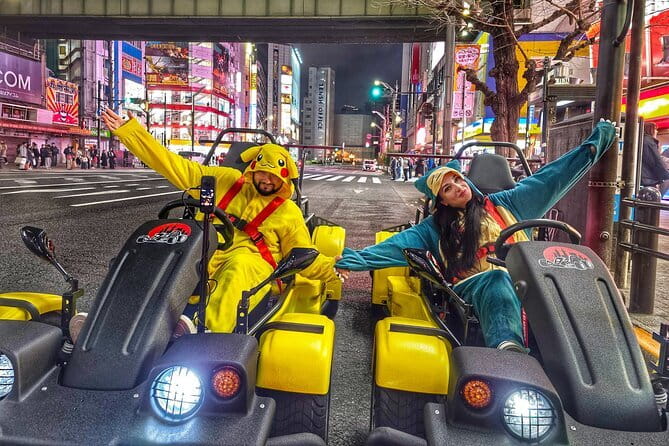
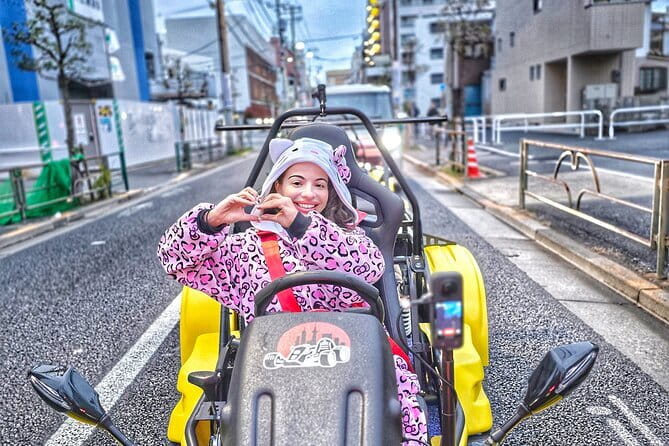
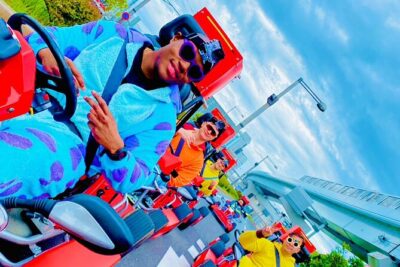
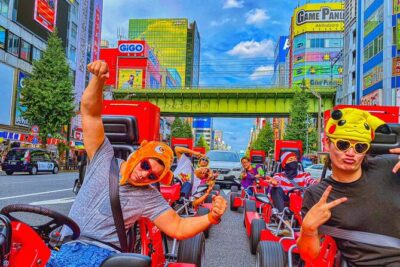
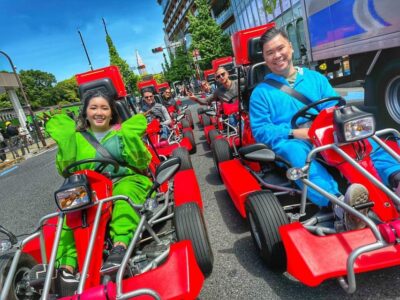
- Costumes are included: Choose a quirky outfit before setting off for photos that look different from standard Tokyo snapshots.
- The physical IDP rule matters: Bring your original International Driving Permit issued under the 1949 Geneva Convention.
- Photos and video are part of the package: An Insta360 data card costs extra, but photo and video service is included.
- Weather can change the plan: Poor conditions may lead to a new date or a full refund.
In This Review
- Tokyo sightseeing with your hands on the wheel
- What you actually see along the route
- Tokyo Skytree and Sumida
- Ryogoku and the Sumo Stadium
- Tokyo Sword Museum
- Tokyo Station and Marunouchi
- Akihabara and Japanese pop culture
- Ueno and its cultural past
- Asakusa and Tokyo’s low city
- The Imperial Palace
- Why the small group makes a difference
- Cost, inclusions, and what you still pay for
- The paperwork can make or break your booking
- Meeting point, timing, and accessibility
- Who will enjoy this most
- Should you book the Tokyo Old Town go-kart tour?
- FAQ
- How long does the go-kart tour last?
- How many destinations are included?
- What is the price?
- Where does the tour begin and end?
- Is hotel pickup included?
- What driving documents are required?
- Can a digital copy of an IDP be used?
- Are costumes and fuel included?
- What happens if the weather is poor?
Tokyo sightseeing with your hands on the wheel
This is not a museum tour or a slow walking route. It is a guided drive through public streets, with the city passing close by as you move from district to district.
The route is designed for someone who wants to see Tokyo and do something playful at the same time. You are not simply being carried past the sights. You operate the go-kart, follow the local guide, and pause or slow down around the featured areas as the route allows.
That format gives you a quick sense of how Tokyo’s older neighborhoods connect. In one outing, you can move from the sumo district of Ryogoku to the pop culture streets of Akihabara, then on to the temples and traditional character of Asakusa.
The 100-minute length is useful if you have a packed Tokyo schedule. It is long enough to feel like a real outing, but short enough to fit around another activity. Keep your expectations in check, though. Eight stops in that time means this is a moving overview, not eight full visits.
What you actually see along the route
The itinerary covers eight destinations. Each one gives the drive a different flavor, and the variety is one of the tour’s strongest features.
More street-kart slots:
- Flagship 2-Hours Official Street Go-Kart Tour – Tokyo Bay Shop
★ 5.0 · 4,974 reviews - Official Street Go-Kart in Shibuya
★ 5.0 · 3,435 reviews - Official Street Go-Kart Tour – Akihabara
★ 5.0 · 1,578 reviews
Tokyo Skytree and Sumida
Tokyo Skytree is the route’s biggest visual marker. At 634 meters, it is the world’s tallest broadcasting and communication tower and the third tallest structure in the world.
From a go-kart, the tower provides an unmistakable point of reference. You may not have time to go inside or visit an observation deck, but you get the pleasure of seeing it rise above the Sumida area while you are on the move.
This stop works best as a photo and orientation point. If your main goal is the Skytree observation deck, book that separately. The go-kart route gives you a street-level encounter rather than a tower visit.
Ryogoku and the Sumo Stadium
Ryogoku is Tokyo’s sumo center, and the Sumo Stadium gives this part of the drive a strong local identity. The district combines old Edo traditions with the practical energy of a working city neighborhood.
You get a quick look at the area rather than a sumo match or a formal stadium tour. Still, it is a worthwhile stop because it helps you see Tokyo beyond the usual shopping and temple circuit.
The guide-led format is useful here. You can keep moving while learning why Ryogoku matters, instead of trying to work out the district’s importance from a passing glance.
Tokyo Sword Museum
Japanese swords carry more than military meaning. They have also served as symbols of authority, works of art, and objects connected with worship.
The Tokyo Sword Museum preserves important Japanese swords and samurai armor. The go-kart outing takes you through the area, but the supplied details do not indicate a museum admission or interior visit.
That distinction matters. If you want to study sword-making, armor, or the museum collection, plan a separate visit. On this tour, the museum adds cultural context to the drive and gives you another reason the old-town route is more than a string of famous photo stops.
A few more Tokyo bookings worth comparing
- Mt Fuji and Hakone 1-Day Bus Tour Return by Bullet Train
★ 5.0 · 26,383 reviews - 1-Day Tokyo Bus Tour
★ 5.0 · 14,250 reviews - Tokyo: TOKYO SKYTREE® Admission ticket
★ 4.5 · 11,192 reviews - Tokyo: teamLab Planets TOKYO Digital Art Museum Entry Ticket
★ 4.6 · 9,779 reviews
Tokyo Station and Marunouchi
Tokyo Station brings a change of mood. Its early 20th-century architecture gives the Marunouchi district a formal, polished appearance, quite different from the older streets around Asakusa or the specialist shops of Akihabara.
The route places Tokyo Station at center stage as an example of architectural skill and urban history. You will see it from the road, with the guide leading the group through the district.
This is a good section for anyone who likes city design. You get a sense of how Tokyo places historic architecture beside modern office buildings and major transport links. Again, allow for an exterior view rather than a station tour.
Akihabara and Japanese pop culture
Akihabara is the route’s loudest change of pace. It is known for electronics, anime, and Japan’s otaku culture, but the district also has roots reaching back to the Meiji period.
From the go-kart, you can take in the area as a center of modern Japanese popular culture. The costumes fit naturally here, giving the photo stops a playful edge.
The limitation is simple: 100 minutes does not leave time to browse the arcades, shops, or specialist stores. Treat Akihabara as a fast visual introduction. Return later on foot if you want to shop or spend time with the district’s subcultures.
Ueno and its cultural past
Ueno became important after the Tokugawa Shogunate began in Edo in 1603. It first grew around Buddhist temples and local residents, then developed into a center for modern Japanese art and culture during the Meiji period.
That background makes Ueno a useful bridge between old and new Tokyo. You are not only passing a park or a station area. You are seeing a district shaped by religion, government, art, and city life across several periods.
As with the other stops, the route offers an outside view rather than a museum visit. If you want to explore Ueno’s cultural institutions, save a separate block of time.
Asakusa and Tokyo’s low city
Asakusa reaches back about 1,400 years to the Asuka period. It is one of the best places in Tokyo to sense the character of the old shitamachi, or low city.
This is one of the most appealing parts of the route. Asakusa has a stronger traditional identity than many central districts, and its streets connect naturally with the city’s temple culture and older neighborhoods.
The go-kart lets you see the district in motion, but it cannot replace a walk. You will want time to explore on foot if you plan to visit the temples, browse shops, or stop for food. Consider the drive a first look that helps you decide where to return.
The Imperial Palace
The Imperial Palace is the final major landmark on the route. Its story begins with Edo Castle, constructed in 1457 by Ota Dokan. Today, it is the residence of the Japanese Emperor and Empress.
The palace grounds provide a more formal finish to the tour after the pop culture of Akihabara and the traditional character of Asakusa. You see an important symbol of Japan’s modern state and its earlier shogunate past.
Do not assume the go-kart experience includes entry to palace buildings or grounds. The information provided describes the route and sightseeing stop, not an interior admission.
Why the small group makes a difference
The group limit is 10 participants. That is a practical advantage for a driving activity because a smaller convoy is easier to keep together than a large procession.
You can expect to follow a local guide rather than navigate the route alone. That removes much of the stress of finding each neighborhood while driving, and it gives the outing a clear pace.
A small group also helps with photos and basic questions. The exact guide’s name is not provided, so you cannot request a particular guide based on the published details. Still, the arrangement is more intimate than a coach excursion.
Remember that this is a public-road activity. You must be comfortable operating a go-kart, following instructions, and keeping with the group. The experience is designed for most participants, but anyone uncertain about driving on city streets should think carefully before booking.
Cost, inclusions, and what you still pay for
The price is $91.45 per person. That is not a cheap way to get from one Tokyo district to another, but transportation is not the right comparison.
You are paying for the go-kart rental, a guide, fuel, insurance, a costume, drinking water, and photo and video service. The tour also compresses eight sightseeing areas into a single 100-minute activity. For someone who values novelty and wants a memorable city overview, the package can make sense.
Food is not included, and pickup and drop-off are not included. You must reach the meeting point in Katsushika City yourself, then return there when the activity ends.
An Insta360 camera data card is available for purchase, but it is not included. Photos and video are included in the listed package, so ask exactly what you will receive and what requires the extra card before setting off.
The price is best justified if you want the driving experience itself. If your goal is simply to see the landmarks at the lowest cost, Tokyo’s trains and walking routes will be far cheaper. If you want an unusual activity with built-in sightseeing, the comparison is fairer.
The paperwork can make or break your booking
This is the most important practical point. To drive, you need your original local driving license and an International Driving Permit issued under the 1949 Geneva Convention.
A digital copy, email attachment, or image stored on your phone is not enough. One participant arrived with digital proof of an IDP and was unable to drive. The provider’s response made clear that Japanese law requires the physical document for public-road driving.
If you are from Switzerland, Germany, France, Belgium, Monaco, or Taiwan, you may drive with your local license and an official Japanese translation. Contact the provider a month in advance if you need help arranging that translation.
US military personnel stationed in Japan need a SOFA Driving License. Bring your passport as well.
Failure to produce the required original documents can result in cancellation on the day, with no refund. Put the physical permit in your travel wallet before leaving home. This is not a minor check at the desk. It is a condition of participation.
Meeting point, timing, and accessibility
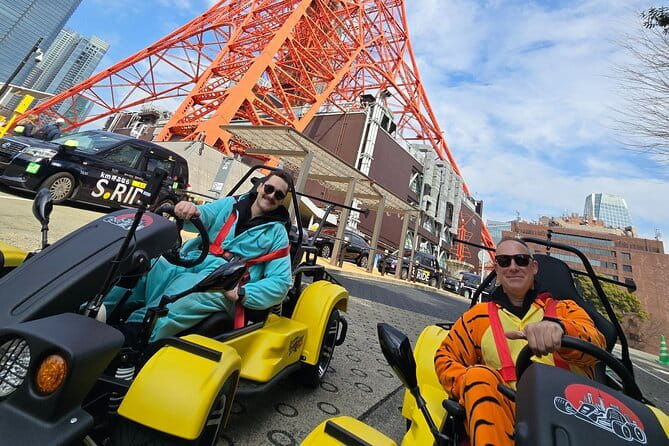
The tour begins at Japan, 124-0014 Tokyo, Katsushika City, Higashiyotsugi, 1-chōme202, at the Kojima office location. The activity ends back at the same meeting point.
The experience is near public transportation, but pickup and drop-off are not provided. Check the route from your hotel in advance and leave enough time to arrive with your documents ready.
The drive lasts about one hour and 40 minutes. That includes the route through all eight destinations, so the experience has a brisk sightseeing rhythm.
The activity is listed as wheelchair accessible. If you use a wheelchair or need a particular boarding arrangement, contact the provider before booking and describe your needs clearly. The published details confirm accessibility, but they do not explain the exact vehicle setup or transfer process.
Good weather is required. If poor weather forces cancellation, you are offered another date or a full refund. The general cancellation rule also allows a full refund when you cancel at least 24 hours before the start time. Within 24 hours, you receive no refund, and late changes are not accepted.
Who will enjoy this most
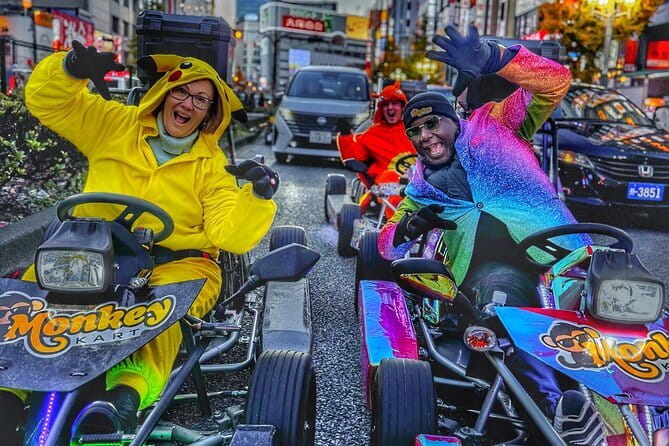
I would choose this for an active Tokyo visitor who has already seen the city from trains and sidewalks, or who wants one memorable afternoon activity between more traditional sightseeing plans.
It suits you if you enjoy:
- Driving and following a guide through a major city
- Fast introductions to several Tokyo districts
- Costumes and playful photos
- Small-group activities
- Seeing both old-town culture and modern pop culture in one outing
It is less suitable if you want long visits inside museums, temples, the Imperial Palace, or Tokyo Skytree. The route shows you the city, but it does not give you extended time at each attraction.
It may also be a poor choice if you do not have the correct physical driving documents. The paperwork rule is strict enough that you should settle it before paying, not at the meeting point.
Should you book the Tokyo Old Town go-kart tour?
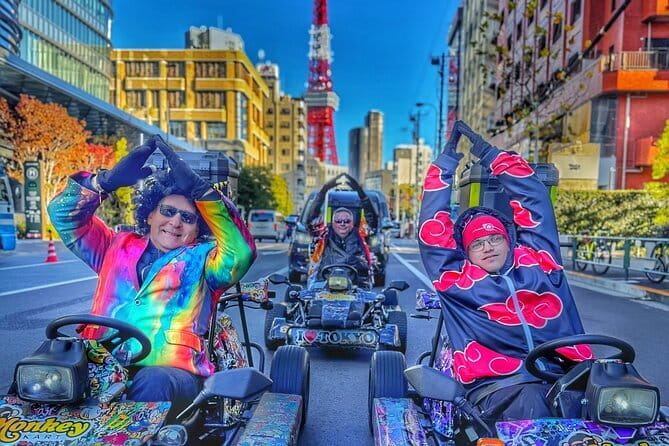
Book it if the idea of driving through Tokyo appeals to you as much as the sightseeing itself. The route has real variety: Skytree, sumo culture, swords, Tokyo Station, anime culture, Ueno, Asakusa, and the Imperial Palace all appear in one compact outing.
The strongest value is the combination of activity and coverage. You get a guide, fuel, insurance, costume, water, and photos or video, while the 10-person limit keeps the group manageable.
Skip it if you prefer quiet, unhurried visits or if you are comparing it only with low-cost public transit. You will see the landmarks from outside and at speed. Most importantly, do not book until you have the original IDP or the correct license translation in hand.
For the right person, this is a lively way to get an overview of Tokyo’s old and new sides, with enough unusual scenery to make the day memorable.
FAQ
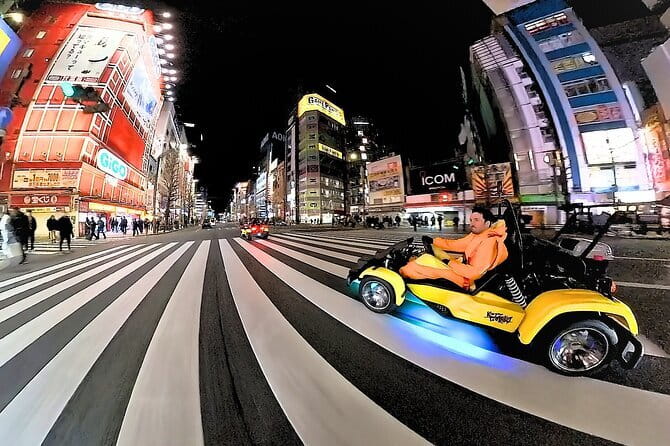
How long does the go-kart tour last?
The experience lasts approximately one hour and 40 minutes, or 100 minutes.
How many destinations are included?
The route includes eight destinations: Tokyo Skytree, Ryogoku and the Sumo Stadium, the Tokyo Sword Museum area, Tokyo Station and Marunouchi, Akihabara, Ueno, Asakusa, and the Imperial Palace.
What is the price?
The listed price is $91.45 per person.
Where does the tour begin and end?
The meeting point is in Katsushika City at Japan, 124-0014 Tokyo, Higashiyotsugi, 1-chōme202, Kojima office location. The tour ends back at the same meeting point.
Is hotel pickup included?
No. Pickup and drop-off are not included. You must make your own way to the meeting point and return from there.
What driving documents are required?
You need your original local driving license and an International Driving Permit issued under the 1949 Geneva Convention. You also need your passport.
Can a digital copy of an IDP be used?
No. A digital copy or email proof is not accepted. You must present the original physical document.
Are costumes and fuel included?
Yes. Go-kart rental, a costume, fuel, insurance, a tour guide, drinking water, and photo and video service are included.
What happens if the weather is poor?
The experience requires good weather. If it is canceled because of poor conditions, you can choose another date or receive a full refund.
New on our Tokyo list
- Sumi-e Experience in a relaxing green tea shop in Tokyo★ 5.0 · 3 reviews
- Tokyo : Kamikaze Street Drift Ride★ 5.0 · 3 reviews
- Private Zen Meditation in English in Shinjuku, Tokyo★ 5.0 · 3 reviews
- Onsen Spa in Tokyo and Asakusa Bar Hopping with Local Guide★ 5.0 · 3 reviews
- Easy for everyone! Now you can play handmade mini shamisen and show off to everyone! Musical instruments, sweets and live music★ 5.0 · 3 reviews
- Tokyo: Private Tsukiji Street Food & Sake with Local Guide★ 5.0 · 3 reviews
- Mt Fuji Exploration Tour with Free Japanese Kusa Mochi from Tokyo★ 4.5 · 3 reviews
- Tokyo Tsukiji Fish Market Walking and Exploring Hidden Gems Tour★ 5.0 · 3 reviews
Tokyo Go-Kart Experiences, compared.
Flagship 2-Hours Official Street Go-Kart Tour – Tokyo Bay Shop
Read our review →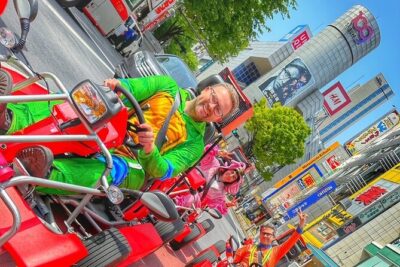
Tokyo Go Kart: Asakusa, Skytree, and Akihabara **IDP MUST**
Read our review →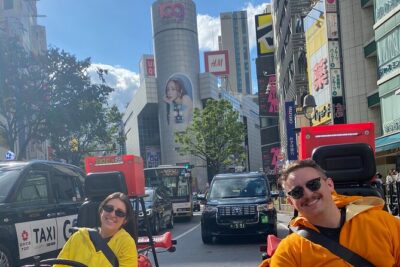
Shibuya Official Street Go-Kart in Shibuya Annex
Read our review →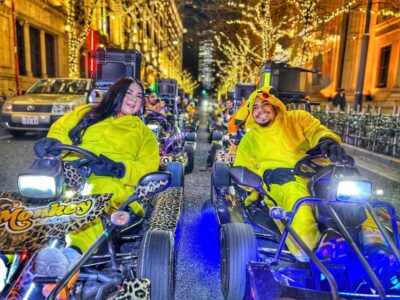
Asakusa, Skytree & Akhihabara Go-Kart City Experience
Read our review →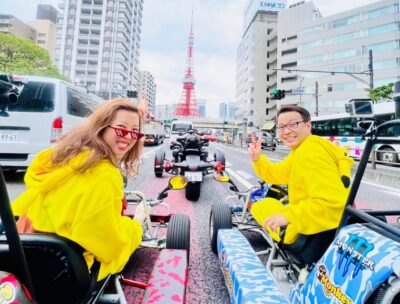
Premium Go-Kart Tour with Tower & Shibuya Crossing
Read our review →Browse the lists this tour appears in