Reviewed · TOURS
Half Day Sightseeing Tour in Tokyo
Tokyo can feel like several cities stitched together, and this morning coach tour gives you a quick look at its major contrasts: forested Meiji Jingu, imperial grounds, anime districts, and old Asakusa. I especially like the efficient route and the chance to hear cultural details from guides such as Yuki, Hiro, Aiko, Lisa, and Ayaka.
I also like the air-conditioned bus, onboard Wi-Fi, and included Uji matcha or matcha gelato. The main catch is simple but important: you finish at Senso-ji in Asakusa, not at your original pickup point, and the Imperial Palace visit may amount to a view of the bridge and moat if garden access is unavailable.
In This Review
- Key points to know before booking
- A fast morning route through Tokyo
- Starting at the LOVE sculpture
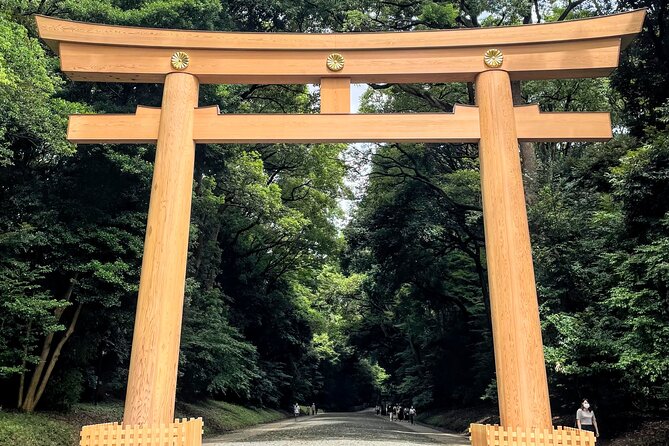
- Meiji Jingu: Tokyo’s forested shrine
- Drive-by Tokyo: Akihabara, Ueno, and the National Diet
- The Imperial Palace area and the limits of the stop
- Matcha in Asakusa
- Senso-ji and the best ending point
- Guides, audio, and group management
- Who gets good value at $94.84?
- Practical details for a smoother morning
- Should you book this Tokyo half-day tour?
- FAQ
- How long does the tour last?
- Where can I join the tour?
- Where does the tour end?
- Is Senso-ji included?
- Is the Imperial Palace open to visitors on this tour?
- What languages are supported?
- Is transportation provided?
- Is matcha included?
- How many people can join the tour?
- Can I cancel for a full refund?
Key points to know before booking
- Three to four hours on the road: You cover a lot of Tokyo without changing trains or navigating the subway.
- Meiji Jingu is the strongest stop: Expect about 50 minutes among tall trees, shrine gates, and sake and wine barrels.
- The Imperial Palace stop is exterior-focused: You may stroll near the bridge and moat, but access to the gardens can change.
- Asakusa combines tea and temple time: Uji matcha, Nakamise Avenue, Kaminari-mon Gate, and Senso-ji bring the tour to a useful finish.
- The return plan matters: Pickup is offered at Matsuya Ginza or the LOVE sculpture in Shinjuku, but the tour ends in Asakusa.
- Guide quality shapes the day: English-speaking guides including Yuki, Hiro, Mao, Tsubasa, Ayaka, Aiko, and Elven have received especially warm praise.
A fast morning route through Tokyo
At $94.84 per person, this is not a cheap sightseeing bus. You are paying for transport, a guide, a prearranged route, and a little help making sense of Tokyo’s vast size.
The value depends on your schedule. If you have only a short time in the city, or you would rather not decode several train lines on your first morning, the coach does useful work. It links places that sit in different parts of Tokyo while you sit in an air-conditioned seat.
If you already move around Tokyo with confidence, the price is harder to justify. Meiji Jingu, the Imperial Palace exterior, Asakusa, and Senso-ji are all reachable independently. The guide adds context and removes planning, but the tour does not give you long, unhurried visits at each site.
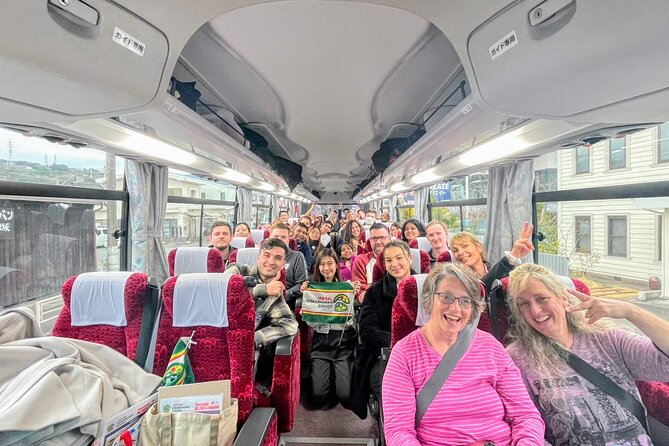
The maximum group size is 43 people. That is large enough for the guide to spend time counting heads and organizing movement, especially around busy Asakusa. It also means you should not expect a private tour or a quiet, flexible pace.
A few more Tokyo bookings worth comparing
- Mt Fuji and Hakone 1-Day Bus Tour Return by Bullet Train
★ 5.0 · 26,383 reviews - 1-Day Tokyo Bus Tour
★ 5.0 · 14,250 reviews - Tokyo: TOKYO SKYTREE® Admission ticket
★ 4.5 · 11,192 reviews
Starting at the LOVE sculpture
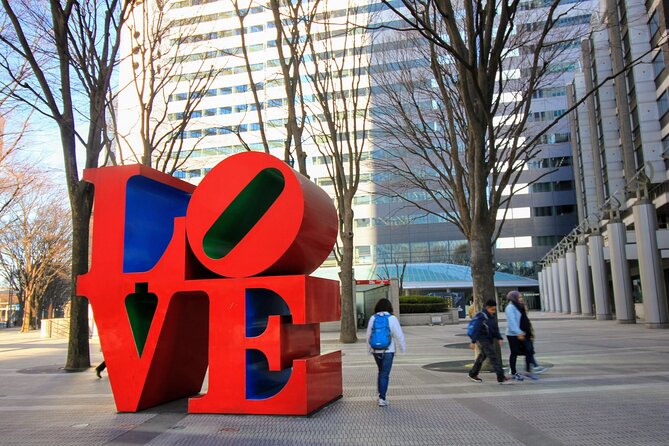
The tour uses two morning pickup points: Matsuya Ginza at 7:20 a.m. and the Robert Indiana LOVE sculpture in Shinjuku at 7:50 a.m. The LOVE sculpture serves as a clear meeting landmark, but check your booking details closely because the tour’s endpoint is different.
This early start is practical. Tokyo’s major roads become harder to predict as the morning moves on, and the itinerary order can change with traffic, weather, or operating conditions. If you arrive late, you cannot simply join the coach at the next stop.
The coach ride also gives you a broad first look at the city. Depending on the route, you drive past districts such as Harajuku, Akihabara, Ueno, and the area around the National Diet Building. These are drive-by glimpses, not full visits, so set your expectations accordingly.
Some guides use multilingual audio support in English, French, Italian, Spanish, German, Portuguese, and Ukrainian. The live tour is led in English, while the audio option can help if you prefer a second layer of explanation. If you sit near the back, hearing the guide can be harder in a large group, so choose a forward seat when possible.
Meiji Jingu: Tokyo’s forested shrine
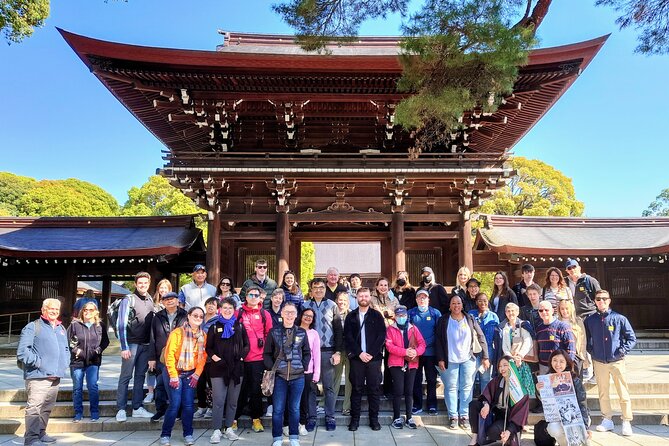
Meiji Jingu is the morning’s most satisfying stop. Built in 1920 for Emperor Meiji, this Shinto shrine sits in a broad wooded setting that feels far removed from nearby Harajuku.
You walk through the grounds toward the shrine, with the city’s noise giving way to a more measured pace. The tour allows about 50 minutes here, enough to see the main approach, notice the torii gates, and take in the setting without turning the visit into a rushed photo stop.
The details make this stop more than a quick landmark visit. Guides have explained the sake barrels and wine barrels displayed along the approach, as well as the fact that one torii gate was donated by Taiwan. These small points help you read what you are seeing instead of simply photographing it.
This is also a place where the guide’s personality matters. Aiko, Ayaka, Yuki, and Elven have been singled out for clear explanations, warm organization, and a good sense of humor. Hiro has also been praised for keeping an eye on a participant who had difficulty walking.
You should still plan for walking. The tour is not recommended if you cannot cover a long distance, and the shrine grounds are not a quick step from the coach. Comfortable shoes matter more here than fashionable ones.
Harajuku itself is seen mainly from the bus. The district is known for youth fashion and Japanese pop culture, but this tour does not give you a dedicated Harajuku shopping stop. If you want Takeshita Street, cafés, or more time with contemporary youth culture, return on your own.
Drive-by Tokyo: Akihabara, Ueno, and the National Diet
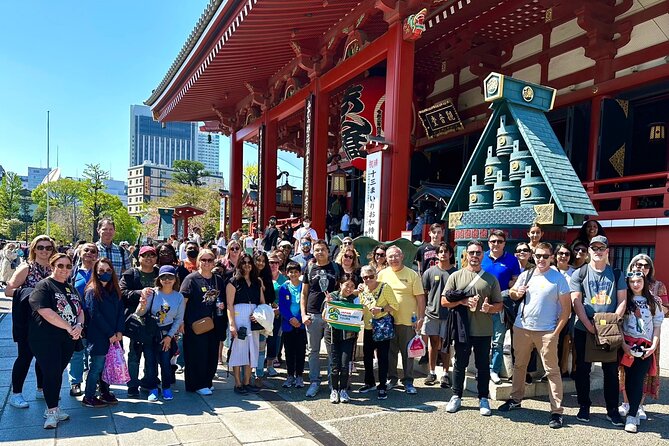
Between the main stops, the coach passes several recognizable parts of Tokyo. Akihabara is associated with anime, games, electronics, and maid cafés. Ueno is known for its park, seasonal blossoms and autumn color, along with the nearby Ameyoko market.
These drive-bys are useful for orientation, especially on a first visit. You begin to understand how far apart Tokyo’s districts are and can mark places for a later visit. The drawback is that traffic may limit what you see, and the guide cannot give every neighborhood the attention it deserves.
The National Diet Building, Japan’s parliament, may also appear along the route. Its symmetrical 1936 design makes a good bus-window sight, but again, this is not a stop for an interior visit.
The same is true of the kitchenware district, where shops sell Japanese dishes, knives, and remarkably realistic food replicas. It is an appealing idea for a longer Tokyo itinerary, yet on this half-day outing you should treat it as a passing introduction rather than a shopping opportunity.
This stretch of the tour is where feedback has been most mixed. Some guides fill the drive with history, anecdotes, and useful explanations. Others spend more time giving instructions, counting the group, and announcing the next stop. That is partly the nature of a 43-person coach, but it is worth knowing if you want a deep cultural lecture throughout the morning.
Same corner of Tokyo, a completely different plan:
- Tokyo: teamLab Planets TOKYO Digital Art Museum Entry Ticket
★ 4.6 · 9,779 reviews - Mt Fuji & Hakone Cruise, Drum Show Bullet Train 1 Day from Tokyo
★ 4.0 · 7,413 reviews - Tokyo: Sumo Show Experience with Chicken Hot Pot and a Photo
★ 4.8 · 6,678 reviews - Tokyo: Shinjuku Food Tour (13 Dishes at 4 Local Eateries)
★ 5.0 · 6,603 reviews
The Imperial Palace area and the limits of the stop
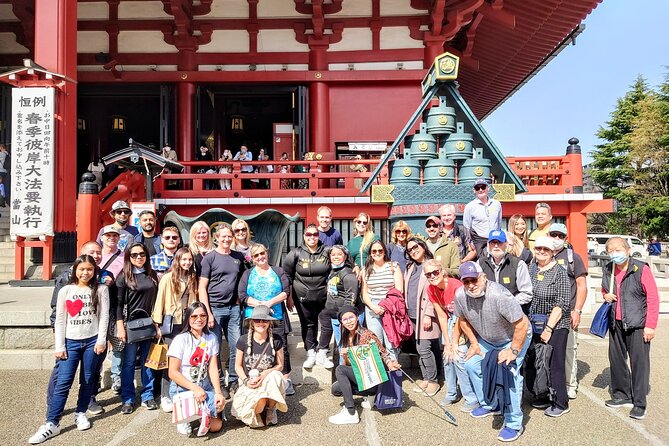
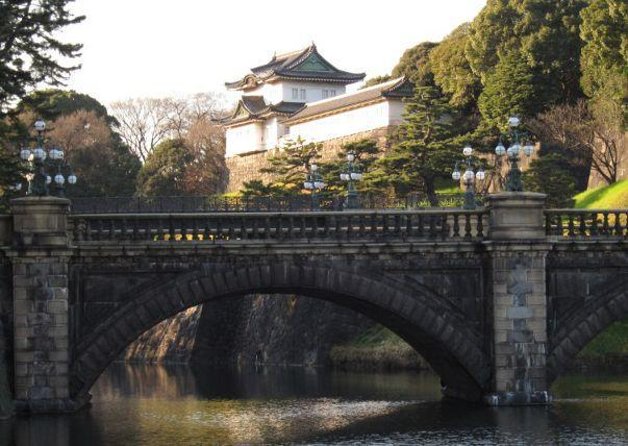
The Imperial Palace occupies the grounds of Edo Castle and remains the residence of Japan’s imperial family. The tour sets aside about 50 minutes for this part of the morning, including time to walk near the palace area and see traditional gardens or historic structures when access allows.
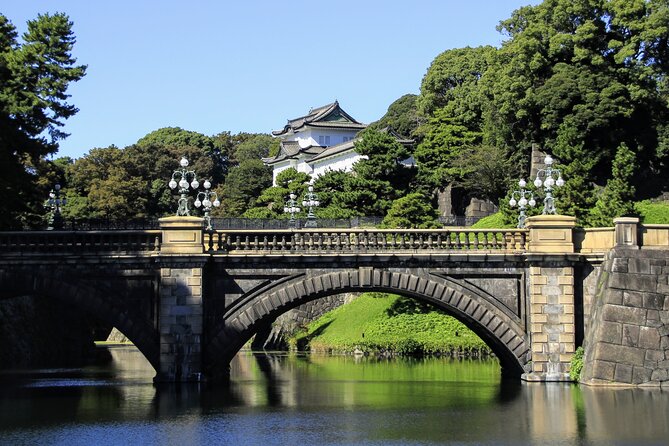
Do not picture a full palace tour. The public cannot simply wander through every part of the imperial compound, and the exact area available can change. Several people found that the stop consisted mainly of the bridge, moat, gate, and a photo opportunity. When the East Garden or another planned area is closed, the visit may be shortened or redirected.
That does not make the stop useless, but it changes its value. If you enjoy architecture, moats, formal views, and the setting of the former Edo Castle, you will get a worthwhile introduction. If you expect rooms, palace interiors, or a long garden stroll, you may feel disappointed.
One memorable detail concerns the samurai statue near the palace area. A guide may explain the position of the horse’s raised leg and what it signifies about the samurai. Details like this are exactly where a strong guide turns a brief stop into something you remember.
Weather and operations can also affect this part of the route. The operator may substitute another place or provide a gift if activities cannot be completed, but changes do not bring a refund. Keep your expectations flexible, particularly during poor weather or periods when a garden is closed.
Matcha in Asakusa
The Asakusa portion brings a more hands-on Japanese touch. You receive either a matcha drink or matcha gelato, using first-flush tea from Uji in Kyoto. The advertised style is smooth and less bitter than the strongly grassy matcha some people encounter elsewhere.
This is a small inclusion, not a full meal. Food and additional drinks are not included, so you should plan to buy lunch after the tour. The matcha stop is near Senso-ji, which makes the transition from tasting to sightseeing easy.
The tea experience also offers a useful introduction to a familiar Japanese flavor. If you already love matcha, you may want to browse the available matcha items. If you find matcha too bitter, this softer preparation may be a more approachable sample.
There is a practical caveat: the matcha store is closed on May 9, when the operator provides matcha souvenirs instead. That is still a small replacement, but it is not the same as receiving the drink or gelato.
Senso-ji and the best ending point
Senso-ji is one of Tokyo’s most recognizable temples, and ending here makes good sense. You have time to photograph Kaminari-mon Gate, pass along Nakamise Avenue, and continue into the temple grounds after the organized portion ends.
The listed visit is about 10 minutes, so the guided stop itself is brief. The useful part is that you can remain in Asakusa after the coach departs. You are not rushed onto a return bus, and this gives you a chance to explore the temple, browse the shopping street, pray, or collect a goshuin if that is part of your Japan plans.
This ending also explains some of the confusion around the tour. The half-day program does not return to Ginza or Shinjuku. You finish at Senso-ji in Asakusa, on the east side of Tokyo, and arrange your own onward transport.
That is not a minor footnote. If you planned to continue from your hotel near Shinjuku or Ginza, allow time and train fare to get back. On the other hand, ending in Asakusa can be helpful if you want to spend the afternoon there. You can visit more of the temple district, eat nearby, or continue toward other eastern Tokyo sights.
Guides, audio, and group management
The guide can make or break this tour. The strongest guide feedback centers on clear English, humor, cultural explanations, and calm control of a large group.
Names that have received particularly warm praise include Yuki, Hiro, Aiko, Ayaka, Lisa, Mao, Tsubasa, Tacu, Angela, and Elven. That does not guarantee who will lead your departure, but it shows the operator has produced some excellent guiding. Yuki has been praised for combining a gentle manner with strong group control, while Hiro has been noted for helping someone with limited mobility.
The less successful experience is usually tied to sound and pace. A guide may be easy to hear at the front but difficult to follow from the back. Some guides focus heavily on head counts and timing, leaving less room for history.
The multilingual audio guidance is helpful, but it does not fully replace a live guide who can answer questions or explain an unexpected detail. The bus Wi-Fi is another practical plus, especially for checking maps and planning your afternoon in Asakusa.
Who gets good value at $94.84?
I would consider this tour for a first morning in Tokyo, especially if you are staying near Ginza or Shinjuku and want a quick introduction without handling the subway right away. It also suits people with a short stay who want to see Meiji Jingu, the palace area, and Asakusa in one compact outing.
The price makes more sense if you value the air-conditioned coach and live commentary. Tokyo’s distances can be tiring, and a guide can explain shrine customs, imperial landmarks, and local details while you ride.
I would hesitate if you have several days in Tokyo and enjoy independent sightseeing. You can spend longer at Meiji Jingu, explore Harajuku properly, visit Akihabara or Ueno rather than passing them, and take your time at Senso-ji. The tour’s short stops and large group may feel restrictive.
It is also a poor fit if you expect a full Imperial Palace visit. The palace stop is best understood as an exterior look at the grounds, bridge, moat, and nearby structures, with garden access dependent on conditions.
Practical details for a smoother morning
Wear shoes suitable for extended walking, particularly at Meiji Jingu and Asakusa. The tour is not recommended for anyone unable to walk long distances.
Bring water and plan your meal afterward. Food and drinks beyond the included matcha are not provided, and the tour ends at Senso-ji without hotel drop-off.
Arrive early at the correct pickup point. Late arrivals cannot join the group partway through, and the tour may change order because of traffic, weather, closures, or operating conditions.
The activity offers free cancellation up to 24 hours before the start time. Changes or cancellations made inside that window are not accepted for a refund.
Should you book this Tokyo half-day tour?
Book it if you want a structured first look at Tokyo and like the idea of sitting in a coach while a guide connects distant sights. Meiji Jingu and Asakusa provide the strongest visits, while the matcha stop adds a pleasant local detail. A good guide, such as Yuki, Hiro, Aiko, Lisa, or Ayaka, can make the compact schedule feel lively and useful.
Skip it if you want a slow, in-depth day, a true palace visit, or a return to your starting point. At $94.84, the tour’s value rests on convenience and orientation rather than admission tickets or long visits. Treat it as a sampler, not a complete Tokyo tour, and you are more likely to feel the morning earned its place in your itinerary.
FAQ
How long does the tour last?
The tour lasts approximately 3 to 4 hours.
Where can I join the tour?
Pickup is available at Matsuya Ginza at 7:20 a.m. or the Robert Indiana LOVE sculpture in Shinjuku at 7:50 a.m.
Where does the tour end?
The tour ends at Senso-ji Temple in Asakusa. There is no extra drop-off service to your hotel or original pickup point.
Is Senso-ji included?
Yes. Senso-ji is part of the Asakusa section, and the tour finishes there. You can continue exploring Asakusa after the organized tour ends.
Is the Imperial Palace open to visitors on this tour?
Access can vary. The tour may visit the East Garden or another available area, but closures can mean seeing only the gate, bridge, moat, or exterior surroundings.
What languages are supported?
A professional guide conducts the tour in English. Multilingual audio guidance is available in English, French, Italian, Spanish, German, Portuguese, and Ukrainian.
Is transportation provided?
Yes. The tour uses an air-conditioned vehicle, with free Wi-Fi available on the bus.
Is matcha included?
Yes. You receive a matcha drink or matcha gelato. The matcha uses first-flush tea from Uji, Kyoto. On May 9, the matcha store is closed and matcha souvenirs are provided instead.
How many people can join the tour?
The maximum group size is 43 participants.
Can I cancel for a full refund?
You can cancel at least 24 hours before the experience start time for a full refund. Cancellations or changes made less than 24 hours before the start time are not refunded or accepted.
New on our Tokyo list
- From Tokyo: Mount Fuji & Hakone Full Day Private Tour★ 4.9 · 25 reviews
- Tokyo Spectacular View Day-Cruise in 90 Minutes★ 5.0 · 25 reviews
- Real Tokyo Runner Club : Daikoku Car Meet Night Tour with JDM Car★ 5.0 · 25 reviews
- 2.5 Hour-Guided Cycle Tour in the Central Tokyo★ 5.0 · 25 reviews
- Ramen Making from Scratch +Akihabara Tour –Cooking Class★ 5.0 · 25 reviews
- [Self-Drive] Tokyo & Daikoku Custom Car Driving Tour★ 4.9 · 25 reviews
- Tokyo: 2-Hour Night Bike Tour of the City’s Hidden Gems★ 4.9 · 25 reviews
- Buddha, Bamboo & Zen – Bespoke Kamakura Private Walking Tours★ 5.0 · 25 reviews
Tours, compared.
Mt Fuji and Hakone 1-Day Bus Tour Return by Bullet Train
Read our review →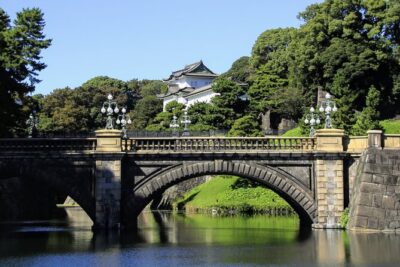
Shinjuku Food Tour (13 Dishes at 4 Local Eateries)
Read our review →
Tokyo Mt Fuji 5th St & Hakone Cruise Bus Tour w/Bullet Train
Read our review →
Flagship 2-Hours Official Street Go-Kart Tour – Tokyo Bay Shop
Read our review →
Mt. Fuji Tour, Hakone Ropeway, Owakudani, Lake Ashi
Read our review →
Tokyo 6hr Private Tour with Government-Licensed Guide
Read our review →