
Reviewed · TOKYO GO-KART EXPERIENCES
Iconic Tokyo Uptown Landmarks Go Kart Tour (120 Minutes)
Tokyo is easiest to understand at street level, and this tour puts you right there, behind the wheel. You roll from the Kartzilla facility near Tokyo Skytree through sumo country, the Imperial Palace area, Ginza, and other central districts while your guide talks you through the city by two-way radio. It is sightseeing with a steering wheel, not a race.
I like the comfortable, stable karts, especially for first-time drivers, and the live guidance from guides such as Sata and Travis. I also like the mix of famous sights and ordinary city streets. The main catch is practical: you must bring the exact driving documents required in Japan, arrive 40 minutes early, and accept that rain can shape the ride.
In This Review
- Key points
- Why this Tokyo go-kart route works
- Starting near Yotsugi Station
- Getting comfortable in the Kartzilla go-karts
- Tokyo Skytree gives you a dramatic opening
- Ryogoku and the world of sumo
- Tokyo Station and the Imperial Palace area
- Tokyo Tower, Ginza, and Kabuki-za
- The guide makes the ride easier
- What happens if the weather turns wet
- Recording the ride with Insta360
- Who will enjoy this experience most
- Small details that affect the value
- Should you book the Tokyo Uptown Route?
- FAQ
- How long is the Tokyo Uptown go-kart tour?
- Where does the tour start?
- Which landmarks are included on the route?
- Is a driving license required?
- Which documents can non-residents use?
- Can I use a digital license or a photo of my license?
- How early should I arrive?
- Is the tour suitable for children?
- Is video recording included?
- What happens if it rains?
Key points
- A 120-minute route through central Tokyo: See Tokyo Skytree, Ryogoku Kokugikan, Tokyo Station, the Imperial Palace area, Tokyo Tower, Ginza, and Kabuki-za.
- Purpose-built karts: Advanced suspension, hydraulic brakes, reinforced frames, and stable handling help make city driving less tiring.
- Live radio contact: Your guide gives road directions, safety reminders, landmark context, and local tips as you drive.
- Small groups of up to 10: The limited size makes it easier to follow the guide and keep the group together.
- Useful video option: An on-board Insta360 camera can record the ride, but you need a Micro SD card or must buy one on site.
- A strict license check: A valid Japanese license, qualifying International Driving Permit, or approved foreign license with JAF translation is required.
Why this Tokyo go-kart route works
The best part of the experience is the changing view. You do not simply stop at one attraction, take a photo, and move on. You pass through several versions of Tokyo in one continuous ride: the huge presence of Skytree, the old sumo district around Ryogoku, the formal avenues near the Imperial Palace, and the polished shopping streets of Ginza.
That movement gives the tour its character. You notice how Tokyo shifts from neighborhood streets to major avenues, and your guide helps you make sense of what you are seeing. The radio matters here. It lets the guide point out sights and give directions without forcing the group to stop every few minutes.
This is not a driving lesson or a speed experience. The tour runs at a relaxed, beginner-friendly pace, and there is no racing. You still need to pay attention to traffic, signals, lane position, and the riders around you, but the karts are designed to make the job manageable.
The cost is $116 per person. That includes the street-legal kart, fuel, guide, accident insurance, costume rental, drinks, and use of the on-board Insta360 camera, though you need to provide a Micro SD card. For a two-hour activity that combines transport, sightseeing, and a guide, the price can make sense if you want something more active than a bus tour. It is less compelling if your main goal is entering museums or spending long periods at each landmark.
More street-kart slots:
- Flagship 2-Hours Official Street Go-Kart Tour – Tokyo Bay Shop
★ 5.0 · 4,974 reviews - Official Street Go-Kart in Shibuya
★ 5.0 · 3,435 reviews - Official Street Go-Kart Tour – Akihabara
★ 5.0 · 1,578 reviews
Starting near Yotsugi Station
The Kartzilla Go Kart facility is about an eight to ten-minute walk from Yotsugi Station on the Keisei Line. The building has clear signage, and Google Maps should get you close. The walk passes through a quiet suburban area, so do not expect a tourist-filled street leading to the facility.
Arrive at least 40 minutes before your scheduled start. That early arrival is not wasted time. You need to check in, show your documents, receive instructions, and complete the required safety briefing before heading onto Tokyo’s roads.
Bring your passport, driving license, and International Driving Permit if applicable. For non-residents, the accepted options are an International Driving Permit issued under the 1949 Geneva Convention, or a license from Switzerland, Germany, France, Belgium, Monaco, or Taiwan accompanied by an official Japanese translation from JAF.
This rule is firm. Digital licenses, photographs of licenses, and expired documents are not accepted. If you arrive without the correct paperwork, you cannot drive and no refund is provided. Check this before booking, not on the morning of the tour.
Getting comfortable in the Kartzilla go-karts
The karts are built for city driving rather than a go-kart track. Advanced suspension helps soften the ride, while hydraulic brakes give you more controlled stopping. Reinforced frames are designed to accommodate big and tall riders, and the stable handling is useful if you have never driven a kart on public roads.
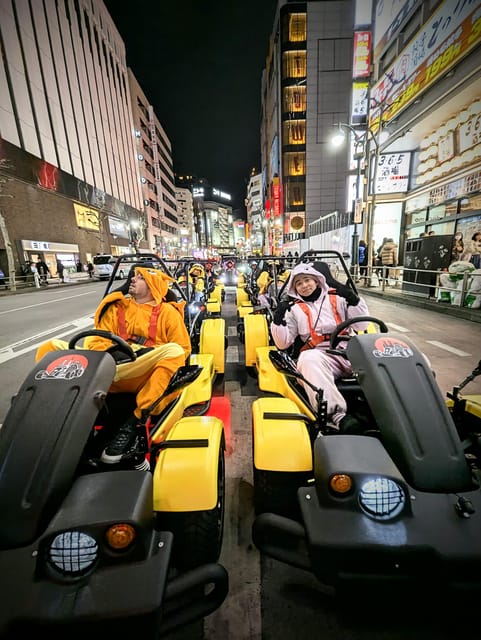
That equipment changes the feel of the activity. You are still exposed to the weather, but you are not dealing with a cramped, twitchy recreational kart. The aim is confidence and control. You follow the guide, keep the group together, and enjoy the view without turning the ride into a contest.
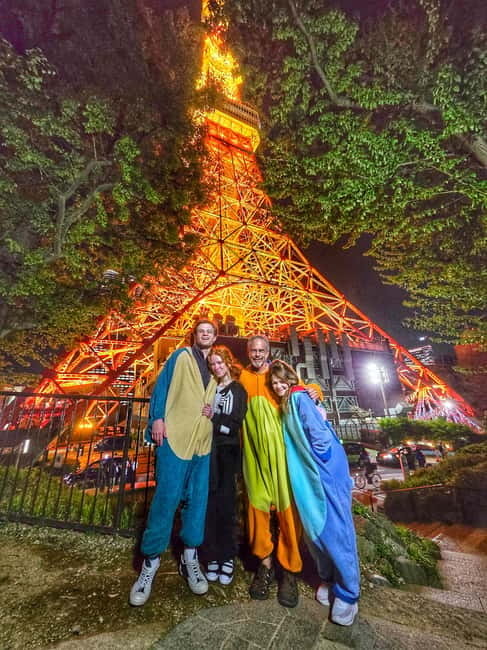
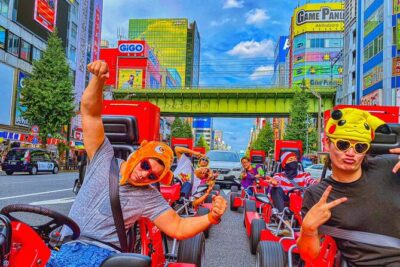
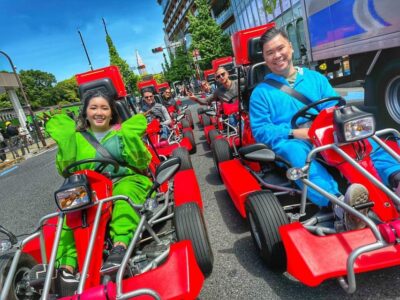
Costumes are included, which adds a playful touch to the experience. The supplied information does not specify the full range of themes, so choose on site based on what is available. Keep in mind that a costume may affect what you want to wear underneath, particularly if the weather is cool or wet.
You also receive water, tea, and coffee. Meals are not included, so eat before or after the ride according to your start time. Hotel pickup and drop-off are not provided, and you make your own way to the facility.
Tokyo Skytree gives you a dramatic opening
The route begins with Tokyo Skytree, one of the easiest sights in the city to recognize from a distance. Starting near this enormous tower gives the tour an immediate sense of scale before the ride moves through the surrounding streets.
At street level, Skytree feels different from an observation deck visit. You see the tower rising above buildings and intersections as you drive, rather than looking down over Tokyo from above. The guide can add context and keep you moving safely through the opening part of the route.
The nearby area also helps ease you into the experience. You start away from the most intense central traffic, learn the kart controls, and settle into the guide’s radio instructions before reaching the busier parts of Tokyo.
A few more Tokyo bookings worth comparing
- Mt Fuji and Hakone 1-Day Bus Tour Return by Bullet Train
★ 5.0 · 26,383 reviews - 1-Day Tokyo Bus Tour
★ 5.0 · 14,250 reviews - Tokyo: TOKYO SKYTREE® Admission ticket
★ 4.5 · 11,192 reviews - Tokyo: teamLab Planets TOKYO Digital Art Museum Entry Ticket
★ 4.6 · 9,779 reviews
Ryogoku and the world of sumo
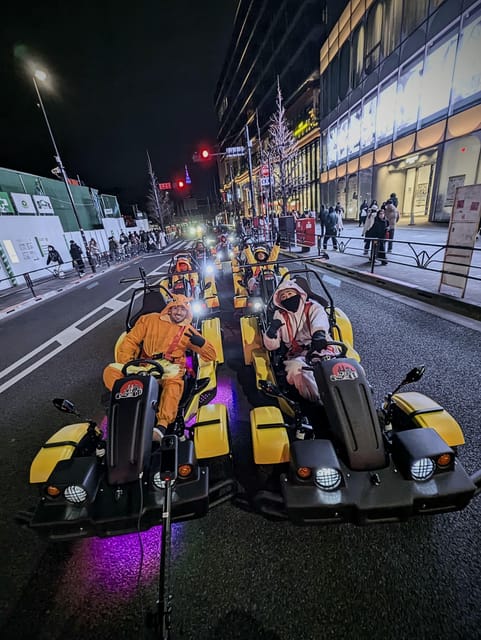
The next major sight is Ryogoku Kokugikan, Tokyo’s famous sumo stadium. Ryogoku is closely tied to Japan’s national sport, and the district has a different mood from the sleek commercial areas later in the tour.
You should think of this as a passing view rather than a stadium visit. The tour gives you a look at the setting and the surrounding district, but there is no scheduled indoor tour or sumo match included. The value comes from seeing how a major piece of Japanese culture fits into the city around it.
This is also the sort of stop where the guide’s live commentary helps. A quick view of a building can mean more when you know what it is and why the neighborhood matters.
Tokyo Station and the Imperial Palace area
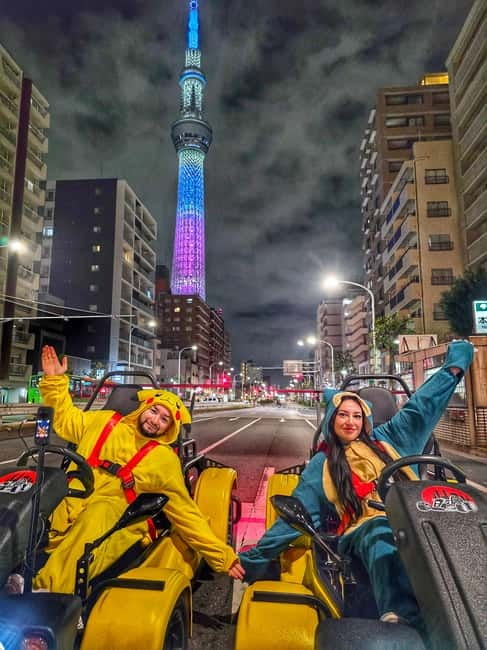
Tokyo Station brings a shift in tone. It is a major transport center and an important reference point for understanding the capital’s central core. From the kart, you experience the station as part of the working city rather than as a destination where you get off and wait for a group.
The route then continues around the Imperial Palace surroundings. The palace itself is not presented as an interior visit, so manage your expectations. You are seeing the broad setting and surrounding streets, with the guide adding stories and directions as the group passes through.
This part of the ride is especially useful for first-time visitors who want to connect several central districts in one outing. You can later return on foot or by train to spend more time at any one place.
Tokyo Tower, Ginza, and Kabuki-za
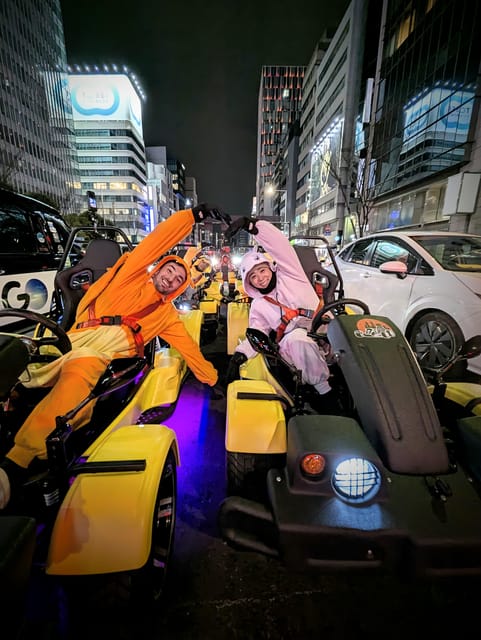
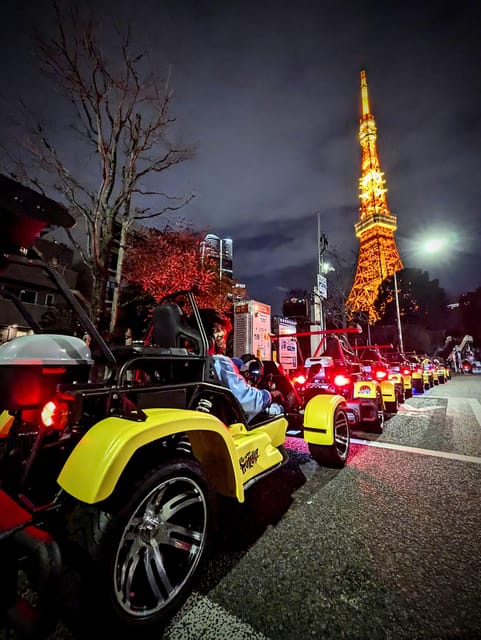
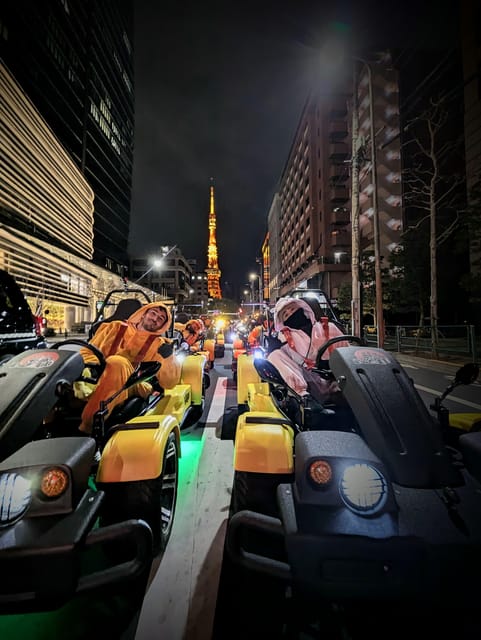
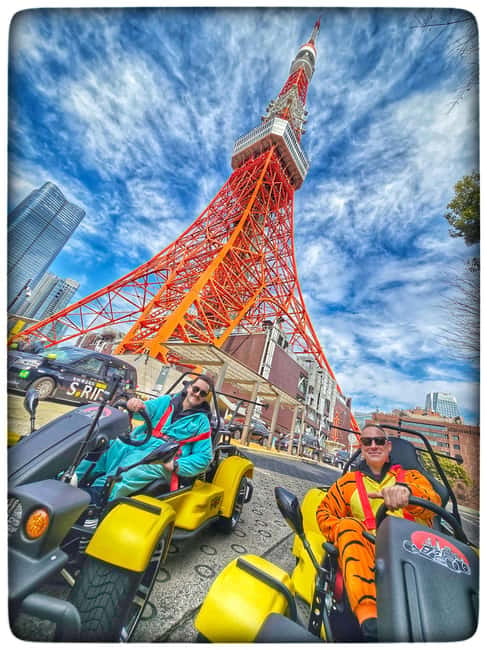
Tokyo Tower adds another recognizable skyline marker. In contrast to Skytree, it has a more classic Tokyo presence, and seeing both towers on the same route gives you a quick visual lesson in the city’s changing identity.
Ginza brings high-end shops, broad streets, and polished city scenery. It is a good place to appreciate the contrast between Tokyo’s older cultural institutions and its modern commercial side. You pass through rather than shop, so this is a preview, not a substitute for an afternoon in the district.
Kabuki-za provides the cultural finish. Its connection to kabuki theater makes it one of the most distinctive buildings on the route. Again, you should expect a guided drive and exterior views, not a theater performance or backstage visit.
Taken together, these sights create a well-shaped route. You see major towers, a sumo venue, a transport hub, the Imperial Palace surroundings, a central shopping district, and a traditional theater. The tour does not linger at each one, but it covers a lot of ground without feeling like a checklist of disconnected photo stops.
The guide makes the ride easier
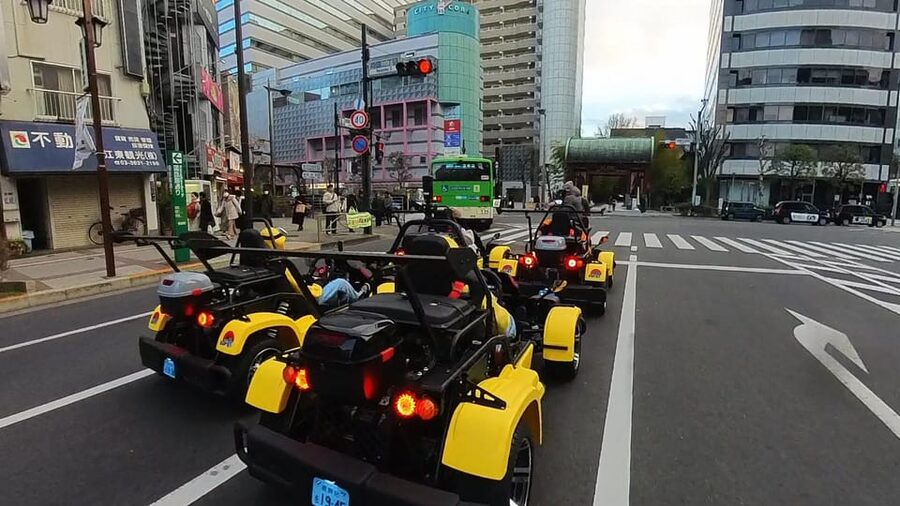
The two-way radio system is one of the most useful parts of the tour. Your guide can tell you when to turn, when to slow down, and how to keep the group moving. At the same time, the guide shares stories about the sights and points out details you might otherwise miss.
Sata guided one reported outing with clear directions and frequent reminders about what was coming next. Travis was also praised for offering useful Tokyo advice that extended beyond the ride. Those details matter because a good guide does more here than lead a line of karts. The guide becomes your voice in the traffic and your first local source of ideas for the rest of your Japan trip.
The available guide languages are English, German, and Spanish. The small group is limited to 10 participants, which should make radio instructions easier to follow than they would be in a large convoy.
What happens if the weather turns wet
Rain is a real possibility because you are outdoors for the full two hours. One rider found that rain jackets were available and that towels and hair dryers were useful after the tour. That is encouraging, but you should still dress with wet weather in mind.
You might want to choose a waterproof outer layer and shoes that can handle wet roads. The supplied information does not promise a dry-weather guarantee or a particular rain policy, so check conditions and ask the facility about current arrangements if the forecast looks poor.
Night departures have a different appeal. City lights and neon signs can make Ginza, Tokyo Tower, and other central streets more eye-catching after dark. The tradeoff is reduced daylight for viewing building details and a greater need to stay alert in traffic.
Recording the ride with Insta360
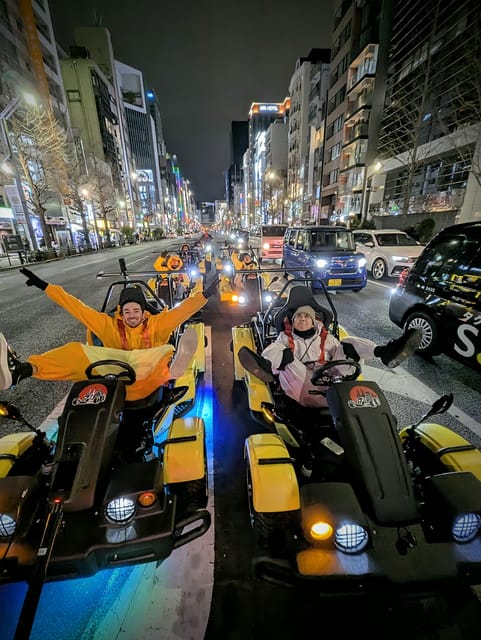
Each kart offers the option to use an on-board Insta360 camera. It records hands-free from the driver’s position, which is much easier than trying to operate a phone while driving.
You must bring a Micro SD card, or purchase one on site. Confirm the card requirement before arriving if recording is important to you. The camera lets you preserve the route itself, including street scenes, landmarks, costumes, and the changing city views.
Free photos of the experience are also included. The exact number and delivery method are not specified, so treat the photos as a useful extra rather than the main reason to book.
Who will enjoy this experience most
This tour suits adults who want sightseeing with a bit of action. It is a good fit if you have already seen Tokyo from trains and sidewalks and want to experience the city from a moving, open-air viewpoint.
First-time kart drivers should be comfortable here if they listen carefully and follow the guide. The suspension, brakes, and stable design reduce some of the strain found in basic karts, but you still need to drive responsibly and remain aware of traffic.
The experience is not suitable for children under 18, drivers under 18, people without a license, visually impaired people, or people over 95. It is wheelchair accessible, though you should confirm any personal transfer needs with the operator before booking.
It also suits small groups of friends, couples, and solo participants who enjoy a shared activity. If you dislike driving in city traffic, prefer long stops, or want a quiet cultural tour, this is probably the wrong choice.
Small details that affect the value
At $116, the price covers more than the vehicle itself. Fuel, the guide, insurance, costume rental, drinks, and camera use are included. You are paying for a structured two-hour route through several parts of Tokyo, with someone managing the navigation and safety side of the experience.
The main extra cost is the Micro SD card if you want to keep video and do not bring your own. Meals and transportation to the facility are also your responsibility. The tour does not include hotel pickup, and the walk from Yotsugi Station takes up to ten minutes.
Free cancellation is available up to 24 hours before the start, and you can reserve now and pay later. Those options help if your Tokyo schedule is still moving around, but the license requirement remains the key booking issue.
Should you book the Tokyo Uptown Route?
Book it if you want to see Tokyo from the road, enjoy live guide contact, and are happy to handle the required driving documents. The route gives you a broad look at the city in two hours, and the comfortable karts, friendly guidance, costumes, and optional video make it more than a simple vehicle rental.
I would choose an evening departure for neon and city lights, while carrying rain protection in any uncertain forecast. I would also arrive early, bring the original license documents, and confirm the Micro SD card plan before leaving your hotel.
Skip it if you want inside visits, long time at each landmark, or a calm walking tour. But if your idea of sightseeing includes Skytree in the distance, Ginza at street level, and Tokyo’s traffic moving around you, Kartzilla offers a memorable and well-organized way to see the city.
FAQ
How long is the Tokyo Uptown go-kart tour?
The tour lasts 120 minutes, or two hours.
Where does the tour start?
It starts at the Kartzilla Go Kart facility near Yotsugi Station. The facility is about an eight to ten-minute walk from the station on the Keisei Line.
Which landmarks are included on the route?
The route passes Tokyo Skytree, Ryogoku Kokugikan, Tokyo Station, the Tokyo Imperial Palace surroundings, Tokyo Tower, Ginza, and Kabuki-za before returning to the Kartzilla facility.
Is a driving license required?
Yes. You need a valid and accepted driving license to participate.
Which documents can non-residents use?
Non-residents can use an International Driving Permit issued under the 1949 Geneva Convention. Licenses from Switzerland, Germany, France, Belgium, Monaco, or Taiwan are accepted with an official Japanese translation issued by JAF.
Can I use a digital license or a photo of my license?
No. Digital licenses, photos, and expired licenses are not accepted.
How early should I arrive?
Arrive at least 40 minutes before your scheduled start for check-in and the mandatory safety briefing.
Is the tour suitable for children?
No. Participants must be at least 18 years old.
Is video recording included?
Use of an on-board Insta360 camera is included, but you need a Micro SD card. You can bring one or purchase one on site.
What happens if it rains?
Rain jackets are available, and towels and hair dryers may be available after the ride. You should still prepare for outdoor driving in wet conditions.
New on our Tokyo list
- Sumi-e Experience in a relaxing green tea shop in Tokyo★ 5.0 · 3 reviews
- Tokyo : Kamikaze Street Drift Ride★ 5.0 · 3 reviews
- Private Zen Meditation in English in Shinjuku, Tokyo★ 5.0 · 3 reviews
- Onsen Spa in Tokyo and Asakusa Bar Hopping with Local Guide★ 5.0 · 3 reviews
- Easy for everyone! Now you can play handmade mini shamisen and show off to everyone! Musical instruments, sweets and live music★ 5.0 · 3 reviews
- Tokyo: Private Tsukiji Street Food & Sake with Local Guide★ 5.0 · 3 reviews
- Mt Fuji Exploration Tour with Free Japanese Kusa Mochi from Tokyo★ 4.5 · 3 reviews
- Tokyo Tsukiji Fish Market Walking and Exploring Hidden Gems Tour★ 5.0 · 3 reviews
Tokyo Go-Kart Experiences, compared.
Flagship 2-Hours Official Street Go-Kart Tour – Tokyo Bay Shop
Read our review →
Tokyo Go Kart: Asakusa, Skytree, and Akihabara **IDP MUST**
Read our review →
Shibuya Official Street Go-Kart in Shibuya Annex
Read our review →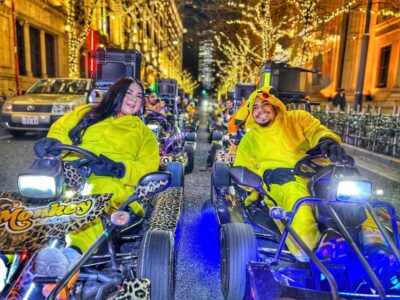
Asakusa, Skytree & Akhihabara Go-Kart City Experience
Read our review →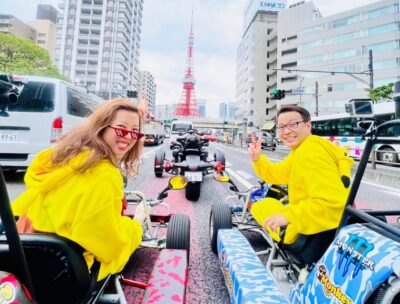
Premium Go-Kart Tour with Tower & Shibuya Crossing
Read our review →Browse the lists this tour appears in