
Reviewed · MT FUJI AREA TOURS
Mount Fuji Full Day Sightseeing Tour from Tokyo
Mount Fuji is the star, but the clever part of this day trip is how many different faces of the mountain you see. From Lake Kawaguchi and flower-filled Oishi Park to the red pagoda at Arakurayama Sengen Park, the route gives you a full album of Fuji views without forcing you to plan several train connections.
I like the eight-stop variety and the fact that an air-conditioned coach handles the long journey from Tokyo. I also like the practical help good guides provide. Keiko, Winnie, Betty, Joey, Belle, Tim, and others are praised for photo tips, food advice, cultural background, and keeping the group moving.
The trade-off is the group size, which can reach 45 people. Some guides explain places clearly, while others may be harder to understand in English, so this tour works best if you value easy transport and many views more than a slow, deeply detailed lesson at every stop.
In This Review
- Key points at a glance
- Why this Tokyo to Fuji day trip works
- Lake Kawaguchi and Oishi Park
- A red torii, flowers, and a very famous convenience store
- Oshino Hakkai’s eight clear springs
- Arakurayama Sengen Park and the Chureito Pagoda climb
- Arakura Fuji Sengen Shrine
- The Shimoyoshida street view
- The guide can shape the whole day
- Ten hours on the road, with trade-offs
- Who gets the best value from $67
- Booking details that matter
- Should you book this Mount Fuji tour?
- FAQ
- How long does the Mount Fuji tour from Tokyo last?
- How many Mount Fuji-area stops are included?
- Is transportation included?
- Is lunch included?
- How much does the tour cost?
- How large can the group be?
- Are there multiple pickup points in Tokyo?
- What is the cancellation policy?
Key points at a glance
- Eight Fuji-area stops: See lakeside viewpoints, shrines, springs, a pagoda, a shopping street, and the famous Lawson photo location.
- A full 10-hour day: Expect a long outing from Tokyo, with much of the day spent on the road between central Tokyo and Yamanashi.
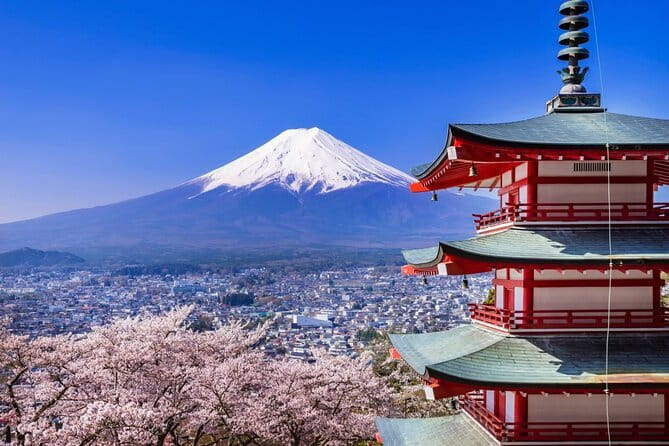
- Best photo range: Chureito Pagoda, Lake Kawaguchi, Oishi Park, and Shimoyoshida Honcho Street each frame Fuji in a different way.
- Helpful guides can make the difference: Guides including Keiko, Winnie, Betty, Joey, Belle, and Tim are praised for clear directions, local tips, and friendly care.
- Lunch costs extra: Food is not included, though guides may suggest restaurants and local specialties.
- Good value at $67: The price covers the coach, taxes, and fees, making it useful for a first Fuji visit from Tokyo.
Why this Tokyo to Fuji day trip works
Getting from Tokyo to the Mount Fuji area is not hard in theory, but it takes planning. You need to choose between trains, buses, local connections, and taxi rides, then work out how to link scattered viewpoints around the lakes and towns. This tour removes that puzzle.
For $67 per person, you get an air-conditioned vehicle, transportation for roughly 10 hours, and all listed fees and taxes. That is a fair price for a day that covers a wide area. You are paying less for a slow, specialist tour and more for a practical way to reach several places that would be awkward to connect independently.
The outing begins at one of two central Tokyo pickup points. The exact meeting point matters, so check it carefully when booking. Confirmation is provided at booking, and the mobile ticket makes the experience easy to keep on your phone.
The coach may be full, with up to 45 people. That means you should expect set meeting times, regular head counts, and no freedom to linger for an extra hour at your favorite viewpoint. In exchange, you get a route that would be tiring to organize alone.
More Mt Fuji days from Tokyo:
- Mt Fuji and Hakone 1-Day Bus Tour Return by Bullet Train
★ 5.0 · 26,383 reviews - Mt Fuji & Hakone Cruise, Drum Show Bullet Train 1 Day from Tokyo
★ 4.0 · 7,413 reviews - Tokyo Mt Fuji 5th St & Hakone Cruise Bus Tour w/Bullet Train
★ 4.4 · 5,024 reviews
Lake Kawaguchi and Oishi Park
Lake Kawaguchi is the natural opening act. It is one of the Fuji Five Lakes, with a shoreline that offers several angles toward the mountain. The listed stop is 20 minutes, so use the time well: check the lake, look for a clear Fuji reflection, and take your main photos before the group moves on.
Fuji is not guaranteed to show itself. Clear weather can transform the day, as the mountain may appear above the lake in a sharp, almost graphic shape. Cloud cover can hide much of it, so the tour’s many viewpoints are useful. If Fuji disappears from one angle, another stop may offer a better chance.
Oishi Park follows with a 25-minute visit. Its long flower path changes with the seasons, giving you more than a standard lake photograph. The flowers add color in the foreground, while Fuji provides the backdrop. This is a particularly good stop for wide photos rather than close mountain shots.
The short timing keeps the day moving, but it also limits wandering. You will have time for photos and a quick look around, not a relaxed park visit. Keep your camera ready and avoid spending the first few minutes searching for facilities or snacks.
A red torii, flowers, and a very famous convenience store
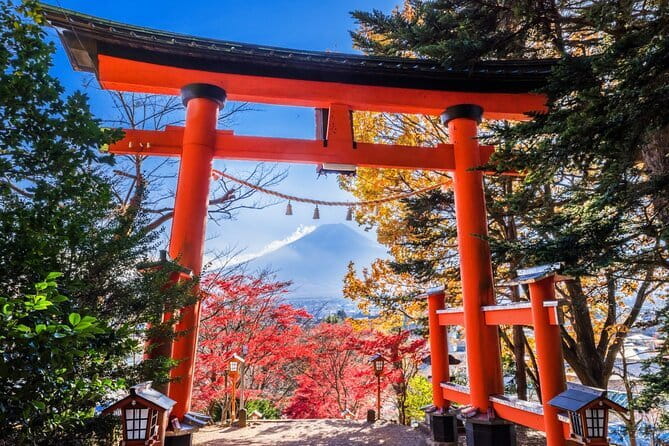
The Kawaguchiko Natural Living Center offers a quick photo stop, listed at 10 minutes. From the second floor, you can frame a red torii gate with Mount Fuji. It is a small detail, but that combination of shrine architecture and mountain gives the image a distinctly Japanese feel.
Next comes Lawson Fujikawaguchiko Town Hall, a 15-minute stop. The blue and white convenience-store frontage, with Fuji behind it, has become one of the area’s most recognizable social-media photos. It is an amusing contrast: a very ordinary Japanese shop placed beneath one of the world’s most famous mountains.
This stop is also where the tour’s photo-first style becomes clear. You are not visiting a grand monument. You are collecting a particular composition that has become popular online. That can feel fun and modern, though some people may find a convenience store less meaningful than another shrine or nature stop.
Bring patience and follow local instructions here. These photo locations can be busy, and the road area is not a place to drift away from the group. The point is a quick, memorable image, not a long visit.
Oshino Hakkai’s eight clear springs
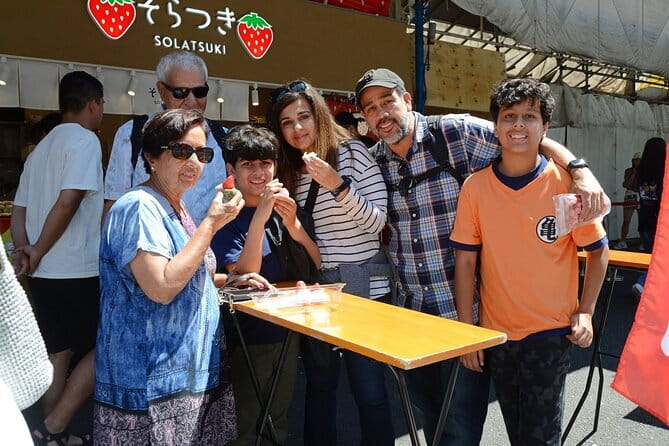
Oshino Hakkai receives about an hour, making it one of the more substantial stops. The village is known for eight springs fed by snowmelt from Mount Fuji. The water is clear, and the site is recognized as one of Japan’s famous waters and part of the Fuji area’s World Heritage designation.
This is a good place to slow down after several brief photo stops. You can look at the springs, sample the water, browse shops, and find something to eat. Local snacks and small souvenirs are part of the appeal, and several guides are praised for pointing out good food and shopping choices.
Lunch is not included in the tour price. Some guides recommend a restaurant, and the food suggestions receive repeated praise, but you should budget separately and understand that the meal is an extra expense. The one-hour stop gives you a better chance to eat without turning lunch into a rushed bus snack.
Oshino Hakkai can feel more commercial than the lake and parks. That is not necessarily a flaw. It gives you a chance to taste local food and buy small gifts, but visitors seeking quiet nature should focus on the springs and surrounding views rather than expecting an untouched village.
A few more Tokyo bookings worth comparing
- From Tokyo: Mount Fuji Full-Day Sightseeing Trip
★ 4.5 · 4,970 reviews - Mount Fuji Full-Day Private Tour from Tokyo (Customizable)
★ 4.9 · 1,470 reviews - Tokyo Private Full-Day Tour by Car or Van
★ 5.0 · 684 reviews - From Tokyo: Must-Visit Mount Fuji Highlight Full-Day Tour
★ 4.7 · 532 reviews
Arakurayama Sengen Park and the Chureito Pagoda climb
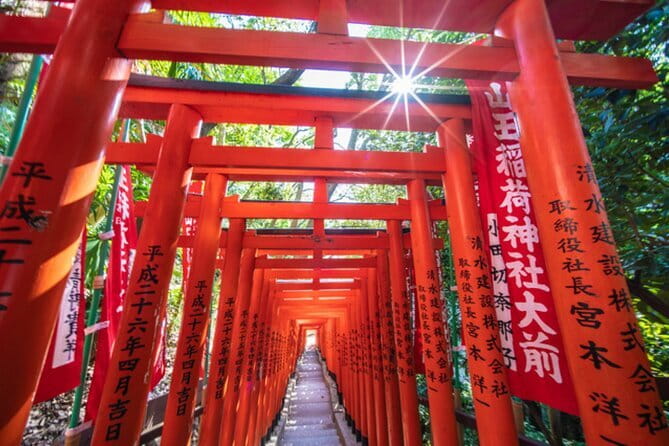
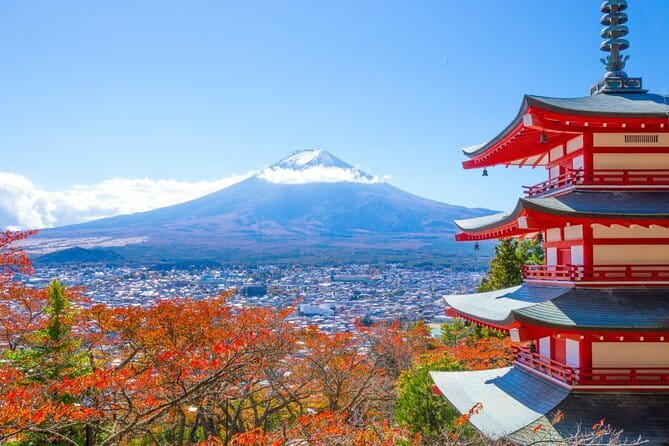
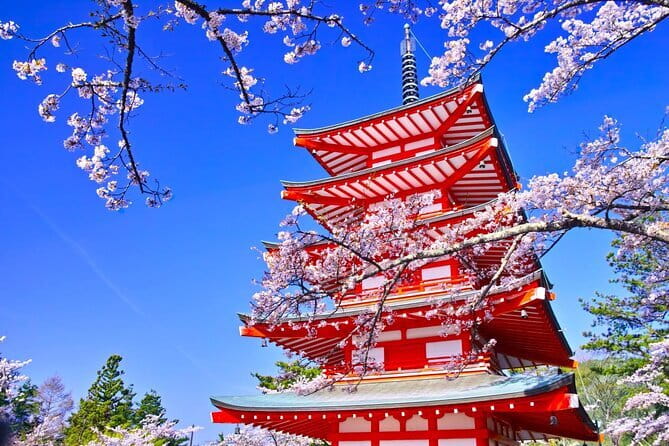
Arakurayama Sengen Park is the signature stop for the classic Fuji photograph. The five-story Chureito Pagoda sits above Fujiyoshida, with Mount Fuji often rising behind it. The view is especially well known for combining pagoda, mountain, and town in one frame.
You get about an hour here, but part of that time goes into climbing roughly 400 steps to the pagoda viewpoint. Wear good shoes. This is the clearest physical demand of the tour, and it can feel harder if the stop comes after lunch or after a full morning on the road.
The reward is not only the famous photo. From above, you gain a broad view over Fujiyoshida and a sense of how the town sits beneath Fuji. The pagoda itself is a postwar structure, while the wider site connects with the area’s long tradition of worship around the mountain.
This stop requires sensible expectations. You may need to share the viewpoint, wait for a clear photo position, and keep track of the return time. If stairs are difficult for you, ask about the meeting arrangements when booking. The tour notes that most people can participate, but it also asks you to mention a stroller or large luggage in advance.
Arakura Fuji Sengen Shrine
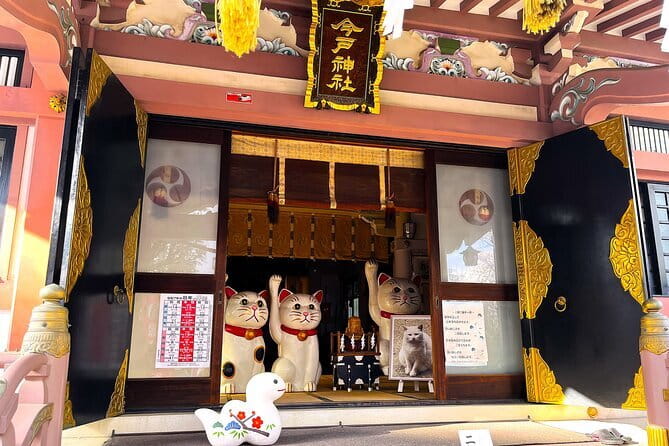
The shrine visit is shorter, around 15 minutes, but it adds meaning to the day. Arakura Fuji Sengen Shrine was built in 705 and has served as a place to pray for well-being and family happiness. Its connection to Mount Fuji is not just decorative. The mountain has long carried religious importance in Japan.
The shrine’s story includes a major eruption in 807, when people were frightened by Mount Fuji’s activity and the shrine held a ceremony. That background helps explain why shrines in the Fuji area are more than scenic backdrops.
Fifteen minutes is enough for a respectful look and a few photos, but not for a long visit. You will get more from this stop if you pause at the entrance, notice the religious setting, and let the pagoda stop provide the larger panoramic view.
A strong guide can add a lot here. Guides such as Winnie and Betty are praised for explaining the significance of sites instead of simply pointing out the next meeting time. That kind of interpretation is valuable because the itinerary moves quickly.
The Shimoyoshida street view
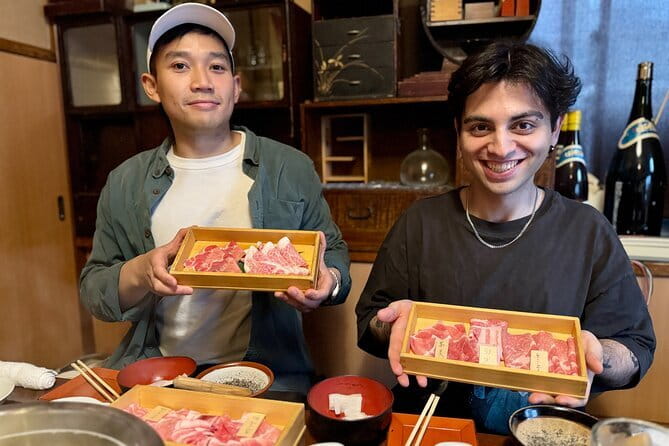
The final listed stop is Fujiyoshida Retro Shopping Street, at Shimoyoshida Honcho Street. The photo focus here is the Hikawa Clock Shop and the stairway that appears to lead straight toward Mount Fuji.
It is a good change of mood after the parks and religious sites. You get a glimpse of a local shopping street, older storefronts, and the everyday town below the mountain. The view feels less arranged than the pagoda photo, even though it has become popular in its own right.
The stop is listed at 20 minutes, so expect a quick walk, a few pictures, and perhaps a look at nearby shops. Pay attention to traffic and stay aware of the group. Streets are shared spaces, not photo studios.
The guide can shape the whole day
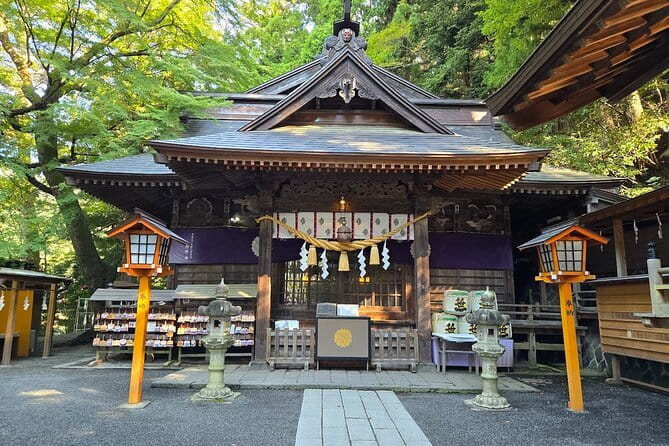
The route is fixed, but the human side of the tour varies. Several guides receive strong praise for being friendly, patient, and useful with small details. Keiko is singled out for local knowledge and calm organization. Winnie and Betty are praised for photo locations, food suggestions, cultural notes, and helping people find places. Joey and Belle are also noted for keeping the day smooth and offering practical advice.
Tim is praised for communicating through WhatsApp before and during the outing, giving useful information, and helping people after the tour with nearby food and points of interest. Those touches matter on a long day when many people are trying to keep track of time and directions.
There is an important limitation. Some English explanations may be difficult to follow. One person felt the guide mainly gave departure times and lacked enough background, while another found the guide kind and helpful but occasionally hard to understand. The operator says it is working on guide training, but you should still book this mainly for transport and sightseeing, not for a guaranteed expert lecture.
Ten hours on the road, with trade-offs
The tour lasts about 10 hours. That includes the journey from Tokyo and the return, plus stops around Lake Kawaguchi, Oshino, and Fujiyoshida. The bus ride can feel long, especially if traffic slows the return to Tokyo.
Still, the long ride is the price of seeing Fuji from several sides in one day. A self-guided trip might give you more time at one or two places, but linking all eight stops would require careful timing and several transport decisions.
The air conditioning is welcome, especially in warm months. Bring water, though remember that the vehicle rules and group instructions apply. One complaint concerned open food and drinks on a full bus, so it is wise to follow the guide’s directions and keep the coach tidy.
To make the day easier, I would bring:
- Comfortable shoes for the pagoda steps and street walking
- A phone charger or power bank for repeated photos
- Cash or a payment method for lunch and personal purchases
- A light layer, since mountain-area weather can differ from Tokyo
- A note of the vehicle and meeting instructions
These are practical choices, not extra luxuries. With eight stops and fixed return times, losing your phone battery or wearing poor shoes can spoil an otherwise good day.
Who gets the best value from $67
I would choose this tour if you have limited time in Tokyo, want to see Mount Fuji without an overnight stay, or do not want to manage regional transport. First-time visitors get a useful overview, and solo visitors benefit from having a clear structure and a guide nearby.
It is also a strong fit for photographers who want several compositions. You get lake, flowers, torii gate, convenience store, springs, pagoda, shrine, and town views in one day. The variety makes the tour worthwhile even if one viewpoint is cloudy.
I would think twice if you prefer long visits, quiet trails, or a small private group. The coach may carry up to 45 people, and most stops are short. You will be watching the clock, especially at the 10-, 15-, and 20-minute stops.
The rating is 4.7 from 243 ratings, with 93 percent recommending the experience. That is a strong result, but it should be read alongside the recurring qualification about guide communication. The best days seem to depend on two things: clear weather and a guide who can explain the area well.
Booking details that matter
The tour includes the air-conditioned vehicle and all fees and taxes. Lunch and personal spending are not included. If you book separately from relatives or friends, tell the operator at least one day ahead so you have a better chance of being assigned to the same vehicle.
Most people can take part, and the tour is near public transportation. Strollers and large luggage need advance notice. The mobile ticket is convenient, but you should still save the pickup details where you can find them quickly.
Free cancellation is available up to 24 hours before the start time for a full refund. Cancellations or changes made within 24 hours are not accepted for a refund, and the cutoff follows local time.
Should you book this Mount Fuji tour?
Book it if your main goal is to see Mount Fuji from many angles in one day, with transport and timing handled for you. At $67, it is good value for a broad sightseeing route, especially when you consider the distance from Tokyo and the number of separate places included.
Do not book it expecting a leisurely mountain retreat or a guaranteed English-language history talk at every stop. The group can be large, the bus ride is long, and Fuji itself depends on the weather.
For a first visit, I think the convenience wins. Choose a clear-weather date if your schedule allows, wear sturdy shoes, keep lunch money handy, and treat the guide as a key part of the experience. With those expectations, this is an efficient and photo-filled break from Tokyo.
FAQ
How long does the Mount Fuji tour from Tokyo last?
The tour lasts approximately 10 hours, including transportation from Tokyo, sightseeing stops, and the return journey.
How many Mount Fuji-area stops are included?
The advertised route includes eight stops: Lake Kawaguchi, Oishi Park, Kawaguchiko Natural Living Center, Lawson Fujikawaguchiko Town Hall, Oshino Hakkai, Arakurayama Sengen Park, Arakura Fuji Sengen Shrine, and Fujiyoshida Retro Shopping Street.
Is transportation included?
Yes. Transportation is provided in an air-conditioned vehicle, and all fees and taxes are included.
Is lunch included?
No. Lunch is not included, and personal expenses are also separate. Guides may recommend places to eat during the day.
How much does the tour cost?
The listed price is $67 per person.
How large can the group be?
The tour can have a maximum of 45 travelers.
Are there multiple pickup points in Tokyo?
Yes. You can choose from two central Tokyo pickup points.
What is the cancellation policy?
You can cancel at least 24 hours before the experience start time for a full refund. Cancellations or changes made less than 24 hours before the start time are not accepted for a refund.
New on our Tokyo list
- From Tokyo: Mount Fuji & Hakone Full Day Private Tour★ 4.9 · 25 reviews
- Tokyo Spectacular View Day-Cruise in 90 Minutes★ 5.0 · 25 reviews
- Real Tokyo Runner Club : Daikoku Car Meet Night Tour with JDM Car★ 5.0 · 25 reviews
- 2.5 Hour-Guided Cycle Tour in the Central Tokyo★ 5.0 · 25 reviews
- Ramen Making from Scratch +Akihabara Tour –Cooking Class★ 5.0 · 25 reviews
- [Self-Drive] Tokyo & Daikoku Custom Car Driving Tour★ 4.9 · 25 reviews
- Tokyo: 2-Hour Night Bike Tour of the City’s Hidden Gems★ 4.9 · 25 reviews
- Samurai themed Entertainment show in Shinjuku★ 4.5 · 25 reviews
Mt Fuji Area Tours, compared.
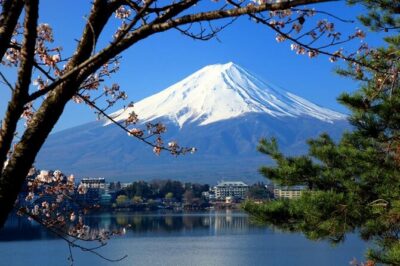
Mt Fuji and Hakone 1-Day Bus Tour Return by Bullet Train
Read our review →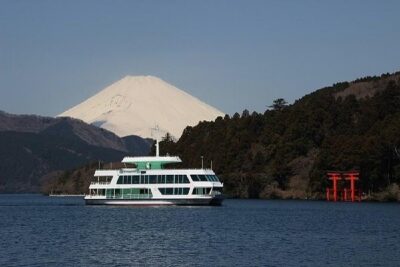
Mt Fuji & Hakone Cruise, Drum Show Bullet Train 1 Day from Tokyo
Read our review →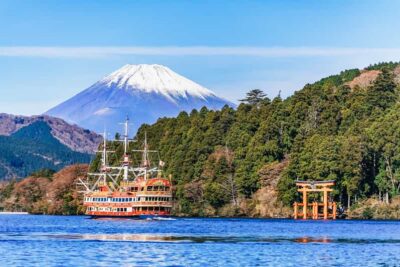
Tokyo Mt Fuji 5th St & Hakone Cruise Bus Tour w/Bullet Train
Read our review →
Mt. Fuji Tour, Hakone Ropeway, Owakudani, Lake Ashi
Read our review →
Mt.Fuji,Kawaguchiko Oishi Park,Arakurayama Sengen Park
Read our review →
Mt. Fuji 5th Station & Hakone Cruise 1-Day Bus Tour
Read our review →
Mt Fuji Top 5 Spots Day Tour: Arakurayama Park,Oshino Hakkai
Read our review →Browse the lists this tour appears in