
Reviewed · TOKYO GO-KART EXPERIENCES
Official Japan Go-Kart Through Tokyo Bay / Ginza (IDP Required)
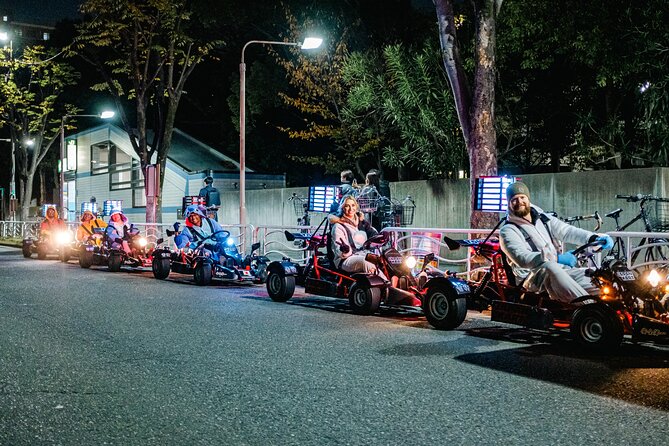
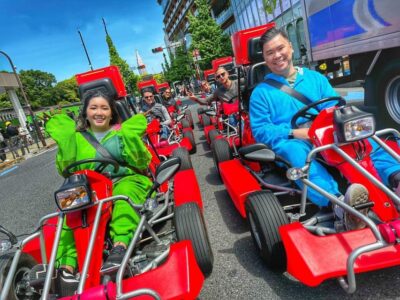
Tokyo sightseeing gets wonderfully odd when you trade a train seat for a small go-kart and follow a guide van through Ginza, Asakusa, and the Tokyo Bay area. You are not racing. You are part of a moving road group, seeing the city from street level while drivers, pedestrians, and shopkeepers often wave at the costumed procession.
I like the careful start, with a proper road-rules briefing and staff vehicles at the front and back. I also like the range of neighborhoods covered in roughly two hours, from sleek Toyosu to old Asakusa and neon-heavy Akihabara. The main drawback is serious: you must bring the correct driving documents, and the operator does not refund you if you arrive without them.
In This Review
- Key things to know before you book
- What this Tokyo go-kart tour really feels like
- Why the safety setup makes a difference
- Toyosu brings in the waterfront
- Ginza supplies the big-city theater
- Nihonbashi connects old Tokyo and new Tokyo
- Akihabara turns the route electric
- Ueno offers a calmer cultural pause
- Asakusa gives you Tokyo’s old face
- Tokyo Skytree is the route’s visual marker
- The photo stop breaks up the driving
- The strict driving documents are the key issue
- Price, timing, and the real value
- Who should book this ride?
- Should you book the JapanKart tour?
- FAQ
- Do I need an International Driving Permit?
- Are 1968 Vienna Convention permits accepted?
- Are there exceptions to the IDP requirement?
- Where does the tour start and finish?
- How early should I arrive?
- What clothing is not allowed?
- What happens if bad weather cancels the tour?
Key things to know before you book
- This is a real road tour: You drive on Tokyo’s public streets, not on a closed kart track.
- The document rules are strict: You need an accepted 1949 Geneva Convention International Driving Permit, your home-country driving license, and your passport, with specific exceptions for several countries.
- The lead and follow vans matter: They help keep the group together and make unfamiliar left-side traffic easier to manage.
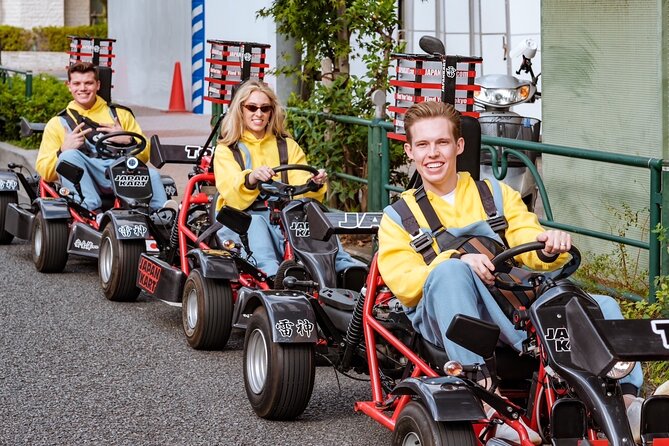
- Costumes and photos are included: Pick a supplied costume, then expect staff to take photos during the outing.
- The route covers East Tokyo well: Toyosu, Ginza, Nihonbashi, Akihabara, Ueno, Asakusa, and Tokyo Skytree are all part of the planned route.
- Arrive early and dress sensibly: Get there 15 minutes ahead. Long skirts, high heels, and sandals are not allowed.
What this Tokyo go-kart tour really feels like
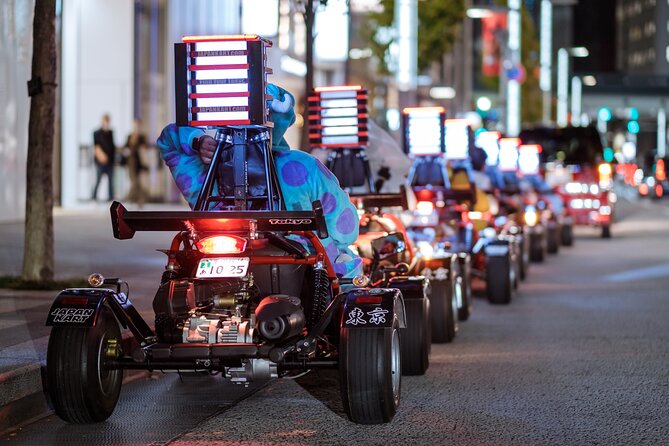
This is best understood as a moving city outing with go-karts, not as a racing session. You sit low, feel the wind, and travel in a small group behind a guide vehicle. The fun comes from being in the middle of Tokyo’s normal traffic and seeing familiar districts from an unusual angle.
The karts are described as easy to handle once the briefing is complete, but you still need to drive responsibly. You follow Japanese traffic rules, watch signals, keep your position, and stay with the group. A van leads the way and another follows behind, which gives the outing a managed feel even when the group reaches busy intersections.
The staff briefing covers kart operation and road rules, including the challenge of driving on the left. If that is new to you, pay close attention. The guide van helps, but it does not remove the need for good judgment.
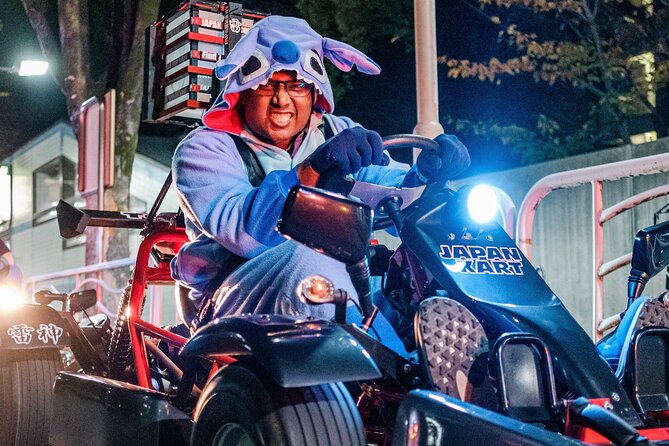
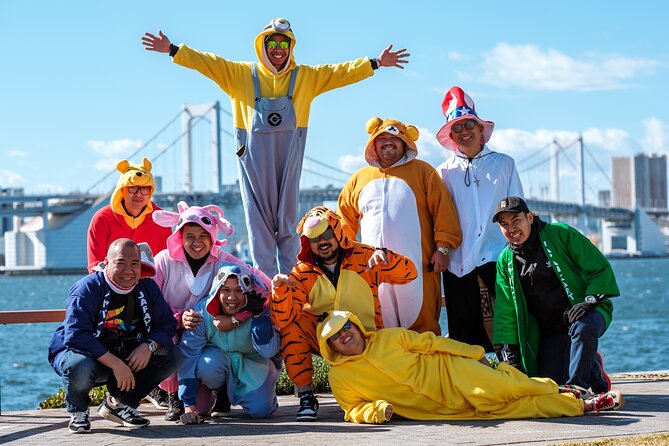
The mood is playful. Costumes are supplied, and you can dress as a favorite character or choose something colorful for the photos. People along the route may smile, wave, or take pictures. That public attention is part of the charm, though anyone who prefers quiet sightseeing may find it a little much.
More street-kart slots:
- Flagship 2-Hours Official Street Go-Kart Tour – Tokyo Bay Shop
★ 5.0 · 4,974 reviews - Official Street Go-Kart in Shibuya
★ 5.0 · 3,435 reviews - Official Street Go-Kart Tour – Akihabara
★ 5.0 · 1,578 reviews
Why the safety setup makes a difference
The strongest practical feature is the escort system. The lead van sets the route and pace, while the rear van helps protect the group from surrounding traffic and keeps slower drivers from being left behind.
This setup also helps at traffic lights. A large group can split briefly when a signal changes, so you may need to wait for the rest of the karts to regroup. That is normal for a road tour, not a sign that the outing is poorly managed.
The group limit is 20 people. That is large enough to create the cheerful parade effect, but it can also mean a slower pace at junctions. You should expect a guided procession, not a free-form ride where you choose your own speed or route.
The operator asks you to watch an instructional video sent with your confirmation. Do that before arrival. It saves time and gives you a better idea of what you are signing up for.
Toyosu brings in the waterfront
Toyosu is one of the newer parts of the route, with broad roads, modern buildings, and a waterfront setting. It is also home to Tokyo’s famous fish market, a useful reminder that the city’s food culture depends on both old traditions and modern facilities.
The listed stop here is about 10 minutes and has no admission charge. Do not expect a market visit or a long food stop during the kart tour. You are seeing Toyosu as part of a road route, so the value is the contrast between the open waterfront district and the tighter streets you reach later.
This is a good early change of pace. The road space can feel more comfortable than central Ginza, giving you time to settle into the kart before the city becomes more intense.
Ginza supplies the big-city theater
Ginza is the most glamorous part of the route. Designer shops, department stores, polished facades, and bright signs give you the Tokyo many first-time visitors picture before they arrive.
From a go-kart, Ginza becomes less formal and more entertaining. You are close to the pavement, exposed to the air, and moving through the same streets as taxis, buses, and ordinary commuters. The contrast between luxury storefronts and a line of costumed karts is exactly what makes this section memorable.
The trade-off is traffic. Your group may stop often, and the guide must keep the pace safe. Treat the ride as sightseeing with movement, not a chance to cover Ginza quickly.
A few more Tokyo bookings worth comparing
- Mt Fuji and Hakone 1-Day Bus Tour Return by Bullet Train
★ 5.0 · 26,383 reviews - 1-Day Tokyo Bus Tour
★ 5.0 · 14,250 reviews - Tokyo: TOKYO SKYTREE® Admission ticket
★ 4.5 · 11,192 reviews - Tokyo: teamLab Planets TOKYO Digital Art Museum Entry Ticket
★ 4.6 · 9,779 reviews
Nihonbashi connects old Tokyo and new Tokyo
Nihonbashi Bridge marks an important point in Tokyo’s road network. It was once the starting point for Japan’s major roads, and the bridge remains a useful link between the city’s past and its tall modern office buildings.
You will not have a long walking visit here. Instead, you pass through the district by road, taking in the bridge and the surrounding streets from the kart. That makes this stop valuable for orientation. Tokyo can feel like a collection of separate centers, and Nihonbashi helps you see how the old commercial core fits into the modern city.
This part also rewards passengers who look up and around rather than focusing only on the kart ahead. Since there is no ongoing narration during the drive, you may want to read about the districts before setting out.
Akihabara turns the route electric
Akihabara is Tokyo’s famous center for anime, games, electronics, arcades, and character goods. Its tall signs and themed shops create a sharp visual change from the restrained streets of Nihonbashi and the luxury mood of Ginza.
The kart gives you a fast street-level glimpse rather than time to shop. You will not be stopping to browse arcades or collect souvenirs, so think of Akihabara as a visual highlight. If you want to explore its stores, return later by train.
This section is especially good for costume photos. The setting and the supplied outfits fit naturally together, though you should follow staff instructions about when and where photography is safe.
Ueno offers a calmer cultural pause
Ueno brings parks, museums, temples, and a more relaxed city rhythm. Ueno Park is known for cherry blossoms in spring, and the district also includes major cultural attractions and a zoo.
Again, this is a drive through the area, not a museum or park visit. The benefit is variety. In one outing, you move from commercial streets and electronics shops to a district with more greenery and cultural institutions.
If your main goal is a detailed visit to Ueno Park, this tour will not replace it. If your goal is to understand how quickly Tokyo’s character changes from one neighborhood to the next, the route does that well.
Asakusa gives you Tokyo’s old face
Asakusa is one of the most rewarding sections for first-time visitors. Senso-ji Temple, Nakamise Street, traditional shops, and street food give the district a very different character from Ginza or Akihabara.
The kart passes near this historic center, so you get the atmosphere without leaving the group. You may catch views of temple architecture and the busy streets around it, but do not expect enough free time to walk Nakamise Street or enter Senso-ji.
Asakusa is also where the tour’s unusual format makes the most sense. A traditional temple district and a line of small karts are an amusing pairing. You get a snapshot of old Tokyo while still taking part in something distinctly modern and tourist-friendly.
Tokyo Skytree is the route’s visual marker
The ride goes near Tokyo Skytree, which reaches 634 meters and is easy to recognize from many parts of the city. From the road, you get the scale of the tower and the surrounding urban spread rather than the full observation-deck visit.
A nearby photo opportunity may be included during the route. The tour also includes photos, so you can expect the staff to record parts of the outing. Bring your own phone if you want personal pictures, but do not assume you can safely film continuously while driving. Your attention belongs on the road.
The Skytree section works well near the end because it gives the route a clear landmark. You are not simply driving without a sense of place. You are moving through a chain of recognizable Tokyo districts.
The photo stop breaks up the driving
A rest and photo break is built into the outing. One reported stop offers a view near the Rainbow Bridge, giving you time to step away from the kart, stretch, and take pictures.
That pause matters more than it may sound. Two hours on a small open kart can be tiring, especially if you are unused to the posture or the weather. Use the stop to check your belongings, drink water, and reset your attention before rejoining traffic.
The tour includes gas, karts, costumes, and photos in the price. That keeps the basic cost predictable. You should still treat the outing as a physical activity: wear practical clothes, skip sandals and high heels, and avoid long skirts.
The strict driving documents are the key issue
Do not book this on the assumption that a normal license is enough. You must present:
- Your valid driving license from your home country
- Your passport
- An International Driving Permit issued under the 1949 Geneva Convention
The IDP must be an official booklet, not a paper or A4 printout. It must come from an approved issuer in your country. Examples given are AAA or AATA in the United States, AAA in Australia, AA or RAC in the United Kingdom, and CAA in Canada.
Japan does not accept International Driving Permits issued under the 1968 Vienna Convention. This is the detail that can cause real trouble. Check the convention and issuing organization before you pay.
There are exceptions for licenses from Switzerland, Germany, France, Taiwan, Belgium, and Monaco. In those cases, you need your original driving license and a Japanese translation from the Japan Automobile Federation, or JAF. You still need to bring the required documents and should confirm the current process before booking.
The responsibility is yours. If your papers are wrong, expired, missing, or in the wrong format, you can be denied participation without a refund. Several serious complaints arose from this issue, so consider document checking the first step of planning, not a small footnote.
Price, timing, and the real value
The listed price is $85.89 per person for about two and a half hours. That is not cheap compared with a normal neighborhood walk or a short train ride, but the price includes the kart, fuel, costume, staff escort, safety briefing, and photos.
I think the value is strongest if you want an activity, not just information. You cover a lot of East Tokyo, but you do not get a guide explaining every building or a chance to stop and explore each district. The tour sells the feeling of driving through Tokyo, with sightseeing woven into it.
Arrive 15 minutes early at JapanKart, 2-chome-18-15 Azumabashi, Sumida City. The operator can wait no more than 10 minutes after the reserved time, so leave extra time for the walk from public transport and for finding the building.
The tour ends back at the same meeting point. Alcohol before the ride is prohibited. That rule is sensible and non-negotiable because you are operating a vehicle on public roads.
Free cancellation is available up to 24 hours before the start time. Inside that window, changes and refunds are not accepted. Bad weather can cancel the activity, in which case you can choose a new date if available or receive a full refund.
Who should book this ride?
I would choose this for an adventurous adult, a couple wanting a memorable shared activity, or a family with older children who meet the driving requirements. One participant described it as enjoyable even at age 70, but age alone is not the deciding factor. You need to be comfortable operating a kart in traffic and following instructions.
It suits people who enjoy costumes, public attention, and unusual ways to see a city. It is less suitable if you want quiet sightseeing, detailed historical commentary, extensive photo stops, or time inside the neighborhoods.
You also need to be comfortable driving on the left. The staff gives guidance, and the lead and follow vans provide useful support, but this remains a driving activity. If city traffic makes you anxious, a bus tour or walking tour may be a better fit.
Should you book the JapanKart tour?
Book it if you have the correct IDP or JAF paperwork, arrive early, and want the thrill of driving through real Tokyo streets. The route offers a fine mix of waterfront roads, luxury Ginza, old Asakusa, Akihabara signs, Ueno culture, and the Tokyo Skytree area.
Skip it if you have not checked your documents, dislike driving in traffic, or expect a narrated tour with long stops. The biggest risk is not the kart itself. It is arriving at the meeting point with the wrong permit and losing your payment.
For the right person, this is one of Tokyo’s more memorable ways to see the city. Keep your eyes on the road, let the guide set the pace, and enjoy the strange pleasure of becoming a small, costumed part of Tokyo’s daily street scene.
FAQ
Do I need an International Driving Permit?
Yes. Most participants must bring an International Driving Permit issued under the 1949 Geneva Convention, their driving license from their country of origin, and their passport.
Are 1968 Vienna Convention permits accepted?
No. International Driving Permits issued under the 1968 Vienna Convention are not accepted in Japan for this activity.
Are there exceptions to the IDP requirement?
Yes. Participants with licenses from Switzerland, Germany, France, Taiwan, Belgium, or Monaco need their own driving license and a Japanese translation issued by the Japan Automobile Federation, or JAF.
Where does the tour start and finish?
It starts and ends at JapanKart, 2-chome-18-15 Azumabashi, Sumida City, Tokyo 130-0001, Japan.
How early should I arrive?
Arrive 15 minutes before your booked time. The operator can wait a maximum of 10 minutes after the reserved start time.
What clothing is not allowed?
Do not wear long skirts, high heels, or sandals. Choose clothing and shoes that allow you to operate the kart safely.
What happens if bad weather cancels the tour?
You can receive a full refund or reschedule for another date, depending on availability.
New on our Tokyo list
- From Tokyo: Mount Fuji & Hakone Full Day Private Tour★ 4.9 · 25 reviews
- Tokyo Spectacular View Day-Cruise in 90 Minutes★ 5.0 · 25 reviews
- Real Tokyo Runner Club : Daikoku Car Meet Night Tour with JDM Car★ 5.0 · 25 reviews
- 2.5 Hour-Guided Cycle Tour in the Central Tokyo★ 5.0 · 25 reviews
- Ramen Making from Scratch +Akihabara Tour –Cooking Class★ 5.0 · 25 reviews
- [Self-Drive] Tokyo & Daikoku Custom Car Driving Tour★ 4.9 · 25 reviews
- Tokyo: 2-Hour Night Bike Tour of the City’s Hidden Gems★ 4.9 · 25 reviews
- Samurai themed Entertainment show in Shinjuku★ 4.5 · 25 reviews
Tokyo Go-Kart Experiences, compared.
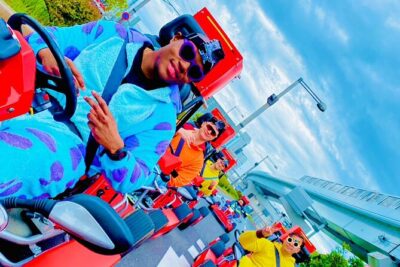
Flagship 2-Hours Official Street Go-Kart Tour – Tokyo Bay Shop
Read our review →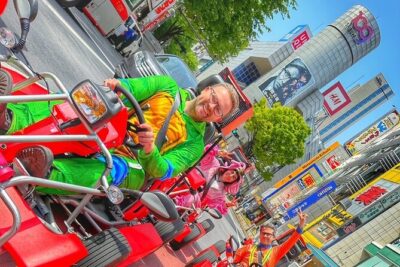
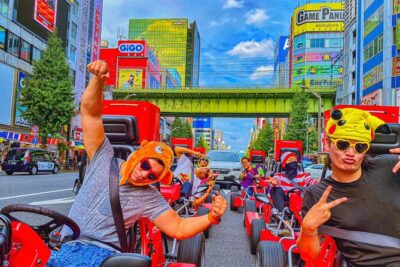
Tokyo Go Kart: Asakusa, Skytree, and Akihabara **IDP MUST**
Read our review →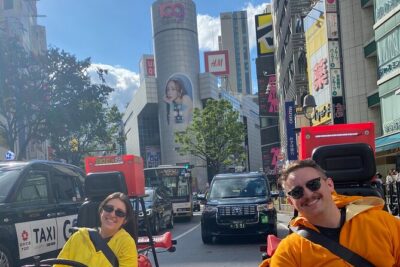
Shibuya Official Street Go-Kart in Shibuya Annex
Read our review →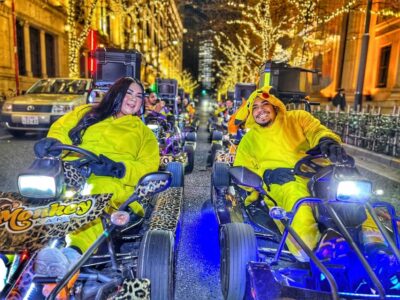
Asakusa, Skytree & Akhihabara Go-Kart City Experience
Read our review →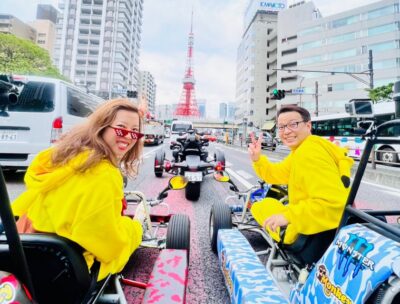
Premium Go-Kart Tour with Tower & Shibuya Crossing
Read our review →Browse the lists this tour appears in