
Reviewed · SUMO EXPERIENCES
Tokyo Shinjuku Sumo Show & Experience with Photo
The best part of this 90-minute Shinjuku show is the close look at sumo beyond the bout itself. You see salt throwing, ring stomping, and other pre-match rituals, then watch two professional wrestlers demonstrate the sport with plenty of humor and audience interaction. A bilingual MC keeps the rules and traditions clear.
I like the mix of real athletic skill and easygoing comedy. I also like the chance to step onto the dohyō, ask questions, and take photos with the wrestlers instead of sitting far away from the action. The main consideration is simple: this is a cultural demonstration and audience show, not a formal tournament with serious competitive matches.
In This Review
- Key points at a glance
- Why this Shinjuku sumo show works for first-time visitors
- Entering the traditional-style venue in Shinjuku
- The opening lesson: rituals, rules, and respect
- Watching two wrestlers show the sport’s real demands
- Stepping onto the dohyō for a friendly challenge
- Photos, questions, and a closer look at the athletes
- What the $79.59 price gets you
- Who should book this experience
- Booking and cancellation advice
- Should you book the Shinjuku Sumo Club experience?
- FAQ
- How long does the Tokyo Shinjuku Sumo Show last?
- Where does the sumo experience take place?
- How much does the experience cost?
- Is the show presented in English?
- Will I see real sumo wrestlers?
- Can I try sumo myself?
- Are photos with the wrestlers included?
- Can I cancel for a refund?
Key points at a glance
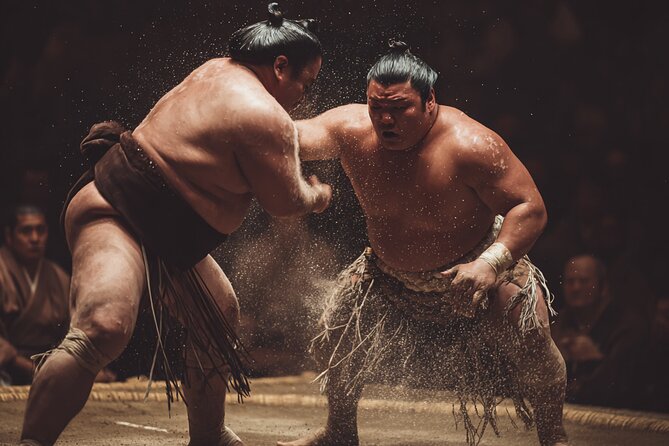
- Traditional sumo rituals explained: Learn why wrestlers throw salt, stomp their feet, and follow formal pre-match movements.
- Two professional wrestlers on the mat: Watch live demonstrations that show the speed, balance, force, and tactics behind the sport.
- Audience participation included: You may try a friendly sumo challenge, with children sometimes joining in inflatable sumo costumes.
- Bilingual hosting: MCs such as Shane and Manny have guided sessions with clear explanations, humor, and time for questions.
- Photo opportunity with the wrestlers: Bring your camera or phone for a close-up souvenir after the performances.
- Convenient Shinjuku setting: The venue is near public transportation and uses a mobile ticket.
Why this Shinjuku sumo show works for first-time visitors
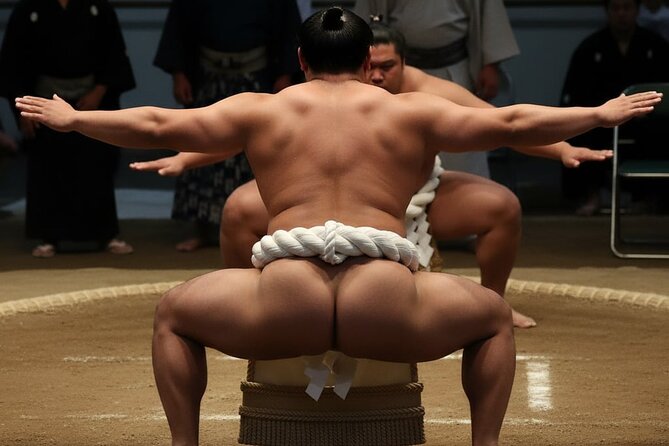
Sumo can look simple from a distance: two large athletes push, pull, and try to force one another out of a ring. The show helps you see the skill hidden inside those short clashes. You learn about the movements, rules, tactics, ceremonies, and place of sumo in Japanese culture before watching the wrestlers put those ideas into practice.
That structure matters. A formal tournament may offer the most serious competition, but it can be hard to follow if you do not know what to watch. Here, the bilingual MC explains what is happening in plain language, so you can understand why a small shift in balance or a quick foot movement may decide a match.
The mood is friendly rather than solemn. The athletes are serious about their craft, yet the performance includes jokes, playful exchanges, and chances for the audience to take part. That makes this a good choice for a family, a couple, or anyone who wants a manageable introduction to sumo without committing to a full tournament day.
The rating of 5 from 1,753 reviews and a 99 percent recommendation rate point to a very consistent strength: the show combines information with fun. Still, one four-star assessment makes a fair point. If you have already filled your Tokyo schedule with major cultural sights, you may find the event pleasant rather than essential. Its value depends on how much you want a guided, interactive look at sumo.
More sumo mornings:
- Tokyo: Sumo Show Experience with Chicken Hot Pot and a Photo
★ 4.8 · 6,678 reviews - Tokyo: Sumo Show and Dining Experience
★ 4.8 · 2,742 reviews - the SUMO show
★ 5.0 · 1,960 reviews
Entering the traditional-style venue in Shinjuku
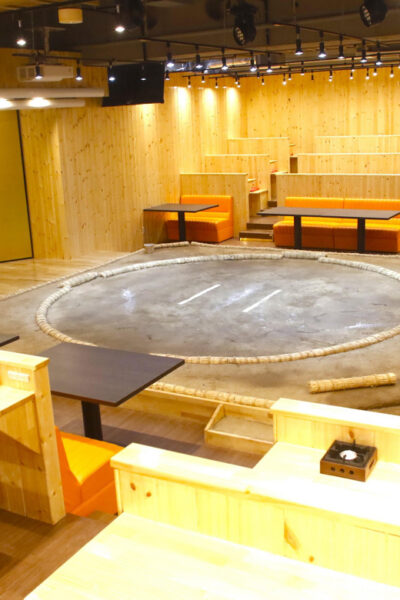
The experience takes place at Shinjuku Sumo Club, in a traditional-style setting in one of Tokyo’s most useful visitor districts. The location is near public transportation, and finding the venue from the train is described as straightforward.
Give yourself extra time to reach the entrance. Traffic in Tokyo can slow a taxi or car journey, and arriving just before the start can leave you rushed. One family arrived on time despite heavy traffic, but the practical lesson is to allow at least 30 minutes so a delayed ride or a wrong turn does not cost you the opening explanation.
The mobile ticket keeps the arrival process simple. Your booking confirmation is provided at the time of purchase, and the activity is listed as suitable for most people. The supplied information does not give a detailed seating plan, exact group size, or specific access details, so contact the operator if you need precise arrangements before booking.
Shinjuku also makes the show easy to pair with other plans. You can place it before dinner, after an afternoon in the district, or among other central Tokyo activities. Since the experience lasts about an hour and a half, it is long enough to feel substantial without taking over your day.
The opening lesson: rituals, rules, and respect
The first part sets up the sport. The MC explains the origins and customs of sumo, along with the basic rules and tactics that shape a bout. You hear why salt is thrown into the ring and why wrestlers stomp their feet before the match.
These actions are not random stage business. The explanations give them meaning and show how sumo links physical competition with ceremony. For a first-time visitor, this is one of the most useful parts because the pre-match routine can otherwise seem mysterious.
The host also helps you understand the dohyō, or sumo ring, and the importance of the wrestlers’ movements before contact. The format is designed for an international audience, so the bilingual commentary keeps the material accessible even if you know very little Japanese.
The tone depends partly on the MC leading your session. Shane and Manny are named by people who attended different performances, and both are praised for clear delivery, humor, and smooth audience interaction. Another host, Mr. So, is also singled out for his comic timing. Since the staff may vary, expect the same bilingual format but not necessarily the same presenter.
This teaching section gives the show its cultural value. You are not simply watching two strong people collide. You are learning how to read what happens before, during, and after the action.
Watching two wrestlers show the sport’s real demands
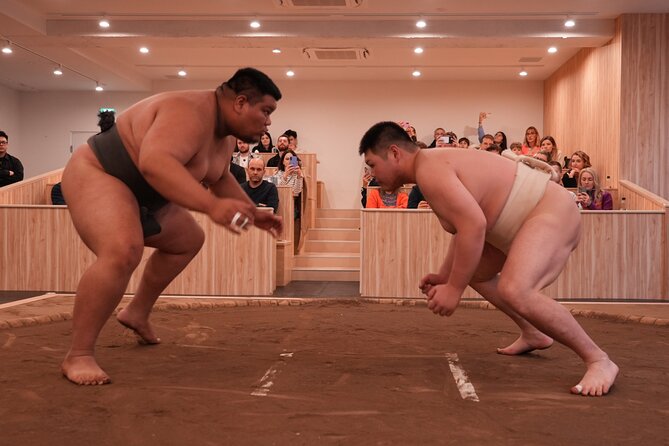
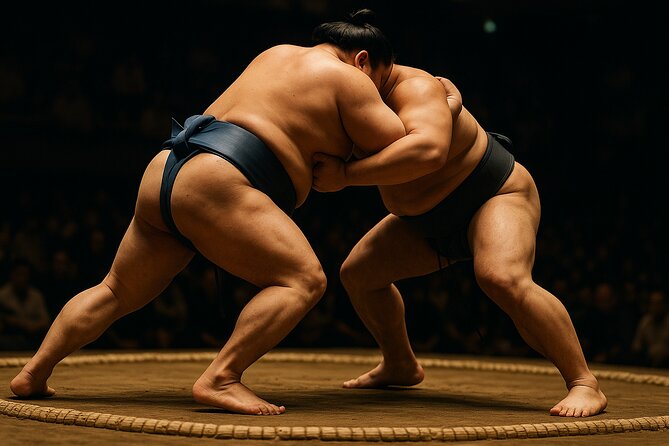
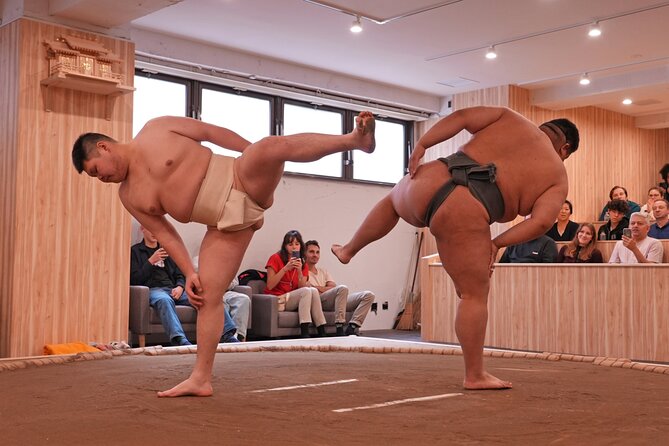
Two professional wrestlers perform live demonstrations in the ring. The show lets you see their size up close, but size is only part of the picture. The athletes also show speed, balance, timing, and control.
That point comes through especially well when the MC explains tactics. A bout may last only a short time, yet the wrestlers need to react quickly and use leverage wisely. The demonstrations make those details easier to understand than a general explanation alone.
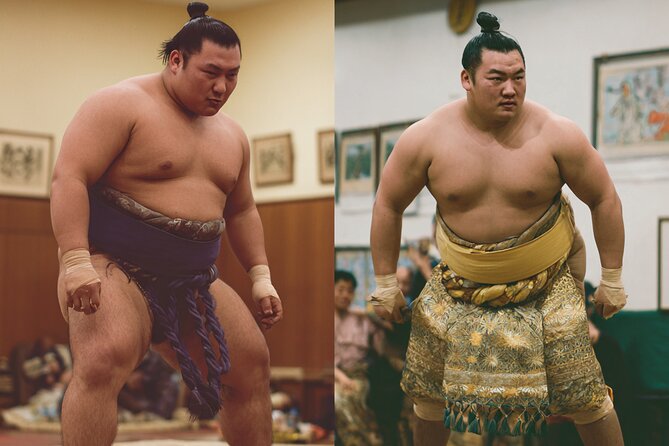
The performers also play to the room. Ogawa and Tani are named in one account, while other sessions feature wrestlers identified as Gucci and George. The changing names suggest that the cast can vary, so do not book expecting one particular pair unless the operator confirms it.
The athletes’ humor is a major part of the appeal. They answer questions, interact with the audience, and keep the atmosphere light. You still see strong physical performance, but the event is shaped as entertainment and education rather than a strict sporting contest.
That distinction deserves emphasis. If your goal is to watch official bouts between ranked competitors, this is not the right substitute for a professional tournament. If you want to understand the basic culture and physical demands of sumo in a relaxed setting, it is a far more approachable first step.
More Shinjuku nights and walks:
- Tokyo: Shinjuku Food Tour (13 Dishes at 4 Local Eateries)
★ 5.0 · 6,603 reviews - Tokyo Bar Hopping Tour in Shinjuku (All-You-Can-Drink + Dinner)
★ 5.0 · 3,587 reviews - Tokyo: Shinjuku Food Tour (15 Dishes and 4 Eateries)
★ 4.9 · 2,033 reviews - Best of Shinjuku: Izakaya Food Tour (4 Stops, 14+ Tastings)
★ 5.0 · 1,863 reviews
Stepping onto the dohyō for a friendly challenge
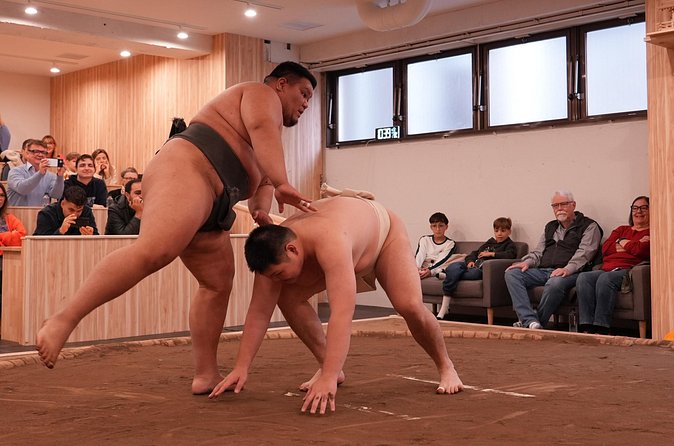
The most memorable section for many people is the audience participation. You may be invited onto the dohyō to try a friendly sumo challenge against one of the wrestlers.
This is not a test of strength in any serious sense. It is a playful demonstration that helps you feel how difficult it is to move a trained sumo athlete, even when the interaction is controlled for the show. Children may take part too, sometimes wearing inflatable sumo costumes. That creates an especially funny moment for families without making the activity dependent on athletic ability.
You do not need to be a sumo expert to enjoy this part. The host explains what to do, and the wrestlers guide the interaction. Audience members can also ask questions, which adds a personal touch and lets you hear more about the athletes and the sport.
Participation is an advantage, but it can also mean the experience feels less predictable from one session to the next. The amount of time given to individual participants may vary, and not everyone will necessarily want to step forward. You can still watch and learn if you prefer to stay in your seat.
For families, this is likely the show’s strongest feature. It gives children a way to connect with the sport through play, while adults receive the cultural explanation behind the spectacle.
Photos, questions, and a closer look at the athletes
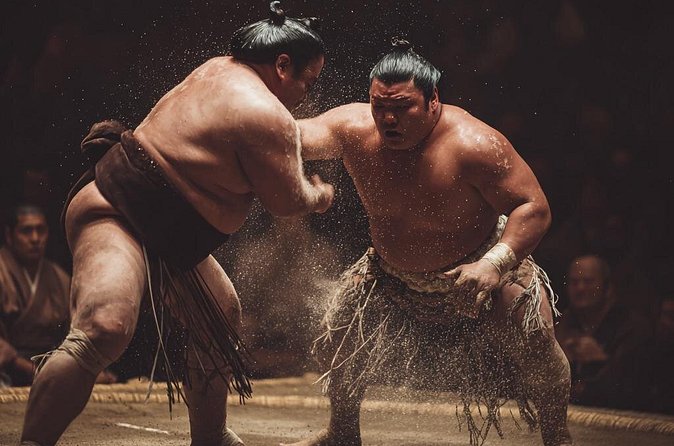
The experience includes time for photos with the wrestlers. This is more than a quick view from across a room. You get a close look at the athletes’ size and personality, and the photo becomes a clear reminder of the event.
You can also ask questions. That conversation helps humanize the wrestlers, especially after seeing them perform a sport that may seem distant or formal from the outside. The question-and-answer element brings the focus back to the people behind the ceremonies and competition.
Bring your phone or camera, since the activity includes a photo opportunity but does not describe a separate professional photography package. The mobile ticket is useful for entry, while your own device is the practical choice for personal pictures.
Some sessions also allow you to buy drinks and snacks while watching. One detail to note is that a drink included with the booking may be limited to one bottled water per person, rather than a broad selection. If refreshments matter to you, plan on purchasing additional items at the venue.
What the $79.59 price gets you
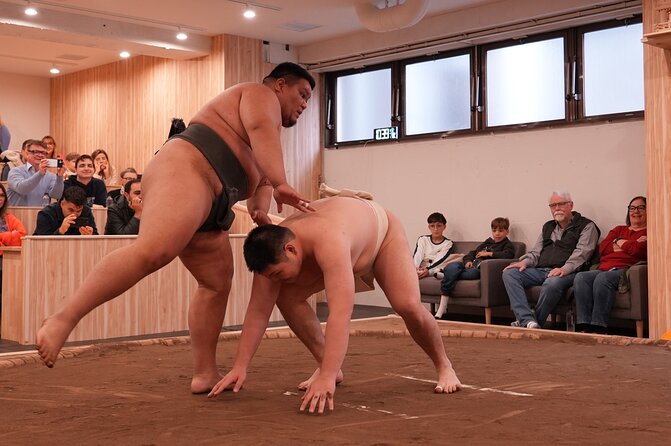
At $79.59 per person, the experience is not a bargain-bin attraction, but the price can make sense for the right visitor. You receive a 90-minute hosted program with live demonstrations, explanations of sumo customs and rules, audience interaction, a chance to challenge a wrestler, and photos with the performers.
The value is strongest if you are new to sumo. Instead of trying to piece together the rituals, tactics, and history on your own, you get a guided introduction in a single sitting. The bilingual MC is especially useful for couples or families who want cultural context without a long lecture.
The value is also good for a short Tokyo visit. A full tournament is not always taking place during your dates, and even when one is available, tickets and schedules can require more planning. This show offers a shorter and more direct encounter in central Tokyo.
I would be less quick to recommend it if you already have a packed schedule and only want Tokyo’s biggest sights. One person found the show merely okay compared with other activities in the city. That is a reasonable warning. The event is enjoyable and informative, but it is still a staged cultural experience, not a once-in-a-lifetime sporting final.
The strong ratings suggest the price feels worthwhile to most people, especially families and first-time visitors. Think of it as an accessible cultural performance with real athletes, not as admission to an official sumo competition.
Who should book this experience
I would put this near the top of the list for:
- Families seeking a funny, hands-on activity
- First-time visitors curious about Japanese customs
- Couples looking for an evening activity in Shinjuku
- People who want to learn basic sumo rules before attending a tournament
- Visitors with only 90 minutes available
- Anyone who enjoys audience participation and informal storytelling
It may suit you less if you dislike being called on in a group setting. You can watch without taking part, but the audience interaction is central to the format. It is also not ideal if you want solemn, high-stakes matches or a quiet museum-style lesson.
The program works for a wide age range. Young children can enjoy the costumes and physical comedy, while adults can focus on the sport’s rituals, tactics, and cultural background. Most people can participate, according to the supplied booking information, though exact access needs should be checked directly if they affect your plans.
Booking and cancellation advice
You can cancel for a full refund if you do so at least 24 hours before the experience’s start time. Cancellations or changes made less than 24 hours before the start are not accepted for a refund, and the cut-off follows Tokyo local time.
That policy gives you some flexibility, but it is not a last-minute option. Check your train plans, dinner booking, and arrival time before the 24-hour deadline. Confirmation arrives when you book, and the mobile ticket makes it easy to keep the entry details on your phone.
Should you book the Shinjuku Sumo Club experience?
Book it if you want a lively introduction to sumo, especially if you are visiting Japan for the first time or traveling with children. The bilingual explanations, real wrestlers, ritual demonstrations, questions, photos, and friendly challenge give you more than a short performance. You leave with a better sense of what makes sumo a sport and a ceremony.
Skip it if you are looking for official tournament competition or if your Tokyo schedule is already full of higher priorities. This is a polished cultural show, not a tournament ticket.
For most visitors, $79.59 is a fair price for a clear, entertaining 90-minute introduction in Shinjuku. Allow extra time to arrive, expect humor alongside tradition, and go ready to watch as well as take part. That is the formula that makes this experience work.
FAQ
How long does the Tokyo Shinjuku Sumo Show last?
The experience lasts approximately 1 hour and 30 minutes.
Where does the sumo experience take place?
It takes place at Shinjuku Sumo Club in Shinjuku, Tokyo.
How much does the experience cost?
The listed price is $79.59 per person.
Is the show presented in English?
A bilingual MC guides the experience and explains the rituals, rules, history, and demonstrations.
Will I see real sumo wrestlers?
Yes. Two professional sumo wrestlers perform live demonstrations and interact with the audience.
Can I try sumo myself?
You may take part in a friendly sumo challenge on the dohyō. Audience participation is part of the experience, and children may also be invited to join.
Are photos with the wrestlers included?
Yes. The experience includes a chance to take photos with the wrestlers.
Can I cancel for a refund?
Yes. You can cancel at least 24 hours before the start time for a full refund. Cancellations or changes made less than 24 hours before the start time are not refunded or accepted.
More Show in Tokyo
- Mt Fuji & Hakone Cruise, Drum Show Bullet Train 1 Day from Tokyo
★ 4.0 · 7,413 reviews - Mt Fuji & Hakone Cruise, Drum Show Bus 1 Day from Tokyo
★ 4.0 · 1,287 reviews - Tokyo: Sumo Show and Experience in Shinjuku
★ 4.8 · 1,001 reviews - Tokyo:Luxury Sumo Show Experience & Japanese cuisine & Drink
★ 4.7 · 577 reviews
New on our Tokyo list
- From Tokyo: Mount Fuji & Hakone Full Day Private Tour★ 4.9 · 25 reviews
- Tokyo Spectacular View Day-Cruise in 90 Minutes★ 5.0 · 25 reviews
- Real Tokyo Runner Club : Daikoku Car Meet Night Tour with JDM Car★ 5.0 · 25 reviews
- 2.5 Hour-Guided Cycle Tour in the Central Tokyo★ 5.0 · 25 reviews
- Ramen Making from Scratch +Akihabara Tour –Cooking Class★ 5.0 · 25 reviews
- [Self-Drive] Tokyo & Daikoku Custom Car Driving Tour★ 4.9 · 25 reviews
- Tokyo: 2-Hour Night Bike Tour of the City’s Hidden Gems★ 4.9 · 25 reviews
- Samurai themed Entertainment show in Shinjuku★ 4.5 · 25 reviews
Sumo Experiences, compared.
Sumo Show Experience with Chicken Hot Pot and a Photo
Read our review →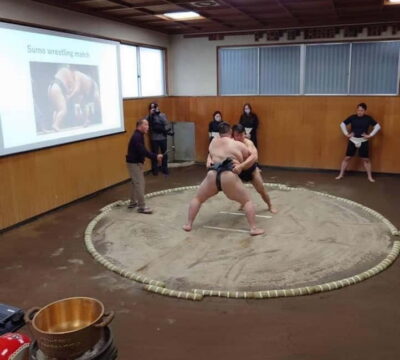
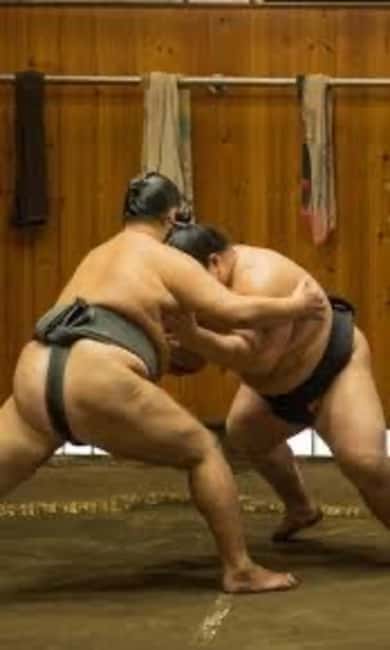

Authentic Sumo Experience in Tokyo: Enter the Sanctuary
Read our review →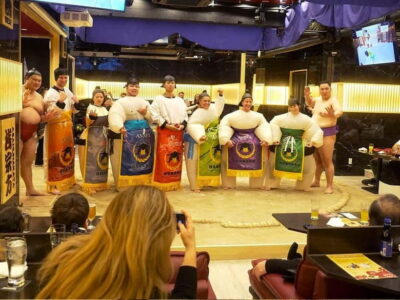
Luxury Sumo Show Experience & Japanese cuisine & Drink
Read our review →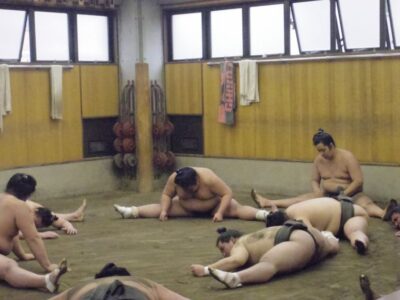
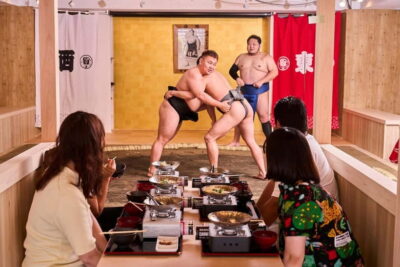
Tokyo Sumo Experience: Chanko & Mochi with a Former Pro
Read our review →Browse the lists this tour appears in