
Reviewed · SAMURAI & NINJA EXPERIENCES
Samurai Nature Retreat
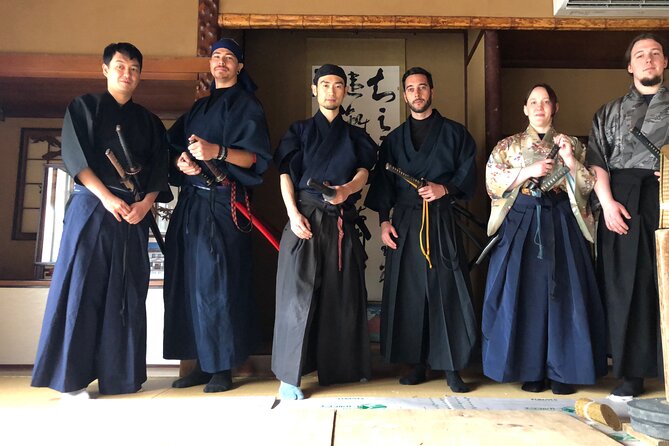
The unusual heart of this four-hour retreat is the mix of samurai sword practice and sound meditation. In Yamanashi’s quiet countryside, you change into kimono and hakama, work with an unsharpened katana, stand in Zen meditation, and let flute and improvised music shape the mood.
I like the strong sense of place. The river, trees, clean air, and outdoor meditation give this more weight than a quick costume photo stop. I also like the small group limit of 10, plus the clear English instruction praised by past participants.
The main consideration is that this is not a historical museum visit or a full-day martial arts course. It is a spiritual and artistic retreat with samurai practice at its center. Some activities involve a steep path, and the outdoor portions may be moved indoors during rain or midsummer heat.
In This Review
- Key points at a glance
- Why this Yamanashi retreat feels different
- Kimono, hakama, and the right frame of mind
- River cleansing and the power of place
- The opening sword performance
- Sound meditation with Yoshino
- Standing Zen among the trees
- Learning basic katana movements
- Samurai art, improvised music, and photographs
- Price, group size, and overall value
- Who should choose this retreat?
- Booking advice and cancellation timing
- Should you book Samurai Nature Retreat?
- FAQ
- Where does Samurai Nature Retreat take place?
- What time does the experience begin?
- How long does the retreat last?
- Where does the activity end?
- What clothing do participants wear?
- Is the sword real?
- Who leads the experience?
- Can beginners participate?
- What happens in bad weather or midsummer heat?
- How many people can join, and what is the cancellation policy?
Key points at a glance
- A real unsharpened katana lesson: Learn basic sword handling and movement without using a sharpened weapon.
- Yusuke leads the sword work: He is a Japanese sword artist and competition champion with international performance experience.
- Nature is part of the program: River cleansing, standing Zen, and outdoor practice connect the physical exercises to the setting.
- Sound is treated as a healing tool: Yoshino’s singing, flute, improvised music, and samurai dance add an artistic layer.
- Small and practical: The session lasts about four hours, starts at 1 p.m., accepts mobile tickets, and allows free cancellation up to 24 hours before the start.
Why this Yamanashi retreat feels different
Many samurai activities in Japan focus on dressing up, posing with a sword, and taking a few pictures. This one takes a slower route. You use the costume, the sword, the river, the music, and the surrounding nature as parts of one connected program.
That makes the experience less like a stage show and more like a guided reset. You are asked to pay attention to breathing, posture, movement, sound, and the feeling of your body in space. The samurai theme gives the session a clear shape, while meditation and music keep it from becoming only a technical lesson.
The setting is in Uenohara, in Yamanashi Prefecture, at 1025 Arata. The area is promoted as a particularly beautiful natural setting in Japan, and the program makes full use of that location. You are not simply looking at the countryside from a vehicle. You cleanse with river water, meditate outdoors, and practice movement in contact with the natural surroundings.
The experience is limited to 10 people. That matters here. Sword practice requires personal correction, and meditation works better when the group is not noisy or crowded. A small class also gives the performers room to create a more personal session.
More samurai and ninja sessions:
- Samurai Swordsmanship and Sound Meditation in nature
★ 5.0 · 5 reviews - Tokyo: Samurai Ninja Museum Guided tour and Experience
★ 4.6 · 1,010 reviews - Tokyo: Samurai Sword & Archery Class from Samurai Descendant
★ 5.0 · 603 reviews
Kimono, hakama, and the right frame of mind
The program begins with an introduction, followed by a change into kimono and hakama. These garments give the activity its visual appeal, but they also affect how you move. A hakama changes your stride and makes you more aware of your legs, balance, and posture.
You should not expect a fashion fitting with a long explanation of fabric or formal dress traditions. The clothing is part of the working session. Once dressed, you are ready to take part in a sequence that links purification, performance, meditation, and sword practice.
I like this order because it gives the afternoon a sense of ceremony without requiring you to know Japanese customs in advance. You arrive as a sightseer and gradually shift into the role of a student. The tone is respectful, but the information provided suggests that most people can participate.
Yusuke leads the sword side of the program. He is described as a teacher and performer of Japanese sword art, and as the winner of a Japanese sword-skill competition. That background matters most during the demonstration and practical lesson, when safe handling and controlled movement need to be explained clearly.
The host Yoshino brings a different skill set. She is a dancing and singing artist who performs internationally. Her role helps turn the session into an artistic presentation rather than a standard martial arts class.
River cleansing and the power of place
One of the first active parts of the program is cleansing your body and mind with the clean water of the river. The details of the exact procedure are not specified, so you should think of this as a guided purification element rather than a swimming or bathing stop.
The value is symbolic and physical. Cool water, moving air, and the sound of a river can quickly pull your attention away from city traffic, shopping streets, and phone screens. You are given a clear break between ordinary sightseeing and the retreat itself.
This is also where the setting earns its keep. If you booked this only for a sword lesson, the river portion may feel unexpected. If you want a quieter way to experience rural Yamanashi, it gives the afternoon a stronger connection to Japanese spiritual practice.
The accessibility note is worth taking seriously. People with leg or lower-back problems may not be able to reach every area because of steep slopes, though most of the program remains available. If walking on an incline is difficult, tell the provider before the session and plan on taking part in the portions that are easier to reach.
The opening sword performance
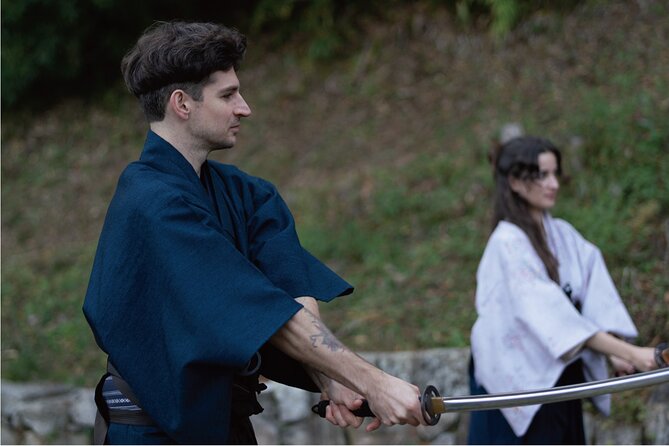
After the cleansing, Yusuke presents a performance called the sword of beginnings. This is not simply a demonstration of fast cuts. It sets the mood for the lesson and gives you a chance to see controlled sword movement before trying it yourself.
The contrast between performance and practice is useful. A trained artist makes the action look effortless, but your own first movements will likely be slower and more deliberate. That is a good thing. The program is about awareness and central balance, not about pretending to be a movie hero.
The sword art also gives the retreat a focus. Meditation can feel vague if you are not used to it. A katana requires attention to grip, direction, stance, timing, and the position of the body. Those practical details help you understand the idea of finding your central axis.
The sword used in your lesson is unsharpened and not a real cutting sword. That makes this suitable for beginners and removes the danger associated with handling a live blade. Still, you will be learning a discipline with formal movements, so listen closely and follow the instructor’s pace.
More Mt Fuji days from Mt Fuji Area:
- Mt Fuji and Hakone 1-Day Bus Tour Return by Bullet Train
★ 5.0 · 26,383 reviews - Mt Fuji & Hakone Cruise, Drum Show Bullet Train 1 Day from Tokyo
★ 4.0 · 7,413 reviews - Tokyo Mt Fuji 5th St & Hakone Cruise Bus Tour w/Bullet Train
★ 4.4 · 5,024 reviews - From Tokyo: Mount Fuji Full-Day Sightseeing Trip
★ 4.5 · 4,970 reviews
Sound meditation with Yoshino
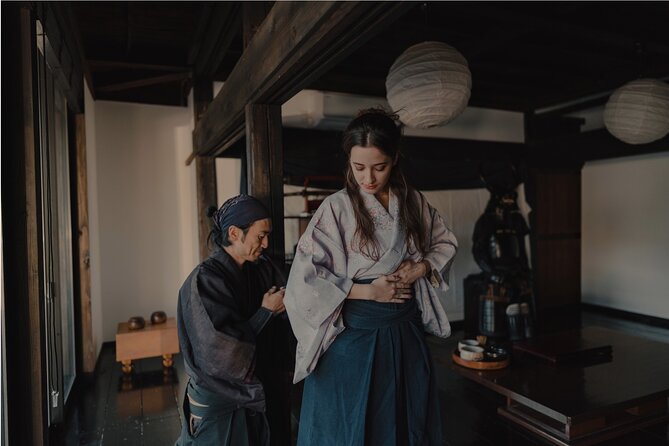
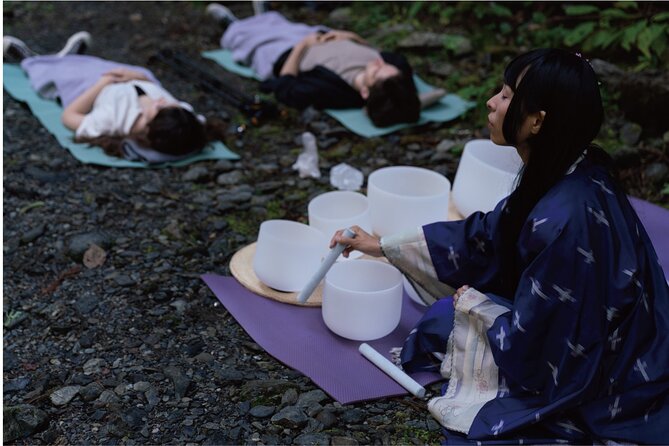
Sound plays a major role in this experience. The program describes human beings and objects as giving off vibrations and sounds, then uses flute, singing, improvised music, and other healing sounds to help clear the mind.
You do not need to approach this as a person who already practices meditation. The session is presented as an opportunity to settle your attention and notice how sound changes your physical and mental state. Some people will find the language about purification and healing meaningful. Others may prefer to treat it as a calm listening exercise.
Yoshino’s singing and dance add a live performance element. The music is improvised on the spot, so the sound is not a fixed recording repeated for every group. That can make the session feel more personal, though it also means the artistic side may be more important to some people than the martial arts side.
Past feedback specifically praises the combination of sound healing, breathing techniques, and nature. That combination is the key to understanding the experience. You are not being asked to master swordsmanship in four hours. You are being guided through several ways of paying attention.
Standing Zen among the trees
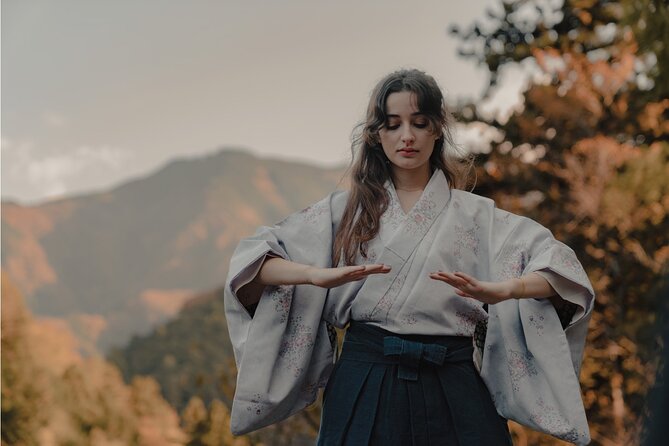
The standing Zen meditation is one of the simplest parts of the program, but it may be one of the most useful. Instead of sitting in a formal pose, you stand in nature and work on alignment, stillness, and breathing.
Standing makes the connection to sword practice clear. A stable stance begins with the feet, continues through the hips and spine, and affects every movement of the arms. The exercise can help you notice where you carry tension and how quickly your balance changes when you stop forcing your posture.
The natural setting is important here. A quiet outdoor space gives you more than a decorated studio can provide. You hear the surroundings, feel the ground, and become aware of small shifts in your body. On a rainy day or during the hottest part of summer, the session may be held indoors instead. That protects the program from bad conditions, though it may reduce the outdoor atmosphere.
The afternoon starts at 1 p.m. and lasts about four hours. That timing makes it possible to fit into a broader Yamanashi visit, but you should leave enough room around it for transportation and the possibility of a slower return from the rural meeting point.
Learning basic katana movements
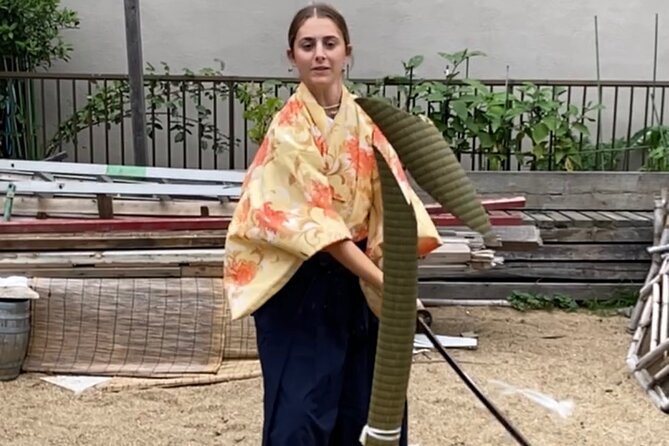
The practical sword lesson is the part many people will be waiting for. You handle an unsharpened Japanese sword and learn basic movement. The available information does not promise advanced combat training, sparring, or a certificate, so book this as an introduction to swordsmanship rather than a martial arts qualification.
The lesson focuses on how the body works with the sword. Breathing, foot position, balance, and the line of the arms all matter. The program connects these skills to meditation and says the practice can help realign body and mind while helping you find your central axis.
That idea is more useful than simply memorizing a dramatic pose. You will get more from the lesson if you pay attention to the mechanics: keep your movements controlled, listen to corrections, and notice how your stance changes when you grip the sword.
Clear English instruction is an important practical advantage. One past participant specifically praised the guide’s English and the clarity of the teaching. That does not mean every explanation will feel effortless for every person, but the session is designed for an international audience.
You should also expect a performance level that is higher than what you can copy in one afternoon. Yusuke’s competition background and stage work are part of the appeal. The lesson lets you try the basics, while the demonstrations show what years of training can produce.
Samurai art, improvised music, and photographs
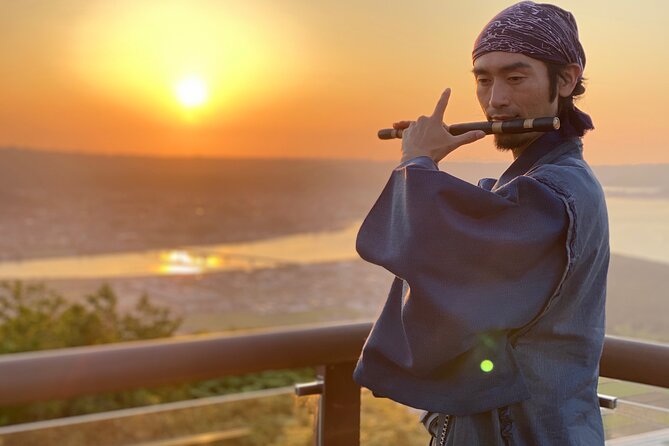
The final performance brings the separate strands together. Samurai art, dance, singing, and music share the same space, creating a closing presentation with a strong emotional tone.
This is where Yoshino’s role becomes especially important. The program is not only about the sword. It uses movement and sound to create a performance that the description says is intended to reach the soul and ignite the heart. That language will appeal to people who enjoy expressive cultural activities, though those looking for a strictly historical lecture may find it more poetic than factual.
A photo shoot follows the performance. The kimono and hakama make this a natural time for photographs, after you have already learned how the clothing feels in motion. The pictures are not the sole point of the event, which is a plus. You get a record of the experience after taking part in the ritual and practice rather than simply posing at the start.
I would treat the photographs as a bonus, not a guarantee of a particular number or style of images. The supplied details confirm a photo shoot but do not specify how many photos you receive or whether the provider takes them with professional equipment.
Price, group size, and overall value
At $84.70 per person, the retreat sits in a reasonable range for a four-hour cultural activity that combines instruction, live performance, costume, meditation, and a nature setting. The value depends on what you want from a samurai experience.
If you want a quick photo and a short sword pose, this may be more time and spiritual framing than you need. A shorter activity could suit you better. If you value an extended session with several distinct parts, the price is easier to justify.
You are paying for more than equipment. The program includes access to instruction from an accomplished sword performer, a live artistic presentation, use of kimono and hakama, sound meditation, and a small group format. The maximum of 10 people is especially helpful for a hands-on lesson.
The listed average booking time is 55 days in advance. That suggests planning ahead is sensible, particularly if your Yamanashi dates are fixed. Group discounts are available, so the price may work better for families or friends booking together, though the exact discount is not provided.
The mobile ticket is convenient for a day of sightseeing. Confirmation is provided at booking, and the activity returns to its meeting point. Since the supplied information does not give a full transportation route, check how you will reach 1025 Arata in Uenohara before committing to a tight schedule.
Who should choose this retreat?
I would recommend it most strongly to you if you want a cultural activity that joins physical practice with quiet reflection. It suits first-time visitors who want to try swordsmanship without handling a sharpened weapon, and it works well for people interested in meditation, traditional dress, live music, or Japanese spirituality.
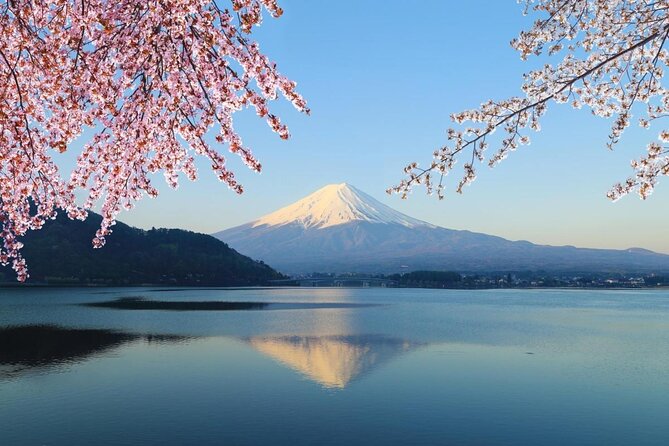
It may also suit you if Tokyo or other large cities have begun to feel tiring. One Spanish-language response praised the peace of the area near Mount Fuji and wished for a longer stay there. The retreat is not described as being at Mount Fuji itself, so do not book it on the assumption that you will receive a Fuji viewpoint. Its appeal is the calm of the wider Yamanashi setting.
Families and mixed-age groups may find the accessible basic sword movements easier to share than a demanding sports class. Still, anyone with mobility concerns should account for the steep sections. The activity is open to most people, but not every outdoor area is reachable for those with leg or lower-back problems.
You may want to skip it if you prefer a factual museum talk, a long historical lecture, or intensive martial arts training. The music, spiritual language, and artistic performance are not side details. They are central to the program.
Booking advice and cancellation timing
The experience begins at 1 p.m. and ends back at the meeting point after about four hours. Give yourself a buffer before and after, especially since the location is in Uenohara and the available information does not list a complete transport timetable.
Rain and midsummer heat do not automatically cancel the activity. The program can move indoors in those conditions. That provides useful weather protection, although the river and outdoor setting will naturally feel different inside.
Free cancellation is available if you cancel at least 24 hours before the local start time. Cancellations or changes made within 24 hours are not accepted for a refund. This is a helpful policy for normal itinerary changes, but it is still worth checking your transport plans before the deadline.
Should you book Samurai Nature Retreat?
Book it if you want an intimate, unusual afternoon that lets you wear samurai clothing, hold an unsharpened katana, practice basic movements, and slow down through meditation and live sound. The strongest reasons to choose it are the small group, Yusuke’s sword background, Yoshino’s artistic work, and the use of the river and countryside as active parts of the experience.
Think twice if you want a traditional history lesson or a pure martial arts class. This is a spiritual performance and beginner sword session, not a complete study of samurai culture.
For the right person, $84.70 is fair value for four hours of guided activity and live art. Plan ahead, allow time to reach the meeting point, and accept the program on its own terms: less Hollywood swordplay, more posture, breath, sound, and attention.
FAQ
Where does Samurai Nature Retreat take place?
The meeting point is 1025 Arata, Uenohara, Yamanashi 409-0113, Japan.
What time does the experience begin?
The program starts at 1 p.m.
How long does the retreat last?
It lasts approximately four hours.
Where does the activity end?
The activity ends back at the meeting point.
What clothing do participants wear?
You change into a kimono and hakama, traditional clothing associated with the samurai style.
Is the sword real?
You practice with an unsharpened sword, not a real sharpened katana.
Who leads the experience?
Yusuke leads the sword instruction and performance. Yoshino is the dancing and singing artist involved in the artistic and sound portions.
Can beginners participate?
Most people can participate, and the program teaches basic sword movements. It is not described as an advanced swordsmanship course.
What happens in bad weather or midsummer heat?
The activity is held indoors on rainy days and during midsummer days.
How many people can join, and what is the cancellation policy?
The group has a maximum of 10 people. You can cancel for a full refund up to 24 hours before the local start time. Changes or cancellations made less than 24 hours before the start are not accepted for a refund.
New on our Mt Fuji Area list
- Mt Fuji Exploration Tour with Free Japanese Kusa Mochi from Tokyo★ 4.5 · 3 reviews
- Mount Fuji – Private Tour with English Speaking Chauffeur★ 3.7 · 3 reviews
- Day Trip To Mount Fuji and Hakone from Tokyo with English Guide★ 4.5 · 3 reviews
- 3-Row Luxury Bus Tour to Mt. Fuji, Lake Kawaguchi from Tokyo★ 4.3 · 3 reviews
- Full Day Private Tour of Mt Fuji★ 5.0 · 3 reviews
- From Tokyo: Mount Fuji One Day Private And Customized Tour★ 4.7 · 3 reviews
- Mt Fuji, Hakone Private Tour by Car Pickup from Tokyo★ 5.0 · 3 reviews
- Mt. Fuji 5th Station Oshino Hakkai & Gotemba, Hot Spring Day Tour★ 5.0 · 3 reviews
Samurai & Ninja Experiences, compared.
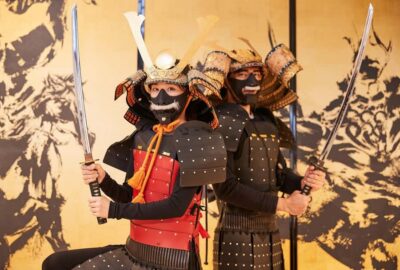
Samurai Ninja Museum Guided tour and Experience
Read our review →
Samurai Sword & Archery Class from Samurai Descendant
Read our review →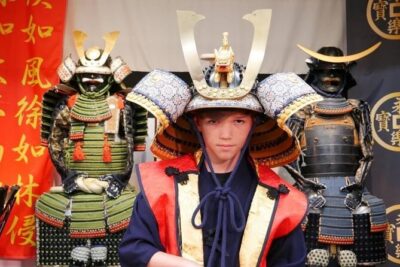
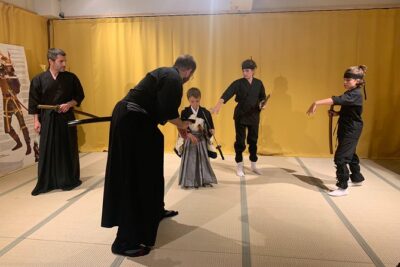
Ninja Experience (Family Friendly) at Samurai Ninja Museum TOKYO
Read our review →
Samurai Entertainment Night Show in Kanda Shrine
Read our review →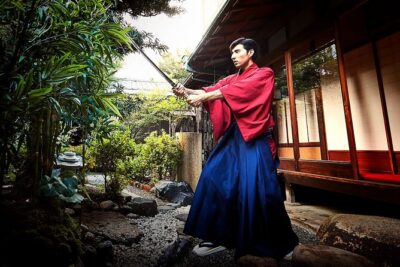
Tokyo Sword Experience – includes Museum Ticket/Ninja Experience
Read our review →
Samurai Ninja Museum Asakusa: Samurai Sword Lesson & Tour
Read our review →
Ninja Samurai 2-hour hands-on lesson by Japanese master in Tokyo
Read our review →Browse the lists this tour appears in